Posted on 10/02/2022 7:20:05 PM PDT by MtnClimber
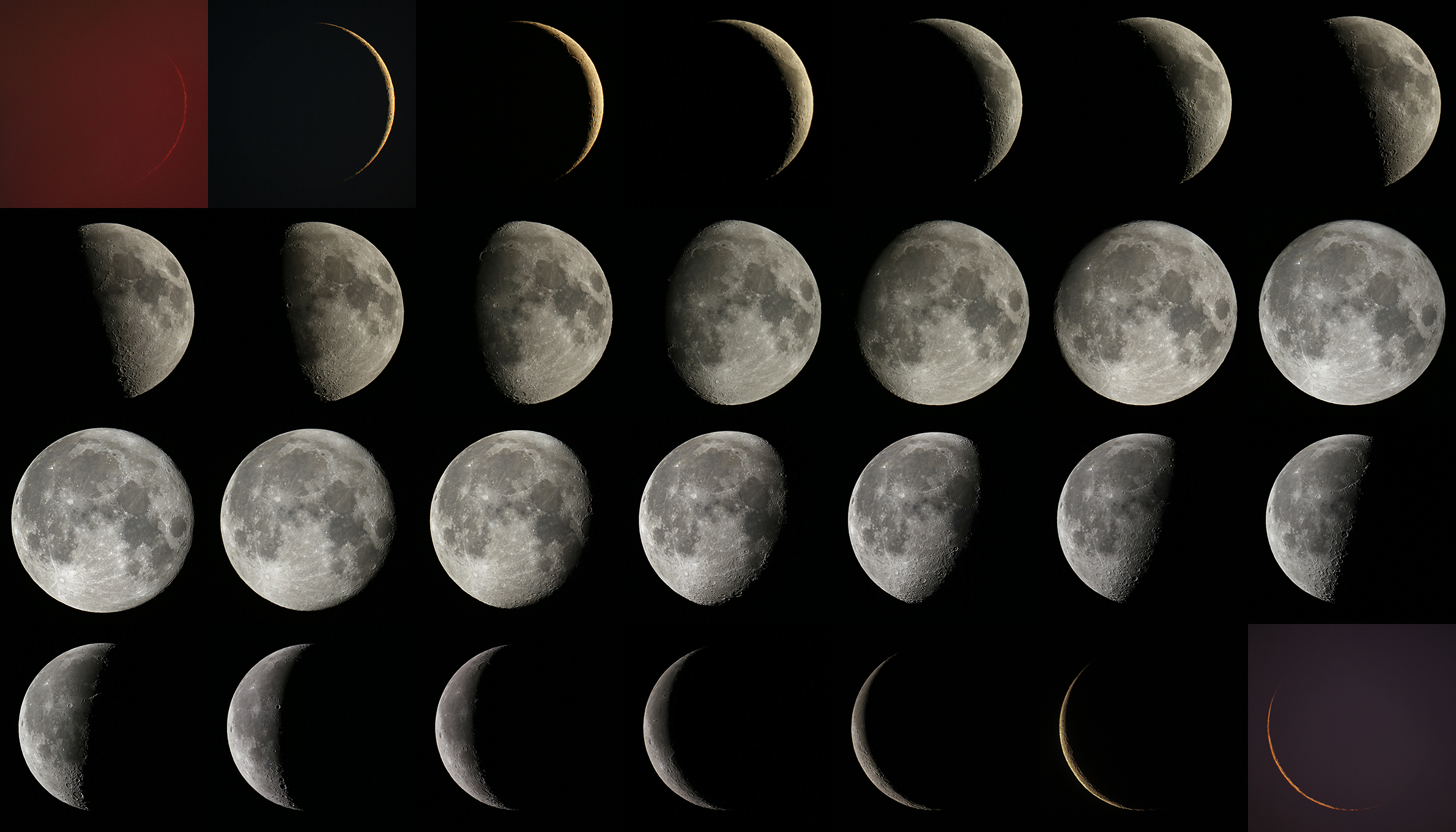
Explanation: Observe the Moon every night and you'll see its visible sunlit portion gradually change. In phases progressing from New Moon to Full Moon to New Moon again, a lunar cycle or lunation is completed in about 29.5 days. Top left to bottom right, this 7x4 matrix of telescopic images captures the range of lunar phases for 28 consecutive nights, from the evening of July 29 to the morning of August 26, following an almost complete lunation. No image was taken 24 hours or so just after and just before New Moon, when the lunar phase is at best a narrow crescent, close to the Sun and really hard to see. Finding mostly clear Mediterranean skies required an occasional road trip to complete this lunar cycle project, imaging in early evening for the first half and late evening and early morning for the second half of the lunation. Since all the images are registered at the same scale you can use this matrix to track the change in the Moon's apparent size during the single lunation. For extra credit, find the lunar phase that occurred closest to perigee.
For more detail go to the link and click on the image for a high definition image. You can then move the magnifying glass cursor then click to zoom in and click again to zoom out. When zoomed in you can scan by moving the side bars on the bottom and right side of the image.
Good thing there are no mice on the moon. It would be gone by now.
Mice will eventually find a way.

Disclaimer: Opinions posted on Free Republic are those of the individual posters and do not necessarily represent the opinion of Free Republic or its management. All materials posted herein are protected by copyright law and the exemption for fair use of copyrighted works.