Should work with any juice. You can make alcohol from water, sugar & yeast. Fruits and grains mostly add flavors. Potatoes for vodka.
At two weeks, the apple wine has some sweetness. Tastes almost like a mild screwdriver and has about the same color. It's still pretty cloudy by then. It takes months to go clear and then it is dry.
Some people will add sugar back to a longer fermented wine. I don't know the process but there are plenty of youtube videos out there of people making wine from store bought juice. Probably add it while it's warm, shake it and then stick it in the fridge to settle and stop fermentation.
Exported the notes I took which has several links as a pdf file. https://permasteader.route66custom.com/cloud/index.php/s/yFjnDjwNWmmEXHy
I'm using the zero equipment method. I do have one airlock like the one on the left that will fit the 64oz bottles but since I'm running 7 at a time, I'd need 6 more. The more proper way is to use 5 gallon carboys but I don't have a lot of room here so the bottles work best.
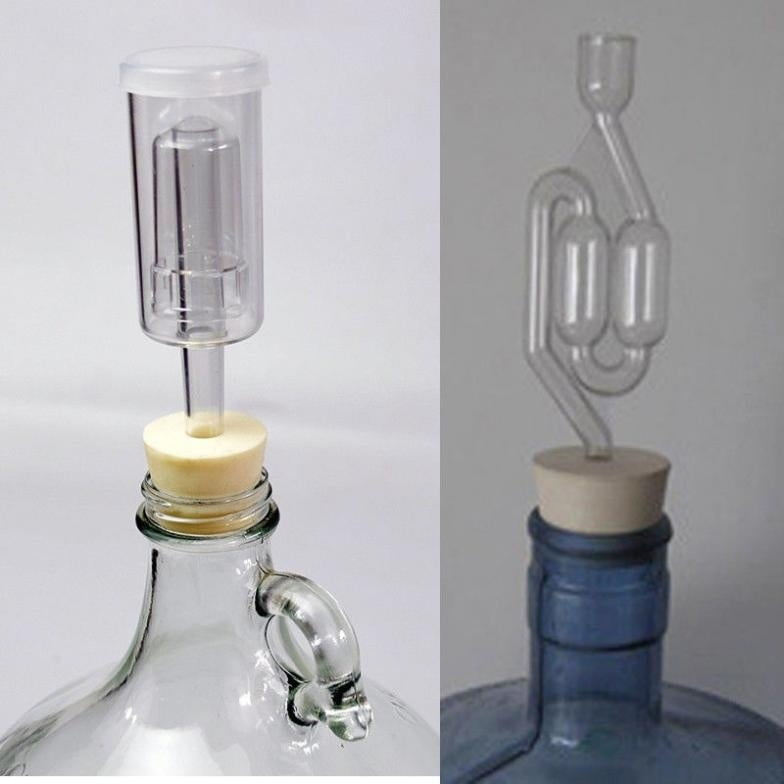
My neighbor makes grape wine, I think from frozen concentrate. Most times I've tried it, I didn't like it but last time it was pretty good. He said it was 5 months old and had been siphoned from one carboy to another, minus sludge, three times. That's how you get a nice clear wine. His process is similar to the four part video series in my notes under Nice Wine. That guy bottles it up in real wine bottles with the plastic things down over the top of the bottle to make them look more like store bought. Bottling is actually called racking. I guess because the bottles would go on the wine rack in the wine cellar?
I took those notes as notes for me so if there's anything you don't understand, let me know. After a good length of time, sometimes I don't even understand my notes. LOL
Pollard thanks! Good Deal! I've fermented both beer and wine, but its been about 30 years since I did that. Just vegetables lately.
For others reading; Safety; If you are making beer or wine or cider always use a food grade non reactive fermenting container, non leaded glass container food grade plastic, or stainless steel. In the beginning a food grade bucket bucket, after racking a carboy works well. The Glass 1 gallon container and plastic carboy in your picture works well for small batches of wine or cider! (I bet that a glass 1.7 gallon Sun Tea container would be a great low cost primary fermenting container!! )
proper container
From that site:
"Consider using a carboy or demijohn as a primary fermenter for your delicate white wines instead of a bucket. Oxidation and bacteria are more easily controlled because of the small neck. Use "food grade" buckets only if you're going with a plastic primary fermenter. There's a reason the grocery stores and bakeries use only food grade containers and bags. You don't want plastic toxins or off-tastes coming out in your wine.
The most economical are food grade buckets. For a larger batch - food grade drums work excellent. Both buckets and drums come in many sizes.
There are also stainless steel tanks and conical fermenters - these also come in food safe plastic too."
Containers not to use:

ME; A few tips from my time fermenting;
Clean your fermenting and beer and wine bottles with soda ash and or concentrated baking soda rather than detergent which can leave a residue. You can purchase large bottle brushes from brewing suppliers**
If you are fermenting with an air lock, its a good idea to use vodka rather than water to keep bacterial from growing in the air lock.**
Do not use table sugar in your ferments or to prime your beer when you bottle. The yeast has to convert the sucrose to a digestible form and produces an enzyme that can result in an off taste! You can boil sugar and turn it into invert sugar that yeast more easily digest and you can also purchase a specialty corn syrup made for this purpose and to prime beer bottles. (Link below.) ** https://www.homebrewersassociation.org/beer-food/invert-syrups-making-simple-sugars-complex-beers/
"Invert sugar is chemically similar to honey. While regular table sugar consists of the disaccharide sucrose, invert sugar is comprised of the monosaccharides that bond tgether to form sucrose—glucose and fructose. Invert sugar is great for brewing because yeast doesn’t have to work as hard to digest it—there’s no need to break sucrose down into its constituent monosaccharides for fermentation. But that’s not the only reason to consider adding it to your homebrew." more at link.
Brewers crystal $3.29 lb
You get better results with yeasts developed for brewing rather than using bakers yeasts. Its worth the additional cost to buy them.**
Ale and Beer. Brewed with different yeast and methods, but not getting into it here!**
They also sell
Note that if you are using other fruits or fruit juices yeast will produce enzymes that can produce an off taste. (Plum or peach) It is also possible that a company will put something in their concentrate or frozen juice to prevent fermentation. I have no experience with anything other than beer or wine so its something to research further online.
Not getting into bottling. Search youtube for how to do it and the tools you will need! (Hated bottling!)
This and Pollard's posts just skim the surface;
If you are making fermented beverages you can be as simple or high end as you want.
Here is a source for supplies that looks pretty good. (Again, you can start inexpensively or go high end, they have both!) Other sources online using search. Also Amazon and Ebay.
(I am showing the links for the yeast for this place. You can explore the other things they supply including cleaning soda, sugar, kits and and containers.)
https://www.midwestsupplies.com/
Cider yeast
Wine Yeast
Beer yeast
**Note to any reader that if you are fermenting potatoes for vodka or corn mash for bourbon you would then distill them and I have little information on that process EXCEPT to note that you better use copper for your boiler and coil and not an old radiator and brake lines or you will poison someone with the result!
Copper Kettle