Posted on 07/07/2022 11:45:21 AM PDT by Red Badger
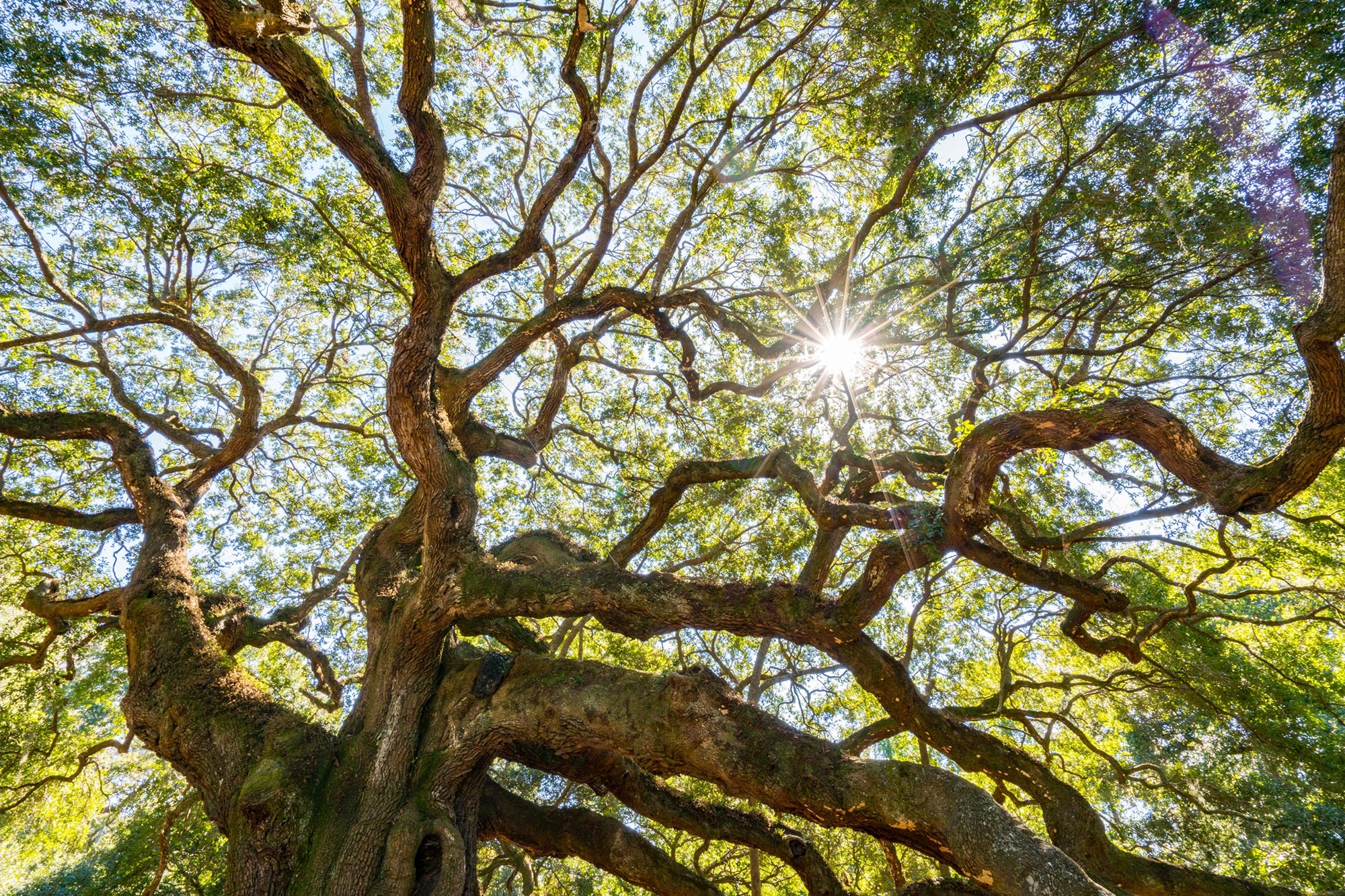
Angel Oak
Hopefully, the lone Quercus tardifolia will be nursed back to health and well cared for like Angel Oak, pictured here.
One Quercus tardifolia found clinging to life in Big Bend National Park. Botanical researchers have discovered an oak tree once thought to be extinct, and now in immediate need of conservation within Big Bend National Park in Texas. The discovery was made by scientists representing a coalition of more than 10 institutions.
Scientists headed by The Morton Arboretum and United States Botanic Garden (USBG) were ecstatic to discover a lone Quercus tardifolia (Q. tardifolia) tree standing about 30 feet (9 meters) tall, though it is in poor health. First described in the 1930s, the last known living specimen was believed to have perished in 2011.
“This work is crucial to preserve the biodiversity that Earth is so quickly losing,” said Murphy Westwood, Ph.D., vice president of science and conservation at The Morton Arboretum. “If we ignore the decline of Q. tardifolia and other rare, endangered trees, we could see countless domino effects with the loss of other living entities in the ecosystems supported by those trees,” she said. According to Westwood, Q. tardifolia is considered one of, if not the rarest oak in the world.
Researchers hope that by determining why this tree is going extinct they may be able to protect other organisms from the same fate. Unfortunately, it is still unclear whether or not this specimen of Q. tardifolia can be saved.
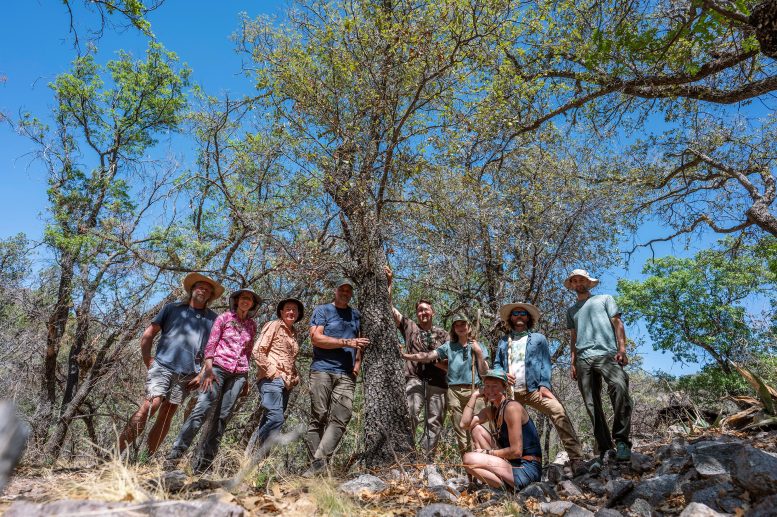
Researcher Group Finds Quercus tardifolia
The research group stands with the lone specimen of Quercus tardifolia. Credit: United States Botanic Garden
On May 25, 2022, the team of researchers made the discovery, uncovering a dire scene. The tree’s trunk is scarred by fire and shows evidence of severe fungal infection. A drought or fire has the potential to end its life, according to the scientists who also report that climate change makes this outcome more and more likely each year. The group is now working with the National Park Service to reduce the immediate wildfire threat to the tree. Additionally, conservationists in this collaboration are moving quickly to return to search for acorns and to attempt propagation, the process of breeding specimens from a parent plant.
“This is important, collaborative research necessary for the conservation of Q. tardifolia,” said Carolyn Whiting, a botanist at Big Bend National Park. “The Chisos Mountains support a high diversity of oak species, partly because of the wide range of habitats available in this ‘sky island.’ There is still much to learn about the oaks in the Chisos.”
“The United States Botanic Garden is thrilled about the success of this partnership and collecting trip that rediscovered such a rare oak,” said Susan Pell, Ph.D., acting executive director at the United States Botanic Garden, which is funding and collaborating on the project. “This discovery is just the beginning of the conservation work we are doing in partnership with The Morton Arboretum to better understand and conserve threatened trees.”
Other collaborators in this project include Bartlett Tree Research Laboratories and Arboretum; Lady Bird Johnson Wildflower Center; NatureServe; Polly Hill Arboretum; San Antonio Botanical Garden; University of California, Davis Arboretum and Public Garden; and The Sul Ross State University A. Michael Powell Herbarium.
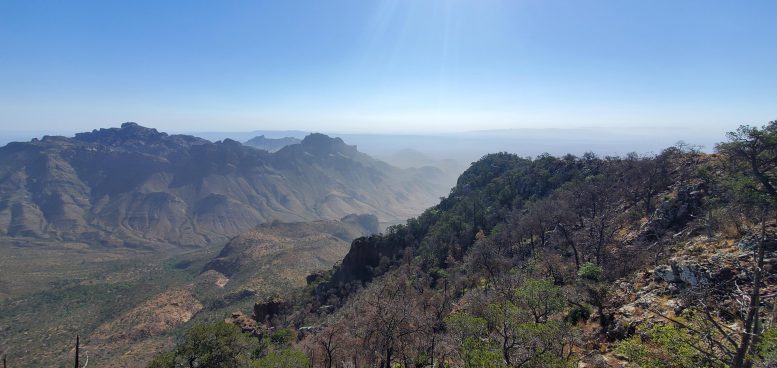
Big Bend National Park
Researchers search through the backcountry of Big Bend National Park. Credit: Photo by Bartlett Tree Research Laboratories and Arboretum
What might molecular analysis reveal about Quercus tardifolia? Oaks tend to hybridize, or crossbreed, which may allow them to adapt more quickly to changing climate conditions such as extreme heat and new diseases. This frequent hybridization can also blur the genetic lines between oak species in a given ecosystem like Big Bend. Molecular analysis will confirm whether the DNA of the newly discovered tree matches that of previous samples of Q. tardifolia, but according to the researchers, there is a chance that the analysis will raise more questions than answers.
According to Andrew Hipp, Ph.D., senior scientist in plant systematics and herbarium director at The Morton Arboretum, whose team will be conducting the genetic analysis, “This is an interesting problem. We’re looking into whether this tree is genetically similar to other trees that have been previously collected as Q. tardifolia. That should tell us whether this collection is the same as what Cornelius H. Muller named Q. tardifolia. It should also tell us whether this collection of specimens is genetically distinct enough from other closely related oaks in the area to warrant recognition as a species.”
Regardless of classification, Hipp noted that it is important to preserve more than individual species, but rather all the genetic variation in life. “Species are genetically distinct populations that we can generally recognize in the field,” he said. “But they aren’t the be-all and end-all of conservation. We also aim to protect the functional variation within species. Leaf forms, physiological responses to drought and fire and even tree longevity are all attributes that can be shared among populations and among species by gene flow. The functional variation that these new collections represent may be just what is needed to help oaks of the region adapt to environmental changes in the near or distant future.”
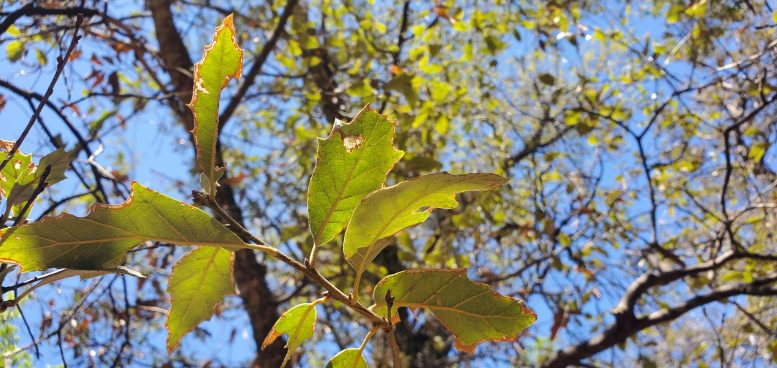
Quercus tardifolia Leaves
Quercus tardifolia leaves. Credit: Photo by Bartlett Tree Research Laboratories and Arboretum
Preserving oaks is critical to ecosystems Oaks are exceptional among tree species in that their acorns cannot be traditionally seed banked for conservation purposes. According to the researchers, they must be preserved in the wild or in living collections, which is why the involvement of botanical gardens is critical. The researchers who found the Q. tardifolia tree are concerned that it is not producing acorns. Other methods of propagation, including grafting, are being pursued to preserve the oak’s future.
“Across the planet, oaks serve as an ecological anchor cleaning air, filtering water, sequestering carbon dioxide and supporting countless fungi, insects, birds and mammals,” Westwood explained. “When one is lost, we don’t know what else we might permanently lose in its wake,” she said.
However, Westwood, Pell and others warn that conservation efforts such as this require collaborative initiatives, such as the Global Conservation Consortium for Oak, the involvement of botanical gardens and a variety of scientific experts to secure a future for endangered trees.
“In many ways, this tree is an ancient relic. Due to the changing climate, the world is completely different now than when it evolved,” said Wesley Knapp, chief botanist at NatureServe, who participated in the expedition. “It is incumbent upon us to learn from it and protect it while we still can in order to inform future conservation efforts,” he said. “Nature rarely hands us a second chance, and I doubt we’ll get a third. We won’t waste it.”
Members of the May 2022 expedition that first located the lone Q. tardifolia tree included Adam Black of Bartlett Tree Research Laboratories and Arboretum, Michael Eason of San Antonio Botanical Garden, Emily Griswold of UC Davis Arboretum and Public Garden, Wesley Knapp of NatureServe, John Saltiel of USBG, Phillip Schulze of Lady Bird Johnson Wildflower Center, Elizabeth Thomas of Polly Hill Arboretum, Kelsey Wogan of Sul Ross State University A. Michael Powell Herbarium and Zarah Wyly, an independent oak researcher in California.
About The Morton Arboretum
The Morton Arboretum is a world-renowned leader in tree science and research. Its 1,700-acre site includes 222,000 tree and plant specimens, representing 4,650 taxa from 40 countries. The Arboretum’s Center for Tree Science collaborates with researchers around the world, contributing scientific knowledge and technical experience to secure the future of trees. The Arboretum’s Global Tree Conservation Program leverages the expertise of the botanical garden community to protect and restore vulnerable and threatened trees. Additional information about the Arboretum’s scientific work and how it contributes to a greener, healthier world for future generations can be found at mortonarb.org.
About the United States Botanic Garden
The United States Botanic Garden (USBG) is the oldest continuously operating public garden in the United States, created by Congress in 1820. The USBG informs visitors about the importance and fundamental value and diversity of plants, as well as their aesthetic, cultural, economic, therapeutic, and ecological significance. With over a million visitors annually, the USBG strives to demonstrate and promote sustainable practices. It is a living plant museum accredited by the American Alliance of Museums and Botanic Gardens Conservation International.
Oaks tend to hybridize.
There is unrest in the forest
There is trouble with the trees
For the maples want more sunlight
And the oaks ignore their pleas
The trouble with the maples
And they’re quite convinced they’re right
They say the oaks are just too lofty
And they grab up all the light
But the oaks can’t help their feelings
If they like the way they’re made
And they wonder why the maples
Can’t be happy in their shade?
There is trouble in the forest
And the creatures all have fled
As the maples scream, “oppression”
And the oaks just shake their heads
So the maples formed a union
And demanded equal rights
“The oaks are just too greedy
We will make them give us light”
Now there’s no more oak oppression
For they passed a noble law
And the trees are all kept equal
By hatchet
Axe
And saw
Get busy collecting material to start a new stand of trees!
Sounds like some made up whoop-de-do to me.
The ‘Angel’ Oak is a beautiful old tree.
We lost our Wye Oak, a white oak on the Eastern Shore (it was the State Tree of Maryland) in a bad storm in 2002. But it has been cloned. The original was estimated to be about 400 years old:
https://en.wikipedia.org/wiki/Wye_Oak
#1 REASON

“conservationists in this collaboration are moving quickly to return to search for acorns and to attempt propagation”
Just bring in some squirrels, they’ll definitely find the acorns and even plant some of them that they don’t eat. Plus they’ll poop all around the tree to fertilize the soil too.
RIP, Neil.
i remember that...
they made benches and judges gavels out of the wood...
that was back when i lived in ocean city...
Huh. Oak died and became an angel oak. That’s only the way it’s supposed to work in movies.

You’re thinking of devil oaks. This is an angel oak. It goes to Heaven.
thought to be extinct....
They said that about Sen. Diane Feinstein. Not true. Technically speaking. I’ll shut up now.
One tradition says that the name ‘Angel’ was apparently given it due to local legends that the ghosts of former slaves showed up as angels around the tree.
They also made a desk, which is now the Governor’s Desk in the Maryland State House:
https://msa.maryland.gov/msa/mdstatehouse/html/gov_wyeoak_desk.html
didn’t know that...
thank you for teaching me something new today... 😀
“Due to the changing climate, the world is completely different now than when it evolved”
And why did the tree quit evolving? The stupid is so thick you can cut it with a knife.
My guess is that a proposed pipeline is going to be built through there and they’ll do anything to stop it, including finding the only existing specimen of an oak tree that looks just like any other closely related oak tree ...
Disclaimer: Opinions posted on Free Republic are those of the individual posters and do not necessarily represent the opinion of Free Republic or its management. All materials posted herein are protected by copyright law and the exemption for fair use of copyrighted works.