Posted on 07/06/2022 12:44:53 PM PDT by Red Badger
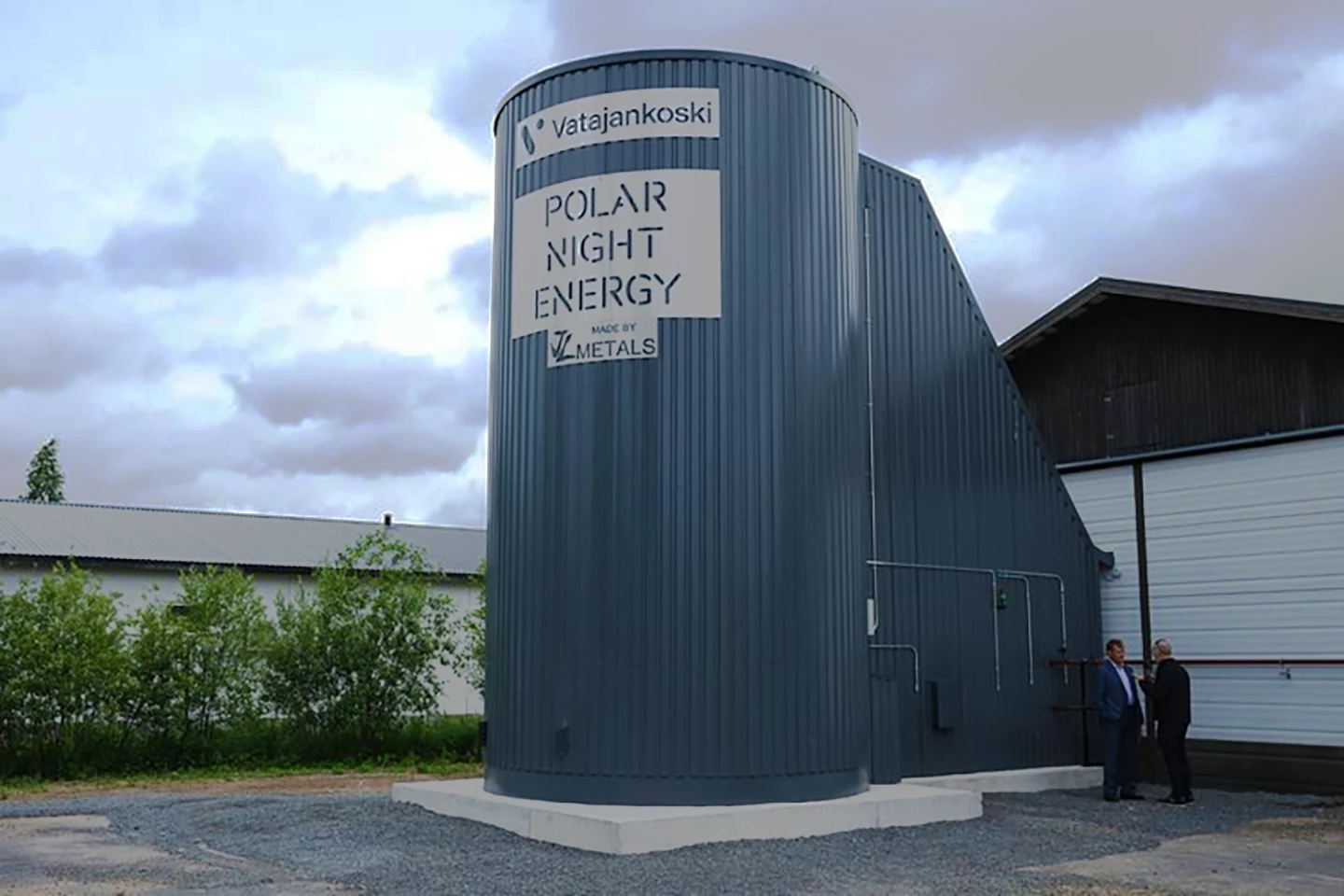
A new type of battery being put to use in Finland is exploring the potential of sand as an energy storage medium
Wind and solar power are intermittent, generating power when it's available rather than when it's needed, so the green energy transition will require huge amounts of energy storage. This could end up taking many forms, from conventional lithium-based "big battery" installations, to flow batteries, silicon phase-change batteries, molten salt batteries, iron-air batteries, gravity batteries, carbon dioxide expansion batteries, and other more unusual ideas like buoyancy batteries.
Each has its own advantages and disadvantages in terms of efficiency, size, location, installation costs, operating costs, input and output power ratings, longevity and how long it can store the energy for. That's good, since different solutions will fill different needs – some backing up the power grid during instantaneous demand spikes, others smoothing out the mismatched daily curves between demand and renewable supply, and others still helping to address seasonal supply drops, like when solar drops off through the winter.
Here's another for the pile, coming out of Finland. Polar Night Energy says it's just opened its first commercial sand battery at the premises of "new energy" company Vatajankoski, a few hours out of Helsinki.
(Excerpt) Read more at newatlas.com ...
The USA already has a abandoned coal mine putting out lots of heat… the burning coal mine in Centralia, Pennsylvania.
So could excess heat from nuclear power stations and you would get electricity as a bonus.
“A new type of battery being put to use in Finland is exploring the potential of sand as an energy storage medium”
I’ll bet China is now trying to use eminent domain to claim they own all the worlds sand.
Unfortunately, along with some really bad pollutants: oxides of nitrogen and sulfur, particulates and heavy metals. Those are a major threats to the environment, not CO2.
They would need to be constantly pumped. In our neck of the woods if the pump stops, anything 3 feet or above freezes solid.
I would think you would need some fort of antifreeze running.
It’s just a dream that everyone north of the Mason Dixon line has to eliminate snow shoveling, lol.

Its not a battery.
Its a heat storage medium.
It has existed since the invention of fire.
We store excess solar daytime energy in hot water.
The only thing renewable about renewables is how often they have to be replaced. All of it is expendable and difficult waste to deal with. It is a pipe dream insufficient to our needs.
Thank you for standing up for basic technology literacy. The sand based heat storage system is the thermal analog of a capacitor, and it is definitely not a battery.
The fire you mentioned is a better analog to a battery...
However low temperature energy distribution and storage is still a useful technology. Waste heat can be re-used and thermal storage by mass is a good way to simplify heating systems. That's one good reason to build a large stone structure around fires used for heating. Things formerly known as fireplaces.
Sand (silica) has a depressingly low specific heat, which means you need an awful lot of sand to store an appreciable amount of energy.
"When this sand is heated up, using a simple heat exchanger buried in the middle of it, this device is capable of storing an impressive 8 megawatt-hours of energy, at a nominal power rating of 100 kW, with the sand heated to somewhere around 500-600 degrees Celsius (932-1112 °F)."
Seems to me that would be enough heat to generate enough steam to run a high pressure steam generator.
From the article: "When this sand is heated up, using a simple heat ex-changer buried in the middle of it, this device is capable of storing an impressive 8 megawatt-hours of energy, at a nominal power rating of 100 kW, with the sand heated to somewhere around 500-600 degrees Celsius (932-1112 °F).
I want one in my driveway.
You’ll never have to shovel snow from that driveway again.
Ok, dry steam much more useful. Can be used many ways, including to turn a turbine.
I am thinking of 1200 psi steam from a 950 °F boiler for running a steam-powered turbine capable of running an 100 kW electric generator.
If I understand the article windmills and solar cells will heat this sand to 1,000F. I assume that the electricity produced would heat the sand by resistance heating. Basic laws of thermodynamics say that when energy is transferred from one state to another there is a loss of energy due to entropy. Consider using windmills. The windmill itself is probably only 30% efficient converting the wind energy to electrical energy. That electrical energy heating the sand by resistance heating...another loss of energy. The sand heating the water to make steam..more energy lost. Finally the turbines that convert mechanical energy to electricity..more energy lost. In my opinion the efficiency of this sand storage would be such that it isn’t practical.
In northern climates well over half of all energy consumption is used in heating buildings. Not having to go through two exchanges of energy makes this very efficient in storing and releasing heat. Joule heating is 99% efficient in turning electricity into heat. The larger the volume the less the surface area to mass ratio it scales at the cube root of volume. Sand is also very dense so you get another boost in efficiency. Storing cheap off peak or surplus wind or solar electricity in the form of dense packed heat makes a lot of sense in cold climates. District heating is also very efficient and can send heat upwards of 100km away with less than 10% losses. The Chinese are using AP1100 reactors to build out city sized District heating zones in their northern provinces. They plan over 150 of them.
I wonder what the storage temperature range is for it to provide usefull work. Or do you add a secondary coal or gas power source to stabilize the temerature output for steam going to the turbines?
We have here in Florida companies that make such a system for home COOLING and HEATING.
PVC pipes are buried about 4 or more feet underground in a grid pattern, and a pump moves water through the CLOSED system to a heat exchanger in the house............
Disclaimer: Opinions posted on Free Republic are those of the individual posters and do not necessarily represent the opinion of Free Republic or its management. All materials posted herein are protected by copyright law and the exemption for fair use of copyrighted works.