Posted on 04/25/2022 3:15:22 PM PDT by MtnClimber
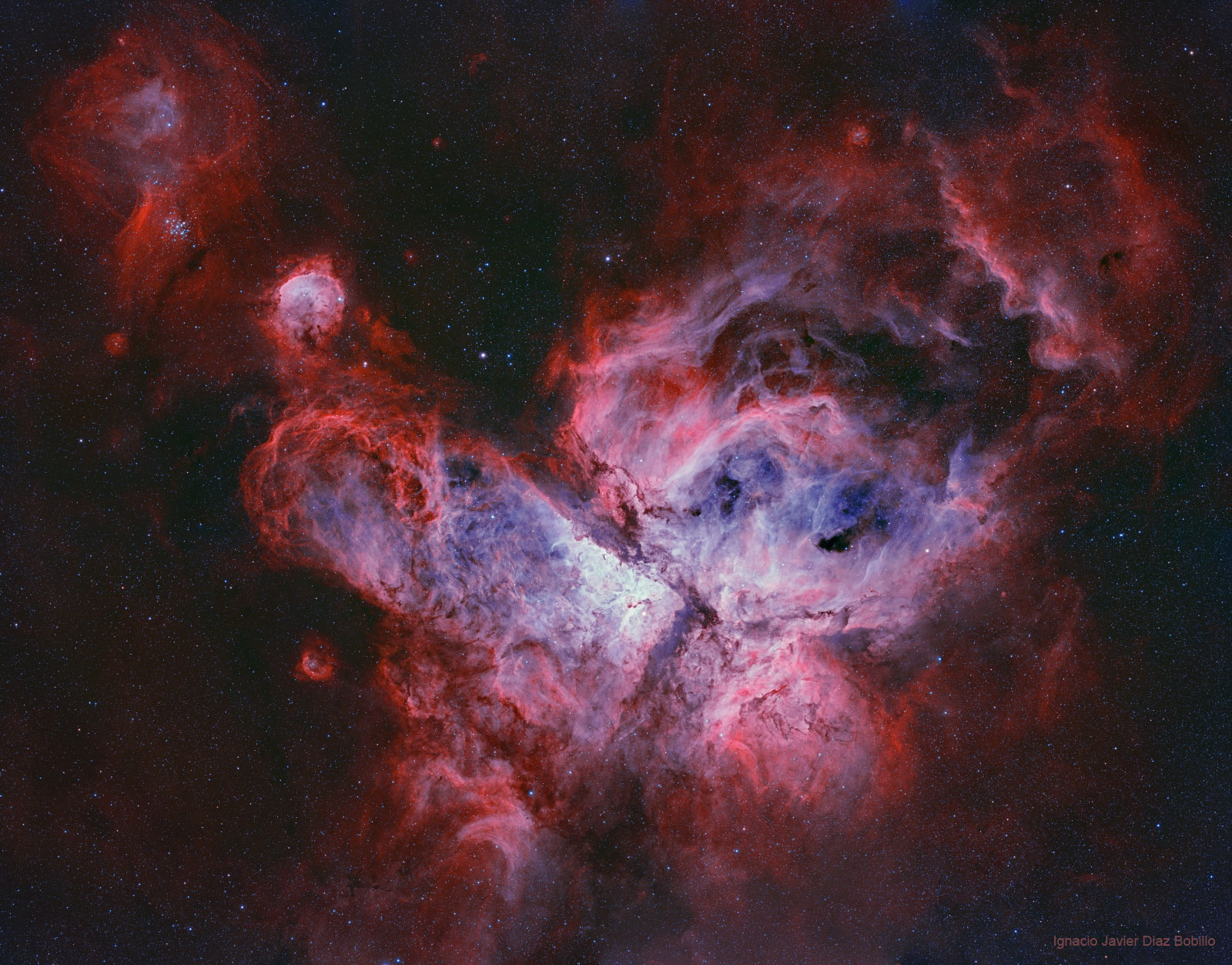
Explanation: In one of the brightest parts of Milky Way lies a nebula where some of the oddest things occur. NGC 3372, known as the Great Nebula in Carina, is home to massive stars and changing nebulas. The Keyhole Nebula (NGC 3324), the bright structure just below the image center, houses several of these massive stars. The entire Carina Nebula, captured here, spans over 300 light years and lies about 7,500 light-years away in the constellation of Carina. Eta Carinae, the most energetic star in the nebula, was one of the brightest stars in the sky in the 1830s, but then faded dramatically. While Eta Carinae itself maybe on the verge of a supernova explosion, X-ray images indicate that much of the Great Nebula in Carina has been a veritable supernova factory.
(Excerpt) Read more at apod.nasa.gov ...
For more detail go to the link and click on the image for a high definition image. You can then move the magnifying glass cursor then click to zoom in and click again to zoom out. When zoomed in you can scan by moving the side bars on the bottom and right side of the image.
Great image of Carina, NGC 3372.
M42 Orion Nebula

Nice photo. How many images were stacked to create it?
Gotta love these false color photos.
It’s like taking your moms old black and white photo and giving her pink, purple and blue hair.
Our view is much more mundane.
Nice photo. How many images were stacked to create it?
137 x 1 minute
I actually prefer astronomical images done without using color filters, because they include the grey tones which are more natural and life-like. The in-you-face color of the Hubble images and so forth contrast too much against the dark of space, and look cartoonish.
That's because cameras many times more sensitive than the human eye and are able to see things we can't.
Which light filters are you referring to? Internally in the camera or in the optical train?
Nope.
It is because the presenters select the false colors to use to present the data to us to get the most ‘striking’ image.
Btw, no external color filters were used during that imaging.
Nope.
Okie-Dokie
Btw, when the data was processed, no colors were added or selected by me. However, when processing the data I did add those refraction spikes to some of the stars. Some like them, some don’t. I only did it because it looked nice in this particular image.
I don’t do astrophotography at all, but I know a lot of the pictures you see these days use color filters at some point in the light path to take 3 exposures, and then combine them. It’s actually getting harder to see the ones that don’t, but I’ve always liked them better.
I understand and you’re correct, some totally over process and add colors their images. I hate doing that. I like to keep it as real as possible.
I can assure you no color filters were added to the optical train by me. All the raw images were basically calibrated, aligned and stacked with no added color by me.
Btw, thanks!
Well, you probably know all this, but color filters don’t really add any color. Humans have 3 color receptors for the red, green, and blue parts of the spectrum. Filters capture this light, but restrict some light from the wavelengths in between these. So the colors are true, they’re just missing some grey tones which make it look more natural.
Disclaimer: Opinions posted on Free Republic are those of the individual posters and do not necessarily represent the opinion of Free Republic or its management. All materials posted herein are protected by copyright law and the exemption for fair use of copyrighted works.