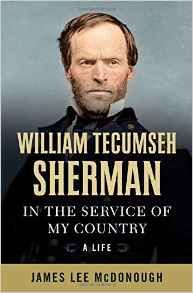
Continued from March 30 (reply #19). On this date William Tecumseh Sherman wrote to his brother, Rep. John Sherman, that “this year’s presidential may be a dangerous one; may actually result in civil war. . . “ (second paragraph of the following excerpt.)

James Lee McDonough, William Tecumseh Sherman: In the Service of My Country, A Life
We should notice once again: the reason the Democrat party split-up in Charleston -- it was related to what Catton calls Senator Jefferson Davis'
"Southern rights code" and what Sherman biographer McDonough calls
"a Federal slave code in all US territory".
- Not tariffs
- Not "money flows from Europe"
- Not "northeastern power brokers"
- Not the 1817 Navigation Act
- Not Southerners paying for Federal government.
The issue was slavery in the territories, and by extension, the threat to slavery everywhere from Northern Black Republican abolitionists.
Senator Davis' words to the Senate & Catton's commentary:
Davis: " 'The power of resistance [note that word]...consists in no small degree, in meeting the enemy at the outer gate...
We of the South have made no war upon the North.
We have asked no discrimination in our favor.
We claim but to have the Constitution fairly and equally administered.'Catton: Firmly entrenched at the outer gate, Senator Davis would await the assault, which at the moment was verbal.
He was fighting over words.
If it could be said plainly, flatly, and irrevocably that the United states government must under no circumstances interfere with slavery, all might be well, but the drift of the times, unhappily, was against it.
The desperate intransigence of Southern leaders in this spring of 1860 carried an anxiety that their cause might be doomed no matte4r what anyone said.
The intricate, fragile, and cherished society based on slavery could not endure very much longer, simploy because the day in which it might live was coming to a close and nobody could stave off the sunset.
Senator Davis would try, stalking into the shadows with infinite integrity and fixity of vision..."
Slavery was the issue, the only issue powerful enough to split the Democrats' party and eventually the nation.
In the end, the Senate will pass Senator Davis' "Southern Rights Code" but it will go nowhere until eventually modified by Ohio Representative Thomas Corwin, hoping then to appease Border State slaveholders. ![]()
It must have been very discouraging for Sherman to see war coming, which will take him from the school he built up, knowing there wasn't a darn thing he could do about it.
After Charleston and the Southern demand for a slave code binding on the Territories there wasn't a darn thing anyone could do about it.

