
Grand Central Terminal’s last incandescent light bulbs are being replaced using energy-efficient compact fluorescent bulbs. An electrician, Richard Catterson, tested a new bulb installed on a Beaux-Arts chandelier.
Posted on 04/28/2009 6:59:32 PM PDT by Daffynition
How many people does it take to change every light bulb in Grand Central Terminal?
Six, it turns out. And it’s a full-time job.
On Tuesday, those wiremen — their official title — unscrewed the last remaining incandescent bulbs in the building, replacing them with compact fluorescent bulbs and completing the greening of the lighting system at the bustling station.
While the wiremen worked, photographers snapped pictures, and officials applauded the efforts, reminiscing about the days when both the station and the light bulb were young.
The bulbs in question were on one of the 10 huge Beaux-Arts chandeliers in the main lobby. Adorned with gold detail and banded with 110 bulbs, the 96-year-old globe-shaped chandeliers hang above the Main Concourse balconies like luminescent Fabergé eggs.
Fluorescent bulbs last longer and use less energy, saving money and helping advance the city’s environmental goals.
They were first installed in the terminal in the mid-1980s, with tube-shaped fluorescents hung on the train platforms largely to brighten them, said Marjorie S. Anders, a spokeswoman for the Metro-North Railroad. About seven years ago, compact fluorescents, which can be screwed into standard light sockets, were installed in the cornice that rings the ceiling of the Main Concourse, 75 feet above the ground, largely because frequently replacing the old bulbs was a risky and labor-intensive chore.
And as the technology and aesthetics improved — the bulbs became less distinguishable and could be dimmed — the bulbs were added everywhere from the departure board to the chandeliers.
“If you see an incandescent bulb in this place, call me,” said Steve Stroh, the terminal’s electrical and mechanical superintendent, who has overseen the replacement effort. “We’ll have it changed, because we may have missed one or two.”
(Excerpt) Read more at cityroom.blogs.nytimes.com ...
Grand Central Terminal’s last incandescent light bulbs are being replaced using energy-efficient compact fluorescent bulbs. An electrician, Richard Catterson, tested a new bulb installed on a Beaux-Arts chandelier.
Fluorescent light bulbs contain a very small amount of mercury sealed within the glass tubing. EPA recommends the following clean-up and disposal below. Please also read the information on this page about what never to do with a mercury spill.
Before Clean-up: Air Out the Room
Clean-Up Steps for Hard Surfaces
Clean-up Steps for Carpeting or Rug
Clean-up Steps for Clothing, Bedding and Other Soft Materials
Disposal of Clean-up Materials
Future Cleaning of Carpeting or Rug: Air Out the Room During and After Vacuuming
Have everyone else leave the area; don't let anyone walk through the mercury on their way out. Make sure all pets are removed from the area. Open all windows and doors to the outside; shut all doors to other parts of the house.
DO NOT allow children to help you clean up the spill.
Mercury can be cleaned up easily from the following surfaces: wood, linoleum, tile and any similarly smooth surfaces.
If a spill occurs on carpet, curtains, upholstery or other absorbent surfaces, these contaminated items should be thrown away in accordance with the disposal means outlined below. Only cut and remove the affected portion of the contaminated carpet for disposal.
1. 4-5 ziplock-type bags
2. trash bags (2 to 6 mils thick)
3. rubber, nitrile or latex gloves
4. paper towels
5. cardboard or squeegee
6. eyedropper
7. duct tape, or shaving cream and small paint brush
8. flashlight
9. powdered sulfur (optional)
Put on rubber, nitrile or latex gloves.
If there are any broken pieces of glass or sharp objects, pick them up with care. Place all broken objects on a paper towel. Fold the paper towel and place in a zip lock bag. Secure the bag and label it as directed by your local health or fire department.
Locate visible mercury beads. Use a squeegee or cardboard to gather mercury beads. Use slow sweeping motions to keep mercury from becoming uncontrollable. Take a flashlight, hold it at a low angle close to the floor in a darkened room and look for additional glistening beads of mercury that may be sticking to the surface or in small cracked areas of the surface. Note: Mercury can move surprising distances on hard-flat surfaces, so be sure to inspect the entire room when "searching."
Use the eyedropper to collect or draw up the mercury beads. Slowly and carefully squeeze mercury onto a damp paper towel. Place the paper towel in a zip lock bag and secure. Make sure to label the bag as directed by your local health or fire department.
After you remove larger beads, put shaving cream on top of small paint brush and gently "dot" the affected area to pick up smaller hard-to-see beads. Alternatively, use duct tape to collect smaller hard-to-see beads. Place the paint brush or duct tape in a zip lock bag and secure. Make sure to label the bag as directed by your local health or fire department.
OPTIONAL STEP: It is OPTIONAL to use commercially available powdered sulfur to absorb the beads that are too small to see. The sulfur does two things: (1) it makes the mercury easier to see since there may be a color change from yellow to brown and (2) it binds the mercury so that it can be easily removed and suppresses the vapor of any missing mercury. Where to get commercialized sulfur? It may be supplied as mercury vapor absorbent in mercury spill kits, which can be purchased from laboratory, chemical supply and hazardous materials response supply manufacturers. Note: Powdered sulfur may stain fabrics a dark color. When using powdered sulfur, do not breathe in the powder as it can be moderately toxic. Additionally, users should read and understand product information before use.
If you choose not to use this option, you may want to request the services of a contractor who has monitoring equipment to screen for mercury vapors. Consult your local environmental or health agency to inquire about contractors in your area. Place all materials used with the cleanup, including gloves, in a trash bag. Place all mercury beads and objects into the trash bag. Secure trash bag and label it as directed by your local health or fire department.
Contact your local health department, municipal waste authority or your local fire department for proper disposal in accordance with local, state and federal laws.
Remember to keep the area well ventilated to the outside (i.e., windows open and fans in exterior windows running) for at least 24 hours after your successful cleanup. Continue to keep pets and children out of cleanup area. If sickness occurs, seek medical attention immediately. View information on health effects related to exposures to vapors from metallic mercury. For additional information on health effects, the Agency for Toxic Substances and Disease Registry (ATSDR) provides a Mercury Fact Sheet  that also presents information on health effects related to exposures to vapors from metallic mercury.
Recommendation: If there are young children or pregnant women in the house, seek additional advice from your local or state health or state environmental agency.
“Fluorescent bulbs last longer and use less energy”
Oh yes. And so they said about 1.6 gal toilets using less water.
I’ve heard this is really overblown and there is little danger from a broken bulb.
With all those bulbs, it’s only a matter of time....
It’s such a shame that Metro North would rather be green, to the extent that they’re willing to put so many people at risk of exposure to toxic substances.
Just hope nothing ever falls on *me*! LOL!
BTW, I thought I heard Glenn say that these bulbs are more expensive, and don’t last as long as incandescents. Didn’t he say that the technology wasn’t advanced enough to warrant the use of these green bulbs? I heard him read off that list you posted.
It’s scary. These whackos are going to be the death of us.
PANIC! Everyone PANIC!
Not sure about your question..I don't really remember what he said in regards to the cost and life expectancy of CFLs.
PANDEMIC! PANDEMIC! PANDEMIC!
LOL!
Thanks for the link. I will check this out.
I heard him discuss the bulbs on his radio show. I thought of the duct tape as being a good idea for picking up any toxic powder, such as spilled Draino.
BTW, when we were kids, a broken thermometer meant a few days of playing with balls of liquid metal. Lots of fun! And I’m glad to report that I’m still alive, and my liver and everything is still okay. :-)
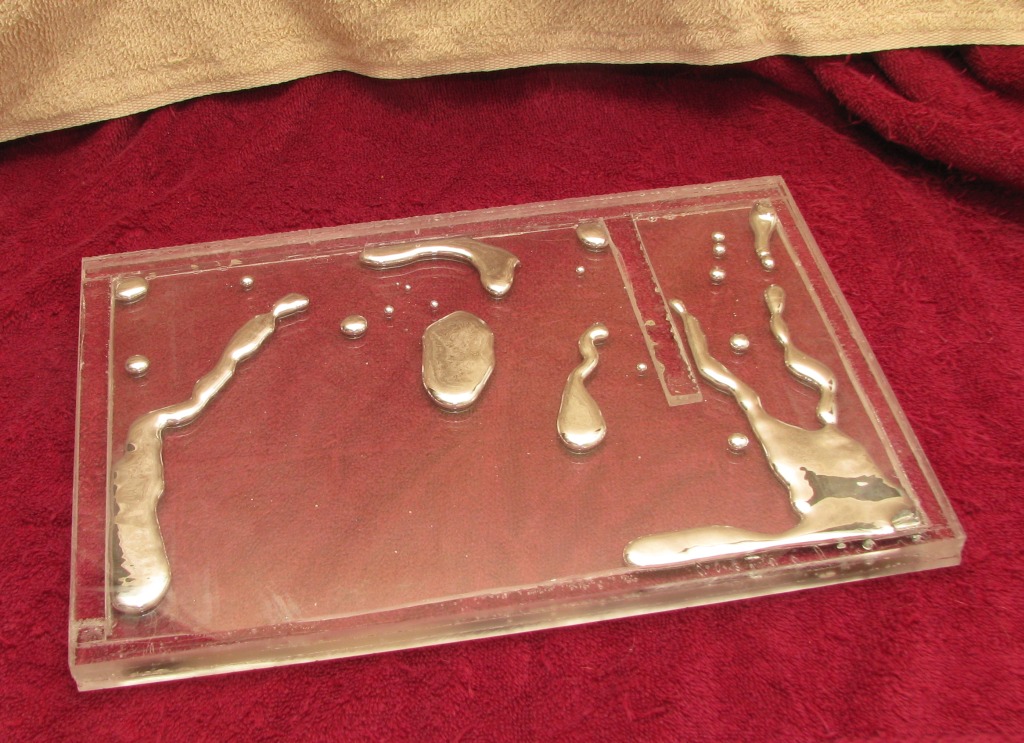
That’s beautiful! I’d get a kick out of seeing the little balls join up with each other, just like water drops. And how could we possibly explain to todays kids how it feels to roll around some mercury in the hollow of a hand.
Well, I gotta check out if I see a difference in the light output in Grand Central. Past a certain time they dim them in the Concourse. I suppose they replaced the bulbs in the roof over the entrance at Vanderbilt and 42nd.


And how the shafts of light are no longer visible except through these precious photos b/c of the neighboring skyscrapers.


Never mind the building. People used to care how they looked. Today’s people aren’t worthy of that beauty.
How many people does it take to change every light bulb in Grand Central Terminal? Six, it turns out. And it's a full-time job. On Tuesday, those wiremen -- their official title -- unscrewed the last remaining incandescent bulbs in the building, replacing them with compact fluorescent bulbs... The bulbs in question were on one of the 10 huge Beaux-Arts chandeliers in the main lobby. Adorned with gold detail and banded with 110 bulbs, the 96-year-old globe-shaped chandeliers hang above the Main Concourse balconies like luminescent Faberge eggs.
Disclaimer: Opinions posted on Free Republic are those of the individual posters and do not necessarily represent the opinion of Free Republic or its management. All materials posted herein are protected by copyright law and the exemption for fair use of copyrighted works.