Free Republic
Browse · Search
General/Chat
Topics · Post Article

Skip to comments.

pureSilicon Debuts World's First 1TB 2.5-Inch SSD -- Most Compact SSD per GB
pureSilicon ^ | Jan 08, 2009 21:58 ET | Tim Cox

Posted on 03/04/2009 2:46:22 PM PST by Ernest_at_the_Beach

First Solid-State Drive to Crack 1TB Also Offers High Performance, Low Energy Consumption; Designed for Server, Networking, Datacenter, Supercomputing, and Professional Media Applications

LAS VEGAS, NV--(Marketwire - January 8, 2009) - CES booth 72440/Sands -- pureSilicon Inc. is demonstrating the highest-density SSD available today: the 1TB Nitro Series. This represents a major advance for the storage industry since it combines maximum density with high performance and low power demand. Four of these drives deliver 4TB in the same space as a standard 3.5-inch HDD, so server footprint requirements and energy consumption in data-intensive applications can be considerably reduced.

The 1TB Nitro SSD is the most compact SSD per gigabyte: 15.40GB per cubic centimeter in a 2.5-inch form-factor -- at least three times greater than any other SSD on the market. This high density in a small form factor has been achieved through innovative engineering techniques coupled with advanced industrial design that yields an exceptionally thin enclosure.

This Nitro line of high-performance solid-state drives is designed for applications where data throughput and power consumption are paramount: server, networking, datacenter, supercomputing, and professional media. These applications require fast transfer speeds and involve the storage of massive amounts of data. pureSilicon has benchmarked these drives at speeds approaching the maximum bus speed of SATA II (300 MB/s).

(Excerpt) Read more at marketwire.com ...


TOPICS: Business/Economy; Computers/Internet
KEYWORDS: hitech
Navigation: use the links below to view more comments.
first 1-2021-23 next last

1 posted on 03/04/2009 2:46:24 PM PST by Ernest_at_the_Beach
[ Post Reply | Private Reply | View Replies]

To: ShadowAce
ASUS is going to use this in a new High end Laptop:

Asus soups up Lamborghini laptop with 1TB SSD

******************EXCERPT********************

Lamborghini VX5 also sports a Blu-ray drive

March 3, 2009 (Computerworld) Asustek Computer Inc. unveiled a new laptop at the CeBIT show in Hannover, Germany, today that comes equipped with a 1TB solid-state disk (SSD) drive, a 16-in. high-definition display, a Blu-ray drive and leather-covered panel rests.

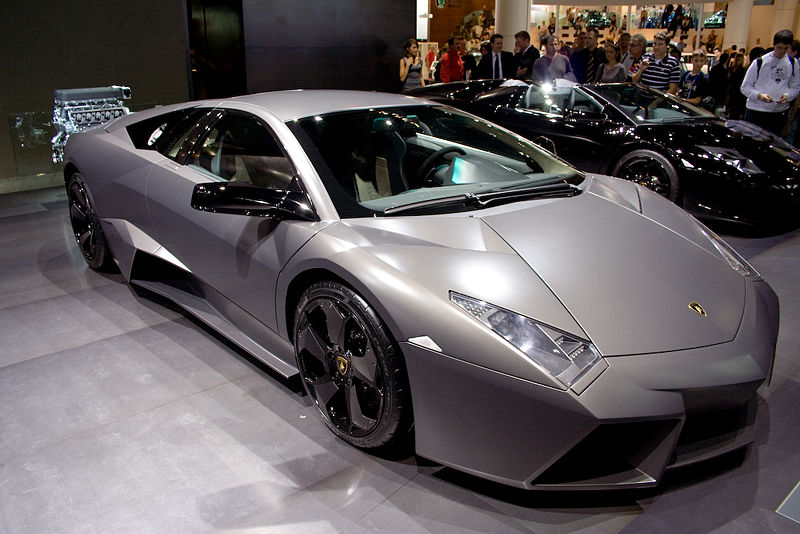
The Asus Lamborghini VX5 laptop comes with an LCD cover designed to remind users of the Lamborghini Reventon sports car's aluminum-alloy fuselage.

Its piano-painted mirror surface is also supposed to mimic the car's finish. The notebook comes with a 1TB SSD from pureSilicon Inc., which launched the compact flash-memory drive in January.

2 posted on 03/04/2009 2:48:48 PM PST by Ernest_at_the_Beach (What happened to my IRAs)
[ Post Reply | Private Reply | To 1 | View Replies]


3 posted on 03/04/2009 2:49:29 PM PST by Ernest_at_the_Beach (What happened to my IRAs)
[ Post Reply | Private Reply | To 2 | View Replies]

To: Ernest_at_the_Beach

Yawn. Let me know when the bus bandwidth reaches 1GB. Then we’ll talk. Same with GPU’s; the BW needs to be faster. Fiber-optic anyone?


4 posted on 03/04/2009 2:52:53 PM PST by jeffc (They're coming to take me away! Ha-ha, hey-hey, ho-ho!)
[ Post Reply | Private Reply | To 1 | View Replies]

To: Ernest_at_the_Beach

I remember when a Gig took an entire computer room. I now have more computing power and storage in my PDA than on my 1st Mainframe — 1 MB of of virtual core memory and we were happy to have it!

And we had to push the bits uphill — to AND from the terminals! ASCII? I barely knew ye!! We had to use EBCDIC — and we liked it! COBOL that had to do their own memory segmentation? You betcha. Hot chick graphics? Character based — and we liked it!

*grumble* spoilt whippersnappers.


5 posted on 03/04/2009 2:53:29 PM PST by freedumb2003 (Communism comes to America: 1/20/2009. Keep your powder dry, folks.)
[ Post Reply | Private Reply | To 1 | View Replies]

To: rdb3; Calvinist_Dark_Lord; GodGunsandGuts; CyberCowboy777; Salo; Bobsat; JosephW; ...

6 posted on 03/04/2009 3:00:08 PM PST by ShadowAce (Linux -- The Ultimate Windows Service Pack)
[ Post Reply | Private Reply | To 1 | View Replies]

To: freedumb2003
Funny, thanks.

I remember when a 2314 was the best thing that had ever happened to me.

7 posted on 03/04/2009 3:04:38 PM PST by Proud_texan (Scare people enough and they'll do anything.)
[ Post Reply | Private Reply | To 5 | View Replies]

To: Proud_texan

>>I remember when a 2314 was the best thing that had ever happened to me.

HOLY CRAP — 2314 DASF??

I was moanin’ about 3350 DDs. Dang, think you could put together an Autocoder “Hello World” program?

I helped an SE debug a paper tape loader using CCW’s one time and I wrote my own memory swapping routines on an S-100, but you were there for the birth of Random Access.

I bow in your general direction and hand my Hollerith Pinball Crown to you.. :)


8 posted on 03/04/2009 3:12:03 PM PST by freedumb2003 (Communism comes to America: 1/20/2009. Keep your powder dry, folks.)
[ Post Reply | Private Reply | To 7 | View Replies]

To: freedumb2003
3350s were the thing! The day the first 3350 rolled in I think I actually drooled, those 2314 were junk and they'd crash right at the end of a big update (I worked in bank DP at the time), etc.

Never got to work with paper tape much other than being around them in a DEC shop for a short period but you'll enjoy this; we were early with ATM machines (offline of course) and they'd create a paper tape of each transaction. We'd collect the tapes, run them through a TI mini-something and that'd print out coupons with MICR encoding. Talk about the bad old days.

You can keep the crown, these days I'm lucky if I can code my name....

9 posted on 03/04/2009 3:20:22 PM PST by Proud_texan (Scare people enough and they'll do anything.)
[ Post Reply | Private Reply | To 8 | View Replies]

To: Proud_texan

>>You can keep the crown, these days I’m lucky if I can code my name.

Nope — I couldn’t write a COBOL-68 segmentation procedure if you put a gun to my head.

Yeah, them 3350’s beat the heck out of the drums and 3330’s. But we was programming on the card-punches (we were poor that way — this rich sites coded on coding forms and had keypunch operators to actually do the card punches).

But I had a friend whose first job was running inside the Truly Old School mainframes and replacing the vacuum tubes when they blew. His first language was, indeed, Autocoder.

We touch back to the prior generation, who touvh back to the origins.

But, in the same way kids today don’t know R&R roots and we did (ask about Buddy Holly and his importance to anyone younger than 45), people today don’t know what built the Internet and modern computing.


10 posted on 03/04/2009 3:27:38 PM PST by freedumb2003 (Communism comes to America: 1/20/2009. Keep your powder dry, folks.)
[ Post Reply | Private Reply | To 9 | View Replies]

To: Proud_texan
I remember the stuff before the 2314...forget the name though...senior moment....
11 posted on 03/04/2009 3:28:04 PM PST by Ernest_at_the_Beach (What happened to my IRAs)
[ Post Reply | Private Reply | To 7 | View Replies]

To: dirtboy
Stuff is changing....related thread:

Seagate ships 1 billionth drive

12 posted on 03/04/2009 3:32:00 PM PST by Ernest_at_the_Beach (What happened to my IRAs)
[ Post Reply | Private Reply | To 1 | View Replies]

To: freedumb2003
Hollerith Pinball Crown

Hey,...I want a shot at that....I remember this:


IBM 1405 Disk Storage

The IBM 1405 Disk Storage of 1960 used improved technology to double the tracks per inch and bits per inch of track -- to achieve a fourfold increase in capacity -- compared to the IBM RAMAC disk file of 1956.

Storage units were available in 25-disk and 50-disk models, for a storage capacity of 10 million and 20 million characters, respectively. Recording density was 220 bits per inch (40 tracks per inch) and the head-to-disk spacing was 650 microinches. The disks rotated at 1800 rpm. Data were read or written at a rate of 17.5K bytes a second.

The 1405 was used in conjunction with the IBM 1410 Data Processing System. Each 1410 was capable of controlling up to five of the 1405s, for a total of 100 million characters. In addition, a single 1405 of either model could be attached to an IBM 1401 Data Processing System. The 1405 was reported to have been used with the "Walnut" information retrieval system of the U.S. Central Intelligence Agency in the 1960s. According to published reports, Walnut was the first mechanized system that could store and search millions of pages of documents.


13 posted on 03/04/2009 3:35:49 PM PST by Ernest_at_the_Beach (What happened to my IRAs)
[ Post Reply | Private Reply | To 8 | View Replies]

To: NormsRevenge; blam; SunkenCiv; Marine_Uncle

fyi


14 posted on 03/04/2009 3:37:04 PM PST by Ernest_at_the_Beach (What happened to my IRAs)
[ Post Reply | Private Reply | To 1 | View Replies]

To: All
Just in case anyone is interested:

20th century disk storage chronology...IBM

********************EXCERPT*************************

IBM 350
IBM 350

  • Model 1 announced September 4, 1956

  • Model 2 announced May 5, 1958

  • Models 3 & 4 announced September 15, 1958

  • Models 11, 12, 13 & 14 announced January 12, 1959

  • All models withdrawn August 18, 1969

The IBM 350 Disk Storage was a major component of the IBM 305 RAMAC (Random Access Memory Accounting) system, introduced in September 1956.

IBM 305 RAMAC
IBM 305 RAMAC

The 305 was a flexible, electronic, general purpose data processing machine that enabled businesses to record transactions as they occurred and concurrently reflect each entry in affected accounts. It maintained records on a real-time basis, provided random access to any record, eliminated peak loads, and could simultaneously produce output by either print or punched cards.

The 305 system consisted of the IBM 305 Processing Unit (containing the magnetic process drum, magnetic core register and electronic logical and arithmetic circuits), the IBM 370 Printer (an 80-position serial-output printer with tape control carriage), the IBM 323 Card Punch (similar to the IBM 523 Gang Summary Punch, providing for 80 columns of output punching), the IBM 380 Console (containing the card feed, typewriter, keyboard and indicator lights and control keys), the IBM 340 Power Supply (supplying power for all components except the motors in the 350 disk storage unit), a utility table adjacent to the console, and the IBM 350 Disk Storage Unit.

The 350 Disk Storage Unit consisted of the magnetic disk memory unit with its access mechanism, the electronic and pneumatic controls for the access mechanism, and a small air compressor. Assembled with covers, the 350 was 60 inches long, 68 inches high and 29 inches deep. It was configured with 50 magnetic disks containing 50,000 sectors, each of which held 100 alphanumeric characters, for a capacity of 5 million characters.

Disks rotated at 1,200 rpm, tracks (20 to the inch) were recorded at up to 100 bits per inch, and typical head-to-disk spacing was 800 microinches. The execution of a "seek" instruction positioned a read-write head to the track that contained the desired sector and selected the sector for a later read or write operation. Seek time averaged about 600 milliseconds.

In 1958, the 305 system was enhanced to permit an optional additional 350 Disk Storage Unit, thereby doubling storage capacity; and an additional access arm for each 350.

The dual arms used to record or read data from the 350 disk storage unit.

With storage capacities of 5 million and 10 million digits, and the capability to be installed either singly or in pairs, the 350 provided the 305 system with storage capacities of 5, 10, 15 or 20 million characters. More than 1,000 305s were built before production ended in 1961. The 305 RAMAC was one of the last vacuum tube systems designed in IBM.


15 posted on 03/04/2009 3:42:11 PM PST by Ernest_at_the_Beach (What happened to my IRAs)
[ Post Reply | Private Reply | To 14 | View Replies]

To: Ernest_at_the_Beach
Seagate said it's shipped the equivalent of 79 million terabytes of storage since the company made its first hard drive in 1979.

So, basically, it can now make a single drive that holds over one percent of its total shipped storage as of the last article in 2008. Amazing.

16 posted on 03/04/2009 3:42:44 PM PST by dirtboy
[ Post Reply | Private Reply | To 12 | View Replies]

To: Ernest_at_the_Beach

Remeber the 407 Accounting Machines, with those big plugboards full of jumpers?


17 posted on 03/04/2009 3:48:56 PM PST by tacticalogic ("Oh bother!" said Pooh, as he chambered his last round.)
[ Post Reply | Private Reply | To 11 | View Replies]

To: Ernest_at_the_Beach
Seagate said it's shipped the equivalent of 79 million

Oops, misread that. That's well up into Petabyte territory. What comes after a Petabyte?

18 posted on 03/04/2009 3:51:07 PM PST by dirtboy
[ Post Reply | Private Reply | To 16 | View Replies]

To: Ernest_at_the_Beach; martin_fierro
Wow, thanks Ernest!
ASUS is going to use this in a new High end Laptop

19 posted on 03/04/2009 4:18:44 PM PST by SunkenCiv (https://secure.freerepublic.com/donate/____________________ Profile updated Monday, January 12, 2009)
[ Post Reply | Private Reply | To 2 | View Replies]

To: ShadowAce

That’d make one helluva SD card.


20 posted on 03/04/2009 6:47:37 PM PST by JoJo Gunn (In this dance of Life, I have two left feet.)
[ Post Reply | Private Reply | To 6 | View Replies]


Navigation: use the links below to view more comments.
first 1-2021-23 next last

Disclaimer: Opinions posted on Free Republic are those of the individual posters and do not necessarily represent the opinion of Free Republic or its management. All materials posted herein are protected by copyright law and the exemption for fair use of copyrighted works.

Free Republic
Browse · Search
General/Chat
Topics · Post Article

FreeRepublic, LLC, PO BOX 9771, FRESNO, CA 93794
FreeRepublic.com is powered by software copyright 2000-2008 John Robinson