Posted on 06/30/2023 7:03:28 AM PDT by Kaiser8408a
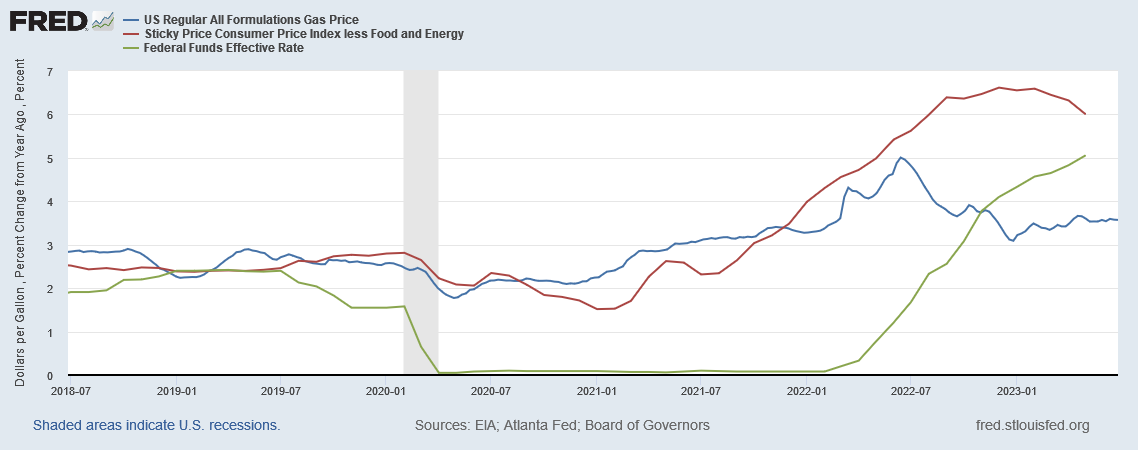
The film “The Core” was a silly film, but core inflation in the US is a serious problem for the middle class and low-wage workers. It remains elevated despite Treasury Secretary Janet “The Marxist Gnome” Yellen saying it was “transitory.” Looks pretty permanent to me!
The Federal Reserve’s preferred measures of US inflation cooled (slightly) in May and consumer spending stagnated, suggesting the economy’s main engine is starting to lose some momentum.
The personal consumption expenditures price index rose 0.1% in May, Commerce Department figures showed Friday. From a year ago, the measure eased to the slowest pace in more than two years.
Consumer spending, adjusted for prices, was little changed after a downwardly revised 0.2% gain in April. From February through May, household spending has essentially stalled after an early-year surge. Spending on merchandise dropped, while outlays for services increased. .
Indicator Actual Estimate PCE price index (MoM) +0.1% +0.1% Core PCE price index (MoM) +0.3% +0.3% PCE price index (YoY) +3.8% +3.8% Core PCE price index (YoY) +4.6% +4.7% Real consumer spending (MoM) 0.0% +0.1% Under the hood of the government report, a key metric flagged by Fed Chair Jerome Powell showed a welcome slowdown. Services inflation excluding housing and energy services increased 0.2% in May from a month earlier, the smallest advance since July of last year, according to Bloomberg calculations. The figure was up 4.5% from a year ago.
The Taylor Rule now suggests a target rate of 10%. We are just halfway to target!
Meanwhile, Yellen Plans July China Trip, While US Preps Investment Curbs. Trying to convince China that the US won’t default on its $32 TRILLION and growing debt?
(Excerpt) Read more at confoundedinterest.net ...
I don’t know what deal Yellen could possibly be negotiating.
It’s reasonable to suppose that if the Taylor Rule shows interest rates should be raised, you should raise interest rates, BUT
1. The Taylor Rule is an absolute complete absurd joke when it comes to suggesting the magnitude of those rate increases. Doing so is like finding out your turkey is still cold inside with a minute left to when it’s supposed to be ready, so setting your oven to 3,500 degrees.
2. Even if you were adopt a more moderate policy of gradually increasing interest rates, the Taylor rule fails to recognize that inflation is a massively trailing economic indicator. So let’s say you need to get to Gramma’s house for Thanksgiving but it’s 12:00 and you’re 600 miles away, so now the Taylor rule is saying you need to drive 36,000 miles an hour, but now you realize that’s kinda absurd, so you’re only going to drive 6,000 miles an hour and check on your progress hourly. Still stupid as all hell.
3. The people whose economic behavior we need to dampen aren’t quickly affected by the Taylor rule. With quantitative easing and fixed-rate contracts and all that, they’re much slower to be harmed than small businesses and especially adjustable-rate mortgage. And wage earners are the first to lose their jobs. So before we can think of complying with the Taylor rule, we have to make a ton of reforms WAY bigger than interest rate setting. And with our current tax policies, the Taylor recession would form a vicious cycle. We have to
(a) prohibit quantitative easing,
(b) effectively and permanently end immigration of low-skilled workers,
(c) prohibit adjustable-rate mortgages, including locking current ARMs to their current interest rate and
(d) find some way of extending that same sort of relief to farmers and small businessmen.
(e) end the five-year write-downs of business losses for corporations.
Meant to say dinner is at 12 and it’s 11:59.
Disclaimer: Opinions posted on Free Republic are those of the individual posters and do not necessarily represent the opinion of Free Republic or its management. All materials posted herein are protected by copyright law and the exemption for fair use of copyrighted works.