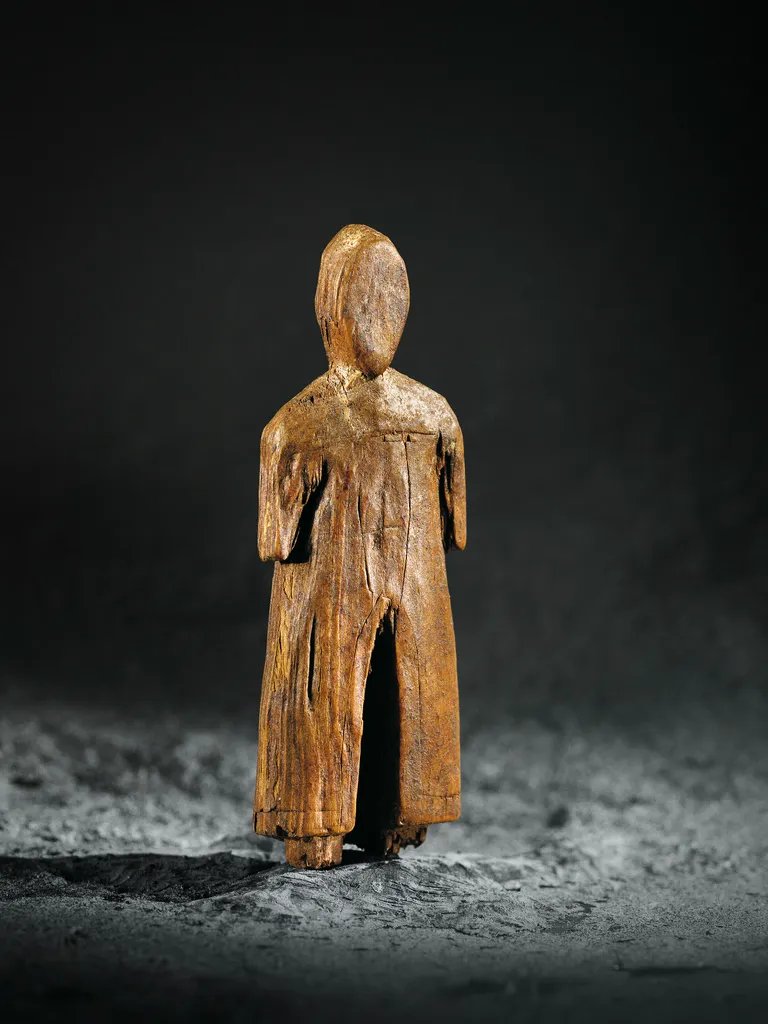
An Inuit carving of a European, dated to around AD 1350 — the earliest depiction of a European in the Western Hemisphere.
An Inuit carving of a European, dated to around AD 1350 — the earliest depiction of a European in the Western Hemisphere.
Inuit kind cool ping.
Ya prob already have in inventory.
Somebody made a doll for their kid and someone gets paid mega bucks to tell us what it means so they can change history! lol
So lifelike, the eyes followed someone out the door.
But, the emphasis, the framing, is a put down on Columbus.
We all know that the vikings visited all over the place. That is how they got the name. We all know that they tried to settle some areas. This is not news.
But, nonetheless, the MSM simply MUST make sure in every way possible that you are told that Columbus is relegated to 2nd place, at best.
Where are the Italian/Spanish pitchforks?
White Scots, Danes and Norwegians should start calling themselves “First Peoples” in Canada.
“unique carving represents a person wearing European clothing and a cross on their chest.”
Whoa whoa whoa wait....I thought we can’t assume anything by the way people dress?
(AND BTW, I can’t tell about any cross.)
Is the carving 1350 or is just the wood?
Maybe a more modern Intuit found a piece of old driftwood to carve on.
It’s Columbus’s janitor!
I think they discovered Mr. Bill.
One presumes they came across the top of Canada just before the Little Ice Age.
Spitting image of my Swedish grandfather.
Thanks!
What that nose, mouth, eyes and ears, you can clearly see that’s a northern European depiction.
Are they sure it isn’t a fertility goddess ? /s
LOL - Obviously a Norwegian. 😊
Wow!
This lends some credibility to the(Norwegian) “Kensington Runestone” found in the late 1800s in Kensington, near Alexandria Minnesota. It was found under and entwined in the roots of an old apple tree that had died, and fallen over. It also had some ancient runes inscribed on it that were not in use for centuries.
The runestone was given little credibility and was considered a fake as it was found in a Norwegian community that was only several decades old. Critics said that any early visitors would clearly never have known that Norwegians would eventually settle there and understand what the runes were.