Grizz spotted 20 miles east of here a couple weeks ago. They are expanding their range.
Posted on 10/02/2026 9:43:51 AM PDT by ProtectOurFreedom
What to Know: Early snow, icy trails, and vanishing daylight make autumn one of the trickiest times in the backcountry. After four tragic hiker deaths in Washington in a single week, search and rescue volunteers share how to navigate fall’s hidden hazards.
Neil Gehring, 26, went missing during an overnight backpacking trip in Olympic National Park. He set out on August 31 for a two-day traverse from Boulder Lake to Appleton Pass, starting and ending at the Madison Falls Trailhead. He would never return home.
Gehring was found dead on September 13 on the northwest slope of 6,000-foot Mount Appleton.
Doug McCall, president of Seattle Mountain Rescue, was among the volunteer search-and-rescue officials that participated the mission to find Gehring. His team searched for nearly two weeks, using cellphone-location data to aide in the mission. “We just wish we could have found him sooner,” McCall told Outside.
Gehring died of extensive blunt trauma, coroner Rebecca Shankles confirmed to Outside. Based on the extent of his injuries, and where he was found 300 feet below the trail, Shankles said it’s likely he lost his footing and fell down the side of the mountain.
Gehring was one of at least four hikers who have been found dead in Washington State in less than a month. On September 19, 66-year-old Gary Idleburg died on Sauk Mountain after plummeting 1,000 feet after going over the edge of a switchback trail, according to the Skagit County Sheriff’s Office. The day before, Peter Kalapaca, 78, died on the same mountain. Oklahoma woman Sybil Claborn, 45, died of hypothermia in the Enchantments after she and her husband were stranded overnight in a snowstorm on September 13.
Experts told Outside that September presents very specific hazards to those who venture into the mountains, in Washington State and elsewhere. As summer transitions to fall, changing conditions mean shorter daylight, rapidly shifting weather, and slippery trail conditions that pose certain seasonal dangers.
“More and more people are getting out in the mountains, and statistically, that just means there’s a higher likelihood of incidents occurring,” McCall said. “Seattle Mountain Rescue has been around for 80 years, and year-over-year, we see a trend of increasing incidents.” McCall said his team sees an uptick in fall rescues. Outside spoke with him and Rob Brewer of the National Association for Search and Rescue, to learn more about how to safely hike when changing conditions present hidden dangers.
According to National Park Service mortality data, roughly 30 people die every year in U.S. national parks. It’s not just hikers—this dataset includes people who could be sightseeing as well, and can be as simple as a wrong step.
Washington is home to three national parks: Olympic, Mount Rainier, and the North Cascades, all of which include rugged mountain peaks and highly volatile alpine environments. Since the American Alpine Club started tracking in 1951, Washington has had more reported accidents than any other state or region, Climbing reported in February. Washington has 2,134 climber accidents recorded since 1951, followed by California, with 1,798 accidents. Washington also ties with California for most climber fatalities to date (378 per-state).
With its wet, maritime climate and northern latitude, Washington sometimes experiences fall conditions earlier than in other states, as storms dump rain and even snow on the highest peaks as early as mid- to late-August. These storms can blow in off of the Pacific and quickly drench trails and send the thermometer plummeting.
When it comes to hiking in the backcountry, McCall said that as leaves fall to the ground and freezing rain moves through high-alpine environments, the ground can become extra slippery.
Hikers should always be aware of their surrounding areas. They should also bring spikes, shoes with traction, and hiking poles because the ground can erode in bad weather.
“In the Pacific Northwest, the days are getting shorter, and the time will change soon,” McCall said. “A lot of times people will forget a headlamp, just thinking that it’ll be nice weather, but it gets dark faster. We will have an increase [of rescues] typically in the fall.”
Autumn also brings shorter daylight hours paired with rapid weather shifts. “As the days get shorter, you can get sudden snowstorms,” McCall said. With it getting darker sooner, he adds that hikers will forget critical cold weather gear, especially if they start a hike in nice weather.
McCall advises hikers to prepare for the early darkness with specific gear. Always bring a headlamp, including one additional light source in case it dies. Hikers should always include extra warm layers and an emergency shelter in case they get stranded overnight. A search-and-rescue favorite is the 98.6 bag, a plastic barrier that retains body heat and protects against the elements. It costs less than $10.
McCall adds to check weather conditions for the entire route—not just the trailhead—and to use satellite devices that can also provide real-time weather updates.
Both Brewer and McCall said people often overestimate their skills or endurance in the backcountry.
“Know your limits and be thoughtful about where things stand, because a small mistake can be devastating in the backcountry,” McCall said. “Be realistic about it. Preparedness is key.”
In search-and-rescue operations, Brewer and his team us a three-colored system to determine whether it’s safe to go into the backcountry. Green means it’s safe, amber indicates they should pause, and red means stop.
“We continually adjust and reflect on that Green-Amber-Red,” he said. “We tell our team members that it’s important that if something changes in the situation—like the terrain or vegetation or weather— to stop the team and have a discussion about what that risk looks like.”
Perhaps most importantly, know when to turn around. “Getting to the top is optional, getting down is mandatory,” Brewer said. “That idea drives risk management and situation awareness. Both transition seasons, spring and fall, bring their own risks not just to inexperienced or extreme hikers, but to anyone outdoors.”
A little communication can go a long way. Set a turnaround time that gives you enough time to get back to the trailhead. When hiking in groups, discuss limitations, coordinate gear like first aid kits and emergency blankets, and run through potential emergencies and how you’d manage them.
Unlike urban emergency services, which typically arrive within minutes, mountain rescue teams must travel to trailheads and hike in, which can take several hours or days depending on location and terrain.
“In the backcountry, most of the rescue teams have to drive to the trailhead and start hiking in,” McCall said. “Depending on how far a person is, it can take some time. Always be prepared to wait, especially as the days get colder or the weather suddenly changes.”
Cell phones are convenient but can also be unreliable. If a phone screen breaks, the device is essentially useless. McCall said hikers should bring a GPS system independent of their phone and paper maps to navigate if tech fails.
Extended searches and recovery operations take a significant toll on both the victims’ families and the rescue personnel involved.
“Any loss in the mountains or in the backcountry is devastating to the family and friends, and also to the climbers and rescue teams,” McCall said.
Most mountain rescue teams in the U.S. are comprised of volunteers who donate their time and rely heavily on donor funding to operate.
“I’m lucky I get to do this and it’s just a way of giving back to our community,” McCall said. “We know that accidents can happen, and it’s nice to know that there are mountain rescue teams and volunteers across the country who are willing to put their afternoons aside to help when needed.”
Rescuers like McCall and Brewer say they don’t want to discourage outdoor recreation, but rather hope to encourage safer, better-prepared experiences.
“There are so many beautiful places in our country to get out and recreate and enjoy,” Brewer said. “Get out there, be prepared, and do it safely.”
Being outdoors is vital for well-being, and fear shouldn’t prevent people from enjoying nature.
“Being outside is crucial to our mental health,” McCall said. “Fall hiking is a beautiful time to get out and enjoy the mountains. Just be ready for weather changes, and be OK with turning around.”
That shocks me, too.
Our temperatures in King County (Seattle) have been near average or a little warmer than average.
Rain and mountain snow on the Cascades have been on the moderate drought side all summer.
I got all that kind of stuff out of my system during scouting days. Now I am 86 and semi-dormant.
I got all that kind of stuff out of my system during scouting days. Now I am 86 and semi-dormant.
So-o-o-o-o, the rest of the Olympics and Cascades are temperate zones with stable environments? 🙄
You forgot the most important piece of information. What caliber sidearm are you carrying?
😊
I am a few years behind you. I know what you are talking about. I started off on canoe trips as a teen and worked up to more challenging canoe trips. Then worked our way up to fly in outpost fishing. The next step was to do the $5K a week per person fishing lodge gig, which we didn't do.
I was born in Port Angeles. Dad went salmon fishing at Seku in the ‘50’s, but I’ve never been out there. Been to Crescent Beach and Agate Beach when we were kids.
It’s not just hikes that can get you. When wife and I rode the train in Durango back in 2000 we saw the same kind of ignorance on display.
It’s late September, and we board a train in Durango (elev. 4500) bound for Silverton (elev. 10,000). Even my wife asked why I brought a tote bag filled with winter gear. “Just in case.”
It was balmy in Durango, but Silverton presented with 30 degrees, wind, and snow. There were people riding in an open car wearing nothing but tank tops, shorts, and flip-flops. They wasted no time sprinting into the gift shop to buy all the cold weather gear they could grab, while we just suited up with what we “brung,” and were on our way.
The defining experience I had that taught me about temperature changes was when I rode my Harley Low Rider from the south rim of the Grand Canyon (20 degrees) back to Phoenix (110 degrees) all in the space of about 4 hours. I was prepared for the cold, so in that case it was just a matter of stopping to peel layers off as I descended.
I was a know-nothing greenhorn in summer ‘76 and camped one night in the high desert in Arizona in a 45 degree rated sleeping bag. Coldest night of my life!
Grizz spotted 20 miles east of here a couple weeks ago. They are expanding their range.
Anyone know of any statistics of number of people in the backcountry to confirm or dispute this comment? Because I have exactly the opposite perception.
My perception is that boomers are aging and getting out less, and that younger folks are less fit and have their eyes on a screen. If older folks go out they mostly sit outside a 5th wheel at a backcountry campsite, while younger folks ride around on ATVs. I was up in the Bighorns last week and I was the only person on a trail I saw on foot. There are good reasons at times to be on an ATV, but I definitely don't get the impression that people are using the outdoors to get exercise and build stamina like they used to.
On the east coast, at Mt Washington in New Hampshire, people have frozen to death every month of the year. It’s only +6000 ft tall but that’s the highest point east of the Mississippi. Winds have been recorded at over 200 mph and most years snow can be found in July and august.
If you’re not prepared there’s a good chance a mortician will prepare you.
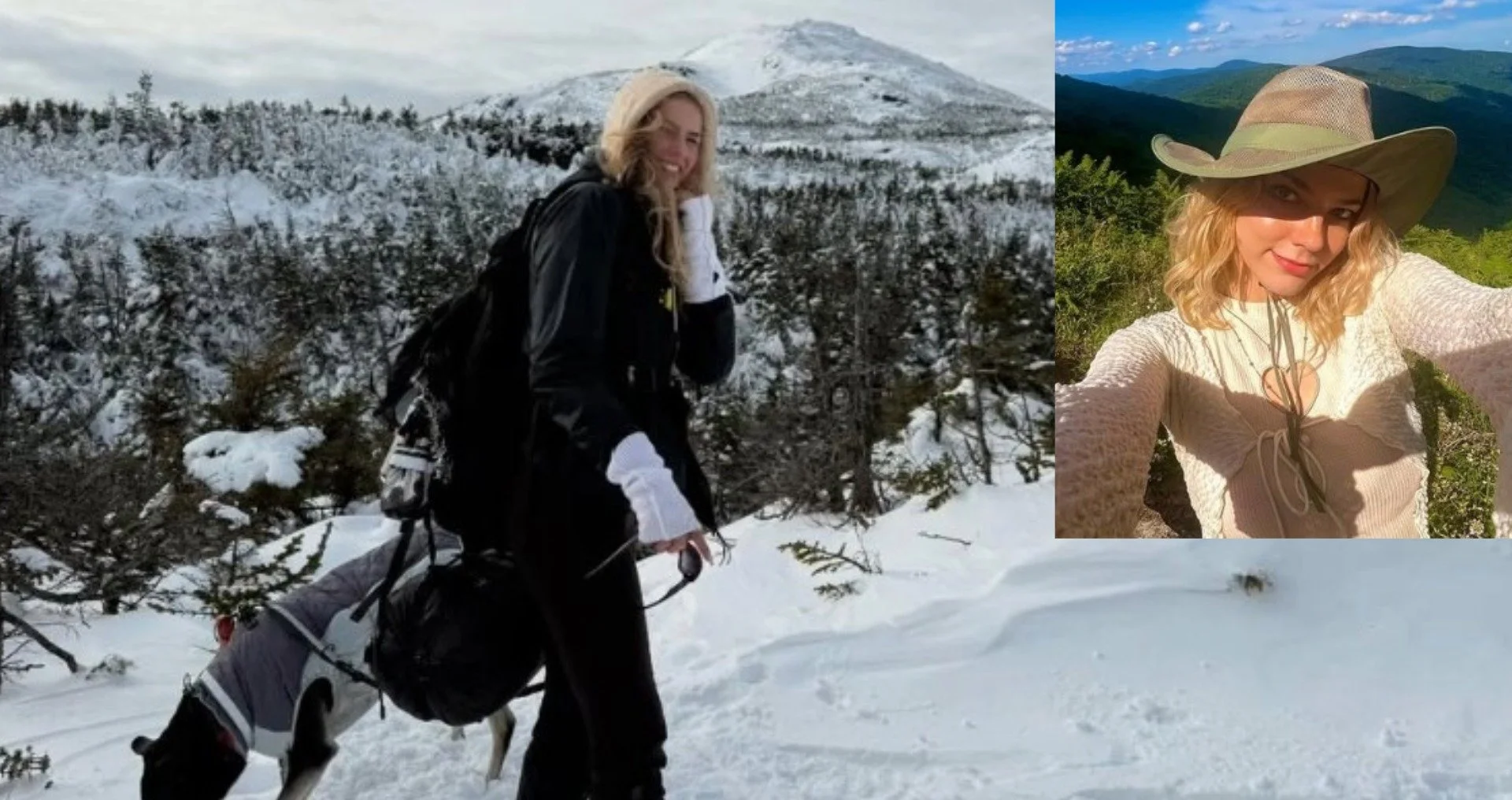
YOUNG NJ WOMAN DIES CLIMBING NEW YORK'S HIGHEST MOUNTAIN, HER DOG SURVIVESBy JB Nicholas
BRIANNA L. MOHR FELL CLIMBING MT. MARCY AND FROZE TO DEATH BEFORE RESCUERS COULD REACH HER
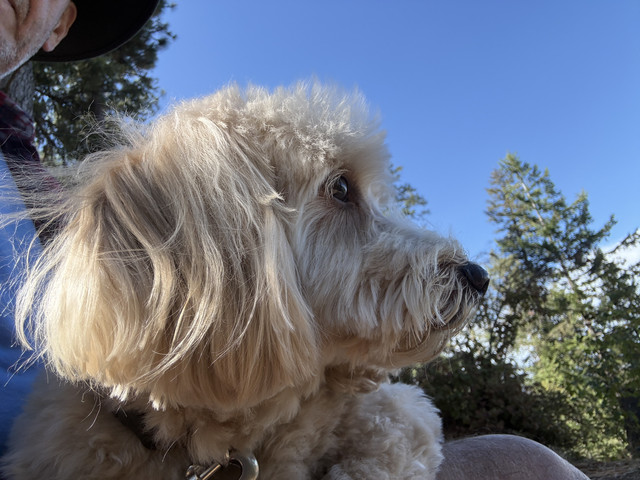
Brianna L. Mohr climbing Mt. Marcy in December with her dog, Fezco. She fell and died there last Wednesday. Photo credit: unknown, via Instagram.Feb. 17, 2026
The 21-year-old woman who died climbing New York's highest mountain alone on Thursday has been identified. Brianna L. Mohr ”slipped off the trail near the summit of Mount Marcy and were unable to get back on the trail,” according to a news release by the state Department of Environmental Conservation. She called 9-1-1 for help just after 3:00 PM, the DEC said, setting in motion a dramatic but failed attempt to rescue her before the cold killed her. Her dog, Fezco, survived.
Standing 5,343 feet tall, Mt. Marcy is the highest mountain in New York. In winter, conditions at its summit are arctic and deadly. Its located in the center of the state's forbidding High Peaks wilderness area, more than seven miles from the nearest road. The mountains that surround it are a rogue’s gallery of New York's other highest, rock-jagged mountains, blocking easy access.
In response to Mohr's call for help, State Forest Rangers raced toward her in a snowmobile, a “tracked utility task vehicle” and a State Police helicopter with two Forest Rangers on board, the DEC said. Because of the rugged mountain terrain, the snowmobile and the utility vehicle were only able to get within about four miles of her. From there, rescuers proceeded on foot.
Meanwhile, the State Police helicopter with Forest Rangers on board approached the summit of Mt. Marcy “for a possible hoist rescue,’ the DEC said. But, “due to the heavy cloud cover, the two Rangers in the helicopter could not see the missing hiker. At 6:06 p.m., one of the Rangers in the helicopter was inserted into the Marcy Dam Outpost to search on the ground.”
The Rangers moved as fast as they could, but deep snow slowed their progress. When they got near the summit, they spread out to search. By the time a Ranger found Mohr late Thursday night at 9:51 PM, it was too late.
What a great idea.
I leaned about cotton in my late 20s during spring skiing in the Sierras. I wore cotton Levis blue jeans skiing. They got soaked. Temperature was hovering around freezing. When I got back to the car around 3 pm, I started shivering uncontrollably. It was really frightening and a good object lesson about what could happen in the wilds wearing wet cotton.
I don’t get that impression in North Idaho, Western Montana, and Eastern Washington. Lots of people all ages on the trails.
For sun protection, I'd add a wide-brim hat. I used to wear ball caps, but my skin doc highly recommended wearing wide-brim hats to protect the face, ears, and neck better. I bought a floppy hiking hat at REI that I like, but I then upgraded to "Four Seasons Felt" 100% wool hat and added a Stetson "Gallatin" 100% wool hat. I've gotten a lot of compliments on the Four Seasons Felt hat.
“So-o-o-o-o, the rest of the Olympics and Cascades are temperate zones with stable environments? 🙄”
LOL...yep, those weather systems respect the National Park boundaries.
“What caliber sidearm are you carrying?”
Yeah, some day I mean to do that! Especially since a grizzly was spotted 30 miles east of CdA a couple weeks ago.
Get a .45 Colt Ruger Blackhawk revolver and some heavy Buffalo Bore ammo (made in Idaho) and you would be well-equipped.
Disclaimer: Opinions posted on Free Republic are those of the individual posters and do not necessarily represent the opinion of Free Republic or its management. All materials posted herein are protected by copyright law and the exemption for fair use of copyrighted works.