Skip to comments.
Why am I paying for AC when I use DC ?
self ^
| June 20, 2026
| knarf, Tessla and Edison
Posted on 06/20/2026 2:48:23 AM PDT by knarf
I'm not smart enough to analyze this correctly, but most of my house is operating low voltage items . . . TV's, lap tops and a ton of smaller lights and stuff that all have those little black boxes for plugs.
TOPICS: Business/Economy; Conspiracy; Education; Science
KEYWORDS: electricity
Navigation: use the links below to view more comments.
first previous 1-20, 21-40, 41-60, 61-80 ... 121-124 next last
To: Brian Griffin
So far it looks like almost no one looks at their electric bills and compare usage by month with the previous year or years when evaluating their home improvements or new systems.
41
posted on
06/20/2026 5:16:57 AM PDT
by
ansel12
To: knarf
The major power gulpers for me are the AC and water heater.
The oven takes a lot of electricity when it is in use. It has a 50-amp supply circuit. I think the AC compressor also has a 50-amp supply circuit. The water-heater is on a 30-amp circuit.
42
posted on
06/20/2026 5:18:30 AM PDT
by
Brian Griffin
($324 billion -> Iran; nothing worthwhile for the USA or Israel)
To: ansel12
“So far it looks like almost no one looks at their electric bills and compare usage by month with the previous year or years when evaluating their home improvements or new systems.”
I pay my Florida Power & Light bill by automated means for which I forgot the password. I just get notified of the amount, around $65 in summer and about $40 most of the rest of the year.
43
posted on
06/20/2026 5:21:00 AM PDT
by
Brian Griffin
($324 billion -> Iran; nothing worthwhile for the USA or Israel)
To: knarf
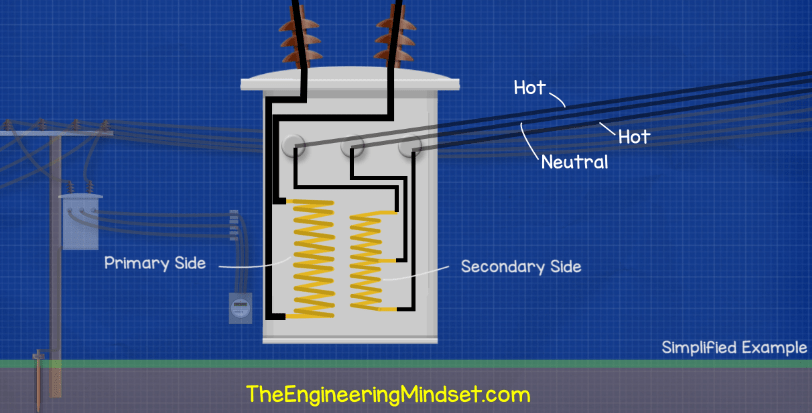
It is easy: AC can be transmitted long distances but DC cannot. AC can be stepped up and down in voltage through the use of transformers, which have in and out coils of wire that share a magnetic core. DC will not pass from one coil to the other.
Generated AC passes through a transformer which elevates the voltage really really high. That goes a long distance from the generator to the user site. Another transformer is used to bring the voltage back down to usable levels.
The AC in your home can be used as is or transformed again to low voltage DC.
44
posted on
06/20/2026 5:21:30 AM PDT
by
GingisK
To: Merrick
There are some situations, involving long distances over different systems, where electric utilities find it more efficient to transmit DC power. You're probably familiar with it, but folks who aren't (and are bored enough) can Google on something to the effect of: high voltage direct current.
To: ansel12
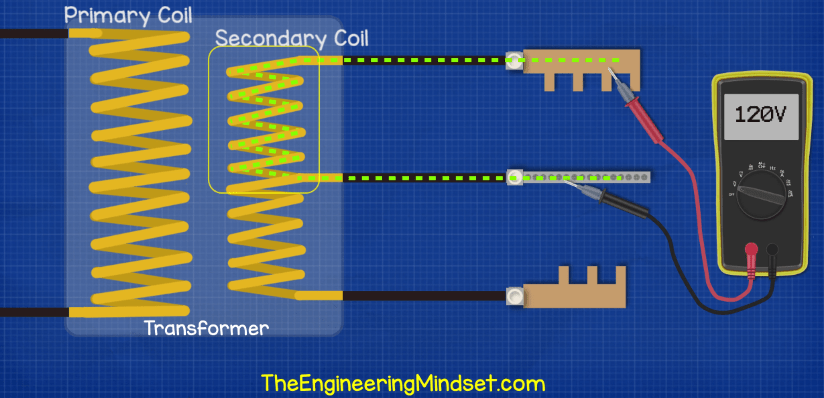
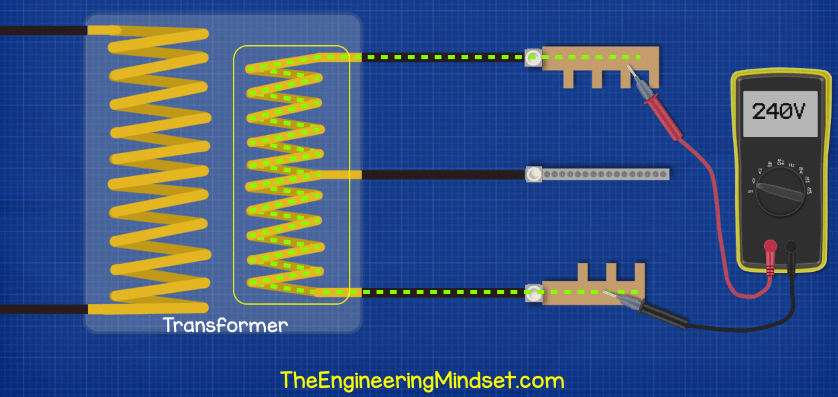
..but as far as I know you have 110/120 volts coming into the house, not 220/240... No, 220/240 enters your house in two phases that are offset from each other by 180 degrees, with a common (neutral) between them. The voltage between the phases is 220/240 volts. The voltage between either to neutral is 110/220.
46
posted on
06/20/2026 5:28:08 AM PDT
by
GingisK
To: knarf
AC can be transmitted much longer distances by wire, then converted to DC if needed. Also the DC motors used in industries were POS compared with the three kinds of AC motors invented by Tesla. AFAIK, no one has discovered any others.
47
posted on
06/20/2026 5:29:35 AM PDT
by
SunkenCiv
(TDS -- it's not just for DNC shills anymore -- oh, wait, yeah it is.)
To: knarf
Well, flip the main breaker to the Off position and go away for a month.
When the bill arrives, open it and examine the bill for the month during which you used no electricity.
48
posted on
06/20/2026 5:29:40 AM PDT
by
fso301
To: GingisK
Right, I guess I was mixing up the OP’s mentioning 220 as he did, as him thinking that his house outlets and light fixtures were 220, it is so rare for someone to talk about 220 coming into their house, we tend to talk about what it is at the outlets.
49
posted on
06/20/2026 5:32:26 AM PDT
by
ansel12
To: Merrick
Tesla was just wrong. Let it go. It seems you are mistaken. Edison championed DC. Tesla invented the power transformer and advocated AC so that power could be distributed at very high voltages and then transformed to lower voltages for use by the customer.
Transmitting power through the air was his unrealized dream, one he demonstrated at small scale. This is where "Tesla Coils" originated. Realistically speaking, this will not work in a practical manner and would cause dangerous side affects in the ambience.
50
posted on
06/20/2026 5:37:12 AM PDT
by
GingisK
To: Brian Griffin
Your bills sound slightly better than mine but I deal with winter and 100+ summers, having a small house and concrete walls on a slab I leave one 5000 btu window A/C and pedestal fan running 24 hours to move the cool air around which keeps the house cool and then my bedroom window unit makes for comfortable sleeping.
During the winter I find that running 2 space heaters with thermostats always on keep the house warm.
Maybe it is all the concrete but I quit turning the heating and cooling on and off and instead let it stay on and it seems to work better than trying to bring all the mass to temperature, then losing it, then bringing it to temp again, then losing it, and so on, this way is far more comfortable, it seems efficient and cheap, and makes the house feel like I have central heating and cooling because everything is comfortable and quiet.
51
posted on
06/20/2026 5:46:21 AM PDT
by
ansel12
To: ansel12
I have a small laundromat, and have 4 220v washers.
52
posted on
06/20/2026 5:49:26 AM PDT
by
Don W
(When blacks riot, neighborhoods and cities burn. When whites riot, nations and continents burn)
To: knarf
This should have been taught in science class.
It is proper to ask questions and that is good but it points to the lack of education.
Food comes from a fridge........................
53
posted on
06/20/2026 5:49:49 AM PDT
by
PeterPrinciple
((Thinking Caps are no longer being issued, but there must be a warehouse full of them somewhere))
To: knarf
FLORIDA POWER&LIGHT
RESIDENTIAL SERVICE RATE SCHEDULE: RS-1
In all areas served.
For service for all domestic purposes in individually metered dwelling units and in duplexes and triplexes, including the separately-metered non-commercial facilities of a residential Customer (i.e., garages, water pumps, etc.).
Also for service to commonly-owned facilities of condominium, cooperative and homeowners’ associations as set forth on Sheet No. 8.211, Rider CU.
SERVICE:
Single phase, 60 hertz at available standard distribution voltage. Three phase service may be furnished but only under special arrangements. All residential service required on the premises by Customer shall be supplied through one meter.
MONTHLY RATE:
Minimum:
$30.00
Base Charge:
$10.52
Base Energy Charge:
First 1,000 kWh
7.865¢ per kWh
All additional kWh
8.865¢ per kWh
Additional Charges:
Residential Load Management Program (if applicable), See Sheet No.8.217
BILLING ADJUSTMENT RATES [added]
FUEL
1st 1,000 kWh 2.893¢/kWh
all addn kWh 3.893¢/kWh
CONSERVATION
0.148¢/kWh
CAPACITY
0.052¢/kWh
ENVIRONMENTAL
0.345¢/kWh
STORM PROTECTION
0.995¢/kWh
https://www.fpl.com/content/dam/fplgp/us/en/rates/pdf/electric-tariff-section8.pdf
54
posted on
06/20/2026 5:51:01 AM PDT
by
Brian Griffin
($324 billion -> Iran; nothing worthwhile for the USA or Israel)
To: Don W
I know they exist commercially and for foreign markets, I just haven’t run into them in homes.
55
posted on
06/20/2026 5:55:51 AM PDT
by
ansel12
To: Brian Griffin
My home is brick, with much of it on the south side. It’s nice in the winter, but in the summer the brick is a heat sink and it radiates through the interior walls. Thus the high AC bills.
I’ve thought about spraying foam insulation behind the brick, but air flow is also very important. The other consideration is a sealant on the brick that reflects the sun.
My home is about 10,000 sq ft, for two of us. I joke that my wife can live in one wing and me in another and we will always get along well.
I’m approaching the age of downsizing, but dread the job of emptying the house. My wife has stated several times that she wants to die first so the job is all mine.
To: tired&retired
“in the summer the brick is a heat sink and it radiates through the interior walls”
I planted a tree on the west side of my house to shield it some.
57
posted on
06/20/2026 6:05:05 AM PDT
by
Brian Griffin
($324 billion -> Iran; nothing worthwhile for the USA or Israel)
To: tired&retired
Trees on a property can lower the temperature of the surrounding air by a few degrees.
My neighborhood is a few degrees warmer because hurricanes, affluent new homeowners and tree death have taken out a high percentage of the trees. The houses on my streets are helped by only half the number of big trees of 30 years ago.
Trees can also help mitigate the force of hurricanes. Better the trees get broken than the houses.
58
posted on
06/20/2026 6:10:11 AM PDT
by
Brian Griffin
($324 billion -> Iran; nothing worthwhile for the USA or Israel)
To: Fresh Wind
The solution is Energy Glass - glass which produces DC power. It is currently in production for an apartment complex North Dakota, which - in spite of the climate - will be entirely off the grid.
Energy Glass Puts Thomas Edison’s Vision Back on the Table
As electrical technology advanced in the latter half of the 19th century, scientists and engineers were racing to develop the most efficient means of providing electric power to buildings. Thomas Edison, a pioneer in this arena as he was in many others, favored a direct current (dc) solution over one featuring alternating current (ac). As Edison saw it, a dc design was safer and easier to distribute than an ac solution, with motors that operated with more starting torque and greater efficiency and lacked that annoying 60 Hz “buzz” associated with ac systems.
Edison met with early success as he lit up neighborhoods in London and New York with his dc design, but efforts to expand exposed the system’s significant drawback. It required a dc generating source within a mile of the final destination to be effective, while ac power could be distributed over long distances using transformers. In the interests of expediency, the advantages of dc power within a building were sacrificed to support large area transmission efficiency outside the buildings.
Fast-forward to today. Energy Glass transforms light into dc power. A pane of Energy Glass might power an LED lamp. Sheathe an entire structure in Energy Glass and you’ve created a potent dc power generator. Twelve decades after Edison’s pioneering efforts, dc power delivery is back on the table.
And just in time. While many building systems rely on ac power, the devices we use every day are already on low-level dc power. Converting ac power to the dc power they consume wastes a lot of energy.
A modern building equipped with Energy Glass promises to deliver power directly to every dc system in the building—laptops, computer routers, cell phones, landlines, LED lighting, security systems, and even coffee pots and microwaves—with energy to spare. Excess power might be stored for later use, converted to ac power for the balance of the building’s energy needs or sold back to the utilities for a profit – especially when the building is not in use. It’s not hard to imagine transitioning all internal ac systems to dc power over time.
Energy Glass is a real game-changer. Edison would have loved it.
To: GingisK
60
posted on
06/20/2026 6:15:38 AM PDT
by
fruser1
Navigation: use the links below to view more comments.
first previous 1-20, 21-40, 41-60, 61-80 ... 121-124 next last
Disclaimer:
Opinions posted on Free Republic are those of the individual
posters and do not necessarily represent the opinion of Free Republic or its
management. All materials posted herein are protected by copyright law and the
exemption for fair use of copyrighted works.
FreeRepublic.com is powered by software copyright 2000-2008 John Robinson