|
Posted on 03/31/2026 9:24:51 PM PDT by ransomnote
Many come here to read dispatches from the War between Good and Evil, to red-pill and encourage.....and to pray and give thanks to the God who fights for us.
Q has reminded us repeatedly that together, we are strong. As the false "narrative" is destroyed and the divisive machinery put in place by the Deep State fails, the fact that patriotism has no skin color or political party is exposed for all to see.
3038 Mar 12, 2019 2:55:14 PM EDT
Q !!mG7VJxZNCI ID: 4fe510 No. 5643022>Decide for yourself (be free from outside opinion).
>Decide for yourself (be objective in your conclusions).
>Decide for yourself (be true in your own beliefs).
>Decide for yourself (be open to following the facts).
>Decide for yourself (be strong in defending your beliefs).
>Decide for yourself (be resistant to blindly accepting fact-less statements).
>Decide for yourself (be free)
Those who attack you.
Those who mock you.
Those who cull you.
Those who control you.
Those who label you.
Do they represent you?
Or, do they represent themselves (in some form)?
Mental Enslavement.
The Great Awakening ('Freedom of Thought’), was designed and created not only as a backchannel to the public (away from the longstanding ‘mind’ control of the corrupt & heavily biased media) to endure future events through transparency and regeneration of individual thought (breaking the chains of ‘group-think’), but, more importantly, aid in the construction of a vehicle (a ‘ship’) that provides the scattered (‘free thinkers’) with a ‘starter’ new social-networking platform which allows for freedom of thought, expression, and patriotism or national pride (the feeling of love, devotion and sense of attachment to a homeland and alliance with other citizens who share the same sentiment).
When ‘non-dogmatic’ information becomes FREE & TRANSPARENT it becomes a threat to those who attempt to control the narrative and/or the stable.
When you are awake, you stand on the outside of the stable (‘group-think’ collective), and have ‘free thought’.
"Free thought" is a philosophical viewpoint which holds that positions regarding truth should be formed on the basis of logic, reason, and empiricism, rather than authority, tradition, revelation, or dogma.
When you are awake, you are able to clearly see.
The choice is yours, and yours alone.
Trust and put faith in yourself.
You are not alone and you are not in the minority.
Difficult truths will soon see the light of day.
WWG1WGA!!!Q
In the battle between those who strip us our constitutional rights, we can't afford to let false divisions separate us any longer. We, and our country, will be forever made stronger by diligently seeking the truth, independence and freedom of thought.
Where We Go 1, We Go All
WOW!
grey_whiskers wrote:
“
WOW! A drone show put on by a church in Manvel, Texas depicts our Savior Jesus on the cross.
One of the coolest things I’ve ever seen. Tomorrow, HE IS RISEN. pic.twitter.com/zlhWEnFzCZ— Chad Prather (@WatchChad) April 4, 2026
“
I saw part of that.
Christ is risen indeed!
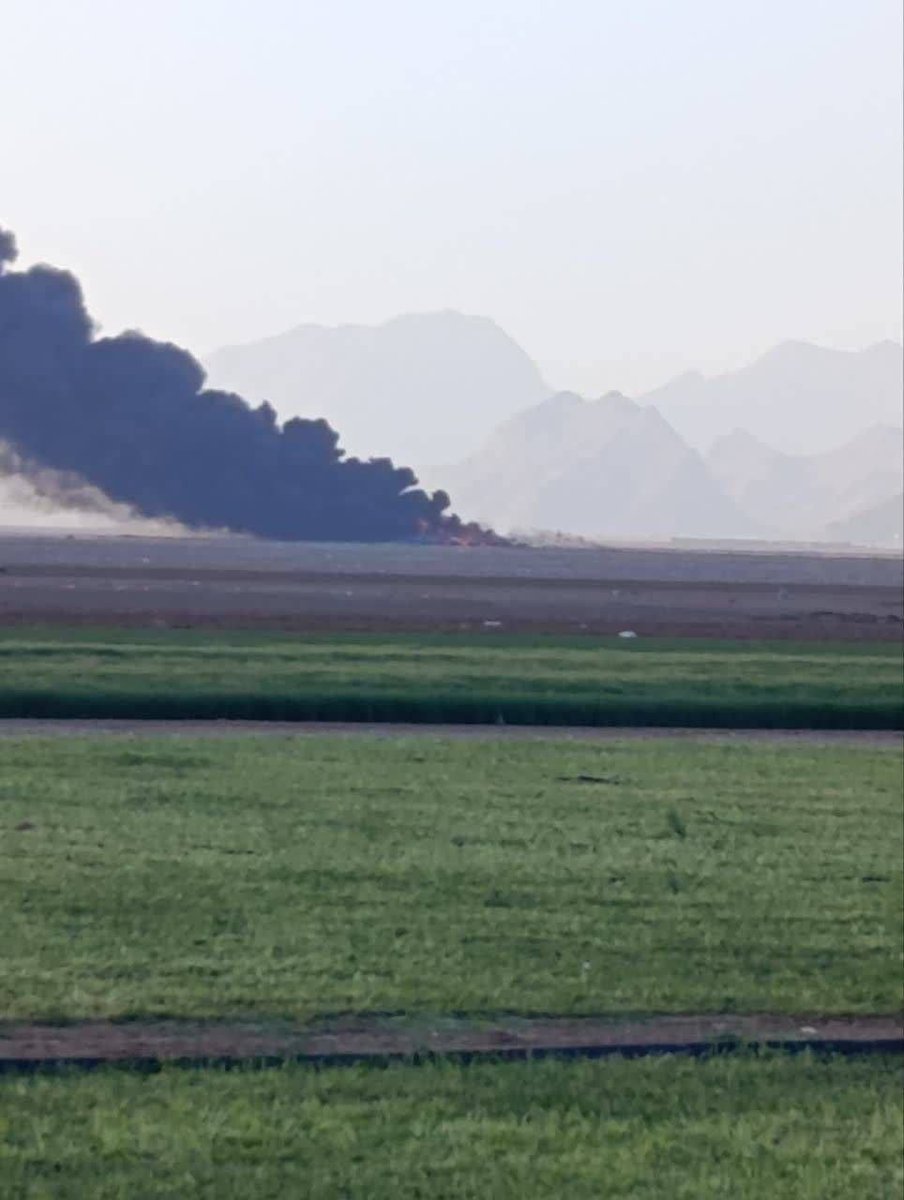
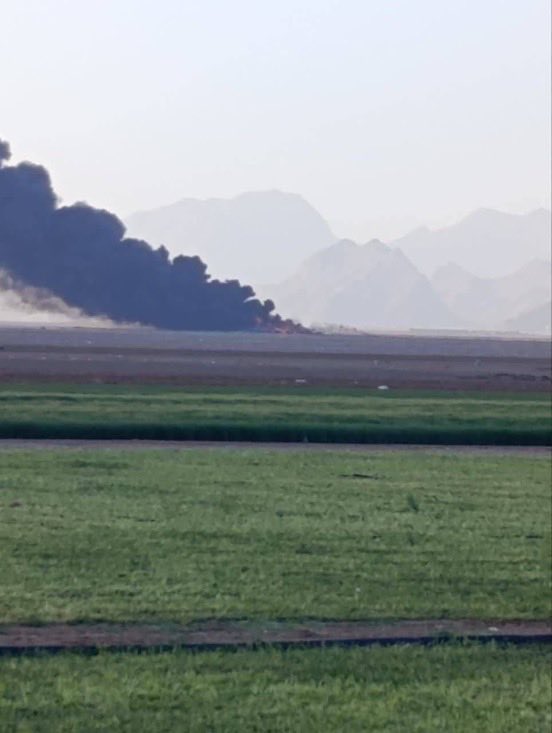
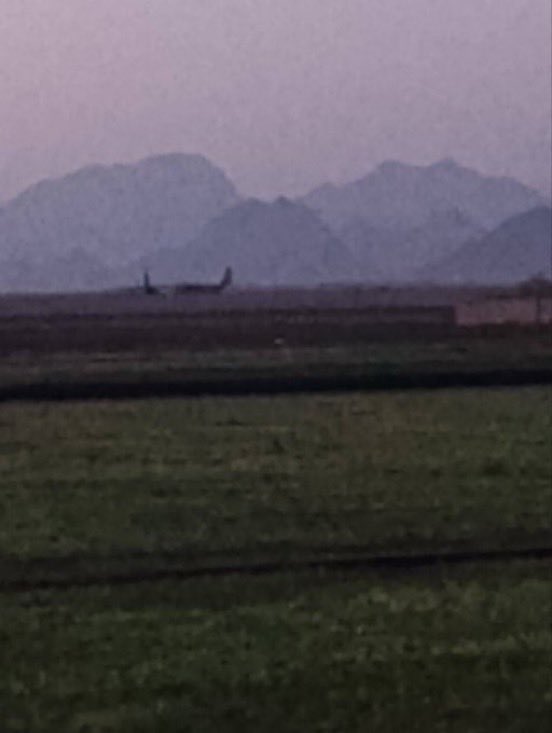
More information on that rescue operation:
https://freerepublic.com/focus/f-news/4373686/posts?page=1#1
My fellow Americans, over d past several hours,d United States Military pulled off one of d most daring Search and Rescue Operations in U.S. History, for one of our incredible Crew Office Members, and who I am thrilled to let you know is SAFE and SOUND!” - Pres Donald J. Trump
pic.twitter.com/xgphVcMvbL— DailyFact (@Factsdaiily) April 5, 2026
2A
Great news and good report. Thanks.
The fellow made quite a climb. That is rugged country with just about no cover but rocks.
Lockheed thanks the Iranian mud too. Shame about the 130’s but at least they came away with what they went for. We’ll still need two more of them for replacements.
That was a Lakenheath 15E I take it. Boeing can make another one and the choppers can be repaired.
What would be done without the A-10? There are no more Spad’s and no other plane to do the job. I don’t think the AG planes can do a similar job.
Reminds me of the rescue of Lt. Col. Iceal Hambleton at Easter time in 1972.
This rescue turned out quite a bit better with no loss of live and didn’t take 11 days.
Happy Easter. He is Risen.

You do realize that his spawn “Wil I Am” is a prime contender for AC. Usually the cabal has 3 waiting in the wings.
https://kaldanis.blogspot.com/
WOW!
Happy Easter, all!
He is indeed Risen!
Wonderfully encouraging❗ 🙂 🙏 Thank you.
Yeah, I do remember reading something about that. I initially thought it would be Ol’ Chuckles, but he’s too physically weak and decrepit. Guess we’ll have to keep a sharp eye on how things develop. For me, “the jury is still out” on him, but he does sometimes make me a little uncomfortable.
Blessed Easter Everyone.
You’re right. That can’t be a real car.
Posted on Instapundit’s Open Thread last night.
Long but worth the read:
This kind of reads like a Paul Harvey story.
The History Vault
The year is 1962, and a 50-year-old Japanese man named Nobuo Fujita sits nervously on a flight bound for the United States.
In his checked luggage lies a 400-year-old samurai sword.
It has been handed down through his family for generations.
But Fujita isn’t bringing it as a gift.
He is bringing it to kill himself.
Fujita has been invited to the small, coastal logging town of Brookings, Oregon.
The town is hosting its annual Azalea Festival, and the local Jaycees decided to invite a very specific guest of honor.
When the formal invitation arrived in Japan, the Japanese government urged Fujita not to go.
They warned him it was a massive trap.
They told him the Americans were going to publicly humiliate him, put him on trial, or worse.
Even his own family begged him to stay home.
Fujita decided to go anyway.
But as a man of deep traditional honor, he made a silent, terrifying vow.
If the townspeople of Brookings hurled stones at him, or if they tried to lynch him, he would draw his family’s ancestral blade.
He would commit seppuku—ritual suicide—right there on American soil.
He felt he owed them a blood debt.
Because twenty years earlier, Nobuo Fujita had done something no one else in the history of the world had ever done.
He had bombed the continental United States.
Let’s rewind to September 9, 1942.
Warrant Officer Nobuo Fujita is a pilot in the Imperial Japanese Navy.
But he doesn’t fly from a traditional aircraft carrier.
He flies from a submarine.
Just before dawn, the massive Japanese submarine I-25 surfaces quietly off the coast of Oregon.
The ocean is pitch black, and the crew works in absolute silence.
They quickly assemble a small, canvas-winged Yokosuka E14Y floatplane right on the wet deck of the sub.
Fujita climbs into the tiny cockpit.
His mission is highly experimental and entirely unprecedented.
Bolted to the wings of his plane are two 168-pound incendiary bombs.
The plan is to fly over the dense, dry timber of the Siskiyou National Forest and drop the explosives.
The Japanese high command believes this will spark a massive inferno along the American coast.
They hope a raging mega-fire will terrify the public and force the United States to pull its naval fleet away from the Pacific theater.
Fujita catapults off the submarine and vanishes into the thick morning fog.
He navigates blindly for fifty miles, crossing the American coastline.
When he reaches the dense evergreen canopy of Mount Emily, he pulls the release lever.
The heavy bombs plummet into the trees below.
Fujita watches as blinding flashes of light erupt in the dark, silent forest.
He turns his small plane around, escapes back to the waiting submarine, and the crew sinks beneath the waves before American coastal patrols can spot them.
He has successfully executed the only aerial bombing of the U.S. mainland by an enemy aircraft.
But the grand master plan fails.
Oregon had experienced unusually heavy rain the night before.
The forest is damp, and the massive, apocalyptic inferno never materializes.
A lone U.S. Forest Service lookout named Howard Gardner spots the smoke from a fire tower.
Gardner hikes to the site and quickly extinguishes the small flames.
The physical damage to the United States is practically zero.
But the psychological weight of that single morning will haunt Nobuo Fujita for the next two decades.
Now, it is 1962.
Fujita steps off the plane in the United States.
He takes the long drive up the winding Oregon coast toward Brookings.
His stomach is in knots.
He keeps his hand near the luggage containing his 400-year-old sword.
He expects angry mobs.
He expects picket signs demanding his execution.
His heart races as the car finally pulls into the small town limits of Brookings.
And then, Fujita freezes.
There are people lining the streets.
Hundreds of them.
But they aren’t holding pitchforks or throwing stones.
They are holding up American and Japanese flags.
They are smiling.
They are cheering for him.
The mayor of Brookings steps forward and extends his hand.
He welcomes Fujita not as an enemy war criminal, but as an honored guest.
Fujita is completely overwhelmed.
The harsh, violent reception he prepared for does not exist.
Instead, he finds a community offering him unconditional grace.
During the town’s festival, Fujita asks for a moment to speak to the crowd.
He steps onto the stage, trembling.
He has brought the 400-year-old samurai sword with him.
But he does not draw it to end his life.
With tears streaming down his face, he carefully hands the ancestral blade to the mayor of Brookings.
It is the most prized possession his family owns, a relic passed down for four centuries.
He surrenders it as a formal apology for his actions during the war.
“This is the finest sword I own,” Fujita tells the stunned crowd through an interpreter.
“I give it to you in the spirit of peace and friendship.”
The town accepts it.
And in that single, incredibly vulnerable moment, a fifty-year healing process begins.
Fujita does not just visit Brookings once.
Over the next three decades, he returns again and again.
He comes to consider the small American logging town his second home.
When he learns that the local Brookings library is struggling financially, he feels compelled to help.
He quietly donates thousands of dollars of his own money to buy children’s books about international peace.
Later, he pays for a group of local high school students from Brookings to visit Japan.
He wants them to experience his culture, to ensure the next generation sees each other as friends, not enemies.
In 1992, exactly fifty years to the week that he dropped bombs on their forest, the town of Brookings does something extraordinary.
They officially vote to make Nobuo Fujita an honorary citizen of their town.
During this visit, Fujita hikes back up Mount Emily.
He plants a redwood tree at the exact site where his bombs fell.
It is a living, breathing monument to forgiveness, growing out of the same soil he once tried to destroy.
When Fujita passes away in 1997 at the age of 85, he makes one final, incredibly poignant request.
He does not want to be laid to rest entirely in his homeland.
In October 1998, his daughter travels across the Pacific Ocean one last time.
She hikes up Mount Emily, deep into the Siskiyou National Forest.
She stands by the redwood tree her father planted.
And she scatters a portion of his ashes at the bomb site.
The only man to ever strike the U.S. mainland from the air didn’t conquer America with fire, but was conquered by its forgiveness.
Sources: National WWII Museum / Oregon Historical Society
#history #knowledge #worldwar2 #historyfacts
Sources: National WWII Museum / Oregon Historical Society
#history #knowledge #worldwar2 #historyfacts
| GOOD MORNING | |||
 Happy Easter America |  Church & Breakfast |  Easter Breakfast |  Sunday Breakfast Chicago |
 Easter Sunrise Coffee |  Tom Fitton Hallelujah |  Bunny Hides Eggs |  Easter Hot Cross Buns |
 Coffee Easter Sunday |  Wonderful Easter Sunday | ||
Disclaimer: Opinions posted on Free Republic are those of the individual posters and do not necessarily represent the opinion of Free Republic or its management. All materials posted herein are protected by copyright law and the exemption for fair use of copyrighted works.