Ok if you want to get into the weeds on this, the 1860 US Census recorded: "Dwellings" -- meaning separate buildings or separate entrances to a single structure (aka apartments) "Families" -- defined as everyone living together in a single dwelling, regardless of kinship -- including boarders & hired help. Multiple families could occupy in a single dwelling if they lived and ate separately. "Slaves" -- listed on Schedule 2, by owner. Owners then are cross referenced with families to see what percentage of families owned slaves. Now, in these discussions, I've used the word "household" rather than "family" because of the broader definition of "family" used in 1860. When I say "household", I mean "family" as broadly defined in the 1860 census.I've gone with families as that is the better measure rather than temporary boarders and the like.
Massacres of Southern Unionists such as the 1862 Nueces Massacre in Texas and the 1863 Shelton Laurel Massacre in western North Carolina prove unequivocally that there were indeed many Southerners who did not own slaves, and opposed the CSA. Such people were not well treated by their slavery supporting neighbors.
Sure. And there were many Southerners who did not own slaves and who supported the CSA. Just because some Southerners were opposed to those who were against the CSA does not mean they were "slavery supporting" as you claimed. People had lots of other reasons for supporting the CSA. Northern Copperheads were not treated very well by their war supporting neighbors either.
1861 Votes For and Against Secession: FRiend, if we agree that roughly 50% of Mississippi families owned slaves, while only 3% of Delaware families owned slaves, and other states fell between those numbers, then we've established a discussable fact-set.
Have we? Delaware did not secede. Why would they be included? When I said 5.63% of the White population in the Southern states owned slaves, I did not count Delaware or Maryland or Kentucky. They did not secede.
What we know from that fact-set is, states with: More than 33% slaveholding families, in the Deep South -- those declared secession from December 1860 to February 1861, before Fort Sumter, in April 1861. 25%-33% slaveholding families, in the Upper South -- those declared secession only after Fort Sumter. Fewer than 25% slaveholding families, in Border States -- those never declared secession, though some did have minority secessionist populations. The overall average of slaveholding families for the Confederacy depends on how you weight the numbers, but 26% is a reasonable approximation.
The Original 7 seceding states also happened to produce the most cotton and thus the most exports by $ value. They were thus hit hardest by the tariffs. The percentage of families the study of this showed that did own slaves in the seceding states was actually 19.9%. Meaning 80% did not.
This means that some 74% of Confederate families did not own slaves, and where those were concentrated regionally -- i.e., eastern Tennessee among others -- those regions saw:
Let me stop you right there. There were lots of regions of the Confederate states that did not have high percentages of slave ownership - not just the areas that did not support secession as much. All of Tennessee had significantly lower rates of slave ownership than states that were more in the Deep South. Yet Tennessee voted overwhelmingly for secession after Lincoln chose to start a war.
Serious resistance to the CSA
And Northern copperheads who did not think the union should fight a war of aggression to impose its rule over people who did not consent to it were treated very badly in the North. Somewhere between 13,000 and 38,000 were imprisoned often without charge or trial - or at best trial before military tribunals. They were thrown into federal dungeons where they were sometimes tortured. Newspapers which opposed the war were shut down by direct order of Lincoln. Others saw mobs invade their offices and smash up the printing presses which police never treated as a crime. Lincoln had several confiscation acts passed whereby the property of those opposed to the war was seized - and if they were ratted out by informers, the informers and the government split the proceeds. People were forcibly disarmed in areas where unionists weren't sure of the loyalty of the population, etc etc.
You're right because Eastern Tennessee: Home of Lincoln's VP, then Pres. Andrew Johnson, a hotbed of Southern Unionism, had few to zero slaves -- 9% overall. Supplied more troops to the Union army (~31,000) than to the CSA (~20,000). Confederates hanged East Tennessee Unionists, confiscated their properties and drafted their young men. Remained a solid Republican region even in the post War Solid Democratic South, well into the late 20th century. So, if your ancestors from East Tennessee served the CSA army, it's because they were drafted and served to avoid Confederates confiscating their families' properties for being Southern Unionists. Most East Tennesseans were Unionists during the Civil War, and remained loyal Republicans to this day.
There were plenty of areas of the South that had low rates of slave ownership which supported secession and supported the CSA....like my ancestors who moved from Virginia in the 1830s after the family had lived there for 180 years and settled in central Tennessee. Another family moved from North Carolina where they had lived since before the War of Independence to central Tennessee and a third family had moved to central Tennessee from England one generation earlier.
Actually, it was Jefferson Davis who chose to start war, and for precisely the reasons you listed here: because he knew that war would flip the entire Upper South, plus possibly Border States, from Union to Confederate.
Actually it was Lincoln who chose to start war because he could not afford to let the North's cash cows - the biggest exporting Southern States - leave.
But East Tennessee is a case in point: even on June 8, 1861 -- long after Fort Sumter and Union forces occupying parts of Virginia -- in Tennessee's secession referendum, nearly two‑thirds of East Tennesseans voted against secession, despite Tennessee overall voting in favor.
East Tennessee did not have a population that was that large. The state as a whole voted overwhelmingly for secession after Lincoln started the war. See previous post.
Naw... The fact is that nearly every pro-Union anti-Confederate Southern region also had few to no slaves, including: Western Virginia Eastern Tennessee Western North Carolina Northern Alabama Arkansas Osarks Texas Hill Country Overall, circa 100,000 Confederate state whites served in the Union Army, and of those the vast majority came from the above regions. For comparison, there were no major enlistments from Northern free-states in the Confederate army and estimates of individual soldiers range from a few hundred total to possibly 1,000. Bottom line: Being anti-slavery made ~100,000 Confederates into Union Army soldiers. Being pro-slavery turned maybe 1,000 Union free-state men into Confederate Army soldiers.
Yeah. There were plenty of slave owners who sided with the Union.....like the Grants for example. Read Jack Hinson's One Man War. He was another pro union slave owner. There were plenty of them. Its hardly surprising more people in the Southern states would choose to side with remaining in the Union than people in Northern states would choose to travel to the South to support the Confederacy. After all, all the states had been in the union.
Bottom line: There were plenty of areas that had low rates of slave ownership which were pro confederate. There were also plenty of union sympathizing slave owners. Being pro union did not necessarily mean being anti slavery and being pro Confederate did not necessarily mean being a staunch supporter of slavery. People had lots of other reasons to support the Confederacy - after all, most of the non slave owners who were the overwhelming majority in the Southern states voted to secede after all.
FLT-bird re: 1860 census terms:
"I've gone with families as that is the better measure rather than temporary boarders and the like." You can call it whatever you like, but in the 1860 census the word "family" meant household including borders and hired help, but not slaves.
FLT-bird: "Sure.
And there were many Southerners who did not own slaves and who supported the CSA.
Just because some Southerners were opposed to those who were against the CSA does not mean they were "slavery supporting" as you claimed.
People had lots of other reasons for supporting the CSA."
Your own East Tennessee is a perfect example.
By the way, my parents met in college in East Tennessee in the 1930s.
They married shortly after WWII, living in Philadelphia and New Jersey at the time.
December 1861: Bridge Burners hanged in East Tennessee:

- East Tennessee in 1860 had few to zero slaves, only ~5% of East TN families owned slaves, compared to ~30% in West Tennessee.
- Two thirds of East Tennesseans voted against secession, even after Fort Sumter flipped the state from Union to Confederate.
- East Tennesseans tried to secede from Tennessee and set up their own Union state, similar to West Virginia.
- Some East Tennesseans conducted sabotage raids on Confederate military infrastructure.
- More East Tennesseans served in the Union Army (31,000) than in the Confederate army (~20,000).
- The CSA made a Department of East Tennessee, commanded by Major Gen. Kirby Smith & Brig. Gen. Henry Heth, to suppress rebellion in East Tennessee.
CSA Gen. Smith declared East Tennessee, "an enemy's country". - CSA Generals Smith & Heth imposed on East Tennessee:
- Martial law
- Suspension of habeas corpus
- Arrests and deportations of suspected Unionists
- Confiscations of suspected Unionist properties
- Acting like a military dictator, Smith jailed and deported suspected Unionists and vigorously enforced the CSA's April 1862 conscription act.
January 1863: Shelton Laurel Massacre, Western NC:
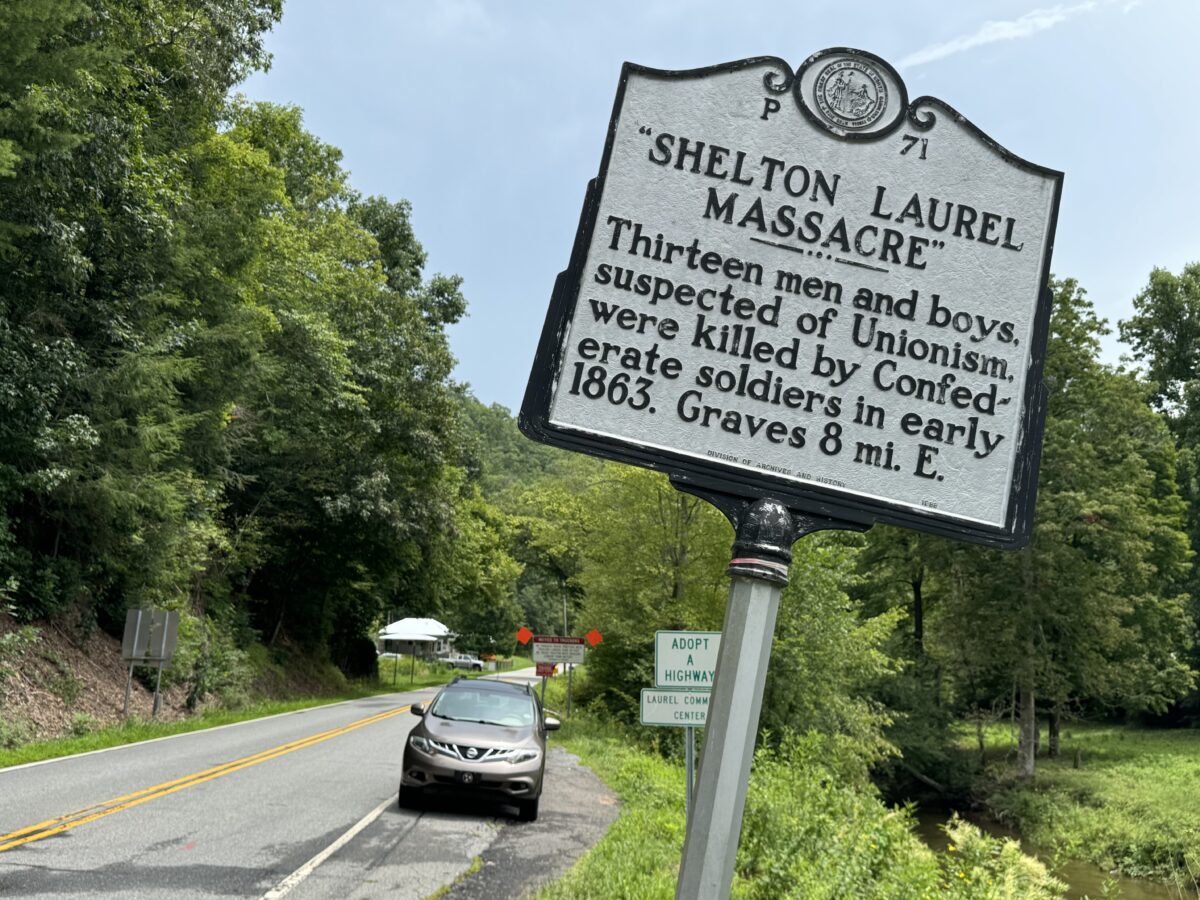
- Confederate authorities in western North Carolina and East Tennessee increasingly treated Unionist civilians as enemies rather than protected noncombatants.
This treatment included:- Torture to extract information
- Summary executions
- Collective punishment of families
- These heavy‑handed measures succeeded in further provoking Unionists and spreading discontent, turning previously neutral East Tennesseans into enemies of the CSA.
In January 1863, CSA Gen. Heth ordered the 64th North Carolina Infantry to
"take no prisoners" in dealing with suspected Unionists in western NC.
The result was the Shelton Laurel Massacre of civilians.
Bottom line: Confederates who lived in regions with few to no slaves overwhelmingly supported the Union, opposed secession, the CSA and Confederate military service.
These people were not treated well by Confederate authorities.
Northern copperheads who did not think the union should fight a war of aggression to impose its rule over people who did not consent to it were treated very badly in the North.There was a lot of antiwar sentiment in the southern counties of Ohio, Indiana, and Illinois, and in New Jersey as well. The southernmost counties of the three Midwestern states were heavily settled by Virginians and Kentuckians a generation or two before Fort Sumter. All these states were Northern and were free of slaves, although a handful remained in New Jersey. However, Ohio beyond the southernmost counties was pro-Union and the early Union takeover of West Virginia was largely due to the Ohio militia invading that future state. Three of the main Union generals were Ohioans: Grant, Sherman, and Sheridan. Yet Clement Vallandigham, the most prominent Copperhead, was also an Ohioan. The antiwar sentiment in New Jersey was so prevalent that Northern generals did not fully trust troops from that state. The New England influence on the Garden State was not as great as it was in New York and the Upper Midwest. It was not as influenced by German immigration was were Pennsylvania, Ohio, Indiana, Illinois, Wisconsin, and Iowa. New Jersey voted for the Democrat in national Presidential elections, 1872 excepted, from 1856 to 1892, unusual for a state in the North. In the 20th Century, New Jersey, along with Delaware and Maryland, became a part of the Northeastern megalopolis.