Skip to comments.
US pilot who dismissed Pearl Harbor reports dies
hosted. ^
| Feb 25
Posted on 02/25/2010 1:24:17 PM PST by JoeProBono
SAN DIEGO (AP) -- An American pilot who dismissed initial reports of what turned out to be the Japanese attack on Pearl Harbor has died at age 96.
Kermit Tyler was the Army Air Forces' first lieutenant on temporary duty at Ft. Shafter's radar information center in Hawaii on Dec. 7, 1941, when two privates reporting seeing an unusually large blip on their radar screen, indicating a large number of aircraft about 132 miles away and fast approaching.
"Don't worry about it," Tyler famously replied, thinking it was a flight of U.S. B-17 bombers that was due in from the mainland.
The aircraft were the first wave of more than 180 Japanese fighters, torpedo bombers, dive bombers and horizontal bombers whose surprise attack on Pearl Harbor shortly before 8 a.m. plunged the United States into World War II.
Many questioned his decision for years, and the 1970 movie "Tora! Tora! Tora!" portrayed him in an unflattering light.
(Excerpt) Read more at hosted.ap.org ...
TOPICS: History; Military/Veterans
KEYWORDS: jpb; kermittyler; navair; pearlharbor; worldwarii
Navigation: use the links below to view more comments.
first previous 1-20, 21-36 last
To: AngelesCrestHighway
Just the other night, I was listening to some broadcasts from Dec 7, 1941. It was really chilling about hearing the stations on the West Coast talking about the blackout across the Pacific coast from California to Washington State, and to think on that day, people were actually thinking the Japanese could strike against the West Coast.
21
posted on
02/25/2010 2:34:22 PM PST
by
dfwgator
To: dfwgator
Japan was no more able to strike the West Coast than a bunch of Arabs would be to strike New York City.
To: Vroomfondel; SC Swamp Fox; Fred Hayek; NY Attitude; P3_Acoustic; Bean Counter; investigateworld; ...
SONOBUOY PING!
"Air attack on Pearl Harbor, this is no drill" ping.

Click on pic for past Navair pings.
Post or FReepmail me if you wish to be enlisted in or discharged from the Navair Pinglist.
The only requirement for inclusion in the Navair Pinglist is an interest in Naval Aviation.
This is a medium to low volume pinglist.
23
posted on
02/25/2010 2:56:06 PM PST
by
magslinger
(Cry MALAISE! and let slip the dogs of incompetence.)
To: gaijin; GonzoGOP
The Japanese Midget Submarine

24
posted on
02/25/2010 2:58:34 PM PST
by
JoeProBono
(A closed mouth gathers no feet)
To: Mr. Lucky
Japan was no more able to strike the West Coast than a bunch of Arabs would be to strike New York City.You're right about that. In 1942 Japanese sub lobbed some shells onto the shore of what's now Isla Vista, CA (right near Santa Barbara). Nobody hurt, but everyone scared.
25
posted on
02/25/2010 3:04:54 PM PST
by
dorothy
("The Creator gave burdens, also shoulders." -- Jewish Saying)
To: GonzoGOP
“They have recently found out that TWO, not one Japanese subs probably penetrated the heart of the harbor, reaching immediately next to battleship row. The new thinking is that they accounted for many more hits than had previously been attributed to them”
one hit on WEST VIRGINIA by midget subs. the one torpedo hole is larger than the others and the submarine torpedo warhead was twice as large as aerial torpedo warheads.
i have studied the attack and wrote an alternate history piece on it. what happen was the second best thing given we were going to be attacked. any sortie by the BBs would have caused them to be sunk at sea with heavier loss of life and no recovery. any of our carriers foing after the KB would have been sunk. the best thing would have been an alert an hour before so the ships would be manned and ready and perhaps even some army AA guns would have been manned and had ammo. remember, the ships had ammo on board, the army’s ammo was in the the munitions dumps.
oh and fdr did not know of the attack, churchill didn’t tell him, and there were no transmissions from the japanese task force that were picked up by anyone. everyone please reserve your tin foil hats for current events.
26
posted on
02/25/2010 3:16:37 PM PST
by
bravo whiskey
(If the little things really bother you, maybe it's because the big things are going well.)
To: JoeProBono
That submarine is now at the Museum of the Pacific War in Fredericksburg, TX. The museum has been recently redone, covers the Pacific War in quite a bit of detail.
27
posted on
02/25/2010 3:17:57 PM PST
by
Fred Hayek
(From this point forward the Democratic Party will be referred to as the Communist Party)
To: Fred Hayek
28
posted on
02/25/2010 3:22:50 PM PST
by
JoeProBono
(A closed mouth gathers no feet)
To: dorothy
That was not the only instance of J attack directly on the US mainland; a Japanese submarine with a small aircraft hangar —of all things— tried to start major forest fires in Oregon using incindiary devices dropped. They were dropped from an aircaft which was unfolded and then shot off the spine of a surfaced submarine.
The attack went mostly unnoticed.
Oh..! The Isla Vista attack has a funny back story:
The Japanese sub commander was a merchant marine captain of some kind in pre-war Japan, and he had toured the oil fields nearby to Isla Vista as a “civilian” (it might have actually been a precautionary recon leading up to the war).
Apparently that land in Isla Vista at the oil fields is home to a lot of cactus —this Japanese commander guy lost his footing on this tour, and landed kiester-first in the cactus. All on the tour saw how this guy got it in the ass so bad, and they all doubled-over laughing, apparently —certainly not nice.
He lost face and never forgot it.
Amazing story, huh? In fact that sub shelled that land for quite some time from the surface, even as it was all lit up from the shore.
They caused allllmost no damage at all —I think some shards hit an outhouse, or something, IIRC.
29
posted on
02/25/2010 3:23:54 PM PST
by
gaijin
To: gaijin
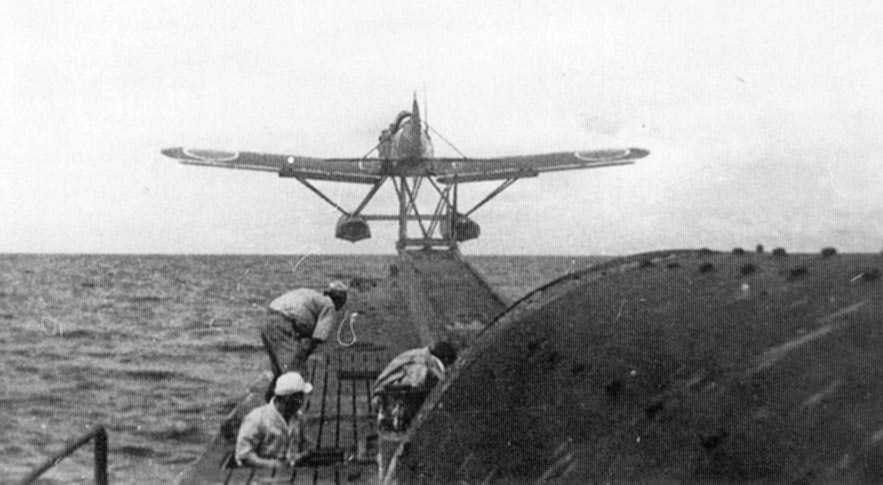
Japanese submarine-launched bomber against the state of Oregon:
There were two attacks, not one, as I'd thought. Later in the same mission this J submarine also sunk two ships, one American and one Soviet.
This pilot, Nobuo Fujita, remains the only military pilot ever to have attacked the mainland USA with bombs.
30
posted on
02/25/2010 3:31:54 PM PST
by
gaijin
To: PackerBoy
Oh, jeez. Are will still blaming this man for an understandable interpretation of fuzzy information provided by new and imprecise technology?Agreed. That, and the fact that the Japs were coming in on a heading only a few degrees different from the expected B-17s.
31
posted on
02/25/2010 4:08:59 PM PST
by
Oatka
("A society of sheep must in time beget a government of wolves." –Bertrand de Jouvenel)
To: JoeProBono
32
posted on
02/25/2010 4:26:46 PM PST
by
fieldmarshaldj
(~"This is what happens when you find a stranger in the Amber Lamps !"~~)
To: dfwgator
To: Mr. Lucky
>>”Japan was no more able to strike the West Coast than a bunch of Arabs would be to strike New York City.”
Of course, you jest; “...a bunch of Arabs” DID, in fact, “strike New York City.” 9/11
DG
34
posted on
02/25/2010 5:57:26 PM PST
by
DoorGunner
("Rom 11: until the fullness of the Gentiles has come in; 26 and so, all Israel will be saved")
35
posted on
02/26/2010 5:01:39 PM PST
by
SunkenCiv
(Freedom is Priceless.)
To: bravo whiskey
oh and fdr did not know of the attack, churchill didn’t tell him, and there were no transmissions from the japanese task force that were picked up by anyone. everyone please reserve your tin foil hats for current events. You're joking, right?
Burton K. Wheeler and at least half the wartime GOP congressional caucus would disagree with you.
Navigation: use the links below to view more comments.
first previous 1-20, 21-36 last
Disclaimer:
Opinions posted on Free Republic are those of the individual
posters and do not necessarily represent the opinion of Free Republic or its
management. All materials posted herein are protected by copyright law and the
exemption for fair use of copyrighted works.
FreeRepublic.com is powered by software copyright 2000-2008 John Robinson
