Posted on 10/17/2026 8:40:15 PM PDT by SeekAndFind
During this time of increased political polarization, it is good to know that there is one issue uniting Trump-loving MAGA Republicans, Bernie Sanders-style Democratic Socialists, and everyone in between: opposition to data centers, especially large data centers built for artificial intelligence (AI). Part of the opposition stems from the public's increasing skepticism of AI. An even larger part is generated by concerns over how AI will drive up electricity costs for those living close to the centers, as well as the high amount of water necessary to run the centers.
Many data center critics ignore the fact that these kinds of facilities have been around for years. As the name suggests, data centers are buildings (or centers) that house the infrastructure and data necessary for the operations of digital services such as the cloud. The typical data center includes servers, switches, routers, and fiber optic cables. These data centers make it possible for individuals to use their phones,and tablets to store and share their photos, messages, and documents, as well as to download and use a wide variety of apps.
While some companies, such as JP Morgan Chase, operate data centers for their own use, other companies operate hyperscalers. These hyperscalers are large enough to host multiple clients. Leading tech firms, including Meta (parent company of Facebook, Instagram, and WhatsApp), Google, and Amazon Web Services operate hyperscalers that provide services to private companies and government agencies.
Data centers are not just the physical foundation of the internet; they are a source of high-paying jobs. For example, data centers transformed Ashburn, Virginia from a small rural town to a technological hub. The tax revenue generated from the center helped fund improvements in infrastructure, public facilities, and schools. Data centers did not became controversial until the need for larger data centers to accommodate AI led many to blame AI data centers for the increase in electric prices.
Since 2020, residential electric prices have risen by more than 36%. However, studies show that data centers pay a large and growing share of utilities fixed charges, thus reducing costs for other consumers. In addition, tech companies Microsoft and Anthropic have both pledged to pay for any increased electric costs incurred as result of their AI data centers. Other technology companies have signed President Trump's Ratepayer Protection Pledge to ensure that increased electric costs from AI Data centers are not borne by consumers.
The problem with the electric grid is not that data centers are using too much electricity, but that public utilities failed to invest resources in infrastructure placement during 20 years of flat demand. The increased revenue from AI data centers can help finance the necessary upgrades to the nation's energy grid. AI companies are also exploring uses of alternative energy as a way to reduce costs. Similarly, many AI data centers, including Amazon Web Services and Microsoft, are using recycled water to reduce their demand for fresh water. Some technology firms are exploring a way to expand AI data centers without increasing their neighbors' bills by building them in the ocean. Microsoft has already shown that underwater data centers can be just as, if not more, effective than land-based ones.
According to University of North Carolina Management Professor Nir Kshetri:
"In 2015, Microsoft launched a research project to explore the feasibility, benefits and challenges of underwater data centers." Part of that effort included setting up a waterproof data center on the seafloor near Scotland's Orkney Islands in 2018. It contained 864 servers and was connected to shore by an underwater cable.
"After two years, Microsoft reported that the servers in the underwater data center failed at about one-eighth the rate of servers in comparable land-based data centers. The company is still studying the possible reasons but hypothesizes that in a sealed underwater environment the equipment is less exposed to oxygen, humidity, and temperature fluctuations - as well as less jostling from people working to replace broken components."
Unfortunately, despite their initial success, Microsoft has suspended its underwater data centers when they ended the experiment in 2024. Hopefully, Microsoft or another tech company will take up underwater data center development and/or discover other ways to meet the need for AI data centers without increasing other Americans' electric bills. Tech companies can do this as long as government limits its role to ensuring that companies compensate Americans for any harms caused by their operations.

|
Click here: to donate by Credit Card Or here: to donate by PayPal Or by mail to: Free Republic, LLC - PO Box 9771 - Fresno, CA 93794 Thank you very much and God bless you. |
.

What a BS statement: “public utilities failed to invest resources in infrastructure placement during 20 years of flat demand”
If demand is flat and not growing, then why would you increase capacity?
CEO: “Widget sales are flat. What do we do?”
MBA Sharpshooter: “Boss, let’s double our production capacity!”
The sudden demand growth by AI caught everybody by surprise.
Its an arms race with China. We dont want to be on the losing end.
The financial scale of the current artificial intelligence buildout is dwarfing the Interstate Highway System, with tech companies effectively spending the highway's entire multi-decade budget every single year.
While the highway network is widely considered the most expensive public works project in American history, the private capital currently flowing into data centers and compute infrastructure operates on a vastly accelerated timeline.
| Metric | US Interstate Highway System | AI Infrastructure Buildout |
|---|---|---|
| Total Cost | ~$620 billion (inflation-adjusted) | ~$5.5 trillion (projected by 2030) |
| Timeline to Build | 36 years (1956–1992) | Concentrated sprint (2023–2030) |
| Peak GDP Impact | ~1.1% of US GDP | ~2.0% to 3.2% of US GDP |
| Current Pace | ~$17 billion per year (average) | ~$194 billion per quarter (top 5 firms) |
| Asset Lifespan | Decades (with resurfacing) | 3 to 4 years (GPU obsolescence) |
| Funding Source | Public (Federal and State taxes) | Private (Hyperscalers and debt) |
The Velocity of Spending
During its peak construction years in the 1950s, the Interstate Highway System consumed roughly 1.1% of the national GDP. Today, capital expenditures by the five major hyperscalers (Amazon, Alphabet, Microsoft, Meta, and Oracle) are pushing AI infrastructure spending toward 3% of US GDP. In 2026 alone, total global AI investment is projected to cross $1 trillion, with roughly $580 billion of that concentrated directly in the US.
The Refresh Cycle Trap
The most significant financial difference between the two projects is asset longevity. When the government poured concrete for the highways, the underlying infrastructure was designed to serve for generations. In contrast, the massive capital expenditures funding the AI boom are purchasing silicon that faces a strict 3-to-4-year lifespan before becoming technologically obsolete. This means the multi-trillion-dollar AI buildout is not a one-time construction cost, but a rapidly recurring hardware refresh cycle that must be continuously funded to maintain state-of-the-art capabilities.
This is a massive amount of spending that has no parallel. I have been an AI enthusiast, but it has become more and more obvious that the return on investment has almost no chance of ever working out. This is likely to leave our financial system in really bad shape when reality finally sets in.
What is the future of PCs and software companies such as MS? Yes I know MS is in the Data Center business. But will PC’s disappear and be replaced by dumb terminals? If so, no need for personal computer or personal copies of software programs. These will reside on the Data Center.
Dear Mr. Singleton. You lost credibility when you mentioned Bernie Sanders-style Democratic Socialists. Why do you make such simply mistakes? Oh, I get it. You think socialism will work this time.
Not sure you can conclude AI is financially impractical.
If medical advances alone are as big as expected, this should take pressure off the federal Medicare and Medicaid budgets, which are the largest drivers of our federal debt. Just as one example...
No argument there.
It’s simple supply and demand. Every tech company in the world is now using AI as part of their daily business.
AI has also become useful to everybody that uses Google or ChatGPT or any other AI product.
AI is now as common as Google, Amazon, YouTube, instagram and Facebook.
I started using AI at the beginning of 2026 and now use it every day at home or work. Working on cars as a hobby became much easier with YouTube but now is even better with AI. It’s amazing.

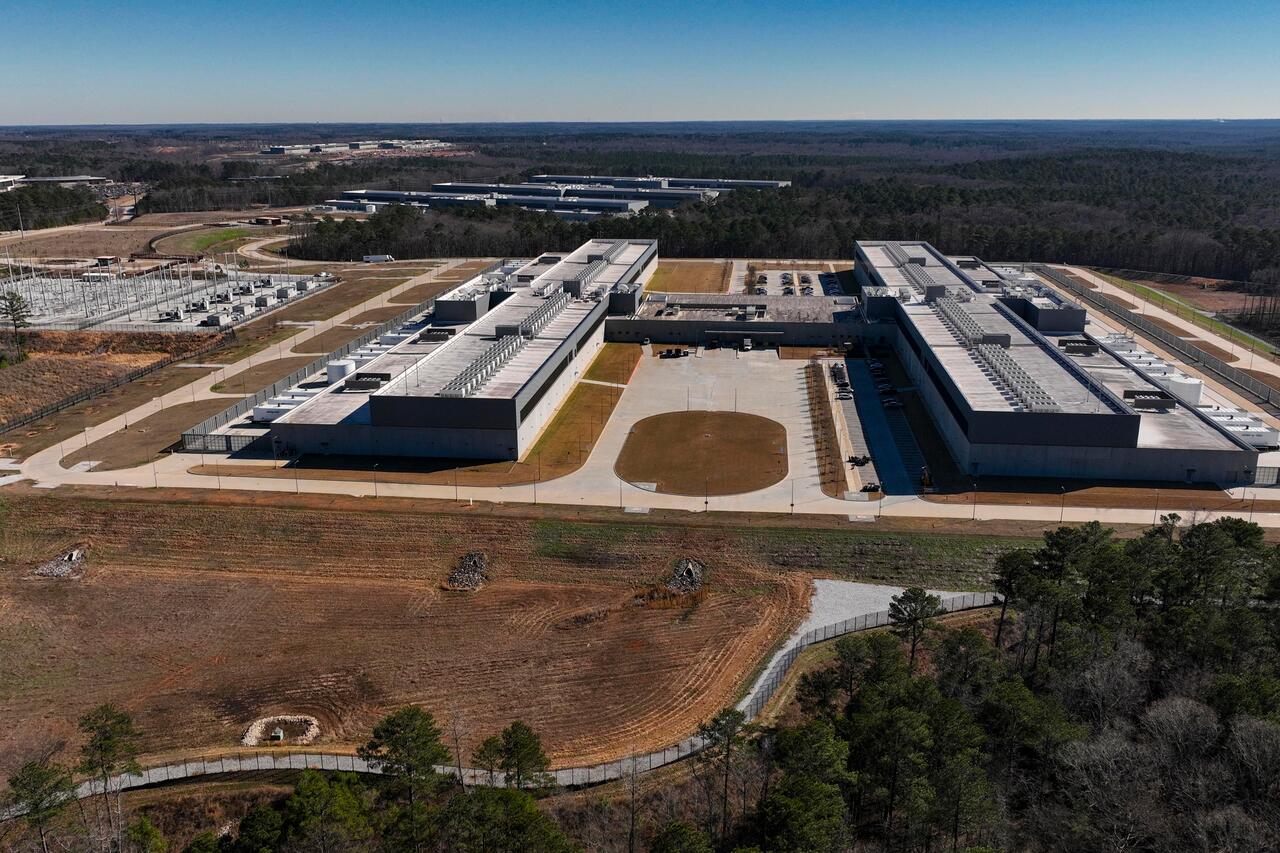
No. Buildings with racks of web servers are common. You might not even be aware of them. Multiple football field sized data centers drawing hundreds of megawatts of power and the associated cooling systems are not so inconspicuous.
“...data centers pay a large and growing share of utilities fixed charges, thus reducing costs for other consumers.”
Not around here...Electrical coasts are through the roof, despite the growing number of data centers.
“...The increased revenue from AI data centers can help finance the necessary upgrades”
Big difference between “can” and “will”. See first comment.
An additional note: these centers, all run by leftist oriented owners like Meta, etc. are using traditionally generated electricity instead of the oh so green wind and solar options they want everyone else to use. Because that power is unreliable.
Huh...go figure.
I’m not so opposed to data centers per se, but Pollyanna articles should be taken with enough grains of salt that would raise your blood pressure...
Not around here...Electrical coasts are through the roof, despite the growing number of data centers.”
Therein lies the problem - most reasonable folks would not object to these power hungry operations IF (note big IF) they did not cause any increase in regular consumer power bills. If electrical provider in your area has to pass along the cost of a data center's power demands, that is a failure of your utility to properly plan for the needed infrastucture required.
A datacenter that consumes 1 GW occupies 1.5 to 2.2 million sq ft. It employs 150 to 300 permanent staff.
A 1 GW solar farm occupies about 200 million sq ft, and employs only 5 to 15 permanent staff.
Datacenters are presently the largest source of new blue collar jobs.
And:
If you’re reading this, you’re using datacenters.
If you use Tik-Tok, X, Instagram, Facebook, Reddit, Amazon, or any other internet source you’re using datacenters.
If you use a cell phone, you’re using datacenters.
If you use a credit card, you’re using datacenters.
And on and on.
Sometimes I feel like the crazy finances of AI and Data Center construction is driven by the notion that massive use of AI and automation in the future will make “work” a thing of the past for huge numbers of humans. The concept of “money” may go away as goods and services are provided for “free” by various machines. If that is the future, then perhaps spending trillions right now is just a “can’t lose/why not?” situation.
I don’t say that this is good thinking — but if the big boys think like this, it might explain some things. Elon Musk has certainly hinted at it.
I’m no fan of data centers, but maybe it will point out to some in a more graphic way that we need to increase the electrical grid, even without the data centers, just as we also need more petroleum refineries.
Disclaimer: Opinions posted on Free Republic are those of the individual posters and do not necessarily represent the opinion of Free Republic or its management. All materials posted herein are protected by copyright law and the exemption for fair use of copyrighted works.