|
Posted on 05/08/2003 5:34:33 AM PDT by SAMWolf
|
|
 are acknowledged, affirmed and commemorated.
|

| Our Mission: The FReeper Foxhole is dedicated to Veterans of our Nation's military forces and to others who are affected in their relationships with Veterans.
Where the Freeper Foxhole introduces a different veteran each Wednesday. The "ordinary" Soldier, Sailor, Airman or Marine who participated in the events in our Country's history. We hope to present events as seen through their eyes. To give you a glimpse into the life of those who sacrificed for all of us - Our Veterans.
|
|
|
|
The Battle of the Coral Sea John James Powers, born in New York City 3 July 1912, graduated from the Naval Academy in 1935. After serving at sea for 5 years, he underwent flight training, reporting 21 January 1941 to Bombing Squadron 5, attached to famed Yorktown (CV-5).  Next morning while the great carrier battle continued, he joined the attack on Shokaku, scoring an important bomb hit. His intrepid, low-bombing run, however, brought Powers into heavy antiaircraft fire and his plane plunged into the sea. Lt. Powers was declared dead; but, for his indomitable spirit in this series of attacks, was awarded the Medal of Honor posthumously. According to the citation: "... completely disregarding the safety altitude and without fear or concern for his own safety, he courageously pressed home his attack, almost to the very deck of an enemy carrier and did not release his bomb until he was sure of a direct hit." Congressional Medal of Honor Awarded Posthumously JOHN JAMES POWERS Rank and organization: Lieutenant, U.S. Navy. Born: 13 July 1912, New York City, New York. Accredited to: New York. Other Navy award: Air Medal with 1 gold star. For distinguished and conspicuous gallantry and intrepidity at the risk of his life above and beyond the call of duty, while pilot of an airplane of Bombing Squadron 5, Lt. Powers participated, with his squadron, in five engagements with Japanese forces in the Coral Sea area and adjacent waters during the period 4 to 8 May 1942. 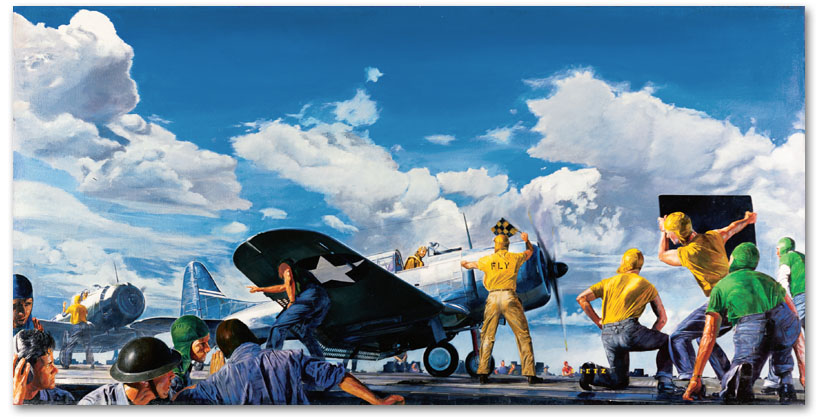 Three attacks were made on enemy objectives at or near Tulagi on 4 May. In these attacks he scored a direct hit which instantly demolished a large enemy gunboat or destroyer and is credited with two close misses, one of which severely damaged a large aircraft tender, the other damaging a 20,000-ton transport. He fearlessly strafed a gunboat, firing all his ammunition into it amid intense antiaircraft fire. This gunboat was then observed to be leaving a heavy oil slick in its wake and later was seen beached on a nearby island. On 7 May, an attack was launched against an enemy airplane carrier and other units of the enemy's invasion force. He fearlessly led his attack section of three Douglas Dauntless dive bombers, to attack the carrier. On this occasion he dived in the face of heavy antiaircraft fire, to an altitude well below the safety altitude, at the risk of his life and almost certain damage to his own plane, in order that he might positively obtain a hit in a vital part of the ship, which would insure her complete destruction. This bomb hit was noted by many pilots and observers to cause a tremendous explosion engulfing the ship in a mass of flame, smoke, and debris. The ship sank soon after. That evening, in his capacity as Squadron Gunnery Officer, Lt. Powers gave a lecture to the squadron on point-of-aim and diving technique. During this discourse he advocated low release point in order to insure greater accuracy; yet he stressed the danger not only from enemy fire and the resultant low pull-out, but from own bomb blast and bomb fragments. Thus his low-dive bombing attacks were deliberate and premeditated, since he well knew and realized the dangers of such tactics, but went far beyond the call of duty in order to further the cause which he knew to be right. 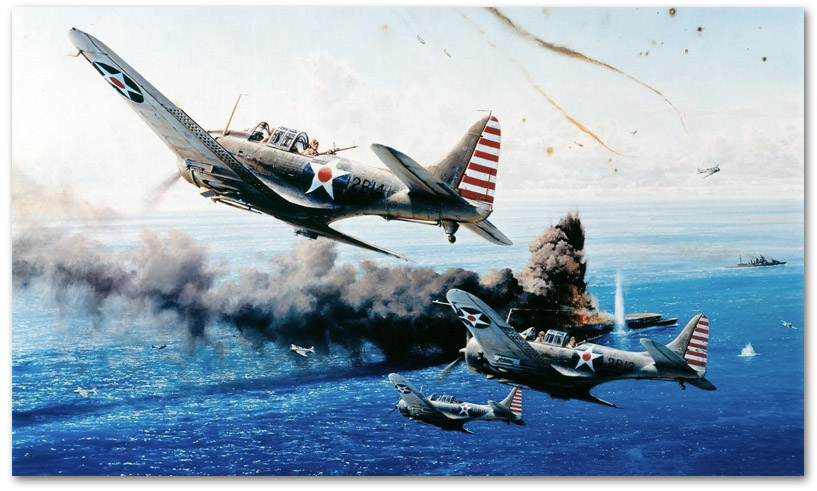 The next morning, 8 May, as the pilots of the attack group left the ready room to man planes, his indomitable spirit and leadership were well expressed in his own words, "Remember the folks back home are counting on us. I am going to get a hit if I have to lay it on their flight deck." He led his section of dive bombers down to the target from an altitude of 18,000 feet, through a wall of bursting antiaircraft shells and into the face of enemy fighter planes. Again, completely disregarding the safety altitude and without fear or concern for his safety, Lt. Powers courageously pressed home his attack, almost to the very deck of an enemy carrier and did not release his bomb until he was sure of a direct hit. He was last seen attempting recovery from his dive at the extremely low altitude of 200 feet, and amid a terrific barrage of shell and bomb fragments, smoke, flame and debris from the stricken vessel.
|
Most notably the 201st Squadron..flying ground attack in the Phillipines 1945 as clean still ran for some time since the initial landings in Oct 44.
MEAPF was disbanded in Dec. of 1945.
Wether they were able to "Ride the signal back" by signal strength is the debate.
Japanese radar was terribly inferior to U.S. sets...in 1943 when the SG radar made its way into the fleet..the operational strength of U.S. Naval forces dramatically picked up.[In 1945 ,Japanese radars on warships were on par with the U.S. of 1942]
The SC sets were prone to atmospherics ,coupled with the reality that the sets were vulnerable to shock..ie..when 5" mounts on destroyers opened up..they often blew curcuits and lost their radars...same with the crusiers.
Able to aquire contacts at varying distances in good weather...over 50 miles...but not accurate...a more reliable picture was 10 miles for a naval commander to trust and act on in 1942.
So at times U.S. naval command pondered how so many Japaneses planes could turn up so suddenly.


I don't know how he does it all.
Hahaha, he absolutely adores his MIL, and he'll do anything to please her, well, it's like love and marriage….


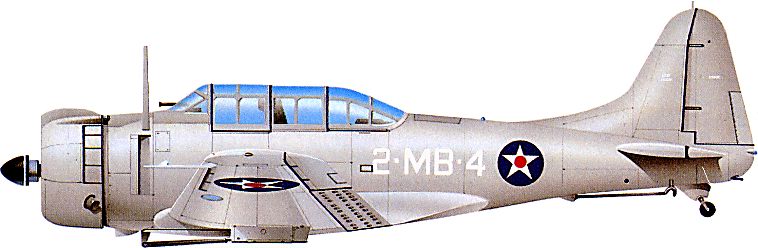
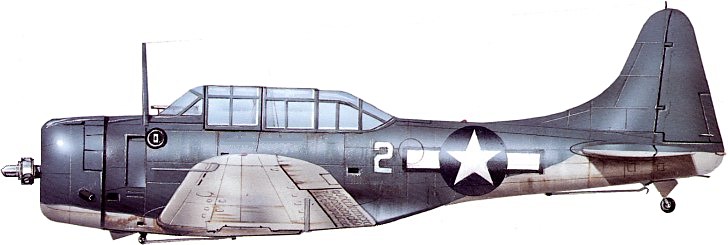
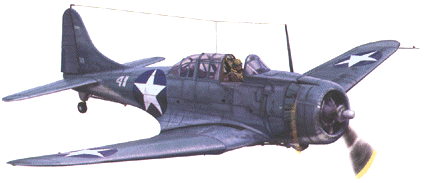
The Dauntless was the standard shipborne dive-bomber of the US Navy from mid-1940 until November 1943 (when the first operational Curtiss SB2C Helldivers arrived to replace it). In 1942-43, at the Battle of the Coral Sea, in the bitter Guadalcanal campaign and most of all in the crucial Battle of Midway, the Dauntless did more than any other aircraft to turn the tide of the Pacific War. At Midway on 4 June 1942 it wrecked all four Japanese carriers, and later in the battle sank a heavy cruiser and severely damaged another. From 1942 through to 1945, in addition to its shipboard service, the SBD saw intensive use with the US Marine Corps, flying from island bases.
In the Guadalcanal Campaign the Dauntless - operating from US carriers and from Henderson Field on the island of Guadalcanal itself - took a huge toll of Japanese shipping. SBDs sank the carrier Ryujo in the battle of the Eastern Solomons, and damaged three other carriers in the battles of Eastern Solomons and Santa Cruz. In the decisive Naval Battle of Guadalcanal, 12-15 November 1942, SBDs sank the heavy cruiser Kinugasa and, supported by TBD Avengers, sank nine transports.
The Dauntless was older and slower than its Japanese opposite number, the Aichi D3A2 "Val" - but the SBD was far more resistant to battle damage, and its flying qualities perfectly suited it to its role. In particular - as its pilots testified - it was very steady in a dive.
When the more modern and powerfully-engined Helldiver went into action alongside the SBD it was soon realised - particularly at the Battle of the Philippine Sea - that the new aircraft was inferior to the Dauntless. But the Helldiver was already in large-scale production and it was too late to reverse the decision that it should supplant the Dauntless in shipboard service. The SBD was gradually phased out during 1944, and the 20 June 1944 strike against the Japanese Mobile Fleet in the Battle of the Philippine Sea was therefore its last major action as a carrier-borne aircraft. The SBD nonetheless continued to be used effectively by the Marine Corps right up to the end of hostilities in August 1945, most notably in the Philippines campaign.




Disclaimer: Opinions posted on Free Republic are those of the individual posters and do not necessarily represent the opinion of Free Republic or its management. All materials posted herein are protected by copyright law and the exemption for fair use of copyrighted works.


