Posted on 06/20/2026 3:02:03 PM PDT by ebb tide
McElroy Welcomes Outreach to Washington
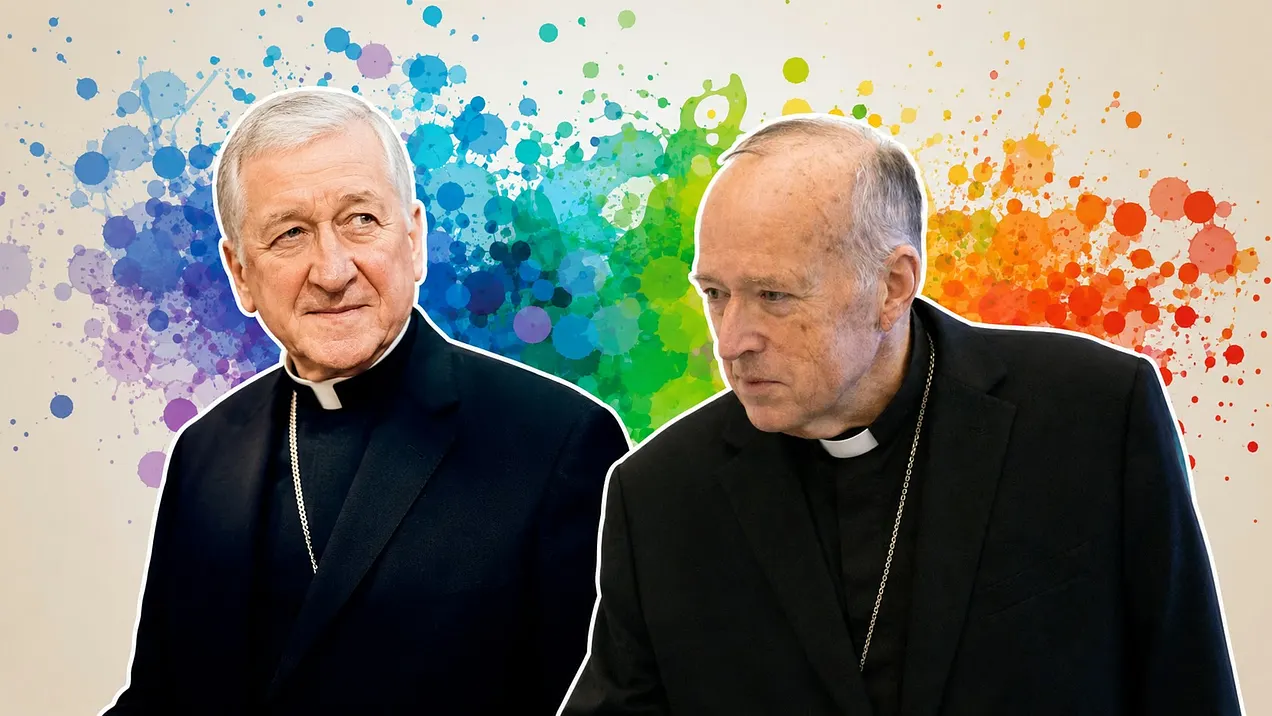
Cardinal Robert McElroy welcomed the 2026 Outreach Conference to Washington with language that should make every serious Catholic stop reading and then read it again.
The letter is dated June 19, 2026, on the letterhead of the Roman Catholic Archdiocese of Washington. It begins with the usual soft clerical greeting: “My Dear Fellow Pilgrims in Faith.” Then McElroy tells the conference that he is “delighted” to welcome it to Washington. He says he knows the Holy Spirit will be “profoundly present” in its meetings and discussions.
This is Father James Martin’s Outreach conference, held at Georgetown University, built around ministry to LGBTQ Catholics, with panels, liturgies, networking, pastoral workshops, and the expected vocabulary of accompaniment. Outreach’s own conference page lists sessions on LGBTQ Catholics and chastity, theology and LGBTQ Catholics, transgender Catholic experience, parish ministry, Scripture, mental health, and commissioning.
McElroy did not treat the conference as a delicate pastoral problem requiring doctrinal precision. He treated it as a providential moment.
The key sentence comes in the second paragraph. McElroy writes that the Church now stands at a moment when “the pastoral foundations laid by Pope Francis for authentic ministry to and with the LGBT community are being deepened and refined by Pope Leo.”
That sentence is far more important than another routine liberal letter of greeting. McElroy is interpreting Leo XIV as the continuation and development of Francis’ LGBT project. He presents Francis as the founder, Leo as the refiner, and Outreach as the local American expression of this new pastoral regime.
The older Catholic framework begins with the nature of man, the created order, the sixth commandment, chastity, repentance, grace, temptation, sin, confession, and conversion. It insists that persons must be treated with charity and justice because every human soul is made for God. It also insists that sexual acts outside the marriage of man and woman cannot be blessed, normalized, or made the basis of ecclesial identity.
McElroy’s letter moves in another world. The governing terms are LGBT community, authentic ministry, diverse disciples, experience, new paradigm, dialogue, and holiness in all its concreteness. The old moral doctrine remains somewhere in the background like furniture stored in a closed room. The public theology is experience.
That is the breakthrough. The person is no longer approached primarily as a sinner called to grace, as every one of us is. The person is approached through an identity category that the Church is asked to receive, listen to, accompany, and integrate into a new paradigm of holiness.
McElroy ends the paragraph with Francis’ phrase “Todos, Todos, Todos.” Everyone, everyone, everyone.
The slogan works because it sounds like mercy. Its practical effect is the suspension of judgment. Everyone is summoned inside before anyone has explained what conversion still means. The invitation becomes the doctrine. The welcome becomes the Gospel. The pastoral process becomes the new rule of faith.
Cupich Turns Welcome Into Missionary Doctrine
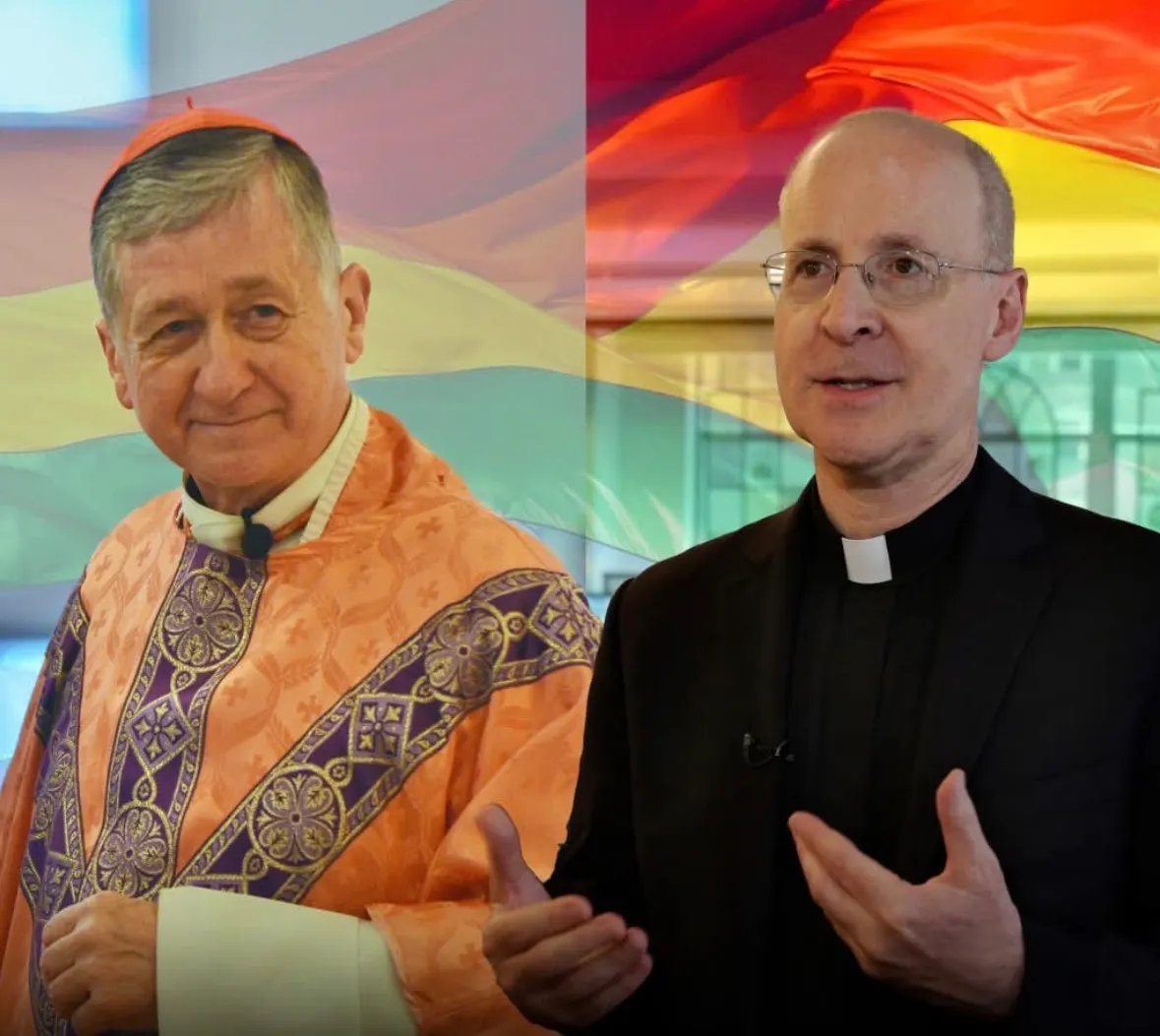
Cardinal Blase Cupich sent his own letter from Chicago, and the tone is smoother because Cupich has always mastered the language of bureaucratic warmth.
His letter praises Outreach’s conference theme, “Walking Side by Side: Celebrating Five Years of Outreach Ministries.” He writes that listening and accompanying are essential to a thriving Church. He notes that the conference features leaders from vibrant parishes and Chicago’s Archdiocesan Gay and Lesbian Outreach. He praises efforts to foster outreach to LGBTQ Catholics and a culture of welcome, hospitality, and proclaiming the Gospel.
Then he adds the line that reveals the structure beneath the sentiment: the conference theme “resonates well in our synodal church and in the current new missionary age.”
This is no longer a marginal ministry. It is being placed inside the missionary identity of the postconciliar Church. Cupich presents LGBTQ outreach as part of the new evangelization, the synodal method, and the Church’s public witness in a polarized world.
The word evangelization has been hollowed out and refilled. In the old Catholic sense, evangelization meant the proclamation of Jesus Christ, the call to repentance, incorporation into the Church, sacramental life, moral transformation, and perseverance unto salvation. In Cupich’s letter, evangelization becomes a process of listening to faith journeys, recognizing that people grow through relationship, and ensuring that no one feels left out or left behind.
Conversion retreats into process language.
The most revealing part of this rhetoric is its moral evasiveness. Cupich does not say what exactly the Church is calling anyone to leave behind, how chastity fits into the conference’s culture of welcome, whether same-sex relationships must be abandoned, whether transgender ideology is false, whether Catholic anthropology still governs pastoral practice, or whether the Gospel he invokes still contains the hard words of Christ.
He blesses the process. The process does the rest.
This is how the new church changes doctrine while denying that doctrine has changed. It moves the moral center from law to narrative, from commandment to journey, from repentance to inclusion, from confession to accompaniment. The old doctrine is not always formally abolished. It is made pastorally unusable.
Then the unusable doctrine becomes a museum piece.
Study Group 9 Supplies the Mechanism
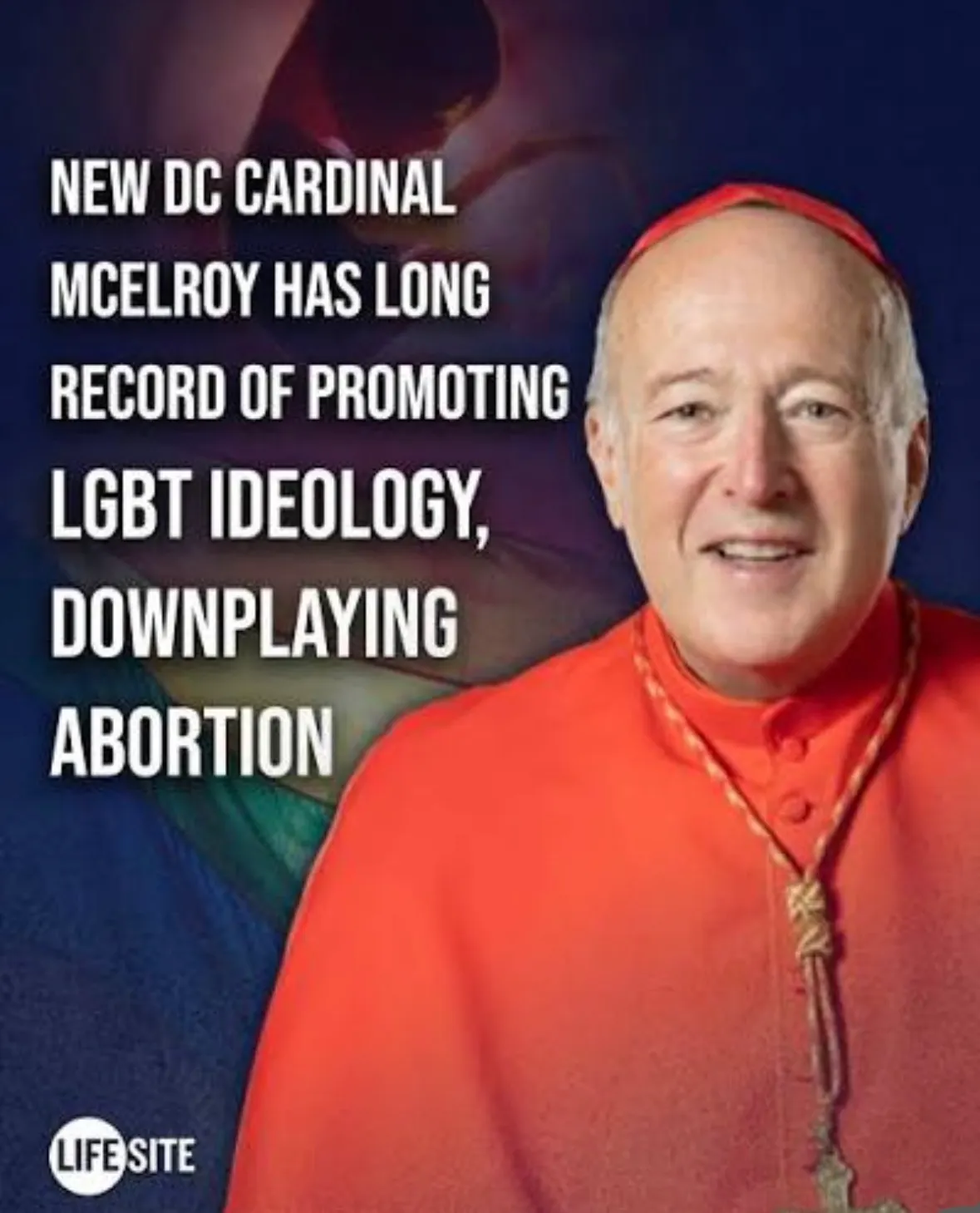
McElroy explicitly ties the Outreach conference to Study Group 9 of the Synod on Synodality. That connection matters because Study Group 9 gives the pastoral revolution a theological method.
The report includes a section on “Experiences of people of faith with same-sex attractions.” It speaks of testimonies, suffering, stigma, double lives, reparative therapy, pastoral practices, doctrine, and the challenge of reconciling doctrinal firmness with welcome. That much sounds like familiar postconciliar framing.
Then the report crosses a line.
One testimony says that sin, at its root, does not consist in the same-sex couple relationship, but in a lack of faith in a God who desires our fulfillment. The report presents this testimony as part of the material for synodal discernment. It also speaks of the stability of a healthy affective relationship, self-acceptance, participation in the Christian community, and a theology capable of opening up contextual and hermeneutic readings of Scripture.
The report then identifies the deeper methodological target. It says the task is to overcome the theoretical model that derives practice from “pre-packaged” doctrine and applies general principles to concrete personal situations. It calls instead for a circularity between theory and practice, thought and experience, with theological reflection proceeding from experiences of “good” inscribed in the sensus fidei fidelium.
That is the engine.
Doctrine becomes one pole in a circle. Experience becomes another. The concrete life of those living in objectively disordered situations becomes material through which the Church discerns the good. The older model of applying moral truth to particular cases is treated as inadequate, abstract, pre-packaged, and pastorally stuck.
This is exactly what McElroy’s letter celebrates as a “new paradigm.”
A Catholic may listen to suffering without surrendering doctrine. A priest may treat a person with tenderness while still naming sin. A confessor may understand weakness, loneliness, and fear while still giving the medicine of repentance. The entire sacramental system presupposes this union of truth and mercy.
Study Group 9 moves toward a different settlement. It allows experience to pressure doctrine until the doctrine can no longer speak clearly. It reframes the contradiction between Catholic moral teaching and same-sex relationships as an impasse to be overcome rather than a truth to be obeyed.
The phrase “call to holiness in all of its concreteness” then becomes dangerous. Holiness is no longer clearly defined by conformity to Christ through grace, repentance, chastity, and the commandments. It becomes something discerned inside the very experiences the Church once knew how to judge.
The pastoral revolution becomes doctrinal because it changes the location of authority.
Authority moves from the deposit of faith to the interpreted experience of the accompanied person.
Rome Prepares to Widen the SSPX Trap
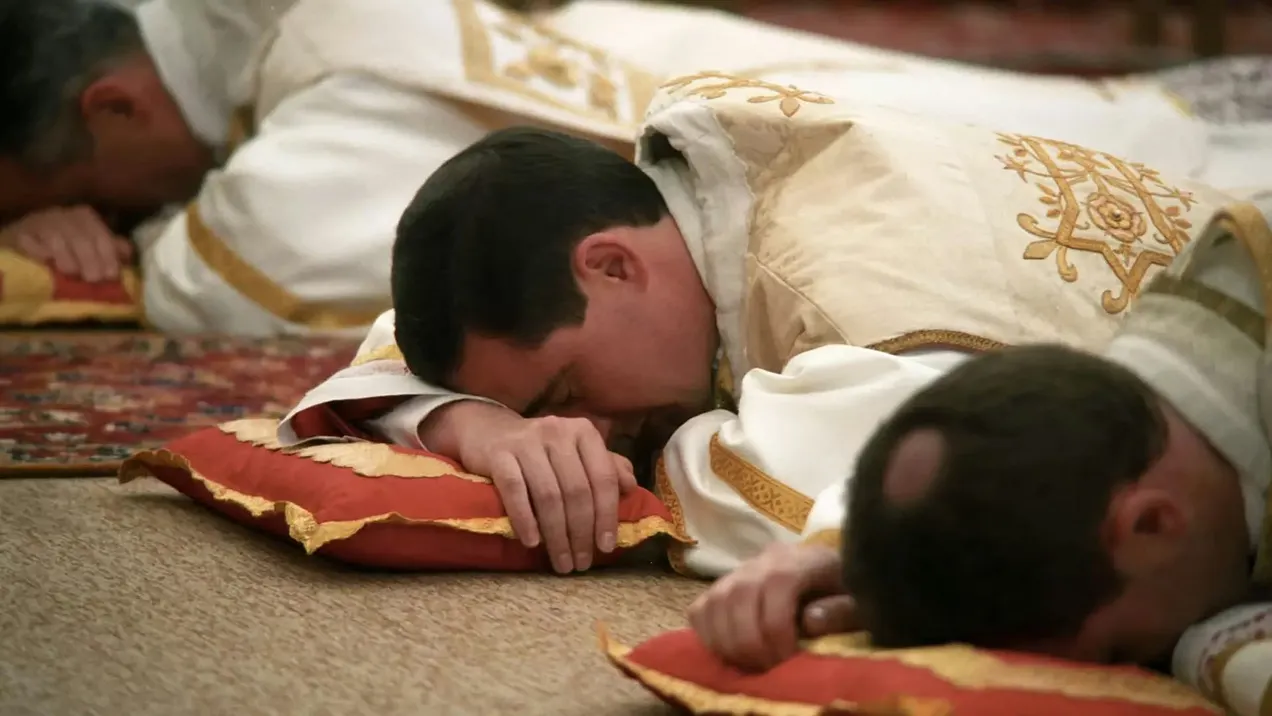
Reports from Rome now suggest that the coming punishment of the Society of Saint Pius X may reach far beyond the bishops who consecrate and the four priests who receive episcopal orders on July 1.
Tribune Chrétienne reports that a document under preparation at the Vatican could formally clarify the canonical consequences of what Rome will call a new rupture with the Holy See. The report says the consequences may extend to the whole SSPX structure: roughly 700 priests, seminaries, apostolates, works, and even the faithful who regularly attend SSPX chapels around the world.
Leo XIV has already spoken publicly in the language of final warning. At Castel Gandolfo, he said he was considering one more appeal to the SSPX: “Do not do this.” Then he named the heart of the matter. The Society, he said, refuses to accept fundamental elements of the Church, beginning with several points of the Second Vatican Council.
That is the line that explains everything. Rome is preparing to make Vatican II the visible boundary of Catholic communion. The consecrations provide the occasion. The real target is the traditionalist refusal to accept the council as the charter of the new ecclesial order.
The reported scope of the possible decree is breathtaking. If Rome declares the entire SSPX structure schismatic, the result would not be limited to a handful of bishops. It would place priests, schools, seminaries, missions, chapels, and ordinary faithful under a cloud of canonical condemnation. Families who have spent years attending SSPX Masses, many of them believing themselves to be loyal Catholics preserving the faith of their fathers, could suddenly find themselves treated as formal participants in schism.
This would mark a historic escalation.
The same Roman system that speaks endlessly of dialogue, listening, inclusion, and accompaniment may be preparing to place a global traditional Catholic network under one sweeping label. The faithful who kneel before the old Mass could be told that their habitual spiritual home now places them outside communion. The priests who preach the old doctrine could be branded as schismatic. The chapels that preserved Catholic life through decades of liturgical and doctrinal chaos could be treated as forbidden territory.
This is why the report’s references to other traditional communities are important.
Tribune Chrétienne notes concern among groups attached to the traditional liturgy but formally loyal to Rome: Saint Thomas Becket communities, the Missionaries of Divine Mercy, the Benedictines of Nursia, and others watching the SSPX case closely. The pattern already looks arbitrary. One community receives permissions. Another is blocked from ordinations in the traditional rite. Another waits under restriction. Another is told its priests cannot celebrate the Tridentine Mass. A nuncio in France shows firmness toward the Fraternity of Saint Peter. Cardinal Roche, Cardinal Fernández, and Leo XIV all appear aligned against any further growth of the traditionalist world.
The message is unmistakable. The official structures may tolerate the old rite only as a controlled exhibit. They will not allow it to become a living alternative to the postconciliar settlement.
That is the real fear in Rome.
The SSPX has always represented more than a canonical problem. It represents a living accusation. Its existence says that the old Mass, old doctrine, old priestly formation, and old condemnations of modern error did not die when the council ended. Its chapels say that Catholics can still recognize the religion of their ancestors. Its seminaries say that priestly identity can still be formed outside the psychological universe of Vatican II. Its bishops say that the traditional sacramental organism can survive without Roman permission from men who persecute the very tradition they claim to govern.
Rome wants that accusation neutralized.
The contrast with other “sensitive” groups is impossible to miss. Anglican women “bishops” can be received in Vatican settings. German synodal figures can spend years pushing sexual and ecclesiological revolution while remaining inside the conversation. LGBT conferences can receive praise from cardinals who invoke the Holy Spirit and the new synodal paradigm. Interfaith gestures can multiply. False worship can be treated as encounter. Moral revolution can be processed through discernment.
The old Mass gets decrees.
The SSPX gets warnings.
Traditional priests get suspicion.
Traditional faithful may soon get a canonical brand.
The word “schism” is being used to protect the conciliar revolution from the Catholic past. Rome speaks as if the wound comes from Écône. The wound began when the men of the council and their successors taught Catholics to accept a new relation to false religions, a new liturgy, a new attitude toward modern liberty, a new pastoral method, and a new instinct toward the world. The SSPX did not create that rupture. It refused to baptize it.
A wider decree against all SSPX clergy and faithful would therefore clarify the present regime. It would show that the postconciliar hierarchy can still act with terrifying juridical force when the target is Catholic Tradition. The same men who hesitate before every progressive error can suddenly discover the full vocabulary of law, communion, obedience, rupture, and excommunication when the old Roman rite refuses to remain contained.
This is not pastoral governance. It is canonical quarantine.
Rome has spent years telling Catholics that everyone must be welcomed: todos, todos, todos. The apparent exception is the Catholic who wants the faith, worship, and condemnations of the Church before the council. For him, welcome has conditions. Dialogue has limits. Mercy has deadlines. Communion requires surrender.
If the reported decree comes, it will not merely punish the SSPX.
It will announce that Vatican II has become the gate through which every Catholic must pass.
That is why this moment could reach far beyond the Society. Every traditional institute now has reason to look at Écône and understand its own future. Permission today does not guarantee permission tomorrow. Diocesan favor can vanish. Roman patience can expire. The ancient rite can be allowed in one monastery and strangled in another. The law can shift whenever the guardians of the new order decide that tradition has become too confident.
The coming weeks may expose the final shape of the postconciliar settlement.
There is room for almost everyone.
There is no secure room for the old faith when it refuses to apologize for existing.
The Argentine Bishops Thank God for An Abortion Activist’s Courage
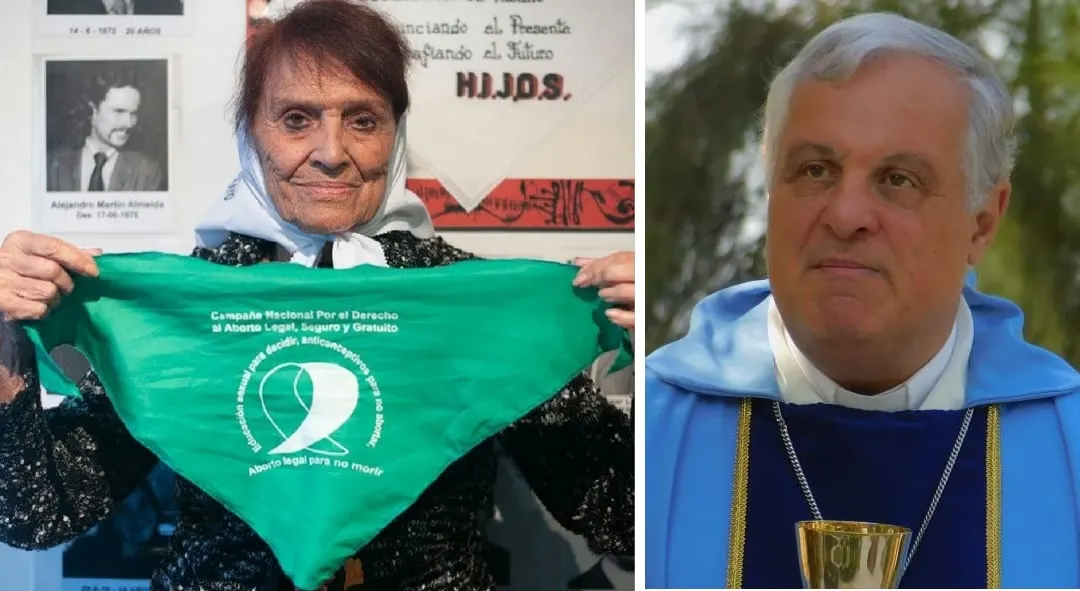
The Argentine bishops’ tribute to Taty Almeida shows the same moral disorder in another register.
Almeida was one of Argentina’s best known human rights activists, associated with the Mothers of Plaza de Mayo, the movement born from the anguish of families whose loved ones disappeared during Argentina’s political violence and military dictatorship. Her own son was disappeared. Any honest Catholic can recognize the grief, courage, and moral seriousness involved in seeking truth about the disappeared.
That part of her life deserves sober respect.
The bishops’ statement went further. The Argentine Episcopal Conference praised her historic commitment to human rights and thanked God for sustaining her courage in difficult times. It described her responsibility in the search for truth and justice as a testimony for many generations.
The statement did not account for her public support for abortion.
Almeida appeared with the green scarf, the symbol of Argentina’s campaign for legal abortion. Argentine pro-abortion memory includes her among those who supported the movement when the abortion debate filled the streets. The bishops praised the courage and historical commitment while leaving the abortion question unmentioned.
That silence performs an absolution.
The same hierarchy that knows how to issue precise warnings against traditional consecrations suddenly becomes generous, broad, and poetic when the subject is a left-wing human rights figure who also supported legal abortion. The parts of the life that fit the bishops’ social justice vocabulary are elevated. The support for killing unborn children disappears into the fog.
This is one of the main tricks of the postconciliar moral imagination. Human rights language becomes a solvent. It can wash away the blood. A person becomes a symbol of truth, justice, democracy, memory, courage, and fraternity, and the nonnegotiable evil gets treated as an unfortunate footnote too divisive for the moment.
Catholic charity for the dead does not require public praise for a life without moral accounting. Catholics may pray for Almeida’s soul. Catholics may acknowledge the horror of state terror. Catholics may condemn kidnapping, torture, disappearance, and murder. Catholics may sympathize with a mother who spent decades seeking her son.
Catholic bishops have a higher duty than sentimental balance. They must teach the moral law whole.
A public tribute that thanks God for courage while ignoring abortion activism catechizes by omission. It teaches Catholics that the murder of the unborn can be bracketed if the public biography contains enough progressive human rights capital.
That is the same pattern at work in Outreach. Identity, experience, suffering, exclusion, and social justice become the dominant grammar. The moral law is relocated to the margins.
The Pattern After the Evidence
These stories form one moral picture.
The postconciliar system has become exquisitely sensitive to the suffering of those who challenge Catholic sexual teaching. It has become eloquent about inclusion, welcome, accompaniment, and identity. It can speak of the Holy Spirit over an Outreach conference and of a new paradigm for holiness grounded in diverse experience.
The same system has become increasingly severe toward Catholics who challenge Vatican II, defend the old Mass, and resist the doctrinal consequences of the council.
The old sins are redescribed as wounds, journeys, identities, and testimonies.
The old faith is redescribed as rigidity, division, nostalgia, and schism.
That is why the Traditional Catholic critique keeps becoming harder to dismiss. This is no longer a dispute over tone or a matter of one reckless liberal bishop or one poorly worded synod paragraph. The pattern is structural. The men in the highest places of the postconciliar institution speak with pastoral tenderness toward moral revolution and juridical menace toward Catholic tradition.
A Church that truly believed its old doctrine would never treat an Outreach conference as a privileged site of the Holy Spirit while treating the defense of the old Mass and preconciliar faith as the real emergency.
A Church that truly believed its old moral law would not thank God for the courage of a public abortion supporter without warning that no human rights record can sanctify support for the killing of the unborn.
A Church that truly believed its old theology of authority would not make Vatican II the practical test of communion while the sixth commandment is slowly reprocessed through experience and dialogue.
The new religion is not chaotic. It has a discipline of its own.
It blesses process.
It praises experience.
It elevates inclusion.
It canonizes dialogue.
It spiritualizes ambiguity.
Then it remembers law when tradition refuses to die.
The modern hierarchy can find the Holy Spirit at Georgetown, courage in an abortion-rights symbol, and a new paradigm in the testimonies of same-sex relationships. It can also find schism at Écône.
That tells Catholics what kind of church they are being asked to obey.

Intro
Yeah
They kicked in the chapel door
Looking for schism
Found a veil, a missal
And six kids eating donuts
Uh oh
Chorus
Will you help me find my schism?
I think Rome left it on the floor
They searched the Latin chapel
Then blessed Georgetown next door
Will you help me find my schism?
They said it’s somewhere in the pew
But the rainbow conference got a cardinal letter
And a “Holy Spirit” stamp too
Todos, todos, todos
Everybody come on in
Except the folks with old missals
That’s apparently the sin
Verse 1
Cardinal Bob wrote a love note
Said the Spirit would attend
At a conference full of buzzwords
Where the doctrine likes to bend
Cupich sent a greeting card
With a Chicago velvet smile
“Walking side by side,” he said
For about five synodal miles
They got badges, they got lanyards
They got panels on the floor
They got “lived experience”
Beating doctrine two to four
Then Grandma brings her rosary
And whispers “Kyrie eleison”
Rome jumps out the bushes yelling
“Call Fernández, seize the reason!”
Chorus
Will you help me find my schism?
I think Rome left it on the floor
They searched the Latin chapel
Then blessed Georgetown next door
Will you help me find my schism?
They said it’s somewhere in the pew
But the rainbow conference got a cardinal letter
And a “Holy Spirit” stamp too
Todos, todos, todos
Everybody come on in
Except the folks with old missils
That’s apparently the sin
Verse 2
Study Group Nine came rolling in
With a binder full of haze
Said doctrine’s pre-packaged now
And experience gets a raise
They put sin in the suggestion box
They put Scripture on a slide
They put “journey” in the driver’s seat
And let the commandments ride
At Georgetown, they say “listen”
At Écône, they say “halt”
At Outreach, it’s the Spirit
At the old Mass, it’s assault
They can nuance every rainbow
Till the catechism faints
But a priest says “Introibo”
And they’re rounding up the saints
Chorus
Will you help me find my schism?
I think Rome left it on the floor
They searched the Latin chapel
Then blessed Georgetown next door
Will you help me find my schism?
They said it’s somewhere in the pew
But the rainbow conference got a cardinal letter
And a “Holy Spirit” stamp too
Todos, todos, todos
Everybody gets a chair
Unless you chant the Credo
Then security’s over there
Verse 3
Argentina thanked the courage
Of the lady with the scarf
Green as springtime, red as warning
Somehow bishops missed that part
They remembered all the slogans
They remembered all the pain
They forgot the little babies
And the blood behind the campaign
They can spot a schismatic
At three hundred yards in lace
But abortion’s just a footnote
When it wears a left-wing face
Give a speech on human rights
Get the incense and applause
Ask for the old religion
And they hit you with the laws
Chorus
Will you help me find my schism?
I think Rome left it on the floor
They searched the Latin chapel
Then blessed Georgetown next door
Will you help me find my schism?
They said it’s somewhere in the pew
But the rainbow conference got a cardinal letter
And a “Holy Spirit” stamp too
Todos, todos, todos
Hear the happy slogan ring
Everybody means everybody
Minus those before the spring
Bridge
They got mercy for the movement
They got mercy for the trend
They got mercy for the bishop
Who can’t tell where morals end
They got process for the Germans
They got smiles for every fight
They got dialogue for everyone
Who attacks the Church from left to right
But a chapel full of families
With a missal and a bell
Gets a Roman SWAT team memo
Saying, “See you folks in hell”
They kicked down the chapel door
Looking for rebellion
Found three altar boys, a potluck
And a dad in a Suburban
They said, “Where’s the danger hiding?”
I said, “Maybe down the street
Where the cardinals wrote endorsements
For the sexual retreat”
Final Chorus
Will you help me find my schism?
I think Rome left it on the floor
They searched the Latin chapel
Then blessed Georgetown next door
Will you help me find my schism?
They said it’s somewhere in the pew
But the rainbow conference got a cardinal letter
And a “Holy Spirit” stamp too
Todos, todos, todos
Let the slogan do its dance
If you’re anything but trad
You get a fifty-second chance
Outro
So please repair the chapel door
You broke it hunting ghosts
The schism wasn’t hiding there
It’s wearing Roman posts
You found a missal and a mantilla
You found donuts after Mass
You found kids who know the Sanctus
And a dad low on gas
Meanwhile down at Georgetown
They got bishops on the bill
Saying “Come on, Holy Spirit”
While the doctrine sits still
Will you help me find my schism?
Maybe check the VIP room
Where the fog machine is running
And the synod flowers bloom.

Tradition: bad
Sodomy: good
The return of our Savior cannot be far away when those who are called to deliver God’s Word faithfully to his people jubilantly embrace Satan and his ways instead, turning their backs on God Almighty.
The Hawaii Six springs to mind. They have also ruled that certain bishops that are ordaining and consecrating priests and bishops, for Old Catholics and such, which almost no onbe approves of it, are actually doing it validly, even if it's completely illicit.
The Hawaii Six springs to mind. They have also ruled that certain bishops that are ordaining and consecrating priests and bishops, for Old Catholics and such, which almost no onbe approves of it, are actually doing it validly, even if it's completely illicit.
Am I wrong?
I don’t know about the Old Catholics; but it’s fact that Rome winks at the Chicoms illicitly ordaining bishops without a prior papal mandate.
And it is those bishops who are schismatic for they profess no loyalty to the Pope, only to Xi Jinping and the CCPA.
If Pope Leo XIV does this, he could not say all the priests are excommunicated latar sententiae, relying on one interpretation of canon law. He woild have to do it under his own authority, without so much as a trial. For the Faithful, he would have to demote the SSPX below the Orthodox and other formally schismaayic groups whose Masses can fulfill the Sunday obligation for practical or moral reasons. I do not see that happening. From Rome, I expect a louder repeat of 1988.
I have homo fatigue.
The perverts are relentless.
God knows.
Crap article they never define SSPX. It’s like everyone knows WTF they are talking about...which means I can dismiss this as a real news article.
Keep in mind I have now idea what it’s saying because they never defined SSPX.
🤣🤣
It was spelled out right in the article.
I can’t help you with your limited reading comprehension.
Here’s an observation. Guys who go into a line of work where they’re not expected to get married and regularly wear costumes that sort of resemble evening gowns just may have solid reasons for favoring the LGBTQ yadda yadda perspective. Just a thought.
They are inviting a schism!
Really? Copy and paste the definition of it?
Oh wait you can’t.
Thank you better than @ebbtide’s bs answer.
Your crass language didn’t deserve my time.
“crap”, “WTF”, “BS”
You’ve got any others you want to toss out?
Disclaimer: Opinions posted on Free Republic are those of the individual posters and do not necessarily represent the opinion of Free Republic or its management. All materials posted herein are protected by copyright law and the exemption for fair use of copyrighted works.