
Posted on 07/28/2025 6:14:26 PM PDT by SeekAndFind
In the past, the younger generation tended to rebel against the religious norms of their parents. Young people’s resistance to the rules and institutions of religion was assumed and expected. But that’s not the case anymore.
According to a recent article from Axios, members of Gen Z—which includes young people born between 1997 and 2012—are actually more likely to go to weekly religious services than millennials and young Gen Xers.
According to some reports, church attendance has quadrupled amongst Gen Zers in recent years.
America witnessed a steady decline in Christianity from the 1970s through the 1990s, with only about 46 percent of Americans born in the ’90s identifying as Christian. Yet that falling trend has abruptly halted, likely due to a surge in religiosity amongst young Americans, particularly young men. Some Catholic dioceses, for instance, have reported a 70 percent increase in converts this year compared to last, and many of these new converts are people in their teens and twenties. The winds have changed.
The phenomenon is not restricted to just the United States, either. Throughout the West—which has for so long been the graveyard of Christian civilization, dominated by an aggressive liberal secularism—there are signs of a religious renaissance. In Britain, for example, the percentage of people aged 18 to 24 who attend church at least once a month spiked from 4 percent in 2018 to 16 percent in 2025. This included a 21 percent gain among young men. Meanwhile, across the channel in France, the Catholic Church baptized more than 10,000 adults at the 2025 Easter Vigil—a 45 percent increase over baptisms in 2024, and a 90 percent increase over 2023.
Even in the Netherlands—which is certainly no bastion of Catholicism—priests are noticing an increase in young people attending Mass. According to Dutch Cardinal Willem Eijk, “The numbers are not huge in the Netherlands, but we hear these noises from almost every pastor. It is clear that something is happening. We also see it reflected in the interest in the priesthood: there are many new applications.”
While it’s not just the Catholic Church seeing this growth, Catholicism in particular seems to be garnering unexpected interest from the young. In an interview with Fox News, Gen Z influencer Isabel Brown explained that the time-honored traditions and unyielding teachings of the church appeal to young people who feel disillusioned with inauthentic forms of Christianity that sway with the times. Moreover, according to Brown, Catholicism’s teaching that Jesus Himself can be directly encountered in the Holy Eucharist offers a real experience of the transcendent that’s especially enticing in a culture given over more and more to the artificial and inauthentic. “What this really boils down to is a level of relationship and intimacy with Jesus offered through the Holy Eucharist that is unfound anywhere else,” she said.
So the evidence is clear. A religious revival is emerging. The question is, why? To Brown, it’s a natural reaction against what she sees as the evils of the age: “You watch the degradation of marriage, the normalization of transitioning children, abortion by the millions for the most vulnerable in our society over the past several decades and in the midst this darkness, we’re watching young people run back towards God.”
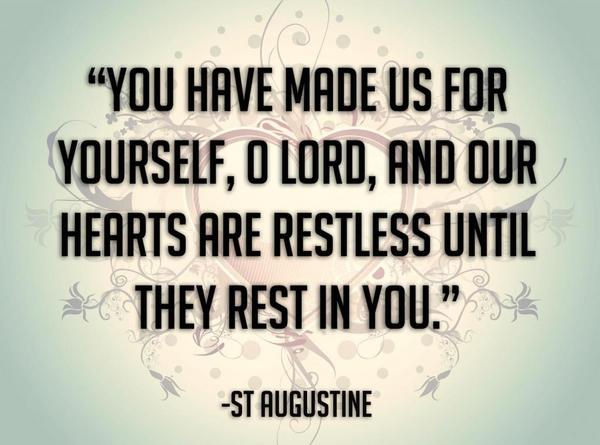
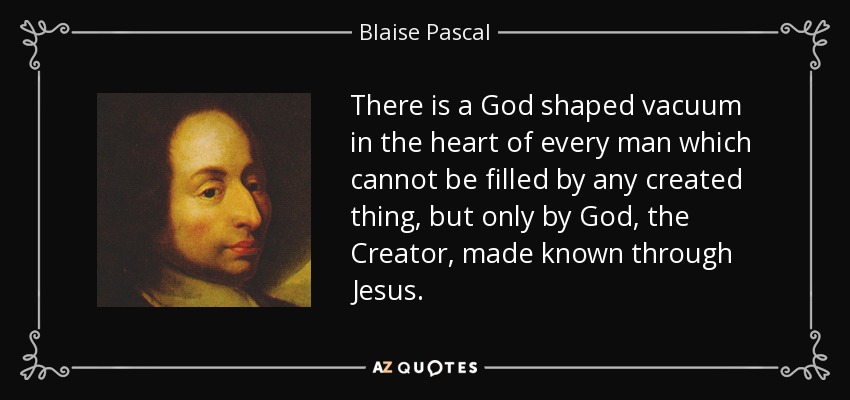
Cardinal Eijk identifies a thirst for stability and meaning in those newly-interested in religion: “The younger generation often lacks a fixed point in their lives. Their lives have no deeper meaning or destination. But questions about meaning arise for everyone, including them.”
Conservative commentator Matt Walsh came to the same conclusion in his analysis of the phenomenon, arguing that human beings inherently need meaning and purpose in their lives and their culture. “You cannot have a society that exists without meaning for very long,” he said on his podcast, “The Matt Walsh Show.” “A society without meaning will either collapse and be destroyed, or it will be revived and it will rediscover meaning.”
The insights of Eijk and Walsh are backed up by the famous research of Austrian psychologist Viktor Frankl, who conducted a careful study of human nature when he was placed in a concentration camp during World War II. Stripped of all the normal vestures of life, all the veneer of civilized life, Frankl’s fellow prisoners presented a stark image of human nature reduced to its essentials. Frankl concluded from studying human behavior in the camp and afterwards in his clinical practice that humans are not fundamentally motivated by the desire for power, as Marx taught, nor sexual drive, as Freud insisted, but by an acute need to find meaning in existence.
From these insights, Frankl developed his own school of psychotherapy, known as “logotherapy,” which he described in these terms in his book “Man’s Search for Meaning”: “Logotherapy … focuses on the meaning of human existence as well as on man’s search for such a meaning. … Man’s search for meaning is the primary motivation in his life and not a ‘secondary rationalization’ of instinctual drives.” According to Frankl, it is humanity’s unheard cry for meaning—ignored by a “post-truth” modern society—that causes many modern mental health problems.
Young people today aren’t convinced by the pseudo-meaning dished up by contemporary society, the appetizing yet ultimately substanceless consumerism, hedonism, secularism, and individualism. So they’re turning to the force that provided meaning for generation upon generation of our ancestors: religion.
Part of the meaning furnished from religion involves a sense of belonging. Younger generations want to belong to something bigger than themselves. The Western cult of unchecked individualism and personal freedom has turned out to be a rather lonely and unfulfilling path for many, and might explain, too, on the other end of the spectrum, the rush to find an identity within LGBTQ+ and similar groups. “Many young people have turned to religion to find community and connection after the isolating years of the pandemic, which hit Gen Z harder than most,” theorizes the Axios article.
During COVID, many people’s primary connection to the wider world was the internet. Gen Z is among the first generations to grow up, more or less, with the internet and to be shaped by it. That upbringing has come with its own set of problems. But it’s also been, ironically, a path to a more authentic experience of life for many of these “digital natives.”
The internet has allowed people to forge—or rather, rediscover—certain intellectual paths that are “far from the madding crowd.” The internet provided an alternative to mainstream culture, which—during the really heavy years of decline in religiosity—was more narrowly controlled and more uniform via television, radio, Hollywood, and the music industry. All these cultural mediums were transmitting a strong secular message. But the internet, for all its problems, has now opened up myriad forms of alternative information and entertainment, allowing more traditional, less mainstream messages to get through in a way they probably didn’t a generation ago.
Cardinal Eijk specifically attributes the conversions he’s seeing to internet evangelism, stating that the young converts “have often found their way to the Church through the Internet and Catholic influencers on social media.” Similarly, sociology professor Anne Hendershott notes that the internet has allowed for a new form of the evangelization called for by Pope John Paul II in the 1980s.
Where and how far will this new wind blow? It’s impossible to say. But for those who long for a restoration of tradition in America and some kind of bulwark against the further erosion of values once held sacred in our country—especially religious ones—this wind bears a scent of hope. As the younger generation begins to replace the older one in posts of influence, their beliefs will become increasingly the beliefs of the institutions that make up society and their priorities the priorities of culture. If current data is any indicator, those priorities will be faithful to traditional religious belief, which could signal a wholesale cultural revolution—or, more accurately, restoration.
As Brown put it, “God’s not done with American culture yet.”
Because even they sense that life in America was better for everybody when almost the entire society was was attending church. They may not understand, in their early years of church going, why it was better. However, they think it was and they’d be correct.
The Spirit of God is moving, promises made, promises kept. John 3:16
Religion brings faith to the people. Faith brings meaning. The Soviet Union tried for 70 years to create “the New Soviet Man,” who would find meaning in serving the state. To further this goal they suppressed religion as much as they could. But the New Soviet Man never showed up. Having no meaning in his life, he drank himself to death.
Young white men by and large wish a return to what their grandparents knew
They are different but still
Educated class white girls it’s the opposite
Only thing they both have in common is lust for each other but even that had declined
It’s sad
Young men are frustrated unless you’re a Brad or have a Ferrari on your Snapchat
religion is the study of man in relation to God.
Theology is the study of God in relation to man.
There is a difference.
We see a huge growth rate in our church with lots of young people. But we are fortunate.
But the overall trend is clear. Society continues to be more secular and a fewer percentage of people identify as Christians now vs say 1950.

For the attractive marrying kind of women they can meet and many events and gatherings.
Guys do things for a reason.
Sex, Money, Power.
Maybe they’re rebelling against their parents’ irreligion. The woke have pushed everything so far left that the only way left to Rebel is to return to tradition.
...or find a sweet home schooled girl.
Yes, and faith is the substance that connects Man with God.
This younger generation is now rebelling against the non-religious norms of their generation of parents.
Amen!
That’s right.
My guess is because the more evil has its way in the world, the more generati9ns begin to look to God to counter said evil.
Decades ago, there was a New Yorker cartoon where an older hippie couple are looking at their son, who is dressed in a three piece suit. The caption was something like, “Oh no, our son’s become a Presbyterian!”
Why... ?
because there actually is a REAL God very very real.
They are starting to try to believe... which is the essence of the faith of God, a CONCRETE thing, from which all things are actually made including the universe... The image of God within, calls to the reality of God beyond. Jesus IS A REAL PERSON. Just because hypostatic union is hard to discuss, does not make it less real than the gravity that tugs at our mass all day long, every day.
They want to connect... but may not realize yet that their desire to connect is the proof of the connection itself.
the art work on the buildings are NOT the evidence. The fact that the church fathers wanted to record them in a physical form, is testimony to the substance which they attempted to display.
The bands of ORION can be loosed by the one who made the members of that constellation. Its in the book of Job the first written book of the old testament... but not the books of the law. It is believed by studied scholars that Moses wrote it down first from the oral historical renditions of the patriarchs of OT fame.
We shall see one day... but the “ring” of truth sounds from end to end of the written testimony of God via his prophets. “I know that my redeemer lives and that in the last day, with my flesh I will see God... even if my eyes are eaten by worms. I know that my redeemer lives.”
Kids today hear that bell ringing when there is no one even seen knocking at the door. We are approaching an end time harvest... in my humble opinion.
faith is not imagination, note to mankind... scripture says is is “substance” of what is desired. it comes from God and accomplishes what He pleases... in ways we cannot always explain... but God never fails.
Disclaimer: Opinions posted on Free Republic are those of the individual posters and do not necessarily represent the opinion of Free Republic or its management. All materials posted herein are protected by copyright law and the exemption for fair use of copyrighted works.