|
Posted on 04/28/2004 12:00:22 AM PDT by SAMWolf
|
|
 are acknowledged, affirmed and commemorated.
|

| Our Mission: The FReeper Foxhole is dedicated to Veterans of our Nation's military forces and to others who are affected in their relationships with Veterans.
Where the Freeper Foxhole introduces a different veteran each Wednesday. The "ordinary" Soldier, Sailor, Airman or Marine who participated in the events in our Country's history. We hope to present events as seen through their eyes. To give you a glimpse into the life of those who sacrificed for all of us - Our Veterans.
|
|
of the Confederate Ram Albemarle The use of iron versus wood and the torpedo boat were to change the nature of naval warfare forever.  CSS Albemarle (1864-1864) General plan, which appears to be a copy of a Civil War era drawing. The original is plan # 3-5-27 in Record Group 19 at the U.S. National Archives. North Carolina Governor Zebulon Vance agreed for the railroad iron to be taken and shipped to either Richmond, Virginia or Atlanta, Georgia to be rolled into plate under the stipulation that it be used for the defense of the state. In particular, the governor noted that the railroad iron should be used on the ironclads being built inland on the Neuse and the Roanoke Rivers. Propellers and propeller shafts for the ironclads were fabricated in the Confederate Navy yard at Charlotte. Steam engines were obtained wherever they could be found. Although no one knows for sure, some people claim the engine for the Albemarle was converted from "a large saw mill."  The Ram Albemarle was built upriver in eastern North Carolina in William Ruffin Smith, Jr's cornfield on the edge of the Roanoke River near Scotland Neck in the spring of 1864. The cornfield soon became known as Edwards Ferry Shipyard, because of its close proximity to a river crossing called Edwards Ferry. The Albemarle was 122 feet long, 45 feet beam and her draft 8 feet. Her planking was 4 inches thick over 8x10 inch frames. The central shield was 60 feet long and covered by two layers of 2 inch iron plating. Her armament consisted of two 8 inch guns, one forward, the other aft, behind iron shutters. She had two engines of 200hp each. She was commissioned into the Confederate Navy on Sunday, April 17, 1864. In the spring of 1864 it was decided at Confederate headquarters that an attempt should be made to recapture Plymouth. Commander Cooke, was ordered to begin to take the Albemarle downstream and to cooperate with the commander of the land forces, General Hoke. The Albemarle was to clear the river front of the Federal war vessels protecting Plymouth with their guns.  Location of Plymouth, NC. and Edwards Ferry Shipyard (Red Diamond) and location of first engagement with Federal gunboats (Red Box with X). On the morning of April 18th, 1864, the Albemarle left the town of Hamilton and proceeded down river toward Plymouth, going stern first, with chains dragging from the bow, the rapidity of the current making it impracticable to steer with her head down-stream. Her tender ship the Cotton Patch following close behind. She came to anchor about three miles above Plymouth, and a mile or so above the battery on the bluff at Warren's Neck, near Thoroughfare Gap, where torpedoes, sunken vessels, piles, and other obstructions had been placed. An exploring expedition was sent out, under command of one of the lieutenants, which returned in about two hours, with the report that it was considered impossible to pass the obstructions. Thereupon the fires were banked, and the officers and crew not on duty retired to rest.  CSS Abemarle under construction Another party was sent out and found that there was ten feet of water over and above the obstructions. This was due to the remarkable freshet then prevailing. The party had made its way downstream to Plymouth, and taking advantage of the shadow of the trees on the north side of the river, opposite the town, watched the Federal transports taking on board the women and children who were being sent away for safety, on account of the approaching bombardment. With muffled oars, the party made its way back up the river, hugging the northern bank, and reached the ram about 1 o'clock, reporting to Captain Cooke that it was practicable to pass the obstruction provided the boat was kept in the middle of the stream. Captain Cooke instantly aroused his men, gave the order to get up steam, slipped the cables in his impatience to be off, and started down the river. The obstructions were soon reached and safely passed, under a fire from the fort at Warren's Neck which was not returned. Protected by the iron-clad shield, to those on board the noise made by the shot and shell as they struck the boat sounded no louder than pebbles thrown against an empty barrel. At Boyle's Mill, lower down, there was another fort upon which was mounted a very heavy gun.  19th Century engraving of the ship as she appeared "ready for action". Two days after leaving the Edwards Ferry yard, the ironclad Albemarle, with her tender ship the Cotton Patch following close behind, arrived offshore of Plymouth. At 4:07 a.m. on April 19, Cooke ordered the Albemarle's gun crew to load solid shot and standby. Through the misty twilight he had spotted two approaching Union vessels. Union Navy command in New Bern had been warned by spies that the Albemarle was on her way downstream and had sent two gunboats, the Miami and the Southfield to intercept the ram. As the enemy drew closer Captain Cooke could see that the two ships were lashed together with long spars, and with chains festooned between them. The plan of Miami's Captain, Lt. Commander Charles W. Flusser (also the Senior U.S. naval officer at Plymouth) to run his vessels so as to get the Albemarle between the two, so the ironclad could be boarded and possibly captured.  Ram Albemarle becomes entangled in frame of the Southfield and the Miami opens fire on crippled ram at close range. Cooke ordered the Albemarle "all ahead full," sending the 376-ton ironclad straight for the space between the bows of wooden hulled Union vessels. Heavy guns from the two Union ships pounded the Albemarle with shot. Captain Cooke ran the ram close to the southern shore, and then suddenly turning toward the middle of the stream, and going with the current, the throttles, in obedience to his bell, being wide open, he dashed the prow of the Albemarle into the side of the Southfield, The Albemarle's ram crashed 10 feet inside the Southfield's hull, causing the Union ship to start sinking immediately. Part of her crew went down with her. Cooke ordered "all astern full," hoping that full reverse thrust would relieve the Albemarle's bow and ram from the sinking Southfield.  Lt. Commander Charles Flusser To his horror, the Albemarle's ram remained stuck. The chain-plates on the forward deck of the Albemarle became entangled in the frame of the sinking vessel, and her bow was carried down to such a depth that water poured into her port-holes in great volume, and she would soon have shared the fate of the Southfield, had not the latter vessel reached the bottom, and then, turning over on her side, released the ram, thus allowing her to come up on an even keel. The Miami, right alongside, had opened fire with her heavy guns, placing several broadsides into the ironclad's port casemate, but the shots ricocheted off the iron plates of the Albemarle, careening harmlessly into the water. During the heat of the battle, Captain Flusser trained the Miami's bow-mounted 9-inch Dahlgren cannon, and personally fired the big gun pointblank at the Albemarle from a range of about 30 feet. The shell slammed into the ironclad's casemate, ricocheting back and exploding directly over Flusser, killing him instantly and wounding several of the gun crew.  Engraving published in "Harper's Weekly", May 1864, depicting CSS Albemarle driving off USS Miami, after ramming and sinking USS Southfield (foreground), 19 April 1864. Notwithstanding the death of Flusser, an attempt was made to board the ram, which was heroically resisted by as many of the crew as could be crowded on the top deck, who were supplied with loaded muskets passed up by their comrades below. The Miami, a very fast side-wheeler, succeeded in eluding the Albemarle without receiving a blow from her ram, and retired below Plymouth, into Albemarle Sound. By 5:11 a.m., as the sun began to cast rays over the waters of the Roanoke River at Plymouth, the Albemarle's first battle was over. She had suffered only one casualty - a crew member identified only as "Harris." That unlucky Confederate received a pistol shot from a sailor on the Miami when he succumbed to curiosity and took a peek out of one the ironclad's gun ports. Cooke navigated the victorious Albemarle to a point one mile below Plymouth where he dropped anchor and allowed the crew to recover and prepare their ship for another battle. His "iron sharpshooter battery" and tender ship, the Cotton Plant, which had remained above Plymouth while the Albemarle engaged the enemy, was now anchored close by the ironclad. Having now established control of the Roanoke, the Albemarle began sporadically firing her two 6.4 rifles at Union targets in and around occupied Plymouth.  19th Century photograph of an artwork by Acting Second Engineer Alexander C. Stuart, USN, 1864. It shows CSS Albemarle engaging several Federal gunboats on Albemarle Sound, North Carolina, on 5 May 1864. USS Sassacus is in left center, ramming the Confederate ironclad. Other U.S. Navy ships seen are (from left): Commodore Hull, Wyalusing and Mattabesett. The Confederate transport Bombshell, captured during the action, is in the right background. Albemarle was not significantly damaged during this action, which left Sassacus disabled by a hit in one of her boilers. On the morning of the 20th, Cooke steamed the Albemarle to the banks of the river at Plymouth in support of Confederate ground troops who were attacking Union forces stationed there at Fort Williams. Anchoring off Jefferson Street, The Albemarle's crew began shelling the fort. By 10 a.m., the Union had surrendered Plymouth back to the Confederates, and the Albemarle was basking in another victory. The Albemarle now went to the wharf at Plymouth to be completed and repaired.
|

Male Language Patterns...
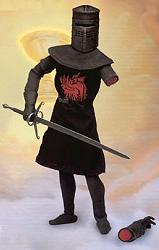
"Oh, don't fuss. I just cut myself. It's no big deal," REALLY MEANS,
"I have actually severed a limb, but will bleed to death before I admit I'm hurt."
free dixie,sw
Thanks for the information on the Cushings.
LOL! Where I come from we say "dumber than a hoe handle". Fits!
LOL!
off to work,DRAT!
free dixie,sw
Disclaimer: Opinions posted on Free Republic are those of the individual posters and do not necessarily represent the opinion of Free Republic or its management. All materials posted herein are protected by copyright law and the exemption for fair use of copyrighted works.


