
Posted on 11/05/2026 9:15:05 PM PST by fidelis
Jesus said to his disciples, “A rich man had a steward who was reported to him for squandering his property. He summoned him and said, ‘What is this I hear about you? Prepare a full account of your stewardship, because you can no longer be my steward.’” Luke 16:1–2
At first glance, today’s parable can be puzzling and even unsettling, as Jesus appears to praise deceit. However, when read in light of Catholic tradition, its deeper spiritual meaning becomes clear and richly instructive. This parable is not about how to succeed in the world, but about how to live wisely in view of eternal life.
In the parable, the steward is accused of squandering his master’s goods, which is a serious offense. Facing dismissal, he devises a plan to reduce the debts owed to his master, hoping to earn favor with the debtors so that they might welcome him into their homes once he is out of a job. The master does not praise the steward’s dishonesty, but he does commend his prudence and shrewd foresight in preparing for the future. This becomes a symbol of the diligence we must exercise to prepare our souls for eternal life.
The steward finds himself at a moment of reckoning. He must give an account of his stewardship. The steward’s moment of judgment mirrors the spiritual truth that we are called to give an account of how we have used our time, talents, and treasures. The steward poses a question to himself: “What shall I do?” That same question ought to echo within our own hearts. How do I prepare now for what comes next?
It is tempting to live as if this life were our final end, as if earthly success, comfort, and security were our primary goals. Though we may hope in Heaven, its mysterious and intangible nature can lead us to treat it as a distant dream rather than a present reality.
The moment when the steward is called to account, however, does not simply symbolize the hour of our death. Rather, it points to this present moment. Each day, we are called to live in such a way that we are continually preparing to meet our Lord. Every decision, every act of charity, every use of our material resources is part of our ongoing accounting before God. Knowing that our time in this world is short in comparison to eternity, our ongoing question for self-reflection is: “What shall I do today to prepare for Heaven and eternal glory with the angels and saints?” This is not a selfish question when we understand the correct answer.
Reflect today on how God is calling you to be a steward of mercy. Whom can you help to turn toward God? What debts can you help reduce? By drawing others to Christ, you also prepare your own soul for the eternal reward He promises. Turn your eyes to Heaven and live this life with that eternal perspective, and you will be prepared to give a full accounting of your stewardship before God when the time of accounting has begun.
My Lord and Just Judge, Though You have fully paid the debt of sin that I owe, You ask that I humble myself before You to receive that precious gift. Help me to open my heart completely to Your mercy and forgiveness, and then to go forth diligently, seeking ways to help reduce the debt of others. May my life be a witness to Your grace, drawing souls to conversion, so that together we may share in the eternal rewards of Heaven. Jesus, I trust in You.

|
Click here: to donate by Credit Card Or here: to donate by PayPal Or by mail to: Free Republic, LLC - PO Box 9771 - Fresno, CA 93794 Thank you very much and God bless you. |
Please keep in mind that this is a Catholic Caucus/Devotional thread for the purpose of prayerful reflection on the Sacred Scriptures and is closed to debate of any kind. Per FR policy on Religion Caucus threads, off-topic, argumentative, and abusive comments are not allowed and will be submitted to the Mods for deletion. Thanks, and God bless you.
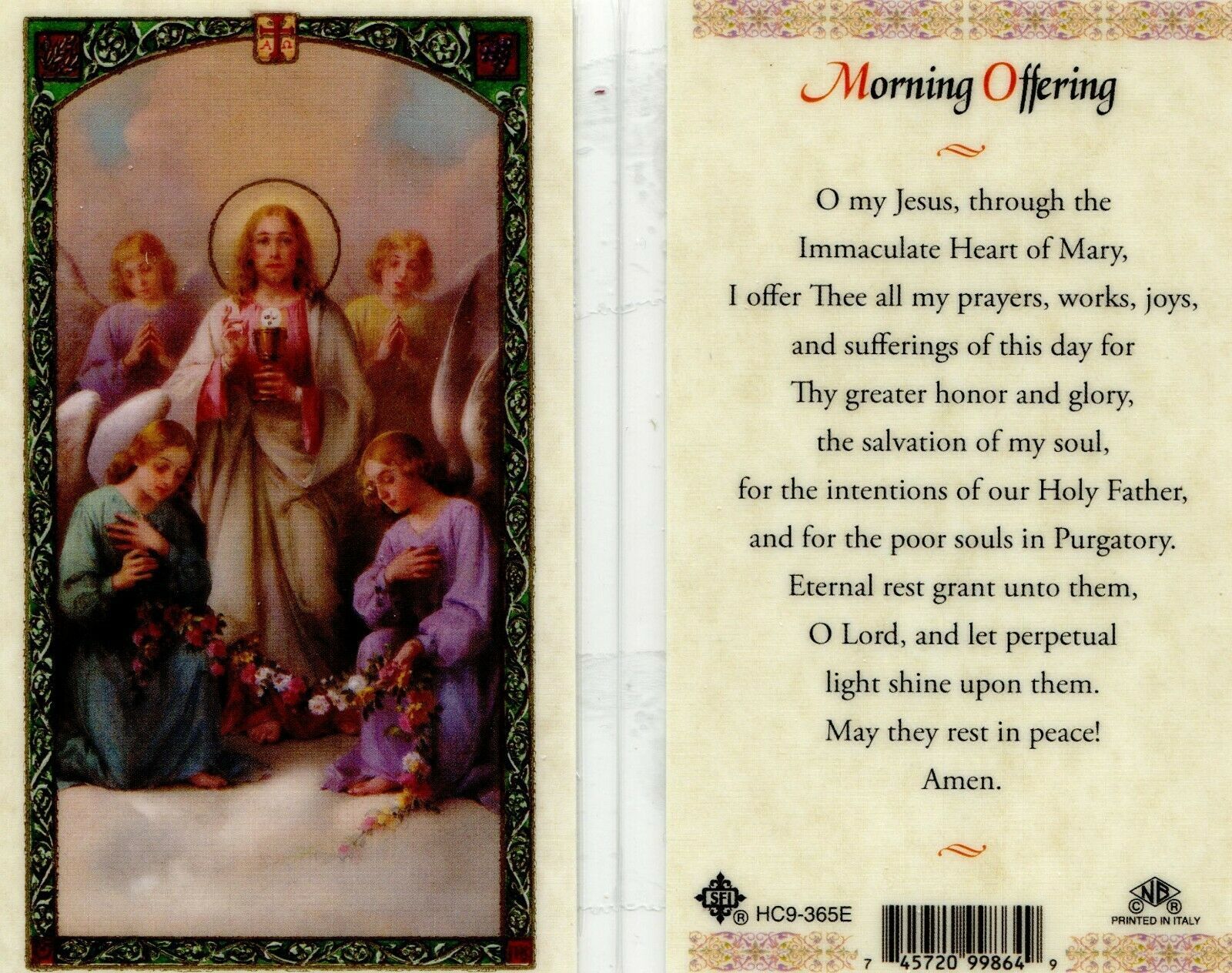

The Month of November is Dedicated to the Holy Souls in Purgatory
“It is a holy and wholesome thought to pray for the dead, so they may be loosed from sins..” (2 Maccabees 12:46)

Pope Leo XIV’s prayer intention for the month of November, 2026:
For the proper use of wealth
Let us pray for the proper use of wealth, that not succumbing to the temptation of selfishness, it may always be put at the service the common good and solidarity of those who have less.

Today’s First Reading
From: Philippians 3:17-4:1
Citizens of Heaven
------------------------
[17] Brethren, join in imitating me, and mark those who so live as you have an example in us. [18] For many, of whom I have often told you and now tell you even with tears, live as enemies of the cross of Christ. [19] Their end is destruction, their god is the belly, and they glory in their shame, with minds set on earthly things. [20] But our commonwealth is in heaven, and from it we await a Savior, the Lord Jesus Christ, [21] who will change our lowly body to be like his glorious body, by the power which enables him even to subject all things to himself.
Exhortation to Perseverance and Joy
-----------------------------------------------
[1] Therefore, my brethren, whom I love and long for, my joy and crown, stand firm thus in the Lord, my beloved.
***********************************************************************
Commentary:
17. The Apostle's teaching goes further than to list a series of truths and rules for moral behavior: he backs this up with his own life in the service of the Gospel, and, through it, all men; this is what makes his preaching arresting and convincing.
There is no better teaching than the teacher's own example," St John Chrysostom exclaims, commenting on this passage; "by taking this course the teacher is sure of getting his disciple to follow him. Speak wisely, instruct as eloquently as you can ..., but your example will make a greater impression, will be more decisive.... When your actions are in line with your words, nobody will be able to find fault with you" ("Hom. on Phil, ad loc.").
This, then, is the standard Christians should aim at. It will help those they come in contact with to learn how to be hard-working, noble, loyal and sincere people, or at least to tend in that direction.
One can see from this verse, as from many other passages in his letters, that St Paul refers to himself now as "me", now as "us". In the second case he is probably also referring to his co-workers; these they should also imitate, for like him they are imitators of Christ (cf. 1 Cor 4:17). it is quite likely that he is thinking particularly of Timothy, whose name he put alongside his own at the head of this letter--and whom he praised in glorious terms in the previous chapter (cf. Phil 2:19, 22).
Imitation of the saints is a very good way to equip oneself to serve others. "Most earnestly, then, we exhort you", Pius XII says, "be very solicitous for the salvation of those whom Providence has entrusted to your apostolic labors, maintaining throughout the closest union with our divine Redeemer, by whose strength we can do all things (cf. Phil 4:13). It is our ardent desire, beloved sons, that you may emulate those saintly men of old who, by the immensity of their achievement, bore witness to the power of divine grace. Would that each of you could on the evidence of the faithful attribute to himself in humble sincerity the words of the Apostle: 'I will most gladly spend and be spent for your souls' (2 Cor 12:15)" ("Menti Nostrae", 31).
18-19. St Paul points to the bad example given by those (cf. v. 2) who, by upholding false doctrines or abusing their Christian freedom, lead a life steeped in vice; they let themselves be controlled by their sensual appetites and they set their hearts on things which enslave them, which should rather make them blush. They are enemies of Christ's cross.
"They glory in their own shame": they take pride in behavior which is shameful. This may also be an allusion to circumcision, for Judaizers were proud of a mark which decency keeps covered.
20-21. "It is nature, flawed by sin, that begets all the citizens of the earthly city, whereas it is grace alone which frees nature from sin, which begets citizens of the heavenly city" ("De Civitate Dei", 15, 2). Christians are "citizens of heaven" and therefore are called to live a life that is joyful and full of hope, as befits children of God.
The effort to live in a manner worthy of members of the commonwealth of heaven is aided by hope in the second coming of our Lord Jesus Christ in glory. The Parousia, as well as the passion and death of Christ and his subsequent resurrection, are constant themes in the Apostle's preaching. Reflection on these mysteries helps us to have hope and gives us encouragement in our everyday struggle.
Christ's resurrection is the cause of our resurrection, for "Christ has been raised from the dead, the first fruits of those who have fallen asleep. For as by a man came death, by a man has come also the resurrection of the dead" (1 Cor 15:20-21). An essential prerequisite for attaining resurrection in glory is the effort to identify with Christ, in both joy and suffering, in both life and death. "If we have died with him, we shall also live with him; if we endure, we shall also reign with him" (2 Tim 2:12). Christ is the Lord of all creation; his authority extends over the entire universe (cf. Col 1:15-20). If we make the effort that fidelity requires, he will take our body, which is weak and subject to illness, death and decay, and transform it into a glorious body.
From: Luke 16:1-15
The Unjust Steward
------------------------
[1] He (Jesus) also said to the disciples, "There was a rich man who had a steward, and charges were brought to him that this man was wasting his goods. [2] And he called him and said to him, 'What is this that I hear from you? Turn in the account of your stewardship, for you can no longer be steward.' [3] And the steward said to himself, 'What shall I do, since my master is taking the stewardship away from me? I am not strong enough to dig, and I am ashamed to beg. [4] I have decided what to do, so that people may receive me into their houses when I am put out of the stewardship.' [5] So, summoning his master's debtors one by one, he said to the first, 'How much do you owe my master?' [6] He said, 'A hundred measures of oil.' And he said to him, 'Take your bill, and sit down quickly and write fifty.' [7] Then he said to another, 'And how much do you owe?' He said, 'A hundred measures of wheat.' He said to him, 'Take your bill, and write eighty.' [8] The master commended the dishonest steward for his prudence; for the sons of this world are wiser in their own generation that the sons of light.
***********************************************************************
Commentary:
1-8. The unfaithful steward manages to avoid falling on hard times. Of course, our Lord presumes that we realize the immorality of the man's behavior. What he emphasizes and praises, however, is his shrewdness and effort: he tries to derive maximum material advantages from his former position as steward. In saving our soul and spreading the Kingdom of God, our Lord wants us to apply at least the same ingenuity and effort as people put into their worldly affairs or their attempts to attain some human ideal. The fact that we can count on God's grace does not in any way exempt us from the need to employ all available legitimate human resources even if that means strenuous effort and heroic sacrifice.
"What zeal people put into their earthly affairs: dreaming of honors, striving for riches, bent on sensuality. Men and women, rich and poor, old and middle-aged and young and even children: all of them the same. When you and I put the same zeal into the affairs of our souls, we will have a living and operative faith: and there will be no obstacle that we cannot overcome in our apostolic undertakings" (St J. Escriva, "The Way", 317).
Disclaimer: Opinions posted on Free Republic are those of the individual posters and do not necessarily represent the opinion of Free Republic or its management. All materials posted herein are protected by copyright law and the exemption for fair use of copyrighted works.


