Skip to comments.
Catholic Caucus: Daily Mass Readings 4-November-2026
Universalis/Jerusalem Bible ^
Posted on 11/04/2026 7:24:40 AM PST by annalex
4 November 2026
Saint Charles Borromeo, Bishop
on Wednesday of week 31 in Ordinary Time

St. Charles Borromeo, Pittsfield, MAReadings at MassThis is a preview of Universalis. The Universalis app gives you every day of every year, not just the single week you’re seeing now, and it doesn’t need the Internet. It gives you the official New American Bible version for the readings at Mass. As well as the Mass, it gives you the Liturgy of the Hours. It costs $9.99-12.99 on your phone, or £19.99 (about $26.50) on your computer. Get it now. Liturgical Colour: White. Year: A(II). Readings for the feria Readings for the memorial These are the readings for the feria
| First reading |
|---|
| Philippians 2:12-18 |
|---|
Work for your salvation, for God is working in youMy dear friends, continue to do as I tell you, as you always have; not only as you did when I was there with you, but even more now that I am no longer there; and work for your salvation ‘in fear and trembling.’ It is God, for his own loving purpose, who puts both the will and the action into you. Do all that has to be done without complaining or arguing and then you will be innocent and genuine, perfect children of God among a deceitful and underhand brood, and you will shine in the world like bright stars because you are offering it the word of life. This would give me something to be proud of for the Day of Christ, and would mean that I had not run in the race and exhausted myself for nothing. And then, if my blood has to be shed as part of your own sacrifice and offering – which is your faith – I shall still be happy and rejoice with all of you, and you must be just as happy and rejoice with me.
| Responsorial Psalm |
|---|
| Psalm 26(27):1,4,13-14 |
|---|
The Lord is my light and my help. The Lord is my light and my help; whom shall I fear? The Lord is the stronghold of my life; before whom shall I shrink? The Lord is my light and my help. There is one thing I ask of the Lord, for this I long, to live in the house of the Lord, all the days of my life, to savour the sweetness of the Lord, to behold his temple. The Lord is my light and my help. I am sure I shall see the Lord’s goodness in the land of the living. Hope in him, hold firm and take heart. Hope in the Lord! The Lord is my light and my help.
| Gospel Acclamation | Ps118:88 |
|---|
Alleluia, alleluia! Because of your love give me life, and I will do your will. Alleluia! Alleluia, alleluia! It is a blessing for you when they insult you for bearing the name of Christ, for the Spirit of God rests on you. Alleluia!
Anyone who does not carry his cross and follow me cannot be my discipleGreat crowds accompanied Jesus on his way and he turned and spoke to them. ‘If any man comes to me without hating his father, mother, wife, children, brothers, sisters, yes and his own life too, he cannot be my disciple. Anyone who does not carry his cross and come after me cannot be my disciple. ‘And indeed, which of you here, intending to build a tower, would not first sit down and work out the cost to see if he had enough to complete it? Otherwise, if he laid the foundation and then found himself unable to finish the work, the onlookers would all start making fun of him and saying, “Here is a man who started to build and was unable to finish.” Or again, what king marching to war against another king would not first sit down and consider whether with ten thousand men he could stand up to the other who advanced against him with twenty thousand? If not, then while the other king was still a long way off, he would send envoys to sue for peace. So in the same way, none of you can be my disciple unless he gives up all his possessions.’ Continue These are the readings for the memorial
| First reading | Romans 12:3-13 |
|---|
Use the gifts you have been givenIn the light of the grace I have received I want to urge each one among you not to exaggerate his real importance. Each of you must judge himself soberly by the standard of the faith God has given him. Just as each of our bodies has several parts and each part has a separate function, so all of us, in union with Christ, form one body, and as parts of it we belong to each other. Our gifts differ according to the grace given us. If your gift is prophecy, then use it as your faith suggests; if administration, then use it for administration; if teaching, then use it for teaching. Let the preachers deliver sermons, the almsgivers give freely, the officials be diligent, and those who do works of mercy do them cheerfully. Do not let your love be a pretence, but sincerely prefer good to evil. Love each other as much as brothers should, and have a profound respect for each other. Work for the Lord with untiring effort and with great earnestness of spirit. If you have hope, this will make you cheerful. Do not give up if trials come; and keep on praying. If any of the saints are in need you must share with them; and you should make hospitality your special care.
| Responsorial Psalm |
|---|
| Psalm 88(89):2-5,21-22,25,27 |
|---|
I will sing for ever of your love, O Lord. I will sing for ever of your love, O Lord; through all ages my mouth will proclaim your truth. Of this I am sure, that your love lasts for ever, that your truth is firmly established as the heavens. I will sing for ever of your love, O Lord. ‘I have made a covenant with my chosen one; I have sworn to David my servant: I will establish your dynasty for ever and set up your throne through all ages. I will sing for ever of your love, O Lord. ‘I have found David my servant and with my holy oil anointed him. My hand shall always be with him and my arm shall make him strong. I will sing for ever of your love, O Lord. ‘My truth and my love shall be with him; by my name his might shall be exalted. He will say to me: “You are my father, my God, the rock who saves me.”’ I will sing for ever of your love, O Lord.
| Gospel Acclamation | Jn10:14 |
|---|
Alleluia, alleluia! I am the good shepherd, says the Lord; I know my own sheep and my own know me. Alleluia!
The good shepherd is one who lays down his life for his sheepJesus said: ‘I am the good shepherd: the good shepherd is one who lays down his life for his sheep. The hired man, since he is not the shepherd and the sheep do not belong to him, abandons the sheep and runs away as soon as he sees a wolf coming, and then the wolf attacks and scatters the sheep; this is because he is only a hired man and has no concern for the sheep. ‘I am the good shepherd; I know my own and my own know me, just as the Father knows me and I know the Father; and I lay down my life for my sheep. And there are other sheep I have that are not of this fold, and these I have to lead as well. They too will listen to my voice, and there will be only one flock, and one shepherd.’ Continue Christian Art Each day, The Christian Art website gives a picture and reflection on the Gospel of the day. The readings on this page are from the Jerusalem Bible, which is used at Mass in most of the English-speaking world. The New American Bible readings, which are used at Mass in the United States, are available in the Universalis apps, programs and downloads.
You can also view this page with the Gospel in Greek and English. |
TOPICS: Catholic; General Discusssion; Prayer; Worship
KEYWORDS: catholic; lk14; ordinarytime; prayer
Message from Jim Robinson:
Dear FRiends,
We need your continuing support to keep FR funded. Your donations are our sole source of funding. No sugar daddies, no advertisers, no paid memberships, no commercial sales, no gimmicks, no tax subsidies. No spam, no pop-ups, no ad trackers.
If you enjoy using FR and agree it's a worthwhile endeavor, please consider making a contribution today:
Click here: to donate by Credit Card
Or here: to donate by PayPal
Or by mail to: Free Republic, LLC - PO Box 9771 - Fresno, CA 93794
Thank you very much and God bless you,
Jim
For your reading, reflection, faith-sharing, comments, questions, discussion.
1
posted on
11/04/2026 7:24:40 AM PST
by
annalex
To: All
KEYWORDS: catholic; lk14; ordinarytime; prayer
2
posted on
11/04/2026 7:25:25 AM PST
by
annalex
(fear them not)
To: nickcarraway; NYer; ELS; Pyro7480; livius; ArrogantBustard; Catholicguy; RobbyS; marshmallow; ...

Alleluia Ping Please FReepmail me to get on/off the Alleluia Ping List.
3
posted on
11/04/2026 7:26:26 AM PST
by
annalex
(fear them not)
To: annalex
4
posted on
11/04/2026 7:27:00 AM PST
by
annalex
(fear them not)
To: annalex
| Luke |
| | English: Douay-Rheims | Latin: Vulgata Clementina | Greek NT: Byzantine/Majority Text (2000) |
| | Luke 14
|
| 25. | And there went great multitudes with him. And turning, he said to them: | Ibant autem turbæ multæ cum eo : et conversus dixit ad illos : | συνεπορευοντο δε αυτω οχλοι πολλοι και στραφεις ειπεν προς αυτους |
| 26. | If any man come to me, and hate not his father, and mother, and wife, and children, and brethren, and sisters, yea and his own life also, he cannot be my disciple. | Si quis venit ad me, et non odit patrem suum, et matrem, et uxorem, et filios, et fratres, et sorores, adhuc autem et animam suam, non potest meus esse discipulus. | ει τις ερχεται προς με και ου μισει τον πατερα αυτου και την μητερα και την γυναικα και τα τεκνα και τους αδελφους και τας αδελφας ετι δε και την εαυτου ψυχην ου δυναται μου μαθητης ειναι |
| 27. | And whosoever doth not carry his cross and come after me, cannot be my disciple. | Et qui non bajulat crucem suam, et venit post me, non potest meus esse discipulus. | και οστις ου βασταζει τον σταυρον αυτου και ερχεται οπισω μου ου δυναται ειναι μου μαθητης |
| 28. | For which of you having a mind to build a tower, doth not first sit down, and reckon the charges that are necessary, whether he have wherewithal to finish it: | Quis enim ex vobis volens turrim ædificare, non prius sedens computat sumptus, qui necessarii sunt, si habeat ad perficiendum, | τις γαρ εξ υμων ο θελων πυργον οικοδομησαι ουχι πρωτον καθισας ψηφιζει την δαπανην ει εχει τα εις απαρτισμον |
| 29. | Lest, after he hath laid the foundation, and is not able ti finish it, all that see it begin to mock him, | ne, posteaquam posuerit fundamentum, et non potuerit perficere, omnes qui vident, incipiant illudere ei, | ινα μηποτε θεντος αυτου θεμελιον και μη ισχυοντος εκτελεσαι παντες οι θεωρουντες αρξωνται εμπαιζειν αυτω |
| 30. | Saying: This man began to build, and was not able to finish. | dicentes : Quia hic homo cœpit ædificare, et non potuit consummare ? | λεγοντες οτι ουτος ο ανθρωπος ηρξατο οικοδομειν και ουκ ισχυσεν εκτελεσαι |
| 31. | Or what king, about to go to make war against another king, doth not first sit down, and think whether he be able, with ten thousand, to meet him that, with twenty thousand, cometh against him? | Aut quis rex iturus committere bellum adversus alium regem, non sedens prius cogitat, si possit cum decem millibus occurrere ei, qui cum viginti millibus venit ad se ? | η τις βασιλευς πορευομενος συμβαλειν ετερω βασιλει εις πολεμον ουχι καθισας πρωτον βουλευεται ει δυνατος εστιν εν δεκα χιλιασιν απαντησαι τω μετα εικοσι χιλιαδων ερχομενω επ αυτον |
| 32. | Or else, whilst the other is yet afar off, sending an embassy, he desireth conditions of peace. | Alioquin adhuc illo longe agente, legationem mittens rogat ea quæ pacis sunt. | ει δε μηγε ετι πορρω αυτου οντος πρεσβειαν αποστειλας ερωτα τα προς ειρηνην |
| 33. | So likewise every one of you that doth not renounce all that he possesseth, cannot be my disciple. | Sic ergo omnis ex vobis, qui non renuntiat omnibus quæ possidet, non potest meus esse discipulus. | ουτως ουν πας εξ υμων ος ουκ αποτασσεται πασιν τοις εαυτου υπαρχουσιν ου δυναται μου ειναι μαθητης |
|
5
posted on
11/04/2026 7:29:24 AM PST
by
annalex
(fear them not)
To: annalex

Catena Aurea by St. Thomas Aguinas
14:2527
25. And there went great multitudes with him: and he turned, and said unto them,
26. If any man come to me, and hate not his father, and mother, and wife, and children, and brethren, and sisters, yea, and his own life also, he cannot be my disciple.
27. And whosoever doth not bear his cross, and come after me, cannot be my disciple.
GREGORY. (in Hom. 37. in Ev.) The mind is kindled, when it hears of heavenly rewards, and already desires to be there, where it hopes to enjoy them without ceasing; but great rewards cannot be reached except by great labours. Therefore it is said, And there went great multitudes with him: and he turned to them, and said, &c.
THEOPHYLACT. For because many of those that accompanied Him followed not with their whole heart, but lukewarmly, He shews what kind of a man his disciple ought to be.
GREGORY. (in Hom. ut sup.) But it may be asked, how are we bid to hate our parents and our relations in the flesh, who are commanded to love even our enemies? But if we weigh the force of the command we are able to do both, by rightly distinguishing them so as both to love those who are united to us by the bond of the flesh, and whom we acknowledge our relations, and by hating and avoiding not to know those whom we find our enemies in the way of God. For he is as it were loved by hatred, who in his carnal wisdom, pouring into our ears his evil sayings, is not heard.
AMBROSE. For if for thy sake the Lord renounces His own mother, saying, Who is my mother? and who are my brethren? (Matt. 12:48, Mark 3:33.) why dost thou deserve to be preferred to thy Lord? But the Lord will have us neither be ignorant of nature, nor be her slaves, but so to submit to nature, that we reverence the Author of nature, and depart not from God out of love to our parents.
GREGORY. (in Hom. ut sup.) Now to shew that this hatred towards relations proceeds not from inclination or passion, but from love, our Lord adds, yea, and his own life also. It is plain therefore that a man ought to hate his neighbour, by loving as himself him who hated him. For then we rightly hate our own soul when we indulge not its carnal desires, when we subdue its appetites, and wrestle against its pleasures. That which by being despised is brought to a better condition, is as it were loved by hatred.
CYRIL OF ALEXANDRIA. But life must not be renounced, which both in the body and the soul the blessed Paul also preserved, that yet living in the body he might preach Christ. But when it was necessary to despise life so that he might finish his course, he counts not his life dear unto him. (Acts 20:24.)
GREGORY. (in Hom. ut sup.) How the hatred of life ought to be shewn He declares as follows; Whosoever bears not his cross, &c.
CHRYSOSTOM. He means not that we should place a beam of wood on our shoulders, but that we should ever have death before our eyes. As also Paul died daily and despised death. (1 Cor. 15:31.)
BASIL. By bearing the cross also he announced the death of his Lord, saying, The world is crucified to me, and I to the world, (Gal. 6:14.) which we also anticipate at our very baptism, in which our old man is crucified, that the body of sin may be destroyed.
GREGORY. (in Hom. 37. in Ev.) Or because the cross is so called from torturing. In two ways we bear our Lords cross, either when by abstinence we afflict our bodies, or when through compassion of our neighbour we think all his necessities our own. But because some exercise abstinence of the flesh not for Gods sake but for vain-glory, and shew compassion, not spiritually but carnally, it is rightly added, And, cometh after me. For to bear His cross and come after the Lord, is to use abstinence of the flesh, or compassion to our neighbour, from the desire of an eternal gain.
14:2833
28. For which of you, intending to build a tower, sitteth not down first, and counteth the cost, whether he have sufficient to finish it?
29. Lest haply, after he hath laid the foundation, and is not able to finish it, all that behold it begin to mock him,
30. Saying, This man began to build, and was not able to finish.
31. Or what king, going to make war against another king, sitteth not down first, and consulteth whether he be able with ten thousand to meet him that cometh against him with twenty thousand?
32. Or else, while the other is yet a great way off, he sendeth an ambassage, and desireth conditions of peace.
33. So likewise, whosoever he be of you that for-saketh not all that he hath, he cannot be my disciple.
GREGORY. (37. in Ev.) Because He had been giving high and lofty precepts, immediately follows the comparison of building a tower, when it is said, For which of you intending to build a tower does not first count &c. For every thing that we do should be preceded by anxious consideration. If then we desire to build a tower of humility, we ought first to brace ourselves against the ills of this world.
BASIL. (in Esai. 2.) Or the tower is a lofty watch-tower fitted for the guardianship of the city and the discovery of the enemys approach. In like manner was our understanding given us to preserve the good, to guard against the evil. For the building up whereof the Lord bids us sit down and count our means if we have sufficient to finish.
GREGORY OF NYSSA. (lib. de Virg. 17.) For we must be ever pressing onward that we may reach the end of each difficult undertaking by successive increases of the commandments of God, and so to the completion of the divine work. For neither is one stone the whole fabric of the tower, nor does a single command lead to the perfection of the soul. But we must lay the foundation, and according to the Apostle, thereupon must be placed store of gold, silver, and precious stones. (1 Cor. 3:12.) Whence it is added, Lest haply after he hath laid the foundation, &c.
THEOPHYLACT. For we ought not to lay a foundation, i. e. begin to follow Christ, and not bring the work to an end, as those of whom St. John writes, That many of his disciples went backward. (John 6:66.) Or by the foundation understand the word of teaching, as for instance concerning abstinence. There is need therefore of the above-mentioned foundation, that the building up of our works be established, a tower of strength from the face of the enemy. (Ps. 61:3.) Otherwise, man is laughed at by those who see him, men as well as devils.
GREGORY. (ubi sup.) For when occupied in good works, unless we watch carefully against the evil spirits, we find those our mockers who are persuading us to evil. But another comparison is added proceeding from the less to the greater, in order that from the least things the greatest may be estimated. For it follows, Or what king, going to make war against another king, sitteth not down first, and consultelh whether he be able with ten thousand to meet him that cometh against him with twenty thousand?
CYRIL OF ALEXANDRIA. For we fight against spiritual wickedness in high places; (Eph. 6:12.) but there presses upon us a multitude also of other enemies, fleshly lust, the law of sin raging in our members, and various passions, that is, a dreadful multitude of enemies.
AUGUSTINE. Or the ten thousand of him who is going to fight with the king who has twenty, signify the simplicity of the Christian about to contend with the subtlety of the devil.
THEOPHYLACT. The king is sin reigning in our mortal body; (Rom. 6:12.) but our understanding also was created king. If then he wishes to fight against sin, let him consider with his whole mind. For the devils are the satellites of sin, which being twenty thousand, seem to surpass in number our ten thousand, because that being spiritual compared to us who are corporeal, they are come to have much greater strength.
AUGUSTINE. (ut sup.) But as with respect to the unfinished tower, he alarms us by the reproaches of those who say, The man began to build, and was not able to finish, so with regard to the king with whom the battle was to be, he reproved even peace, adding, Or else, while the other is yet a great way off, he sendeth an ambassage, and desireth conditions of peace; signifying that those also who forsake all they possess cannot endure from the devil the threats of even coming temptations, and make peace with him by consenting unto him to commit sin.
GREGORY. (in Hom. ut sup.) Or else, in that awful trial we come not to the judgment a match for our king, for ten thousand are against twenty thousand, two against one. He comes with a double army against a single. For while we are scarcely prepared in deeds only, he sifts us at once both in thought and deed. While then he is yet afar off, who though still present in judgment, is not seen, let us send him an embassy, our tears, our works of mercy, the propitiatory victim. This is our message which appeases the coming king.
AUGUSTINE. Now to what these comparisons refer, He on the same occasion sufficiently explained, when he said, So likewise whosoever he be of you that forsaketh not all that he hath, he cannot be my disciple. The cost therefore of building the tower, and the strength of the ten thousand against the king who has twenty thousand, mean nothing else than that each one should forsake all that he hath. The foregoing introduction tallies then with the final conclusion. For in the saying that a man forsakes all that he hath, is contained also that he hates his father and mother, his wife and children, brothers and sisters, yea and his own wife also. For all these things are a mans own, which entangle him, and hinder him from obtaining not those particular possessions which will pass away with time, but those common blessings which will abide for ever.
BASIL. But our Lords intention in the above-mentioned example is not indeed to afford occasion or give liberty to any one to become His disciple or not, as indeed it is lawful not to begin a foundation, or not to treat of peace, but to shew the impossibility of pleasing God, amidst those things which distract the soul, and in which it is in danger of becoming an easy prey to the snares and wiles of the devil.
BEDE. But there is a difference between renouncing all things and leaving all things. For it is the way of few perfect men to leave all things, that is, to cast behind them the cares of the world, but it is the part of all the faithful to renounce all things, that is, so to hold the things of the world as by them not to be held in the world.
Catena Aurea Luke 14
6
posted on
11/04/2026 7:31:04 AM PST
by
annalex
(fear them not)
To: annalex

The Last Supper
Tilman Riemenschneider
1501-02
Limewood
Church of Sankt Jakob, Rothenburg
7
posted on
11/04/2026 7:31:27 AM PST
by
annalex
(fear them not)
To: annalex
| John |
| | English: Douay-Rheims | Latin: Vulgata Clementina | Greek NT: Byzantine/Majority Text (2000) |
| | John 10
|
| 11. | I am the good shepherd. The good shepherd giveth his life for his sheep. | Ego sum pastor bonus. Bonus pastor animam suam dat pro ovibus suis. | εγω ειμι ο ποιμην ο καλος ο ποιμην ο καλος την ψυχην αυτου τιθησιν υπερ των προβατων |
| 12. | But the hireling, and he that is not the shepherd, whose own the sheep are not, seeth the wolf coming, and leaveth the sheep, and flieth: and the wolf catcheth, and scattereth the sheep: | Mercenarius autem, et qui non est pastor, cujus non sunt oves propriæ, videt lupum venientem, et dimittit oves, et fugit : et lupus rapit, et dispergit oves ; | ο μισθωτος δε και ουκ ων ποιμην ου ουκ εισιν τα προβατα ιδια θεωρει τον λυκον ερχομενον και αφιησιν τα προβατα και φευγει και ο λυκος αρπαζει αυτα και σκορπιζει τα προβατα |
| 13. | And the hireling flieth, because he is a hireling: and he hath no care for the sheep. | mercenarius autem fugit, quia mercenarius est, et non pertinet ad eum de ovibus. | ο δε μισθωτος φευγει οτι μισθωτος εστιν και ου μελει αυτω περι των προβατων |
| 14. | I am the good shepherd; and I know mine, and mine know me. | Ego sum pastor bonus : et cognosco meas, et cognoscunt me meæ. | εγω ειμι ο ποιμην ο καλος και γινωσκω τα εμα και γινωσκομαι υπο των εμων |
| 15. | As the Father knoweth me, and I know the Father: and I lay down my life for my sheep. | Sicut novit me Pater, et ego agnosco Patrem : et animam meam pono pro ovibus meis. | καθως γινωσκει με ο πατηρ καγω γινωσκω τον πατερα και την ψυχην μου τιθημι υπερ των προβατων |
| 16. | And other sheep I have, that are not of this fold: them also I must bring, and they shall hear my voice, and there shall be one fold and one shepherd. | Et alias oves habeo, quæ non sunt ex hoc ovili : et illas oportet me adducere, et vocem meam audient, et fiet unum ovile et unus pastor. | και αλλα προβατα εχω α ουκ εστιν εκ της αυλης ταυτης κακεινα με δει αγαγειν και της φωνης μου ακουσουσιν και γενησεται μια ποιμνη εις ποιμην |
8
posted on
11/04/2026 7:34:27 AM PST
by
annalex
(fear them not)
To: annalex
Catena Aurea by St. Thomas Aguinas
10:11–13
11. I am the good shepherd: the good shepherd giveth his life for the sheep.
12. But he that is an hireling, and not the shepherd, whose own the sheep are not, seeth the wolf coming, and leaveth the sheep, and fleeth: and the wolf catcheth them, and scattereth the sheep.
13. The hireling fleeth, because he is an hireling, and careth not for the sheep.
AUGUSTINE. (Tr. xlvi. 1) Our Lord has acquainted us with two things which were obscure before; first, that He is the Door; and now again, that He is the Shepherd: I am the good Shepherd. (c. xlvii. 1, 3). Above He said that the shepherd entered by the door. If He is the Door, how doth He enter by Himself? Just as He knows the Father by Himself, and we by Him; so He enters into the fold by Himself, and we by Him. We enter by the door, because we preach Christ; Christ preaches Himself. A light shews both other things, and itself too. (Tr. xlvi. 5). There is but one Shepherd. For though the rulers of the Church, those who are her sons, and not hirelings, are shepherds, they are all members of that one Shepherd. (Tr. xlvii. 3). His office of Shepherd He hath permitted His members to bear. Peter is a shepherd, and all the other Apostles: all good Bishops are shepherds. But none of us calleth himself the door. He could not have added good, if there were not bad shepherds as well. They are thieves and robbers; or at least mercenaries.
GREGORY. (Hom. xiv. in Evang.) And He adds what that goodness (forma bonitatis) is, for our imitation: The good Shepherd giveth His life for the sheep. He did what He bade, He set the example of what He commanded: He laid down His life for the sheep, that He might convert His body and blood in our Sacrament, and feed with His flesh the sheep He had redeemed. A path is shewn us wherein to walk, despising death; a stamp is applied to us, and we must submit to the impression. Our first duty is to spend our outward possessions upon the sheep; our last, if it be necessary, is to sacrifice our life for the same sheep. Whoso doth not give his substance to the sheep, how can he lay down his life for them?
AUGUSTINE. (Tr. xlvii) Christ was not the only one who did this. And yet if they who did it are members of Him, one and the same Christ did it always. He was able to do it without them; they were not without Him.
AUGUSTINE. (de Verb. Dom. Serm. 1) All these however were good shepherds, not because they shed their blood, but because they did it for the sheep. For they shed it not in pride, but in love. Should any among the heretics suffer trouble in consequence of their errors and iniquities, they forthwith boast of their martyrdom; that they may be the better able to steal under so fair a cloak: for they are in reality wolves. But not all who give their bodies to be burned, are to be thought to shed their blood for the sheep; rather against the sheep; for the Apostle saith, Though I give my body to be burned, and have not charity, it profiteth me nothing. (1 Cor. 13:3) And how hath he even the smallest charity, who does not love connexion (convictus) with Christians? to command which, our Lord did not mention many shepherds, but one, I am the good Shepherd.
CHRYSOSTOM. (Hom. lx. 5) Our Lord shews here that He did not undergo His passion unwillingly; but for the salvation of the world. He then gives the difference between the shepherd and the hireling: But he that is an hireling, and not the shepherd, whose own the sheep are not, seeth the wolf coming, and leaveth the sheep, and fleeth.
GREGORY. (Hom. in Evang. xiv.) Some there are who love earthly possessions more than the sheep, and do not deserve the name of a shepherd. He who feeds the Lord’s flock for the sake of temporal hire, and not for love, is an hireling, not a shepherd. An hireling is he who holds the place of shepherd, but seeketh not the gain of souls, who panteth after the good things of earth, and rejoices in the pride of station.
AUGUSTINE. (de Verb. Dom. Serm. xlix) He seeketh therefore in the Church, not God, but something else. If he sought God he would be chaste; for the soul hath but one lawful husband, God. Whoever seeketh from God any thing beside God, seeketh unchastely.
GREGORY. (Hom. in Evang. xiv.) But whether a man be a shepherd or an hireling, cannot be told for certain, except in a time of trial. In tranquil times, the hireling generally stands watch like the shepherd. But when the wolf comes, then every one shews with what spirit he stood watch over the flock.
AUGUSTINE. (de Verb. Dom. Serm. xlix.) The wolf is the devil, and they that follow him; according to’ Matthew, Which come to you in sheeps’ clothing, but inwardly they are ravening wolves. (Matt. 7:15)
AUGUSTINE. (Tr. xlvi. 8) Lo, the wolf hath seized a sheep by the throat, the devil hath enticed a man into adultery. The sinner must be excommunicated. But if he is excommunicated, he will be an enemy, he will plot, he will do as much harm as he can. Wherefore thou art silent, thou dost not censure, thou hast seen the wolf coming, and fled. Thy body has stood, thy mind has fled. For as joy is relaxation, sorrow contraction, desire a reaching forward of the mind; so fear is the flight of the mind.
GREGORY. (Hom. in Evang. xiv.) The wolf too cometh upon the sheep, whenever any spoiler and unjust person oppresses the humble believers. And he who seems to be shepherd, but leaves the sheep and flees, is he who dares not to resist his violence, from fear of danger to himself. He flees not by changing place, but by withholding consolation from his flock. The hireling is inflamed with no zeal against this injustice. He only looks to outward comforts, and overlooks the internal suffering of his flock. The hireling fleeth, because he is an hireling, and careth not for the sheep. The only reason that the hireling fleeth, is because he is an hireling; as if to say, He cannot stand at the approach of danger, who doth not love the sheep that he is set over, but seeketh earthly gain. Such an one dares not face danger, for fear he should lose what he so much loves.
AUGUSTINE. (Tr. xlvi. 7) But if the Apostles were shepherds, not hirelings, why did they flee in persecution? And why did our Lord say, When they persecute you in this city, flee ye into another? (Mat. 10:23) Let us knock, then will come one, who will explain.
AUGUSTINE. (ad Honor. Ep. clxxx.) A servant of Christ, and minister of His Word and Sacraments, may flee from city to city, when he is specially aimed at by the persecutors, apart from his brethren; so that his flight does not leave the Church destitute. But when all, i. e. Bishops, Clerics, and Laics, are in danger in common, let not those who need assistance be deserted by those who should give it. Let all flee together if they can, to some place of security; but, if any are obliged to stay, let them not be forsaken by those who are bound to minister to their spiritual wants. Then, under pressing persecution, may Christ’s ministers flee from the place where they are, when none of Christ’s people remain to be ministered to, or when that ministry may be fulfilled by others who have not the same cause for flight. But when the people stay, and the ministers flee, and the ministry ceases, what is this but a damnable flight of hirelings, who care not for the sheep?
AUGUSTINE. (Tr. xlvi. 1) On the good side are the door, the porter, the shepherd, and the sheep; on the bad, the thieves, the robbers, the hirelings, the wolf.
AUGUSTINE. (de Verb. Dom. s. xlix) We must love the shepherd, beware of the wolf, tolerate the hireling. For the hireling is useful so long as he sees not the wolf, the thief, and the robber. When he sees them, he flees.
AUGUSTINE. (Tr. xlvi. 5) Indeed he would not be an hireling, did he not receive wages from the hirer. (c. 6). Sons wait patiently for the eternal inheritance of their father; the hireling looks eagerly for the temporal wages from his hirer; and yet the tongues of both speak abroad the glory of Christ. The hireling hurteth, in that he doeth wrong, not in that he speaketh right: the grape bunch hangeth amid thorns; pluck the grape, avoid the thorn. Many that seek temporal advantages in the Church, preach Christ, and through them Christ’s voice is heard; and the sheep follow not the hireling, but the voice of the Shepherd heard through the hireling.
10:14–21
14. I am the good shepherd, and know my sheep, and am known of mine.
15. As the Father knoweth me, even so know I the Father: and I lay down my life for the sheep.
16. And other sheep I have, which are not of this fold: them also I must bring, and they shall hear my voice; and there shall be one fold, and one shepherd.
17. Therefore doth my Father love me, because I lay down my life, that I might take it again.
18. No man taketh it from me, but I lay it down of myself. I have power to lay it down, and I have power to take it again. This commandment have I received of my Father.
CHRYSOSTOM. (Hom. lx. 1) Two evil persons have been mentioned, one that kills, and robs the sheep, another that doth not hinder: the one standing for those movers of seditions; the other for the rulers of the Jews, who did not take care of the sheep committed to them. Christ distinguishes Himself from both; from the one who came to do hurt by saying, I am come that they might have life; from those who overlook the rapine of the wolves, by saying that He giveth His life for the sheep. Wherefore He saith again, as He said before, I am the good Shepherd. And as He had said above that the sheep heard the voice of the Shepherd and followed Him, that no one might have occasion to ask, What sayest Thou then of those that believe not? He adds, And I know My sheep, and am known of Mine. (Rom. 11:12) As Paul too saith, God hath not cast away His people, whom He foreknew.
GREGORY. (Hom. in Evang. xiv.) As if He said, I love My sheep, and they love and follow Me. For he who loves not the truth, is as yet very far from knowing it.
THEOPHYLACT. Hence the difference of the hireling and the Shepherd. The hireling does not know his sheep, because he sees them so little. The Shepherd knows His sheep, because He is so attractive to them.
CHRYSOSTOM. (Hom. lx. 1) Then that thou mayest not attribute to the Shepherd and the sheep the same measure of knowledge, He adds, As the Father knoweth Me, even so know I the Father: i. e. I know Him as certainly as He knoweth Me. This then is a case of like knowledge, the other is not; as He saith, No man knoweth who the Son is, but the Father. (Luke 10:23)
GREGORY. (Hom. in Evang. xiv.) And I lay down My life for My sheep. As if to say, This is why I know My Father, and am known by the Father, because I lay down My life for My sheep; i. e. by My love for My sheep, I shew how much I love My Father.
CHRYSOSTOM. (Hom. lx. 1) He gives it too as a proof of His authority. In the same way the Apostle maintains his own commission in opposition to the false Apostles, by enumerating his dangers and sufferings.
THEOPHYLACT. For the deceivers did not expose their lives for the sheep, but, like hirelings, deserted their followers. Our Lord, on the other hand, protected His disciples: Let these go their way. (infr. 18:8)
GREGORY. (Hom. xiv.) But as He came to redeem not only the Jews, but the Gentiles, He adds, And other sheep I have, which are not of this fold.
AUGUSTINE. (de Verb. Dom. s. 1) The sheep hitherto spoken of are those of the stock of Israel according to the flesh. But there were others of the stock of Israel, according to faith, Gentiles, who were as yet out of the fold; predestinated, but not yet gathered together. They are not of this fold, because they are not of the race of Israel, but they will be of this fold: Them also I must bring.
CHRYSOSTOM. (Hom. lx. 2) What wonder that these should hear My voice, and follow Me, when others are waiting to do the same. Both these flocks are dispersed, and without shepherds; for it follows, And they shall hear My voice. And then He foretells their future union: And there shall be one fold and one Shepherd.
GREGORY. (Hom. Evang. xiv.) Of two flocks He maketh one fold, uniting the Jews and Gentiles in His faith.
THEOPHYLACT. For there is one sign of baptism for all, and one Shepherd, even the Word of God. Let the Manichean mark; there is but one fold and one Shepherd set forth both in the Old and New Testaments.
AUGUSTINE. (Tr. xlvii. 4) What does He mean then when He says, I am not sent but unto the lost sheep of the house of Israel? Only, that whereas He manifested Himself personally to the Jews, He did not go Himself to the Gentiles, but sent others.
CHRYSOSTOM. (Hom. lx) The word must here (I must bring) does not signify necessity, but only that the thing would take place. Therefore doth My Father love Me, because I lay down My life, that I might take it again. They had called Him an alien from His Father.
AUGUSTINE. (Tr. xlvii. 7) i. e. Because I die, to rise again. There is great force in, I lay down. Let not the Jews, He says, boast; rage they may, but if I should not choose to lay down My life, what will they do by raging?
THEOPHYLACT. The Father does not bestow His love on the Son as a reward for the death He suffered in our behalf; but He loves Him, as beholding in the Begotten His own essence, whence proceeded such love for mankind.
CHRYSOSTOM. (Hom. lx. 2) Or He says, in condescension to our weakness, Though there were nothing else which made Me love you, this would, that ye are so loved by My Father, that, by dying for you, I shall win His love. Not that He was not loved by the Father before, or that we are the cause of such love. For the same purpose He shews that He does not come to His Passion unwillingly: No man taketh it from Me, but I lay it down of Myself.
AUGUSTINE. (iv. de Trin. c. xiii.) Wherein He shewed that His natural death was not the consequence of sin in Him, but of His own simple will, which was the why, the when, and the how: I have power to lay it down.
CHRYSOSTOM. (Hom. lx. 2) As they had often plotted to kill Him, He tells them their efforts will be useless, unless He is willing. I have such power over My own life, that no one can take it from Me, against My will. This is not true of men. We have not the power of laying down our own lives, except we put ourselves to death. Our Lord alone has this power. And this being true, it is true also that He can take it again when He pleases: And I have power to take it again: which words declare beyond a doubt a resurrection. That they might not think His death a sign that God had forsaken Him, He adds, This commandment have I received from My Father; i. e. to lay down My life, and take it again. By which we must not understand that He first waited to hear this commandment, and had to learn His work; He only shows that that work which He voluntarily undertook, was not against the Father’s will.
THEOPHYLACT. He only means His perfect agreement with His Father.
ALCUIN. For the Word doth not receive a command by word, but containeth in Himself all the Father’s commandments. When the Son is said to receive what He possesseth of Himself, His power is not lessened, but only His generation declared. The Father gave the Son every thing in begetting Him. He begat Him perfect.
THEOPHYLACT. After declaring Himself the Master of His own life and death, which was a lofty assumption, He makes a more humble confession; thus wonderfully uniting both characters; shewing that He was neither inferior to or a slave of the Father on the one hand, nor an antagonist on the other; but of the same power and will.
AUGUSTINE. (Tr. xlvii) How doth our Lord lay down His own life? Christ is the Word, and man, i. e. in soul and body. Doth the Word lay down His life, and take it again; or doth the human soul, or doth the flesh? If it was the Word of God that laid down His soul1 and took it again, that soul was at one time separated from the Word. But, though death separated the soul and body, death could not separate the Word and the soul. It is still more absurd to say that the soul laid down itself; if it could not be separated from the Word, how could it be from itself? The flesh therefore layeth down its life and taketh it again, not by its own power, but by the power of the Word which dwelleth in it. This refutes the Apollinarians, who say that Christ had not a human, rational soul.
Catena Aurea John 10
9
posted on
11/04/2026 7:36:11 AM PST
by
annalex
(fear them not)
To: annalex
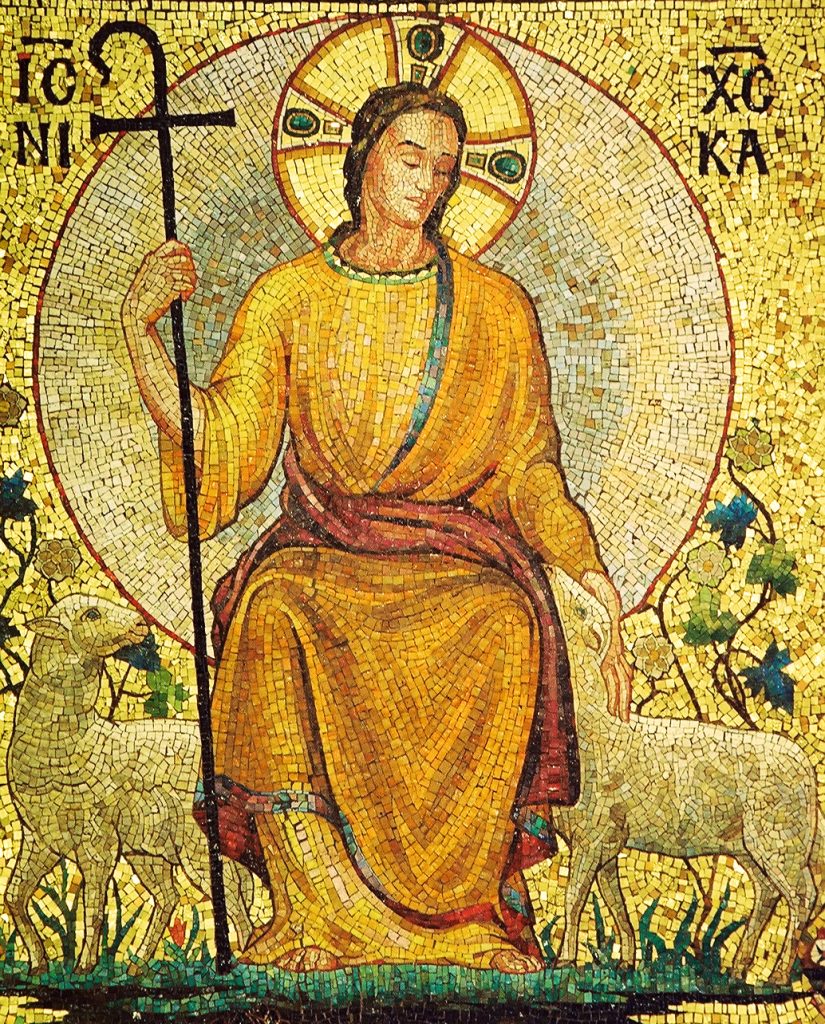
Jesus Christ Victor
10
posted on
11/04/2026 7:36:32 AM PST
by
annalex
(fear them not)
To: annalex
Saint of the Day for November 4
(October 2, 1538 – November 3, 1584)
Saint Charles Borromeo’s Story
The name of Charles Borromeo is associated with reform. He lived during the time of the Protestant Reformation, and had a hand in the reform of the whole Church during the final years of the Council of Trent.
Although he belonged to the Milanese nobility and was related to the powerful Medici family, Charles Borromeo desired to devote himself to the Church. In 1559, when his uncle, Cardinal de Medici was elected Pope Pius IV, he made Charles cardinal-deacon and administrator of the Archdiocese of Milan. At the time Charles was still a layman and a young student. Because of his intellectual qualities Charles was entrusted with several important offices connected with the Vatican, and later appointed secretary of state with responsibility for the papal states.
The untimely death of his elder brother brought Charles to a definite decision to be ordained a priest, despite his relatives’ insistence that he marry. Soon after being ordained a priest at age 25, Borromeo was consecrated bishop of Milan.
Working behind the scenes, Saint Charles deserves the credit for keeping the Council of Trent in session when at several points it was on the verge of breaking up. Borromeo encouraged the pope to renew the Council in 1562, after it had been suspended for 10 years. He took upon himself the task of the entire correspondence during the final phase. Because of his work at the Council, Borromeo was unable to take up residence in Milan until the Council concluded.
Eventually, Borromeo was allowed to devote his time to the Archdiocese of Milan, where the religious and moral picture was far from bright. The reform needed in every phase of Catholic life among both clergy and laity was initiated at a provincial council of all the bishops under him. Specific regulations were drawn up for bishops and other clergy: If the people were to be converted to a better life, Borromeo had to be the first to give a good example and renew their apostolic spirit.
Charles Borromeo took the initiative in giving a good example. He allotted most of his income to charity, forbade himself all luxury, and imposed severe penances upon himself. He sacrificed wealth, high honors, esteem, and influence to become poor. During the plague and famine of 1576, Borromeo tried to feed 60,000 to 70,000 people daily. To do this he borrowed large sums of money that required years to repay. Whereas the civil authorities fled at the height of the plague, he stayed in the city, where he ministered to the sick and the dying, helping those in want.
Work and the heavy burdens of his high office began to affect Archbishop Borromeo’s health, leading to his death at the age of 46.
Reflection
Saint Charles Borromeo made his own the words of Christ: “…I was hungry and you gave me food, I was thirsty and you gave me drink, a stranger and you welcomed me, naked and you clothed me, ill and you cared for me, in prison and you visited me” (Matthew 25:35-36). Borromeo saw Christ in his neighbor, and knew that charity done for the least of his flock was charity done for Christ.
Saint Charles Borromeo is a Patron Saint of:
Catechists
Catechumens
Seminarians
franciscanmedia.org
11
posted on
11/04/2026 7:39:40 AM PST
by
annalex
(fear them not)
To: annalex
12
posted on
11/04/2026 7:41:16 AM PST
by
annalex
(fear them not)
To: annalex
NAVARRE BIBLE COMMENTARY(RSV)
Ad Majorem Dei Gloriam (To the Greater Glory of God)
Today’s First Reading
From: Philippians 2:12-18
The Children of God Are the Light of the World
----------------------------------------------
[12] Therefore, my beloved, as you have always obeyed, so now, not only as in my presence but much more in my absence, work out your own salvation with fear and trembling; [13] for God is at work in you, both to will and to work for his good pleasure.
[14] Do all things without grumbling or questioning, [15] that you may be blameless and innocent, children of God without blemish in the midst of a crooked and perverse generation, among whom you shine as lights in the world, [16] holding fast the word of life, so that in the day of Christ I may be proud that I did not run in vain or labor in vain. [17] Even if I am to be poured as a libation upon the sacrificial offering of your faith, I am glad and rejoice with you all. [18] Likewise you also should be glad and rejoice with me.
***********************************************************************
Commentary:
12-18. St Paul now points out that reflection on Christ's example should lead Christians to make a genuine and generous effort to attain salvation. When he was in their midst, they did try to do this; he is no longer with them, but they should still be pressing forward (v. 12). In doing so, they are always being helped by grace, which will lead them to implement God's plans for them (v. 13).
With God's help Christians should light up the world by the example of their honest, simple lives (v. 14). The Apostle points out that his work will be effective if they conduct themselves as children of God and bear witness to others concerning the word of salvation (vv. 16-17). The Philippians' response to grace more than repays him for all his efforts and fills his heart with joy (v. 18).
12-13. Perseverance in faith and charity until the end of one's life is a gift from God. This perseverance is possible provided one does not frustrate the graces which God continues to provide. In this connection the Council of Trent stresses that "all ought to have most secure hope in the help of God. For unless men are unfaithful to his grace, God will bring the good work to perfection, just as he began it, working both the will and the performance" ("De Iustificatione", chap. 13).
"For his good pleasure": the grace God gives a person to enable him to perform supernatural acts is an expression of his benevolence; he wants all men to be saved. Man can do nothing that leads to eternal life unless he be moved by grace. And yet grace does not overpower our freedom: it is we who love, and we who act. Man's inability to perform meritorious actions on his own should not cause him to lose heart. On the contrary, it is an additional reason why we should be grateful to God, for he is always ready to give us the help of grace; grace enables us to do good works, which are efficacious for meriting heaven. St Francis de Sales gives this example to show the wonderful way God's love works: "when an affectionate mother is teaching her little child to walk, she helps him and holds him if necessary, directing him to safer places and more level ground, holding him by the hand and keeping him there, or lifting him up in her arms. Our Lady similarly watches over the steps her children take" ("Treatise on the Love of God", book 3, chap. 4).
God's solicitude towards us should not, however, be an excuse for inaction on our part. He is always desirous of entering our soul (cf. Rev 3:20), but he will not do so if we refuse to listen to his voice; if we bar our heart to him. Hence St Paul's advice: "work out your own salvation with fear and trembling" (v. 12). This is an urgent invitation to second the action of God's grace in our soul. The "fear" and "trembling" are the fear of a good child who does not want to displease someone who loves him (cf. 2 Cor 7:15); this filial fear is closely connected with the joy of sensing God (cf. Ps 2:11) and it is sweetened by the sure knowledge that God himself is bent on our being holy; "we must [...] not be dispirited. We must not be stopped by any kind of human calculation. To overcome the obstacles we have to throw ourselves into the task so that the very effort we make will open up new paths" (St. J. Escriva, "Christ Is Passing By", 160).
14-15. In the midst of people who sometimes turn their backs on God, a Christian should always act in a "blameless and innocent" way that befits a child of God. By so doing his work and social dealings will be "lights in the world", showing everyone the way, with the light of Christ. "Don't let your life be barren. Be useful. Make yourself felt. Shine forth with the torch of your faith and your love. With your apostolic life, wipe out the trail of filth and slime left by the unclean sowers of hatred. And set aflame all the ways of the earth with the fire of Christ that you bear in your heart" (St. J. Escriva, "The Way", 1).
The first Christians did not go in fear of the world, despite being surrounded by depravity and wickedness. Although the equals of their fellow-citizens, their way of acting exerted a supernatural influence on the society of which they formed part. They were putting into practice their Master's teaching: "Let your light so shine before men, that they may see your good works and give glory to your Father who is in heaven" (Mt 5:16).
"The difference between Christians and the rest of mankind is not a matter of nationality, or language, or customs. Christians do not live apart in separate cities of their own, they do not speak any special dialect, or practice any separate way of life [...]. To put it briefly, the relationship of Christians is to the world as that of soul to body. As the soul is diffused through every part of the body, so are Christians through all the world" ("Letter to Diognetus", 5, 1 and 2; 6, 1).
Today, as then, Christians continue to be a leaven of spiritual and truly human life. Nothing human is a matter of indifference to them.
In addition to the many human reasons which motivate this way of acting, the faithful also draw inspiration from their faith: "Every Christian should make Christ present among men; he ought to act in such a way that those who know him sense 'the fragrance of Christ' (cf. 2 Cor 2:15). People should be able to recognize the Master in his disciples" (St. J. Escriva, "Christ Is Passing By", 105).
17. In some of the sacrifices regulated by the Mosaic Law (cf. Ex 29:40; Num 15:5, 7; 28:14-15) as also in many types of pagan sacrifice, a libation was poured over the sacrificial victim. In pagan rites this consisted in pouring wine over the holocaust while it was actually burning on the altar. St Paul's words here refer to this rite. Up to this he has offered his life as a sacrifice so that the faith might spread to all men; now he is ready to go further to shed his blood as a libation to make his sacrifice complete. Should it prove necessary to die a martyr's death, that would not sadden him; he would be very happy.
Many saints have felt the same way. St Ignatius of Antioch, for example, asked the Christians of Rome to sing in thanksgiving to God when the time came for him to be thrown to the lions: "Suffer me to be a libation poured out to God, while there is still an altar ready for me. Then you may form a loving choir around it and sing hymns of praise in Jesus Christ to the Father" ("Letter to the Romans", II, 2). Total self-surrender and unreserved commitment to his vocation should categorize an apostle's life, for he should always bear in mind that "no ideal becomes a reality without sacrifice" (St. J. Escriva, "The Way", 175). Self-denial, therefore is absolutely essential if one is to fully identify with Christ. However, "Many who would willingly let themselves be nailed to a cross before the astonished gaze of a thousand onlookers cannot bear with a Christian spirit the pinpricks of each day! Think, then, which is the more heroic" ("The Way", 204).
13
posted on
11/04/2026 8:19:19 AM PST
by
fidelis
(Ecce Crucem Domini! Fugite partes adversae! Vicit Leo de tribu Juda, Radix David! Alleluia!)
Today’s Gospel Reading From: Luke 14:25-33
Conditions For Following Jesus
------------------------------
[25] Now great multitudes accompanied Him (Jesus); and He turned and said to them, [26] "If any one comes to Me and does not hate his own father and mother and wife and children and brothers and sisters, yes, and even his own life, he cannot be My disciple. [27] Whoever does not bear his own cross and come after Me, cannot be My disciple. [28] For which of you, desiring to build a tower, does not first sit down and count the cost, whether he has enough to complete it? [29] Otherwise, when he has laid a foundation, and is not able to finish, all who see it begin to mock him, [30] saying, `This man began to build, and was not able to finish.' [31] Or what king, going to encounter another king in a war, will not sit down first and take counsel whether he is able with ten thousand to meet him who comes against him with twenty thousand? [32] And if not, while the other is yet a great way off, he sends an embassy and asks terms of peace. [33] So therefore, whoever of you does not renounce all that he has cannot be My disciple."
***********************************************************************
Commentary:
26. These words of our Lord should not disconcert us. Love for God and for Jesus should have pride of place in our lives and we should keep away from anything which obstructs this love: "In this world let us love everyone," St. Gregory the Great comments, "even though he be our enemy; but let us hate him who opposes us on our way to God, though he be our relative [...]. We should then, love, our neighbor; we should have charity towards all--towards relative and towards strangers—but without separating ourselves from the love of God out of love for them" ("In Evangelia Homiliae", 37, 3). In the last analysis, it is a matter of keeping the proper hierarchy of charity: God must take priority over everything.
This verse must be understood, therefore, in the context of all of our Lord's teachings (cf. Luke 6:27-35). These are "hard words. True, `hate' does not exactly express what Jesus meant. Yet He did put it very strongly, because He doesn't just mean `love less,' as some people interpret it in an attempt to tone down the sentence. The force behind these vigorous words does not lie in their implying a negative or pitiless attitude, for the Jesus who is speaking here is none other than that Jesus who commands us to love others as we love ourselves and who gives up His life for mankind. These words indicate simply that we cannot be half-hearted when it comes to loving God. Christ's words could be translated as `love more, love better', in the sense that a selfish or partial love is not enough: we have to love others with the love of God" (St. J. Escriva, "Christ Is Passing By", 97). See the notes on Matthew 10:34-37; Luke 2:49.
As the Second Vatican Council explains, Christians "strive to please God rather than men, always ready to abandon everything for Christ" (Vatican II, "Apostolicam Actuositatem, 4).
27. Christ "by suffering for us not only gave us an example so that we might follow in His footsteps, but He also opened up a way. If we follow that way, life and death becomes holy and acquire a new meaning" (Vatican II, "Gaudium Et Spes", 22).
The way the Christian follows is that of imitating Christ. We can follow Him only if we help Him bear His cross. We all have experience of suffering, and suffering leads to unhappiness unless it is accepted with a Christian outlook. The Cross is not a tragedy: it is God's way of teaching us that through sin we can be sanctified, becoming one with Christ and winning Heaven as a reward. This is why it is so Christian to love pain: "Let us bless pain. Love pain. Sanctify pain....Glorify pain!" (St. J. Escriva, "The Way", 208).
28-35. Our Lord uses different examples to show that if mere human prudence means that a person should try to work out in advance the risks he may run, with all the more reason should a Christian embrace the cross voluntarily and generously, because there is no other way he can follow Jesus Christ. "`Quia hic homo coepit aedificare et non potuit consummare! He started to build and was unable to finish!' A sad commentary which, if you don't want, need be made about you: for you possess everything necessary to crown the edifice of your sanctification--the grace of God and your own will." (St. J. Escriva, "The Way", 324).
33. Earlier our Lord spoke about "hating" one's parents and one's very life; now He equally vigorously requires us to be completely detached from possessions. This verse is a direct application of the two foregoing parables: just as a king is imprudent if he goes to war with an inadequate army, so anyone is foolish who thinks he can follow our Lord without renouncing all his possessions. This renunciation should really bite: our heart has to be unencumbered by anything material if we are able to follow in our Lord's footsteps. The reason is, as He tells us later on, that it is impossible to "serve God and Mammon" (Luke 16:13). Not infrequently our Lord asks a person to practice total, voluntary poverty; and He asks everyone to practice genuine detachment and generosity in the use of material things. If a Christian has to be ready to give up even life itself, with all the more reason should he renounce possessions: If you are a man of God, you will seek to despise riches as intensely as men of the world seek to possess them" (St. J. Escriva, "The Way", 633). See the note on Luke 12:33-34.
Besides, for a soul to become filled with God it must first be emptied of everything that could be an obstacle to God's indwelling: "The doctrine that the Son of God came to teach was contempt for all things in order to receive as a reward the Spirit of God in himself. For, as long as the soul does not reject all things, it has no capacity to receive the Spirit of God in pure transformation" (St. John of the Cross, "Ascent of Mount Carmel", Book 1, Chapter 5, 2).
14
posted on
11/04/2026 8:19:39 AM PST
by
fidelis
(Ecce Crucem Domini! Fugite partes adversae! Vicit Leo de tribu Juda, Radix David! Alleluia!)
15
posted on
11/04/2026 8:20:43 AM PST
by
fidelis
(Ecce Crucem Domini! Fugite partes adversae! Vicit Leo de tribu Juda, Radix David! Alleluia!)
Disclaimer:
Opinions posted on Free Republic are those of the individual
posters and do not necessarily represent the opinion of Free Republic or its
management. All materials posted herein are protected by copyright law and the
exemption for fair use of copyrighted works.
FreeRepublic.com is powered by software copyright 2000-2008 John Robinson

