
Posted on 11/03/2026 9:00:07 PM PST by fidelis
Memorial of Saint Charles Borromeo, Bishop
Great crowds were traveling with Jesus, and he turned and addressed them, “If anyone comes to me without hating his father and mother, wife and children, brothers and sisters, and even his own life, he cannot be my disciple. Whoever does not carry his own cross and come after me cannot be my disciple.” Luke 14:25–27
In today’s Gospel, Jesus lays down the interior dispositions required for true discipleship. He then says three times that those who fail to meet these conditions “cannot be my disciple.” This passage is part of Luke’s “Travel Narrative,” which spans nearly ten chapters and includes radical teachings and miraculous signs as Jesus makes His way from Galilee to Jerusalem. This journey is not only geographical but deeply symbolic, representing the path of self-denial, sacrificial love, and ultimate glory to which all followers of Christ are called.
The first condition is especially striking and perhaps even scandalous if not properly understood: “If anyone comes to me without hating his father and mother, wife and children, brothers and sisters, and even his own life, he cannot be my disciple.” In Jewish culture of the time, to “hate” referred to preference, not to emotional hostility toward family or self. Jesus is teaching that love of God must take precedence over every earthly attachment, even the most intimate ones because it is the only source of love of neighbor.
This is clearer in a parallel passage in Matthew’s Gospel: “Whoever loves father or mother more than me is not worthy of me” (Matthew 10:37). Jesus is calling for an ordering of loves, not their destruction. He must be loved first and above all, and all other relationships must be embraced in reference to that primary love of Him. This teaching does not devalue family or self, but places them in their proper context, transforming natural affection into supernatural charity. It is not a call to lesser love, but to a greater, purified love that flows from God and returns to Him, sharing God’s love with others, which ultimately is the sole source of true unity and communal happiness.
Reflect today on the radical demands that true discipleship places upon us. Being a disciple of Christ does not mean that life becomes easy or that we are universally loved in a merely emotional sense. It means that our eyes are forever fixed on Christ as the one and only source of grace, salvation, and charity for others. Are your eyes fixed on Christ, especially as He carries His Cross? Are you willing to take up that same Cross in your life and allow Jesus to carry His Cross in you, all the way to Calvary? Pray for the grace to understand and embrace an authentic discipleship that moves beyond feelings and resolutely chooses the sacrificial love to which we are all called.
My sacrificial Lord, You call Your disciples to love You above all, so that we may fully share in Your journey to Jerusalem, laying down our lives with You and in You—for ourselves and for others. Please live in me and grant me the grace I need to take up my cross and follow You, journeying with You into the depths of pure and holy sacrificial love. Jesus, I trust in You.

|
Click here: to donate by Credit Card Or here: to donate by PayPal Or by mail to: Free Republic, LLC - PO Box 9771 - Fresno, CA 93794 Thank you very much and God bless you. |
Please keep in mind that this is a Catholic Caucus/Devotional thread for the purpose of prayerful reflection on the Sacred Scriptures and is closed to debate of any kind. Per FR policy on Religion Caucus threads, off-topic, argumentative, and abusive comments are not allowed and will be submitted to the Mods for deletion. Thanks, and God bless you.
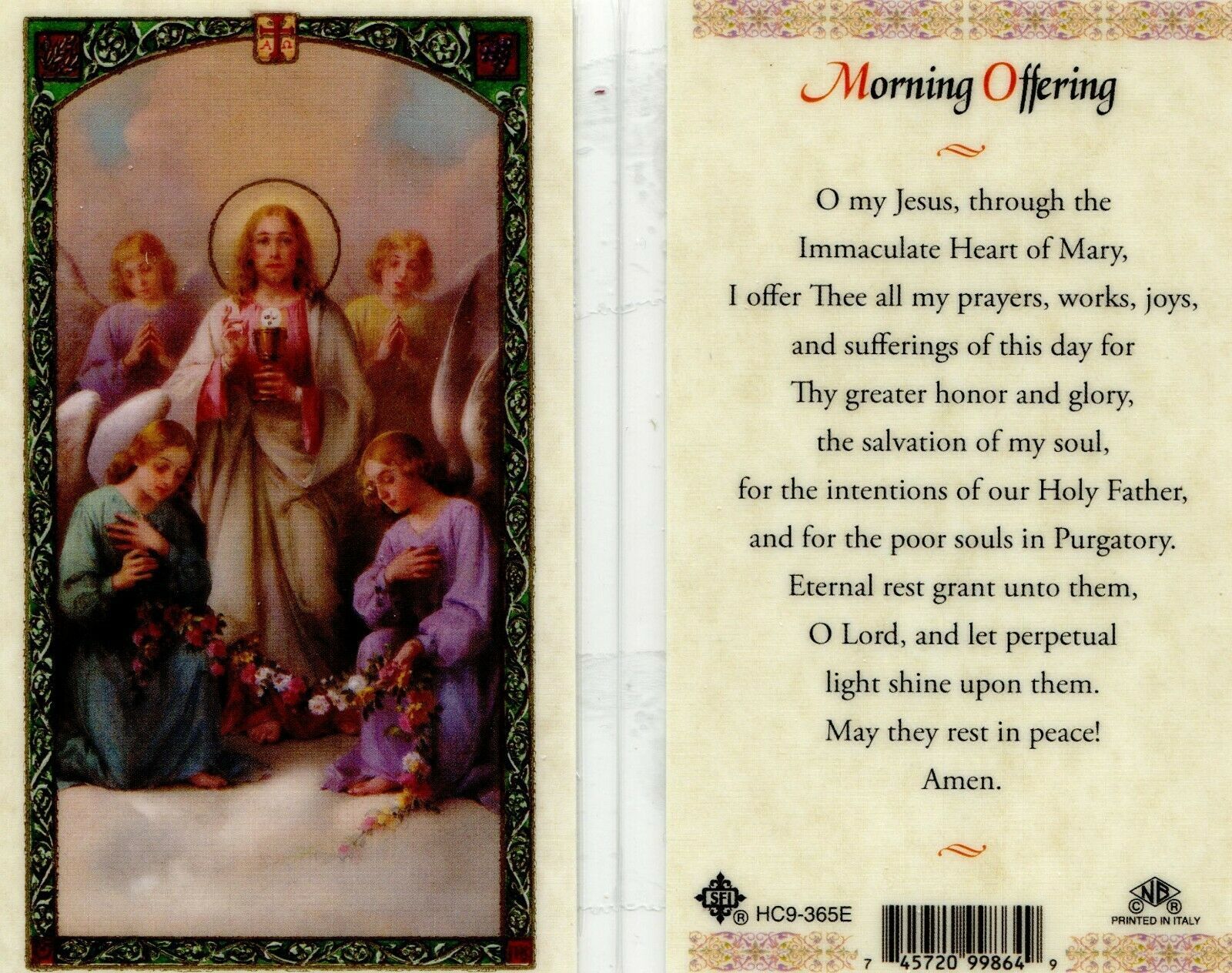

The Month of November is Dedicated to the Holy Souls in Purgatory
“It is a holy and wholesome thought to pray for the dead, so they may be loosed from sins..” (2 Maccabees 12:46)

Pope Leo XIV’s prayer intention for the month of November, 2026:
For the proper use of wealth
Let us pray for the proper use of wealth, that not succumbing to the temptation of selfishness, it may always be put at the service the common good and solidarity of those who have less.

Today’s First Reading
From: Philippians 2:12-18
The Children of God Are the Light of the World
----------------------------------------------
[12] Therefore, my beloved, as you have always obeyed, so now, not only as in my presence but much more in my absence, work out your own salvation with fear and trembling; [13] for God is at work in you, both to will and to work for his good pleasure.
[14] Do all things without grumbling or questioning, [15] that you may be blameless and innocent, children of God without blemish in the midst of a crooked and perverse generation, among whom you shine as lights in the world, [16] holding fast the word of life, so that in the day of Christ I may be proud that I did not run in vain or labor in vain. [17] Even if I am to be poured as a libation upon the sacrificial offering of your faith, I am glad and rejoice with you all. [18] Likewise you also should be glad and rejoice with me.
***********************************************************************
Commentary:
12-18. St Paul now points out that reflection on Christ's example should lead Christians to make a genuine and generous effort to attain salvation. When he was in their midst, they did try to do this; he is no longer with them, but they should still be pressing forward (v. 12). In doing so, they are always being helped by grace, which will lead them to implement God's plans for them (v. 13).
With God's help Christians should light up the world by the example of their honest, simple lives (v. 14). The Apostle points out that his work will be effective if they conduct themselves as children of God and bear witness to others concerning the word of salvation (vv. 16-17). The Philippians' response to grace more than repays him for all his efforts and fills his heart with joy (v. 18).
12-13. Perseverance in faith and charity until the end of one's life is a gift from God. This perseverance is possible provided one does not frustrate the graces which God continues to provide. In this connection the Council of Trent stresses that "all ought to have most secure hope in the help of God. For unless men are unfaithful to his grace, God will bring the good work to perfection, just as he began it, working both the will and the performance" ("De Iustificatione", chap. 13).
"For his good pleasure": the grace God gives a person to enable him to perform supernatural acts is an expression of his benevolence; he wants all men to be saved. Man can do nothing that leads to eternal life unless he be moved by grace. And yet grace does not overpower our freedom: it is we who love, and we who act. Man's inability to perform meritorious actions on his own should not cause him to lose heart. On the contrary, it is an additional reason why we should be grateful to God, for he is always ready to give us the help of grace; grace enables us to do good works, which are efficacious for meriting heaven. St Francis de Sales gives this example to show the wonderful way God's love works: "when an affectionate mother is teaching her little child to walk, she helps him and holds him if necessary, directing him to safer places and more level ground, holding him by the hand and keeping him there, or lifting him up in her arms. Our Lady similarly watches over the steps her children take" ("Treatise on the Love of God", book 3, chap. 4).
God's solicitude towards us should not, however, be an excuse for inaction on our part. He is always desirous of entering our soul (cf. Rev 3:20), but he will not do so if we refuse to listen to his voice; if we bar our heart to him. Hence St Paul's advice: "work out your own salvation with fear and trembling" (v. 12). This is an urgent invitation to second the action of God's grace in our soul. The "fear" and "trembling" are the fear of a good child who does not want to displease someone who loves him (cf. 2 Cor 7:15); this filial fear is closely connected with the joy of sensing God (cf. Ps 2:11) and it is sweetened by the sure knowledge that God himself is bent on our being holy; "we must [...] not be dispirited. We must not be stopped by any kind of human calculation. To overcome the obstacles we have to throw ourselves into the task so that the very effort we make will open up new paths" (St. J. Escriva, "Christ Is Passing By", 160).
14-15. In the midst of people who sometimes turn their backs on God, a Christian should always act in a "blameless and innocent" way that befits a child of God. By so doing his work and social dealings will be "lights in the world", showing everyone the way, with the light of Christ. "Don't let your life be barren. Be useful. Make yourself felt. Shine forth with the torch of your faith and your love. With your apostolic life, wipe out the trail of filth and slime left by the unclean sowers of hatred. And set aflame all the ways of the earth with the fire of Christ that you bear in your heart" (St. J. Escriva, "The Way", 1).
The first Christians did not go in fear of the world, despite being surrounded by depravity and wickedness. Although the equals of their fellow-citizens, their way of acting exerted a supernatural influence on the society of which they formed part. They were putting into practice their Master's teaching: "Let your light so shine before men, that they may see your good works and give glory to your Father who is in heaven" (Mt 5:16).
"The difference between Christians and the rest of mankind is not a matter of nationality, or language, or customs. Christians do not live apart in separate cities of their own, they do not speak any special dialect, or practice any separate way of life [...]. To put it briefly, the relationship of Christians is to the world as that of soul to body. As the soul is diffused through every part of the body, so are Christians through all the world" ("Letter to Diognetus", 5, 1 and 2; 6, 1).
Today, as then, Christians continue to be a leaven of spiritual and truly human life. Nothing human is a matter of indifference to them.
In addition to the many human reasons which motivate this way of acting, the faithful also draw inspiration from their faith: "Every Christian should make Christ present among men; he ought to act in such a way that those who know him sense 'the fragrance of Christ' (cf. 2 Cor 2:15). People should be able to recognize the Master in his disciples" (St. J. Escriva, "Christ Is Passing By", 105).
17. In some of the sacrifices regulated by the Mosaic Law (cf. Ex 29:40; Num 15:5, 7; 28:14-15) as also in many types of pagan sacrifice, a libation was poured over the sacrificial victim. In pagan rites this consisted in pouring wine over the holocaust while it was actually burning on the altar. St Paul's words here refer to this rite. Up to this he has offered his life as a sacrifice so that the faith might spread to all men; now he is ready to go further to shed his blood as a libation to make his sacrifice complete. Should it prove necessary to die a martyr's death, that would not sadden him; he would be very happy.
Many saints have felt the same way. St Ignatius of Antioch, for example, asked the Christians of Rome to sing in thanksgiving to God when the time came for him to be thrown to the lions: "Suffer me to be a libation poured out to God, while there is still an altar ready for me. Then you may form a loving choir around it and sing hymns of praise in Jesus Christ to the Father" ("Letter to the Romans", II, 2). Total self-surrender and unreserved commitment to his vocation should categorize an apostle's life, for he should always bear in mind that "no ideal becomes a reality without sacrifice" (St. J. Escriva, "The Way", 175). Self-denial, therefore is absolutely essential if one is to fully identify with Christ. However, "Many who would willingly let themselves be nailed to a cross before the astonished gaze of a thousand onlookers cannot bear with a Christian spirit the pinpricks of each day! Think, then, which is the more heroic" ("The Way", 204).
From: Luke 14:25-33
Conditions For Following Jesus
------------------------------
[25] Now great multitudes accompanied Him (Jesus); and He turned and said to them, [26] "If any one comes to Me and does not hate his own father and mother and wife and children and brothers and sisters, yes, and even his own life, he cannot be My disciple. [27] Whoever does not bear his own cross and come after Me, cannot be My disciple. [28] For which of you, desiring to build a tower, does not first sit down and count the cost, whether he has enough to complete it? [29] Otherwise, when he has laid a foundation, and is not able to finish, all who see it begin to mock him, [30] saying, `This man began to build, and was not able to finish.' [31] Or what king, going to encounter another king in a war, will not sit down first and take counsel whether he is able with ten thousand to meet him who comes against him with twenty thousand? [32] And if not, while the other is yet a great way off, he sends an embassy and asks terms of peace. [33] So therefore, whoever of you does not renounce all that he has cannot be My disciple."
***********************************************************************
Commentary:
26. These words of our Lord should not disconcert us. Love for God and for Jesus should have pride of place in our lives and we should keep away from anything which obstructs this love: "In this world let us love everyone," St. Gregory the Great comments, "even though he be our enemy; but let us hate him who opposes us on our way to God, though he be our relative [...]. We should then, love, our neighbor; we should have charity towards all--towards relative and towards strangers—but without separating ourselves from the love of God out of love for them" ("In Evangelia Homiliae", 37, 3). In the last analysis, it is a matter of keeping the proper hierarchy of charity: God must take priority over everything.
This verse must be understood, therefore, in the context of all of our Lord's teachings (cf. Luke 6:27-35). These are "hard words. True, `hate' does not exactly express what Jesus meant. Yet He did put it very strongly, because He doesn't just mean `love less,' as some people interpret it in an attempt to tone down the sentence. The force behind these vigorous words does not lie in their implying a negative or pitiless attitude, for the Jesus who is speaking here is none other than that Jesus who commands us to love others as we love ourselves and who gives up His life for mankind. These words indicate simply that we cannot be half-hearted when it comes to loving God. Christ's words could be translated as `love more, love better', in the sense that a selfish or partial love is not enough: we have to love others with the love of God" (St. J. Escriva, "Christ Is Passing By", 97). See the notes on Matthew 10:34-37; Luke 2:49.
As the Second Vatican Council explains, Christians "strive to please God rather than men, always ready to abandon everything for Christ" (Vatican II, "Apostolicam Actuositatem, 4).
27. Christ "by suffering for us not only gave us an example so that we might follow in His footsteps, but He also opened up a way. If we follow that way, life and death becomes holy and acquire a new meaning" (Vatican II, "Gaudium Et Spes", 22).
The way the Christian follows is that of imitating Christ. We can follow Him only if we help Him bear His cross. We all have experience of suffering, and suffering leads to unhappiness unless it is accepted with a Christian outlook. The Cross is not a tragedy: it is God's way of teaching us that through sin we can be sanctified, becoming one with Christ and winning Heaven as a reward. This is why it is so Christian to love pain: "Let us bless pain. Love pain. Sanctify pain....Glorify pain!" (St. J. Escriva, "The Way", 208).
28-35. Our Lord uses different examples to show that if mere human prudence means that a person should try to work out in advance the risks he may run, with all the more reason should a Christian embrace the cross voluntarily and generously, because there is no other way he can follow Jesus Christ. "`Quia hic homo coepit aedificare et non potuit consummare! He started to build and was unable to finish!' A sad commentary which, if you don't want, need be made about you: for you possess everything necessary to crown the edifice of your sanctification--the grace of God and your own will." (St. J. Escriva, "The Way", 324).
33. Earlier our Lord spoke about "hating" one's parents and one's very life; now He equally vigorously requires us to be completely detached from possessions. This verse is a direct application of the two foregoing parables: just as a king is imprudent if he goes to war with an inadequate army, so anyone is foolish who thinks he can follow our Lord without renouncing all his possessions. This renunciation should really bite: our heart has to be unencumbered by anything material if we are able to follow in our Lord's footsteps. The reason is, as He tells us later on, that it is impossible to "serve God and Mammon" (Luke 16:13). Not infrequently our Lord asks a person to practice total, voluntary poverty; and He asks everyone to practice genuine detachment and generosity in the use of material things. If a Christian has to be ready to give up even life itself, with all the more reason should he renounce possessions: If you are a man of God, you will seek to despise riches as intensely as men of the world seek to possess them" (St. J. Escriva, "The Way", 633). See the note on Luke 12:33-34.
Besides, for a soul to become filled with God it must first be emptied of everything that could be an obstacle to God's indwelling: "The doctrine that the Son of God came to teach was contempt for all things in order to receive as a reward the Spirit of God in himself. For, as long as the soul does not reject all things, it has no capacity to receive the Spirit of God in pure transformation" (St. John of the Cross, "Ascent of Mount Carmel", Book 1, Chapter 5, 2).
Disclaimer: Opinions posted on Free Republic are those of the individual posters and do not necessarily represent the opinion of Free Republic or its management. All materials posted herein are protected by copyright law and the exemption for fair use of copyrighted works.

