Skip to comments.
Catholic Caucus: Daily Mass Readings 18-October-2026
Universalis/Jerusalem Bible ^
Posted on 10/18/2026 2:52:02 PM PDT by annalex
18 October 2026
29th Sunday in Ordinary Time

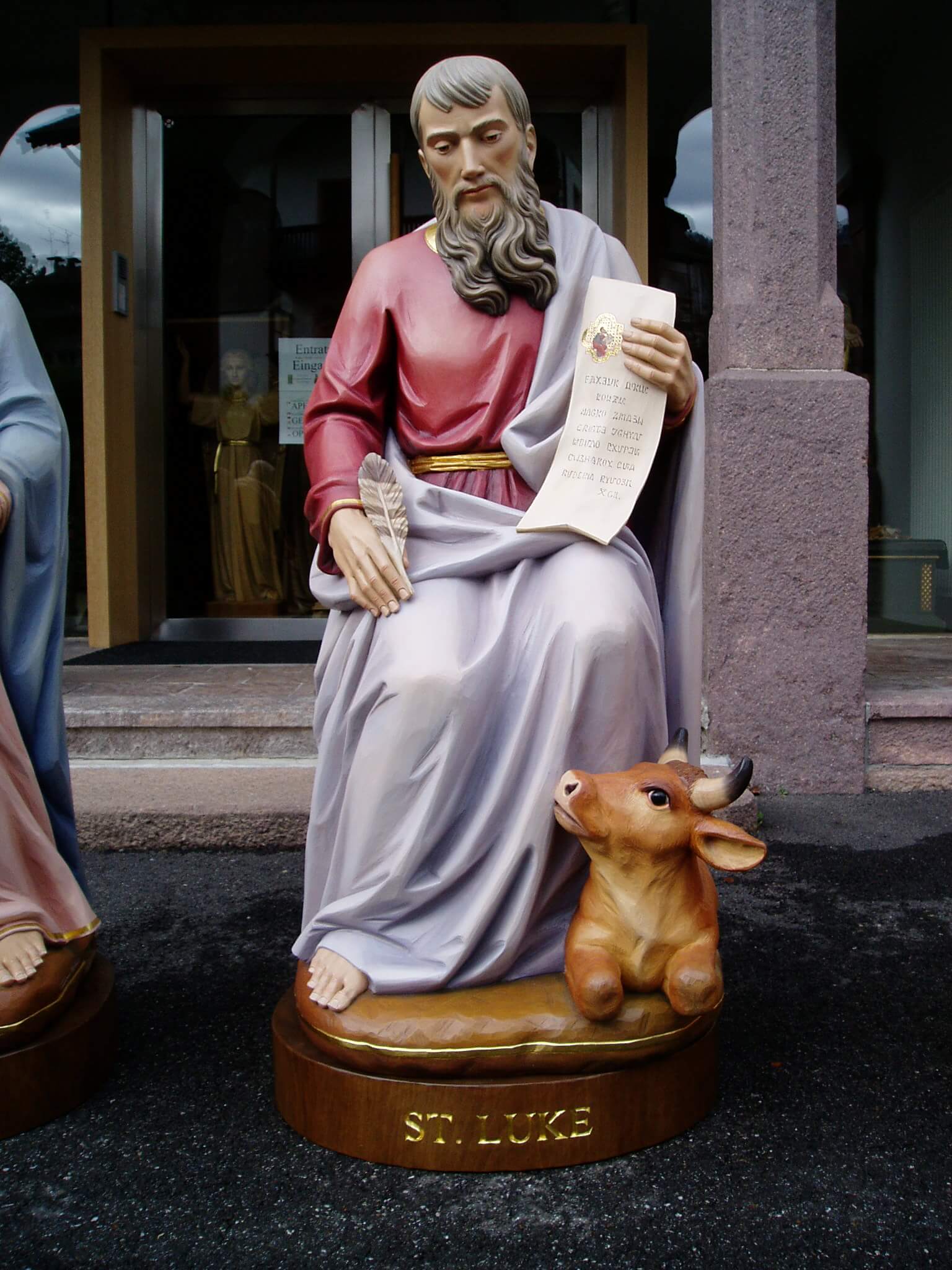
St. Luke Parish in Middleburg, FLReadings at MassThis is a preview of Universalis. The Universalis app gives you every day of every year, not just the single week you’re seeing now, and it doesn’t need the Internet. It gives you the official New American Bible version for the readings at Mass. As well as the Mass, it gives you the Liturgy of the Hours. It costs $9.99-12.99 on your phone, or £19.99 (about $26.50) on your computer. Get it now. Liturgical Colour: Green. Year: A(II).
| First reading | Isaiah 45:1,4-6 |
|---|
I have taken Cyrus by his right hand to subdue nations before himThus says the Lord to his anointed, to Cyrus, whom he has taken by his right hand to subdue nations before him and strip the loins of kings, to force gateways before him that their gates be closed no more: ‘It is for the sake of my servant Jacob, of Israel my chosen one, that I have called you by your name, conferring a title though you do not know me. I am the Lord, unrivalled; there is no other God besides me. Though you do not know me, I arm you that men may know from the rising to the setting of the sun that, apart from me, all is nothing.’
| Responsorial Psalm |
|---|
| Psalm 95(96):1,3-5,7-10 |
|---|
Give the Lord glory and power. O sing a new song to the Lord, sing to the Lord all the earth. Tell among the nations his glory and his wonders among all the peoples. Give the Lord glory and power. The Lord is great and worthy of praise, to be feared above all gods; the gods of the heathens are naught. It was the Lord who made the heavens, Give the Lord glory and power. Give the Lord, you families of peoples, give the Lord glory and power; give the Lord the glory of his name. Bring an offering and enter his courts. Give the Lord glory and power. Worship the Lord in his temple. O earth, tremble before him. Proclaim to the nations: ‘God is king.’ He will judge the peoples in fairness. Give the Lord glory and power.
| Second reading |
|---|
| 1 Thessalonians 1:1-5 |
|---|
We constantly remember your faith, your love and your hopeFrom Paul, Silvanus and Timothy, to the Church in Thessalonika which is in God the Father and the Lord Jesus Christ; wishing you grace and peace from God the Father and the Lord Jesus Christ. We always mention you in our prayers and thank God for you all, and constantly remember before God our Father how you have shown your faith in action, worked for love and persevered through hope, in our Lord Jesus Christ. We know, brothers, that God loves you and that you have been chosen, because when we brought the Good News to you, it came to you not only as words, but as power and as the Holy Spirit and as utter conviction.
| Gospel Acclamation | Jn17:17 |
|---|
Alleluia, alleluia! Your word is truth, O Lord: consecrate us in the truth. Alleluia! Alleluia, alleluia! You will shine in the world like bright stars because you are offering it the word of life. Alleluia!
Give back to Caesar what belongs to CaesarThe Pharisees went away to work out between them how to trap Jesus in what he said. And they sent their disciples to him, together with the Herodians, to say, ‘Master, we know that you are an honest man and teach the way of God in an honest way, and that you are not afraid of anyone, because a man’s rank means nothing to you. Tell us your opinion, then. Is it permissible to pay taxes to Caesar or not?’ But Jesus was aware of their malice and replied, ‘You hypocrites! Why do you set this trap for me? Let me see the money you pay the tax with.’ They handed him a denarius, and he said, ‘Whose head is this? Whose name?’ ‘Caesar’s’ they replied. He then said to them, ‘Very well, give back to Caesar what belongs to Caesar – and to God what belongs to God.’ You can read the Gospels in Greek in parallel with the English, by using the Universalis app. You can get it here. Universalis podcast: The week ahead – from 18 to 24 OctoberPope Saint John Paul II: ‘Do not be afraid’. Blessed Daudi Okelo and Jildo Irwa. Saint John of Capistrano and why we are not Muslims..Saint Antony Mary Claret: 15 assassination attempts and millions of books. (24 minutes)
Episode notes.Play Christian Art Each day, The Christian Art website gives a picture and reflection on the Gospel of the day. The readings on this page are from the Jerusalem Bible, which is used at Mass in most of the English-speaking world. The New American Bible readings, which are used at Mass in the United States, are available in the Universalis apps, programs and downloads.
You can also view this page with the Gospel in Greek and English. |
TOPICS: Catholic; General Discusssion; Prayer; Worship
KEYWORDS: catholic; mt22; ordinarytime; prayer
For your reading, reflection, faith-sharing, comments, questions, discussion.
1
posted on
10/18/2026 2:52:02 PM PDT
by
annalex
To: annalex
KEYWORDS: catholic; mt22; ordinarytime; prayer
2
posted on
10/18/2026 2:52:25 PM PDT
by
annalex
(fear them not)
To: nickcarraway; NYer; ELS; Pyro7480; livius; ArrogantBustard; Catholicguy; RobbyS; marshmallow; ...

Alleluia Ping Please FReepmail me to get on/off the Alleluia Ping List.
3
posted on
10/18/2026 2:53:18 PM PDT
by
annalex
(fear them not)
To: annalex
4
posted on
10/18/2026 2:53:45 PM PDT
by
annalex
(fear them not)
To: annalex
| Matthew |
| | English: Douay-Rheims | Latin: Vulgata Clementina | Greek NT: Byzantine/Majority Text (2000) |
| | Matthew 22
|
| 15. | Then the Pharisees going, consulted among themselves how to insnare him in his speech. | Tunc abeuntes pharisæi, consilium inierunt ut caperent eum in sermone. | τοτε πορευθεντες οι φαρισαιοι συμβουλιον ελαβον οπως αυτον παγιδευσωσιν εν λογω |
| 16. | And they sent to him their disciples with the Herodians, saying: Master, we know that thou art a true speaker, and teachest the way of God in truth, neither carest thou for any man: for thou dost not regard the person of men. | Et mittunt ei discipulos suos cum Herodianis, dicentes : Magister, scimus quia verax es, et viam Dei in veritate doces, et non est tibi cura de aliquo : non enim respicis personam hominum : | και αποστελλουσιν αυτω τους μαθητας αυτων μετα των ηρωδιανων λεγοντες διδασκαλε οιδαμεν οτι αληθης ει και την οδον του θεου εν αληθεια διδασκεις και ου μελει σοι περι ουδενος ου γαρ βλεπεις εις προσωπον ανθρωπων |
| 17. | Tell us therefore what dost thou think, is it lawful to give tribute to Caesar, or not? | dic ergo nobis quid tibi videtur, licet censum dare Cæsari, an non ? | ειπε ουν ημιν τι σοι δοκει εξεστιν δουναι κηνσον καισαρι η ου |
| 18. | But Jesus knowing their wickedness, said: Why do you tempt me, ye hypocrites? | Cognita autem Jesus nequitia eorum, ait : Quid me tentatis hypocritæ ? | γνους δε ο ιησους την πονηριαν αυτων ειπεν τι με πειραζετε υποκριται |
| 19. | Shew me the coin of the tribute. And they offered him a penny. | Ostendite mihi numisma census. At illi obtulerunt ei denarium. | επιδειξατε μοι το νομισμα του κηνσου οι δε προσηνεγκαν αυτω δηναριον |
| 20. | And Jesus saith to them: Whose image and inscription is this? | Et ait illis Jesus : Cujus est imago hæc, et superscriptio ? | και λεγει αυτοις τινος η εικων αυτη και η επιγραφη |
| 21. | They say to him: Caesar's. Then he saith to them: Render therefore to Caesar the things that are Caesar's; and to God, the things that are God's. | Dicunt ei : Cæsaris. Tunc ait illis : Reddite ergo quæ sunt Cæsaris, Cæsari : et quæ sunt Dei, Deo. | λεγουσιν αυτω καισαρος τοτε λεγει αυτοις αποδοτε ουν τα καισαρος καισαρι και τα του θεου τω θεω |
| 22. | And hearing this they wondered, and leaving him, went their ways. | Et audientes mirati sunt, et relicto eo abierunt. | και ακουσαντες εθαυμασαν και αφεντες αυτον απηλθον |
5
posted on
10/18/2026 2:56:06 PM PDT
by
annalex
(fear them not)
To: annalex
Catena Aurea by St. Thomas Aguinas
22:1522
15. Then went the Pharisees, and took counsel how they might entangle him in his talk.
16. And they sent out unto him their disciples with the Herodians, saying, Master, we know that thou art true, and teachest the way of God in truth, neither carest thou for any man: for thou regardest not the person of men.
17. Tell us therefore, What thinkest thou? Is it lawful to give tribute unto Cæsar, or not?
18. But Jesus perceived their wickedness, and said, Why tempt ye me, ye hypocrites?
19. Shew me the tribute money. And they brought unto him a penny.
20. And he saith unto them, Whose is this image and superscription?
21. They say unto him, Cæsars. Then saith he unto them, Render therefore unto Cæsar the things which are Cæsars; and unto God the things that are Gods.
22. When they had heard these words, they marvelled, and left him, and went their way.
PSEUDO-CHRYSOSTOM. As when one seeks to dam a stream of running water, as soon as one outlet is stopped up it makes another channel for itself; so the malevolence of the Jews, foiled on one hand, seeks itself out another course. Then went the Pharisees; went to the Herodians. Such as the plan was, such were the planners; They send unto Him their disciples with the Herodians.
GLOSS. (ord.) Who as unknown to Him, were more likely to ensnare Him, and so through them they might take Him, which they feared to do of themselves because of the populace.
JEROME. Lately under Cæsar Augustus, Judæa, which was subject to the Romans, had been made tributary when the census was held of the whole world; and there was a great division among the people, some saying that tribute ought to be paid to the Romans in return for the security and quiet which their arms maintained for all. The Pharisees on the other hand, self-satisfied in their own righteousness, contended that the people of God who paid tithes and gave first-fruits, and did all the other things which are written in the Law, ought not to be subject to human laws. But Augustus had given the Jews as king, Herod, son of Antipater, a foreigner and proselyte; he was to exact the tribute, yet to be subject to the Roman dominion. The Pharisees therefore send their disciples with the Herodians, that is, with Herods soldiers, or those whom the Pharisees in mockery called Herodians, because they paid tribute to the Romans, and were not devoted to the worship of God.
CHRYSOSTOM. (Hom. lxx.) They send their disciples and Herods soldiers together, that whatever opinion the might give might be found fault with. Yet would they rather have had Him say somewhat against the Herodians; for being themselves afraid to lay hands on Him because of the populace, they sought to bring Him into danger through His liability to pay tribute.
PSEUDO-CHRYSOSTOM. This is the commonest act of hypocrites, to commend those they would ruin. Thus, these break out into praises of Him, saying, Master, we know that Thou art true. They call Him Master, that, deceived by this shew of honour and respect, He might in simplicity open all His heart to them, as seeking to gain them for disciples.
GLOSS. (non occ.) There are three ways in which it is possible for one not to teach the truth. First, on the side of the teacher, who may either not know, or not love the truth; guarding against this, they say, We know that Thou art true. Secondly, on the side of God, there are some who, putting aside all fear of Him, do not utter honestly the truth which they know respecting Him; to exclude this they say, And teachest the way of God in truth. Thirdly, on the side of our neighbour, when through fear or affection any one withholds the truth; to exclude this they say, And carest for no man, for Thou regardest not the person of man.
CHRYSOSTOM. This was a covert allusion to Herod and Cæsar.
JEROME. This smooth and treacherous enquiry was a kind of challenge to the answerer to fear God rather than Cæsar, and immediately they say, Tell us therefore, what thinkest Thou? Is it lawful to give tribute to Cæsar or not? Should He say tribute should not be paid, the Herodians would immediately accuse Him as a person disaffected to the Emperor.
CHRYSOSTOM. They knew that certain had before suffered death for this very thing, as plotting a rebellion against the Romans, therefore they sought by such discourse to bring Him into the same suspicion.
PSEUDO-CHRYSOSTOM. He makes an answer not corresponding to the smooth tone of their address, but harsh, suitable to their cruel thoughts; for God answers mens hearts, and not their words.
JEROME. This is the first excellence of the answerer, that He discerns the thoughts of His examiners, and calls them not disciples but tempters. A hypocrite is he who is one thing, and feigns himself another.
PSEUDO-CHRYSOSTOM. He therefore calls them hypocrites, that seeing Him to be a discerner of human hearts, they might not be hardy enough to carry through their design. Observe thus how the Pharisees spoke fair that they might destroy Him, but Jesus put them to shame that He might save them; for Gods wrath is more profitable to man, than mans favour.
JEROME. Wisdom does ever wisely, and so the tempters are best confuted out of their own words; therefore it follows, Shew me the tribute money; and they brought unto Him a denarius. This was a coin reckoned equivalent to ten sesterces, and bore the image of Cæsar. Let those who think that the Saviour asks because He is ignorant, learn from the present place that it is not so, for at all events Jesus must have known whose image was on the coin. They say unto Him, Cæsars; not Augustus, but Tiberius, under whom also the Lord suffered. All the Roman Emperors were called Cæsar, from Caius Cæsar who first seized the chief power. Render therefore unto Cæsar the things which are Cæsars; i. e. the coin, tribute, or money.
HILARY. For if there remain with us nothing that is Cæsars, we shall not be bound by the condition of rendering to him the things that are his; but if we lean upon what is his, if we avail ourselves of the lawful protection of his power, we cannot complain of it as any wrong if we are required to render to Cæsar the things of Cæsar.
CHRYSOSTOM. But when you hear this command to render to Cæsar the things of Cæsar, know that such things only are intended which in nothing are opposed to religion; if such there be, it is no longer Cæsars but the Devils tribute. And moreover, that they might not say that He was subjecting them to man, He adds, And unto God the things that, are Gods.
JEROME. That is, tithes, first-fruits, oblation, and victims; as the Lord Himself rendered to Cæsar tribute, both for Himself and for Peter; and also rendered unto God the things that are Gods in doing the will of His Father.
HILARY. It behoves us also to render unto God the things that are His, namely, body, soul, and will. For Cæsars coin is in the gold, in which His image was pourtrayed, that is, Gods coin, on which the Divine image is stamped; give therefore your money to Cæsar, but preserve a conscience void of offence for God.
ORIGEN. From this place we learn by the Saviours example not to be allured by those things which have many voices for them, and thence seem famous, but to incline rather to those things which are spoken according to some method of reason. But we may also understand this place morally, that we ought to give some things to the body as a tribute to Cæsar, that is to say, necessaries. And such things as are congenial to our souls nature, that is, such things as lead to virtue, those we ought to offer to God. They then who without any moderation inculcate the law of God, and command us to have no care for the things required by the body, are the Pharisees, who forbad to give tribute to Cæsar, forbidding to marry, and commanding to abstain from meats, which God hath created. (1 Tim. 4:3.) They, on the other hand, who allow too much indulgence to the body are the Herodians. But our Saviour would neither that virtue should be enfeebled by immoderate devotedness to the flesh; nor that our fleshly nature should be oppressed by our unremitting efforts after virtue. Or the prince of this world, that is, the Devil, is called Cæsar; and we cannot render to God the things that are Gods, unless we have first rendered to this prince all that is his, that is, have cast off all wickedness. This moreover let us learn from this place, that to those who tempt us we should neither be totally silent, nor yet answer openly, but with caution, to cut off all occasion from those who seek occasion in us, and teach without blame the things which may save those who are willing to be saved.
JEROME. They who ought to have believed did but wonder at His great wisdom, that their craft had found no means for ensnaring Him: whence it follows, When they had heard these words, they marvelled, and left Him, and went their way, carrying away their unbelief and wonder together.
Catena Aurea Matthew 22
6
posted on
10/18/2026 2:57:11 PM PDT
by
annalex
(fear them not)
To: annalex

The Tribute Money
Titian (1490 - 1576)
7
posted on
10/18/2026 2:58:57 PM PDT
by
annalex
(fear them not)
To: annalex
Use the links below to jump to different sections of our page dedicated to St. Luke.
Overview
- Birth: 1-16 AD
- Location: Antioch (modern-day Turkey)
- Death: 84-100 AD
- Beatification: N/A (Before the Congregation for the Causes of Saints)
- Canonized: N/A (Before the Congregation for the Causes of Saints)
- Feast Day: October 18
- Patron Saint of: physicians, surgeons, and artists
Life and Legacy
The Evangelist St. Luke was a disciple and traveling companion of the Apostle St. Paul. St. Paul refers to St. Luke in his Letter to the Colossians as “the beloved physician” (Col. 4:14).
St. Luke is the patron saint of physicians, surgeons, and artists, and is represented symbolically by a winged ox, a Jewish symbol of sacrifice. The wings represent the call to proclaim the Gospel throughout the world.
St. Luke is also known for painting portraits of the Blessed Virgin.
Gospel of Luke
Luke became the author of both the Gospel of Luke and the Acts of the Apostles, gathering eye-witness accounts to write these texts. He contributed to the New Testament with rich vocabulary, intimate accounts of Mary’s life, and descriptions of the early Church.
Being a Gentile and not a Jew, Luke emphasized in his Gospel the universality of salvation won by Christ. He is the only Gentile who has written books in the Bible.
The Gospel of Luke is highly regarded as the most poetic of all. He emphasized the dignity of women, marginalized people, and the poor by writing about their interactions with Jesus.
St. Luke Prayers
Saint Luke is particularly known for his writing of the Gospel of Luke and Acts of the Apostles, which are books widely known for their emphasis on women, marginalized groups, and the poor. For faith in the power of evangelization, here is a prayer you can say:
“Almighty God, you inspired Your servant St. Luke the Evangelist and Physician to set forth in the gospel the love and the healing power of your Son. In faithfully detailing the humanity of Jesus, he also showed the divinity of Jesus and His genuine compassion for all human beings.
May St. Luke intercede for us that we may deepen our understanding of the gospel and grow in compassion of Jesus. May his intercession enable our new parish to follow Your way and plan for us.
We ask this through our Lord Jesus Christ who lives and reigns with You and the Holy Spirit, one God forever and ever. Amen.”
(Source)
St. Luke the Evangelist, pray for us!
Patronage
hallow.com
8
posted on
10/18/2026 3:03:21 PM PDT
by
annalex
(fear them not)
To: annalex
9
posted on
10/18/2026 3:05:50 PM PDT
by
annalex
(fear them not)
To: annalex
NAVARRE BIBLE COMMENTARY(RSV)
Ad Majorem Dei Gloriam (To the Greater Glory of God)
Today’s First Reading
From: Isaiah 45:1-8, 18, 21c-25
Cyrus' Mission
-----------------------------
[1] Thus says the Lord to his anointed, to Cyrus, whose right hand I have grasped, to subdue nations before him and ungird the loins of kings, to open doors before him that gates may not be closed:
[4] For the sake of my servant Jacob, and Israel my chosen, I call you by your name. I surname you, though you do not know me. [5] I am the Lord, and there is no other, besides me there is no God; I gird you, though you do not know me, [6] that men may know, from the rising of the sun and from the west, that there is none besides me; I am the Lord, and there is no other.
***********************************************************************
Commentary:
45:1-13. This poetic statement is a message designed to raise the spirits of the exiles by announcing the sending of a liberator. Cyrus of Persia, whom God will use to implement his plans of salvation for Israel. The formal, very considered, mention of Cyrus, a foreign king, reveals the universal scope of God's salvific plans—which did not at all fit in with the people's own exclusive, nationalistic mentality. The prophecy can be read as an investiture oracle that maybe never reached the ears of Cyrus yet filled the exiles with hope. St Thomas comments: "Having raised the hope of the people in the divine promises (chaps. 40-44), he lists and details the promises in order to console them: first he promises freedom from all ills (chaps. 45-55), and then the restoration of all goods (chaps. 56-66)" (Expositio super Isaiam, 59).
Cyrus was a foreign king who did not know the God of the chosen people, and yet, surprisingly, has been given the title of "anointed", a title reserved to the kings of Israel. Moreover, the oracle says that the mission and conquest of this Persian king are attributable to special divine providence: God has chosen this man to deliver Israel from oppression by other nations (vv. 1-5). This message must have truly amazed those who heard the oracle. Even many centuries later it makes us realize that Gods plans can involve historical events that at first sight can seem disconcerting or at odds with those plans.
45:6-7. When these verses were written they may have been designed to counter dualism (very prevalent among the Persians and their neighbors), which held that two counterposed principles existed--good and evil; hence the emphasis on the fact that the Lord is the only God, the creator of all things of light and of darkness. That would explain why God is described as the maker of “weal” and “woe”, whereas because God is infinite goodness he cannot properly be called the author of evil. However, because Christian readers could find the statement (in v. 2) disconcerting, exegetes have commented on it. Origen, quite early on, gave this explanation: “Evil, in the absolute sense of the word, was not created by God [...]. If we speak of evil in a loose sense, meaning physical and natural evils, then we can say that God created it in order to convert men by their suffering. What is strange about this teaching? We refer to the punishments meted out by parents and teachers, and even the prescriptions and operations carried out by doctors and surgeons, as evils and sufferings, without blaming or condemning them. And that is how we should read the verse: 'I form light and create darkness, I make weal and woe' (Is 45:7)” ("Contra Celsum", 6, 55-56). And St Gregory the Great comments: “I make weal and woe: the peace of God is offered to us precisely in the moment when created things, which are good in themselves, though not always desired or sought with rectitude of heart, become the source of suffering and disgrace. Our union with God is broken by sin; it is fitting, therefore, that we return to him along the path of suffering. When any created thing, which is good in itself, causes us to suffer, it is an instrument for our conversion, so that we will return humbly to the source of peace” ("Moralia In Job", 3, 9, 15).
10
posted on
10/18/2026 4:53:45 PM PDT
by
fidelis
(Ecce Crucem Domini! Fugite partes adversae! Vicit Leo de tribu Juda, Radix David! Alleluia!)
Today’s Second Reading From: 1 Thessalonians 1:1--10
Greetings
---------
[1] Paul, Silvanus, and Timothy, To the church of the Thessalonians in God the Father and the Lord Jesus Christ: Grace to you and peace.
Thanksgiving for the Thessalonians' Fidelity
--------------------------------------------
[2] We give thanks to God always for you all, constantly mentioning you in our prayers, [3] remembering before our God and Father your work of faith and labor of love and steadfastness of hope in our Lord Jesus Christ. [4] For we know brethren beloved by God, that he has chosen you; [5b] for our gospel came to you not only in word, but also in power and in the Holy Spirit and with full conviction.
***********************************************************************
Commentary:
1. The heading is in keeping with the style of the period: it identifies the writer and the addressees and contains a greeting. The names of Silvanus and Timothy, co-workers of St Paul, appears alongside his own. The heading is affectionate in tone but it is not the kind of opening typical of a simple family letter. This is an official letter, which is why two witnesses vouch for its content (in line with legal requirements: cf. Deut 17:6).
As in certain other letters (cf. 2 Thess, Phil, Philem), St Paul does not describe himself as an Apostle; the mention of his name is enough to convey his authority. Silvanus is the same person as Silas whom Acts describes as "prophet" and one of the "leading men among the brethren" in Jerusalem (cf. Acts 15 :22, 32); here the Latin transcription of his name is used. He had worked alongside St Paul in the evangelization of Thessalonica, so he would have been well known to the believers in that city (cf. Acts 17:4). Timothy was son of Gentile father and a Jewish mother (his mother was a Christian convert); Paul gave him instruction in the faith when he passed through Lystra during his second missionary journey, and ever since then he had always been a faithful helper of the Apostle. When St Paul was writing this letter, Timothy had just arrived in Corinth from Thessalonica with good reports of the spiritual health of that church (cf. 1 Thess 3:6).
The letter is addressed to "the church of the Thessalonians". The Greek word "ekklesia", meaning "assembly, gathering of the people", was used from the apostolic age onwards to describe the Church, the new people of God. St Thomas Aquinas used this verse for his definition of the Church as "the assembly of the faithful brought together in God the Father and in the Lord Jesus Christ, through faith in the Trinity and in the divinity and humanity of Christ" ("Commentary on 1 Thess, ad loc."). "All those, who in faith look toward Jesus, the author of salvation and the principle of unity and peace, God had gathered together and established as the Church, that it may be for each and everyone the visible sacrament of this saving unity" (Vatican II, Lumen Gentium, 9).
"Grace to you and peace": a favorite greeting of St Paul's, expressing the wish that they will attain the fullness of heavenly good things. See the note on Rom 1:7).
3. The spiritual life of the Christian is based on the practice of the theological virtues, for "faith encourages men to do good, charity to bear pain and effort, and hope to resist patiently" (Severian of Gabala, "Commentary on 1 Thess, ad loc.").
Faith needs to be reflected in one's conduct, for "faith apart from works is dead" (Jas 2:26). As St John Chrysostom teaches, "belief and faith are proved by works--not by simply saying that one believes, but by real actions, which are kept up, and by a heart burning with love" ("Hom. on I Thess, ad loc.").
The service of others for God's sake is a proof of charity. A person who practices this virtue always rises to the occasion and does not try to dodge sacrifice or effort.
Hope is a virtue which "enables one to endure adversity" (St Thomas, "Commentary on 1 Thess, ad loc."). St Paul encourages us to rejoice in hope and be patient in tribulation (cf. Rom 12:12), for hope fills the soul with joy and gives it the strength to bear every difficulty for love of God.
4. All men are "beloved by God" and, as St Thomas points out, this is the case "not just in the ordinary sense of having received natural existence from him, but particularly because he has called them to eternal good things" ("Commentary on I Thess, ad loc."). Man's last end is happiness, and happiness cannot be found (other than in a relative sense) in wealth, honors, health or sensual satisfaction; it can only be found in knowing and loving God. By raising man to the supernatural order, God gave him a supernatural goal or end, which consists in "seeing God himself, triune and one, as he is, clearly" (Council of Florence, "Laetentur Coeli").
Deprived as he was of sanctifying grace on account of original sin and his personal sins, man was unable to attain any end exceeding his natural powers. But God loved us so much that he deigned to enable us "to share in the inheritance of the saints in light. He has delivered us from the dominion of darkness and transferred us to the kingdom of his beloved Son" (Col 1:12-13). Therefore, those who have been given the preaching of the Gospel and the fruits of Redemption through Baptism and the other sacraments are the object of a special divine "choice". This "choice" or election is not the same as "salvation"; it is an initiative on God's part prior to the attainment of salvation. To be saved one must second this action of God by responding freely to grace.
5. St Paul reminds them that what he preached was the "gospel" foretold by the prophets (cf. Is 40:9; 52:7; 60:6; 61:1) and fulfilled by the Incarnation of the Word and by his work of salvation. The Apostle was pressed into service by the Holy Spirit to forward his work of sanctification. The Thessalonians were not won over by mere human words but by the "power" of God, who made those words effective. The term "power" refers not only to miraculous actions but also to the Holy Spirit moving the souls of those who heard Paul's preaching.
It is true that this activity, like all actions of God outside himself, is something done by all three Persons of the Blessed Trinity; but in the language of Scripture and of the Church it is customary "to attribute to the Father those works of the Divinity in which power excels; to attribute to the Son, those in which wisdom excels; and to the Holy Spirit, those in which love excels" (Leo XIII, "Divinum Illud Munus", 5).
In the early years of the Church the proclamation of the Gospel was often marked by special graces of the Holy Spirit, such as prophecy, miracles, or the gift of tongues (cf. Acts 2:8). This profusion of gifts made it clear that the messianic era had begun (cf. Acts 2:16), for it meant the fulfillment of the ancient prophecies: "I will pour out my spirit on all flesh; your sons and your daughters shall prophesy, your old men shall dream dreams, and your young men shall see visions. Even upon the menservants and maidservants in those days, I will pour out my spirit" (Joel 3:1-3).
"In power and in the Holy Spirit": in line with the divine plan of salvation, the time of the Old Testament, which prepared the way for the coming of the Messiah, has reached its end, and a new era has begun, the Christian era, the key feature of which is the activity of the Spirit of God: "It must be said that the Holy Spirit is the principal agent of evangelization: it is he who impels each individual to proclaim the Gospel, and it is he who in the depths of consciences causes the word of salvation to be accepted and understood" (Paul VI, "Evangelii Nuntiandi", 75).
11
posted on
10/18/2026 4:54:44 PM PDT
by
fidelis
(Ecce Crucem Domini! Fugite partes adversae! Vicit Leo de tribu Juda, Radix David! Alleluia!)
Today’s Gospel Reading From: Matthew 22:15-33
On Tribute to Caesar
--------------------
[15] Then the Pharisees went and took counsel how to entangle him in his talk. [16] And they sent their disciples to him, along with the Herodians, saying, "Teacher, we know that you are true, and teach the way of God truthfully, and care for no man; for you do not regard the position of men. [17] Tell us, then, what you think. Is it lawful to pay taxes to Caesar, or not?" [18] But Jesus, aware of their malice, said, "Why put me to the test, you hypocrites? [19] Show me the money for the tax." And they brought him a coin. [20] And Jesus said to them, "Whose likeness and inscription is this?" [21] They said, "Caesar's." Then he said to them, "Render therefore to Caesar the things that are Caesar's, and to God the things that are God's."
***********************************************************************
Commentary:
15-21. The Pharisees and Herodians join forces to plot against Jesus. The Herodians were supporters of the regime of Herod and his dynasty. They were quite well disposed to Roman rule and, as far as religious matters were concerned, they held the same kind of materialistic ideas as the Sadducees. The Pharisees were zealous keepers of the Law; they were anti-Roman and regarded the Herodians as usurpers. It is difficult to imagine any two groups more at odds with each other: their amazing pact shows how much they hated Jesus.
Had Jesus replied that it was lawful to pay taxes to Caesar, the Pharisees could have discredited him in the eyes of the people, who were very nationalistic; if he said it was unlawful, the Herodians would have been able to denounce him to the Roman authorities.
Our Lord's answer is at once so profound that they fail to grasp its meaning, and it is also faithful to his preaching about the Kingdom of God: give Caesar what is his due, but no more, because God must assuredly be given what he has a right to (the other side of the question, which they omitted to put). God and Caesar are on two quite different levels, because for an Israelite God transcends all human categories. What has Caesar a right to receive? Taxes, which are necessary for legitimate state expenses. What must God be given? Obviously, obedience to all his commandments--which implies personal love and commitment. Jesus' reply goes beyond the human horizons of these tempters, far beyond the simple yes or no they wanted to draw out of him.
The teaching of Jesus transcends any kind of political approach, and if the faithful, using the freedom that is theirs, chose one particular method of solving temporal questions, they "ought to remember that in those cases no one is permitted to identify the authority of the Church exclusively with his own opinion" (Vatican II, "Gaudium Et Spes", 43).
Jesus' words show that he recognized civil authority and its rights, but he made it quite clear that the superior rights of God must be respected (cf. Vatican II, "Dignitatis Humanae", 11 ), and pointed out that it is part of God's will that we faithfully fulfill our civic duties (cf. Rom 13:1-7).
12
posted on
10/18/2026 4:55:16 PM PDT
by
fidelis
(Ecce Crucem Domini! Fugite partes adversae! Vicit Leo de tribu Juda, Radix David! Alleluia!)
13
posted on
10/18/2026 4:56:50 PM PDT
by
fidelis
(Ecce Crucem Domini! Fugite partes adversae! Vicit Leo de tribu Juda, Radix David! Alleluia!)
14
posted on
10/18/2026 4:57:53 PM PDT
by
fidelis
(Ecce Crucem Domini! Fugite partes adversae! Vicit Leo de tribu Juda, Radix David! Alleluia!)
Disclaimer:
Opinions posted on Free Republic are those of the individual
posters and do not necessarily represent the opinion of Free Republic or its
management. All materials posted herein are protected by copyright law and the
exemption for fair use of copyrighted works.
FreeRepublic.com is powered by software copyright 2000-2008 John Robinson