
Posted on 10/17/2026 10:26:55 PM PDT by fidelis
Twenty-ninth Sunday in Ordinary Time
The Pharisees went off and plotted how they might entrap him in speech. They sent their disciples to him, with the Herodians, saying, “Teacher, we know that you are a truthful man and that you teach the way of God in accordance with the truth. And you are not concerned with anyone’s opinion, for you do not regard a person’s status. Tell us, then, what is your opinion: Is it lawful to pay the census tax to Caesar or not?” Matthew 22:15–17
The Herodians were a political group who supported the rule of Herod Antipas and his dynasty. They favored collaboration with the Roman Empire and upheld the Herodian line as the legitimate rulers over Judea. For the sake of national stability, they promoted political compromise.
The Pharisees, on the other hand, were a religious sect devoted to the Law of Moses and the strict observance of Jewish customs, though often corrupted by legalism. They viewed Gentile rule as a threat to the sanctity of God’s covenant and wielded great influence over the people due to their outward piety and perceived religious authority.
Given their stark political and theological differences, the alliance formed between the Pharisees and the Herodians in their plot against Jesus is both startling and revealing. Despite their longstanding enmity, they found common ground in their mutual hatred of Jesus. The Pharisees sought to undermine His credibility among the people, while the Herodians hoped to present Him as a threat to the Roman authority. Together, they constructed a trap, hoping Jesus would either speak against the Law or against Caesar—either of which would serve their purposes.
Hatred, envy, jealousy, pride, and self-righteousness can forge what appears to be unity—even among rivals—but it is a unity rooted in darkness, a counterfeit communion built on shared agendas rather than truth. It is the kind of alliance in which satan himself rejoices. Such false unity always unravels. Anything built on pride and sin cannot stand. Unity can only endure where truth, humility, and love prevail.
As we look around us, we see many such counterfeit alliances formed not by shared conviction in what is good and true, but by convenience in opposing what threatens personal influence or power. Individuals and groups unite to silence voices that speak uncomfortable truths. This is frequently seen in politics and culture, but is also tragically found even within the Church. In every case, truth is twisted, motives are disguised, and God’s pure and holy will becomes the object of attack. When such unholy alliances take root within the Church, they do grave damage to our common mission to proclaim the Gospel in truth.
Reflect today on the unity to which you are called. Do you form alliances based on personal ambition or on wholehearted worship of God? Reflect especially upon your involvement within the Church and consider whether, even unintentionally, you act more like a politician or lobbyist than a true disciple of Christ. Commit yourself not to an agenda, but to Jesus. Worship Him, surrender your life to Him, and allow Him to unite you with other members of His Body, the Church. Such unity is the only unity that endures all things and bears lasting fruit.
My Jesus and Head of Your Church, You call all Christians to form a spiritual bond that is forged through union with You. Grant me the grace of humility and charity, so that I may work within Your Church not with a personal agenda, but with mercy and truth. May I seek Your will alone and set aside my own ideas and preferences, choosing only You and Your eternal glory. Jesus, I trust in You.
Dear FRiends,
We need your continuing support to keep FR funded. Your donations are our sole source of funding. No sugar daddies, no advertisers, no paid memberships, no commercial sales, no gimmicks, no tax subsidies. No spam, no pop-ups, no ad trackers.
If you enjoy using FR and agree it's a worthwhile endeavor, please consider making a contribution today:
Click here: to donate by Credit Card
Or here: to donate by PayPal
Or by mail to: Free Republic, LLC - PO Box 9771 - Fresno, CA 93794
Thank you very much and God bless you,
Jim
Please keep in mind that this is a Catholic Caucus/Devotional thread for the purpose of prayerful reflection on the Sacred Scriptures and is closed to debate of any kind. Per FR policy on Religion Caucus threads, off-topic, argumentative, and abusive comments are not allowed and will be submitted to the Mods for deletion. Thanks, and God bless you.
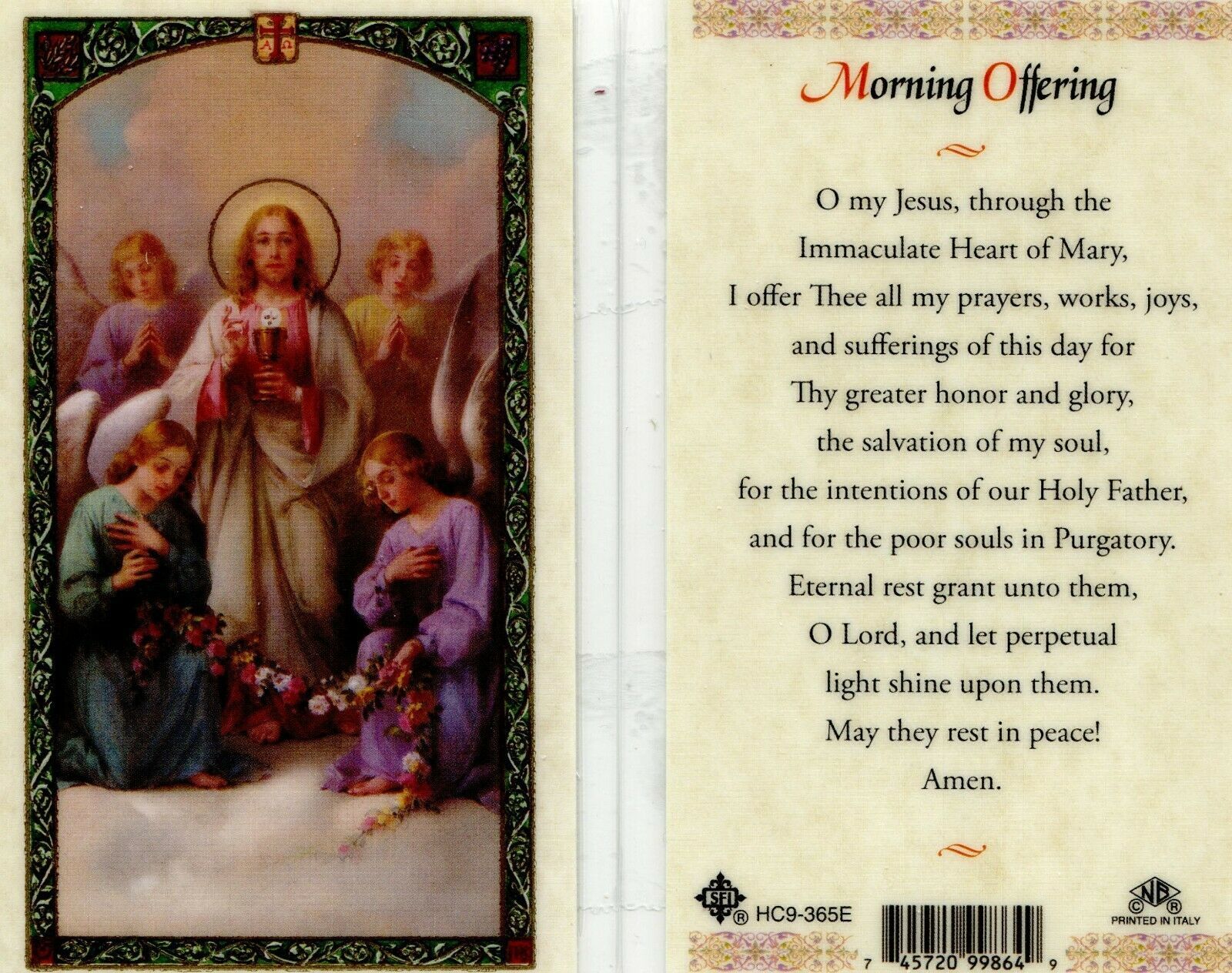

The Month of October is Dedicated to the Holy Rosary

“Rejoice in your hope, be patient in tribulation, be constant in prayer.” (Romans 12:12)

Pope Leo XIV’s prayer intention for the month of October, 2026:
For mental health ministry
Let us pray that the mental health ministry be established throughout the Church, helping to overcome the stigma and discrimination of persons with mental illnesses.

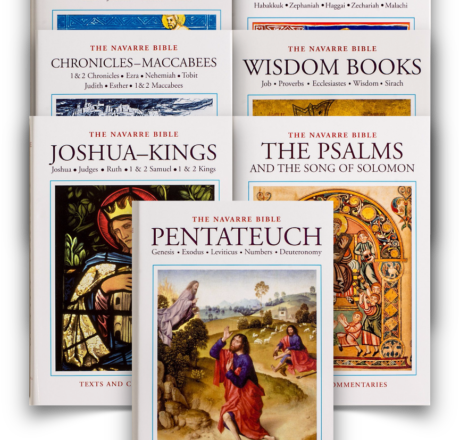
Today’s First Reading
From: Isaiah 45:1-8, 18, 21c-25
Cyrus' Mission
-----------------------------
[1] Thus says the Lord to his anointed, to Cyrus, whose right hand I have grasped, to subdue nations before him and ungird the loins of kings, to open doors before him that gates may not be closed:
[4] For the sake of my servant Jacob, and Israel my chosen, I call you by your name. I surname you, though you do not know me. [5] I am the Lord, and there is no other, besides me there is no God; I gird you, though you do not know me, [6] that men may know, from the rising of the sun and from the west, that there is none besides me; I am the Lord, and there is no other.
***********************************************************************
Commentary:
45:1-13. This poetic statement is a message designed to raise the spirits of the exiles by announcing the sending of a liberator. Cyrus of Persia, whom God will use to implement his plans of salvation for Israel. The formal, very considered, mention of Cyrus, a foreign king, reveals the universal scope of God's salvific plans—which did not at all fit in with the people's own exclusive, nationalistic mentality. The prophecy can be read as an investiture oracle that maybe never reached the ears of Cyrus yet filled the exiles with hope. St Thomas comments: "Having raised the hope of the people in the divine promises (chaps. 40-44), he lists and details the promises in order to console them: first he promises freedom from all ills (chaps. 45-55), and then the restoration of all goods (chaps. 56-66)" (Expositio super Isaiam, 59).
Cyrus was a foreign king who did not know the God of the chosen people, and yet, surprisingly, has been given the title of "anointed", a title reserved to the kings of Israel. Moreover, the oracle says that the mission and conquest of this Persian king are attributable to special divine providence: God has chosen this man to deliver Israel from oppression by other nations (vv. 1-5). This message must have truly amazed those who heard the oracle. Even many centuries later it makes us realize that Gods plans can involve historical events that at first sight can seem disconcerting or at odds with those plans.
45:6-7. When these verses were written they may have been designed to counter dualism (very prevalent among the Persians and their neighbors), which held that two counterposed principles existed--good and evil; hence the emphasis on the fact that the Lord is the only God, the creator of all things of light and of darkness. That would explain why God is described as the maker of “weal” and “woe”, whereas because God is infinite goodness he cannot properly be called the author of evil. However, because Christian readers could find the statement (in v. 2) disconcerting, exegetes have commented on it. Origen, quite early on, gave this explanation: “Evil, in the absolute sense of the word, was not created by God [...]. If we speak of evil in a loose sense, meaning physical and natural evils, then we can say that God created it in order to convert men by their suffering. What is strange about this teaching? We refer to the punishments meted out by parents and teachers, and even the prescriptions and operations carried out by doctors and surgeons, as evils and sufferings, without blaming or condemning them. And that is how we should read the verse: 'I form light and create darkness, I make weal and woe' (Is 45:7)” ("Contra Celsum", 6, 55-56). And St Gregory the Great comments: “I make weal and woe: the peace of God is offered to us precisely in the moment when created things, which are good in themselves, though not always desired or sought with rectitude of heart, become the source of suffering and disgrace. Our union with God is broken by sin; it is fitting, therefore, that we return to him along the path of suffering. When any created thing, which is good in itself, causes us to suffer, it is an instrument for our conversion, so that we will return humbly to the source of peace” ("Moralia In Job", 3, 9, 15).
From: 1 Thessalonians 1:1--10
Greetings
---------
[1] Paul, Silvanus, and Timothy, To the church of the Thessalonians in God the Father and the Lord Jesus Christ: Grace to you and peace.
Thanksgiving for the Thessalonians' Fidelity
--------------------------------------------
[2] We give thanks to God always for you all, constantly mentioning you in our prayers, [3] remembering before our God and Father your work of faith and labor of love and steadfastness of hope in our Lord Jesus Christ. [4] For we know brethren beloved by God, that he has chosen you; [5b] for our gospel came to you not only in word, but also in power and in the Holy Spirit and with full conviction.
***********************************************************************
Commentary:
1. The heading is in keeping with the style of the period: it identifies the writer and the addressees and contains a greeting. The names of Silvanus and Timothy, co-workers of St Paul, appears alongside his own. The heading is affectionate in tone but it is not the kind of opening typical of a simple family letter. This is an official letter, which is why two witnesses vouch for its content (in line with legal requirements: cf. Deut 17:6).
As in certain other letters (cf. 2 Thess, Phil, Philem), St Paul does not describe himself as an Apostle; the mention of his name is enough to convey his authority. Silvanus is the same person as Silas whom Acts describes as "prophet" and one of the "leading men among the brethren" in Jerusalem (cf. Acts 15 :22, 32); here the Latin transcription of his name is used. He had worked alongside St Paul in the evangelization of Thessalonica, so he would have been well known to the believers in that city (cf. Acts 17:4). Timothy was son of Gentile father and a Jewish mother (his mother was a Christian convert); Paul gave him instruction in the faith when he passed through Lystra during his second missionary journey, and ever since then he had always been a faithful helper of the Apostle. When St Paul was writing this letter, Timothy had just arrived in Corinth from Thessalonica with good reports of the spiritual health of that church (cf. 1 Thess 3:6).
The letter is addressed to "the church of the Thessalonians". The Greek word "ekklesia", meaning "assembly, gathering of the people", was used from the apostolic age onwards to describe the Church, the new people of God. St Thomas Aquinas used this verse for his definition of the Church as "the assembly of the faithful brought together in God the Father and in the Lord Jesus Christ, through faith in the Trinity and in the divinity and humanity of Christ" ("Commentary on 1 Thess, ad loc."). "All those, who in faith look toward Jesus, the author of salvation and the principle of unity and peace, God had gathered together and established as the Church, that it may be for each and everyone the visible sacrament of this saving unity" (Vatican II, Lumen Gentium, 9).
"Grace to you and peace": a favorite greeting of St Paul's, expressing the wish that they will attain the fullness of heavenly good things. See the note on Rom 1:7).
3. The spiritual life of the Christian is based on the practice of the theological virtues, for "faith encourages men to do good, charity to bear pain and effort, and hope to resist patiently" (Severian of Gabala, "Commentary on 1 Thess, ad loc.").
Faith needs to be reflected in one's conduct, for "faith apart from works is dead" (Jas 2:26). As St John Chrysostom teaches, "belief and faith are proved by works--not by simply saying that one believes, but by real actions, which are kept up, and by a heart burning with love" ("Hom. on I Thess, ad loc.").
The service of others for God's sake is a proof of charity. A person who practices this virtue always rises to the occasion and does not try to dodge sacrifice or effort.
Hope is a virtue which "enables one to endure adversity" (St Thomas, "Commentary on 1 Thess, ad loc."). St Paul encourages us to rejoice in hope and be patient in tribulation (cf. Rom 12:12), for hope fills the soul with joy and gives it the strength to bear every difficulty for love of God.
4. All men are "beloved by God" and, as St Thomas points out, this is the case "not just in the ordinary sense of having received natural existence from him, but particularly because he has called them to eternal good things" ("Commentary on I Thess, ad loc."). Man's last end is happiness, and happiness cannot be found (other than in a relative sense) in wealth, honors, health or sensual satisfaction; it can only be found in knowing and loving God. By raising man to the supernatural order, God gave him a supernatural goal or end, which consists in "seeing God himself, triune and one, as he is, clearly" (Council of Florence, "Laetentur Coeli").
Deprived as he was of sanctifying grace on account of original sin and his personal sins, man was unable to attain any end exceeding his natural powers. But God loved us so much that he deigned to enable us "to share in the inheritance of the saints in light. He has delivered us from the dominion of darkness and transferred us to the kingdom of his beloved Son" (Col 1:12-13). Therefore, those who have been given the preaching of the Gospel and the fruits of Redemption through Baptism and the other sacraments are the object of a special divine "choice". This "choice" or election is not the same as "salvation"; it is an initiative on God's part prior to the attainment of salvation. To be saved one must second this action of God by responding freely to grace.
5. St Paul reminds them that what he preached was the "gospel" foretold by the prophets (cf. Is 40:9; 52:7; 60:6; 61:1) and fulfilled by the Incarnation of the Word and by his work of salvation. The Apostle was pressed into service by the Holy Spirit to forward his work of sanctification. The Thessalonians were not won over by mere human words but by the "power" of God, who made those words effective. The term "power" refers not only to miraculous actions but also to the Holy Spirit moving the souls of those who heard Paul's preaching.
It is true that this activity, like all actions of God outside himself, is something done by all three Persons of the Blessed Trinity; but in the language of Scripture and of the Church it is customary "to attribute to the Father those works of the Divinity in which power excels; to attribute to the Son, those in which wisdom excels; and to the Holy Spirit, those in which love excels" (Leo XIII, "Divinum Illud Munus", 5).
In the early years of the Church the proclamation of the Gospel was often marked by special graces of the Holy Spirit, such as prophecy, miracles, or the gift of tongues (cf. Acts 2:8). This profusion of gifts made it clear that the messianic era had begun (cf. Acts 2:16), for it meant the fulfillment of the ancient prophecies: "I will pour out my spirit on all flesh; your sons and your daughters shall prophesy, your old men shall dream dreams, and your young men shall see visions. Even upon the menservants and maidservants in those days, I will pour out my spirit" (Joel 3:1-3).
"In power and in the Holy Spirit": in line with the divine plan of salvation, the time of the Old Testament, which prepared the way for the coming of the Messiah, has reached its end, and a new era has begun, the Christian era, the key feature of which is the activity of the Spirit of God: "It must be said that the Holy Spirit is the principal agent of evangelization: it is he who impels each individual to proclaim the Gospel, and it is he who in the depths of consciences causes the word of salvation to be accepted and understood" (Paul VI, "Evangelii Nuntiandi", 75).
From: Matthew 22:15-33
On Tribute to Caesar
--------------------
[15] Then the Pharisees went and took counsel how to entangle him in his talk. [16] And they sent their disciples to him, along with the Herodians, saying, "Teacher, we know that you are true, and teach the way of God truthfully, and care for no man; for you do not regard the position of men. [17] Tell us, then, what you think. Is it lawful to pay taxes to Caesar, or not?" [18] But Jesus, aware of their malice, said, "Why put me to the test, you hypocrites? [19] Show me the money for the tax." And they brought him a coin. [20] And Jesus said to them, "Whose likeness and inscription is this?" [21] They said, "Caesar's." Then he said to them, "Render therefore to Caesar the things that are Caesar's, and to God the things that are God's."
***********************************************************************
Commentary:
15-21. The Pharisees and Herodians join forces to plot against Jesus. The Herodians were supporters of the regime of Herod and his dynasty. They were quite well disposed to Roman rule and, as far as religious matters were concerned, they held the same kind of materialistic ideas as the Sadducees. The Pharisees were zealous keepers of the Law; they were anti-Roman and regarded the Herodians as usurpers. It is difficult to imagine any two groups more at odds with each other: their amazing pact shows how much they hated Jesus.
Had Jesus replied that it was lawful to pay taxes to Caesar, the Pharisees could have discredited him in the eyes of the people, who were very nationalistic; if he said it was unlawful, the Herodians would have been able to denounce him to the Roman authorities.
Our Lord's answer is at once so profound that they fail to grasp its meaning, and it is also faithful to his preaching about the Kingdom of God: give Caesar what is his due, but no more, because God must assuredly be given what he has a right to (the other side of the question, which they omitted to put). God and Caesar are on two quite different levels, because for an Israelite God transcends all human categories. What has Caesar a right to receive? Taxes, which are necessary for legitimate state expenses. What must God be given? Obviously, obedience to all his commandments--which implies personal love and commitment. Jesus' reply goes beyond the human horizons of these tempters, far beyond the simple yes or no they wanted to draw out of him.
The teaching of Jesus transcends any kind of political approach, and if the faithful, using the freedom that is theirs, chose one particular method of solving temporal questions, they "ought to remember that in those cases no one is permitted to identify the authority of the Church exclusively with his own opinion" (Vatican II, "Gaudium Et Spes", 43).
Jesus' words show that he recognized civil authority and its rights, but he made it quite clear that the superior rights of God must be respected (cf. Vatican II, "Dignitatis Humanae", 11 ), and pointed out that it is part of God's will that we faithfully fulfill our civic duties (cf. Rom 13:1-7).
Disclaimer: Opinions posted on Free Republic are those of the individual posters and do not necessarily represent the opinion of Free Republic or its management. All materials posted herein are protected by copyright law and the exemption for fair use of copyrighted works.


