Skip to comments.
Catholic Caucus: Daily Mass Readings 11-September-2026
Universalis/Jerusalem Bible ^
Posted on 09/11/2026 8:29:42 AM PDT by annalex
11 September 2026
Friday of week 23 in Ordinary Time
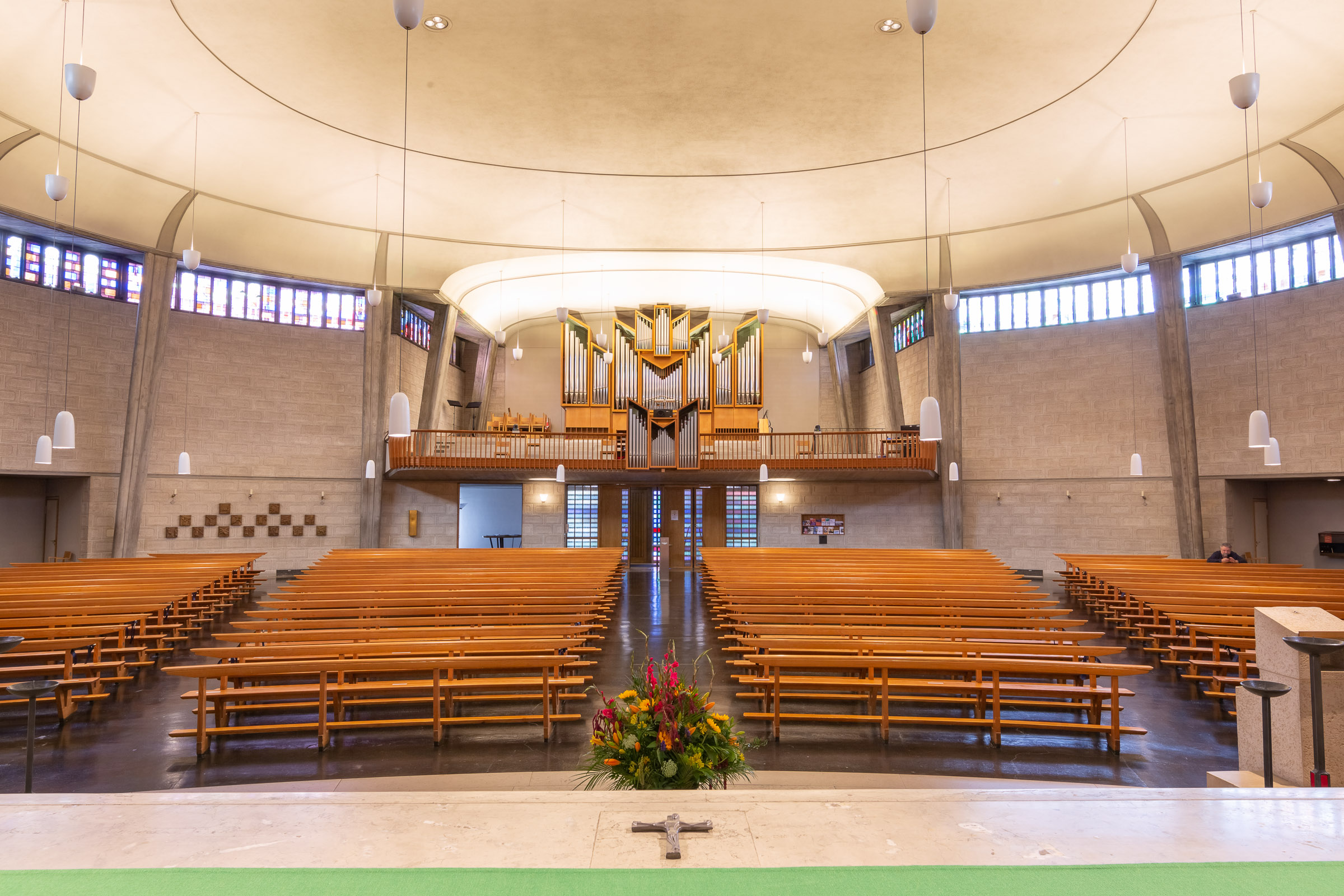
St. Felix and Regula, ZurichReadings at MassLiturgical Colour: Green. Year: A(II).
| First reading |
|---|
| 1 Corinthians 9:16-19,22-27 |
|---|
We go into strict training, like fighters at the gamesI do not boast of preaching the gospel, since it is a duty which has been laid on me; I should be punished if I did not preach it! If I had chosen this work myself, I might have been paid for it, but as I have not, it is a responsibility which has been put into my hands. Do you know what my reward is? It is this: in my preaching, to be able to offer the Good News free, and not insist on the rights which the gospel gives me. So though I am not a slave of any man I have made myself the slave of everyone so as to win as many as I could. I made myself all things to all men in order to save some at any cost; and I still do this, for the sake of the gospel, to have a share in its blessings. All the runners at the stadium are trying to win, but only one of them gets the prize. You must run in the same way, meaning to win. All the fighters at the games go into strict training; they do this just to win a wreath that will wither away, but we do it for a wreath that will never wither. That is how I run, intent on winning; that is how I fight, not beating the air. I treat my body hard and make it obey me, for, having been an announcer myself, I should not want to be disqualified.
| Responsorial Psalm |
|---|
| Psalm 83(84):3-6,12 |
|---|
How lovely is your dwelling-place, Lord, God of hosts. My soul is longing and yearning, is yearning for the courts of the Lord. My heart and my soul ring out their joy to God, the living God. How lovely is your dwelling-place, Lord, God of hosts. The sparrow herself finds a home and the swallow a nest for her brood; she lays her young by your altars, Lord of hosts, my king and my God. How lovely is your dwelling-place, Lord, God of hosts. They are happy, who dwell in your house, for ever singing your praise. They are happy, whose strength is in you, in whose hearts are the roads to Zion. How lovely is your dwelling-place, Lord, God of hosts. For the Lord God is a rampart, a shield; he will give us his favour and glory. The Lord will not refuse any good to those who walk without blame. How lovely is your dwelling-place, Lord, God of hosts.
| Gospel Acclamation | Ps147:12,15 |
|---|
Alleluia, alleluia! O praise the Lord, Jerusalem! He sends out his word to the earth. Alleluia! Alleluia, alleluia! Your word is truth, O Lord: consecrate us in the truth. Alleluia!
Can the blind lead the blind?Jesus told a parable to the disciples: ‘Can one blind man guide another? Surely both will fall into a pit? The disciple is not superior to his teacher; the fully trained disciple will always be like his teacher. Why do you observe the splinter in your brother’s eye and never notice the plank in your own? How can you say to your brother, “Brother, let me take out the splinter that is in your eye,” when you cannot see the plank in your own? Hypocrite! Take the plank out of your own eye first, and then you will see clearly enough to take out the splinter that is in your brother’s eye.’ Universalis podcast: The week ahead – from 13 to 19 SeptemberThe Exaltation of the Holy Cross. The Seven Deadly Sins in Dante: 5. Avarice. (20 minutes)
Episode notes.Play Christian Art Each day, The Christian Art website gives a picture and reflection on the Gospel of the day. The readings on this page are from the Jerusalem Bible, which is used at Mass in most of the English-speaking world. The New American Bible readings, which are used at Mass in the United States, are available in the Universalis apps, programs and downloads.
You can also view this page with the Gospel in Greek and English. |
TOPICS: Catholic; General Discusssion; Prayer; Worship
KEYWORDS: catholic; lk6; ordinarytime; prayer
For your reading, reflection, faith-sharing, comments, questions, discussion.
1
posted on
09/11/2026 8:29:42 AM PDT
by
annalex
To: All
KEYWORDS: catholic; lk6; ordinarytime; prayer
2
posted on
09/11/2026 8:31:48 AM PDT
by
annalex
(fear them not)
To: All
NAVARRE BIBLE COMMENTARY(RSV)
Ad Majorem Dei Gloriam (To the Greater Glory of God)
Today’s First Reading
From: 1 Corinthians 9:16-19, 22b-27
St Paul Does Not Exercise This Right
------------------------------------
[16] For if I preach the gospel, that gives me no ground for boasting. For necessity is laid upon me. Woe to me if I do not preach the gospel! [17] For if I do this of my own will, I have a reward; but if not of my own will, I am entrusted with a commission. [18] What then is my reward? Just this: that in my preaching I may make the gospel free of charge, not making full use of my right in the gospel.
[19] For though I am free from all men, I have made myself a slave to all, that I might win the more. [22b] I have become all things to all men, that I might by all means save some. [23] I do it all for the sake of the gospel, that I may share in its blessings.
The Need for Asceticism
-----------------------
[24] Do you not know that in a race all the runners compete, but only one receives the prize? So run that you may obtain it. [25] Every athlete exercises self-control in all things. They do it to receive a perishable wreath, but we an imperishable. [26] Well, I do not run aimlessly, I do not box as one beating the air, but I pommel my body and subdue it, lest after preaching to others I myself should be disqualified.
***********************************************************************
Commentary:
15-18. As he already said in v. 12, St Paul makes it clear that he has not exercised so far, nor does he envisage doing so, his right to be supported by the faithful. Conscious that his God-given calling obliges him to preach the Gospel, he prefers to carry out that mission without receiving anything in exchange. His attitude shows both his greatness and his humility: he faces every kind of suffering, privation and danger for the sake of the Gospel (cf. 2 Cor 11:23-33), and yet he considers that he is doing no more than his duty. His policy recalls our Lord's teaching: "When you have done all that is commanded you, say, 'We are unworthy servants; we have only done what was our duty"' (Lk 17:10; cf. Mt 10:8).
To keep to this self-imposed policy, St Paul had to add to all his work of evangelization the additional effort to earn his own living. In the Acts of the Apostles, for example, we learn of his manual work in Corinth (18:3) and Ephesus (20:34); and he himself tells the Thessalonians that "we worked night and day, that we would not burden any of you, while we preached to you the gospel of God" (1 Thess 2:9; 2 Thess 3:9). Only in the case of the Philippians for whom he had very particular affection, did he allow any exception to this rule (cf. Phil 4:15-16). However, at no time did he feel that others were doing wrong in acting differently, "for the Lord had disposed that those who proclaim the Gospel be supported by it [...]. But he [Paul] went further and chose not even to take what was his due" (St Augustine, "Sermon" 46, 4).
16. The Church has often used these words of St Paul to remind the faithful that our Lord has called them to the apostolate through the sacraments of Baptism and Confirmation. The Second Vatican Council explains what this apostolate involves: "The witness of life, however, is not the sole element in the apostolate; the true apostle is on the lookout for occasions of announcing Christ by word, either to unbelievers to draw them towards the faith, or to the faithful to instruct them, strengthen them, incite them to a more fervent life; 'for Christ's love urges us on' (2 Cor 5:14), and in the hearts of all should the Apostle's words find echo: 'Woe to me if I do not preach the Gospel' (1 Cor 9:16)" ("Apostolicam Actuositatem", 6).
St John Chrysostom anticipates the kinds of excuse people might offer to avoid this duty: "There is nothing colder than a Christian who is not concerned about the salvation of others [...]. Do not say, I cannot help others: for, if you are truly a Christian it is impossible not to. Natural objects have properties that cannot be denied; the same is true of what I have just said, because it is the nature of a Christian to act in that way. Do not offend God by deception. If you said that the sun cannot shine, you would be committing an offense against God and making a liar of him. It is easier for the sinner to shine or give warmth than for a Christian to cease to give light: it is easier for that to happen than for light to become darkness. Do not say that that is impossible: what is impossible is the contrary [...]. If we behave in the correct way, everything else will follow as a natural consequence. The light of Christians cannot be hidden, a lamp shining so brightly cannot be hidden" ("Hom. on Acts", 20).
19-23. Because he is one with Christ (cf. Gal 2:20), who "came not to be served but to serve, and to give us his life as a ransom for many" (Mt 20:28), the Apostle makes himself "all things to all men", so generous is he and so eager to save as many souls as possible, at the cost of whatever sacrifice and humiliation might be involved. "A Christian has to be ready to share his life with everyone at all times, giving to everyone the chance to come nearer to Christ Jesus. He has to sacrifice his own desires willingly for the sake of others, without separating people into watertight compartments, without pigeonholing them or putting tags on them as though they were merchandise or insect specimens. A Christian cannot afford to separate himself from others, because, if he did that, his life would be miserably selfish. He must become 'all things to all men, in order to save all men' (1 Cor 9:22)" (St. J. Escriva, "Christ Is Passing By", 124).
Obviously this concern for others should not lead to diluting the truths of faith. Referring to this point, Pope Paul VI wrote: "The apostle's art is a risky one. The desire to come together as brothers must not lead to a watering down or subtracting from the truth. Our dialogue must not weaken our attachment to our faith. In our apostolate we cannot make vague compromises about the principles of faith and action on which our profession of Christianity is based. An immoderate desire to make peace and sink differences at all costs is, fundamentally, a kind of skepticism about the power and content of the Word of God which we desire to preach. Only one who is completely faithful to the teaching of Christ can be an apostle. And only he who lives his Christian life to the full can remain uncontaminated by the errors with which he comes into contact" ("Ecclesi am Suam", 33).
24-27. These similes taken from athletics would have been appropriate for the Corinthians, for their city hosted the biennial Isthmus games. Often, when speaking about the Christian life, the Apostle uses metaphors taken from sport-races (cf. Gal 5:7; Phil 3:12-14; 2 Tim 4:7), combats (1 Tim 6:12; 2 Tim 4:7) and laurel crowns (2 Tim 4:8).
A Christian's life on earth must needs involve interior striving; he should approach this with in a competitive, sportive spirit, facing up to any sacrifices that prove necessary, and not letting obstacles, failures or personal limitation get him down: "We should not be surprised to find, in our body and soul, the needle of pride, sensuality, envy, laziness and the desire to dominate others. This is a fact of life, proven by our personal experience. It is the point of departure and the normal context for winning in this intimate sport, this race toward our Father's house. St Paul says: "I do not run aimlessly, I do not box as one beating the air; but I pommel my body and subdue it, lest after preaching to others I myself should be disqualified' (1 Cor 9:26) [...]. In this adventure of love we should not be depressed by our falls, not even by serious falls, if we go to God in the sacrament of Penance contrite and resolved to improve. A Christian is not a neurotic collector of good behavior reports. Jesus Christ our Lord was moved as much by Peter's repentance after his fall as by John's innocence and faithfulness. Jesus understands our weakness and draws us to himself on an inclined plane. He wants us to make an effort to climb a little each day" ("Christ Is Passing By", 75).
27. While we are in this present life, our perseverance can never be taken for granted: "Let no one feel assured of this gift with an absolute certainty, although all ought to have most secure hope in the help of God. For unless we are unfaithful to his grace, God will bring the good work to perfection, just as he began it, working both the will, and the performance (cf. Phil 2:13)" (Council of Trent, "De Iustificatione", chap. 13). Therefore, the Apostle points out, the ascetical effort which every person must keep on making in this life includes physical mortification and self-control. Helped by God's grace and confident of his mercy, a Christian who makes this effort will be able to say as St Paul did at the end of his life, "there is laid up for me a crown of righteousness which the Lord, the righteous judge, will award to me on that day" (2 Tim 4:8).
3
posted on
09/11/2026 9:14:42 AM PDT
by
fidelis
(Ecce Crucem Domini! Fugite partes adversae! Vicit Leo de tribu Juda, Radix David! Alleluia!)
Today’s Gospel Reading From: Luke 6:39-42
Integrity
---------
[39] He (Jesus) told them a parable: "Can a blind man lead a blind man? Will they not both fall into a pit? [40] A disciple is not above his teacher, but every one when he is fully taught will be like his teacher. [41] Why do you see the speck that is in your brother's eye, but do not notice the log that is in your eye? [42] Or how can you say to your brother, `Brother, let me take out the speck that is in your eye,' when you yourself do not see the log that is in your eye? You hypocrite, first take the log out of your own eye, and then you will see clearly to take out the speck that is in your brother's eye."
***********************************************************************
Commentary:
[No Navarre Commentary for Luke 6:39-42. Below is a commentary on a similar theme from Matthew 7:1-5:]
1. Jesus is condemning any rash judgments we make maliciously or carelessly about our brothers' behavior or feelings or motives. "Think badly and you will not be far wrong" is completely at odds with Jesus' teaching.
In speaking of Christian charity St. Paul lists its main features: "Love is patient and kind [...]. Love bears all things, believes all things, hopes all things, endures all things" (1 Corinthians 13:4, 5, 7). Therefore, "Never think badly of anyone, not even if the words or conduct of the person in question give you good grounds for doing so" (St. J. Escriva, "The Way", 442).
"Let us be slow to judge.--Each one sees things from his own point of view, as his mind, with all its limitations, tells him, and through eyes that are often dimmed and clouded by passion" ("ibid"., 451).
1-2. As elsewhere, the verbs in the passive voice ("you will be judged", "the measure you will be given") have God as their subject, even though He is not explicitly mentioned: "Do not judge OTHERS, that you be not judged BY GOD". Clearly the judgment referred to here is always a condemnatory judgment; therefore, if we do not want to be condemned by God, we should never condemn our neighbor. "God measures out according as we measure out and forgives as we forgive, and comes to our rescue with the same tenderness as He sees us having towards others" (Fray Luis de Leon, "Exposicion Del Libro De Job", chapter 29).
3-5. A person whose sight is distorted sees things as deformed, even though in fact they are not deformed. St. Augustine gives this advice: "Try to acquire those virtues which you think your brothers lack, and you will no longer see their defects, because you will not have them yourselves" ("Enarrationes In Psalmos", 30, 2, 7). In this connection, the saying, "A thief thinks that everyone else is a thief" is in line with this teaching of Jesus.
Besides: "To criticize, to destroy, is not difficult; any unskilled laborer knows how to drive his pick into the noble and finely-hewn stone of a cathedral. To construct: that is what requires the skill of a master" (St. J. Escriva, "The Way", 456).
4
posted on
09/11/2026 9:14:58 AM PDT
by
fidelis
(Ecce Crucem Domini! Fugite partes adversae! Vicit Leo de tribu Juda, Radix David! Alleluia!)
5
posted on
09/11/2026 9:16:02 AM PDT
by
fidelis
(Ecce Crucem Domini! Fugite partes adversae! Vicit Leo de tribu Juda, Radix David! Alleluia!)
To: fidelis
Thank you. It was not working in the morning.
6
posted on
09/11/2026 4:50:42 PM PDT
by
annalex
(fear them not)
To: nickcarraway; NYer; ELS; Pyro7480; livius; ArrogantBustard; Catholicguy; RobbyS; marshmallow; ...

Alleluia Ping Please FReepmail me to get on/off the Alleluia Ping List.
7
posted on
09/11/2026 4:51:23 PM PDT
by
annalex
(fear them not)
To: annalex
8
posted on
09/11/2026 4:51:54 PM PDT
by
annalex
(fear them not)
To: annalex
| Luke |
| | English: Douay-Rheims | Latin: Vulgata Clementina | Greek NT: Byzantine/Majority Text (2000) |
| | Luke 6
|
| 39. | And he spoke also to them a similitude: Can the blind lead the blind? do they not both fall into the ditch? | Dicebat autem illis et similitudinem : Numquid potest cæcus cæcum ducere ? nonne ambo in foveam cadunt ? | ειπεν δε παραβολην αυτοις μητι δυναται τυφλος τυφλον οδηγειν ουχι αμφοτεροι εις βοθυνον πεσουνται |
| 40. | The disciple is not above his master: but every one shall be perfect, if he be as his master. | Non est discipulus super magistrum : perfectus autem omnis erit, si sit sicut magister ejus. | ουκ εστιν μαθητης υπερ τον διδασκαλον αυτου κατηρτισμενος δε πας εσται ως ο διδασκαλος αυτου |
| 41. | And why seest thou the mote in thy brother's eye: but the beam that is in thy own eye thou considerest not? | Quid autem vides festucam in oculo fratris tui, trabem autem, quæ in oculo tuo est, non consideras ? | τι δε βλεπεις το καρφος το εν τω οφθαλμω του αδελφου σου την δε δοκον την εν τω ιδιω οφθαλμω ου κατανοεις |
| 42. | Or how canst thou say to thy brother: Brother, let me pull the mote out of thy eye, when thou thyself seest not the beam in thy own eye? Hypocrite, cast first the beam out of thy own eye; and then shalt thou see clearly to take out the mote from thy brother's eye. | aut quomodo potes dicere fratri tuo : Frater, sine ejiciam festucam de oculo tuo : ipse in oculo tuo trabem non videns ? Hypocrita, ejice primum trabem de oculo tuo : et tunc perspicies ut educas festucam de oculo fratris tui. | η πως δυνασαι λεγειν τω αδελφω σου αδελφε αφες εκβαλω το καρφος το εν τω οφθαλμω σου αυτος την εν τω οφθαλμω σου δοκον ου βλεπων υποκριτα εκβαλε πρωτον την δοκον εκ του οφθαλμου σου και τοτε διαβλεψεις εκβαλειν το καρφος το εν τω οφθαλμω του αδελφου σου |
9
posted on
09/11/2026 4:52:57 PM PDT
by
annalex
(fear them not)
To: annalex

Catena Aurea by St. Thomas Aguinas
Luke CHAP. 6
6:39–42
39. And he spake a parable unto them, Can the blind lead the blind? shall they not both fall into the ditch?
40. The disciple is not above his master: but every one that is perfect shall be as his master.
41. And why beholdest thou the mote that is in thy brother’s eye, but perceivest not the beam that is in thine own eye?
42. Either how canst thou say to thy brother, Brother, let me pull out the mote that is in thine eye, when thou thyself beholdest not the beam that is in thine own eye? Thou hypocrite, cast out first the beam out of thine own eye, and then shalt thou see clearly to pull out the mote that is in thy brother’s eye.
CYRIL OF ALEXANDRIA. The Lord added to what had gone before a very necessary parable, as it is said, And he spake a parable to them, for His disciples were the future teachers of the world, and it therefore became them to know the way of a virtuous life, having their minds illuminated as it were by a divine brightness, that they should not be blind leaders of the blind. And then he adds, Can the blind lead the blind? But if any should chance to attain unto an equal degree of virtue with their teachers, let them stand in the measure of their teachers, and follow their footsteps. Hence it follows, The disciple is not above his master. Hence also Paul says, Be ye also followers of me, as I am of Christ (1 Cor. 1:11.). Since Christ therefore judged not, why judgest thou? for He came not to judge the world, but to shew mercy.
THEOPHYLACT. Or else, If thou judgest another, and in the very same way sinnest thyself, art not thou like to the blind leading the blind? For how canst thou lead him to good when thou also thyself committest sin? For the disciple is not above his master. If therefore thou sinnest, who thinkest thyself a master and guide, where will he be who is taught and led by thee? For he will be the perfect disciple who is as his master.
BEDE. Or the sense of this sentence depends upon the former, in which we are enjoined to give alms, and forgive injuries. If, says He, anger has blinded thee against the violent, and avarice against the grasping, how canst thou with thy corrupt heart cure his corruption? If even thy Master Christ, who as God might revenge His injuries, chose rather by patience to render His persecutors more merciful, it is surely binding on His disciples, who are but men, to follow the same rule of perfection.
AUGUSTINE. (de Qu. Ev. l. ii. q. 9.) Or, He has added the words, Can the blind, lead the blind, in order that they might not expect to receive from the Levites that measure of which He says, They shall give into thy bosom, because they gave tithes to them. And these He calls blind, because they received not the Gospel, that the people might the rather now begin to hope for that reward through the disciples of the Lord, whom wishing to point out as His imitators, He added, The disciple is not above his master.
THEOPHYLACT. But the Lord introduces another parable taken from the same figure, as follows, But why seest thou the mote (that is, the slight fault) which is in thy brother’s eye, but the beam which is in thine own eye (that is, thy great sin) thou regardest not?
BEDE. Now this has reference to the previous parable, in which He forewarned them that the blind cannot be led by the blind, that is, the sinner corrected by the sinner. Hence it is said, Or, how canst thou say to thy brother, Brother let me cast out the mote that is in thine eye, if thou seest not the beam that is in thine own eye?
CYRIL OF ALEXANDRIA. As if He said, How can he who is guilty of grievous sins, (which He calls the beam,) condemn him who has sinned only slightly, or even in some cases not at all? For this the mote signifies.
THEOPHYLACT. But these words are applicable to all, and especially to teachers, who while they punish the least sins of those who are put under them, leave their own unpunished. Wherefore the Lord calls them hypocrites, because to this end judge they the sins of others, that they themselves might seem just. Hence it follows, Thou hypocrite, first cast the beam out of thine own eye, &c.
CYRIL OF ALEXANDRIA. That is to say, first shew thyself clean from great sins, and then afterwards shalt thou give counsel to thy neighbour, who is guilty only of slight sins.
BASIL. (Hom. 9, in Hexameron.) In truth, self knowledge seems the most important of all. For not only the eye, looking at outward things, fails to exercise its sight upon itself, but our understanding also, though very quick in apprehending the sin of another, is slow to perceive its own defects.
Catena Aurea Luke 6
10
posted on
09/11/2026 4:53:25 PM PDT
by
annalex
(fear them not)
To: annalex

Christ separates the lambs from the goats
early 6th-century
the Church of Appolinare Nuovo
Ravenna
11
posted on
09/11/2026 4:54:00 PM PDT
by
annalex
(fear them not)
To: annalex
St. Felix & Regula
Catholic Online Saints & Angels
Facts
Feastday: September 11
Patron: of Zürich
Death: 286
Martyred brother and sister who fled to Switzerland during the persecution conducted by co-Emperor Maximian. They were captured and martyred near Zurich. Additional Content Provided by Wikipedia

Wasserkirche church Crypt with 'Martyr stone', the supposed execution site
Felix and Regula (together with their servant Exuperantius) are Coptic Orthodox and Roman Catholic saints. They are the patron saints of Zürich.
Felix and Regula were brother and sister, beheaded in the third century, along with Exuperantius, for converting to Christianity.[1] Their feast day is 11 September in the Gregorian calendar,[2] celebrated on the same day using the Julian calendar (which is the 24th of September Gregorian), the 14th of Tout in the Coptic Calendar.
History
Felix and Regula were siblings, and members of the Theban legion which was based in Egypt under Saint Maurice and stationed in Agaunum in the Valais, Switzerland. When the legion refused to sacrifice to Emperor Maximian, the order was given to execute them.[3] The siblings fled, reaching Zürich (then called Turicum) via Glarus before they were caught, tried and executed in 286. According to legend, after decapitation, they miraculously stood to their feet, picked up their own heads, walked forty paces uphill, and prayed before lying down in death. They were buried on the spot where they lay down, on the hilltop which would become the site of the Grossmünster.[4]
Detail of a plan of Zürich, 1576. Shown is the Grossmünster church, burial place of Saints Felix and Regula, at the river Limmat the Wasserkirche (Water Church), their execution site, and on the left side of the Limmat the Fraumünster Abbey, where important relics of the saints used to be on display to the public. This story was revealed in a dream to a monk called Florentius in the 8th century. It largely contributed to the massive conversion of the inhabitants of these regions to Christianity and had such an impact on Zurich that these three saints still appear on the seal of Zurich today.
In the 9th century, there was a small monastery at the location, outside the settlement of Zürich which was situated on the left side of the Limmat. The Grossmünster was built on their graves from ca. 1100, and the Wasserkirche was built at the site of their execution.[5]
From the 13th century, images of the saints were used in official seals of the city and on coins. On the saints' feast day, their relics were carried in procession between the Grossmünster and the Fraumünster, and the two monasteries vied for possession of the relics, which attracted enough pilgrims to make Zürich the most important pilgrimage site in the bishopric of Konstanz.
With the dissolution of the monasteries by Huldrych Zwingli in 1524, their possessions were confiscated and the graves of the martyrs were opened. There are conflicting versions of what happened then. Heinrich Bullinger, a Protestant theologian, claimed that the graves were empty save for a few bone fragments, which were piously buried in the common graveyard outside the church. The Catholics, on the other hand, claimed that the reformers were planning to throw the relics of the saints into the river, and that a courageous man of Uri (who happened to be exiled from Uri, and by his action earned amnesty) stole the relics from the church. He carried them to Andermatt, where the two skulls of Felix and Regula can be seen to this day, while the remaining relics were returned to Zürich in 1950, to the newly built St. Felix und Regula Catholic church.
The skulls have been Carbon 14 dated, and while one dates to the Middle Ages, the other is in fact composed of fragments of two separate skulls, of which one is medieval, and the other could indeed date to Roman times.
Zurich's Knabenschiessen competition, which started in 1889, originated with the feast day of the saints on 11 September, which came to be the "national holiday" of the early modern Republic of Zürich.
Historicity
The account of the Theban legion is regarded as fictitious by many modern historians.[6] However, other historians believe that historical and archaeological evidence places the legion in Switzerland at that time.[7][8]
Felix & Regula in 'Stuttgarter Passionale' (1130)
See also
Saints Felix and Regula, patron saint archive
References
^ Claremont Colleges Digital Library, Retrieved 2023-04-01
^ Bischof, Franz Xavier, "Felix and Regula", Religion Past and Present 2011 ISBN 9789004146662
^ Codex Parisiensis, Bibliothèque nationale, 9550, reproduced in Louis Dupraz, Les passions de st Maurice d'Agaune: Essai sur l'historicité de la tradition et contribution à l'étude de l'armée pré-Dioclétienne (260–286) et des canonisations tardives de la fin du IVe siècle (Fribourg 1961), Appendix I. Dupraz writes to confirm the historicity of the Theban Legion. ^ ""The First Christians in Zurich: The Legend of Felix and Regula", Zurich Tourism" (PDF). Archived from the original (PDF) on 2016-08-14. Retrieved 2016-07-17.
^ "Siblings carry their severed heads 40 paces to become Zürich’s patron saints", le News, June 12, 2016
^ Woods, David, "The Origin of the Legend of Maurice and the Theban Legion", Journal of Ecclesiastical History 45 (1994), pp. 385–95.
^ David Bindman, Henry Louis Gates, Karen C. C. Dalton, The Image of the Black in Western Art Pt. II (Italy 1979: Menil Foundation), 139.
^ Jstor, Retrieved 2023-04-01
Literature
Hansueli Etter, Urs Baur, Jürg Hanser, Jürg Schneider (Hrsg.): Die Zürcher Stadtheiligen Felix und Regula. Legenden, Reliquien, Geschichte und ihre Botschaft im Licht moderner Forschung. Hochbauamt der Stadt Zürich/Büro für Archäologie, Zürich 1988 ISBN 3-905243-01-6
Walter Nigg: Felix und Regula, Aneignung einer Legende. Zürich: SV International, Schweizer Verlagshaus, 1983. ISBN 3-7263-6361-0
Jürg Hanser, Armin Mathis, Ulrich Ruoff, Jürg Schneider: Das neue Bild des Alten Zürich. Zürich 1983
Cécile Ramer, Felix, Regula und Exuperantius; Ikonographie der Stifts- und Stadtheiligen Zürichs. Zürich: Antiquarische Gesellschaft, 1973.
catholic.org
12
posted on
09/11/2026 5:04:13 PM PDT
by
annalex
(fear them not)
Disclaimer:
Opinions posted on Free Republic are those of the individual
posters and do not necessarily represent the opinion of Free Republic or its
management. All materials posted herein are protected by copyright law and the
exemption for fair use of copyrighted works.
FreeRepublic.com is powered by software copyright 2000-2008 John Robinson
