
Posted on 09/10/2026 9:53:14 PM PDT by fidelis
Jesus told his disciples a parable: “Can a blind person guide a blind person? Will not both fall into a pit?” Luke 6:39
As we continue reading from Jesus’ Sermon on the Plain, we encounter what is arguably the shortest parable in all of Scripture—just two brief rhetorical questions: “Can a blind person guide a blind person? Will not both fall into a pit?” Though concise, these lines present a powerful metaphor. Jesus places this parable within a broader moral discourse that warns against rash judgment and exhorts us to mercy. Just before today’s Gospel, He commands, “Stop judging and you will not be judged. Stop condemning and you will not be condemned. Forgive and you will be forgiven” (Luke 6:37). In this context, the parable becomes a pointed reminder that those who are spiritually blind should not presume to lead others, lest they both stumble into error.
This parable illustrates the importance of interior conversion before we attempt to guide others in the moral life. If we are blinded by pride, sin, or ignorance, we risk not only hurting ourselves but leading others astray as well. In that case, our failure to change—rooted in self-deception—becomes a stumbling block for those we influence.
In a modern context, consider a counselor who gives harmful advice to someone in deep distress, a lawyer who misrepresents a client due to incompetence, or a doctor who negligently ignores clear signs of illness, resulting in greater suffering. In each case, the one entrusted with another’s care fails in his duty, not necessarily out of ignorance, but often due to pride, laziness, or complacency.
Spiritual blindness is even more dangerous. As the context of this parable suggests, it stems especially from judging, condemning, and refusing to forgive. These sins are destructive because they are cloaked in a false sense of righteousness. Judgment and condemnation foster pride, and pride blinds the soul to the profound depth of divine mercy we are called to extend—even toward those who have gravely wronged us.
Immediately following this parable, Jesus offers three maxims that apply directly to its message. First, He says, “No disciple is superior to the teacher; but when fully trained, every disciple will be like his teacher.” This affirms the need for humility and proper formation in the spiritual and moral life. We must become true disciples of Christ, submitting ourselves to His instruction, before presuming to teach or correct others in His name.
Second, Jesus asks, “Why do you notice the splinter in your brother’s eye, but do not perceive the wooden beam in your own?” This descriptive image exposes the hypocrisy of focusing on the minor faults of others while remaining blind to our own far more serious sins.
Reflect today on whether you try to guide others while remaining spiritually blind yourself. Consider moments when you may have judged, condemned, or withheld forgiveness, thinking you were justified. If so, recognize that Christ does not condemn you, but lovingly calls you to be healed by restoring your spiritual vision with His grace. Only through humility, honest self-examination, and sincere repentance can we be made clear-sighted and truly helpful to others.
Most humble and perfect Lord, in Your human nature, You were the perfect expression of the Father’s love, shining light into the darkness of our lives by revealing Your truth and mercy. Help me always to humble myself before You and to remain open to the formation You offer, so that I may not only draw closer to You, but also become a more faithful and powerful instrument of Your presence in the world. Jesus, I trust in You.
Please keep in mind that this is a Catholic Caucus/Devotional thread for the purpose of prayerful reflection on the Sacred Scriptures and is closed to debate of any kind. Per FR policy on Religion Caucus threads, off-topic, argumentative, and abusive comments are not allowed and will be submitted to the Mods for deletion. Thanks, and God bless you.
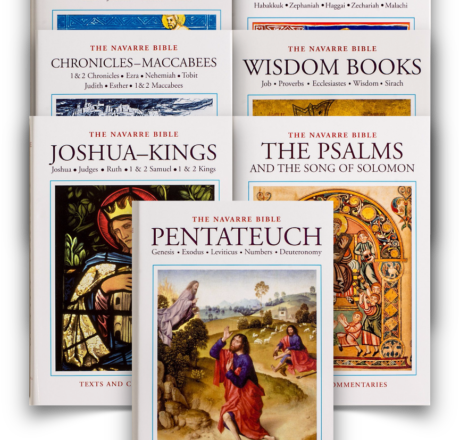
Today’s First Reading
From: 1 Corinthians 9:16-19, 22b-27
St Paul Does Not Exercise This Right
------------------------------------
[16] For if I preach the gospel, that gives me no ground for boasting. For necessity is laid upon me. Woe to me if I do not preach the gospel! [17] For if I do this of my own will, I have a reward; but if not of my own will, I am entrusted with a commission. [18] What then is my reward? Just this: that in my preaching I may make the gospel free of charge, not making full use of my right in the gospel.
[19] For though I am free from all men, I have made myself a slave to all, that I might win the more. [22b] I have become all things to all men, that I might by all means save some. [23] I do it all for the sake of the gospel, that I may share in its blessings.
The Need for Asceticism
-----------------------
[24] Do you not know that in a race all the runners compete, but only one receives the prize? So run that you may obtain it. [25] Every athlete exercises self-control in all things. They do it to receive a perishable wreath, but we an imperishable. [26] Well, I do not run aimlessly, I do not box as one beating the air, but I pommel my body and subdue it, lest after preaching to others I myself should be disqualified.
***********************************************************************
Commentary:
15-18. As he already said in v. 12, St Paul makes it clear that he has not exercised so far, nor does he envisage doing so, his right to be supported by the faithful. Conscious that his God-given calling obliges him to preach the Gospel, he prefers to carry out that mission without receiving anything in exchange. His attitude shows both his greatness and his humility: he faces every kind of suffering, privation and danger for the sake of the Gospel (cf. 2 Cor 11:23-33), and yet he considers that he is doing no more than his duty. His policy recalls our Lord's teaching: "When you have done all that is commanded you, say, 'We are unworthy servants; we have only done what was our duty"' (Lk 17:10; cf. Mt 10:8).
To keep to this self-imposed policy, St Paul had to add to all his work of evangelization the additional effort to earn his own living. In the Acts of the Apostles, for example, we learn of his manual work in Corinth (18:3) and Ephesus (20:34); and he himself tells the Thessalonians that "we worked night and day, that we would not burden any of you, while we preached to you the gospel of God" (1 Thess 2:9; 2 Thess 3:9). Only in the case of the Philippians for whom he had very particular affection, did he allow any exception to this rule (cf. Phil 4:15-16). However, at no time did he feel that others were doing wrong in acting differently, "for the Lord had disposed that those who proclaim the Gospel be supported by it [...]. But he [Paul] went further and chose not even to take what was his due" (St Augustine, "Sermon" 46, 4).
16. The Church has often used these words of St Paul to remind the faithful that our Lord has called them to the apostolate through the sacraments of Baptism and Confirmation. The Second Vatican Council explains what this apostolate involves: "The witness of life, however, is not the sole element in the apostolate; the true apostle is on the lookout for occasions of announcing Christ by word, either to unbelievers to draw them towards the faith, or to the faithful to instruct them, strengthen them, incite them to a more fervent life; 'for Christ's love urges us on' (2 Cor 5:14), and in the hearts of all should the Apostle's words find echo: 'Woe to me if I do not preach the Gospel' (1 Cor 9:16)" ("Apostolicam Actuositatem", 6).
St John Chrysostom anticipates the kinds of excuse people might offer to avoid this duty: "There is nothing colder than a Christian who is not concerned about the salvation of others [...]. Do not say, I cannot help others: for, if you are truly a Christian it is impossible not to. Natural objects have properties that cannot be denied; the same is true of what I have just said, because it is the nature of a Christian to act in that way. Do not offend God by deception. If you said that the sun cannot shine, you would be committing an offense against God and making a liar of him. It is easier for the sinner to shine or give warmth than for a Christian to cease to give light: it is easier for that to happen than for light to become darkness. Do not say that that is impossible: what is impossible is the contrary [...]. If we behave in the correct way, everything else will follow as a natural consequence. The light of Christians cannot be hidden, a lamp shining so brightly cannot be hidden" ("Hom. on Acts", 20).
19-23. Because he is one with Christ (cf. Gal 2:20), who "came not to be served but to serve, and to give us his life as a ransom for many" (Mt 20:28), the Apostle makes himself "all things to all men", so generous is he and so eager to save as many souls as possible, at the cost of whatever sacrifice and humiliation might be involved. "A Christian has to be ready to share his life with everyone at all times, giving to everyone the chance to come nearer to Christ Jesus. He has to sacrifice his own desires willingly for the sake of others, without separating people into watertight compartments, without pigeonholing them or putting tags on them as though they were merchandise or insect specimens. A Christian cannot afford to separate himself from others, because, if he did that, his life would be miserably selfish. He must become 'all things to all men, in order to save all men' (1 Cor 9:22)" (St. J. Escriva, "Christ Is Passing By", 124).
Obviously this concern for others should not lead to diluting the truths of faith. Referring to this point, Pope Paul VI wrote: "The apostle's art is a risky one. The desire to come together as brothers must not lead to a watering down or subtracting from the truth. Our dialogue must not weaken our attachment to our faith. In our apostolate we cannot make vague compromises about the principles of faith and action on which our profession of Christianity is based. An immoderate desire to make peace and sink differences at all costs is, fundamentally, a kind of skepticism about the power and content of the Word of God which we desire to preach. Only one who is completely faithful to the teaching of Christ can be an apostle. And only he who lives his Christian life to the full can remain uncontaminated by the errors with which he comes into contact" ("Ecclesi am Suam", 33).
24-27. These similes taken from athletics would have been appropriate for the Corinthians, for their city hosted the biennial Isthmus games. Often, when speaking about the Christian life, the Apostle uses metaphors taken from sport-races (cf. Gal 5:7; Phil 3:12-14; 2 Tim 4:7), combats (1 Tim 6:12; 2 Tim 4:7) and laurel crowns (2 Tim 4:8).
A Christian's life on earth must needs involve interior striving; he should approach this with in a competitive, sportive spirit, facing up to any sacrifices that prove necessary, and not letting obstacles, failures or personal limitation get him down: "We should not be surprised to find, in our body and soul, the needle of pride, sensuality, envy, laziness and the desire to dominate others. This is a fact of life, proven by our personal experience. It is the point of departure and the normal context for winning in this intimate sport, this race toward our Father's house. St Paul says: "I do not run aimlessly, I do not box as one beating the air; but I pommel my body and subdue it, lest after preaching to others I myself should be disqualified' (1 Cor 9:26) [...]. In this adventure of love we should not be depressed by our falls, not even by serious falls, if we go to God in the sacrament of Penance contrite and resolved to improve. A Christian is not a neurotic collector of good behavior reports. Jesus Christ our Lord was moved as much by Peter's repentance after his fall as by John's innocence and faithfulness. Jesus understands our weakness and draws us to himself on an inclined plane. He wants us to make an effort to climb a little each day" ("Christ Is Passing By", 75).
27. While we are in this present life, our perseverance can never be taken for granted: "Let no one feel assured of this gift with an absolute certainty, although all ought to have most secure hope in the help of God. For unless we are unfaithful to his grace, God will bring the good work to perfection, just as he began it, working both the will, and the performance (cf. Phil 2:13)" (Council of Trent, "De Iustificatione", chap. 13). Therefore, the Apostle points out, the ascetical effort which every person must keep on making in this life includes physical mortification and self-control. Helped by God's grace and confident of his mercy, a Christian who makes this effort will be able to say as St Paul did at the end of his life, "there is laid up for me a crown of righteousness which the Lord, the righteous judge, will award to me on that day" (2 Tim 4:8).
From: Luke 6:39-42
Integrity
---------
[39] He (Jesus) told them a parable: "Can a blind man lead a blind man? Will they not both fall into a pit? [40] A disciple is not above his teacher, but every one when he is fully taught will be like his teacher. [41] Why do you see the speck that is in your brother's eye, but do not notice the log that is in your eye? [42] Or how can you say to your brother, `Brother, let me take out the speck that is in your eye,' when you yourself do not see the log that is in your eye? You hypocrite, first take the log out of your own eye, and then you will see clearly to take out the speck that is in your brother's eye."
***********************************************************************
Commentary:
[No Navarre Commentary for Luke 6:39-42. Below is a commentary on a similar theme from Matthew 7:1-5:]
1. Jesus is condemning any rash judgments we make maliciously or carelessly about our brothers' behavior or feelings or motives. "Think badly and you will not be far wrong" is completely at odds with Jesus' teaching.
In speaking of Christian charity St. Paul lists its main features: "Love is patient and kind [...]. Love bears all things, believes all things, hopes all things, endures all things" (1 Corinthians 13:4, 5, 7). Therefore, "Never think badly of anyone, not even if the words or conduct of the person in question give you good grounds for doing so" (St. J. Escriva, "The Way", 442).
"Let us be slow to judge.--Each one sees things from his own point of view, as his mind, with all its limitations, tells him, and through eyes that are often dimmed and clouded by passion" ("ibid"., 451).
1-2. As elsewhere, the verbs in the passive voice ("you will be judged", "the measure you will be given") have God as their subject, even though He is not explicitly mentioned: "Do not judge OTHERS, that you be not judged BY GOD". Clearly the judgment referred to here is always a condemnatory judgment; therefore, if we do not want to be condemned by God, we should never condemn our neighbor. "God measures out according as we measure out and forgives as we forgive, and comes to our rescue with the same tenderness as He sees us having towards others" (Fray Luis de Leon, "Exposicion Del Libro De Job", chapter 29).
3-5. A person whose sight is distorted sees things as deformed, even though in fact they are not deformed. St. Augustine gives this advice: "Try to acquire those virtues which you think your brothers lack, and you will no longer see their defects, because you will not have them yourselves" ("Enarrationes In Psalmos", 30, 2, 7). In this connection, the saying, "A thief thinks that everyone else is a thief" is in line with this teaching of Jesus.
Besides: "To criticize, to destroy, is not difficult; any unskilled laborer knows how to drive his pick into the noble and finely-hewn stone of a cathedral. To construct: that is what requires the skill of a master" (St. J. Escriva, "The Way", 456).
The Month of September is Dedicated to Our Lady of Sorrows

“And his father and his mother marveled at what was said about him; and Simeon blessed them and said to Mary his mother, ‘Behold, this child is set for the fall and rising of many in Israel, and for a sign that is spoken against (and a sword will pierce through your own soul also), that thoughts out of many hearts may be revealed.’” (Luke 2:33-35)

Pope Leo XIV’s prayer intention for the month of September, 2026:
For the care of water
Let us pray for a just and sustainable management of water, a vital resource, so that everyone may have equal access to it.

Disclaimer: Opinions posted on Free Republic are those of the individual posters and do not necessarily represent the opinion of Free Republic or its management. All materials posted herein are protected by copyright law and the exemption for fair use of copyrighted works.


