Free Republic
Browse · Search
Religion
Topics · Post Article

Skip to comments.

Catholic Caucus: Daily Mass Readings 9-September-2026
Universalis/Jerusalem Bible ^

Posted on 09/09/2026 5:08:52 AM PDT by annalex

9 September 2026

Saint Peter Claver
on Wednesday of week 23 in Ordinary Time


Church of St Peter Claver, West Hartford CT

Readings at Mass

Liturgical Colour: White. Year: A(II).

Readings for the feria

Readings for the memorial

These are the readings for the feria


First reading
1 Corinthians 7:25-31

The world as we know it is passing away

About remaining celibate, I have no directions from the Lord but give my own opinion as one who, by the Lord’s mercy, has stayed faithful. Well then, I believe that in these present times of stress this is right: that it is good for a man to stay as he is. If you are tied to a wife, do not look for freedom; if you are free of a wife, then do not look for one. But if you marry, it is no sin, and it is not a sin for a young girl to get married. They will have their troubles, though, in their married life, and I should like to spare you that.
  Brothers, this is what I mean: our time is growing short. Those who have wives should live as though they had none, and those who mourn should live as though they had nothing to mourn for; those who are enjoying life should live as though there were nothing to laugh about; those whose life is buying things should live as though they had nothing of their own; and those who have to deal with the world should not become engrossed in it. I say this because the world as we know it is passing away.


Responsorial Psalm
Psalm 44(45):11-12,14-17
Listen, O daughter, give ear to my words.
Listen, O daughter, give ear to my words:
  forget your own people and your father’s house.
So will the king desire your beauty:
  He is your lord, pay homage to him.
Listen, O daughter, give ear to my words.
The daughter of the king is clothed with splendour,
  her robes embroidered with pearls set in gold.
She is led to the king with her maiden companions.
Listen, O daughter, give ear to my words.
They are escorted amid gladness and joy;
  they pass within the palace of the king.
Sons shall be yours in place of your fathers:
  you will make them princes over all the earth.
Listen, O daughter, give ear to my words.

Gospel Acclamation1Jn2:5
Alleluia, alleluia!
Whenever anyone obeys what Christ has said,
God’s love comes to perfection in him.
Alleluia!
Or:Lk6:23ab
Alleluia, alleluia!
Rejoice and be glad:
your reward will be great in heaven.
Alleluia!

GospelLuke 6:20-26

Happy are you who are poor, who are hungry, who weep

Fixing his eyes on his disciples Jesus said:
‘How happy are you who are poor: yours is the kingdom of God.
Happy you who are hungry now: you shall be satisfied.
Happy you who weep now: you shall laugh.
Happy are you when people hate you, drive you out, abuse you, denounce your name as criminal, on account of the Son of Man. Rejoice when that day comes and dance for joy, for then your reward will be great in heaven. This was the way their ancestors treated the prophets.
‘But alas for you who are rich: you are having your consolation now.
Alas for you who have your fill now: you shall go hungry.
Alas for you who laugh now: you shall mourn and weep.
‘Alas for you when the world speaks well of you! This was the way their ancestors treated the false prophets.’

Continue

These are the readings for the memorial


First readingTobit 12:6-13

Bless God and utter his praise before all the living

Raphael took Tobit and his son Tobias aside and said, ‘Bless God, utter his praise before all the living for all the favours he has given you. Bless and extol his name. Proclaim before all men the deeds of God as they deserve, and never tire of giving him thanks. It is right to keep the secret of a king, yet right to reveal and publish the works of God. Thank him worthily. Do what is good, and no evil can befall you.
  ‘Prayer with fasting and alms with right conduct are better than riches with iniquity. Better to practise almsgiving than to hoard up gold. Almsgiving saves from death and purges every kind of sin. Those who give alms have their fill of days; those who commit sin and do evil, bring harm on themselves.
  ‘I am going to tell you the whole truth, hiding nothing from you. I have already told you that it is right to keep the secret of a king, yet right too to reveal in worthy fashion the works of God. So you must know that when you and Sarah were at prayer, it was I who offered your supplications before the glory of the Lord and who read them; so too when you were burying the dead. When you did not hesitate to get up and leave the table to go and bury a dead man, I was sent to test your faith, and at the same time God sent me to heal you and your daughter-in-law Sarah.’


Responsorial PsalmPsalm 1:1-4,6
His delight is the law of the Lord.
or
Happy the man who has placed his trust in the Lord.
or
The just will flourish like the palm-tree in the courts of our God.
Happy indeed is the man
  who follows not the counsel of the wicked;
nor lingers in the way of sinners
  nor sits in the company of scorners,
but whose delight is the law of the Lord
  and who ponders his law day and night.
His delight is the law of the Lord.
or
Happy the man who has placed his trust in the Lord.
or
The just will flourish like the palm-tree in the courts of our God.
He is like a tree that is planted
  beside the flowing waters,
that yields its fruit in due season
  and whose leaves shall never fade;
  and all that he does shall prosper.
His delight is the law of the Lord.
or
Happy the man who has placed his trust in the Lord.
or
The just will flourish like the palm-tree in the courts of our God.
Not so are the wicked, not so!
For they like winnowed chaff
  shall be driven away by the wind:
for the Lord guards the way of the just
  but the way of the wicked leads to doom.
His delight is the law of the Lord.
or
Happy the man who has placed his trust in the Lord.
or
The just will flourish like the palm-tree in the courts of our God.

Gospel AcclamationMt5:3
Alleluia, alleluia!
How happy are the poor in spirit:
theirs is the kingdom of heaven.
Alleluia!
Or:Mt5:6
Alleluia, alleluia!
Happy those who hunger and thirst for what is right:
they shall be satisfied.
Alleluia!
Or:Mt5:8
Alleluia, alleluia!
Happy the pure in heart:
they shall see God.
Alleluia!
Or:Mt11:25
Alleluia, alleluia!
Blessed are you, Father,
Lord of heaven and earth,
for revealing the mysteries of the kingdom
to mere children.
Alleluia!
Or:Mt23:11,12
Alleluia, alleluia!
The greatest among you must be your servant, says the Lord:
the man who humbles himself will be exalted.
Alleluia!
Or:Mt11:28
Alleluia, alleluia!
Come to me, all you who labour and are overburdened
and I will give you rest, says the Lord.
Alleluia!
Or:Lk21:36
Alleluia, alleluia!
Stay awake, praying at all times
for the strength to stand with confidence
before the Son of Man.
Alleluia!
Or:Jn8:12
Alleluia, alleluia!
I am the light of the world, says the Lord;
anyone who follows me will have the light of life.
Alleluia!
Or:Jn8:31-32
Alleluia, alleluia!
If you make my word your home
you will indeed be my disciples,
and you will learn the truth, says the Lord.
Alleluia!
Or:Jn13:34
Alleluia, alleluia!
I give you a new commandment:
love one another just as I have loved you,
says the Lord.
Alleluia!
Or:Jn14:23
Alleluia, alleluia!
If anyone loves me he will keep my word,
and my Father will love him,
and we shall come to him.
Alleluia!
Or:Jn15:4,5
Alleluia, alleluia!
Make your home in me, as I make mine in you,
says the Lord;
whoever remains in me bears fruit in plenty.
Alleluia!
Or:Jn15:9,5
Alleluia, alleluia!
Remain in my love, says the Lord;
whoever remains in me, with me in him,
bears fruit in plenty.
Alleluia!

Gospel
Matthew 25:31-46

I was naked and you clothed me; sick, and you visited me

Jesus said to his disciples: ‘When the Son of Man comes in his glory, escorted by all the angels, then he will take his seat on his throne of glory. All the nations will be assembled before him and he will separate men one from another as the shepherd separates sheep from goats. He will place the sheep on his right hand and the goats on his left.
  ‘Then the King will say to those on his right hand, “Come, you whom my Father has blessed, take for your heritage the kingdom prepared for you since the foundation of the world. For I was hungry and you gave me food; I was thirsty and you gave me drink; I was a stranger and you made me welcome; naked and you clothed me, sick and you visited me, in prison and you came to see me.” Then the virtuous will say to him in reply, “Lord, when did we see you hungry and feed you; or thirsty and give you drink? When did we see you a stranger and make you welcome; naked and clothe you; sick or in prison and go to see you?” And the King will answer, “I tell you solemnly, in so far as you did this to one of the least of these brothers of mine, you did it to me.”
  ‘Next he will say to those on his left hand, “Go away from me, with your curse upon you, to the eternal fire prepared for the devil and his angels. For I was hungry and you never gave me food; I was thirsty and you never gave me anything to drink; I was a stranger and you never made me welcome, naked and you never clothed me, sick and in prison and you never visited me.” Then it will be their turn to ask, “Lord, when did we see you hungry or thirsty, a stranger or naked, sick or in prison, and did not come to your help?” Then he will answer, “I tell you solemnly, in so far as you neglected to do this to one of the least of these, you neglected to do it to me.”
  ‘And they will go away to eternal punishment, and the virtuous to eternal life.’

Continue

Christian Art

Illustration

Each day, The Christian Art website gives a picture and reflection on the Gospel of the day.

The readings on this page are from the Jerusalem Bible, which is used at Mass in most of the English-speaking world. The New American Bible readings, which are used at Mass in the United States, are available in the Universalis apps, programs and downloads.

You can also view this page with the Gospel in Greek and English.


TOPICS: Catholic; General Discusssion; Prayer; Worship
KEYWORDS: catholic; lk6; mt25; ordinarytime; prayer

Click here: to donate by Credit Card

Or here: to donate by PayPal

Or by mail to: Free Republic, LLC - PO Box 9771 - Fresno, CA 93794

Thank you very much and God bless you.

For your reading, reflection, faith-sharing, comments, questions, discussion.

1 posted on 09/09/2026 5:08:52 AM PDT by annalex
[ Post Reply | Private Reply | View Replies]

To: All

KEYWORDS: catholic; lk6; mt25; ordinarytime; prayer


2 posted on 09/09/2026 5:09:38 AM PDT by annalex (fear them not)
[ Post Reply | Private Reply | To 1 | View Replies]

To: nickcarraway; NYer; ELS; Pyro7480; livius; ArrogantBustard; Catholicguy; RobbyS; marshmallow; ...


Alleluia Ping

Please FReepmail me to get on/off the Alleluia Ping List.


3 posted on 09/09/2026 5:10:53 AM PDT by annalex (fear them not)
[ Post Reply | Private Reply | To 2 | View Replies]

To: annalex
Chris Robinson: My Dad [our Jim Robinson] Passed Away Peacefully Monday Night (October 27th) In Our Home.
Jim still needs our prayers. Thread 2
Prayer thread for Salvation's recovery
Pray for Ukraine
Prayer thread for Fidelis' recovery
Update on Jim Robinson's health issues
4 posted on 09/09/2026 5:13:13 AM PDT by annalex (fear them not)
[ Post Reply | Private Reply | To 3 | View Replies]

To: annalex
Luke
 English: Douay-RheimsLatin: Vulgata ClementinaGreek NT: Byzantine/Majority Text (2000)
 Luke 6
20And he, lifting up his eyes on his disciples, said: Blessed are ye poor, for yours is the kingdom of God. Et ipse elevatis oculis in discipulis suis, dicebat : Beati pauperes, quia vestrum est regnum Dei.και αυτος επαρας τους οφθαλμους αυτου εις τους μαθητας αυτου ελεγεν μακαριοι οι πτωχοι οτι υμετερα εστιν η βασιλεια του θεου
21Blessed are ye that hunger now: for you shall be filled. Blessed are ye that weep now: for you shall laugh. Beati qui nunc esuritis, quia saturabimini. Beati qui nunc fletis, quia ridebitis.μακαριοι οι πεινωντες νυν οτι χορτασθησεσθε μακαριοι οι κλαιοντες νυν οτι γελασετε
22Blessed shall you be when men shall hate you, and when they shall separate you, and shall reproach you, and cast out your name as evil, for the Son of man's sake. Beati eritis cum vos oderint homines, et cum separaverint vos, et exprobraverint, et ejicerint nomen vestrum tamquam malum propter Filium hominis.μακαριοι εστε οταν μισησωσιν υμας οι ανθρωποι και οταν αφορισωσιν υμας και ονειδισωσιν και εκβαλωσιν το ονομα υμων ως πονηρον ενεκα του υιου του ανθρωπου
23Be glad in that day and rejoice; for behold, your reward is great in heaven. For according to these things did their fathers to the prophets. Gaudete in illa die, et exsultate : ecce enim merces vestra multa est in cælo : secundum hæc enim faciebant prophetis patres eorum.χαρητε εν εκεινη τη ημερα και σκιρτησατε ιδου γαρ ο μισθος υμων πολυς εν τω ουρανω κατα ταυτα γαρ εποιουν τοις προφηταις οι πατερες αυτων
24But woe to you that are rich: for you have your consolation. Verumtamen væ vobis divitibus, quia habetis consolationem vestram.πλην ουαι υμιν τοις πλουσιοις οτι απεχετε την παρακλησιν υμων
25Woe to you that are filled: for you shall hunger. Woe to you that now laugh: for you shall mourn and weep. Væ vobis, qui saturati estis : quia esurietis. Væ vobis, qui ridetis nunc : quia lugebitis et flebitis.ουαι υμιν οι εμπεπλησμενοι οτι πεινασετε ουαι υμιν οι γελωντες νυν οτι πενθησετε και κλαυσετε
26Woe to you when men shall bless you: for according to these things did their fathers to the false prophets. Væ cum benedixerint vobis homines : secundum hæc enim faciebant pseudoprophetis patres eorum.ουαι οταν καλως υμας ειπωσιν οι ανθρωποι κατα ταυτα γαρ εποιουν τοις ψευδοπροφηταις οι πατερες αυτων

5 posted on 09/09/2026 5:16:26 AM PDT by annalex (fear them not)
[ Post Reply | Private Reply | To 4 | View Replies]

To: annalex

Catena Aurea by St. Thomas Aguinas

6:20–23

20. And he lifted up his eyes on his disciples, and said, Blessed be ye poor: for yours is the kingdom of God.

21. Blessed are ye that hunger now: for ye shall be filled. Blessed are ye that weep now: for ye shall laugh.

22. Blessed are ye, when men shall hate you, and when they shall separate you from their company, and shall reproach you, and cast out your name as evil, for the Son of man’s sake.

23. Rejoice ye in that day, and leap for joy: for, behold, your reward is great in heaven: for in the like manner did their fathers unto the prophets.

CYRIL OF ALEXANDRIA. After the ordination of the Apostles, the Saviour directed His disciples to the newness of the evangelical life.

AMBROSE. But being about to utter His divine oracles, He begins to rise higher; although He stood in a low place, yet as it is said, He lifted up his eyes. What is lifting up the eyes, but to disclose a more hidden light?

BEDE. And although He speaks in a general way to all, yet more especially He lifts up His eyes on His disciples; for it follows, on his disciples, that to those who receive the word listening attentively with the heart, He might reveal more fully the light of its deep meaning.

AMBROSE. Now Luke mentions only four blessings, but Matthew eight; but in those eight are contained these four, and in these four those eight. For the one has embraced as it were the four cardinal virtues, the other has revealed in those eight the mystical number. For as the eighth 1 is the accomplishment of our hope, so is the eighth also the completion of the virtues. But each Evangelist has placed the blessings of poverty first, for it is the first in order, and the purest, as it were, of the virtues; for he who has despised the world shall reap an eternal reward. Now can any one obtain the reward of the heavenly kingdom who, overcome by the desires of the world, has no power of escape from them? Hence it follows, He said, Blessed are the poor.

CYRIL OF ALEXANDRIA. In the Gospel according to St. Matthew it is said, Blessed are the poor in spirit, that we should understand the poor in spirit to be one of a modest and somewhat depressed mind. Hence our Saviour says, Learn from me, for I am meek and lowly of heart. But Luke says, Blessed are the poor, without the addition of spirit, calling those poor who despise riches. For it became those who were to preach the doctrines of the saving Gospel to have no covetousness, but their affections set upon higher things.

BASIL. (in Ps. 33.) But not every one oppressed with poverty is blessed, but he who has preferred the commandment of Christ to worldly riches. For many are poor in their possessions, yet most covetous in their disposition; these poverty does not save, but their affections condemn. For nothing involuntary deserves a blessing, because all virtue is characterized by the freedom of the will. Blessed then is the poor man as being the disciple of Christ, Who endured poverty for us. For the Lord Himself has fulfilled every work which leads to happiness, leaving Himself an example for us to follow.

EUSEBIUS. But when the celestial kingdom is considered in the many gradations of its blessings, the first step in the scale belongs to those who by divine instinct embrace poverty. Such did He make those who first became His disciples; therefore He says in their person, For yours is the kingdom of heaven, as pointedly addressing Himself to those present, upon whom also He lifted up His eyes.

CYRIL OF ALEXANDRIA. After having commanded them to embrace poverty, He then crowns with honour those things which follow from poverty. It is the lot of those who embrace poverty to be in want of the necessaries of life, and scarcely to be able to get food. He does not then permit His disciples to be fainthearted on this account, but says, Blessed are ye who hunger now.

BEDE. That is, blessed are ye who chasten your body and subject it to bondage, who in hunger and thirst give heed to the word, for then shall ye receive the fulness of heavenly joys.

GREGORY OF NYSSA. (de Beat. orat. 4.) But in a deeper sense, as they who partake of bodily food vary their appetites according to the nature of the things to be eaten; so also in the food of the soul, by some indeed that is desired which depends upon the opinion of men, by others, that which is essentially and of its own nature good. Hence, according to Matthew, men are blessed who account righteousness in the place of food and drink; by righteousness I mean not a particular but an universal virtue, which he who hungers after is said to be blessed.

BEDE. Plainly instructing us, that we ought never to account ourselves sufficiently righteous, but always desire a daily increase in righteousness, to the perfect fulness of which the Psalmist shews us that we can not arrive in this world, but in the world to come. I shall be satisfied when thy glory shall be made manifest (Ps. 17:15.). Hence it follows, For ye shall be filled.

GREGORY OF NYSSA. (ubi sup.) For to those who hunger and thirst after righteousness He promises abundance of the things they desire. For none of the pleasures which are sought in this life can satisfy those who pursue them. But the pursuit of virtue alone is followed by that reward, which implants a joy in the soul that never faileth.

CYRIL OF ALEXANDRIA. But poverty is followed not only by a want of those things which bring delight, but also by a dejected look, because of sorrow. Hence it follows, Blessed are ye that weep. He blesses those who weep, not those who merely drop tears from their eyes, (for this is common to the believing and unbelieving, when sorrow befals them,) but rather He calls those blessed, who shun a careless life, mixed up with sin, and devoted to carnal pleasures, and refuse enjoyments almost weeping from their hatred of all worldly things.

CHRYSOSTOM. (Hom. 18. ad pop. Ant.) But godly sorrow is a great thing, and it worketh repentance to salvation. Hence St. Paul when he had no failings of his own to weep for, mourned for those of others. Such grief is the source of gladness, as it follows, For ye shall laugh. For if we do no good to those for whom we weep, we do good to ourselves. For he who thus weeps for the sins of others, will not let his own go unwept for; but the rather he will not easily fall into sin. Let us not be ever relaxing ourselves in this short life, lest we sigh in that which is eternal. Let us not seek delights from which flow lamentation, and much sorrow, but let us be saddened with sorrow which brings forth pardon. We often find the Lord sorrowing, never laughing.

BASIL. (Hom. de Grat. act.) But He promises laughing to those who weep; not indeed the noise of laughter from the mouth, but a gladness pure and unmixed with aught of sorrow.

BEDE. He then who on account of the riches of the inheritance of Christ, for the bread of eternal life, for the hope of heavenly joys, desires to suffer weeping, hunger, and poverty, is blessed. But much more blessed is he who does not shrink to maintain these virtues in adversity. Hence it follows, Blessed are ye when men shall hate you. For although men hate, with their wicked hearts they can not injure the heart that is beloved by Christ, It follows, And when they shall separate you. Let them separate and expel you from the synagogue. Christ finds you out, and strengthens you. It follows; And shall reproach you. Let them reproach the name of the Crucified, He Himself raises together with Him those that have died with Him, and makes them sit in heavenly places. It follows, And cast out your name as evil. Here he means the name of Christian, which by Jews and Gentiles as far as they were able was frequently erased from the memory, and east out by men, when there was no cause for hatred, but the Son of man; for in truth they who believed on the name of Christ, wished to be called after His name. Therefore He teaches that they are to be persecuted by men, but are to be blessed beyond men. As it follows, Rejoice ye in that day, and weep for joy, for behold your reward is great in heaven.

CHRYSOSTOM. Great and little are measured by the dignity of the speaker. Let us enquire then who promised the great reward. If indeed a prophet or an apostle, little had been in his estimation great; but now it is the Lord in whose hands are eternal treasures and riches surpassing man’s conception, who has promised great reward.

BASIL. (Hom. 6. in Hex.) Again, great has sometimes a positive signification, as the heaven is great, and the earth is great; but sometimes it has relation to something else, as a great ox or great horse, on comparing two things of like nature. I think then that great reward will be laid up for those who suffer reproach for Christ’s sake, not as in comparison with those things in our power, but as being in itself great because given by God.

DAMASCENE. (in lib. de Logic c. 49.) Those things which may be measured or numbered are used definitely, but that which from a certain excellence surpasses all measure and number we call great and much indefinitely; as when we say that great is the longsuffering of God.

EUSEBIUS. He then fortifies His disciples against the attacks of their adversaries, which they were about to suffer as they preached through the whole world; adding, For in like manner did their fathers to the prophets.

AMBROSE. For the Jews persecuted the prophets even to death.

BEDE. They who speak the truth commonly suffer persecution, yet the ancient prophets did not therefore from fear of persecution turn away from preaching the truth.

AMBROSE. In that He says, Blessed are the poor, thou hast temperance; which abstains from sin, tramples upon the world, seeks not vain delights. In Blessed are they that hunger, thou hast righteousness; for he who hungers suffers together with the hungry, and by suffering together with him gives to him, by giving becomes righteous, and his righteousness abideth for ever. In Blessed are they that weep now (Ps. 112:9.), thou hast prudence; which is to weep for the things of time, and to seek those which are eternal. In Blessed are ye when men hate you, thou hast fortitude; not that which deserves hatred for crime, but which suffers persecution for faith. For so thou wilt attain to the crown of suffering, if thou slightest the favour of men, and seekest that which is from God.

Temperance therefore brings with it a pure heart; righteousness, mercy; prudence, peace; fortitude, meekness. The virtues are so joined and linked to one another, that he who has one seems to have many; and the Saints have each one especial virtue, but the more abundant virtue has the richer reward. What hospitality in Abraham, what humility, but because he excelled in faith, he gained the preeminence above all others. To every one there are many rewards because many incentives to virtue, but that which is most abundant in a good action, has the most exceeding reward.

6:24–26

24. But woe unto you that are rich! for ye have received your consolation.

25. Woe unto you that are full! for ye shall hunger. Woe unto you that laugh now! for ye shall mourn and weep.

26. Woe unto you, when all men shall speak well of you! for so did their fathers to the false prophets.

CYRIL OF ALEXANDRIA. Having said before that poverty for God’s sake is the cause of every good thing, and that hunger and weeping will not be without the reward of the saints, he goes on to denounce the opposite to these as the source of condemnation and punishment. But woe unto you rich, for ye have your consolation.

CHRYSOSTOM. For this expression, woe, is always said in the Scriptures to those who cannot escape from future punishment.

AMBROSE. But although in the abundance of wealth many are the allurements to crime, yet many also are the incitements to virtue. Although virtue requires no support, and the offering of the poor man is more commendable than the liberality of the rich, still it is not those who possess riches, but those who know not how to use them, that are condemned by the authority of the heavenly sentence. For as that poor man is more praiseworthy who gives without grudging, so is the rich man more guilty, who ought to return thanks for what he has received, and not to hide without using it the sum which was given him for the common good. It is not therefore the money, but the heart of the possessor which is in fault. And though there be no heavier punishment than to be preserving with anxious fear what is to serve for the advantage of successors, yet since the covetous desires are fed by a certain pleasure of amassing, they who have had their consolation in the present life, have lost an eternal reward. We may here however understand by the rich man the Jewish people, or the heretics, or at least the Pharisees, who, rejoicing in an abundance of words, and a kind of hereditary pride of eloquence, have overstepped the simplicity of true faith, and gained to themselves useless treasures.

BEDE. Woe to you that are full, for ye shall be hungry. That rich man clothed in purple was full, feasting sumptuously every day, but endured in hunger that dreadful “woe,” when from the finger of Lazarus, whom he had despised, he begged a drop of water.

BASIL. (Reg. fus. tract. 16–19.) Now it is plain that the rule of abstinence is necessary, because the Apostle mentions it among the fruits of the Spirit. (Gal. 5:23.) For the subjection of the body is by nothing so obtained as by abstinence, whereby, as it were a bridle, it becomes us to keep in check the fervour of youth. Abstinence then is the putting to death of sin, the extirpation of passions, the beginning of the spiritual life, blunting in itself the sting of temptations. But lest there should be any agreement with the enemies of God, we must accept every thing as the occasion requires, to shew, that to the pure all things are pure (Tit. 1:15.), by coming indeed to the necessaries of life, but abstaining altogether from those which conduce to pleasure. But since it is not possible that all should keep the same hours, or the same manner, or the same proportion, still let there be one purpose, never to wait to be filled, for fulness of stomach makes the body itself also unfit for its proper functions, sleepy, and inclined to what is hurtful.

BEDE. In another way. If those are happy who always hunger after the works of righteousness, they on the other hand are counted to be unhappy, who, pleasing themselves in their own desires, suffer no hunger after the true good. It follows, Woe to you who laugh, &c.

BASIL. (ut sup.) Whereas the Lord reproves those who laugh now, it is plain that there will never be a house of laughter to the faithful, especially since there is so great a multitude of those who die in sin for whom we must mourn. Excessive laughter is a sign of want of moderation, and the motion of an unrestrained spirit; but ever to express the feelings of our heart with a pleasantness of countenance is not unseemly.

CHRYSOSTOM. (Hom. 6. in Matt.) But tell me, why art thou distracting and wasting thyself away with pleasures, who must stand before the awful judgment, and give account of all things done here?

BEDE. But because flattery being the very nurse of sin, like oil to the flames, is wont to minister fuel to those who are on fire with sin, he adds, Woe unto you when all men shall speak well of you.

CHRYSOSTOM. What is said here is not opposed to what our Lord says elsewhere, Let your light shine before men; (Matt. 5:16.) that is, that we should be eager to do good for the glory of God, not our own. For vain-glory is a baneful thing, and from hence springs iniquity, and despair, and avarice, the mother of evil. But if thou seekest to turn away from this, ever raise thy eyes to God, and be content with that glory which is from Him. For if in all things we must choose the more learned for judges, how dost thou trust to the many the decision of virtue, and not rather to Him, who before all others knoweth it, and can give and reward it, whose glory therefore if thou desirest, avoid the praise of men. For no one more excites our admiration than he who rejects glory. And if we do this, much more does the God of all. Be mindful then, that the glory of men quickly faileth, seeing in the course of time it is past into oblivion. It follows, For so did their fathers to the false prophets.

BEDE. By the false prophets are meant those, who to gain the favour of the multitude attempt to predict future events. The Lord on the mountain pronounces only the blessings of the good, but on the plain he describes also the “woe” of the wicked, because the yet uninstructed hearers must first be brought by terrors to good works, but the perfect need but be invited by rewards.

AMBROSE. And mark, that Matthew by rewards called the people to virtue and faith, but Luke also frightened them from their sins and iniquities by the denunciation of future punishment.

Catena Aurea Luke 6

6 posted on 09/09/2026 5:18:28 AM PDT by annalex (fear them not)
[ Post Reply | Private Reply | To 5 | View Replies]

To: annalex


Scenes from the Life of St. Alexius of Rome, Beggar

Miniature from the Anjou Legendarium
Italian
14th century

7 posted on 09/09/2026 5:20:40 AM PDT by annalex (fear them not)
[ Post Reply | Private Reply | To 6 | View Replies]

To: annalex
Matthew
 English: Douay-RheimsLatin: Vulgata ClementinaGreek NT: Byzantine/Majority Text (2000)
 Matthew 25
31And when the Son of man shall come in his majesty, and all the angels with him, then shall he sit upon the seat of his majesty. Cum autem venerit Filius hominis in majestate sua, et omnes angeli cum eo, tunc sedebit super sedem majestatis suæ :οταν δε ελθη ο υιος του ανθρωπου εν τη δοξη αυτου και παντες οι αγιοι αγγελοι μετ αυτου τοτε καθισει επι θρονου δοξης αυτου
32And all nations shall be gathered together before him, and he shall separate them one from another, as the shepherd separateth the sheep from the goats: et congregabuntur ante eum omnes gentes, et separabit eos ab invicem, sicut pastor segregat oves ab hædis :και συναχθησεται εμπροσθεν αυτου παντα τα εθνη και αφοριει αυτους απ αλληλων ωσπερ ο ποιμην αφοριζει τα προβατα απο των εριφων
33And he shall set the sheep on his right hand, but the goats on his left. et statuet oves quidem a dextris suis, hædos autem a sinistris.και στησει τα μεν προβατα εκ δεξιων αυτου τα δε εριφια εξ ευωνυμων
34Then shall the king say to them that shall be on his right hand: Come, ye blessed of my Father, possess you the kingdom prepared for you from the foundation of the world. Tunc dicet rex his qui a dextris ejus erunt : Venite benedicti Patris mei, possidete paratum vobis regnum a constitutione mundi :τοτε ερει ο βασιλευς τοις εκ δεξιων αυτου δευτε οι ευλογημενοι του πατρος μου κληρονομησατε την ητοιμασμενην υμιν βασιλειαν απο καταβολης κοσμου
35For I was hungry, and you gave me to eat; I was thirsty, and you gave me to drink; I was a stranger, and you took me in: esurivi enim, et dedistis mihi manducare : sitivi, et dedistis mihi bibere : hospes eram, et collegistis me :επεινασα γαρ και εδωκατε μοι φαγειν εδιψησα και εποτισατε με ξενος ημην και συνηγαγετε με
36Naked, and you covered me: sick, and you visited me: I was in prison, and you came to me. nudus, et cooperuistis me : infirmus, et visitastis me : in carcere eram, et venistis ad me.γυμνος και περιεβαλετε με ησθενησα και επεσκεψασθε με εν φυλακη ημην και ηλθετε προς με
37Then shall the just answer him, saying: Lord, when did we see thee hungry, and fed thee; thirsty, and gave thee drink? Tunc respondebunt ei justi, dicentes : Domine, quando te vidimus esurientem, et pavimus te : sitientem, et dedimus tibi potum ?τοτε αποκριθησονται αυτω οι δικαιοι λεγοντες κυριε ποτε σε ειδομεν πεινωντα και εθρεψαμεν η διψωντα και εποτισαμεν
38And when did we see thee a stranger, and took thee in? or naked, and covered thee? quando autem te vidimus hospitem, et collegimus te : aut nudum, et cooperuimus te ?ποτε δε σε ειδομεν ξενον και συνηγαγομεν η γυμνον και περιεβαλομεν
39Or when did we see thee sick or in prison, and came to thee? aut quando te vidimus infirmum, aut in carcere, et venimus ad te ?ποτε δε σε ειδομεν ασθενη η εν φυλακη και ηλθομεν προς σε
40And the king answering, shall say to them: Amen I say to you, as long as you did it to one of these my least brethren, you did it to me. Et respondens rex, dicet illis : Amen dico vobis, quamdiu fecistis uni ex his fratribus meis minimis, mihi fecistis.και αποκριθεις ο βασιλευς ερει αυτοις αμην λεγω υμιν εφ οσον εποιησατε ενι τουτων των αδελφων μου των ελαχιστων εμοι εποιησατε
41Then he shall say to them also that shall be on his left hand: Depart from me, you cursed, into everlasting fire which was prepared for the devil and his angels. Tunc dicet et his qui a sinistris erunt : Discedite a me maledicti in ignem æternum, qui paratus est diabolo, et angelis ejus :τοτε ερει και τοις εξ ευωνυμων πορευεσθε απ εμου οι κατηραμενοι εις το πυρ το αιωνιον το ητοιμασμενον τω διαβολω και τοις αγγελοις αυτου
42For I was hungry, and you gave me not to eat: I was thirsty, and you gave me not to drink. esurivi enim, et non dedistis mihi manducare : sitivi, et non desistis mihi potum :επεινασα γαρ και ουκ εδωκατε μοι φαγειν εδιψησα και ουκ εποτισατε με
43I was a stranger, and you took me not in: naked, and you covered me not: sick and in prison, and you did not visit me. hospes eram, et non collegistis me : nudus, et non cooperuistis me : infirmus, et in carcere, et non visitastis me.ξενος ημην και ου συνηγαγετε με γυμνος και ου περιεβαλετε με ασθενης και εν φυλακη και ουκ επεσκεψασθε με
44Then they also shall answer him, saying: Lord, when did we see thee hungry, or thirsty, or a stranger, or naked, or sick, or in prison, and did not minister to thee? Tunc respondebunt ei et ipsi, dicentes : Domine, quando te vidimus esurientem, aut sitientem, aut hospitem, aut nudum, aut infirmum, aut in carcere, et non ministravimus tibi ?τοτε αποκριθησονται και αυτοι λεγοντες κυριε ποτε σε ειδομεν πεινωντα η διψωντα η ξενον η γυμνον η ασθενη η εν φυλακη και ου διηκονησαμεν σοι
45Then he shall answer them, saying: Amen I say to you, as long as you did it not to one of these least, neither did you do it to me. Tunc respondebit illis, dicens : Amen dico vobis : Quamdiu non fecistis uni de minoribus his, nec mihi fecistis.τοτε αποκριθησεται αυτοις λεγων αμην λεγω υμιν εφ οσον ουκ εποιησατε ενι τουτων των ελαχιστων ουδε εμοι εποιησατε
46And these shall go into everlasting punishment: but the just, into life everlasting. Et ibunt hi in supplicium æternum : justi autem in vitam æternam.και απελευσονται ουτοι εις κολασιν αιωνιον οι δε δικαιοι εις ζωην αιωνιον

8 posted on 09/09/2026 5:23:05 AM PDT by annalex (fear them not)
[ Post Reply | Private Reply | To 7 | View Replies]

To: annalex

Catena Aurea by St. Thomas Aguinas

25:31–45

31. When the Son of man shall come in his glory, and all the holy angels with him, then shall he sit upon the throne of his glory:

32. And before him shall be gathered all nations: and he shall separate them one from another, as a shepherd divideth his sheep from the goats:

33. And he shall set the sheep on his right hand, but the goats on the left.

34. Then shall the King say unto them on his right hand, Come, ye blessed of my Father, inherit the kingdom prepared for you from the foundation of the world:

35. For I was an hungred, and ye gave me meat: I was thirsty, and ye gave me drink: I was a stranger, and ye took me in:

36. Naked, and ye clothed me: I was sick, and ye visited me: I was in prison, and ye came unto me.

37. Then shall the righteous answer him, saying, Lord, when saw we thee an hungred, and fed thee? or thirsty, and gave thee drink?

38. When saw we thee a stranger, and took thee in? or naked, and clothed thee?

39. Or when saw we thee sick, or in prison, and came unto thee

40. And the King shall answer and say unto them, Verily I say unto you, Inasmuch as ye have done it unto one of the least of these my brethren, ye have done it unto me.

41. Then shall he say also unto them on the left hand, Depart from me, ye cursed, into everlasting fire, prepared for the devil and his angels:

42. For I was an hungred, and ye gave me no meat: I was thirsty, and ye gave me no drink:

43. I was a stranger, and ye took me not in: naked, and ye clothed me not: sick, and in prison, and ye visited me not.

44. Then shall they also answer him, saying, Lord, when saw we thee an hungred, or athirst, or a stranger, or naked, or sick, or in prison, and did not minister unto thee?

45. Then shall he answer them, saying, Verily I say unto you, Inasmuch as ye did it not to one of the least of these, ye did it not to me.

RABANUS. After the parables concerning the end of the world the Lord proceeds to describe the manner of the judgment to come.

CHRYSOSTOM. (Hom. lxxix.) To this most sweet section of Scripture which we cease not continually to ponder, let us now listen with all attention and compunction of spirit, for Christ does indeed clothe this discourse with more terrors and vividness. He does not accordingly say of this as of the others, The kingdom of heaven is like, but shews of Himself by direct revelation, saying, When the Son of man shall come in his majesty.

JEROME. He who was within two days to celebrate the passover, to be delivered to the cross, and mocked by men, fitly now holds out the glory of His triumph, that He may overbalance the offences that were to follow by the promise of reward. And it is to be noted, that He who shall be seen in majesty is the Son of Man.

AUGUSTINE. (in Joan. Tr. 21.) The wicked and they also who shall be set on His right hand shall see Him in human shape, for He shall appear in the judgment in that form which He took on Him from us; but it shall be afterwards that He shall be seen in the form of God, for which all the believers long.

REMIGIUS. These words overthrow the error of those who said that the Lord should not continue in the same form of a servant. By his majesty, He means His divinity, in which He is equal to the Father and the Holy Spirit.

ORIGEN. Or, He shall come again with glory, that His body may be such as when He was transfigured on the mount. His throne is either certain of the more perfect of the Saints, of whom it is written, For there are set thrones in judgment; (Ps. 122:5.) or certain Angelic Powers of whom it is said, Thrones or dominions. (Col. 1:16.)

AUGUSTINE. (de Civ. Dei, xx. 24.) He shall come down with the Angels whom He shall call from heavenly places to hold judgment.

CHRYSOSTOM. For all his Angels shall be with him to bear witness to the things wherein they have administered to men’s salvation at His bidding.

AUGUSTINE. (Serm. 351, 8.) Or, by Angels here He means men who shall judge with Christ; for Angels are messengers, and such we rightly understand all who have brought tidings of heavenly salvation to men.

REMIGIUS. And all nations shall be gathered before Him. These words prove that the resurrection of men shall be real.

AUGUSTINE. (de Civ. Dei, xx. 24.) This gathering shall be executed by the ministry of Angels, as it is said in the Psalm, Gather to him his saints. (Ps. 50:5.)

ORIGEN. Or, we need not understand this of a local gathering together, but that the nations shall be no more dispersed in divers and false dogmas concerning Him. For Christ’s divinity shall be manifested so that not even sinners shall any longer be ignorant of Him. He shall not then shew Himself as Son of God in one place and not in another; as He sought to express to us by the comparison of the lightning. So as long as the wicked know neither themselves nor Christ, or the righteous see through a glass darkly, (1 Cor. 13:12.) so long the good are not severed from the evil, but when by the manifestation of the Son of God all shall come to the knowledge of Him, then shall the Saviour sever the good from the evil; for then shall sinners see their sins, and the righteous shall see clearly to what end the seeds of righteousness in them have led. They that are saved are called sheep by reason of that mildness which they have learnt of Him who said, Learn of me, for I am meek and lowly, (Mat. 11:29.) and because they are ready to go even to death in imitation of Christ, who was led as a sheep to the slaughter. (Isa. 53:7.) The wicked, are called goats, because they climb rough and rugged rocks, and walk in dangerous places.

CHRYSOSTOM. Or, He calls the one sheep and the other goats, to denote the unprofitableness of the one, and the fruitfulness of the other, for sheep are greatly productive in fleece, milk, and lambs.

GLOSS. (non occ.) Under the figure of a sheep in Scripture is signified simplicity and innocence. Beautifully then in this place are the elect denoted by sheep.

JEROME. Also the goat is a salacious animal, and was the offering for sins in the Law; and He says not ‘she goats’ which can produce young, and come up shorn from the washing. (Song of Solomon 4:2.)

CHRYSOSTOM. Then He separates them in place.

ORIGEN. For the Saints who have wrought right works, shall receive in recompense of their right works the King’s right hand, at which is rest and glory; but the wicked for their evil and sinister deeds have fallen to the left hand, that is, into the misery of torments. Then shall the King say to those who are on his right hand, Come, that in whatsoever they are behind they may make it up when they are more perfectly united to Christ. He adds, ye blessed of my Father, to shew how eminendy blessed they were, being of old blessed of the Lord, which made heaven and earth. (Ps. 115:15.)

RABANUS. Or, they are called blessed, to whom an eternal blessing is due for their good deserts. He calls it the kingdom of His Father, ascribing the dominion of the kingdom to Him by whom Himself the King was begotten. For by His royal power, with which He shall be exalted alone in that day, He shall pronounce the sentence of judgment, Then shall the King say.

CHRYSOSTOM. Observe that He says not ‘Receive,’ but possess, or inherit, as duo to you from of old.

JEROME. This prepared for you from the foundation, of the world, is to be understood as of the foreknowledge of God, with whom things to come are as already done.

AUGUSTINE. (de Civ. Dei, xx. 9.) Besides that kingdom of which He will say in the end, Inherit the kingdom prepared for you, though in a very inferior manner, the present Church is also called His kingdom, in the which we are yet in conflict with the enemy until we come to that kingdom of peace, where we shall reign without an enemy.

AUGUSTINE. (Serm. 351. 8.) But one will say, I desire not to reign, it is enough for me that I be saved. Wherein they are deceived, first, because there is no salvation for those whose iniquity abounds; and, secondly, because if there be any difference between those that reign, and those that do not reign, yet must all be within the same kingdom, lest they be esteemed for foes or aliens, and perish while the others reign. Thus all the Romans inherit the kingdom of Rome, though all do not reign in it.

CHRYSOSTOM. For what the Saints obtain the boon of this heavenly kingdom He shews when He adds, I was an hungred, and ye gave me to eat.

REMIGIUS. And it is to be noted, that the Lord here enumerates six works of mercy which whoso shall study to accomplish shall be entitled to the kingdom prepared for the chosen from the foundation of the world.

RABANUS. Mystically, He who with the bread of the word and the drink of wisdom refreshes the soul hungering and thirsting after righteousness, or admits into the home of our mother the Church him who is wandering in heresy or sin, or who strengthens the weak in faith, such an one discharges the obligations of true love.

GREGORY. (Mor. xxvi. 27.) These, to whom as they stand on His right hand the Judge at His coming shall say, I was an hungred &c. are they who are judged on the side of the elect, and who reign; who wash away the stains of their life with tears; who redeem former sins by good deeds following; who, whatever unlawful thing they have at any time done, have covered it from the Judge’s eyes by a cloak of alms. Others indeed there are who are not judged, yet reign, who have gone even beyond the precepts of the Law in the perfection of their virtue.

ORIGEN. It is from humility that they declare themselves unworthy of any praise for their good deeds, not that they are forgetful of what they have done. But He shews them His close sympathy with His own.

RABANUS. Lord, when sate we thee &c. This they say not because they distrust the Lord’s words, but they are in amaze at so great exaltation, and at the greatness of their own glory; or because the good which they have done will seem to them to be so small according to that of the Apostle, For the sufferings of this present time are not worthy to be compared to the glory that shall be revealed in us. (Rom. 8:18.)

JEROME. It were indeed free to us to understand that it is Christ in every poor man whom we feed when he is hungry, or give drink to when he is thirsty, and so of other things; but when He says, In that ye have done it to one of the least of these my brethren, He seems tome not to speak of the poor generally, but of the poor in spirit, those to whom He pointed and said, Whosoever shall do the will of my Father which is in heaven, the same is my brother. (Matt. 12:50.)

CHRYSOSTOM. But if they are His brethren, why does He call them the least? Because they are lowly, poor, and outcast. By these He means not only the monks who have retired to the mountains, but every believer though he should be secular, though an hungred, or the like, yet He would have him obtain merciful succours, for baptism and communication of the Divine mysteries makes him a brother.

ORIGEN. As He had said to the righteous, Come ye, so He says to the wicked, Depart ye, for they who keep God’s commandment are near to the Word, and are called that they may be made more near; but they are far from it, though they may seem to stand hard by, who do not His commands; therefore it is said to them, Depart ye, that those who seemed to be living before Him, might be no more seen. It should be remarked, that though He had said to the Saints, Ye blessed of my Father, He says not now, Ye cursed of my Father, because of all blessing the Father is the author, but each man is the origin of his own curse when he does the things that deserve the curse. They who depart from Jesus fall into eternal fire, which is of a very different kind from that fire which we use. For no fire which we have is eternal, nor even of any long continuance. And note, that He does not say, ‘the kingdom prepared for the Angels,’ as He does say everlasting fire prepared for the Devil and his Angels; because He did not, as far as in Him lay, create men to perdition, but sinners yoke themselves to the Devil, so that as they that are saved are made equal to the holy Angels, they that perish are made equal with the Devil’s Angels.

AUGUSTINE. (de Civ. Dei, xxi. 10.) It is hence clear, that the same fire will be appropriated to the punishment of men and of dæmons. If then it inflicts pain by corporeal touch, so as to produce bodily torment, how will there be in it any punishment for the evil spirits, unless the dæmons have, as some have thought, bodies composed of gross and fluid air. But if any man asserts that the dæmons have no bodies, we would not pugnaciously contend the point. For why may we not say, that truly, though wonderfully, even incorporeal spirit can feel pain of corporeal fire? If the spirits of men, though themselves incorporeal, can be now inclosed in bodily limbs, they can then be inseparably attached to the bonds of body. The dæmons then will be united to a body of material fire, though themselves immaterial, drawing punishment from their body, not giving life to it. And that fire being material will torture such bodies as ours with their spirits; but the dæmons are spirits without bodies.

ORIGEN. Or it may be that fire is of such nature that it can but invisible substances, being itself invisible, as the Apostle speaks, The things which are seen are temporal, but the things which are not seen are eternal. (2 Cor. 4:18.) Wonder not when you hear that there is a fire which though unseen has power to torture, when you see that there is an internal fever which comes upon men, and pains them grievously. It follows, I was an hungred, and ye gave me no meat. It is written to the believers, Ye are the body of Christ. (1 Cor. 12:27.) As then the soul dwelling in the body, though it hungers not in respect of its spiritual substance, yet hungers for the food of the body, because it is yoked to the body; so the Saviour suffers whatever His body the Church suffers, though He Himself be impassible. And observe how in speaking to the righteous He reckons up their good deeds under their several kinds, but to the unrighteous He cuts short the description under the one head, I was sick and in prison, and ye visited me not, because it was the part of a merciful Judge to enlarge and dwell upon men’s good deeds, but to pass lightly and cursorily over their evil deeds.

CHRYSOSTOM. Observe how they had failed in mercifulness, not in one or two respects only, but in all; not only did they not feed Him when He was hungry, but they did not even visit Him when He was sick, which was easier. And look how light things He enjoins; He said not, I was in prison, and ye did not set me free, but, and ye visited me not. Also His hunger required no costly dainties, but necessary food. Each of these counts then is enough for their punishment. First, the slightness of His prayer, viz. for bread; secondly, the destitution of Him who sought it, for He was poor; thirdly, the natural feelings of compassion, for He was a man; fourthly, the expectation of His promise, for He promised a kingdom; fifthly, the greatness of Him who received, for it is God who receives in the poor man; sixthly, the preeminent honour, in that He condescended to take of men; and, seventhly, the righteousness of so bestowing it, for what He takes from us is our own. But avarice blinds men to all these considerations.

GREGORY. (ubi sup.) They to whom this is said are the wicked believers, who are judged and perish; others, being unbelievers, are not judged and perish; for there is no examination of the condition of such as appear before the face of an impartial Judge already condemned by their unbelief; but those who hold the profession of the faith, but have not the works of their profession, are convicted that they may be condemned. These at least hear the words of their Judge, because they have at least kept the words of His faith. The others hear no words of their Judge pronouncing sentence of condemnation, because they have not paid Him honour even in word. For a prince who governs an earthly kingdom punishes after a different manner the rebellion of a subject and the hostile attempts of an enemy; in the former case, he recurs to his prerogative; against an enemy he takes arms, and does not ask what penalty the law attaches to his crime.

CHRYSOSTOM. Thus convicted by the words of the Judge, they make answer submissively, Lord, when saw we thee &c.

ORIGEN. Mark how the righteous dwell upon each word, while the unrighteous answer summarily, and not going through the particular instances; for so it becomes the righteous out of humility to disclaim each individual generous action, when imputed to them publicly; whereas bad men excuse their sins, and endeavour to prove them few and venial. And Christ’s answer conveys this. And to the righteous He says, In that ye did it to my brethren, to shew the greatness of their good deeds; to the sinners He says only, to one of the least of these, not aggravating their sin. For they are truly His brethren who are perfect; and a deed of mercy shewn to the more holy is more acceptable to God than one shewn to the less holy; and the sin of overlooking the less holy is less than of overlooking the more holy.

AUGUSTINE. (de Civ. Dei, xx. 1.) He is now treating of the last judgment, when Christ shall come from heaven to judge the quick and dead. This day of the Divine judgment we call the Last Day, that is, the end of time; for we cannot tell through how many days that judgment will be prolonged; but day, as is the use of holy Scripture, is put for time. And we therefore call it the last or latest judgment, because He both now judges and has judged from the beginning of the human race, when He thrust forth the first man from the tree of life, and spared not the Angels that sinned. But in that final judgment both men and Angels shall be judged together, when the Divine power shall bring each man’s good and evil deeds in review before his memory, and one intuitive glance shall present them to the perception, so that at once we shall be condemned or acquitted in our consciences.

25:46

46. And these shall go away into everlasting punishment: but the righteous into life eternal.

AUGUSTINE. (de Fid. et Op. 15.) Some deceive themselves, saying, that the fire indeed is called everlasting, but not the punishment. This the Lord foreseeing, sums up His sentence in these words.

ORIGEN. Observe that whereas He put first the invitation, Come, ye blessed, and after that, Depart, ye cursed, because it is the property of a merciful God to record the good deeds of the good, before the bad deeds of the bad; He now reverses the order, describing first the punishment of the wicked, and then the life of the good, that the terrors of the one may deter us from evil, and the honour of the other incite us to good.

GREGORY. (Mor. xv. 19.) If he who has not given to others is visited with so heavy a punishment, what shall he get who is convicted of having robbed others of their own.

AUGUSTINE. (de Civ. Dei, xix. 11.) Eternal life is our chief good, and the end of the city of God, of which the Apostle speaks, And the end everlasting life. (Rom. 6:22.) But because eternal life might be understood by those who are not well versed in Holy Scripture, to mean also the life of the wicked, because of the immortality of their souls, or because of the endless torments of the wicked; therefore we must call the end of this City in which the chief good shall be attained, either peace in life eternal, or life eternal in peace, that it may be intelligible to all.

AUGUSTINE. (de Trin. i. 8.) That which the Lord spoke to His servant Moses, I am that I am, (Exod. 3:14.) this we shall contemplate when we shall live in eternity. For thus the Lord speaks, This is life eternal, that they might know thee the only true God. (John 17:3.) This contemplation is promised to us as the end of all action, and the eternal perfection of our joys, of which John speaks, We shall see him as he is. (1 John 3:2.)

JEROME. Let the thoughtful reader observe that punishments are eternal, and that that continuing life has thenceforward no fear of fall.

GREGORY. (Mor. xxxiv. 19.) They say that He held out empty terrors to deter them from sin. We answer, if He threatened falsely to check unrighteousness, then He promised falsely to promote good conduct. Thus while they go out of the way to prove God merciful, they are not afraid to charge Him with fraud. But, they urge, finite sin ought not to be visited with infinite punishment; we answer, that this argument would be just, if the righteous Judge considered men’s actions, and not their hearts. Therefore it belongs to the righteousness of an impartial Judge, that those whose heart would never be without sin in this life, should never be without punishment.

AUGUSTINE. (de Civ. Dei, xxi. 11.) And the justice of no law is concerned to provide that the duration of each man’s punishment should be the same with the sin which drew that punishment upon him. There never was any man, who held that the torment of him, who committed a murder or adultery, should be compressed within the same space of time as the commission of the act. And when for any enormous crime a man is punished with death, does the law estimate his punishment by the delay that takes place in putting him to death, and not rather by this, that they remove him for ever from the society of the living? And fines, disgrace, exile, slavery, when they are inflicted without any hopes of mercy, do they not seem like eternal punishments in proportion to the length of this life? They are only therefore not eternal, because the life which suffers them is not itself eternal. But they say, How then is that true which Christ says, With what measure ye mete, it shall be measured to you again, (Matt. 7:2.) if temporal sin is punished with eternal pain? They do not observe that this is said with a view, not to the equality of the period of time, but of the retribution of evil, i. e. that he that has done evil should suffer evil. Man was made worthy of everlasting evil, because he destroyed in himself that good which might have eternal.

GREGORY. (ubi sup.) But they say, no just man takes pleasure in cruelties, and the guilty servant was scourged to correct his fault. But when the wicked are given over to hell fire, to what purpose shall they burn there for ever? We reply, that Almighty God, seeing He is good, does not delight in the torments of the wretched; but forasmuch as He is righteous, He ceases not from taking vengeance on the wicked; yet do the wicked burn not without some purpose, namely, that the righteous may acknowledge how they are debtors for eternity to Divine grace, when they see the wicked suffering for eternity misery, which themselves have escaped only by the assistance of that Divine grace.

AUGUSTINE. (de Civ. Dei, xxi. 3.) But, they assert, nobody can be at once capable of suffering pain, and incapable of death. It must be that one live in pain, but it need not be that pain kill him; for not even these mortal bodies die from every pain; but the reason that some pain causes their death is, that the connection between the soul and our present body is such that it gives way to extreme pain. But then the soul shall be united to such a body, and in such a way, that no pain shall be able to overcome the connection. There will not then be no death, but an everlasting death, the soul being unable to live, as being without God, and equally unable to rid itself of the pains of body by dying.

AUGUSTINE. (17.) Among these impugners of the eternity of punishment, Origen is the most merciful, who believed that the Devil himself and his Angels, after sufferings proportioned to their deserts, and a long endurance, should be delivered from those torments, and associated with the holy Angels. But for these and other things he was not undeservedly rebuked by the Church, because even his seeming mercy was thrown away, making for the saints real pains in which their sins were to be expiated, and fictitious blessedness, if the joys of the good were not to be secure and endless. In quite another way does the mercy of others err through their humane sympathies, who think that the sufferings of those men who are condemned by this sentence will be temporal, but that the happiness of those who are set free sooner or later will be eternal. Why does their charity extend to the whole race of man, but dries up when they come to the angelic race?

GREGORY. (ubi sup.) But they say, How can they be called Saints, if they shall not pray for their enemies whom they see then burning? They do not indeed pray for their enemies, so long as there is any possibility of converting their hearts to a profitable penitence, but how shall they pray for them when any change from their wickedness is no longer possible?

AUGUSTINE. (de Civ. Dei, xxi. 19, 20. &c.) So some there are who hold out liberation from punishment not to all men, but to those only who have been washed in Christ’s Baptism, and have been partakers of His Body, let them have lived as they will; because of that which the Lord speaks, If any man eat of this bread, he shall not die eternally. (John 6:51.) Again, others promise this not to all who have Christ’s sacrament, but to Catholics only, however ill their lives, who have eaten Christ’s Body, not in sacrament only, but in verity, (inasmuch as they are set in the Church, which is His Body,) even though they should afterwards have fallen into heresy or idolatry of the Gentiles. And others again, because of what is written above, He that shall endure to the end, the same shall be saved, (Matt. 24:13.) promise this only to those who persevere in the Catholic Church, that by the worthiness of their foundation, that is, of their faith, they shall be saved by fire. All these the Apostle opposes when he says, The works of the flesh are manifest, which are these, uncleanness, fornication, and the like; of which I tell you before, that they which do such things shall not inherit the kingdom of God. (Gal. 5:19.) Whoever in his heart prefers temporal things to Christ, Christ is not his foundation, though he seem to have the faith of Christ. How much more then is he, who has committed things unlawful, convicted of not preferring Christ, but preferring other things to Him? I have also met with some who thought that only those would burn in eternal torments who neglected to give alms proportioned to their sins; and for this reason they think that the Judge Himself here mentions nothing else that He shall make enquiry of, but of the giving or not giving alms. But whoso gives alms worthily for his sins, first begins with himself; for it were unmeet that he should not do that to himself which he does to others when he has heard the words of God, Thou shalt love thy neighbour as thyself, (Matt. 22:39.) and hears likewise, Be merciful to thy soul in pleasing God? (Ecclus. 30:24.) He then who does not to his own soul this alms of pleasing God, how can he be said to give alms meet for his sins? Why we are to give alms then is only that when we pray for mercy for sins past, we may be heard; not that we may purchase thereby license for continuing in sin. And the Lord forewarns us that He will put alms done on the right hand, and on the left alms not done, to hew us how mighty are alms to do away former sins, not to give impunity to a continuance in sin.

ORIGEN. Or, It is not one kind of righteousness only that is rewarded, as many think. In whatsoever matters any one does Christ’s commands, he gives Christ meat and drink, Who feeds ever upon the truth and righteousness of His faithful people. So do we weave raiment for Christ when cold, when taking wisdom’s web, we inculcate upon others, and put upon them bowels of mercy. Also when we make ready with divers virtues our heart for receiving Him, or those who are His, we take Him in a stranger into the home of our bosom. Also when we visit a brother sick either in faith or in good works, with doctrine, reproof, or comfort, we visit Christ Himself. Moreover, all that is here, is the prison of Christ, and of them that are His, who live in this world, as though chained in the prison of natural necessity. When we do a good work to these; we visit them in prison, and Christ in them.



Catena Aurea Matthew 25
9 posted on 09/09/2026 5:24:39 AM PDT by annalex (fear them not)
[ Post Reply | Private Reply | To 8 | View Replies]

To: annalex


The Last Judgment

10 posted on 09/09/2026 5:25:18 AM PDT by annalex (fear them not)
[ Post Reply | Private Reply | To 9 | View Replies]

To: annalex

Saint of the Day for September 9

(June 26, 1581 – September 8, 1654)


Saint Peter Claver’s Story

A native of Spain, young Jesuit Saint Peter Claver left his homeland forever in 1610 to be a missionary in the colonies of the New World. He sailed into Cartagena, a rich port city washed by the Caribbean. He was ordained there in 1615.

By this time the slave trade had been established in the Americas for nearly 100 years, and Cartagena was a chief center for it. Ten thousand slaves poured into the port each year after crossing the Atlantic from West Africa under conditions so foul and inhuman that an estimated one-third of the passengers died in transit. Although the practice of slave-trading was condemned by Pope Paul III and later labeled “supreme villainy” by Pope Pius IX, it continued to flourish.

Saint Peter Claver’s predecessor, Jesuit Father Alfonso de Sandoval, had devoted himself to the service of the slaves for 40 years before Claver arrived to continue his work, declaring himself “the slave of the Negroes forever.”

As soon as a slave ship entered the port, Peter Claver moved into its infested hold to minister to the ill-treated and exhausted passengers. After the slaves were herded out of the ship like chained animals and shut up in nearby yards to be gazed at by the crowds, Claver plunged in among them with medicines, food, bread, brandy, lemons, and tobacco. With the help of interpreters he gave basic instructions and assured his brothers and sisters of their human dignity and God’s love. During the 40 years of his ministry, Claver instructed and baptized an estimated 300,000 slaves.

Saint Peter Claver’s apostolate extended beyond his care for slaves. He became a moral force, indeed, the apostle of Cartagena. He preached in the city square, gave missions to sailors and traders as well as country missions, during which he avoided, when possible, the hospitality of the planters and owners and lodged in the slave quarters instead.

After four years of sickness, which forced the saint to remain inactive and largely neglected, Saint Peter Claver died on September 8, 1654. The city magistrates, who had previously frowned at his solicitude for the black outcasts, ordered that he should be buried at public expense and with great pomp.

Peter Claver was canonized in 1888, and Pope Leo XIII declared him the worldwide patron of missionary work among black slaves.


Reflection

The Holy Spirit’s might and power are manifested in the striking decisions and bold actions of Peter Claver. A decision to leave one’s homeland never to return reveals a gigantic act of will difficult for us to imagine. Peter’s determination to serve forever the most abused, rejected, and lowly of all people is stunningly heroic. When we measure our lives against such a man’s, we become aware of our own barely used potential and of our need to open ourselves more to the jolting power of Jesus’ Spirit.


Saint Peter Claver is the Patron Saint of:

African Diaspora
African Missions
Colombia
Interracial Justice


franciscanmedia.org
11 posted on 09/09/2026 5:27:56 AM PDT by annalex (fear them not)
[ Post Reply | Private Reply | To 10 | View Replies]

To: annalex

12 posted on 09/09/2026 5:30:04 AM PDT by annalex (fear them not)
[ Post Reply | Private Reply | To 11 | View Replies]

To: All

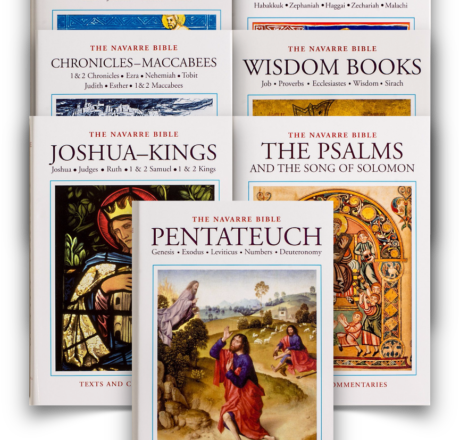
NAVARRE BIBLE COMMENTARY(RSV)

Ad Majorem Dei Gloriam (To the Greater Glory of God)

Today’s First Reading

From: 1 Corinthians 7:25-31

The Excellence of Virginity
---------------------------
[25] Now concerning the unmarried, [2] I have no command of the Lord, but I give my opinion as one who by the Lord's mercy is trustworthy. [26] I think that in view of the impending distress it is well for a person to remain as he is. [27] Are you bound to a wife? Do not seek to be free. Are you free from a wife? Do not seek marriage. [28] But if you marry, you do not sin, and if a girl marries she does not sin. Yet those who marry will have worldly troubles, and I would spare you that. [29] I mean, brethren, the appointed time has grown very short; from now on, let those who have wives live as though they had none, [30] and those who mourn as though they were not mourning, and those who rejoice as though they were not rejoicing, and those who buy as though they had no goods, [31] and those who deal with the world as though they had no dealings with it. For the form of this world is passing away.

***********************************************************************
Commentary:

25-35. The Apostle now explains the excellence of virginity or celibacy (vv. 26ff) for love of God as compared with marriage. The Magisterium of the Church has explicitly spoken on the same lines (cf. Council of Trent, "De Sacrum Matrimonio", can. 10; Pius XII, "Sacra Virginitas", 11).

He begins by saying that he has no commandment from the Lord on this matter (cf. note on 7:12-16; Mt 19-12) but he for his part recommends celibacy, and his advice carries weight because he is an Apostle chosen by the Lord in his mercy. The reasons why he makes this recommendation reduce to one, basically--the love of God: the unmarried person can dedicate himself or herself to God more fully than a married person can, who has to look after the family and is "divided" (v. 34). "This is the main purpose and primary reason for Christian virginity--to dedicate oneself exclusively to divine things, giving them all one's attention and love thinking of Him constantly and consecrating oneself to Him completely, body and soul" (Pius XII, "Sacra Virginitas", 5). This exclusive dedication to God will lead to a full and productive life because it enables a person to love others and devote himself or herself to them with great freedom and availability. Also, celibacy has an eschatological dimension: it is a special sign of heavenly delights (cf. Vatican II, "Perfectae Caritatis", 12), and points to the fact that the blessed in heaven live as angels (cf. Mt 22:30).

St Paul's references to marriage should be understood in the context in which he is writing (cf. note on 7:1-9). All he wants to make clear here is that, although celibacy is a higher state, marriage is not something bad: those who marry are not doing anything wrong (v. 28), nor is there any need for married people to live as celibates (vv. 3-5) or to separate (v. 27). However, only someone who acknowledges the great value that marriage has is in a position to appreciate celibacy as a gift of God. "Virginity or celibacy for the sake of the Kingdom of God not only does not contradict the dignity of marriage but presupposes it and confirms it. Marriage and virginity or celibacy are two ways of expressing and living the one mystery of the covenant of God with his people. When marriage is not esteemed, neither can consecrated virginity or celibacy exist; when human sexuality is not regarded as a great value given by the Creator, the renunciation of it for the sake of the Kingdom of heaven loses its meaning" (St. Pope John Paul II, "Familiaris Consortio", 16)

28. "Worldly troubles" (tribulation of the flesh): this is not in any way pejorative of marriage: "Married love is uniquely expressed and perfected by the exercise of the acts proper to marriage. Hence the acts in marriage by which the intimate and chaste union of the spouses takes place are noble and honorable: the truly human performance of these acts fosters the self-giving they signify and enriches the spouses in joy and gratitude" (Vatican II, "Gaudium Et Spes", 49).

The phrase is very like that used in v. 33 ("worldly affairs"): that is, married people cannot ignore the material needs of their family. This is also what the Apostle means when he says that the married man's interests are "divided" (v. 34), that is, he cannot please God unless he attend to the needs--including material needs--of his family. Married people have to turn these circumstances--inherent in their state of life--into a means of sanctification. "Husband and wife are called to sanctify their married life", Monsignor Escriva writes, "and to sanctify themselves in it. It would be a serious mistake if they were to exclude family life from their spiritual development. The marriage union, the care and education of children, the effort to provide for the needs of the family as well as for its security and development, the relationships with other persons who make up the community--all these are among the ordinary human situations that Christian couples are called upon to sanctify" ("Christ Is Passing By", 23).

29-31. In their letters, St Paul and the other Apostles frequently remind us that life is short (cf. Rom 13:11-14; 2 Pet 3:8; 1 Jn 2:15-17), in order to encourage us to make the very best use of our time to serve God, and others for his sake. "When I reflect on this, how well I understand St Paul's exclamation when he writes to the Corinthians, "tempus breve est" (1 Cor 7:29). How short indeed is the time of our passing through this world! For the true Christian these words ring deep down in his heart as a reproach to his lack of generosity, and as a constant invitation to be loyal. Brief indeed is our time for loving, for giving, for making atonement. It would be very wrong, therefore, for us to waste it, or to cast this treasure irresponsibly overboard. We must not squander this period of the world's history which God has entrusted to each one of us" (St. J. Escriva, "Friends of God", 39).

A Christian, therefore, should always be detached from worldly things, and never let himself become the slave of anything or anyone (cf. 1 Cor 7:23; "Lumen Gentium", 42) but, instead, always have his sights on eternal life. "It is a great help towards this", St Teresa of Avila teaches, "if we keep a very constant care of the vanity of all things, and the rapidity with which they pass away, so that we may withdraw our affections from everything and fix them on what will last forever. This may seem to be a poor kind of help but it will have the effect of greatly fortifying the soul. With regard to little things, we must be very careful, as soon as we begin to be fond of them, to think no more about them and to turn our thoughts to God. His majesty will help us to do this" ("Way of Perfection", chap. X).

13 posted on 09/09/2026 8:02:56 AM PDT by fidelis (Ecce Crucem Domini! Fugite partes adversae! Vicit Leo de tribu Juda, Radix David! Alleluia!)
[ Post Reply | Private Reply | To 12 | View Replies]

Today’s Gospel Reading

From: Luke 6:20-26

The Beatitudes and the Curses
-------------------------------------
[20] And He (Jesus) lifted up His eyes on His disciples, and said: "Blessed are you poor, for yours is the Kingdom of God. [21] Blessed are you that hunger now, for you shall be satisfied. Blessed are you that weep now, for you shall laugh. [22] Blessed are you when men hate you, and when they exclude you and revile you, and cast out your name as evil, on account of the Son of Man! [23] Rejoice in that day, and leap for joy, for behold, your reward is great in Heaven; for so their fathers did to the prophets. [24] But woe to you that are rich, for you have received your consolation. [25] Woe to you that are full now, for you shall hunger. Woe to you that laugh now, for you shall mourn and weep. [26] Woe to you, when all men speak well of you, for so their fathers did to the false prophets."

***********************************************************************
Commentary:

20-49. These thirty verses of St. Luke correspond to some extent to the Sermon on the Mount, an extensive account of which St. Matthew gives us in Chapters 5 to 7 in his Gospel. It is very likely that in the course of His public ministry in different regions and towns of Israel Jesus preached the same things, using different words on different occasions. Under the inspiration of the Holy Spirit each evangelist would have chosen to report those things which he considered most useful for the instruction of his immediate readers--Christians of Jewish origin in the case of Matthew, Gentile converts in the case of Luke. There is no reason why one evangelist should not have selected certain items and another different ones, depending on his readership, or why one should not have laid special stress on some subjects and shortened or omitted accounts of others.

In this present discourse, we might distinguish three parts—the Beatitudes and the curses (6:20-26); love of one's enemies (6:27-38); and teaching on uprightness of heart (6:39-49).

Some Christians may find it difficult to grasp the need of practicing the moral teaching of the Gospel so radically, in particular Christ's teaching in the Sermon on the Mount. Jesus is very demanding in what He says, but He is saying it to everyone, and not just to His Apostles or to those disciples who followed Him closely. We are told expressly that "when Jesus finished these sayings, the crowds were astonished at His teaching" (Matthew 7:28). It is quite clear that the Master calls everyone to holiness, making no distinction of state-in-life, race or personal circumstances. This teaching on the universal call to holiness was a central point of the teaching of (St) Monsignor Escriva de Balaguer. The Second Vatican Council expressed the same teaching with the full weight of its authority: everyone is called to Christian holiness; consider, for example, just one reference it makes, in "Lumen Gentium", 11: "Strengthened by so many and such great means of salvation, all the faithful, whatever their condition or state--though each in his or her own way--are called by the Lord to that perfection of sanctity by which the Father Himself is perfect."

In the Sermon on the Mount Jesus is not proposing an unattainable ideal, useful though that might be to make us feel humble in the light of our inability to reach it. No. Christian teaching in this regard is quite clear: what Christ commands, He commands in order to have us do what He says. Along with His commandment comes grace to enable us to fulfill it. Therefore, every Christian is capable of practising the moral teaching of Christ and of attaining the full height of his calling--holiness--not by his own efforts alone but by means of the grace which Christ has won for us, and with the abiding help of the means of sanctification which He left to His Church. "If anyone plead human weakness to excuse Himself for not loving God, it should be explained that He who demands our love pours into our hearts by the Holy Spirit the fervor of His love, and this good Spirit our Heavenly Father gives to those that ask Him. With reason, therefore, did St. Augustine pray: `Give Me what Thou command, and command what You please.' As, then, God is ever ready to help us, especially since the death of Christ our Lord, by which the prince of this world was cast out, there is no reason why anyone should be disheartened by the difficulty of the undertaking. To him who loves, nothing is difficult" ("St. Pius V Catechism", III, 1, 7).

20-26. The eight Beatitudes which St. Matthew gives (5:3-12) are summed up in four by St. Luke, but with four opposite curses. We can say, with St. Ambrose, that Matthew's eight are included in Luke's four (cf. "Expositio Evangelii Sec. Lucam, in loc."). In St. Luke they are in some cases stated in a more incisive, more direct form than in the First Gospel, where they are given with more explanation: for example, the first beatitude says simply "Blessed are you poor", whereas in Matthew we read, "Blessed are the poor in spirit", which contains a brief explanation of the virtue of poverty.

20. "The ordinary Christian has to reconcile two aspects of this life that can at first seem contradictory. There is on the one hand "true poverty", which is obvious and tangible and made up of definite things. This poverty should be an _expression of faith in God and a sign that the heart is not satisfied with created things and aspires to the Creator; that it wants to be filled with love of God so as to be able to give this same love to everyone. On the other hand, an ordinary Christian is and wants to be "one more among his fellow men", sharing their way of life, their joys and happiness; working with them, loving the world and all the good things that exist in it; using all created things to solve the problems of human life and to establish a spiritual and material environment which will foster personal and social development [...].

"To my way of thinking the best examples of poverty are those mothers and fathers of large and poor families who spend their lives for their children and who with their effort and constancy--often without complaining of their needs--bring up their family, creating a cheerful home in which everyone learns to love, to serve and to work" (St. J. Escriva, "Conversations", 110f).

24-26. Our Lord here condemns four things: avarice and attachment to the things of the world; excessive care of the body, gluttony; empty-headed joy and general self-indulgence; flattery, and disordered desire for human glory--four very common vices which a Christian needs to be on guard against.

24. In the same kind of way as in verse 20, which refers to the poor in the sense of those who love poverty, seeking to please God better, so in this verse the "rich" are to be understood as those who strive to accumulate possessions heedless of whether or not they are doing so lawfully, and who seek their happiness in those possessions, as if they were their ultimate goal. But people who inherit wealth or acquire it through honest work can be really poor provided they are detached from these things and are led by that detachment to use them to help others, as God inspires them. We can find in Sacred Scriptures a number of people to whom the beatitude of the poor can be applied although they possessed considerable wealth--Abraham, Isaac, Moses, David, Job, for example.

As early as St. Augustine's time there were people who failed to understand poverty and riches properly: they reasoned as follows: The Kingdom of Heaven belongs to the poor, the Lazaruses of this world, the hungry; all the rich are bad, like this rich man here. This sort of thinking led St. Augustine to explain the deep meaning of wealth and poverty according to the spirit of the Gospel: "Listen, poor man, to my comments on your words. When you refer to yourself as Lazarus, that holy man covered with wounds, I am afraid your pride makes you describe yourself incorrectly. Do not despise rich men who are merciful, who are humble: or, to put it briefly, do not despise poor rich men. Oh, poor man, be poor yourself; poor, that is, humble [...]. Listen to me, then. Be truly poor, be devout, be humble; if you glory in your ragged and ulcerous poverty, if you glory in likening yourself to that beggar lying outside the rich man's house, then you are only noticing his poverty, and nothing else. What should I notice you ask? Read the Scriptures and you will understand what I mean. Lazarus was poor, but he to whose bosom he was brought was rich. `It came to pass, it is written, that the poor man died and he was brought by the angels to Abraham's bosom.' To where? To Abraham's bosom, or let us say, to that mysterious place where Abraham was resting. Read [...] and remember that Abraham was a very wealthy man when he was on earth: he had abundance of money, a large family, flocks, land; yet that rich man was poor, because he was humble. `Abraham believed God and he was reckoned righteous.' [...] He was faithful, he did good, received the commandment to offer his son in sacrifice, and he did not refuse to offer what he had received to Him from whom he had received it. He was approved in God's sight and set before us as an example of faith" ("Sermon", 14).

To sum up: poverty does not consist in something purely external, in having or not having material goods, but in something that goes far deeper, affecting a person's heart and soul; it consists in having a humble attitude to God, in being devout, in having total faith. If a Christian has these virtues and also has an abundance of material possessions, he should be detached from his wealth and act charitably towards others and thus be pleasing to God. On the other hand, if someone is not well-off he is not justified in God's sight on that account, if he fails to strive to acquire those virtues in which true poverty consists.

14 posted on 09/09/2026 8:03:46 AM PDT by fidelis (Ecce Crucem Domini! Fugite partes adversae! Vicit Leo de tribu Juda, Radix David! Alleluia!)
[ Post Reply | Private Reply | To 13 | View Replies]

Click here to go to the My Catholic Life! Devotional thread for a meditation on today’s Gospel Reading.

15 posted on 09/09/2026 8:05:19 AM PDT by fidelis (Ecce Crucem Domini! Fugite partes adversae! Vicit Leo de tribu Juda, Radix David! Alleluia!)
[ Post Reply | Private Reply | To 14 | View Replies]

Disclaimer: Opinions posted on Free Republic are those of the individual posters and do not necessarily represent the opinion of Free Republic or its management. All materials posted herein are protected by copyright law and the exemption for fair use of copyrighted works.

Free Republic
Browse · Search
Religion
Topics · Post Article

FreeRepublic, LLC, PO BOX 9771, FRESNO, CA 93794
FreeRepublic.com is powered by software copyright 2000-2008 John Robinson