
Posted on 09/08/2026 10:11:24 PM PDT by fidelis
Memorial of Saint Peter Claver, Priest
“Blessed are you who are poor, for the Kingdom of God is yours. Blessed are you who are now hungry, for you will be satisfied. Blessed are you who are now weeping, for you will laugh. Blessed are you when people hate you, and when they exclude and insult you, and denounce your name as evil on account of the Son of Man. Rejoice and leap for joy on that day! Behold, your reward will be great in heaven.” Luke 6:20–23
Normally, we do not consider poverty, hunger, grief, or being denounced and insulted by others to be good things. Yet at the very heart of His Sermon on the Plain, Jesus declares that those who experience such trials are truly blessed—that is, deeply joyful and spiritually fortunate. To be “blessed” in this sense is to be happy in the truest sense of the word. In contrast, those who are rich, well-fed, laughing, and socially esteemed face a serious spiritual danger. Most likely, as the vast crowd of disciples listened to Jesus preach this sermon, many were at least perplexed—if not outright shocked—by what they heard.
Throughout the rest of the week, we will continue reading from this powerful sermon in which Jesus teaches about the necessity of loving one’s enemies, refraining from judgment and condemnation, showing mercy, and building one’s life upon the solid foundation of His words. These teachings were deeply countercultural and demanded a radical reorientation of the values that many of Jesus’ disciples held dear. In order to accept His message, a paradigm shift was necessary—a complete reordering of their lives and foundational beliefs.
The path of the Beatitudes leads through the Cross to the glory of God’s Kingdom. To walk that path—marked by trials and tribulations—divine wisdom is essential. The disciples needed to shed their shallow and incomplete moral and spiritual convictions so that they could understand, embrace, and live a much deeper and richer way of living.
Because we are quite familiar with Jesus’ teachings and the Beatitudes, His words might not leave us shocked or even perplexed—unless we truly hear them, allow their meaning to take root in our lives, and permit them to effect the change they are meant to bring about. For this to happen, we must approach these teachings with humility, openness, and a willingness to let go of worldly values, so that the wisdom of the Cross may become the foundation of our lives. The Christian life is so much more than acting with kindness and gentleness, helping others, and making a difference within the community. Though those are essential qualities and duties, living the Beatitudes draws us much deeper into a life of holy and sacrificial love.
Reflect today on one trial you are currently facing, and ask God to help you see it through the lens of the Beatitudes. Rather than running from the trial, what would happen if you embraced it with hope, trust, and even joy, knowing that it has the potential to lead you to holiness and eternal reward? Let the wisdom of Jesus’ words penetrate your heart, and allow Him to reorder your thoughts and desires according to His perfect and merciful will.
Lord of perfect Wisdom, Your Word shatters the wisdom of the world and reveals the true path to happiness and holiness. Help me to hear Your voice, understand Your wisdom and act upon it, making Your Truth the foundation of my life. Reorient my whole life according to Your will, and work all things for good—even the trials I endure. Jesus, I trust in You!
Please keep in mind that this is a Catholic Caucus/Devotional thread for the purpose of prayerful reflection on the Sacred Scriptures and is closed to debate of any kind. Per FR policy on Religion Caucus threads, off-topic, argumentative, and abusive comments are not allowed and will be submitted to the Mods for deletion. Thanks, and God bless you.
Today’s First Reading
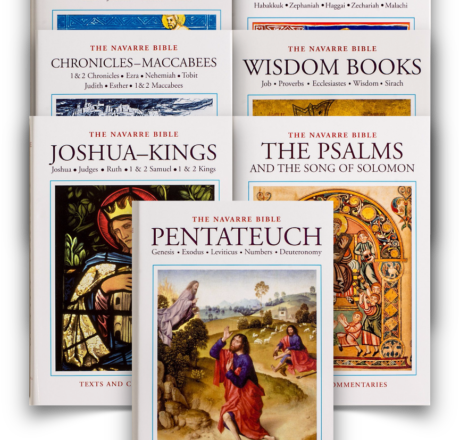
From: 1 Corinthians 7:25-31
The Excellence of Virginity
---------------------------
[25] Now concerning the unmarried, [2] I have no command of the Lord, but I give my opinion as one who by the Lord's mercy is trustworthy. [26] I think that in view of the impending distress it is well for a person to remain as he is. [27] Are you bound to a wife? Do not seek to be free. Are you free from a wife? Do not seek marriage. [28] But if you marry, you do not sin, and if a girl marries she does not sin. Yet those who marry will have worldly troubles, and I would spare you that. [29] I mean, brethren, the appointed time has grown very short; from now on, let those who have wives live as though they had none, [30] and those who mourn as though they were not mourning, and those who rejoice as though they were not rejoicing, and those who buy as though they had no goods, [31] and those who deal with the world as though they had no dealings with it. For the form of this world is passing away.
***********************************************************************
Commentary:
25-35. The Apostle now explains the excellence of virginity or celibacy (vv. 26ff) for love of God as compared with marriage. The Magisterium of the Church has explicitly spoken on the same lines (cf. Council of Trent, "De Sacrum Matrimonio", can. 10; Pius XII, "Sacra Virginitas", 11).
He begins by saying that he has no commandment from the Lord on this matter (cf. note on 7:12-16; Mt 19-12) but he for his part recommends celibacy, and his advice carries weight because he is an Apostle chosen by the Lord in his mercy. The reasons why he makes this recommendation reduce to one, basically--the love of God: the unmarried person can dedicate himself or herself to God more fully than a married person can, who has to look after the family and is "divided" (v. 34). "This is the main purpose and primary reason for Christian virginity--to dedicate oneself exclusively to divine things, giving them all one's attention and love thinking of Him constantly and consecrating oneself to Him completely, body and soul" (Pius XII, "Sacra Virginitas", 5). This exclusive dedication to God will lead to a full and productive life because it enables a person to love others and devote himself or herself to them with great freedom and availability. Also, celibacy has an eschatological dimension: it is a special sign of heavenly delights (cf. Vatican II, "Perfectae Caritatis", 12), and points to the fact that the blessed in heaven live as angels (cf. Mt 22:30).
St Paul's references to marriage should be understood in the context in which he is writing (cf. note on 7:1-9). All he wants to make clear here is that, although celibacy is a higher state, marriage is not something bad: those who marry are not doing anything wrong (v. 28), nor is there any need for married people to live as celibates (vv. 3-5) or to separate (v. 27). However, only someone who acknowledges the great value that marriage has is in a position to appreciate celibacy as a gift of God. "Virginity or celibacy for the sake of the Kingdom of God not only does not contradict the dignity of marriage but presupposes it and confirms it. Marriage and virginity or celibacy are two ways of expressing and living the one mystery of the covenant of God with his people. When marriage is not esteemed, neither can consecrated virginity or celibacy exist; when human sexuality is not regarded as a great value given by the Creator, the renunciation of it for the sake of the Kingdom of heaven loses its meaning" (St. Pope John Paul II, "Familiaris Consortio", 16)
28. "Worldly troubles" (tribulation of the flesh): this is not in any way pejorative of marriage: "Married love is uniquely expressed and perfected by the exercise of the acts proper to marriage. Hence the acts in marriage by which the intimate and chaste union of the spouses takes place are noble and honorable: the truly human performance of these acts fosters the self-giving they signify and enriches the spouses in joy and gratitude" (Vatican II, "Gaudium Et Spes", 49).
The phrase is very like that used in v. 33 ("worldly affairs"): that is, married people cannot ignore the material needs of their family. This is also what the Apostle means when he says that the married man's interests are "divided" (v. 34), that is, he cannot please God unless he attend to the needs--including material needs--of his family. Married people have to turn these circumstances--inherent in their state of life--into a means of sanctification. "Husband and wife are called to sanctify their married life", Monsignor Escriva writes, "and to sanctify themselves in it. It would be a serious mistake if they were to exclude family life from their spiritual development. The marriage union, the care and education of children, the effort to provide for the needs of the family as well as for its security and development, the relationships with other persons who make up the community--all these are among the ordinary human situations that Christian couples are called upon to sanctify" ("Christ Is Passing By", 23).
29-31. In their letters, St Paul and the other Apostles frequently remind us that life is short (cf. Rom 13:11-14; 2 Pet 3:8; 1 Jn 2:15-17), in order to encourage us to make the very best use of our time to serve God, and others for his sake. "When I reflect on this, how well I understand St Paul's exclamation when he writes to the Corinthians, "tempus breve est" (1 Cor 7:29). How short indeed is the time of our passing through this world! For the true Christian these words ring deep down in his heart as a reproach to his lack of generosity, and as a constant invitation to be loyal. Brief indeed is our time for loving, for giving, for making atonement. It would be very wrong, therefore, for us to waste it, or to cast this treasure irresponsibly overboard. We must not squander this period of the world's history which God has entrusted to each one of us" (St. J. Escriva, "Friends of God", 39).
A Christian, therefore, should always be detached from worldly things, and never let himself become the slave of anything or anyone (cf. 1 Cor 7:23; "Lumen Gentium", 42) but, instead, always have his sights on eternal life. "It is a great help towards this", St Teresa of Avila teaches, "if we keep a very constant care of the vanity of all things, and the rapidity with which they pass away, so that we may withdraw our affections from everything and fix them on what will last forever. This may seem to be a poor kind of help but it will have the effect of greatly fortifying the soul. With regard to little things, we must be very careful, as soon as we begin to be fond of them, to think no more about them and to turn our thoughts to God. His majesty will help us to do this" ("Way of Perfection", chap. X).
From: Luke 6:20-26
The Beatitudes and the Curses
-------------------------------------
[20] And He (Jesus) lifted up His eyes on His disciples, and said: "Blessed are you poor, for yours is the Kingdom of God. [21] Blessed are you that hunger now, for you shall be satisfied. Blessed are you that weep now, for you shall laugh. [22] Blessed are you when men hate you, and when they exclude you and revile you, and cast out your name as evil, on account of the Son of Man! [23] Rejoice in that day, and leap for joy, for behold, your reward is great in Heaven; for so their fathers did to the prophets. [24] But woe to you that are rich, for you have received your consolation. [25] Woe to you that are full now, for you shall hunger. Woe to you that laugh now, for you shall mourn and weep. [26] Woe to you, when all men speak well of you, for so their fathers did to the false prophets."
***********************************************************************
Commentary:
20-49. These thirty verses of St. Luke correspond to some extent to the Sermon on the Mount, an extensive account of which St. Matthew gives us in Chapters 5 to 7 in his Gospel. It is very likely that in the course of His public ministry in different regions and towns of Israel Jesus preached the same things, using different words on different occasions. Under the inspiration of the Holy Spirit each evangelist would have chosen to report those things which he considered most useful for the instruction of his immediate readers--Christians of Jewish origin in the case of Matthew, Gentile converts in the case of Luke. There is no reason why one evangelist should not have selected certain items and another different ones, depending on his readership, or why one should not have laid special stress on some subjects and shortened or omitted accounts of others.
In this present discourse, we might distinguish three parts—the Beatitudes and the curses (6:20-26); love of one's enemies (6:27-38); and teaching on uprightness of heart (6:39-49).
Some Christians may find it difficult to grasp the need of practicing the moral teaching of the Gospel so radically, in particular Christ's teaching in the Sermon on the Mount. Jesus is very demanding in what He says, but He is saying it to everyone, and not just to His Apostles or to those disciples who followed Him closely. We are told expressly that "when Jesus finished these sayings, the crowds were astonished at His teaching" (Matthew 7:28). It is quite clear that the Master calls everyone to holiness, making no distinction of state-in-life, race or personal circumstances. This teaching on the universal call to holiness was a central point of the teaching of (St) Monsignor Escriva de Balaguer. The Second Vatican Council expressed the same teaching with the full weight of its authority: everyone is called to Christian holiness; consider, for example, just one reference it makes, in "Lumen Gentium", 11: "Strengthened by so many and such great means of salvation, all the faithful, whatever their condition or state--though each in his or her own way--are called by the Lord to that perfection of sanctity by which the Father Himself is perfect."
In the Sermon on the Mount Jesus is not proposing an unattainable ideal, useful though that might be to make us feel humble in the light of our inability to reach it. No. Christian teaching in this regard is quite clear: what Christ commands, He commands in order to have us do what He says. Along with His commandment comes grace to enable us to fulfill it. Therefore, every Christian is capable of practising the moral teaching of Christ and of attaining the full height of his calling--holiness--not by his own efforts alone but by means of the grace which Christ has won for us, and with the abiding help of the means of sanctification which He left to His Church. "If anyone plead human weakness to excuse Himself for not loving God, it should be explained that He who demands our love pours into our hearts by the Holy Spirit the fervor of His love, and this good Spirit our Heavenly Father gives to those that ask Him. With reason, therefore, did St. Augustine pray: `Give Me what Thou command, and command what You please.' As, then, God is ever ready to help us, especially since the death of Christ our Lord, by which the prince of this world was cast out, there is no reason why anyone should be disheartened by the difficulty of the undertaking. To him who loves, nothing is difficult" ("St. Pius V Catechism", III, 1, 7).
20-26. The eight Beatitudes which St. Matthew gives (5:3-12) are summed up in four by St. Luke, but with four opposite curses. We can say, with St. Ambrose, that Matthew's eight are included in Luke's four (cf. "Expositio Evangelii Sec. Lucam, in loc."). In St. Luke they are in some cases stated in a more incisive, more direct form than in the First Gospel, where they are given with more explanation: for example, the first beatitude says simply "Blessed are you poor", whereas in Matthew we read, "Blessed are the poor in spirit", which contains a brief explanation of the virtue of poverty.
20. "The ordinary Christian has to reconcile two aspects of this life that can at first seem contradictory. There is on the one hand "true poverty", which is obvious and tangible and made up of definite things. This poverty should be an _expression of faith in God and a sign that the heart is not satisfied with created things and aspires to the Creator; that it wants to be filled with love of God so as to be able to give this same love to everyone. On the other hand, an ordinary Christian is and wants to be "one more among his fellow men", sharing their way of life, their joys and happiness; working with them, loving the world and all the good things that exist in it; using all created things to solve the problems of human life and to establish a spiritual and material environment which will foster personal and social development [...].
"To my way of thinking the best examples of poverty are those mothers and fathers of large and poor families who spend their lives for their children and who with their effort and constancy--often without complaining of their needs--bring up their family, creating a cheerful home in which everyone learns to love, to serve and to work" (St. J. Escriva, "Conversations", 110f).
24-26. Our Lord here condemns four things: avarice and attachment to the things of the world; excessive care of the body, gluttony; empty-headed joy and general self-indulgence; flattery, and disordered desire for human glory--four very common vices which a Christian needs to be on guard against.
24. In the same kind of way as in verse 20, which refers to the poor in the sense of those who love poverty, seeking to please God better, so in this verse the "rich" are to be understood as those who strive to accumulate possessions heedless of whether or not they are doing so lawfully, and who seek their happiness in those possessions, as if they were their ultimate goal. But people who inherit wealth or acquire it through honest work can be really poor provided they are detached from these things and are led by that detachment to use them to help others, as God inspires them. We can find in Sacred Scriptures a number of people to whom the beatitude of the poor can be applied although they possessed considerable wealth--Abraham, Isaac, Moses, David, Job, for example.
As early as St. Augustine's time there were people who failed to understand poverty and riches properly: they reasoned as follows: The Kingdom of Heaven belongs to the poor, the Lazaruses of this world, the hungry; all the rich are bad, like this rich man here. This sort of thinking led St. Augustine to explain the deep meaning of wealth and poverty according to the spirit of the Gospel: "Listen, poor man, to my comments on your words. When you refer to yourself as Lazarus, that holy man covered with wounds, I am afraid your pride makes you describe yourself incorrectly. Do not despise rich men who are merciful, who are humble: or, to put it briefly, do not despise poor rich men. Oh, poor man, be poor yourself; poor, that is, humble [...]. Listen to me, then. Be truly poor, be devout, be humble; if you glory in your ragged and ulcerous poverty, if you glory in likening yourself to that beggar lying outside the rich man's house, then you are only noticing his poverty, and nothing else. What should I notice you ask? Read the Scriptures and you will understand what I mean. Lazarus was poor, but he to whose bosom he was brought was rich. `It came to pass, it is written, that the poor man died and he was brought by the angels to Abraham's bosom.' To where? To Abraham's bosom, or let us say, to that mysterious place where Abraham was resting. Read [...] and remember that Abraham was a very wealthy man when he was on earth: he had abundance of money, a large family, flocks, land; yet that rich man was poor, because he was humble. `Abraham believed God and he was reckoned righteous.' [...] He was faithful, he did good, received the commandment to offer his son in sacrifice, and he did not refuse to offer what he had received to Him from whom he had received it. He was approved in God's sight and set before us as an example of faith" ("Sermon", 14).
To sum up: poverty does not consist in something purely external, in having or not having material goods, but in something that goes far deeper, affecting a person's heart and soul; it consists in having a humble attitude to God, in being devout, in having total faith. If a Christian has these virtues and also has an abundance of material possessions, he should be detached from his wealth and act charitably towards others and thus be pleasing to God. On the other hand, if someone is not well-off he is not justified in God's sight on that account, if he fails to strive to acquire those virtues in which true poverty consists.
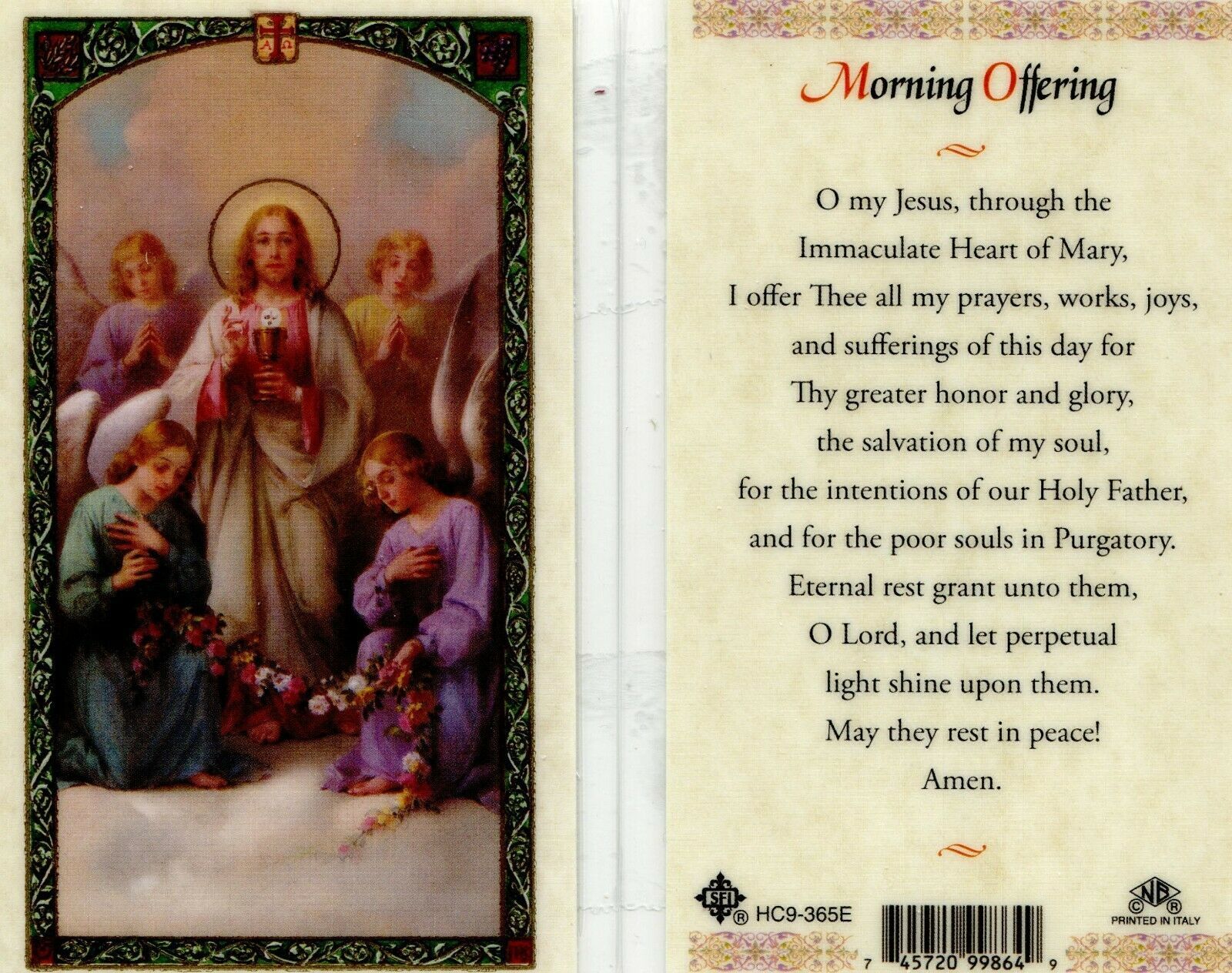
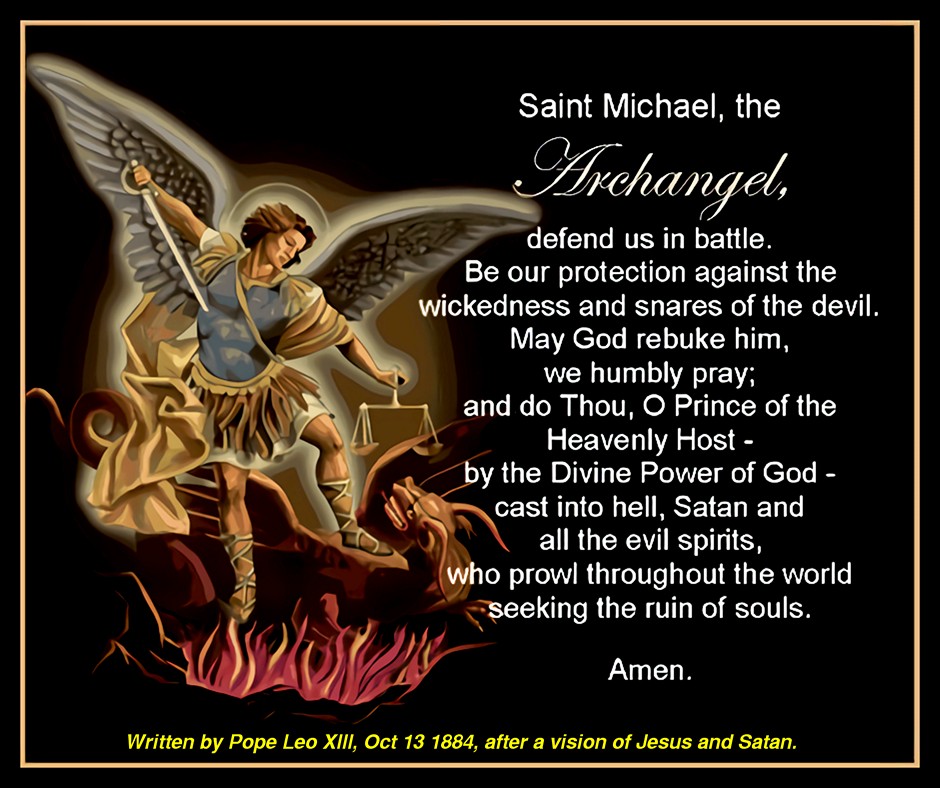
The Month of September is Dedicated to Our Lady of Sorrows

“And his father and his mother marveled at what was said about him; and Simeon blessed them and said to Mary his mother, ‘Behold, this child is set for the fall and rising of many in Israel, and for a sign that is spoken against (and a sword will pierce through your own soul also), that thoughts out of many hearts may be revealed.’” (Luke 2:33-35)

Pope Leo XIV’s prayer intention for the month of September, 2026:
For the care of water
Let us pray for a just and sustainable management of water, a vital resource, so that everyone may have equal access to it.

Disclaimer: Opinions posted on Free Republic are those of the individual posters and do not necessarily represent the opinion of Free Republic or its management. All materials posted herein are protected by copyright law and the exemption for fair use of copyrighted works.


