Skip to comments.
Catholic Caucus: Daily Mass Readings 3-September-2026
Universalis/Jerusalem Bible ^
Posted on 09/03/2026 6:38:28 AM PDT by annalex
3 September 2026
Saint Gregory the Great, Pope, Doctor
on Thursday of week 22 in Ordinary Time

St. Gregory the Great Church, Bellerose, NY Readings at MassLiturgical Colour: White. Year: A(II). Readings for the feria Readings for the memorial These are the readings for the feria
| First reading |
|---|
| 1 Corinthians 3:18-23 |
|---|
The wisdom of the world is foolishness to GodMake no mistake about it: if any one of you thinks of himself as wise, in the ordinary sense of the word, then he must learn to be a fool before he really can be wise. Why? Because the wisdom of this world is foolishness to God. As scripture says: The Lord knows wise men’s thoughts: he knows how useless they are; or again: God is not convinced by the arguments of the wise. So there is nothing to boast about in anything human: Paul, Apollos, Cephas, the world, life and death, the present and the future, are all your servants; but you belong to Christ and Christ belongs to God.
| Responsorial Psalm |
|---|
| Psalm 23(24):1-6 |
|---|
The Lord’s is the earth and its fullness. The Lord’s is the earth and its fullness, the world and all its peoples. It is he who set it on the seas; on the waters he made it firm. The Lord’s is the earth and its fullness. Who shall climb the mountain of the Lord? Who shall stand in his holy place? The man with clean hands and pure heart, who desires not worthless things. The Lord’s is the earth and its fullness. He shall receive blessings from the Lord and reward from the God who saves him. Such are the men who seek him, seek the face of the God of Jacob. The Lord’s is the earth and its fullness.
| Gospel Acclamation | cf.2Thess2:14 |
|---|
Alleluia, alleluia! Through the Good News God called us to share the glory of our Lord Jesus Christ. Alleluia! Alleluia, alleluia! Follow me, says the Lord, and I will make you into fishers of men. Alleluia!
They left everything and followed himJesus was standing one day by the Lake of Gennesaret, with the crowd pressing round him listening to the word of God, when he caught sight of two boats close to the bank. The fishermen had gone out of them and were washing their nets. He got into one of the boats – it was Simon’s – and asked him to put out a little from the shore. Then he sat down and taught the crowds from the boat. When he had finished speaking he said to Simon, ‘Put out into deep water and pay out your nets for a catch.’ ‘Master,’ Simon replied, ‘we worked hard all night long and caught nothing, but if you say so, I will pay out the nets.’ And when they had done this they netted such a huge number of fish that their nets began to tear, so they signalled to their companions in the other boat to come and help them; when these came, they filled the two boats to sinking point. When Simon Peter saw this he fell at the knees of Jesus saying, ‘Leave me, Lord; I am a sinful man.’ For he and all his companions were completely overcome by the catch they had made; so also were James and John, sons of Zebedee, who were Simon’s partners. But Jesus said to Simon, ‘Do not be afraid; from now on it is men you will catch.’ Then, bringing their boats back to land, they left everything and followed him. Continue These are the readings for the memorial
| First reading |
|---|
| 2 Corinthians 4:1-2,5-7 |
|---|
God has shone in our minds to radiate the light of the knowledge of his glorySince we have by an act of mercy been entrusted with this work of administration, there is no weakening on our part. On the contrary, we will have none of the reticence of those who are ashamed, no deceitfulness or watering down the word of God; but the way we commend ourselves to every human being with a conscience is by stating the truth openly in the sight of God. For it is not ourselves that we are preaching, but Christ Jesus as the Lord, and ourselves as your servants for Jesus’ sake. It is the same God that said, ‘Let there be light shining out of darkness’, who has shone in our minds to radiate the light of the knowledge of God’s glory, the glory on the face of Christ. We are only the earthenware jars that hold this treasure, to make it clear that such an overwhelming power comes from God and not from us.
| Responsorial Psalm |
|---|
| Psalm 95(96):1-3,7-8,10 |
|---|
Proclaim the wonders of the Lord among all the peoples. O sing a new song to the Lord, sing to the Lord all the earth. O sing to the Lord, bless his name. Proclaim the wonders of the Lord among all the peoples. Proclaim his help day by day, tell among the nations his glory and his wonders among all the peoples. Proclaim the wonders of the Lord among all the peoples. Give the Lord, you families of peoples, give the Lord glory and power; give the Lord the glory of his name. Proclaim the wonders of the Lord among all the peoples. Proclaim to the nations: ‘God is king.’ The world he made firm in its place; he will judge the peoples in fairness. Proclaim the wonders of the Lord among all the peoples.
| Gospel Acclamation | Jn15:15 |
|---|
Alleluia, alleluia! I call you friends, says the Lord, because I have made known to you everything I have learnt from my Father. Alleluia!
I confer a kingdom on you, just as the Father conferred one on meA dispute arose between the disciples about which should be reckoned the greatest, but Jesus said to them: ‘Among pagans it is the kings who lord it over them, and those who have authority over them are given the title Benefactor. This must not happen with you. No; the greatest among you must behave as if he were the youngest, the leader as if he were the one who serves. For who is the greater: the one at table or the one who serves? The one at table, surely? Yet here am I among you as one who serves! ‘You are the men who have stood by me faithfully in my trials; and now I confer a kingdom on you, just as my Father conferred one on me: you will eat and drink at my table in my kingdom, and you will sit on thrones to judge the twelve tribes of Israel.’ Continue You can also view this page with the New Testament in Greek and English. Christian Art Each day, The Christian Art website gives a picture and reflection on the Gospel of the day. The readings on this page are from the Jerusalem Bible, which is used at Mass in most of the English-speaking world. The New American Bible readings, which are used at Mass in the United States, are available in the Universalis apps, programs and downloads.
You can also view this page with the Gospel in Greek and English. |
TOPICS: Catholic; General Discusssion; Prayer; Worship
KEYWORDS: catholic; lk22; lk5; ordinarytime; prayer
For your reading, reflection, faith-sharing, comments, questions, discussion.
1
posted on
09/03/2026 6:38:28 AM PDT
by
annalex
To: annalex
KEYWORDS: catholic; lk22; lk5; ordinarytime; prayer
2
posted on
09/03/2026 6:39:11 AM PDT
by
annalex
(fear them not)
To: nickcarraway; NYer; ELS; Pyro7480; livius; ArrogantBustard; Catholicguy; RobbyS; marshmallow; ...

Alleluia Ping Please FReepmail me to get on/off the Alleluia Ping List.
3
posted on
09/03/2026 6:40:27 AM PDT
by
annalex
(fear them not)
To: annalex
4
posted on
09/03/2026 6:41:03 AM PDT
by
annalex
(fear them not)
To: annalex
| Luke |
| | English: Douay-Rheims | Latin: Vulgata Clementina | Greek NT: Byzantine/Majority Text (2000) |
| | Luke 5
|
| 1. | AND it came to pass, that when the multitudes pressed upon him to hear the word of God, he stood by the lake of Genesareth, | Factum est autem, cum turbæ irruerunt in eum ut audirent verbum Dei, et ipse stabat secus stagnum Genesareth. | εγενετο δε εν τω τον οχλον επικεισθαι αυτω του ακουειν τον λογον του θεου και αυτος ην εστως παρα την λιμνην γεννησαρετ |
| 2. | And saw two ships standing by the lake: but the fishermen were gone out of them, and were washing their nets. | Et vidit duas naves stantes secus stagnum : piscatores autem descenderant, et lavabant retia. | και ειδεν δυο πλοια εστωτα παρα την λιμνην οι δε αλιεις αποβαντες απ αυτων απεπλυναν τα δικτυα |
| 3. | And going into one of the ships that was Simon's, he desired him to draw back a little from the land. And sitting he taught the multitudes out of the ship. | Ascendens autem in unam navim, quæ erat Simonis, rogavit eum a terra reducere pusillum. Et sedens docebat de navicula turbas. | εμβας δε εις εν των πλοιων ο ην του σιμωνος ηρωτησεν αυτον απο της γης επαναγαγειν ολιγον και καθισας εδιδασκεν εκ του πλοιου τους οχλους |
| 4. | Now when he had ceased to speak, he said to Simon: Launch out into the deep, and let down your nets for a draught. | Ut cessavit autem loqui, dixit ad Simonem : Duc in altum, et laxate retia vestra in capturam. | ως δε επαυσατο λαλων ειπεν προς τον σιμωνα επαναγαγε εις το βαθος και χαλασατε τα δικτυα υμων εις αγραν |
| 5. | And Simon answering said to him: Master, we have labored all the night, and have taken nothing: but at thy word I will let down the net. | Et respondens Simon, dixit illi : Præceptor, per totam noctem laborantes nihil cepimus : in verbo autem tuo laxabo rete. | και αποκριθεις ο σιμων ειπεν αυτω επιστατα δι ολης της νυκτος κοπιασαντες ουδεν ελαβομεν επι δε τω ρηματι σου χαλασω το δικτυον |
| 6. | And when they had done this, they enclosed a very great multitude of fishes, and their net broke. | Et cum hoc fecissent, concluserunt piscium multitudinem copiosam : rumpebatur autem rete eorum. | και τουτο ποιησαντες συνεκλεισαν πληθος ιχθυων πολυ διερρηγνυτο δε το δικτυον αυτων |
| 7. | And they beckoned to their partners that were in the other ship, that they should come and help them. And they came, and filled both the ships, so that they were almost sinking. | Et annuerunt sociis, qui erant in alia navi, ut venirent, et adjuvarent eos. Et venerunt, et impleverunt ambas naviculas, ita ut pene mergerentur. | και κατενευσαν τοις μετοχοις τοις εν τω ετερω πλοιω του ελθοντας συλλαβεσθαι αυτοις και ηλθον και επλησαν αμφοτερα τα πλοια ωστε βυθιζεσθαι αυτα |
| 8. | Which when Simon Peter saw, he fell down at Jesus' knees, saying: Depart from me, for I am a sinful man, O Lord. | Quod cum vidisset Simon Petrus, procidit ad genua Jesu, dicens : Exi a me, quia homo peccator sum, Domine. | ιδων δε σιμων πετρος προσεπεσεν τοις γονασιν ιησου λεγων εξελθε απ εμου οτι ανηρ αμαρτωλος ειμι κυριε |
| 9. | For he was wholly astonished, and all that were with him, at the draught of the fishes which they had taken. | Stupor enim circumdederat eum, et omnes qui cum illo erant, in captura piscium, quam ceperant : | θαμβος γαρ περιεσχεν αυτον και παντας τους συν αυτω επι τη αγρα των ιχθυων η συνελαβον |
| 10. | And so were also James and John the sons of Zebedee, who were Simon's partners. And Jesus saith to Simon: Fear not: from henceforth thou shalt catch men. | similiter autem Jacobum et Joannem, filios Zebedæi, qui erunt socii Simonis. Et ait ad Simonem Jesus : Noli timere : ex hoc jam homines eris capiens. | ομοιως δε και ιακωβον και ιωαννην υιους ζεβεδαιου οι ησαν κοινωνοι τω σιμωνι και ειπεν προς τον σιμωνα ο ιησους μη φοβου απο του νυν ανθρωπους εση ζωγρων |
| 11. | And having brought their ships to land, leaving all things, they followed him. | Et subductis ad terram navibus, relictis omnibus, secuti sunt eum. | και καταγαγοντες τα πλοια επι την γην αφεντες απαντα ηκολουθησαν αυτω |
5
posted on
09/03/2026 6:43:54 AM PDT
by
annalex
(fear them not)
To: annalex

Catena Aurea by St. Thomas Aguinas
CHAP. 5
5:1–3
1. And it came to pass, that, as the people pressed upon him to hear the word of God, he stood by the lake of Gennesaret,
2. And saw two ships standing by the lake: but the fishermen were gone out of them, and were washing their nets.
3. And he entered into one of the ships, which was Simon’s, and prayed him that he would thrust out a little from the land. And he sat down, and taught the people out of the ship.
AMBROSE. When the Lord had performed many and various kinds of cures, the multitude began to heed neither time nor place in their desire to be healed. The evening came, they followed; a lake is before them, they still press on; as it is said, And it came to pass, as the people pressed upon him.
CHRYSOSTOM. (Hom. 25. in Matt.) For they clung to Him with love and admiration, and longed to keep Him with them. For who would depart while He performed such miracles? who would not be content to see only His face, and the mouth that uttered such things? Nor as performing miracles only was He an object of admiration, but His whole appearance was overflowing with grace. Therefore when He speaks, they listen to Him in silence, interrupting not the chain of His discourse; for it is said, that they might hear the word of God, &c. It follows, And he stood near the lake of Gennesaret.
BEDE. The lake of Gennesaret is said to be the same as the sea of Galilee or the sea of Tiberias; but it is called the sea of Galilee from the adjacent province, the sea of Tiberias from a neighbouring city. Gennesaret however, is the name given it from the nature of the lake itself, (which is thought from its crossing waves to raise a breeze upon itself,) being the Greek expression for “making a breeze to itself.” (quasi a γιννάω et ἀὴρ.) For the water is not steady like that of a lake, but constantly agitated by the breezes blowing over it. It is sweet to the taste, and wholesome to drink. In the Hebrew tongue, any extent of water, whether it be sweet or salt, is called a sea.
THEOPHYLACT. But the Lord seeks to avoid glory the more it followed Him, and therefore separating Himself from the multitude, He entered into a ship, as it is said, And he saw two ships standing near the lake: but the fishermen were gone out of them, and were washing their nets.
CHRYSOSTOM. This was a sign of leisure, but according to Matthew He finds them mending their nets. For so great was their poverty, that they patched up their old nets, not being able to buy new ones. But our Lord was very desirous to collect the multitudes, that none might remain behind, but they might all behold Him face to face; He therefore enters into a ship, as it is said, And he entered into a ship, which was Simon’s, and prayed him.
THEOPHYLACT. Behold the gentleness of Christ; He asks Peter; and the willingness of Peter, who was obedient in all things.
CHRYSOSTOM. After having performed many miracles, He again commences His teaching, and being on the sea, He fishes for those who were on the shore. Hence it follows, And he sat down and taught the people out of the ship.
GREGORY NAZIANZEN. (Orat. 37.) Condescending to all, in order that He might draw forth a fish from the deep, i. e. man swimming in the everchanging scenes and bitter storms of this life.
BEDE. Now mystically, the two ships represent circumcision and uncircumcision. The Lord sees these, because in each people He knows who are His, and by seeing, i. e. by a merciful visitation, He brings them nearer the tranquillity of the life to come. The fishermen are the doctors of the Church, because by the net of faith they catch us, and bring us as it were ashore to the land of the living. But these nets are at one time spread out for catching fish, at another washed and folded up. For every time is not fitted for teaching, but at one time the teacher must speak with the tongue, and at another time we must discipline ourselves. The ship of Simon is the primitive Church, of which St. Paul says, He that wrought effectually in Peter to the Apostleship of circumcision. (Gal. 2:8.) The ship is well called one, for in the multitude of believers there was one heart and one soul. (Acts 4:32.)
AUGUSTINE. (de Quæst. Ev. 1. 2. c. 2.) From which ship He taught the multitude, for by the authority of the Church He teaches the Gentiles. But the Lord entering the ship, and asking Peter to put off a little from the land, signifies that we must be moderate in our words to the multitude, that they may be neither taught earthly things, nor from earthly things rush into the depths of the sacraments. Or, the Gospel must first be preached to the neighbouring countries of the Gentiles, that (as He afterwards says, Launch out into the deep,) He might command it to be preached afterwards to the more distant nations.
5:4–7
4. Now when he had left speaking, he said unto Simon, Launch out into the deep, and let down your nets for a draught.
5. And Simon answering said unto him, Master, we have toiled all the night, and have taken nothing: nevertheless at thy word I will let down the net.
6. And when they had this done, they inclosed a great multitude of fishes: and their net brake.
7. And they beckoned unto their partners, which were in the other ship, that they should come and help them. And they came, and filled both the ships, so that they began to sink.
CYRIL OF ALEXANDRIA. Having sufficiently taught the people, He returns again to His mighty works, and by the employment of fishing fishes for His disciples. Hence it follows, When he had left off speaking, he said unto Simon, Launch out into the deep, and let down your nets for a draught.
CHRYSOSTOM. (Hom. 6. in Matt.) For in His condescension to men, He called the wise men by a star, the fishermen by their art of fishing.
THEOPHYLACT. Peter did not refuse to comply, as it follows, And Simon answering said unto him, Master, we have toiled all night and have taken nothing. He did not go on to say, “I will not hearken to thee, nor expose myself to additional labour,” but rather adds, Nevertheless, at thy word I will let down the net. But our Lord, since he had taught the people out of the ship, left not the master of the ship without reward, but conferred on him a double kindness, giving him first a multitude of fishes, and next making him His disciple: as it follows, And when they had done this, they inclosed a great multitude of fishes. They took so many fishes that they could not pull them out, but sought the assistance of their companions; as it follows, But their net brake, and they beckoned to their partners who were in the other ship to come, &c. Peter summons them by a sign, being unable to speak from astonishment at the draught of fishes. We next hear of their assistance, And they came and filled both the ships.
AUGUSTINE. (de Con. Ev. lib. 4. c. 6.) John seems indeed to speak of a similar miracle, but this is very different from the one he mentions. That took place after our Lord’s resurrection at the lake of Tiberias, and not only the time, but the miracle itself is very different. For in the latter the nets being let down on the right side took one hundred and fifty-three fishes, and these of large size, which it was necessary for the Evangelist to mention, because though so large the nets were not broken, and this would seem to have reference to the event which Luke relates, when from the multitude of the fishes the nets were broken.
AMBROSE. Now in a mystery, the ship of Peter, according to Matthew, is beaten about by the waves, (Matt. 8:24.) according to Luke, is filled with fishes, in order that you might understand the Church at first wavering, at last abounding. The ship is not shaken which holds Peter; that is which holds Judas. In each was Peter; but he who trusts in his own merits is disquieted by another’s. Let us beware then of a traitor, lest through one we should many of us be tossed about. Trouble is found there where faith is weak, safety here where love is perfect. Lastly, though to others it is commanded, Let down your nets, to Peter alone it is said, Launch out into the deep, i. e. into deep researches. What is so deep, as the knowledge of the Son of God! But what are the nets of the Apostles which are ordered to be let down, but the interweaving of words and certain folds, as it were, of speech, and intricacies of argument, which never let those escape whom they have once caught. And rightly are nets the Apostolical instruments for fishing, which kill not the fish that are caught, but keep them safe, and bring up those that are tossing about in the waves from the depths below to the regions above. But he says, Master, we have toiled the whole night and have caught nothing; for this is not the work of human eloquence but the gift of divine calling. But they who had before caught nothing, at the word of the Lord inclosed a great multitude of fishes.
CYRIL OF ALEXANDRIA. Now this was a figure of the future. For they will not labour in vain who let down the net of evangelical doctrine, but will gather together the shoals of the Gentiles.
AUGUSTINE. (ut sup.) Now the circumstance of the nets breaking, and the ships being filled with the multitude of fishes so that they began to sink, signifies that there will be in the Church so great a multitude of carnal men, that unity will be broken up, and it will be split into heresies and schisms.
BEDE. The net is broken, but the fish escape not, for the Lord preserves His own amid the violence of persecutors.
AMBROSE. But the other ship is Judæa, out of which James and John are chosen. These then came from the synagogue to the ship of Peter in the Church, that they might fill both ships. For at the name of Jesus every knee shall bow, whether Jew or Greek.
BEDE. Or the other ship is the Church of the Gentiles, which itself also (one ship being not sufficient) is filled with chosen fishes. For the Lord knows who are His, and with Him the number of His elect is sure. And when He finds not in Judæa so many believers as He knows are destined to eternal life, He seeks as it were another ship to receive His fishes, and fills the hearts of the Gentiles also with the grace of faith. And well when the net brake did they call to their assistance the ship of their companions, since the traitor Judas, Simon Magus, Ananias and Sapphira, and many of the disciples, went back. And then Barnabas and Paul were separated for the Apostleship of the Gentiles.
AMBROSE. We may understand also by the other ship another Church, since from one Church several are derived.
CYRIL OF ALEXANDRIA. But Peter beckons to his companions to help them. For many follow the labours of the Apostles, and first those who brought out the writings of the Gospels, next to whom are the other heads and shepherds of the Gospel, and those skilled in the teaching of the truth.
BEDE. But the filling of these ships goes on until the end of the world. But the fact that the ships, when filled, begin to sink, i. e. become weighed low down in the water; (for they are not sunk, but are in great danger,) the Apostle explains when he says, In the last days perilous times shall come; men shall be lovers of their own selves, &c. (2 Tim. 3:1, 2.) For the sinking of the ships is when men, by vicious habits, fall back into that world from which they have been elected by faith.
5:8–11
8. When Simon Peter saw it, he fell down at Jesus’ knees, saying, Depart from me; for I am a sinful man, O Lord.
9. For he was astonished, and all that were with him, at the draught of the fishes which they had taken:
10. And so was also James, and John, the sons of Zebedee, which were partners with Simon. And Jesus said unto Simon, Fear not; from henceforth thou shalt catch men.
11. And when they had brought their ships to land, they forsook all, and followed him.
BEDE. Peter was astonished at the divine gift, and the more he feared, the less did he now presume; as it is said, When Simon Peter saw it, he fell down at Jesus’ knees, saying, Depart from me; for I am a sinful man, O Lord.
CYRIL OF ALEXANDRIA. For calling back to his consciousness the crimes he had committed, he is alarmed and trembles, and as being unclean, he believes it impossible he can receive Him who is clean, for he had learnt from the law to distinguish between what is defiled and holy.
GREGORY OF NYSSA. When Christ commanded to let down the nets, the multitude of the fishes taken was just as great as the Lord of the sea and land willed. For the voice of the Word is the voice of power, at whose bidding at the beginning of the world light and the other creatures came forth. At these things Peter wonders, for he was astonished, and all that were with him, &c.
AUGUSTINE. (de con. Ev. lib. ii. 17.) He does not mention Andrew by name, who however is thought to have been in that ship, according to the accounts of Matthew and Mark. It follows, And Jesus said unto Simon, Fear not.
AMBROSE. Say thou also, Depart from me, for I am a sinful man, O Lord, that God may answer, Fear not. Confess thy sin, and the Lord will pardon thee. See how good the Lord is, who gives so much to men, that they have the power of making alive. As it follows, From henceforth thou shalt catch men.
BEDE. This especially belongs to Peter himself, for the Lord explains to him what this taking of fish means; that in fact as now he takes fishes by the net, so hereafter he will catch men by words. And the whole order of this event shews what is daily going on in the Church, of which Peter is the type.
CHRYSOSTOM. (Hom. 14. in Matt.) But mark their faith and obedience. For though they were eagerly engaged in the employment of fishing, yet when they heard the command of Jesus, they delayed not, but forsook all and followed Him. Such is the obedience which Christ demands of us; we must not forego it, even though some great necessity urges us. Hence it follows, And having brought their ships to land.
AUGUSTINE. (ubi sup.) Matthew and Mark here briefly state the matter, and how it was done. Luke explains it more at large. There seems however to be this difference, that he makes our Lord to have said to Peter only, From henceforth thou shalt catch men, whereas they related it as having been spoken to both the others. But surely it might have been said at first to Peter, when he marvelled at the immense draught of fishes, as Luke suggests, and afterwards to both, as the other two have related it. Or we must understand the event to have taken place as Luke relates, and that the others were not then called by the Lord, but only it was foretold to Peter that he should catch men, not that he should no more be employed in fishing; and hence there is room for supposing that they returned to their fishing, so that afterwards that might happen which Matthew and Mark speak, of. For then the ships were not brought to land, as if with the intention of returning, but they followed Him as calling or commanding them to come. (Matt. 4:20, Mark 1:18.) But if according to John, Peter and Andrew followed Him close by Jordan, how do the other Evangelists say that He found them fishing in Galilee, and called them to the discipleship? Except we understand that they did not see the Lord near Jordan so as to join Him inseparably, but knew only who He was, and marvelling at Him returned to their own.
AMBROSE. But mystically, those whom Peter takes by his word, he claims not as his own booty or his own gift. Depart, he says, from me, O Lord. Fear not then also to ascribe what is thy own to the Lord, for what was His He has given to us.
AUGUSTINE. (de Quæst. Ev. lib. ii. c. 2.) Or, Peter speaks in the character of the Church full of carnal men, Depart from me, for I am a sinful man. As if the Church, crowded with carnal men, and almost sunk by their vices, throws off from it, as it were, the rule in spiritual things, wherein the character of Christ chiefly shines forth. For not with the tongue do men tell the good servants of God that they should depart from them, but with the utterance of their deeds and actions they persuade them to go away, that they may not be governed by the good. And yet all the more anxiously do they hasten to pay honours to them, just as Peter testified his respect by falling at the feet of our Lord, but his conduct in saying, Depart from me.
BEDE. But the Lord allays the fears of carnal men, that no one trembling at the consciousness of his guilt, or astonished at the innocence of others, might be afraid to undertake the journey of holiness.
AUGUSTINE. (ubi sup.) But the Lord did not depart from them, shewing thereby that good and spiritual men, when they are troubled by the wickedness of the many, ought not to wish to abandon their ecclesiastical duties, that they might live as it were a more secure and tranquil life. But the bringing their ships to land, and forsaking all to follow Jesus, may represent the end of time, when those who have clung to Christ shall altogether depart from the storms of this world.
Catena Aurea Luke 5
6
posted on
09/03/2026 6:46:11 AM PDT
by
annalex
(fear them not)
To: annalex
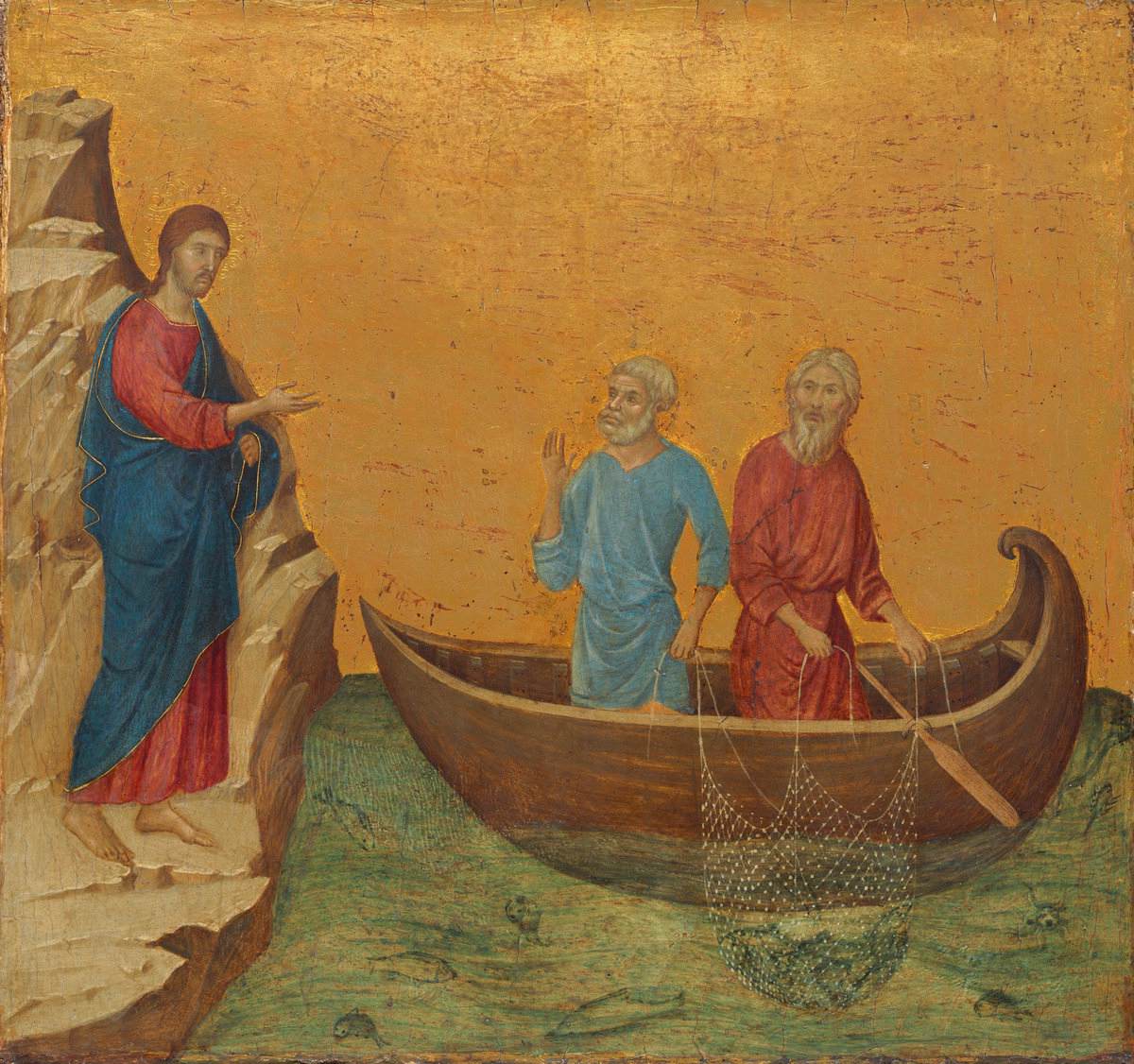
Calling of Peter and Andrew
Duccio di Buoninsegna
1308-11
Tempera on wood, 43,5 x 46 cm
National Gallery of Art, Washington
7
posted on
09/03/2026 6:46:46 AM PDT
by
annalex
(fear them not)
To: annalex
| Luke |
| | English: Douay-Rheims | Latin: Vulgata Clementina | Greek NT: Byzantine/Majority Text (2000) |
| | Luke 22
|
| 24. | And there was also a strife amongst them, which of them should seem to be the greater. | Facta est autem et contentio inter eos, quis eorum videretur esse major. | εγενετο δε και φιλονεικια εν αυτοις το τις αυτων δοκει ειναι μειζων |
| 25. | And he said to them: The kings of the Gentiles lord it over them; and they that have power over them, are called beneficent. | Dixit autem eis : Reges gentium dominantur eorum : et qui potestatem habent super eos, benefici vocantur. | ο δε ειπεν αυτοις οι βασιλεις των εθνων κυριευουσιν αυτων και οι εξουσιαζοντες αυτων ευεργεται καλουνται |
| 26. | But you not so: but he that is the greater among you, let him become as the younger; and he that is the leader, as he that serveth. | Vos autem non sic : sed qui major est in vobis, fiat sicut minor : et qui præcessor est, sicut ministrator. | υμεις δε ουχ ουτως αλλ ο μειζων εν υμιν γενεσθω ως ο νεωτερος και ο ηγουμενος ως ο διακονων |
| 27. | For which is greater, he that sitteth at table, or he that serveth? Is it not he that sitteth at table? But I am in the midst of you, as he that serveth: | Nam quis major est, qui recumbit, an qui ministrat ? nonne qui recumbit ? Ego autem in medio vestrum sum, sicut qui ministrat : | τις γαρ μειζων ο ανακειμενος η ο διακονων ουχι ο ανακειμενος εγω δε ειμι εν μεσω υμων ως ο διακονων |
| 28. | And you are they who have continued with me in my temptations: | vos autem estis, qui permansistis mecum in tentationibus meis. | υμεις δε εστε οι διαμεμενηκοτες μετ εμου εν τοις πειρασμοις μου |
| 29. | And I dispose to you, as my Father hath disposed to me, a kingdom; | Et ego dispono vobis sicut disposuit mihi Pater meus regnum, | καγω διατιθεμαι υμιν καθως διεθετο μοι ο πατηρ μου βασιλειαν |
| 30. | That you may eat and drink at my table, in my kingdom: and may sit upon thrones, judging the twelve tribes of Israel. | ut edatis et bibatis super mensam meam in regno meo, et sedeatis super thronos judicantes duodecim tribus Israël. | ινα εσθιητε και πινητε επι της τραπεζης μου [εν τη βασιλεια μου] και καθισεσθε επι θρονων κρινοντες τας δωδεκα φυλας του ισραηλ |
8
posted on
09/03/2026 6:49:24 AM PDT
by
annalex
(fear them not)
To: annalex
24. And there was also a strife among them, which of them should be accounted the greatest.
25. And he said to them, The kings of the Gentiles exercise lordship over them; and they that exercise authority upon them are called benefactors.
26. But you shall not be so: but he that is greatest among you, let him be as the younger; and he that is chief, as he that does serve.
27. For whether is greater, he that sits at meat, or he that serves? is not be that sits at meat? but I am among you as he that serves.
THEOPHYL. While they were inquiring among themselves who should betray the Lord, they would naturally go on to say to one another, "You are the traitor," and so become impelled to say, "I am the best, I am the greatest." Hence it is said, And there was also a strife among them which should be accounted the greatest.
GREEK EX. Or the strife seems to have arisen from this, that when our Lord was departing from the world, it was thought that some one must become their head, as taking our Lord's place.
BEDE; As good men seek in the Scriptures the examples of their fathers, that they may thereby gain profit and be humbled, so the bad, if by, chance they have discovered any thing blamable in the elect, most gladly seize upon it, to shelter their own iniquities thereby. Many therefore most eagerly read, that a strife arose among the disciples of Christ.
AMBROSE; If the disciples did contend, it is not alleged as any excuse, but held out as a warning. Let us then beware lest any contentions among us for precedence be our ruin.
BEDE; Rather let us look not what carnal disciples did, but what their spiritual Master commanded; for it follows, And he said to them, The kings of the Gentiles, &c.
CHRYS. He mentions the Gentiles, to show thereby how faulty it was. For it is of the Gentiles to seek after precedence.
CYRIL; Soft words are also given them by their subjects, as it follows, And they that exercise authority upon them, are called benefactors.
Now they truly as alien from the sacred law are subject to these evils, but your preeminence is in humility, as it follows, But you shall not be so.
BASIL; Let not him that is chief be puffed up by his dignity, lest he fall away from the blessedness of humility, but let him know that true humility is the ministering to many. As then he who attends many wounded and wipes away the blood from their wounds, least of all men enters upon the service for his own exaltation, much more ought he to whom is committed the care of his sick brethren as the minister of all, about to render an account of all, to be thoughtful and anxious. And so let him that is greatest be as the younger. Again, it is meet that those who are in the chief places should be ready to offer also bodily service, after our Lord's example, who washed His disciples' feet. Hence it follows, And he that is chief as he that does serve. But we need not fear that the spirit of humility will be weakened in the inferior, while he is being served by his superior, for by imitation humility is extended.
AMBROSE; But it must be observed, that not every kind of respect and deference to others betokens humility, for you may defer to a person for the world's sake, for fear of his power, or regard to your own interest. In that case you seek to edify yourself, not to honor another. Therefore there is one form of the precept given to all men, namely, that they boast not about precedence, but strive earnestly for humility.
BEDE; In this rule however, given by our Lord, the great have need of no little judgment, that they do not indeed like the kings of the Gentiles delight to tyrannize over their subjects, and be puffed up with their praises, yet notwithstanding that they be provoked with a righteous zeal against the wickedness of offenders.
But to the words of the exhortation He subjoins His own example, as it follows, For which is greater, he who sits at meat, or he that serves? But I am among you, &c.
CHRYS. As if He says, Think not that your disciple needs you, but that you do not need him. For I who need no one whom all things in heaven and earth need, have condescended to the degree of a servant.
THEOPHYL. He shows Himself to be their servant, when He distributes the bread and the cup, of which service He makes mention, reminding them that if they have eaten of the same bread, and drunk of the same cup, if Christ Himself served all, they ought all to think the same things.
BEDE; Or He speaks of that service wherewith, according to John, He their Lord and Master washed their feet. Although by the word itself serving, all that He did in the flesh may be implied, but by serving He also signifies that He pours forth His blood for us.
28. You are they which have continued with me in my temptations.
29. And I appoint to you a kingdom, as my Father has appointed to me;
30. That you may eat and drink at my table in my kingdom, and sit on thrones judging the twelve tribes of Israel.
THEOPHYL. As the Lord had denounced woe to the traitor, so on the other hand to the rest of the disciples He promises blessings, saying, You are they which have continued with me, &c.
BEDE; For not the first effort of patience, but long-continued perseverance, is rewarded with the glory of the heavenly kingdom for perseverance, (which is called constancy or fortitude of mind,) is, so to say, the pillar and prop of all virtues. The Son of God then conducts those who abide with Him in His temptations to the everlasting kingdom. For if we have been planted together in the likeness of his death, we shall be also in the likeness of his resurrection. Hence it follows, And I give to you a kingdom , &c.
AMBROSE; The kingdom of God is not of this world. But it is not equality with God, but likeness to Him, to which man must aspire. For Christ alone is the full image of God, on account of the unity of His Father's glory expressed in Him. But the righteous man is after the image of God, if for the sake of imitating the likeness of the Divine conversation, He through the knowledge of God despises the world. Therefore also we eat the Body and Blood of Christ, that we may be partakers of eternal life. Whence it follows, That you may eat and drink at my table in my kingdom. For the reward promised to us is not food and drink, but the communication of heavenly grace and life.
BEDE; Or the table offered to all saints richly to enjoy is the glory of a heavenly life, w herewith they who hunger and thirst after righteousness shall be filled, resting in the long desired enjoyment of the true God.
THEOPHYL. He said this not as if they would have there bodily food, or as if His kingdom were to be a sensible one. For their life then shall be the life of angels, as He before told the Sadducees. But Paul also says that the kingdom of God is not meat and drink.
CYRIL; By means of the things of our present life He describes spiritual things. For they exercise a high privilege with earthly kings, who sit at their table as guests. So then by man's estimation He shows who shall be rewarded by Him with the greatest honors.
BEDE; This then is the exchange to the right hand of the Most High, that those who now in lowliness rejoice to minister to their fellow-servants. shall then at our Lord's table on high be fed with the banquet of everlasting life, and they who here in temptations abide with the Lord being unjustly judged, shall then come with Him as just judges upon their tempters. Hence it follows, And sit on thrones judging the twelve tribes of Israel.
THEOPHYL. That is, the unbelievers condemned out of the twelve tribes.
AMBROSE; But the twelve thrones are not as it were any resting-places for the bodily posture, but because since Christ judges after the Divine likeness by knowledge of the hearts, not by examination of the actions, rewarding virtue, condemning iniquity; so the Apostles are appointed to a spiritual judgment, for the rewarding of faith, the condemnation of unbelief, repelling error with virtue, inflicting vengeance on the sacrilegious.
CHRYS. What then will Judas also sit there? Observe what the lay, was which God gave by Jeremiah, If I have promised any good, and you are counted unworthy of it, I will punish you. Therefore speaking to His disciples He did not make a general promise, but added, You who have continued with me in my temptations.
BEDE; From the high excellence of this promise Judas is excluded. For before the Lord said this, Judas must be supposed to have gone out. They also are excluded whoever having heard the words of the incomprehensible Sacrament, have gone backwards.
Catena Aurea Luke 22
9
posted on
09/03/2026 6:50:52 AM PDT
by
annalex
(fear them not)
To: annalex
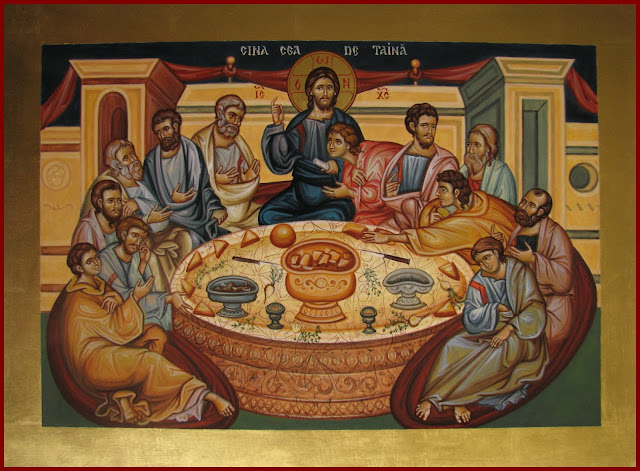
The Mystical Supper
(inscription in Romanian)
Casian Simona Cristina, iconographer
10
posted on
09/03/2026 6:52:15 AM PDT
by
annalex
(fear them not)
To: annalex
Saint of the Day for September 3
(c. 540 – March 12, 604)
Saint Gregory the Great’s Story
Saint Gregory the Great was the prefect of Rome before he was 30. After five years in office he resigned, founded six monasteries on his Sicilian estate, and became a Benedictine monk in his own home at Rome.
Ordained a priest, Gregory became one of the pope’s seven deacons, and also served six years in the East as papal representative in Constantinople. He was recalled to become abbot, but at the age of 50 was elected pope by the clergy and people of Rome.
Gregory was direct and firm. He removed unworthy priests from office, forbade taking money for many services, emptied the papal treasury to ransom prisoners of the Lombards and to care for persecuted Jews and the victims of plague and famine. He was very concerned about the conversion of England, sending 40 monks from his own monastery. He is known for his reform of the liturgy, and for strengthening respect for doctrine. Whether he was largely responsible for the revision of “Gregorian” chant is disputed.
Saint Gregory the Great lived in a time of perpetual strife with invading Lombards and difficult relations with the East. When Rome itself was under attack, he interviewed the Lombard king.
His book, Pastoral Care, on the duties and qualities of a bishop, was read for centuries after his death. He described bishops mainly as physicians whose main duties were preaching and the enforcement of discipline. In his own down-to-earth preaching, Gregory was skilled at applying the daily Gospel to the needs of his listeners. Called “the Great,” Gregory has been given a place with Augustine, Ambrose, and Jerome, as one of the four key doctors of the Western Church.
An Anglican historian has written: “It is impossible to conceive what would have been the confusion, the lawlessness, the chaotic state of the Middle Ages without the medieval papacy; and of the medieval papacy, the real father is Gregory the Great.”
Reflection
Gregory was content to be a monk, but he willingly served the Church in other ways when asked. He sacrificed his own preferences in many ways, especially when he was called to be Bishop of Rome. Once he was called to public service, Gregory gave his considerable energies completely to this work. Gregory’s description of bishops as physicians fits in well with Pope Francis’ description of the Church as a “field hospital.”
Saint Gregory the Great is the Patron Saint of:
England
Epilepsy
Musicians
Teachers
franciscanmedia.org
11
posted on
09/03/2026 6:55:56 AM PDT
by
annalex
(fear them not)
To: annalex

Statue of St Gregory the Great by Nicolas Cordier
12
posted on
09/03/2026 7:00:09 AM PDT
by
annalex
(fear them not)
To: annalex
Thank you.
13
posted on
09/03/2026 11:28:16 AM PDT
by
chud
To: All
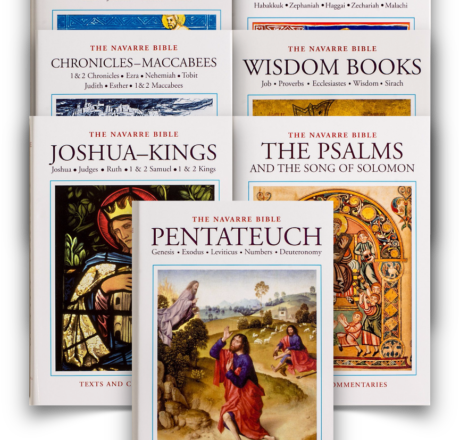
NAVARRE BIBLE COMMENTARY(RSV)
Ad Majorem Dei Gloriam (To the Greater Glory of God)
Today’s First Reading
From: 1 Corinthians 3:18-23
Apostolic Ministry (Continuation)
------------------------------------------
[18] Let no one deceive himself. If any one among you thinks that he is wise in this age, let him become a fool that he may become wise. [19] For the wisdom of this world is folly with God. For it is written, "He catches the wise in their craftiness," [20] and again, "The Lord knows that the thoughts of the wise are futile." [21] So let no one boast of men. For all things are yours, [22] whether Paul or Apollos or Cephas or the world or life or death or the present or the future, all are yours; [23] and you are Christ's; and Christ is God's.
***********************************************************************
Commentary:
18-20. As an application of his teaching about true wisdom, St Paul shows Christians that the worst kind of foolishness is that of thinking one is wise when one in fact is not. He uses two biblical quotations (Job 5:13; Ps 94:11) as a gloss to prove that an exclusively human approach is always doomed to failure.
Christians, therefore, are wiser the more they identify their desires with the plan God has for each; that is, the more supernatural their outlook on life is: "We must learn to acquire the divine measure of things, never losing our supernatural outlook, and realizing that Jesus makes use also of our weaknesses to reveal his glory. So, whenever your conscience feels the stirrings of self-love, of weariness, of discouragement, or the weight of your passions, you must react immediately and listen to the Master, without letting the sad truth about our lives frighten us, because as long as we live our personal failings will always be with us" (St. J. Escriva, "Friends of God", 194).
21-23. One consequence of the defective wisdom which St Paul spoke about in the preceding verses is the Corinthians' desire to seize on one particular teacher. They have forgotten that all ministers are there to serve the faithful (v. 5). In fact, the Apostle tells them, it is not only the teachers that are theirs: "all things are yours." This clearly emphasizes the great dignity involved in being a Christian: by being an adoptive son of God, a brother of Jesus Christ, the Christian has a share in Christ's lordship over the universe (cf. 1 Cor 15:24-28), and is the master of all creation (cf. 2 Cor 6:10), through which he should move with a certain proprietorial feeling, called as he is to live in the freedom of the glory of the sons of God (cf. Rom 8:21), a freedom which God has won for him (cf. Gal 4:31). Human factions and dissensions of the type that have arisen among the Corinthians show that they have forgotten all this and therefore their sense of vocation has become impoverished. The Christian belongs to Christ alone: he has only one master, Christ. "Mine are the heavens and mine is the earth", St John of the Cross explains; "mine are the people, the righteous are mine and the Mother of God, and all things are mine; and God himself is mine and for me, for Christ is mine and all for me. What, then, do you ask for and seek, my soul? All this is yours, and it is all for you. Do not despise yourself, do not despise the crumbs that fall from your Father's table" ("A Prayer of the Soul Enkindled by Love").
The Apostle's words also remind us of the love and respect that man should have for created things, which God has entrusted to him (cf. Vatican II, "Gaudium Et Spes", 37). "The world is not evil," Monsignor Escriva reminds us "for it has come from God's hands; it is his creation; Yahweh looked upon it and saw that it was good (cf. Gen 1:7ff). We ourselves, mankind, make it evil and ugly with our sins and infidelities [...] our age needs to give back to matter and to the most trivial occurrences and situations their noble and original meaning. It needs to restore them to the service of the Kingdom of God, to spiritualize them, turning them into a means and an opportunity for a continuous meeting with Jesus Christ [...]. It is understandable that the Apostle should write: 'all things are yours, you are Christ's and Christ is God's (1 Cor 3:22-23). We have here an ascending movement which the Holy Spirit, infused in our hearts, wants to call forth from this world, upwards from the earth to the glory of the Lord" ("Conversations", 114-115).
14
posted on
09/03/2026 12:35:41 PM PDT
by
fidelis
(Ecce Crucem Domini! Fugite partes adversae! Vicit Leo de tribu Juda, Radix David! Alleluia!)
Today’s Gospel Reading From: Luke 5:1-11
The Miraculous Catch of Fish and the Calling of the First Disciples
------------------------------------------------------------------------------------
[1] While the people pressed upon Him (Jesus) to hear the word of God, He was standing by the Lake of Gennesaret. [2] And He saw two boats by the lake, but the fishermen had gone out of them and were washing their nets. [3] Getting into one of the boats, which was Simon's, He asked him to put out a little from the land. And He sat down and taught the people from the boat. [4] And when He had ceased speaking, He said to Simon, "Put out into the deep and let down your nets for a catch." [5] And Simon answered, "Master, we toiled all night and took nothing! But at your word I will let down the nets." [6] And when they had done this, they enclosed a great shoal of fish; and as their nets were breaking, [7] they beckoned to their partners in the other boat to come and help them. And they came and filled both the boats, so that they began to sink. [8] But when Simon Peter saw it, he fell down at Jesus' knees, saying, "Depart from me, for I am a sinful man, O Lord." [9] For he was astonished, and all that were with Him, at the catch of fish which they had taken; [10] And so also were James and John, sons of Zebedee, who were partners with Simon. And Jesus said to Simon, "Do not be afraid; henceforth you will be catching men." [11] And when they had brought their boats to land, they left everything and followed Him.
***********************************************************************
Commentary:
1. "Just as they do today! Can't you see? They want to hear God's message, even though outwardly they may not show it. Some perhaps have forgotten Christ's teachings. Others, through no fault of their own, have never known them and they think that religion is something odd. But of this we can be sure, that in every man's life there comes a time sooner or later when his soul draws the line. He has had enough of the usual explanations. The lies of the false prophets no longer satisfy. Even though they may not admit it at the time, such people are longing to quench their thirst with the teachings of our Lord" (St. J. Escriva, "Friends of God", 260).
3. The Fathers saw in Simon's boat a symbol of the pilgrim Church on earth. "This is the boat which according to St. Matthew was in danger of sinking and according to St. Luke was filled with fish. Here we can see the difficult beginnings of the Church and its later fruitfulness" (St. Ambrose, "Expositio Evangelii sec. Lucam, in loc."). Christ gets into the boat in order to teach the crowds--and from the barque of Peter, the Church, He continues to teach the whole world.
Each of us can also see himself as this boat Christ uses for preaching. Externally no change is evident: "What has changed? There is a change inside our soul, now that Christ has come aboard, as He went aboard Peter's boat. Its horizon has been expanded. It feels a greater ambition to serve and an irrepressible desire to tell all creation about the "magnalia Dei" (Acts 2:11), the marvellous doings of our Lord, if only we let Him work" (St. J. Escriva, "Friends of God", 265).
4. "When He had finished His catechizing, He told Simon: `Put out into the deep, and lower your nets for a catch.' Christ is the master of this boat. He it is who prepares the fishing. It is for this that He has come into the world, to do all He can so that His brothers may find the way to glory and to the love of the Father" ("Friends of God", 260). To carry this task out, our Lord charges all of them to cast their nets, but it is only Peter He tells to put out into the deep.
This whole passage refers in some way to the life of the Church. In the Church the bishop of Rome, Peter's successor, "is the vicar of Jesus Christ because he represents Him on earth and acts for Him in the government of the Church" ("St. Pius X Catechism", 195). Christ is also addressing each one of us, urging us to be daring in apostolate: `"Duc in altum. Put out into deep water!' Throw aside the pessimism that makes a coward of you. `Et laxate retia vestra in capturam. And pay out you nets for a catch.' Don't you see that you, like Peter, can say: `In nomine tuo, laxabo rete': Jesus, if You say so, I will search for souls?" (St. J. Escriva, "The Way", 792).
"If you were to fall into the temptation of wondering, `Who's telling me to embark on this?', we would have reply, `Christ Himself is telling you, is begging you.' `The harvest is plentiful enough, but the laborers are few. You must ask the Lord to whom the harvest belongs to send laborers out for the harvesting' (Matthew 9:37-38). Don't take the easy way out. Don't say, `I'm no good at this sort of thing; there are others who can do it; it isn't my line.' No, for this sort of thing, there is no one else: if you could get away with that argument, so could everyone else. Christ's plea is addressed to each and every Christian. No one can consider himself exempt, for whatever reason--age, health or occupation. There are no excuses whatsoever. Either we carry out a fruitful apostolate, or our faith will prove barren" ("Friends of God", 272).
5. When Christ gives him these instructions, Peter states the difficulties involved. "A reasonable enough reply. The night hours were the normal time for fishing, and this time the catch had yielded nothing. What was the point of fishing by day? But Peter has faith: `But at Your word I will let down the nets.' He decides to act on Christ's suggestion. He undertakes the work relying entirely on the word of our Lord" ("Friends of God", 261).
8. Peter does not want Christ to leave him; aware of his sins, he declares his unworthiness to be near Christ. This reminds us of the attitude of the centurion who confesses his unworthiness to receive Jesus into his house (Matthew 8:8). The Church requires her children to repeat these exact words of the centurion before receiving the Blessed Eucharist. She also teaches us to show due external reverence to the Blessed Sacrament when going to Communion: by falling down on his knees Peter also shows that internal adoration of God should be also be expressed externally.
11. Perfection is not simply a matter of leaving all things but of doing so in order to follow Christ--which is what the Apostles did: they gave up everything in order to be available to do what God's calling involved.
We should develop this attitude of availability, for "Jesus isn't satisfied `going halves': He wants the lot" (St. J. Escriva, "The Way", 155).
If we don't give ourselves generously, we will find it very difficult to follow Jesus: "Detach yourself from people and things until you are stripped of them. For, says Pope St. Gregory, the devil has nothing of his own in this world, and naked he comes to battle. If you go clothed to fight him, you will soon be pulled to the ground: for he will have something to catch you by" ("The Way", 149).
15
posted on
09/03/2026 12:36:06 PM PDT
by
fidelis
(Ecce Crucem Domini! Fugite partes adversae! Vicit Leo de tribu Juda, Radix David! Alleluia!)
Disclaimer:
Opinions posted on Free Republic are those of the individual
posters and do not necessarily represent the opinion of Free Republic or its
management. All materials posted herein are protected by copyright law and the
exemption for fair use of copyrighted works.
FreeRepublic.com is powered by software copyright 2000-2008 John Robinson