
Posted on 08/27/2026 10:53:56 PM PDT by fidelis
Memorial of Saint Augustine, Bishop and Doctor of the Church>
Jesus told his disciples this parable: “The Kingdom of heaven will be like ten virgins who took their lamps and went out to meet the bridegroom. Five of them were foolish and five were wise. The foolish ones, when taking their lamps, brought no oil with them, but the wise brought flasks of oil with their lamps.” Matthew 25:1–4
Today’s Gospel comes from Jesus’ final discourses with His disciples. It was the week of Passover. Jesus had already concluded His public preaching in the Temple and was now offering some final words to His closest companions. Though He was fully aware of the suffering He was about to endure, His disciples did not yet understand what was to come. Therefore, we should recognize in these final teachings the urgency of Jesus’ message—an urgent appeal received by the Twelve but not yet fully grasped.
The final discourses all center around the theme of vigilance, judgment, and the coming of the Kingdom of Heaven. Jesus, knowing that His Passion was near, sought to prepare His disciples for the trials to come—not only the immediate trial of His crucifixion, but also the long vigil of the Church as she awaits His glorious return. In this parable of the ten virgins, Christ emphasizes the need for constant spiritual preparedness. The wise virgins symbolize those who live in a state of grace, are nourished by prayer, perform acts of charity, and remain faithful to God’s will. The oil in their flasks represents both good deeds and the inner life of the soul—alive through faith and love, and sustained by the Holy Spirit.
The foolish virgins represent those who give the appearance of belonging to the Bridegroom but fail to cultivate the interior life. They are unprepared for the delay, which signifies the mystery and hiddenness of God’s providential will and the unpredictability of the moment of our particular and final judgment. The final discourses, therefore, call us to an active and discerning faith that does not grow lax or presume upon last-minute conversion. Christ urges His disciples to “stay awake,” not in fear, but in hopeful readiness, living each day as if the Bridegroom might arrive at any hour.
Though this exhortation carries eschatological tones—pointing to our particular death and Jesus’ return in glory—it also refers to the countless ways God comes to us by grace, night and day, as we journey through this life. Attentiveness to those graced moments is, in many ways, the most important form of vigilance, because it prepares us to stand confidently before God when this life is over.
Reflect today on the oil in your own flask. Are you spiritually prepared not only for the coming of the Bridegroom at the end of your life or the end of time, but also for the daily, hidden comings of His grace? Seek to live each moment in a state of spiritual readiness, with your heart alert and open. When the Bridegroom comes—whether at the end of days or in the everyday quiet whispers of grace—blessed will you be to rise, lamp in hand, and enter the wedding feast with Him. Responding in this life gives us an immediate foretaste of the joy and peace we will experience in the Eternal Wedding Feast of the Lamb in Heaven.
My Lord and Eternal Bridegroom, You invite me, day and night, to enter the wedding feast of grace with You. Help me, I pray, to remain vigilant, to stay awake, and to always discern Your voice when You call. May I be ever ready, with the oil of charity and grace fueling the light of Your joy and peace—now and forever. Jesus, I trust in You.
Please keep in mind that this is a Catholic Caucus/Devotional thread for the purpose of prayerful reflection on the Sacred Scriptures and is closed to debate of any kind. Per FR policy on Religion Caucus threads, off-topic, argumentative, and abusive comments are not allowed and will be submitted to the Mods for deletion. Thanks, and God bless you.
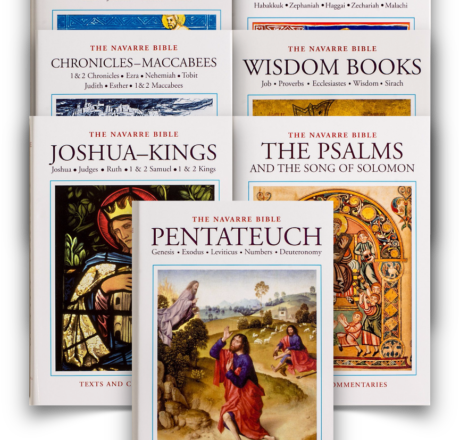
Today’s First Reading
From: 1 Corinthians 1:17-25
An Appeal for Unity (Continuation)
------------------------------------------
[17] For Christ did not send me to baptize but to preach the gospel, and not with eloquent wisdom, lest the cross of Christ be emptied of its power.
The Wisdom of the Cross
-------------------------------
[18] For the word of the cross is folly to those who are perishing, but to us who are being saved it is the power of God. [19] For it is written, "I will destroy the wisdom of the wise, and the cleverness of the clever I will thwart." [20] Where is the wise man? Where is the scribe? Where is the debater of this age? Has not God made foolish the wisdom of the world? [21] For since, in the wisdom of God, the world did not know God through wisdom, it pleased God through the folly of what we preach to save those who believe. [22] For Jews demand signs and Greeks seek wisdom, [23] but we preach Christ crucified, a stumbling block to Jews and folly to Gentiles, [24] but to those who are called, both Jews and Greeks, Christ the power of God and the wisdom of God. [25] For the foolishness of God is wiser than men, and the weakness of God is stronger than men.
***********************************************************************
Commentary:
17. In the first part of this verse St Paul is giving the reasons for his actions as described in the preceding verses. The second part he uses to broach a new subject--the huge difference between this world's wisdom and the wisdom of God.
"Christ did not send me to baptize but to preach the Gospel": this is a reminder that preaching is St Paul's main task, as it is of the other Apostles (cf. Mk 3:14). This does not imply a belittling of Baptism: in his mandate to the Apostles to go out into the whole world (cf. Mt 28:19-20), our Lord charged them to baptize as well as to preach, and we know that St Paul did administer Baptism. But Baptism--the sacrament of faith presupposes preaching: "faith comes from what is heard" (Rom 10:17). St Paul concentrates on preaching, leaving it to others to baptize and gather the fruit--a further sign of his detachment and upright intention.
In Christian catechesis, evangelization and the sacraments are interdependent. Preaching can help people to receive the sacraments with better dispositions, and it can make them more aware of what the sacraments are; and the graces which the sacraments bring help them to understand the preaching they hear and to be more docile to it. "Evangelization thus exercises its full capacity when it achieves the most intimate relationship, or better still a permanent and unbroken intercommunication, between the Word and the Sacraments. In a certain sense it is a mistake to make a contrast between evangelization and sacramentalization, as is sometimes done. It is indeed true that a certain way of administering the Sacraments, without the solid support of catechesis regarding these same Sacraments and a global catechesis, could end up by depriving them of their effectiveness to a great extent. The role of evangelization is precisely to educate people in the faith so as to lead each individual Christian to live the Sacraments as true Sacraments of faith--and not to receive them passively or apathetically" (Paul VI, "Evangelii Nuntiandi", 47).
1:18-4:21. St Paul's writings are not an academic study of particular doctrinal subjects, one after the other, logically arranged. The Apostle's lively mind and the letter-form he uses create an interweaving of profound theological ideas, practical applications of teaching and expressions of warm, apostolic affection. In this section of the letter St Paul discusses the causes of divisions among the Corinthian Christians: they have failed to discover where true wisdom lies (1:18-3:3), or what the true mission of Church ministers is (3:4-4:13). He ends this part of the letter with some words of warning (4:14-21).
Human wisdom ought to be in line with the wisdom of God. But it has gone off course and become "wisdom of the world", relying only on miracles or on logic; only grace can make a person truly wise: therefore, no Christian can boast of obtaining wisdom by his own efforts (1:18-31). Even St Paul relied only on the wisdom of the Cross (2:1-5).
Divine wisdom, which men are called to have a share in, is the plan of salvation revealed by God and taught by the Holy Spirit (2:6-16); the Corinthians have not yet attained it (3:1-3).
The Corinthians' second shortcoming is that they fail to understand the role of Church ministers: these are not working for themselves but for the building-up of the whole Church; every Christian--and the entire Church--belongs to God and Christ alone (3:4-23); Christians are not to sit in judgment over God's ministers: God is their judge (4:1-7). Therefore, the important thing is for Christians to be faithful and to abound in the grace of God, even if the holders of Church office are not very impressive (4:8-13).
18-19. The cross of Christ leads the way to true wisdom and prudence. No one may remain indifferent to it. Some people see the message of the Cross, "the word of the cross", as folly: these are on the road to perdition. Others--those who are on the road to salvation—are discovering that the Cross is "the power of God", because it has conquered the devil and sin. The Church has always seen the Cross in this light: "This is the wood of the cross, on which hung the Savior of the world" ("Roman Missal", Good Friday liturgy).
The saints have rejoiced in this truth: "O most precious gift of the Cross! How splendid it looks! [...] It is a tree which begets life, without causing death; which sheds light, without casting shadows; which leads to Paradise and does not expel anyone therefrom; it is the wood which Christ ascended, as a king mounting his chariot, to defeat the devil who had usurped the power of death, and to set mankind free from the thrall in which the devil held it. This wood, on which the Lord, valiant fighter in the combat, was wounded in his divine hands and feet and side, healed the effects of sins and the wounds which the pernicious dragon had inflicted on our nature [...]. That supreme wisdom, which, so to speak, burgeoned on the Cross, exposed the boasts and the foolish arrogance of the wisdom of the world" (St Theodore the Studite, "Oratio In Adorationem Crucis").
In the Cross the words of Isaiah (29:14) quoted by St Paul are fulfilled. Simplicity and humility are needed if one is to discover the divine wisdom of the Cross. 'The message of Christ's cross", St Thomas says, "contains some- thing which to human wisdom seems impossible--that God should die, or that the Almighty should give himself up into the power of violent men. It also contains things which seem to be contrary to worldly prudence--for instance, someone being able to flee from contradictions and yet not doing so" ("Commentary on 1 Cor, ad loc.").
20-25. After stressing the importance of the message of the Cross, St Paul now contrasts the wisdom of God and the wisdom of the world.
By "wisdom of the world" he means the attitude of man when he is not pursuing his proper goal: this term "world", which has various meanings in Sacred Scripture (cf. note on Jn 17:14-16), in St Paul has the pejorative meaning of "all sinful men", people estranged from God (cf. 1 Cor 1:27; 2:12; 3:19; 5:10; 11:32). This human wisdom cannot attain knowledge of God (cf. Rom 1:19-25), either because it demands external signs or because it accepts only rational arguments.
For the Jews only signs will do--miracles which prove God's presence (cf. Mt 12:38ff; Lk 11:29); they want to base their faith on things the senses can perceive. For people with this attitude, the cross of Christ is a scandal, that is, a stumbling block, which makes it impossible for them to gain access to divine things, because they have in some way imposed limits as to how God may reveal himself and how he may not.
The Greeks--St Paul is referring to the Rationalists of his time—think that they are the arbiters of truth, and that anything which cannot be proved by logical argument is nonsense. "For the world, that is, for the prudent of the world, their wisdom turned into blindness; it could not lead them to see God [...]. Therefore, since the world had become puffed up by the vanity of its dogmas, the Lord set in place the faith whereby believers would be saved by what seemed unworthy and foolish, so that, all human conjecture being of no avail, only the grace of God might reveal what the human mind cannot take in" (St Leo the Great, "Fifth Nativity Sermon").
Christians, whom God has called out from among the Jews and the Gentiles, do attain the wisdom of God, which consists in faith, "a supernatural virtue. By that faith, with the inspiration and help of God's grace, we believe that what he has revealed is true--not because its intrinsic truth is seen by the natural light of reason, but because of the authority of God who reveals it, who can neither deceive nor be deceived" (Vatican I, "Dei Filius", chap. 3). The same council goes on to teach that faith is in conformity with reason (cf. Rom 12:1) and that, in addition to God's help, external signs--miracles and prophecies--and rational argument do act as supports of faith.
21. "In the wisdom of God ...": this has been interpreted in two ways, which complement one another. Roughly, the first interpretation is this: according to God's most wise designs, since the world could not attain knowledge of God by its own efforts, through philosophy, through those elaborate systems of thought the Greeks were so proud of, God decided to save believers through the preaching of the Cross, which to human eyes seemed foolishness, a stumbling block (v. 22).
The second interpretation, favored by many Fathers and by St Thomas Aquinas, contrasts divine wisdom--as manifested in creation and in the Old Testament--with human wisdom. It runs on these lines: since the world, because of its distorted view of things, failed to attain knowledge of God, despite the way he manifested himself in creation (cf. Rom 1:19-20) and Sacred Scripture, God has decided to save man in a remarkable, paradoxical way which better reflects divine wisdom—the preaching of the Cross.
In both interpretations it is clear that the Apostle is trying to squeeze into one expression a number of truths--that God's salvific plans are eternal; that human wisdom, which is capable, on its own, of discovering God through his works, has become darkened; that the Cross is the climax of the all-wise plans of God; that man cannot be truly wise unless he accepts "the wisdom of the cross", no matter how paradoxical it may seem.
25. In his plan of salvation God our Lord wants to use things which to man's mind seem foolish and weak, so that his wisdom and power will shine out all the more. "All that Jesus Christ did for us has been meritorious for us; it has all been necessary and advantageous to our salvation; his very weakness has been for us no less useful than his majesty. For, if by the power of his divinity he has released us from the captivity of sin, he has also, through the weakness of his flesh, destroyed death's rights. As the Apostle so beautifully said, 'the weakness of God is stronger than men'; indeed, by this folly he has been pleased to save the world by combating the wisdom of the world and confounding the wise; for, possessing the nature of God and being equal to God, he abased himself, taking the form of a servant; being rich, he became poor for love of us: being great, he became little; being exalted, humble; he became weak, who was powerful; he suffered hunger and thirst, he wore himself out on the roads and suffered of his own free will and not by necessity. This type of folly, I repeat: has it not meant for us a way of wisdom, a model of justice and an example of holiness, as the same Apostle says: 'The foolishness of God is wiser than men'? So true is this, that death has freed us from death, life has freed us from error, and grace from sin" (St Bernard, "De Laudibus Novae Militiae", XI, 27).
From: Matthew 25:1-13
The Parable of the Wise and Foolish Maidens
-------------------------------------------------------
(Jesus said to His disciples,) [1] "Then the Kingdom of Heaven shall be compared to ten maidens who took their lamps and went to meet the bridegroom. [2] Five of them were foolish, and five were wise. [3] For when the foolish took their lamps, they took no oil with them; [4] but the wise took flasks of oil with their lamps. [5] As the bridegroom was delayed, they all slumbered and slept. [6] But at midnight there was a cry, `Behold the bridegroom! Come out to meet him.' [7] Then all those maidens rose and trimmed their lamps. [8] And the foolish said to the wise, `Give us some of your oil, for our lamps are going out.' [9] But the wise replied, `Perhaps there will not be enough for us and for you; go rather to the dealers and buy for yourselves.' [10] And while they went to buy, the bridegroom came, and those who were ready went in with him to the marriage feast; and the door was shut. [11] Afterwards the other maidens came also, saying, Lord, lord, open to us.' [12] But he replied, `Truly, I say to you, I do not know you.' [13] Watch therefore, for you know neither the day nor the hour."
***********************************************************************
Commentary:
1-46. The whole of chapter 25 is a practical application of the teaching contained in chapter 24. With these parables of the wise and foolish virgins and of the talents, and His teaching on the Last Judgment, our Lord is again emphasizing the need for vigilance (cf. note on Matthew 24:42). In this sense, chapter 25 makes chapter 24 more intelligible.
1-13. The main lesson of this parable has to do with the need to be on the alert: in practice, this means having the light of faith, which is kept alive with the oil of charity. Jewish weddings were held in the house of the bride's father. The virgins are young unmarried girls, bridesmaids who are in the bride's house waiting for the bridegroom to arrive. The parable centers on the attitude one should adopt up to the time when the bridegroom comes. In other words, it is not enough to know that one is "inside" the Kingdom, the Church: one has to be on the watch and be preparing for Christ's coming by doing good works.
This vigilance should be continuous and unflagging, because the devil is forever after us, prowling around "like a roaring lion, seeking someone to devour" (1 Peter 5:8). "Watch with the heart, watch with faith, watch with love, watch with charity, watch with good works [...]; make ready the lamps, make sure they do not go out [...], renew them with the inner oil of an upright conscience; then shall the Bridegroom enfold you in the embrace of His love and bring you into His banquet room, where your lamp can never be extinguished" (St. Augustine, "Sermon", 93).
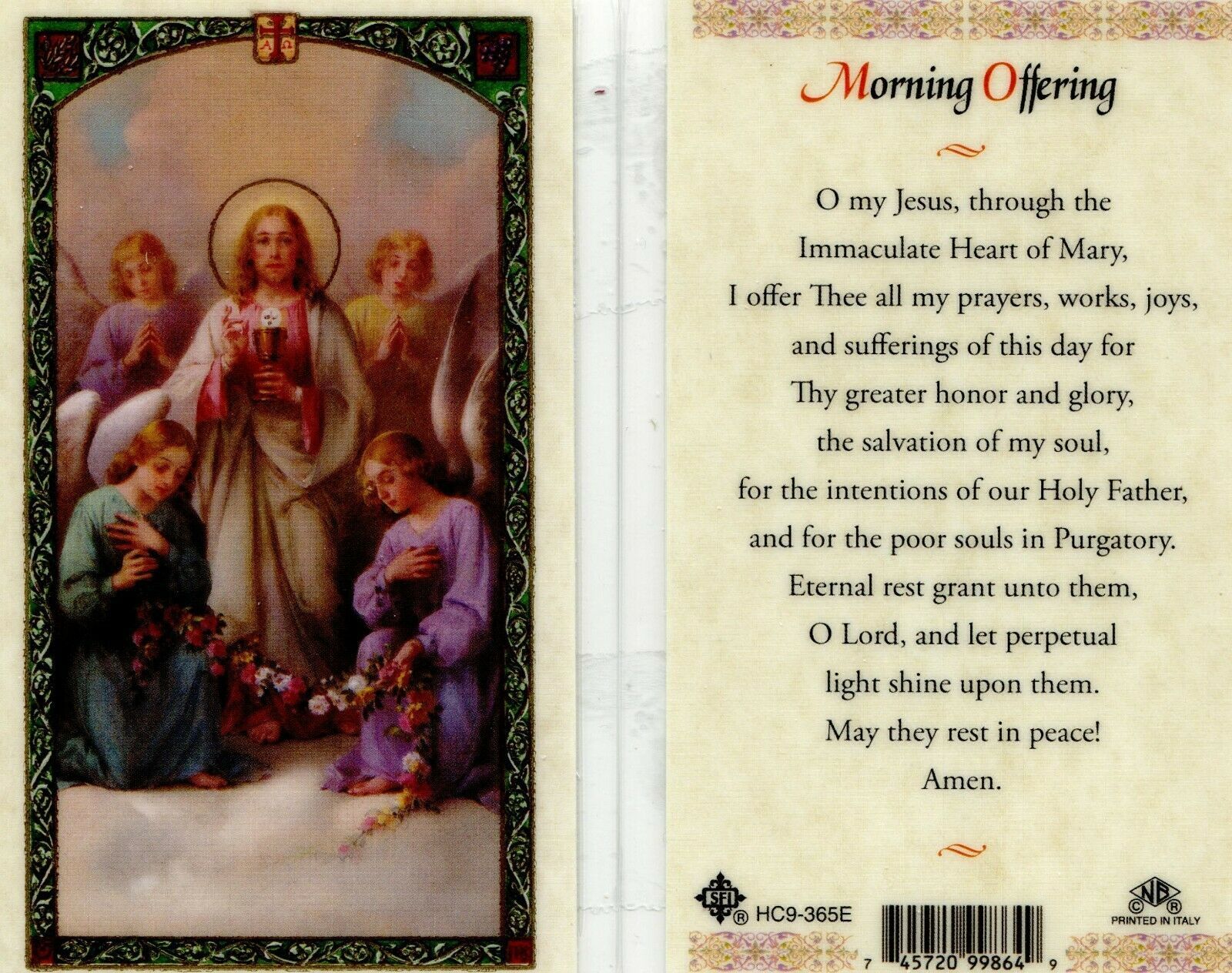
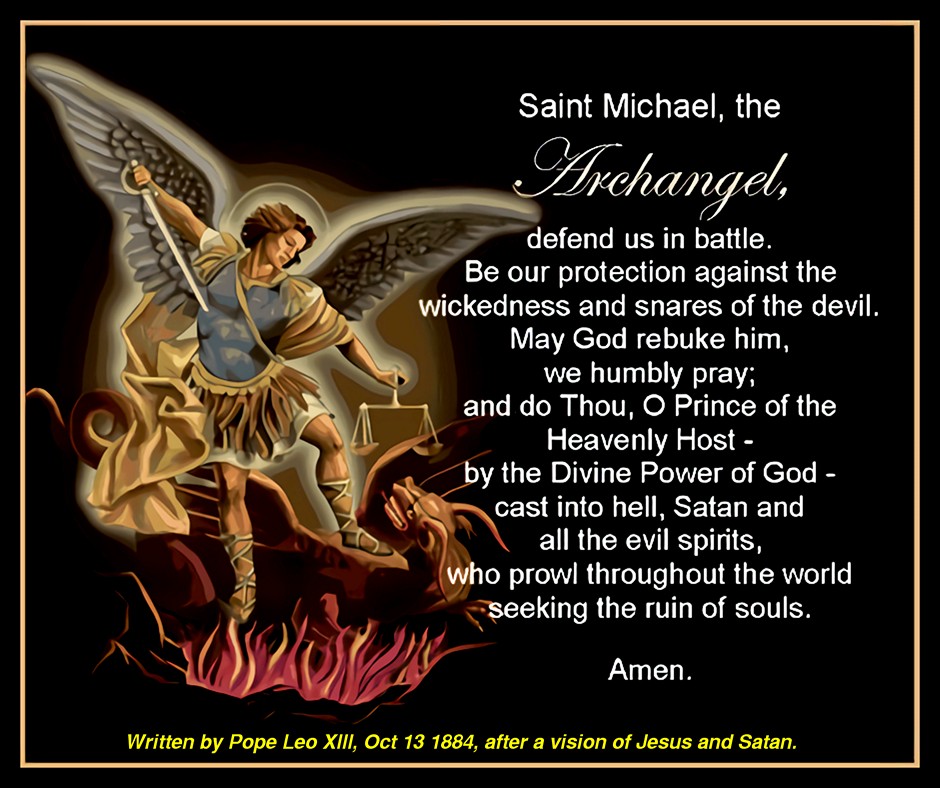
The Month of August is Dedicated to the Immaculate Heart of Mary

“In the sixth month the angel Gabriel was sent from God to a city of Galilee named Nazareth, to a virgin betrothed to a man whose name was Joseph, of the house of David; and the virgin’s name was Mary. And he came to her and said, “Hail, full of grace, the Lord is with you!”” (Luke 1:26-28)

Pope Leo XIV’s prayer intention for the month of August, 2026:
For evangelization in the city
Let us pray that in large cities often marked by anonymity and loneliness we find new ways to proclaim the Gospel, discovering creative paths to build community.

What I've come to recognize, though, is that this story highlights two important things about salvation. The first is that we are responsible for keeping our own faith alive during our time on earth until it is our time to meet the Lord. If we let the "light" of our faith go out, we can't presume on the faith of others to get us into heaven--we have to have faith of our own--real faith, not just what we've done.
The second important truth is that we have to be ready at the time the Lord comes--either at the end of our lives or the Second Coming. At that point, there are no second chances for those who come to the end their lives without faith. As someone said, if you stay ready, you don't have to get ready because by then it might be too late. Hebrews 9:27 says: "It is appointed unto men once to die, but after this the judgment." And as St. Augustine said, "God, who created you without you, will not save you without you"
Disclaimer: Opinions posted on Free Republic are those of the individual posters and do not necessarily represent the opinion of Free Republic or its management. All materials posted herein are protected by copyright law and the exemption for fair use of copyrighted works.


