Skip to comments.
Catholic Caucus: Daily Mass Readings 21-August-2026
Universalis/Jerusalem Bible ^
Posted on 08/21/2026 5:35:37 AM PDT by annalex
21 August 2026
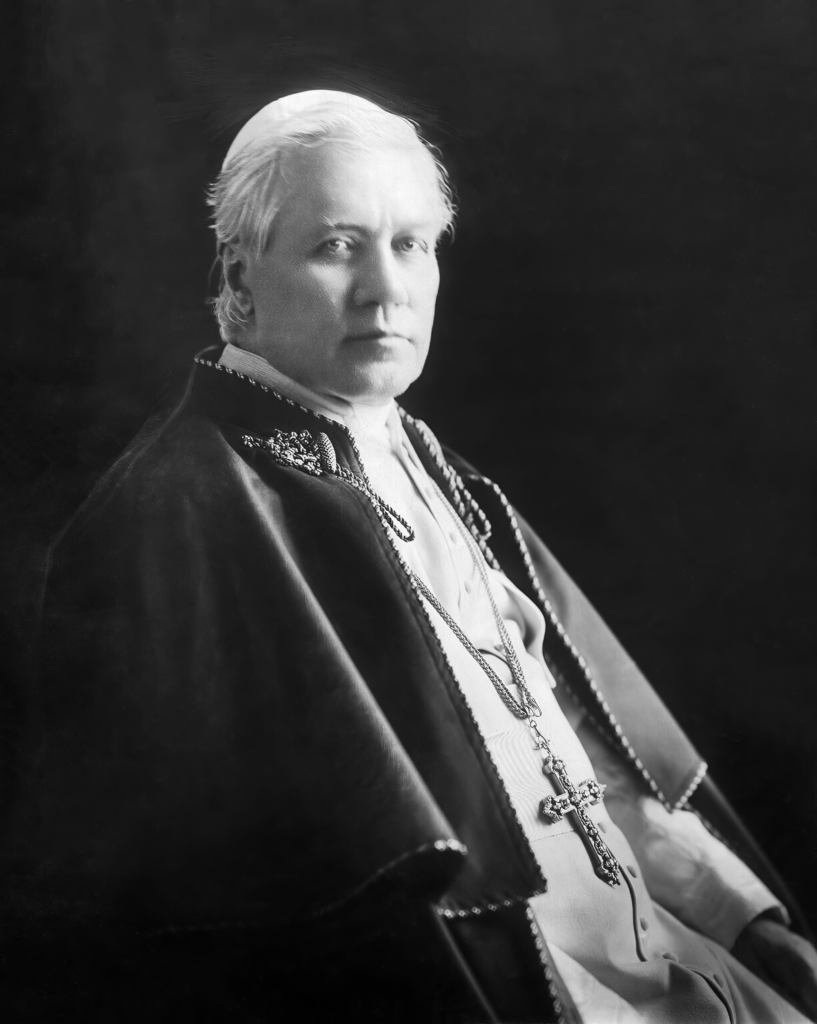
Saint Pius X, Pope
on Friday of week 20 in Ordinary Time
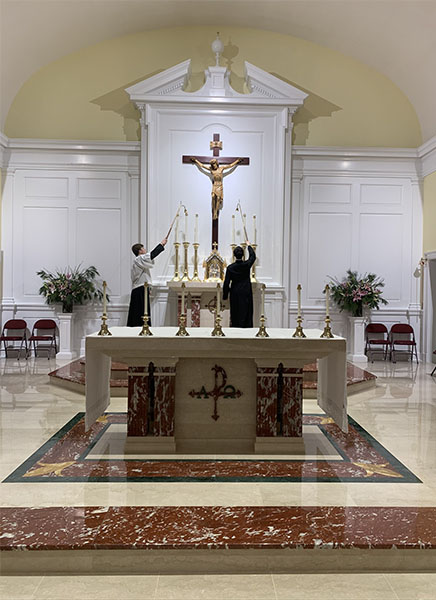
St. Pius X Church – Fairfield CTReadings at MassLiturgical Colour: White. Year: A(II). Readings for the feria Readings for the memorial These are the readings for the feria
| First reading | Ezekiel 37:1-14 |
|---|
A vision of Israel's death and resurrectionThe hand of the Lord was laid on me, and he carried me away by the spirit of the Lord and set me down in the middle of a valley, a valley full of bones. He made me walk up and down among them. There were vast quantities of these bones on the ground the whole length of the valley; and they were quite dried up. He said to me, ‘Son of man, can these bones live?’ I said, ‘You know, Lord.’ He said, ‘Prophesy over these bones. Say, “Dry bones, hear the word of the Lord. The Lord says this to these bones: I am now going to make the breath enter you, and you will live. I shall put sinews on you, I shall make flesh grow on you, I shall cover you with skin and give you breath, and you will live; and you will learn that I am the Lord.”’ I prophesied as I had been ordered. While I was prophesying, there was a noise, a sound of clattering; and the bones joined together. I looked, and saw that they were covered with sinews; flesh was growing on them and skin was covering them, but there was no breath in them. He said to me, ‘Prophesy to the breath; prophesy, son of man. Say to the breath, “The Lord says this: Come from the four winds, breath; breathe on these dead; let them live!”’ I prophesied as he had ordered me, and the breath entered them; they came to life again and stood up on their feet, a great, an immense army. Then he said, ‘Son of man, these bones are the whole House of Israel. They keep saying, “Our bones are dried up, our hope has gone; we are as good as dead.” So prophesy. Say to them, “The Lord says this: I am now going to open your graves; I mean to raise you from your graves, my people, and lead you back to the soil of Israel. And you will know that I am the Lord, when I open your graves and raise you from your graves, my people. And I shall put my spirit in you, and you will live, and I shall resettle you on your own soil; and you will know that I, the Lord, have said and done this – it is the Lord who speaks.”’
| Responsorial Psalm |
|---|
| Psalm 106(107):2-9 |
|---|
O give thanks to the Lord for he is good, for his love has no end. or Alleluia! Let them say this, the Lord’s redeemed, whom he redeemed from the hand of the foe and gathered from far-off lands, from east and west, north and south. O give thanks to the Lord for he is good, for his love has no end. or Alleluia! Some wandered in the desert, in the wilderness, finding no way to a city they could dwell in. Hungry they were and thirsty; their soul was fainting within them. O give thanks to the Lord for he is good, for his love has no end. or Alleluia! Then they cried to the Lord in their need and he rescued them from their distress and he led them along the right way, to reach a city they could dwell in. O give thanks to the Lord for he is good, for his love has no end. or Alleluia! Let them thank the Lord for his love, for the wonders he does for men: for he satisfies the thirsty soul; he fills the hungry with good things. O give thanks to the Lord for he is good, for his love has no end. or Alleluia!
| Gospel Acclamation | Ps118:18 |
|---|
Alleluia, alleluia! Open my eyes, O Lord, that I may consider the wonders of your law. Alleluia! Alleluia, alleluia! Teach me your paths, my God, make me walk in your truth. Alleluia!
The commandments of loveWhen the Pharisees heard that Jesus had silenced the Sadducees they got together and, to disconcert him, one of them put a question, ‘Master, which is the greatest commandment of the Law?’ Jesus said, ‘You must love the Lord your God with all your heart, with all your soul, and with all your mind. This is the greatest and the first commandment. The second resembles it: You must love your neighbour as yourself. On these two commandments hang the whole Law, and the Prophets also.’ Continue These are the readings for the memorial
| First reading |
|---|
| 1 Thessalonians 2:2-8 |
|---|
We were eager to hand over to you not only the Good News but our whole livesIt was our God who gave us the courage to proclaim his Good News to you in the face of great opposition. We have not taken to preaching because we are deluded, or immoral, or trying to deceive anyone; it was God who decided that we were fit to be entrusted with the Good News, and when we are speaking, we are not trying to please men but God, who can read our inmost thoughts. You know very well, and we can swear it before God, that never at any time have our speeches been simply flattery, or a cover for trying to get money; nor have we ever looked for any special honour from men, either from you or anybody else, when we could have imposed ourselves on you with full weight, as apostles of Christ. Instead, we were unassuming. Like a mother feeding and looking after her own children, we felt so devoted and protective towards you, and had come to love you so much, that we were eager to hand over to you not only the Good News but our whole lives as well.
| Responsorial Psalm |
|---|
| Psalm 88(89):2-5,21-22,25,27 |
|---|
I will sing for ever of your love, O Lord. I will sing for ever of your love, O Lord; through all ages my mouth will proclaim your truth. Of this I am sure, that your love lasts for ever, that your truth is firmly established as the heavens. I will sing for ever of your love, O Lord. ‘I have made a covenant with my chosen one; I have sworn to David my servant: I will establish your dynasty for ever and set up your throne through all ages. I will sing for ever of your love, O Lord. ‘I have found David my servant and with my holy oil anointed him. My hand shall always be with him and my arm shall make him strong. I will sing for ever of your love, O Lord. ‘My truth and my love shall be with him; by my name his might shall be exalted. He will say to me: “You are my father, my God, the rock who saves me.”’ I will sing for ever of your love, O Lord.
| Gospel Acclamation | Jn10:14 |
|---|
Alleluia, alleluia! I am the good shepherd, says the Lord; I know my own sheep and my own know me. Alleluia!
Feed my lambs, feed my sheepJesus showed himself to his disciples, and after they had eaten he said to Simon Peter, ‘Simon son of John, do you love me more than these others do?’ He answered, ‘Yes Lord, you know I love you.’ Jesus said to him, ‘Feed my lambs.’ A second time he said to him, ‘Simon son of John, do you love me?’ He replied, ‘Yes, Lord, you know I love you.’ Jesus said to him, ‘Look after my sheep.’ Then he said to him a third time, ‘Simon son of John, do you love me?’ Peter was upset that he asked him the third time, ‘Do you love me?’ and said, ‘Lord, you know everything; you know I love you.’ Jesus said to him, ‘Feed my sheep.’ Continue Universalis podcast: The week ahead – from 23 to 29 AugustSaint Augustine and Saint Monica. Our Lady of Częstochowa. The Seven Deadly Sins in Dante: 2. Envy. (24 minutes)
Episode notes.Play Christian Art Each day, The Christian Art website gives a picture and reflection on the Gospel of the day. The readings on this page are from the Jerusalem Bible, which is used at Mass in most of the English-speaking world. The New American Bible readings, which are used at Mass in the United States, are available in the Universalis apps, programs and downloads.
You can also view this page with the Gospel in Greek and English. |
TOPICS: Catholic; General Discusssion; Prayer; Worship
KEYWORDS: catholic; jn21; mt22; ordinarytime; prayer
For your reading, reflection, faith-sharing, comments, questions, discussion.
1
posted on
08/21/2026 5:35:37 AM PDT
by
annalex
To: annalex
KEYWORDS: catholic; jn21; mt22; ordinarytime; prayer
2
posted on
08/21/2026 5:36:20 AM PDT
by
annalex
(fear them not)
To: nickcarraway; NYer; ELS; Pyro7480; livius; ArrogantBustard; Catholicguy; RobbyS; marshmallow; ...

Alleluia Ping Please FReepmail me to get on/off the Alleluia Ping List.
3
posted on
08/21/2026 5:37:31 AM PDT
by
annalex
(fear them not)
To: annalex
4
posted on
08/21/2026 5:38:12 AM PDT
by
annalex
(fear them not)
To: annalex
| Matthew |
| | English: Douay-Rheims | Latin: Vulgata Clementina | Greek NT: Byzantine/Majority Text (2000) |
| | Matthew 22
|
| 34. | But the Pharisees hearing that he had silenced the Sadducees, came together: | Pharisæi autem audientes quod silentium imposuisset sadducæis, convenerunt in unum : | οι δε φαρισαιοι ακουσαντες οτι εφιμωσεν τους σαδδουκαιους συνηχθησαν επι το αυτο |
| 35. | And one of them, a doctor of the law, asking him, tempting him: | et interrogavit eum unus ex eis legis doctor, tentans eum : | και επηρωτησεν εις εξ αυτων νομικος πειραζων αυτον και λεγων |
| 36. | Master, which is the greatest commandment in the law? | Magister, quod est mandatum magnum in lege ? | διδασκαλε ποια εντολη μεγαλη εν τω νομω |
| 37. | Jesus said to him: Thou shalt love the Lord thy God with thy whole heart, and with thy whole soul, and with thy whole mind. | Ait illi Jesus : Diliges Dominum Deum tuum ex toto corde tuo, et in tota anima tua, et in tota mente tua. | ο δε ιησους εφη αυτω αγαπησεις κυριον τον θεον σου εν ολη καρδια σου και εν ολη ψυχη σου και εν ολη τη διανοια σου |
| 38. | This is the greatest and the first commandment. | Hoc est maximum, et primum mandatum. | αυτη εστιν πρωτη και μεγαλη εντολη |
| 39. | And the second is like to this: Thou shalt love thy neighbor as thyself. | Secundum autem simile est huic : Diliges proximum tuum, sicut teipsum. | δευτερα δε ομοια αυτη αγαπησεις τον πλησιον σου ως σεαυτον |
| 40. | On these two commandments dependeth the whole law and the prophets. | In his duobus mandatis universa lex pendet, et prophetæ. | εν ταυταις ταις δυσιν εντολαις ολος ο νομος και οι προφηται κρεμανται |
5
posted on
08/21/2026 5:41:19 AM PDT
by
annalex
(fear them not)
To: annalex

Catena Aurea by St. Thomas Aguinas
22:3440
34. But when the Pharisees had heard that he had put the Sadducees to silence, they were gathered together.
35. Then one of them, which was a Lawyer, asked him a question, tempting him, and saying,
36. Master, which is the great commandment in the Law?
37. Jesus said unto him, Thou shalt love the Lord thy God with all thy heart, and with all thy soul, and with all thy mind.
38. This is the first and great commandment.
39. And the second is like unto it, Thou shalt love thy neighbour as thyself.
40. On these two commandments hang all the Law and the Prophets.
JEROME. The Pharisees having been themselves already confuted (in the matter of the denarius), and now seeing their adversaries also overthrown, should have taken warning to attempt no further deceit against Him; but hate and jealousy are the parents of impudence.
ORIGEN. Jesus had put the Sadducees to silence, to shew that the tongue of falsehood is silenced by the brightness of truth. For as it belongs to the righteous man to be silent when it is good to be silent, and to speak when it is good to speak, and not to hold his) peace; so it belongs to every teacher of a the Not indeed to be silent, but to be silent as far as any good purpose is concerned.
JEROME. The Pharisees and Sadducees, thus foes to one another, unite in one common purpose to tempt Jesus.
PSEUDO-CHRYSOSTOM. Or the Pharisees meet together, that their numbers may silence Him whom their reasonings could not confute; thus, while they array numbers against Him, shewing that truth failed them; they said among themselves, Let one speak for all, and all speak, through one, so if He prevail, the victory may seem to belong to all; if He be overthrown, the defeat may rest with Him alone; so it follows, Then one of them, a teacher of the Law, asked him a question, tempting him.
ORIGEN. All who thus ask questions of any teacher to try him, and not to learn of him, we must regard as brethren of this Pharisee, according to what is said below, Inasmuch as ye have done it unto one of the least of mine, ye have done it unto me. (Matt. 25:40.)
AUGUSTINE. (de Cons. Ev. ii. 73.) Let no one find a difficulty in this, that Matthew speaks of this man as putting his question to tempt the Lord, whereas Mark does not mention this, but concludes with what the Lord said to him upon his answering wisely, Thou art not far from the kingdom of God. (Mark 12:34.) For it is possible that, though he came to tempt, yet the Lords answer may have wrought correction within him. Or, the tempting here meant need not be that of one designing to deceive an enemy, but rather the cautious approach of one making proof of a stranger. And that is not written in vain, Whoso believeth lightly, he is of a vain heart. (Ecclus. 19:4.)
ORIGEN. He said Master tempting Him, for none but a disciple would thus address Christ. Whoever then does not learn of the Word, nor yields himself wholly up to it, yet calls it Master, he is brother to this Pharisee thus tempting Christ. Perhaps while they read the Law before the Saviours coming, it was a question among them which was the great commandment in it; nor would the Pharisee have asked this, if it had not been long time enquired among themselves, but never found till Jesus came and declared it.
PSEUDO-CHRYSOSTOM. He who now enquires for the greatest commandment had not observed the least. He only ought to seek for a higher righteousness who has fulfilled the lower.
JEROME. Or he enquires not for the sake of the commands, but which is the first and great commandment, that seeing all that God commands is great, he may have occasion to cavil whatever the answer be.
PSEUDO-CHRYSOSTOM. But the Lord so answers him, as at once to lay bare the dissimulation of his enquiry, Jesus saith unto him, Thou shalt love the Lord thy God with all thy heart, with all thy soul, and with all thy mind. Thou shalt love, not fear, for to love is more than to fear; to fear belongs to slaves, to love to sons; fear is in compulsion, love in freedom. Whoso serves God in fear escapes punishment, but has not the reward of righteousness because he did well unwillingly through fear. God does not desire to be served servilely by men as a master, but to be loved as a father, for that He has given the spirit of adoption to men. But to love God with the whole heart, is to have the heart inclined to the love of no one thing more than of God. To love God again with the whole soul is to have the mind stayed upon the truth, and to be firm in the faith. For the love of the heart and the love of the soul are different. The first is in a sort carnal, that we should love God even with our flesh, which we cannot do unless we first depart from the love of the things of this world. The love of the heart is felt in the heart, but the love of the soul is not felt, but is perceived because it consists in a judgment of the soul. For he who believes that all good is in God, and that without Him is no good, he loves God with his whole soul. But to love God with the whole mind, is to have all the faculties open and unoccupied for Him. He only loves God with his whole mind, whose intellect ministers to God, whose wisdom is employed about God, whose thoughts travail in the things of God, and whose memory holds the things which are good.
AUGUSTINE. (de Doctr. Christ. i. 22.) Or otherwise; You are commanded to love God with all thy heart, that your whole thoughtswith all thy soul, that your whole lifewith all thy mind, that your whole understandingmay be given to Him from whom you have that you give. Thus He has left no part of our life which may justly be unfilled of Him, or give place to the desire after any other final good1; but if aught else present itself for the souls love, it should be absorbed into that channel in which the whole current of love runs. For man is then the most perfect when his whole life tends towards the life2 unchangeable, and clings to it with the whole purpose of his soul.
GLOSS. Or, with all thy heart, i. e. understanding; with all thy soul, i.e. thy will; with all thy mind, i.e. memory; so you shall think, will, remember nothing contrary to Him.
ORIGEN. Or otherwise; With all thy heart, that is, in all recollection, act, thought; with all thy soul, to be ready, that is, to lay it down for Gods religion; with all thy mind, bringing forth nothing but what is of God. And consider whether you cannot thus take the heart of the understanding, by which we contemplate things intellectual, and the mind of that by which we utter thoughts, walking as it were with the mind through each expression, and uttering it. If the Lord had given no answer to the Pharisee who thus tempted Him, we should have judged that there was no commandment greater than the rest. But when the Lord adds, This is the first and great commandment, we learn how we ought to think of the commandments, that there is a great one, and that there are less down to the least. And the Lord says not only that it is a great, but that it is the first commandment, not in order of Scripture, but in supremacy of value. They only take upon them the greatness and supremacy of this precept, who not only love the Lord their God, but add these three conditions. Nor did He only teach the first and great commandment, but added that there was a second like unto the first, Thou shall love thy neighbour as thyself. But if Whoso loveth iniquity hath hated his own soul, (Ps. 11:5.) it is manifest that he does not love his neighbour as himself, when he does not love himself.
AUGUSTINE. (de Doctr. Christ. i. 30.) It is clear that every man is to be regarded as a neighbour, because evil is to be done to no man. Further, if every one to whom we are bound to shew service of mercy, (vid. Rom. 13:10.) or who is bound to shew it to us, be rightly called our neighbour, it is manifest that in this precept are comprehended the holy Angels who perform for us those services of which we may read in Scripture. Whence also our Lord Himself would be called our neighbour; for it was Himself whom He represents as the good Samaritan, who gave succour to the man who was left half-dead by the way.
AUGUSTINE. (de Trin. viii. 6.) He that loves men ought to love them either because they are righteous, or that they may be righteous; and so also ought he to love himself either for that he is, or that he may be righteous. And thus without peril he may love his neighbour as himself.
AUGUSTINE. (de Doctr. Christ, i. 22.) But if even yourself you ought not to love for your own sake, but because of Him in whom is the rightful end of your love, let not another man be displeased that you love even him for Gods sake. Whoso then rightly loves his neighbour, ought to endeavour with him that he also with his whole heart love God.
PSEUDO-CHRYSOSTOM. But who loves man is as who loves God; for man is Gods image, wherein God is loved, as a King is honoured in his statue. For this cause this commandment is said to be like the first.
HILARY. Or otherwise; That the second command is like the first signifies that the obligation and merit of both are alike; for no love of God without Christ, or of Christ without God, can profit to salvation.
It follows, On these two commandments hang all the Law and the Prophets.
AUGUSTINE. (Quæst. Ev. i. 33.) Hang, that is, refer thither as their end.
RABANUS. For to these two commandments belongs the whole decalogue; the commandments of the first table to the love of God, those of the second to the love of our neighbour.
ORIGEN. Or, because he that has fulfilled the things that are written concerning the love of God and our neighbour, is worthy to receive from God the great reward, that he should be enabled to understand the Law and the Prophets.
AUGUSTINE. (de Trin. viii. 7.) Since there are two commandments, the love of God and the love of our neighbour, on which hang the Law and the Prophets, not without reason does Scripture put one for both; sometimes the love of God; as in that, We know that all tilings work together for good to them that love God; (Rom. 8:28.) and sometimes the love of our neighbour; as in that, All the law is fulfilled in one word, even in this, Thou shall love thy neighbour as thyself. (Gal. 5:14.) And that because if a man love his neighbour, it follows therefrom that he loves God also; for it is the selfsame affection by which we love God, and by which we love our neighbour, save that we love God for Himself, but ourselves and our neighbour for Gods sake.
AUGUSTINE. (De Doctr. Christ. i. 30. et 26.) But since the Divine substance is more excellent and higher than our nature, the command to love God is distinct from that to love our neighbour. But if by yourself, you understand your whole self, that is both your soul and your body, and in like manner of your neighbour, there is no sort of things to be loved omitted in these commands. The love of God goes first, and the rule thereof is so set out to us as to make all other loves center in that, so that nothing seems said of loving yourself. But then follows, Thou shall love thy neighbour as thyself, so that love of yourself is not omitted.
Catena Aurea Matthew 22
6
posted on
08/21/2026 5:42:32 AM PDT
by
annalex
(fear them not)
To: annalex

The Golden Altar
Iglesia de San Jose
Casco Viejo, Panama
7
posted on
08/21/2026 5:43:10 AM PDT
by
annalex
(fear them not)
To: annalex
| John |
| | English: Douay-Rheims | Latin: Vulgata Clementina | Greek NT: Byzantine/Majority Text (2000) |
| | John 21
|
| 15. | When therefore they had dined, Jesus saith to Simon Peter: Simon son of John, lovest thou me more than these? He saith to him: Yea, Lord, thou knowest that I love thee. He saith to him: Feed my lambs. | Cum ergo prandissent, dicit Simoni Petro Jesus : Simon Joannis, diligis me plus his ? Dicit ei : Etiam Domine, tu scis quia amo te. Dicit ei : Pasce agnos meos. | οτε ουν ηριστησαν λεγει τω σιμωνι πετρω ο ιησους σιμων ιωνα αγαπας με πλειον τουτων λεγει αυτω ναι κυριε συ οιδας οτι φιλω σε λεγει αυτω βοσκε τα αρνια μου |
| 16. | He saith to him again: Simon, son of John, lovest thou me? He saith to him: Yea, Lord, thou knowest that I love thee. He saith to him: Feed my lambs. | Dicit ei iterum : Simon Joannis, diligis me ? Ait illi : Etiam Domine, tu scis quia amo te. Dicit ei : Pasce agnos meos. | λεγει αυτω παλιν δευτερον σιμων ιωνα αγαπας με λεγει αυτω ναι κυριε συ οιδας οτι φιλω σε λεγει αυτω ποιμαινε τα προβατα μου |
| 17. | He said to him the third time: Simon, son of John, lovest thou me? Peter was grieved, because he had said to him the third time: Lovest thou me? And he said to him: Lord, thou knowest all things: thou knowest that I love thee. He said to him: Feed my sheep. | Dicit ei tertio : Simon Joannis, amas me ? Contristatus est Petrus, quia dixit ei tertio : Amas me ? et dixit ei : Domine, tu omnia nosti, tu scis quia amo te. Dixit ei : Pasce oves meas. | λεγει αυτω το τριτον σιμων ιωνα φιλεις με ελυπηθη ο πετρος οτι ειπεν αυτω το τριτον φιλεις με και ειπεν αυτω κυριε συ παντα οιδας συ γινωσκεις οτι φιλω σε λεγει αυτω ο ιησους βοσκε τα προβατα μου |
Two aspects of this passage do not translate well.
The first two times Christ asks "lovest thou me" using the verb "agapo", "αγαπας με", yet St. Peter responds using a different verb, "φιλω σε". The third time both Jesus and St. Peter use the second verb, "φιλεις με" -- "φιλω σε". The former verb indicates a spiritual love, and the second, friendship.
The three charges are all worded differently (the English translation only picks up two variations). "βοσκε τα αρνια μου" is "feed my lambs", "ποιμαινε τα προβατα μου" is "shepherd (guide) my sheep", and finally "βοσκε τα προβατα μου" -- "feed my sheep"
8
posted on
08/21/2026 5:46:15 AM PDT
by
annalex
(fear them not)
To: annalex
Catena Aurea by St. Thomas Aguinas
John CHAP. 21
21:15–17
15. So when they had dined, Jesus saith to Simon Peter, Simon, son of Jonas, lovest thou me more than these? He saith unto him, Yea, Lord; thou knowest that I love thee. He saith unto him, Feed my lambs.
16. He saith to him again the second time, Simon, son of Jonas, lovest thou me? He saith unto him, Yea, Lord; thou knowest that I love thee. He saith unto him, Feed my sheep.
17. He saith unto him the third time, Simon, son of Jonas, lovest thou me? Peter was grieved because he said unto him the third time, Lovest thou me? And he said unto him, Lord, thou knowest all things; thou knowest that I love thee. Jesus saith unto him, Feed my sheep.
THEOPHYLACT. The dinner being ended, He commits to Peter the superintendence over the sheep of the world, not to the others: So when they had dined, Jesus saith to Simon Peter, Simon, son of Jonas, lovest thou Me more than these?
AUGUSTINE. Our Lord asked this, knowing it: He knew that Peter not only loved Him, but loved Him more than all the rest.
ALCUIN. He is called Simon, son of John, John being his natural father. But mystically, Simon is obedience, John grace, a name well befitting him who was so obedient to God’s grace, that he loved our Lord more ardently than any of the others. Such virtue arising from divine gift, not mere human will.
AUGUSTINE. While our Lord was being condemned to death, he feared, and denied Him. But by His resurrection Christ implanted love in his heart, and drove away fear. Peter denied, because he feared to die: but when our Lord was risen from the dead, and by His death destroyed death, what should he fear? He saith unto Him, Yea, Lord; Thou knowest that I love Thee. On this confession of his love, our Lord commends His sheep to him: He saith unto him, Feed My lambs: as if there were no way of Peter’s shewing his love for Him, but by being a faithful shepherd, under the chief Shepherd.
CHRYSOSTOM. (Hom. lxxxviii. 1) That which most of all attracts the Divine love is care and love for our neighbour. Our Lord passing by the rest, addresses this command to Peter: he being the chief of the Apostles, the mouth of the disciples, and head of the college. Our Lord remembers no more his sin in denying Him, or brings that as a charge against him, but commits to him at once the superintendence over his brethren. If thou lovest Me, have rule over thy brethren, shew forth that love which thou hast evidenced throughout, and that life which thou saidst thou wouldest lay down for Me, lay down for the sheep.
He saith to him again the second time, Simon, son of Jonas, lovest thou Me? He saith unto Him, Yea, Lord; Thou knowest that I love Thee.
AUGUSTINE. (Tract. cxxii) Well doth He say to Peter, Lovest thou Me (ἀγαπᾶς diligis), and Peter answer, Amo Te (φελῶ amo), and our Lord replies again, Feed My lambs. Whereby, it appears that amor and dilectio are the same thing: especially as our Lord the third time He speaks does not say, Diligis Me, but Amas Me. He saith unto him the third time, Simon, son of Jonas, lovest thou Me? A third time our Lord asks Peter whether he loves Him. Three confessions are made to answer to the three denials; that the tongue might shew as much love as it had fear, and life gained draw out the voice as much as death threatened.
CHRYSOSTOM. (Hom. lxxxviii) A third time He asks the same question, and gives the same command; to shew of what importance He esteems the superintendence of His own sheep, and how He regards it as the greatest proof of love to Him.
THEOPHYLACT. Thence is taken the custom of threefold confession in baptism.
CHRYSOSTOM. (Hom. lxxxviii) The question asked for the third time disturbed him: Peter was grieved because He said unto him the third time, Lovest thou Me? He was afraid perhaps of receiving a reproof again for professing to love more than he did. So he appeals to Christ Himself: And he said unto Him, Lord, Thou knowest all things, i. e. the secrets of the heart, present and to come.
AUGUSTINE. (de Verb. Dom. serm. 50) He was grieved because he was asked so often by Him Who knew what He asked, and gave the answer. He replies therefore from his inmost heart; Thou knowest that I love Thee.
AUGUSTINE. (Tract. cxxiv) He says no more, He only replies what he knew himself; he knew he loved Him; whether any else loved Him he could not tell, as he could not see into another’s heart: (non occ.). Jesus saith unto him, Feed My sheep; as if to say, Be it the office of love to feed the Lord’s flock, as it was the resolution of fear to deny the Shepherd.
THEOPHYLACT. There is a difference perhaps between lambs and sheep. The lambs are those just initiated, the sheep are the perfected.
ALCUIN. To feed the sheep is to support the believers in Christ from falling from the faith, to provide earthly sustenance for those under us, to preach and exemplify withal our preaching by our lives, to resist adversaries, to correct wanderers.
AUGUSTINE. (Tract. cxxiii) They who feed Christ’s sheep, as if they were their own, not Christ’s, shew plainly that they love themselves, not Christ; that they are moved by lust of glory, power, gain, not by the love of obeying, ministering, pleasing God. Let us love therefore, not ourselves, but Him, and in feeding His sheep, seek not our own, but the things which are His. For whoso loveth himself, not God, loveth not himself: man that cannot live of himself, must die by loving himself; and he cannot love himself, who loves himself to his own destruction. Whereas when He by Whom we live is loved, we love ourselves the more, because we do not love ourselves; because we do not love ourselves in order that we may love Him by Whom we live.
AUGUSTINE. (Serm. Pass.) But unfaithful servants arose, who divided Christ’s flock, and handed down the division to their successors: and you hear them say, Those sheep are mine, what seekest thou with my sheep, I will not let thee come to my sheep. If we call our sheep ours, as they call them theirs, Christ hath lost His sheep.
21:18–19
18. Verily, verily, I say unto thee, When thou wast young, thou girdedst thyself, and walkedst whither thou wouldest: but when thou shalt be old, thou shalt stretch forth thy hands, and another shall gird thee, and carry thee whither thou wouldest not.
19. This spake he, signifying by what death he should glorify God.
CHRYSOSTOM. (Hom. lxxxvii) Our Lord having made Peter declare his love, informs him of his future martyrdom; an intimation to us how we should love: Verily, verily, I say unto thee, When thou wast young, thou girdedst thyself, and walkedst whither thou wouldest. He reminds him of his former life, because, whereas in worldly matters a young man has powers, an old man none; in spiritual things, on the contrary, virtue is brighter, manliness stronger, in old age; age is no hindrance to grace. Peter had all along desired to share Christ’s dangers; so Christ tells him, Be of good cheer; I will fulfil thy desire in such a way, that what thou hast not suffered when young, thou shalt suffer when old: But when thou art old. Whence it appears, that he was then neither a young nor an old man, but in the prime of life.
ORIGEN. (super. Matt.) It is not easy to find any ready to pass at once from this life; and so he says to Peter, When thou art old, thou shalt stretch forth thy hand.
AUGUSTINE. (Tract. cxxiii. 5) That is, shalt be crucified. And to come to this end, Another shall gird thee, and carry thee whither thou wouldest not. First He said what would come to pass, secondly, how it would come to pass. For it was not when crucified, but when about to be crucified, that he was led whither he would not. He wished to be released from the body, and be with Christ; but, if it were possible, he wished to attain to eternal life without the pains of death: to which he went against his will, but conquered by the force of his will, and triumphing over the human feeling, so natural a one, that even old age could not deprive Peter of it. But whatever be the pain of death, it ought to be conquered by the strength of love for Him, Who being our life, voluntarily also underwent death for us. For if there is no pain in death, or very little, the glory of martyrdom would not be great.
CHRYSOSTOM. (Hom. lxxxviii) He says, Whither thou wouldest not, with reference to the natural reluctance of the soul to be separated from the body; an instinct implanted by God to prevent men putting an end to themselves. Then raising the subject, the Evangelist says, This spake He, signifying by what death he should glorify God: not, should die: he expresses himself so, to intimate that to suffer for Christ was the glory of the sufferer. (non occ.). But unless the mind is persuaded that He is very God, the sight of Him can in no way enable us to endure death. Wherefore the death of the saints is certainty of divine glory.
AUGUSTINE. (Tract. cxxiii) He who denied and loved, died in perfect love for Him, for Whom he had promised to die with wrong haste. It was necessary that Christ should first die for Peter’s salvation, and then Peter die for Christ’s Gospel.
Catena Aurea John 21
9
posted on
08/21/2026 5:48:21 AM PDT
by
annalex
(fear them not)
To: annalex
.jpg)
Christ's Charge to Peter
Raphael
1515
Distemper on paper, canvas backing, approx. 3 yd x 5 yd
(cartoon for a tapestry)
Victoria and Albert Museum, London
10
posted on
08/21/2026 5:49:35 AM PDT
by
annalex
(fear them not)
To: annalex
Saint of the Day for August 21
(June 2, 1835 – August 20, 1914)
Saint Pius X’s Story
Pope Pius X is perhaps best remembered for his encouragement of the frequent reception of Holy Communion, especially by children.
The second of 10 children in a poor Italian family, Joseph Sarto became Pius X at age 68. He was one of the 20th century’s greatest popes.
Ever mindful of his humble origin, Pope Pius stated, “I was born poor, I lived poor, I will die poor.” He was embarrassed by some of the pomp of the papal court. “Look how they have dressed me up,” he said in tears to an old friend. To another, “It is a penance to be forced to accept all these practices. They lead me around surrounded by soldiers like Jesus when he was seized in Gethsemani.”
Interested in politics, Pope Pius encouraged Italian Catholics to become more politically involved. One of his first papal acts was to end the supposed right of governments to interfere by veto in papal elections—a practice that reduced the freedom of the 1903 conclave which had elected him.
In 1905, when France renounced its agreement with the Holy See and threatened confiscation of Church property if governmental control of Church affairs were not granted, Pius X courageously rejected the demand.
While Saint Pius X did not author a famous social encyclical as his predecessor had done, he denounced the ill treatment of indigenous peoples on the plantations of Peru, sent a relief commission to Messina after an earthquake, and sheltered refugees at his own expense.
On the 11th anniversary of his election as pope, Europe was plunged into World War I. Saint Pius X had foreseen it, but it killed him. “This is the last affliction the Lord will visit on me. I would gladly give my life to save my poor children from this ghastly scourge.” He died a few weeks after the war began, and was canonized in 1954.
Reflection
His humble background was no obstacle in relating to a personal God and to people whom he loved genuinely. Saint Pius X gained his strength, his gentleness and warmth for people from the source of all gifts, the Spirit of Jesus. In contrast, we often feel embarrassed by our backgrounds. Shame makes us prefer to remain aloof from people whom we perceive as superior. If we are in a superior position, on the other hand, we often ignore simpler people. Yet we, too, have to help “restore all things in Christ,” especially the wounded people of God.
franciscanmedia.org
11
posted on
08/21/2026 5:53:41 AM PDT
by
annalex
(fear them not)
To: annalex
12
posted on
08/21/2026 5:55:46 AM PDT
by
annalex
(fear them not)
To: All
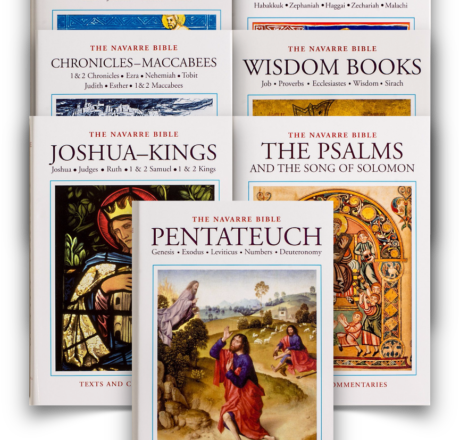
NAVARRE BIBLE COMMENTARY(RSV)
Ad Majorem Dei Gloriam (To the Greater Glory of God)
Today’s First Reading
From: Ezekiel 37:1-14
The dry bones
---------------------
[1] The hand of the Lord was upon me, and he brought me out by the Spirit of the Lord, and set me down in the midst of the valley; it was full of bones. [2] And he led me round among them; and behold, there were very many upon the valley; and lo, there were very dry. And he said to me, "Son of man, can these bones live?" And I answered, "O Lord God, thou knowest." Again he said to me, "Prophesy to these bones, and say to them, O dry bones, hear the word of the Lord. Thus says the Lord God to these bones: Behold, I will cause breath to enter you, and you shall live. [6] And I will lay sinews upon you, and will cause flesh to come upon you, and cover you with skin, and put breath in you, and you shall live; and you shall know that I am the Lord."
[7] So I prophesied as I was commanded; and as I prophesied, there was a noise, and behold, a rattling; and the bones came together, bone to its bone. [8] And as I looked, there were sinews on them, and flesh had come upon them, and skin had covered them; but there was no breath in them. [9] Then he said to me, "Prophesy to the breath, prophesy, son of man, and say to the breath, Thus says the Lord God: Come from the four winds, O breath, and breathe upon these slain, that they may live." [10] So I prophesied as he commanded me, and the breath came into them, and they lived, and stood upon their feet, an exceedingly great host.
[11] Then he said to me, "Son of man, these bones are the whole house of Israel. Behold, they say, 'Our bones are dried up, and our hope is lost; we are clean cut off.' [12] Therefore prophesy, and say to them, Thus says the Lord God: Behold, I will open their graves, and raise you from your graves, O my people; and I will bring you home into the land of Israel. [13] And you shall know that I am the Lord, when I open your graves, and raise you from your graves, O my people. [14] And I will put my Spirit within you, and you shall live, and I will place you in your own land; then you shall know that I, the Lord, have spoken, and I have done it, says the Lord."
*********************************************************
Commentary:
37:1-14. This remarkable vision of the bones being brought back to life sets the scene for the climax of the resurgence of Israel, the unification of the two kingdoms (cf. 37:15-28). The dramatic contrast drawn here between death and life, bones and spirit, shows that the revitalization that God will bring about goes much further than material reconstruction or simply a return to the promised land; it implies, rather, a new beginning, both personal and social.
The vision itself (vv. 2-10) takes place on an immense plain (cf. 3:22-23) and it addresses the exiles' profound concern about their future: "Our bones are dried up, and our hope is lost" (v. 11). It is one of Ezekiel's most famous and most commented-on visions because it is very vivid and easy to understand. The prophet himself explains it as having to do with the destruction-restoration of Israel (vv. 11-14), though the Fathers of the Church see in it veiled references to the resurrection of the dead: "The Creator will revive our mortal bodies here on earth; he promises resurrection, the opening of sepulchers and tombs, and the gift of immortality […]. And in all this, we see that he alone is God, who can do all things, the good Father who from his endless bounty will give life to the lifeless" (St Irenaeus, Adversus haereses, 5, 15, 1). St Jerome writes in similar terms: "The image of the resurrection would not have been used to describe the restoration of the people of Israel if the future resurrection of the dead had not been foreseen, because no one can be led to draw a conclusion from an idea that has no basis is reality" (“Commentarii in Ezechielem,” 27, 1ff.
"I will put my Spirit within you" (v. 14). The spirit of the Lord is, at least, the power of God (cf. Gen 2:7) performing an act of creation. It is also the principle of life causing man to "become a living being" (Gen 2:7); and, certainly, it is the principle of supernatural life. The same God that created all things can revitalize his demoralized people in Babylon and can allow humankind to partake of his own life. This promise, like others found in the prophets (cf. 11:19; Jer 31:31-34; Joel 3:1-5) will find its complete fulfillment at Pentecost, when the Spirit descends on the apostles: "According to these promises, at the 'end time' the Lord's Spirit will renew the hearts of men, engraving a new law in them. He will gather and reconcile the scattered and divided peoples; he will transform the first creation, and God will dwell there with men in peace" (“Catechism of the Catholic Church,” 715).
13
posted on
08/21/2026 8:39:05 AM PDT
by
fidelis
(Ecce Crucem Domini! Fugite partes adversae! Vicit Leo de tribu Juda, Radix David! Alleluia!)
Today’s Gospel Reading From: Matthew 22:34-40
The Greatest Commandment of All
---------------------------------------------
[34] But when the Pharisees heard that He (Jesus) had silenced the Sadducees, they came together. [35] And one of them, a lawyer, asked Him a question, to test Him. [36] "Teacher, which is the greatest commandment in the law?" [37] And He said to him, "You shall love the Lord your God with all your heart, and with all your soul, and with all your mind. [38] This is the great and first commandment. [39] And a second is like it, You shall love your neighbor as yourself. [40] On these two commandments depend all the law and the prophets."
***********************************************************************
Commentary:
34-40. In reply to the question, our Lord points out that the whole law can be condensed into two commandments: the first and more important consists in unconditional love of God; the second is a consequence and result of the first, because when man is loved, St. Thomas says, God is loved, for man is the image of God (cf. "Commentary on St. Matthew", 22:4).
A person who genuinely loves God also loves his fellows because he realizes that they are his brothers and sisters, children of the same Father, redeemed by the same blood of our Lord Jesus Christ: "this commandment we have from Him, that he who loves God should love his brother also" (1 John 4:21). However, if we love man for man's sake without reference to God, this love will become an obstacle in the way of keeping the first commandment, and then it is no longer genuine love of our neighbor. But love of our neighbor for God's sake is clear proof that we love God: "If anyone says, `I love God', but hates his brother, he is a liar" (1 John 4:20).
"You shall love your neighbor as yourself": here our Lord establishes as the guideline for our love of neighbor the love each of us has for himself; both love of others and love of self are based on love of God. Hence, in some cases it can happen that God requires us to put our neighbor's need before our own; in others, not: it depends on what value, in the light of God's love, needs to be put on the spiritual and material factors involved.
Obviously spiritual goods take absolute precedence over material ones, even over life itself. Therefore, spiritual goods, be they our own or our neighbor's, must be the first to be safeguarded. If the spiritual good in question is the supreme one of the salvation of the soul, no one is justified in putting his own soul into certain danger of being condemned in order to save another, because given human freedom we can never be absolutely sure what personal choice another person may make: this is the situation in the parable (cf. Matthew 25:1-13), where the wise virgins refuse to give oil to the foolish ones; similarly St. Paul says that he would wish himself to be rejected if that could save his brothers (cf. Romans 9:3)--an unreal theoretical situation. However, what is quite clear is that we have to do all we can to save our brothers, conscious that, if someone helps to bring a sinner back to the Way, he will save himself from eternal death and cover a multitude of his own sins (James 5:20). From all this we can deduce that self-love of the right kind, based on God's love for man, necessarily involves forgetting oneself in order to love God and our neighbor for God.
37-38. The commandment of love is the most important commandment because by obeying it man attains his own perfection (cf. Colossians 3:14). "The more a soul loves," St. John of the Cross writes, "the more perfect is it in that which it loves; therefore this soul that is now perfect is wholly love, if it may thus be expressed, and all its actions are love and it employs all its faculties and possessions in loving, giving all that it has, like the wise merchant, for this treasure of love which it has found hidden in God [...]. For, even as the bee extracts from all plants the honey that is in them, and has no use for them for aught else save for that purpose, even so the soul with great facility extracts the sweetness of love that is in all the things that pass through it; it loves God in each of them, whether pleasant or unpleasant; and being, as it is, informed and protected by love, it has neither feeling nor taste nor knowledge of such things, for, as we have said, the soul knows naught but love, and its pleasure in all things and occupations is ever, as we have said, the delight of the love of God" ("Spiritual Canticle", Stanza 27, 8).
14
posted on
08/21/2026 8:39:25 AM PDT
by
fidelis
(Ecce Crucem Domini! Fugite partes adversae! Vicit Leo de tribu Juda, Radix David! Alleluia!)
15
posted on
08/21/2026 8:40:16 AM PDT
by
fidelis
(Ecce Crucem Domini! Fugite partes adversae! Vicit Leo de tribu Juda, Radix David! Alleluia!)
Disclaimer:
Opinions posted on Free Republic are those of the individual
posters and do not necessarily represent the opinion of Free Republic or its
management. All materials posted herein are protected by copyright law and the
exemption for fair use of copyrighted works.
FreeRepublic.com is powered by software copyright 2000-2008 John Robinson