
Posted on 08/20/2026 9:58:56 PM PDT by fidelis
Memorial of Saint Pius X, Pope
When the Pharisees heard that Jesus had silenced the Sadducees, they gathered together, and one of them, a scholar of the law, tested him by asking, “Teacher, which commandment in the law is the greatest?” Matthew 22:34–36
Today’s Gospel takes place during the final week of Jesus’ public ministry, shortly after His triumphal entry into Jerusalem, when the crowds acclaimed Him as the Messiah, the Son of David. As the week progressed, Jesus faced an onslaught of confrontations from various religious authorities: the chief priests and elders, the Pharisees and Herodians, the Sadducees, and, in today’s passage, a scholar of the law. Notably, these groups were often at odds with one another and were deeply divided over Scripture and doctrine, especially the Pharisees and Sadducees. Yet, despite their theological disputes, they found common ground in opposing Jesus, uniting in their efforts to discredit Him and undermine His authority.
The scholar of the law who posed the question to Jesus in today’s Gospel was likely a scribe—an expert in the Mosaic Law and its interpretation within the Jewish tradition. Scribes were regarded as authoritative teachers and interpreters of the Law and were frequently consulted on religious and legal matters. Though their role included drawing up legal documents, their primary religious function was to study, teach, and apply the Law of Moses. This particular scribe approached Jesus not to learn, but to test Him—to expose Him as lacking theological credibility. Perhaps he was driven by his pride, seeing himself as far more learned in the Law than Jesus. However, as with the other attempts to trap Him during this final week, Jesus responds not only with divine wisdom but with a clarity and authority that silences His challengers and reveals the heart of the Law.
Jesus meets the question—“Teacher, which commandment in the law is the greatest?”—with a twofold answer: “You shall love the Lord, your God, with all your heart…” and “The second is like it: You shall love your neighbor as yourself.” Though Jesus was only asked which commandment was the greatest, it appears that He revealed two commandments rather than one. But did He?
Theologically speaking, Jesus not only answered the question thoroughly, He showed that love of God, love of self, and love of neighbor are so interconnected that they cannot be separated into greater or lesser categories. If you love God, this is also an act of rightly ordered self-love, which naturally leads to love of others. Hence, this apparent twofold answer presents the unity of charity, upon which “the whole law and the prophets depend.”
Reflect today on the quality and source of your love. Is your love for others rooted in your love of God? Does your love flow from time spent in prayer, from a heart purified by grace, and from a desire to glorify God above all? Seek to love not merely with emotion or obligation, but with divine charity. When you do, your relationships will not only be transformed, they will become instruments through which God touches the world.
My Lord and Source of all charity, draw me into a deep and purifying love for You—a charity that encompasses my whole heart, soul, and mind. From that divine love, pour forth Your charity on others through me, so that all that I am and everything I do may be a fulfillment of the one glorious commandment to which I am called. Jesus, I trust in You!
Please keep in mind that this is a Catholic Caucus/Devotional thread for the purpose of prayerful reflection on the Sacred Scriptures and is closed to debate of any kind. Per FR policy on Religion Caucus threads, off-topic, argumentative, and abusive comments are not allowed and will be submitted to the Mods for deletion. Thanks, and God bless you.
Today’s First Reading
From: Ezekiel 37:1-14
The dry bones
---------------------
[1] The hand of the Lord was upon me, and he brought me out by the Spirit of the Lord, and set me down in the midst of the valley; it was full of bones. [2] And he led me round among them; and behold, there were very many upon the valley; and lo, there were very dry. And he said to me, "Son of man, can these bones live?" And I answered, "O Lord God, thou knowest." Again he said to me, "Prophesy to these bones, and say to them, O dry bones, hear the word of the Lord. Thus says the Lord God to these bones: Behold, I will cause breath to enter you, and you shall live. [6] And I will lay sinews upon you, and will cause flesh to come upon you, and cover you with skin, and put breath in you, and you shall live; and you shall know that I am the Lord."
[7] So I prophesied as I was commanded; and as I prophesied, there was a noise, and behold, a rattling; and the bones came together, bone to its bone. [8] And as I looked, there were sinews on them, and flesh had come upon them, and skin had covered them; but there was no breath in them. [9] Then he said to me, "Prophesy to the breath, prophesy, son of man, and say to the breath, Thus says the Lord God: Come from the four winds, O breath, and breathe upon these slain, that they may live." [10] So I prophesied as he commanded me, and the breath came into them, and they lived, and stood upon their feet, an exceedingly great host.
[11] Then he said to me, "Son of man, these bones are the whole house of Israel. Behold, they say, 'Our bones are dried up, and our hope is lost; we are clean cut off.' [12] Therefore prophesy, and say to them, Thus says the Lord God: Behold, I will open their graves, and raise you from your graves, O my people; and I will bring you home into the land of Israel. [13] And you shall know that I am the Lord, when I open your graves, and raise you from your graves, O my people. [14] And I will put my Spirit within you, and you shall live, and I will place you in your own land; then you shall know that I, the Lord, have spoken, and I have done it, says the Lord."
*********************************************************
Commentary:
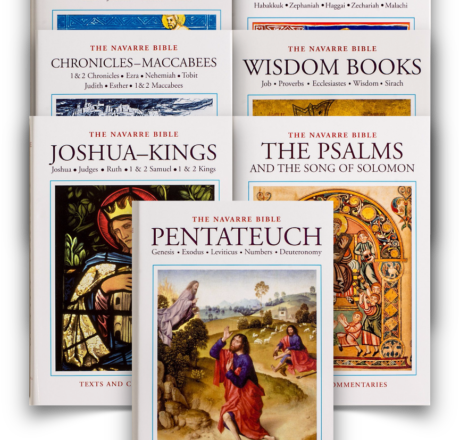
37:1-14. This remarkable vision of the bones being brought back to life sets the scene for the climax of the resurgence of Israel, the unification of the two kingdoms (cf. 37:15-28). The dramatic contrast drawn here between death and life, bones and spirit, shows that the revitalization that God will bring about goes much further than material reconstruction or simply a return to the promised land; it implies, rather, a new beginning, both personal and social.
The vision itself (vv. 2-10) takes place on an immense plain (cf. 3:22-23) and it addresses the exiles' profound concern about their future: "Our bones are dried up, and our hope is lost" (v. 11). It is one of Ezekiel's most famous and most commented-on visions because it is very vivid and easy to understand. The prophet himself explains it as having to do with the destruction-restoration of Israel (vv. 11-14), though the Fathers of the Church see in it veiled references to the resurrection of the dead: "The Creator will revive our mortal bodies here on earth; he promises resurrection, the opening of sepulchers and tombs, and the gift of immortality […]. And in all this, we see that he alone is God, who can do all things, the good Father who from his endless bounty will give life to the lifeless" (St Irenaeus, Adversus haereses, 5, 15, 1). St Jerome writes in similar terms: "The image of the resurrection would not have been used to describe the restoration of the people of Israel if the future resurrection of the dead had not been foreseen, because no one can be led to draw a conclusion from an idea that has no basis is reality" (“Commentarii in Ezechielem,” 27, 1ff.
"I will put my Spirit within you" (v. 14). The spirit of the Lord is, at least, the power of God (cf. Gen 2:7) performing an act of creation. It is also the principle of life causing man to "become a living being" (Gen 2:7); and, certainly, it is the principle of supernatural life. The same God that created all things can revitalize his demoralized people in Babylon and can allow humankind to partake of his own life. This promise, like others found in the prophets (cf. 11:19; Jer 31:31-34; Joel 3:1-5) will find its complete fulfillment at Pentecost, when the Spirit descends on the apostles: "According to these promises, at the 'end time' the Lord's Spirit will renew the hearts of men, engraving a new law in them. He will gather and reconcile the scattered and divided peoples; he will transform the first creation, and God will dwell there with men in peace" (“Catechism of the Catholic Church,” 715).
From: Matthew 22:34-40
The Greatest Commandment of All
---------------------------------------------
[34] But when the Pharisees heard that He (Jesus) had silenced the Sadducees, they came together. [35] And one of them, a lawyer, asked Him a question, to test Him. [36] "Teacher, which is the greatest commandment in the law?" [37] And He said to him, "You shall love the Lord your God with all your heart, and with all your soul, and with all your mind. [38] This is the great and first commandment. [39] And a second is like it, You shall love your neighbor as yourself. [40] On these two commandments depend all the law and the prophets."
***********************************************************************
Commentary:
34-40. In reply to the question, our Lord points out that the whole law can be condensed into two commandments: the first and more important consists in unconditional love of God; the second is a consequence and result of the first, because when man is loved, St. Thomas says, God is loved, for man is the image of God (cf. "Commentary on St. Matthew", 22:4).
A person who genuinely loves God also loves his fellows because he realizes that they are his brothers and sisters, children of the same Father, redeemed by the same blood of our Lord Jesus Christ: "this commandment we have from Him, that he who loves God should love his brother also" (1 John 4:21). However, if we love man for man's sake without reference to God, this love will become an obstacle in the way of keeping the first commandment, and then it is no longer genuine love of our neighbor. But love of our neighbor for God's sake is clear proof that we love God: "If anyone says, `I love God', but hates his brother, he is a liar" (1 John 4:20).
"You shall love your neighbor as yourself": here our Lord establishes as the guideline for our love of neighbor the love each of us has for himself; both love of others and love of self are based on love of God. Hence, in some cases it can happen that God requires us to put our neighbor's need before our own; in others, not: it depends on what value, in the light of God's love, needs to be put on the spiritual and material factors involved.
Obviously spiritual goods take absolute precedence over material ones, even over life itself. Therefore, spiritual goods, be they our own or our neighbor's, must be the first to be safeguarded. If the spiritual good in question is the supreme one of the salvation of the soul, no one is justified in putting his own soul into certain danger of being condemned in order to save another, because given human freedom we can never be absolutely sure what personal choice another person may make: this is the situation in the parable (cf. Matthew 25:1-13), where the wise virgins refuse to give oil to the foolish ones; similarly St. Paul says that he would wish himself to be rejected if that could save his brothers (cf. Romans 9:3)--an unreal theoretical situation. However, what is quite clear is that we have to do all we can to save our brothers, conscious that, if someone helps to bring a sinner back to the Way, he will save himself from eternal death and cover a multitude of his own sins (James 5:20). From all this we can deduce that self-love of the right kind, based on God's love for man, necessarily involves forgetting oneself in order to love God and our neighbor for God.
37-38. The commandment of love is the most important commandment because by obeying it man attains his own perfection (cf. Colossians 3:14). "The more a soul loves," St. John of the Cross writes, "the more perfect is it in that which it loves; therefore this soul that is now perfect is wholly love, if it may thus be expressed, and all its actions are love and it employs all its faculties and possessions in loving, giving all that it has, like the wise merchant, for this treasure of love which it has found hidden in God [...]. For, even as the bee extracts from all plants the honey that is in them, and has no use for them for aught else save for that purpose, even so the soul with great facility extracts the sweetness of love that is in all the things that pass through it; it loves God in each of them, whether pleasant or unpleasant; and being, as it is, informed and protected by love, it has neither feeling nor taste nor knowledge of such things, for, as we have said, the soul knows naught but love, and its pleasure in all things and occupations is ever, as we have said, the delight of the love of God" ("Spiritual Canticle", Stanza 27, 8).
The Month of August is Dedicated to the Immaculate Heart of Mary

“In the sixth month the angel Gabriel was sent from God to a city of Galilee named Nazareth, to a virgin betrothed to a man whose name was Joseph, of the house of David; and the virgin’s name was Mary. And he came to her and said, “Hail, full of grace, the Lord is with you!”” (Luke 1:26-28)

Pope Leo XIV’s prayer intention for the month of August, 2026:
For evangelization in the city
Let us pray that in large cities often marked by anonymity and loneliness we find new ways to proclaim the Gospel, discovering creative paths to build community.

Disclaimer: Opinions posted on Free Republic are those of the individual posters and do not necessarily represent the opinion of Free Republic or its management. All materials posted herein are protected by copyright law and the exemption for fair use of copyrighted works.


