Skip to comments.
Catholic Caucus: Daily Mass Readings 4-August-2026
Universalis/Jerusalem Bible ^
Posted on 08/04/2026 5:21:12 AM PDT by annalex
4 August 2026
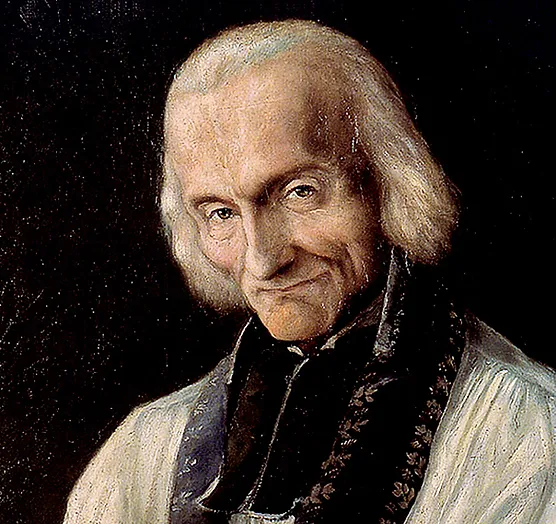
Saint John Mary Vianney, Priest
on Tuesday of week 18 in Ordinary Time
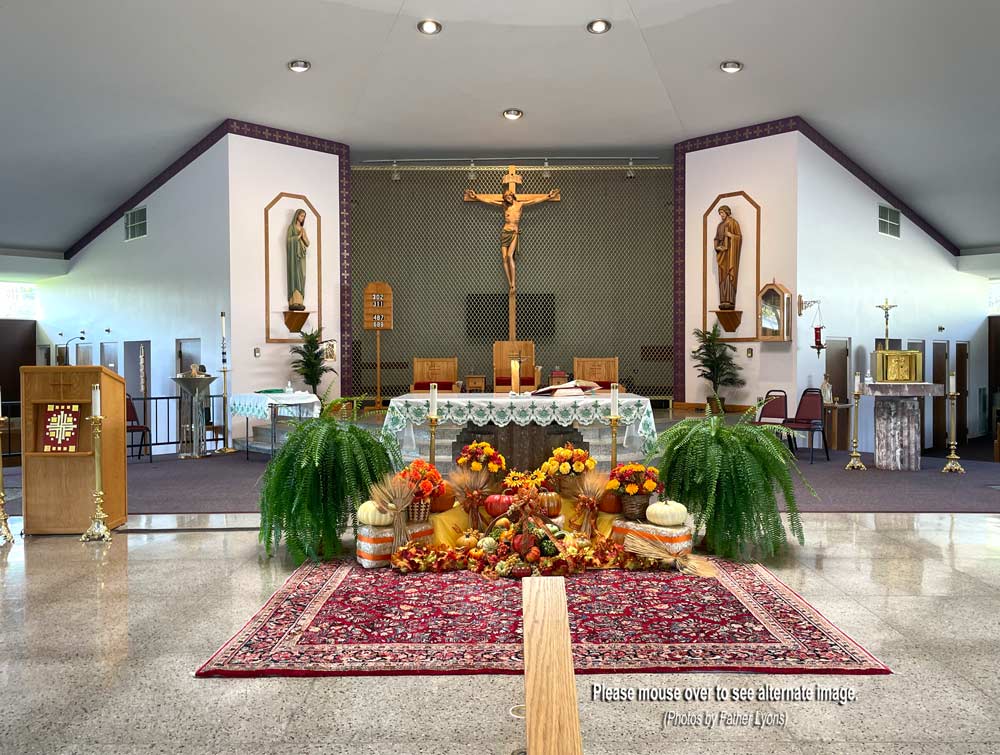
St. John Vianney Parish, Johnstown PA Readings at MassLiturgical Colour: White. Year: A(II). Readings for the feria Readings for the memorial These are the readings for the feria
| First reading |
|---|
| Jeremiah 30:1-2,12-15,18-22 |
|---|
Your wound is incurable but I will heal youThe word addressed to Jeremiah by the Lord: the Lord, the God of Israel says this: Write all the words I have spoken to you in a book. Yes, the Lord says this: Your wound is incurable, your injury past healing. There is no one to care for your sore, no medicine to make you well again. All your lovers have forgotten you, they look for you no more. Yes, I have struck you as an enemy strikes, with harsh punishment so great is your guilt, so many your sins. Why bother to complain about your wound? Your pain is incurable. So great is your guilt, so many your sins, that I have done all this to you. The Lord says this: Now I will restore the tents of Jacob, and take pity on his dwellings: the city shall be rebuilt on its ruins, the citadel restored on its site. From them will come thanksgiving and shouts of joy. I will make them increase, and not diminish them, make them honoured, and not disdained. Their sons shall be as once they were, their community fixed firm in my presence, and I will punish all their oppressors. Their prince will be one of their own, their ruler come from their own people. I will let him come freely into my presence and he can come close to me; who else, indeed, would risk his life by coming close to me? – it is the Lord who speaks. And you shall be my people and I will be your God.
| Responsorial Psalm |
|---|
| Psalm 101(102):16-21,29,22-23 |
|---|
The Lord shall build up Zion again and appear in all his glory. The nations shall fear the name of the Lord and all the earth’s kings your glory, when the Lord shall build up Zion again and appear in all his glory. Then he will turn to the prayers of the helpless; he will not despise their prayers. The Lord shall build up Zion again and appear in all his glory. Let this be written for ages to come that a people yet unborn may praise the Lord; for the Lord leaned down from his sanctuary on high. He looked down from heaven to the earth that he might hear the groans of the prisoners and free those condemned to die. The Lord shall build up Zion again and appear in all his glory. The sons of your servants shall dwell untroubled and their race shall endure before you that the name of the Lord may be proclaimed in Zion and his praise in the heart of Jerusalem, when peoples and kingdoms are gathered together to pay their homage to the Lord. The Lord shall build up Zion again and appear in all his glory.
Alleluia, alleluia! I am the light of the world, says the Lord; anyone who follows me will have the light of life. Alleluia! Alleluia, alleluia! Rabbi, you are the Son of God, you are the King of Israel. Alleluia!
| Gospel |
|---|
| Matthew 15:1-2,10-14 |
|---|
Any plant my Father has not planted will be pulled up by the rootsPharisees and scribes from Jerusalem came to Jesus and said, ‘Why do your disciples break away from the tradition of the elders? They do not wash their hands when they eat food.’ He called the people to him and said, ‘Listen, and understand. What goes into the mouth does not make a man unclean; it is what comes out of the mouth that makes him unclean.’ Then the disciples came to him and said, ‘Do you know that the Pharisees were shocked when they heard what you said?’ He replied, ‘Any plant my heavenly Father has not planted will be pulled up by the roots. Leave them alone. They are blind men leading blind men; and if one blind man leads another, both will fall into a pit.’ Continue These are the readings for the memorial
| First reading | Ezekiel 3:17-21 |
|---|
Warn the wicked man, and you will liveThe word of the Lord was addressed to me as follows, ‘Son of man, I have appointed you as sentry to the House of Israel. Whenever you hear a word from me, warn them in my Name. If I say to a wicked man, “You are to die,” and you do not warn him; if you do not speak and warn him to renounce his evil ways and so live, then he shall die for his sin, but I will hold you responsible for his death. If, however, you do warn a wicked man and he does not renounce his wickedness and his evil ways, then he shall die for his sin, but you yourself will have saved your life. When the upright man renounces his integrity to do evil and I set a trap for him, he too shall die; since you failed to warn him, he shall die for his sin and the integrity he practised will no longer be remembered; but I will hold you responsible for his death. If, however, you warn the upright man not to sin and he abstains from sinning, he shall live, thanks to your warning, and you too will have saved your life.’
| Responsorial Psalm |
|---|
| Psalm 116(117):1-2 |
|---|
Go out to the whole world; proclaim the Good News. or Alleluia! O praise the Lord, all you nations, acclaim him all you peoples! Go out to the whole world; proclaim the Good News. or Alleluia! Strong is his love for us; he is faithful for ever. Go out to the whole world; proclaim the Good News. or Alleluia!
Alleluia, alleluia! The Lord has sent me to bring the good news to the poor, to proclaim liberty to captives. Alleluia!
The harvest is rich but the labourers are fewJesus made a tour through all the towns and villages, teaching in their synagogues, proclaiming the Good News of the kingdom and curing all kinds of diseases and sickness. And when he saw the crowds he felt sorry for them because they were harassed and dejected, like sheep without a shepherd. Then he said to his disciples, ‘The harvest is rich but the labourers are few, so ask the Lord of the harvest to send labourers to his harvest.’ He summoned his twelve disciples, and gave them authority over unclean spirits with power to cast them out and to cure all kinds of diseases and sickness. Continue Christian Art Each day, The Christian Art website gives a picture and reflection on the Gospel of the day. The readings on this page are from the Jerusalem Bible, which is used at Mass in most of the English-speaking world. The New American Bible readings, which are used at Mass in the United States, are available in the Universalis apps, programs and downloads.
You can also view this page with the Gospel in Greek and English. |
TOPICS: Catholic; General Discusssion; Prayer; Worship
KEYWORDS: catholic; mt15; mt9; ordinarytime; prayer
For your reading, reflection, faith-sharing, comments, questions, discussion.
1
posted on
08/04/2026 5:21:12 AM PDT
by
annalex
To: All
KEYWORDS: catholic; mt15; mt9; ordinarytime; prayer;
Liturgical Colour: White
2
posted on
08/04/2026 5:23:06 AM PDT
by
annalex
(fear them not)
To: nickcarraway; NYer; ELS; Pyro7480; livius; ArrogantBustard; Catholicguy; RobbyS; marshmallow; ...

Alleluia Ping Please FReepmail me to get on/off the Alleluia Ping List.
3
posted on
08/04/2026 5:23:55 AM PDT
by
annalex
(fear them not)
To: annalex
4
posted on
08/04/2026 5:24:23 AM PDT
by
annalex
(fear them not)
To: annalex
| Matthew |
| | English: Douay-Rheims | Latin: Vulgata Clementina | Greek NT: Byzantine/Majority Text (2000) |
| | Matthew 15
|
| 1. | THEN came to him from Jerusalem scribes and Pharisees, saying: | Tunc accesserunt ad eum ab Jerosolymis scribæ et pharisæi, dicentes : | τοτε προσερχονται τω ιησου οι απο ιεροσολυμων γραμματεις και φαρισαιοι λεγοντες |
| 2. | Why do thy disciples trangress the tradition of the ancients? For they wash not their hands when they eat bread. | Quare discipuli tui transgrediuntur traditionem seniorum ? non enim lavant manus suas cum panem manducant. | δια τι οι μαθηται σου παραβαινουσιν την παραδοσιν των πρεσβυτερων ου γαρ νιπτονται τας χειρας αυτων οταν αρτον εσθιωσιν |
| [...] |
| 10. | And having called together the multitudes unto him, he said to them: Hear ye and understand. | Et convocatis ad se turbis, dixit eis : Audite, et intelligite. | και προσκαλεσαμενος τον οχλον ειπεν αυτοις ακουετε και συνιετε |
| 11. | Not that which goeth into the mouth defileth a man: but what cometh out of the mouth, this defileth a man. | Non quod intrat in os, coinquinat hominem : sed quod procedit ex ore, hoc coinquinat hominem. | ου το εισερχομενον εις το στομα κοινοι τον ανθρωπον αλλα το εκπορευομενον εκ του στοματος τουτο κοινοι τον ανθρωπον |
| 12. | Then came his disciples, and said to him: Dost thou know that the Pharisees, when they heard this word, were scandalized? | Tunc accedentes discipuli ejus, dixerunt ei : Scis quia pharisæi audito verbo hoc, scandalizati sunt ? | τοτε προσελθοντες οι μαθηται αυτου ειπον αυτω οιδας οτι οι φαρισαιοι ακουσαντες τον λογον εσκανδαλισθησαν |
| 13. | But he answering them, said: Every plant which my heavenly Father hath not planted, shall be rooted up. | At ille respondens ait : Omnis plantatio, quam non plantavit Pater meus cælestis, eradicabitur. | ο δε αποκριθεις ειπεν πασα φυτεια ην ουκ εφυτευσεν ο πατηρ μου ο ουρανιος εκριζωθησεται |
| 14. | Let them alone: they are blind, and leaders of the blind. And if the blind lead the blind, both will fall into the pit. | Sinite illos : cæci sunt, et duces cæcorum ; cæcus autem si cæco ducatum præstet, ambo in foveam cadunt. | αφετε αυτους οδηγοι εισιν τυφλοι τυφλων τυφλος δε τυφλον εαν οδηγη αμφοτεροι εις βοθυνον πεσουνται |
5
posted on
08/04/2026 5:27:13 AM PDT
by
annalex
(fear them not)
To: annalex
1. Then came to Jesus scribes and Pharisees, which were of Jerusalem, saying,
2. Why do your disciples transgress the tradition of the elders? for they wash not their hands when they eat bread.
RABAN; The men of Gennezareth and the less reamed believe; but they who seem to be wise come to dispute with Him; according to that, you have hid these things from the wise and prudent, and has revealed them to babes. Whence it is said, Then came to him from Jerusalem Scribes and Pharisees.
AUG; The Evangelist thus constructs the order of his narrative, Then came to him, that, as appeared in the passage over the lake, the order of the events that followed that might be shown.
CHRYS; For this reason also the Evangelist marks the time that He may show their iniquity overcome by nothing; for they came to Him at a time when He had wrought many miracles, when He had healed the sick by the touch of His hem. That the Scribes and Pharisees are here said to have come from Jerusalem, it should be known that they were dispersed through all the tribes, but those that dwelt in the Metropolis were worse than the others, their higher dignity inspiring them with a greater degree of pride.
REMIG; They were faulty for two reasons ; because they had come from Jerusalem, from the holy city; and because they were elders of the people, and doctors of the Law, and had not come to learn but to reprove the Lord; for it is added, saying, Why do your disciples transgress the tradition of the elders?
JEROME; Wonderful infatuation of the Pharisees and Scribes! They accuse the Son of God that He does not keep the traditions and commandments of men.
CHRYS; Observe, how they are taken in their own question. They say not, 'Why do they transgress the Law of Moses?' but, the tradition of the elders; whence it is manifest that the Priests had introduced many new things, although Moses had said, you shall not add ought to the word which I set before you this day, neither shall you take ought away from it; and when they ought to have been set free from observances, then they bound themselves by many more; fearing lest any should take away their rule and power, they sought to increase the awe in which they were held, by setting themselves forth as legislators.
REMIG; Of what kind these traditions were, Mark shows when he says, The Pharisees and all the Jews, except they wash their hands oft, eat not. Here then also they find fault with the disciples, saying, For they wash not their hands when they eat bread.
BEDE; Taking carnally those words of the Prophets, in which it is said, Wash, and be you clean, they observed it only in washing the body; hence they had laid it down that we ought not to eat with unwashed hands.
JEROME; But the hands that are to be washed are the acts not of the body, but of the mind; that the word of God may be done in them.
CHRYS; But the disciples now did not eat with washed hands, because they already despise all things superfluous, and attended only to such as were necessary; thus they accepted neither washing nor not washing as a rule, but did either as it happened. For how should they who even neglected the food that was necessary for them, have any care about this rite?
REMIG; Or the Pharisees found fault with the Lord's disciples, not concerning that washing which we do from ordinary habit, and of necessity, but of that superfluous washing which was invented by the tradition of the elders.
10. And he called the multitude, and said to them, Hear, and understand:
11. Not that which goes into the mouth defiles a man; but that which comes out of the mouth, this defiles a man.
CHRYS; Having added weight to His accusation of the Pharisees by the testimony of the Prophet, and not having amended them, He now ceases to speak to them, and turns to the multitudes, And he called the multitude, and said to them, Hear and understand. Because He was about to set before them a high dogma, and full of much philosophy, He does not utter it nakedly, but so frames His speech that it should be received by them.
First, by exhibiting anxiety on their account, which the Evangelist expresses by the words, And he called the multitude to him. Secondly, the time He chooses recommends His speech; after the victory He has just gained over the Pharisees. And He not merely calls the multitude to Him, but rouses their attention by the words, Hear and understand; that is, Attend, and give your minds to what you are to hear. But He said not to them, The observance of meats is nothing; nor, Moses bade you wrongly; but in the way of warning and advice, drawing His testimony from natural things; Not what enters in at the mouth defiles a man, but what goes forth of the mouth that defiles a man.
JEROME; The word here 'makes a man common' is peculiar to Scripture, and is not hackneyed in common parlance. The Jewish nation, boasting themselves to be a part of God, call those meats common, of which all men partake; for example, swine's flesh, shell fish, hares, and those species of animals that do not divide the hoof, and chew the cud, and among the fish such as have not scales. Hence in the Acts of the Apostles we read, What God has cleansed, that call not you common. Common then in this sense is that which is free to the rest of mankind, and as though not in part of God, is therefore called unclean.
AUG; This declaration of the Lord, Not that which enters into the mouth defiles a man, is not contrary to the Old Testament. As the Apostle also speaks, To the pure all things are pure; and Every creature of God, is good. Let the Manicheans understand, if they can, that the Apostle said this of the very natures and qualities of things; while that letter (of the ritual law) declared certain animals unclean, not in their nature but typically, for certain figures which were needed for a time.
Therefore to take an instance in the swine and the lamb, by nature both are clean, because naturally every creature of God is good; but in a certain typical meaning the lamb is clean, and the swine unclean. Take the two words, 'fool,' and 'wise,' in their own nature, as sounds, or letters, both of them are pure, but one of them because of the meaning attached to it, not because of any thing in its own nature may be said to be impure. And perhaps what the swine are in typical representation, that among mankind is the fool; and the animal, and this word of two syllables (stultus) signify someone and the same thing.
That animal is reckoned unclean in the law because it does not chew the cud; but this is not its fault but its nature. But the men of whom this animal is the emblem, are impure by their own fault, not by nature; they readily hear the words of wisdom, but never think upon them again. Whatever of profit you may hear, to summon this up from the internal region of the memory through the sweetness of recollection into the mouth of thought, what is this but spiritually to chew the cud? They who do not this are represented by this species of animal.
Such resemblances as these in speech, or in ceremonies, having figurative signification, profitably and pleasantly move the rational mind; but by the former people, many such things were not only to be heard, but to be kept as precepts. For that was a time when it is necessary not in words only, but in deeds, to prophesy those things which hereafter were to be revealed. When these had been revealed through Christ, and in Christ, the burdens of observances were not imposed on the faith of the Gentiles; but the authority of the prophecy was yet confirmed. But I ask of the Manicheans, whether this declaration of the Lord, when He said that a man is not defiled by what enters into his mouth, is true or false? If false, why then does their doctor Adimantus bring it forward against the Old Testament? If true, why contrary to its tenor do they consider that they are thus defiled?
JEROME; The thoughtful reader may here object and say, If that which enters into the mouth defiles not a man, why do we not feed on meats offered to idols? Be it known then that meats and every creature of God is in itself clean; but the invocation of idols and demons makes them unclean with those at least who with conscience of the idol eat that which is offered to idols; and their conscience being weak is polluted, as the Apostle says.
REMIG; But if any one's faith be so strong that he understands that God's creature can in no way be defiled, let him eat what he will, after the food has been hallowed by the word of God and of prayer; yet so that this his liberty be not made au offense to the weak, as the Apostle speaks.
12. Then came his disciples, and said to him, Did you know that the Pharisees were offended, after they heard this saying?
13. But he answered and said, Every plant, which my heavenly Father has not planted, shall be rooted up.
14. Let them alone: they be blind leaders of the blind. And if the blind lead the blind, both shall fall into the ditch.
JEROME; In one of the Lord's discourses the whole superstition of Jewish observances had been cut down. They placed their whole religion in using or abstaining from certain meats.
CHRYS; When the Pharisees heard the things that went before, they made no reply to them, because He had so mightily overthrown them, not only refuting their arguments, but detecting their fraud, but they, not the multitudes, were offended at them; Then came his disciples to him and said, did you know that the Pharisees were offended after they heard this saying?
JEROME; As this word 'scandalum' (offense or stumbling block) is of such frequent use in ecclesiastical writings, we will shortly explain it. We might render it in Latin, 'offendiculum,' or 'ruina,' or 'impactio;' and so when we read, Whosoever shall scandalize, we understand, Who by word or deed has given an occasion of falling to any.
CHRYS; Christ does not remove the stumbling block out of the way of the Pharisees, but rather rebukes them; as it follows, But he answered and said, Every plant which my heavenly Father has not planted shall be rooted up. This Manichaeus affirmed was spoken of the Law, but what has been already said is a sufficient refutation of this. For if He had said this of the Law, how would He have above contended for the Law, easing, Why transgress you the commandment of God through your tradition? Or would He have cited the Prophet? Or how, if God said, Honor your father and your mother, is not this, being spoken in the Law, a plant of God?
HILARY; What He intends then by a plant not planted of Hid Father, is that tradition of men under cover of which the Law had been transgressed, this He instructs them must be rooted up.
REMIG; Every false doctrine and superstitious observance with the workers thereof cannot endure; and because it is not from God the Father, it shall be rooted up with the same. And that only shall endure which is of God.
JEROME; Shall that plant also be rooted up of which the Apostle says, I planted, Apollos watered? The question is answered by what follows, but God gave the increase. He says also, you are God's husbandry a building of God; and in another place, We are workers together of God. And if when Paul plants, and Apollos waters, they are in so doing workers together with God, then God plants and waters together with them. This passage is abused by some who apply it at once to two different kinds of men; they say, 'If every plant which the Father has not planted shall be rooted up, then that which He has planted cannot be rooted up.' But let them hear these words of Jeremiah, I had planted you a true vine, wholly a right seed, how then art you turned into the bitterness of a strange vine? God indeed has planted it, and none may root up His planting. But since that planting was through the disposition of the will of him which w as planted, none other can root it up unless its own will consents thereto.
GLOSS; Or, the plant here spoken of may be the doctors of the Law with their followers, who had not Christ for their foundation. Why they are to be rooted up, He adds, Let them alone; they are blind, leaders of the blind.
RABAN; They are blind, that is, they want the light of God's commandments; and they are leaders of the blind, inasmuch as they draw others headlong, erring, and leading into error whence it is added, If the blind lead the blind, they both fall into the ditch.
JEROME; This is also the same as that Apostolic injunction,, A heretic after the first and second admonition reject, knowing that such a one is perverse. To the same end the Savior commands evil teachers to be left to their own will, knowing that it is hardly that they can be brought to the truth.
Catena Aurea Matthew 15
6
posted on
08/04/2026 5:31:30 AM PDT
by
annalex
(fear them not)
To: annalex

The Parable of the Blind Leading the Blind
Pieter Bruegel the Elder
1568
Tempera on canvas, 86 x 154 cm
Museo Nazionale di Capodimonte, Naples
7
posted on
08/04/2026 5:33:07 AM PDT
by
annalex
(fear them not)
To: annalex
| Matthew |
| | English: Douay-Rheims | Latin: Vulgata Clementina | Greek NT: Byzantine/Majority Text (2000) |
| | Matthew 9
|
| 35. | And Jesus went about all the cities, and towns, teaching in their synagogues, and preaching the gospel of the kingdom, and healing every disease, and every infirmity. | Et circuibat Jesus omnes civitates, et castella, docens in synagogis eorum, et prædicans Evangelium regni, et curans omnem languorem, et omnem infirmitatem. | και περιηγεν ο ιησους τας πολεις πασας και τας κωμας διδασκων εν ταις συναγωγαις αυτων και κηρυσσων το ευαγγελιον της βασιλειας και θεραπευων πασαν νοσον και πασαν μαλακιαν εν τω λαω |
| 36. | And seeing the multitudes, he had compassion on them: because they were distressed, and lying like sheep that have no shepherd. | Videns autem turbas, misertus est eis : quia erant vexati, et jacentes sicut oves non habentes pastorem. | ιδων δε τους οχλους εσπλαγχνισθη περι αυτων οτι ησαν εσκυλμενοι και ερριμμενοι ωσει προβατα μη εχοντα ποιμενα |
| 37. | Then he saith to his disciples, The harvest indeed is great, but the labourers are few. | Tunc dicit discipulis suis : Messis quidem multa, operarii autem pauci. | τοτε λεγει τοις μαθηταις αυτου ο μεν θερισμος πολυς οι δε εργαται ολιγοι |
| 38. | Pray ye therefore the Lord of the harvest, that he send forth labourers into his harvest. | Rogate ergo Dominum messis, ut mittat operarios in messem suam. | δεηθητε ουν του κυριου του θερισμου οπως εκβαλη εργατας εις τον θερισμον αυτου |
| | Matthew 10
|
| 1. | AND having called his twelve disciples together, he gave them power over unclean spirits, to cast them out, and to heal all manner of diseases, and all manner of infirmities. | Et convocatis duodecim discipulis suis, dedit illis potestatem spirituum immundorum, ut ejicerent eos, et curarent omnem languorem, et omnem infirmitatem. | και προσκαλεσαμενος τους δωδεκα μαθητας αυτου εδωκεν αυτοις εξουσιαν πνευματων ακαθαρτων ωστε εκβαλλειν αυτα και θεραπευειν πασαν νοσον και πασαν μαλακιαν |
8
posted on
08/04/2026 5:36:02 AM PDT
by
annalex
(fear them not)
To: annalex

Catena Aurea by St. Thomas Aguinas
9:32–35
32. As they went out, behold, they brought to him a dumb man possessed with a devil.
33. And when the devil was east out, the dumb spake: and the multitudes marvelled, saying, It was never so seen in Israel.
34. But the Pharisees said, He casteth out devils through the prince of the devils.
35. And Jesus went about all the cities and villages, teaching in their synagogues, and preaching the Gospel of the kingdom, and healing every sickness and every disease among the people.
REMIGIUS. Observe the beautiful order of His miracles; how after He had given sight to the blind, He restored speech to the dumb, and healed the possessed of the dæmon; by which He shews Himself the Lord of power, and the author of the heavenly medicine. For it was said by Isaiah, Then shall the eyes of the blind be opened, the ears of the deaf shall be unstopped, and the tongue of the dumb loosed. (Is. 35:6.) Whence it is said, When they were gone forth, they brought unto him a man dumb, and possessed with a dæmon.
JEROME. The Greek word here (κωφὸς) is more frequent in common speech in the sense of ‘deaf,’ but it is the manner of Scripture to use it indifferently as either.
CHRYSOSTOM. This was not a mere natural defect; but was from the malignity of the dæmon; and therefore he needed to be brought of others, for he could not ask any thing of others as living without voice, and the dæmon chaining his spirit together with his tongue. Therefore Christ does not require faith of him, but immediately healed his disorder; as it follows, And when the dæmon was cast out, the dumb spake.
HILARY. The natural order of things is here preserved; the dæmon is first cast out, and there the functions of the members proceed. And the multitude marvelled, saying, It was never so seen in Israel.
CHRYSOSTOM. They set Him thus above others, because He not only healed, but with such ease, and quickness; and cured diseases both infinite in number, and in quality incurable. This most grieved the Pharisees, that they set Him before all others, not only those that then lived, but all who had lived before, on which account it follows, But the Pharisees said, He casteth out dæmons through the Prince of dæmons.
REMIGIUS. Thus the Scribes and Pharisees denied such of the Lord’s miracles as they could deny; and such as they could not they explained by an evil interpretation, according to that, In the multitude of thy excellency thy enemies shall lie unto thee. (Ps. 66:3.)
CHRYSOSTOM. What can be more foolish than this speech of theirs? For it cannot be pretended that one dæmon would cast out another; for they are wont to consent to one another’s deeds, and not to be at variance among themselves. But Christ not only cast out dæmons, but healed the lepers, raised the dead, forgave sins, preached the kingdom of God, and brought men to the Father, which a dæmon neither could nor would do.
RABANUS. Figuratively; As in the two blind men were denoted both nations, Jews and Gentiles, so in the man dumb and afflicted with the dæmon is denoted the whole human race.
HILARY. Or; By the dumb and deaf, and dæmoniae, is signified the Gentile world, needing health in every part; for sunk in evil of every kind, they are afflicted with disease of every part of the body.
REMIGIUS. For the Gentiles were dumb; not being able to open their mouth in the confession of the true faith, and the praises of the Creator, or because in paying worship to dumb idols they were made like unto them. They were afflicted with a dæmon, because by dying in unbelief they were made subject to the power of the Devil.
HILARY. But by the knowledge of God the frenzy of superstition being chased away, the sight, the hearing, and the word of salvation is brought in to them.
JEROME. As the blind receive light, so the tongue of the dumb is loosed, that he may confess Him whom before he denied. The wonder of the multitude is the confession of the nations. The scoff of the Pharisees is the unbelief of the Jews, which is to this day.
HILARY. The wonder of the multitude is followed up by the confession, It was never so seen in Israel; because he, for whom there was no help under the Law, is saved by the power of the Word.
REMIGIUS. They who brought the dumb to be healed by the Lord, signify the Apostles and preachers, who brought the Gentile people to be saved before the face of divine mercy.
AUGUSTINE. (De Cons. Ev. ii. 29.) This account of the two blind men and the dumb dæmon is read in Matthew only. The two blind men of whom the others speak are not the same as these, though something similar was done with them. So that even if Matthew had not also recorded their cure, we might have seen that this present narrative was of a different transaction. And this we ought diligently to remember, that many actions of our Lord are very much like one another, but are proved not to be the same action, by being both related at different times by the same Evangelist. So that when we find cases in which one is recorded by one Evangelist, and another by another, and some difference which we cannot reconcile between their accounts, we should suppose that they are like, but not the same, events.
9:36–38
36. But when he saw the multitudes, he was moved with compassion on them, because they fainted, and were scattered abroad, as sheep having no shepherd.
37. Then saith he unto his disciples, The harvest truly is plenteous, but the labourers are few;
38. Pray ye therefore the Lord of the harvest, that he will send forth labourers into his harvest.
CHRYSOSTOM. The Lord would refute by actions the charge of the Pharisees, who said, He casteth out dæmons by the Prince of the dæmons; for a dæmon having suffered rebuke, does not return good but evil to those who have not shewn him honour. But the Lord on the other hand, when He has suffered blasphemy and contumely, not only does not punish, but does not utter a hard speech, yea He shews kindness to them that did it, as it here follows, And Jesus went about all their towns and villages. Herein He teaches us not to return accusations to them that accuse us, but kindness. For he that ceases to do good because of accusation, shews that his good has been done because of men. But if for God’s sake you do good to your fellow-servants, you will not cease from doing good whatever they do, that your reward may be greater.
JEROME. Observe how equally in villages, cities, and towns, that is to great as well as small, He preaches the Gospel, not respecting the might of the noble, but the salvation of those that believe. It follows, Teaching in their synagogues; this was His meat, going about to do the will of His Father, and saving by His teaching such as yet believed not.
GLOSS. (non occ.) He taught in their synagogues the Gospel of the Kingdom, as it follows, Preaching the Gospel of the Kingdom.
REMIGIUS. Understand, ‘of God;’ for though temporal blessings are also proclaimed, yet they are not called The Gospel. Hence the Law was not called a Gospel, because to such as kept it, it held out not heavenly, but earthly, goods.
JEROME. He first preached and taught, and then proceeded to heal sicknesses, that the works might convince those who would not believe the words. Hence it follows, Healing every sickness and every disease, for to Him alone nothing is impossible.
GLOSS. (ap. Anselm.) By disease we may understand complaints of long standing, by sickness any lesser infirmity.
REMIGIUS. It should be known that those whom He healed outwardly in their bodies, He also healed inwardly in their souls. Others cannot do this of their own power, but can by God’s grace.
CHRYSOSTOM. Nor does Christ’s goodness rest here, but He manifests His care for them, opening the bowels of His mercy towards them; whence it follows, And seeing the multitudes, he had compassion upon them.
REMIGIUS. Herein Christ shews in Himself the disposition of the good shepherd and not that of the hireling. Why He pitied them is added, Because they were troubled1, and sick1 as sheep that have no shepherd—troubled either by dæmons, or by divers sicknesses and infirmities.
GLOSS. (ap. Anselm.) Or, troubled by dæmons, and sick, that is, benumbed and unable to rise; and though they had shepherds, yet they were as though they had them not.
CHRYSOSTOM. This is an accusation against the rulers of the Jews, that being shepherds they appeared like wolves; not only not improving the multitude, but hindering their progress. For when the multitude marvelled and said, It was never so seen in Israel, these opposed themselves, saying, He casteth out dæmons by the prince of the dæmons. (vid. Ps. 102:19.)
REMIGIUS. But when the Son of God looked down from heaven upon the earth, to hear the groans of the captives, straight a great harvest began to ripen; for the multitude of the human race would never have come near to the faith, had not the Author of human salvation looked down from heaven; and it follows, Then said he unto his disciples, The harvest truly is great, but the labourers are few.
GLOSS. (ap. Anselm.) The harvest are those men who can be reaped by the preachers, and separated from the number of the damned, as grain is beaten out from the chaff that it may be laid up in granaries.
JEROME. The great harvest denotes the multitude of the people; the few labourers, the want of instructors.
REMIGIUS. For the number of the Apostles was small in comparison of so great crops to be reaped. The Lord exhorts His preachers, that is, the Apostles and their followers, that they should daily desire an increase of their number; Pray ye therefore the Lord of the harvest, that he would send forth labourers into his harvest.
CHRYSOSTOM. He privately insinuates Himself to be the Lord; for it is He Himself who is Lord of the harvest. For if He sent the Apostles to reap what they had not sown, it is manifest that He sent them not to reap the things of others, but what He had sown by the Prophets. But since the twelve Apostles are the labourers, He said, Pray ye the Lord of the harvest, that he would send labourers into his harvest; and notwithstanding He added none to their number, but rather He multiplied those twelve many times, not by increasing their numbers, but by giving them more abundant grace.
REMIGIUS. Or, He then increased their number when He chose the seventy and two, and then when many preachers were made what time the Holy Spirit descended upon the believers.
CHRYSOSTOM. He shews us that it is a great gift that one should have the power of rightly preaching, in that He tells them that they ought to pray for it. Also we are here reminded of the words of John concerning the threshing-floor, and the fan, the chaff, and the wheat.
HILARY. Figuratively; When salvation was given to the Gentiles, then all cities and towns were enlightened by the power and entrance of Christ, and escaped every former sickness and infirmity. The Lord pities the people troubled with the violence of the unclean Spirit, and sick under the burden of the Law, and having no shepherd at hand to bestow on them the guardianship of the Holy Spirit. But of that gift there was a most abundant fruit, whose plenty far exceeded the multitude of those that drank thereof; how many soever take of it, yet an inexhaustible supply remains; and because it is profitable that there should be many to minister it, He bids us ask the Lord of the harvest, that God would provide a supply of reapers for the ministration of that gift of the Holy Spirit which was made ready; for by prayer this gift is poured out upon us from God.
CHAP. 10
10:1–4
1. And when he had called unto him his twelve disciples, he gave them power against unclean spirits, to cast them out, and to heal all manner of sickness and all manner of disease.
2. Now the names of the twelve apostles are these; The first, Simon, who is called Peter, and Andrew his brother; James the son of Zebedee, and John his brother;
3. Philip, and Bartholomew; Thomas, and Matthew the Publican; James the son of Alphæus, and Lebbæus, whose surname was Thaddæus;
4. Simon the Canaanite, and Judas Iscariot, who also betrayed him.
GLOSS. (ord.) From the healing of Peter’s wife’s mother to this place there has been a continued succession of miracles; and they were done before the Sermon upon the Mount, as we know for certain from Matthew’s call, which is placed among them; for he was one of the twelve chosen to the Apostleship upon the mount. He here returns to the order of events, taking it up again at the healing of the centurion’s servant; saying, And calling to him his twelve disciples.
REMIGIUS. The Evangelist had related above that the Lord exhorted His disciples to pray the Lord of the harvest to send labourers into His vineyard; and He now seems to be fulfilling what He had exhorted them to. For the number twelve is a perfect number, being made up of the number six, which has perfection because it is formed of its own parts, one, two, three, multiplied into one another; and the number six when doubled amounts to twelve.
GLOSS. (vid. Greg. Hom. in Ev. xvii. 1.) And this doubling seems to have some reference to the two precepts of charity, or to the two Testaments.
BEDE. For the number twelve, which is made up of three into four, denotes that through the four quarters of the world they were to preach the faith of the holy Trinity.
RABANUS. (cf. Tertull. cont. Marc. iv. 13.) This number is typified by many things in the Old Testament; by the twelve sons of Jacob, by the twelve princes of the children of Israel, by the twelve running springs in Helim, by the twelve stones in Aaron’s breastplate, by the twelve loaves of the shew-bread, by the twelve spies sent by Moses, by the twelve stones of which the altar was made, by the twelve stones taken out of Jordan, by the twelve oxen which bare the brazen sea. Also in the New Testament, by the twelve stars in the bride’s crown, by the twelve foundations of Jerusalem which John saw, and her twelve gates.
CHRYSOSTOM. He makes them confident not only by calling their ministry a sending forth to the harvest, but by giving them strength for the ministry; whence it follows, He gave them power over all unclean spirits to cast them out, and to heal every sickness and every disease.
REMIGIUS. Wherein is openly shewed that the multitude were troubled not with one single kind of affliction, but with many, and this was His pity for the multitude, to give His disciples power to heal and cleanse them.
JEROME. A kind and merciful Lord and Master does not envy His servants and disciples a share in His powers. As Himself had cured every sickness and disease, He imparted the same power to His Apostles. But there is a wide difference between having and imparting, between giving and receiving. Whatever He does He does with the power of a master, whatever they do it is with confession of their own weakness, as they speak, In the name of Jesus rise and walk. (Acts 3:6.) A catalogue of the names of the Apostles is given, that all false Apostles might be excluded. The names of the twelve Apostles are these; First, Simon who is called Peter, and Andrew his brother. To arrange them in order according to their merit is His alone who searches the secrets of all hearts. But Simon is placed first, having the surname of Peter given to distinguish him from the other Simon surnamed Chananæus, from the village of Chana in Galilee where the Lord turned the water into wine.
RABANUS. (e Beda.) The Greek or Latin ‘Petrus’ is the same as the Syriac Cephas, in both tongues the word is derived from a rock; undoubtedly that of which Paul speaks, And that rock was Christ. (1 Cor. 10:4.)
REMIGIUS. (ap. Raban.) There have been some who in this name Peter, which is Greek and Latin, have sought a Hebrew interpretation, and would have it to signify, ‘Taking off the shoe,’ ‘or unloosing,’ or ‘acknowledging.’ But those that say this are contradicted by two facts. First, that the Hebrew has no letter P, but uses PH instead. Thus Pilate they call Philate. Secondly, that one of the Evangelists has used the word as an interpretation of Cephas; The Lord said, Thou shalt be called Cephas, (John 1:42.) on which the Evangelist adds, which being interpreted is Petrus. Simon is interpreted ‘obedient,’ for he obeyed the words of Andrew, and with him came to Christ, or because he obeyed the divine commands, and at one word of bidding followed the Lord. Or as some will have it, it is to be interpreted, ‘Laying aside grief,’ and, ‘hearing painful things;’ for that on the Lord’s resurrection he laid aside the grief he had for His death; and he heard sorrowful things when the Lord said to him, Another shall gird thee, and shall carry thee whither thou wouldest not. (John 21:18.)
And Andrew his brother.
CHRYSOSTOM. This is no small honour (done to Peter), He places Peter from his merit, Andrew from the nobility he had in being the brother of Peter. Mark names Andrew next after the two heads, namely, Peter and John; but this one not so; for Mark has arranged them in order of dignity.
REMIGIUS. Andrew is interpreted ‘manly;’ for as in Latin ‘virilis’ is derived from ‘vir,’ so in Greek Andrew is derived from ἀνὴρ. Rightly is he called manly, who left all and followed Christ, and manfully persevered in His commands.
JEROME. The Evangelist couples the names throughout in pairs. So he puts together Peter and Andrew, brothers not so much according to the flesh as in spirit; James and John who left their father after the flesh to follow their true Father; James the son of Zebedee and John his brother. He calls him the son of Zebedee, to distinguish him from the other James the son of Alphæus.
CHRYSOSTOM. Observe that he does not place them according to their dignity; for to me John would seem to be greater not than others only, but even than his brother.
REMIGIUS. (e Beda.) James is interpreted ‘The supplanter,’ or ‘that supplanteth;’ for he not only supplanted the vices of the flesh, but even contemned the same flesh when Herod put him to death. John is interpreted ‘The grace of God,’ because he deserved before all to be loved by the Lord; whence also in the favour of His especial love, he leaned at supper in the Lord’s bosom.
Philip and Bartholomew. (e Beda.) Philip is interpreted, ‘The mouth of a lamp,’ or ‘of lamps,’ because when he had been enlightened by the Lord, he straightway sought to communicate the light to his brother by the means of his mouth. Bartholomew is a Syriac, not a Hebrew, name, and is interpreted ‘The son of him that raiseth watera,’ that is, of Christ, who raises the hearts of His preachers from earthly to heavenly things, and hangs them there, that the more they penetrate heavenly things, the more they should steep and inebriate the hearts of their hearers with the droppings of holy preaching.
Thomas, and Matthew the Publican.
JEROME. The other Evangelists in this pair of names put Matthew before Thomas; and do not add, the Publican, that they should not seem to throw scorn upon the Evangelist by bringing to mind his former life. But writing of himself he both puts Thomas first in the pair, and styles himself the Publican; because, where sin hath abounded, there grace shall much more abound. (Rom. 5:20.)
REMIGIUS. (e Beda.) Thomas is interpreted ‘an abyss,’ or ‘a twin,’ which in Greek is Didymus. Rightly is Didymus interpreted an abyss, for the longer he doubted the more deeply did he believe the effect of the Lord’s passion, and the mystery of His Divinity, which forced him to cry, My Lord and my God. (John 20:28.) Matthew is interpreted ‘given,’ because by the Lord’s bounty he was made an Evangelist of a Publican.
James the son of Alphæus, and Thaddæus.
RABANUS. (e Beda.) This James is he who in the Gospels, and also in the Epistle to the Galatians, is called the Lord’s brother. For Mary the wife of Alphæus was the sister of Mary the mother of the Lord; John the Evangelist calls her Mary the wife of Cleophas, probably because Cleophas and Alphæus were the same person. Or Mary herself on the death of Alphæus after the birth of James married Cleophas.
REMIGIUS. It is well said, the son of Alphæus, that is, ‘of the just,’ or ‘the learned;’ for he not only overthrew the vices of the flesh, but also despised all care of the same. And of what he was worthy the Apostles are witness, who ordained him Bishop of the Church of Jerusalemb. And ecclesiastical history (Hegesippus. ap. Euseb. ii. 23.) among other things tells of him, that he never ate flesh, drunk neither wine nor strong drink, abstained from the bath and linen garments, and night and day prayed on his bended knees. And so great was his merit, that he was called by all men, ‘The just.’ Thaddæus is the same whom Luke calls Jude of James, (that is, the brother of James,) whose Epistle is read in the Church, in which he calls himself the brother of James.
AUGUSTINE. (De Cons. Ev. ii. 30.) Some copies have Lebbæus; but whoever prevented the same man from having two, or even three different names?
REMIGIUS. Jude is interpreted ‘having confessed,’ because he confessed the Son of God.
RABANUS. Thaddæus or Lebbæus is interpreted ‘a little heart,’ that is, a heart-worshipper.
Simon Chananæus, and Judas Scarioth, who also betrayed him.
JEROME. Simon Chananæus is the same who in the other Evangelist is called Zelotes. Chana signifies ‘Zeal.’ Judas is named Scarioth, either from the town in which he was born, or from the tribe of Issachar, a prophetic omen of his sin; for Issachar means ‘a booty,’ thus signifying the reward of the betrayer.
REMIGIUS. Scarioth is interpreted ‘The memory of the Lord,’ because he followed the Lord; or ‘The memorial of death,’ because he plotted in his heart how he might betray the Lord to death; or ‘strangling,’ because he went and hanged himself. It should be known that there are two disciples of this name, who are types of all Christians; Jude the brother of James, of such as persevere in the confession of the faith; Jude Scarioth of such as leave the faith; and turn back again.
GLOSS. (non occ.) They are named two and two to express their union as yoke-fellows.
AUGUSTINE. (De Civ. Dei, xviii. 49.) These therefore He chose for His disciples, whom also He named Apostles, humbly born without honour, without learning, that whatever they should do that was great, it was He that should be in them and should do it. He had among them one that was evil, whom He should use in the accomplishment of His Passion, and who should be an example to His Church of suffering evil men.
AMBROSE. (in Luc. 6.) He was not chosen among the Apostles unwittingly; for that truth is great, which cannot be harmed even by having an adversary in one of its own ministers.
RABANUS. Also He willed to be betrayed by a disciple, that you when betrayed by your intimate might bear patiently that your judgment has erred, that your favours have been thrown away.
Catena Aurea Matthew 9
Catena Aurea Matthew 10
9
posted on
08/04/2026 5:38:49 AM PDT
by
annalex
(fear them not)
To: annalex

Christ Preaching Before A Classical Temple
Piedmontese School
10
posted on
08/04/2026 5:41:15 AM PDT
by
annalex
(fear them not)
To: annalex
Saint of the Day for August 4
(May 8, 1786 – August 4, 1859)
Saint John Vianney (Saint Jean Vianney), also known as the Curé d’Ars, is considered the patron saint of parish priests. He is known for his deep devotion to the Church and his dedication to the sacrament of confession. His life inspires all priests, as he exemplified a genuinely holy priest through his humility, selflessness, and unwavering faith.
Early Life and Calling to Priesthood
St John Vianney, also known as the Cure of Ars, was born on May 8, 1786, in the small village of Dardilly, near Lyon, France. His childhood coincided with significant political and social upheaval in France as the French Revolution unfolded. This era was marked by widespread conflict and change, impacting many aspects of society, including the Catholic Church. Despite these tumultuous conditions, John Vianney’s family remained firmly rooted in their faith. His parents were devout Catholics and instilled in him a strong and unwavering commitment to his religion from an early age. This foundation would later guide him in his vocation and shape his path toward the priesthood, ultimately leading him to become a beloved figure in the Church.
The Challenges of Becoming a Priest
A man with vision overcomes obstacles and performs deeds that seem impossible. Saint Vianney was a man with a vision: He wanted to become a priest. But he had to overcome his meager formal schooling, which inadequately prepared him for seminary studies. He also had to overcome the reluctance of the bishop, who questioned his abilities. John almost ended up a farmer instead of a priest. His failure to comprehend Latin lectures forced him to discontinue. But his vision of being a priest urged him to seek private tutoring. After a lengthy battle with the books, John was ordained. Due to his lack of education, he struggled with understanding theology and often faced difficulties preparing his homilies. Despite these challenges, John persevered and became a priest who touched the hearts of many through his humble and authentic faith.
John Vianney’s Role as Curé d’Ars
Situations calling for “impossible” deeds followed him everywhere. As pastor of the parish at Ars, St Vianney encountered people who were indifferent and quite comfortable with their style of living. His vision led him through severe fasts and short nights of sleep. John spent much of his time in the confessional, hearing the confessions of countless penitents. His deep understanding of human nature and compassion for sinners made him an effective confessor, and many experienced spiritual conversion through his guidance and prayers.
Miracles and Spiritual Leadership
With Catherine Lassagne and Benedicta Lardet, he established La Providence, a home for girls. Only a man of vision could have such trust that God would provide for the spiritual and material needs of all those who came to make La Providence their home. His deep devotion to the Blessed Virgin Mary earned him the title “Mary’s Priest” or “Maria of Ars.” Many miracles were also attributed to John Vianney during his lifetime and after his death. He became a popular figure in France and beyond, with many seeking his intercession for healing and other spiritual needs. One of his famed miracles was the ability to read the souls of his parishioners and offer them the perfect penance for their sins.
The Power of Confession: John Vianney’s Legacy
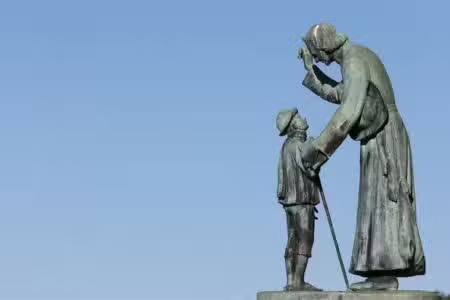
His work as a confessor is John Vianney’s most remarkable accomplishment. He was to spend 11 to 12 hours daily reconciling people with God in the winter months. In the summer months, this time was increased to 16 hours. Unless a man was dedicated to his vision of a priestly vocation, he could not have endured this giving of self day after day. His devotion to the sacrament of confession inspired many to return to their faith and receive God’s forgiveness. He is known as the patron saint of confessors and is a role model for all priests in their duty to shepherd their flock and lead them towards God’s mercy.
St. John Vianney’s Devotion and Fasting
Many people look forward to retirement and taking it easy, doing the things they always wanted but never had the time. But John Vianney had no thoughts of retirement. As his fame spread, more hours were consumed in serving God’s people. The devil frequently disturbed even the few hours he would allow himself to sleep. He became known as a holy priest. More people came to seek his counsel and guidance. Despite these challenges, John Vianney remained steadfast in his devotion to God and continued to fast and sacrifice for the sake of others, following the example of Jesus.
The Final Years: Fame and Spiritual Battles
John Vianney’s fame spread beyond France, and people worldwide came to seek his spiritual guidance. However, with this fame came many spiritual battles for John, as he faced attacks from the devil and endured physical ailments. Despite these trials, he remained steadfast in his faith and continued to serve God’s people until his death on August 4, 1859. He was canonized by Pope Pius XI in 1925.
St. John Vianney Feast Day and Legacy
The feast of St John Vianney is celebrated on August 4th, the anniversary of his death. He is remembered as a model of holiness and dedication to the priesthood, with many priests looking to him for guidance and inspiration in their ministry. His legacy continues as he exemplifies true sanctity and devotion to God. Saint John Vianney’s life serves as a reminder that with determination, faith, and trust in God, one can overcome any obstacle and fulfill one’s calling with great love and humility. May we all strive to follow in his footsteps and become holy instruments of God’s mercy and grace.
Reflection: The Vision of Saint John Vianney
Indifference toward religion and a love for material comfort seem to be common signs of our times. A person from another planet observing us would not likely judge us as pilgrims on our way elsewhere. On the other hand, John Vianney was a man on a journey, with his goal before him at all times.
Saint John Vianney is the Patron Saint of:
- Diocesan Priests
- Parish Priests
FAQs
What is Saint John Vianney known for?
Saint John Vianney, also known as the Curé d’Ars, is widely known and revered for his tireless dedication to hearing confessions and guiding people toward spiritual conversion. He spent long hours in the confessional, often sacrificing sleep and physical comfort to help others find peace with God. His deep understanding of human nature and compassionate approach made him a beloved confessor, with many seeking his counsel and guidance.
What were St. John Vianney’s miracles?
Saint John Vianney is known for many miracles, strengthening his reputation as a holy man. These include healing the sick and infirm, providing miraculous provisions for his orphanage despite facing financial difficulties and being able to read souls during confession. Many people attribute their spiritual conversions and changed lives to his intercession and prayers. These miracles continue to inspire faith in Saint John Vianney’s sanctity and powerful connection with God. So, he is truly an inspiration for all who seek guidance in our spiritual journey.
What did St. John Vianney eat?
Saint John Vianney was known for his severe fasting and self-discipline as part of his spiritual journey. He believed in following the example of Jesus, who fasted for 40 days in the desert and saw it as a way to purify his soul and draw closer to God.
As a result, Saint John Vianney’s diet mainly consisted of boiled potatoes and bread, with occasional vegetables or eggs. This simple and humble diet allowed him to focus on God rather than material comforts, and he often offered up his physical hunger as a sacrifice for others.
Despite financial difficulties in running La Providence orphanage, Saint John Vianney never compromised on his strict fasting routine. His dedication to this spiritual practice is a powerful reminder of the importance of self-discipline and sacrifice in our pursuit of holiness and closeness with God.
What is another name for St. John Vianney?
Saint John Vianney is also known as the Curé d’Ars, which translates to “Priest of Ars” in English. This title refers to his pastoral role as the parish priest of the small French village of Ars, where he served for over 40 years.
As the only priest in a village filled with religious skeptics and lukewarm Catholics, Saint John Vianney faced immense challenges in his ministry. But through his dedication and selfless service, he transformed the village into a center of spiritual revival and devotion.
He spent countless hours hearing confessions, offering guidance and counsel to those seeking help, and providing spiritual direction to the community. His love for God and the people of Ars earned him the title of “Curé d’Ars,” a name that continues to be associated with his legacy as a holy and devoted priest. So, Saint John Vianney is truly an inspiration for all who seek to serve God’s people with love, humility, and determination.
What is the prayer of St. John Vianney?
One of the most well-known prayers attributed to Saint John Vianney is the “Act of Love,” a simple yet powerful prayer that reflects his deep spiritual devotion and humility.
In this prayer, he acknowledges his love for God and desires to serve Him. He recognizes his unworthiness and asks for forgiveness and strength to do God’s will. This act of surrender and trust in God’s mercy showcases Saint John Vianney’s humility and complete reliance on God.
How old was St. John Vianney when he died?
Saint John Vianney passed away at the age of 73 after spending over 40 years as the parish priest of Ars. Despite facing physical ailments and exhaustion from his intense ministry, he continued to serve his parishioners with unwavering dedication and love.
Even in his final days, Saint John Vianney was found hearing confessions and offering guidance to those seeking spiritual help. His tireless efforts in the confessional and selfless service to others until the end reflect his deep commitment to his calling as a priest.
What is special about St. John Vianney?
Saint John Vianney’s life was filled with unique qualities that inspire and guide people toward a deeper relationship with God. One of the most notable characteristics of his life was his profound humility, which shone through in his actions and interactions with others.
Despite being known as a holy man and spiritual guide, Saint John Vianney never considered himself worthy or deserving of such titles. He saw himself as merely an instrument in God’s hands and humbly accepted all praise and honor directed towards him as a reflection of God’s goodness.
What is St. John Mary Vianney the patron saint of?
Saint John Mary Vianney is the patron saint of parish priests, a title given to him in recognition of his exemplary dedication to his pastoral duties and the transformative impact he had on his community in Ars, France.
He was also the patron saint of Diocesan Priests, Confessors, and Faithful Parish Priests. His canonization in 1925 was a testament to his holiness and devotion to God. His feast day is August 4, the day of his passing into eternal life.
Could St. John Vianney read souls?
One of the most well-known aspects of Saint John Vianney’s spiritual gifts was his ability to read souls. Many people who came to confession with him reported feeling as though he could see into their hearts and understand their deepest thoughts and struggles.
This gift allowed him to provide personalized and profound guidance for each individual, addressing their specific needs and offering comfort and encouragement. It also helped him understand the human condition more deeply, allowing him to offer insights and advice that resonated deeply with those seeking his help.
franciscanmedia.org
11
posted on
08/04/2026 5:45:00 AM PDT
by
annalex
(fear them not)
To: annalex
12
posted on
08/04/2026 5:46:49 AM PDT
by
annalex
(fear them not)
To: annalex
NAVARRE BIBLE COMMENTARY(RSV)
Ad Majorem Dei Gloriam (To the Greater Glory of God)
Today’s First Reading
From: Jeremiah 30:1-2, 12-16, 18-22
Distress and hope
---------------------------
[1] The word that came to Jeremiah from the Lord: [2] “Thus says the Lord, the God of Israel: Write in a book all the words that I have spoken to you.
[12] “For thus says the Lord: Your hurt is incurable, and your wound is grievous. [13] There is none to uphold your cause, no medicine for your wound, no healing for you. [14] All your lovers have forgotten you; they care nothing for you; for I have dealt you the blow of an enemy, the punishment of a merciless foe, because your guilt is great, because your sins are flagrant. [15] Why do you cry out over your hurt? Your pain is incurable. Because your guilt is great, because your sins are flagrant, I have done these things to you.
[18] “Thus says the Lord: Behold, I will restore the fortunes of the tents of Jacob, and have compassion on his dwellings: the city shall be rebuilt upon its mound, and the palace shall stand where it used to be. [19] Out of them shall come songs of thanksgiving, and the voices of those who make merry. I will multiply them, and they shall not be few; I will make them honoured, and they shall not be small. [20] Their children shall he as they were of old. and their congregation shall be established before me; and I will punish all who oppress them. [21] Their prince shall be one of themselves, their ruler shall come forth from their midst; I will make him draw near, and he shall approach me, for who would dare of himself to approach me? says the Lord. [22] And you shall be my people, and I will be your God.”
***************************************************************
Commentary:
30:1—33:26. The second section of the second part of the hook is traditionally called the “Book of Consolation” because both the oracles in verse and the prose passages interspersed among them carried a message of consolation for the people during their years in exile.
Although the section may seem to break the thread of the narrative, it does not really do so. Having dealt with the difficulties met by Jeremiah in his attempts to dispel false hopes in an early return from exile, the book now records oracles about a future return to Judah. The central theme is hope in the restoration of Israel and Judah based on a “new covenant”. This section could date from the end of Zedekiah’s reign (587 BC) or a little later.
The oldest part of the section consists in verse oracles. In these we find recurring references to impending judgment and punishment (30:5-7, 12-15, 23-24), calls to hope (30:10-11, 16-17, 18-21; 31:2-14), laments (31:15, 18-19), and promises of better times to come (31:16-17; 31:20-22). The general tone is rather sombre. However, in the final form of the book these oracles are linked by prose passages beginning with the words “days are coming” (30:3; 31:27, 31, 38) and which have the effect of giving these chapters a hopeful tone.
The most important passage announces the “new covenant’ that will replace the one broken by the people’s repeated transgressions down the years (cf. 31:31-37). From very early on, Christian writers have drawn attention to this passage: “God announces that a new covenant shall be made, and it will he a light to all the nations. We believe in his proclamation: our conviction derives from the power of the name of Jesus Christ who was crucified. All the people will forsake idolatry and sin in order to draw closer to God; they will suffer death to pledge their belief in him and to fulfil the creed of their religion. It is clear from the history of events and the power that lies behind them that God’s proclamation is fulfilled in the New Law and the New Covenant, in which all righteous men from all nations who desire God’s goodness place their hope. We, who were led to God by Christ crucified, are the people of Israel in spirit and in truth, the people of Judah and Jacob and Isaac, and of Abraham, the one to whom God bore witness before the time of circumcision, who was blessed and called the father of many nations” (St Justin, “Dialogus cum Trvphone”, 11, 4-5).
30:1-24. The oracles that start of the “Book of Consolation” include some in verse, which are designed mainly to nourish the hope of Israel, that is, the Northern kingdom. To these, others are added (they are usually in prose) which apply those promises of restoration to Judah. The former were probably composed by Jeremiah early in his ministry, in the reign of Josiah, when Assyrian power was on the wane and when religious reform in the Southern kingdom gave ground for hope that the lsraelites, who had borne the brunt of Assyrian aggression, would come back into the fold. The later oracles were composed after Judah had suffered deportations. God is not forgetful of his followers, be they from North or South, and he promises to re-establish his people in their land.
In the first oracles a sharp contrast is drawn between the suffering and anguish that prevails in Israel (seemingly an insoluble situation: vv. 5-7, 12-15), and the Lord’s promise that he will not abandon his people or allow them to he destroyed even though they are experiencing the punishment that their sins deserve (vv. 10-11, 16-24). Similarly, Jerusalem will be rebuilt, and after a period of religious and moral reform, it will flourish again (vv. 18-21). Just as the Lord will deliver Israel, so he will come to Judah’s rescue in due course. He will lift the yoke that Babylon has placed on the Jews (cf. 27:1-22) and they will be able to serve God once more, under the rule of a descendant of David (vv. 8-9; cf. 23:5; Ezek 34:23; 37:24). The Septuagint version omits verse 22, which occurs again in 31:33. It is a wording of the Covenant valid for all times and situations (cf. 7:23; 11:4; 24:7; 32:38).
The grounds for hope are the same as appear right through the book: “I am with you” (v. 11; cf. 1:8; 1:19; 15:20; 30:11; 46:28). Despite the sins of men God is merciful: his love endures: “sin too constitutes man’s misery. The people of the Old Covenant experienced this misery from the time of the Exodus, when they set up the golden calf. The Lord himself triumphed over this act of breaking the covenant when he solemnly declared to Moses that he was a ‘God merciful and gracious, slow to anger, and abounding in steadfast love and faithfulness’ (Ex 34:6). It is in this central revelation that a people, and each of its members, will find, every time that they have sinned, the strength and the motive for turning to the Lord to remind him of what he had exactly revealed about himself and to beseech his forgiveness” (John Paul Il, Dives’ in misericordia, 4).
13
posted on
08/04/2026 8:13:36 AM PDT
by
fidelis
(Ecce Crucem Domini! Fugite partes adversae! Vicit Leo de tribu Juda, Radix David! Alleluia!)
Today’s Gospel Reading From: Matthew 15:1-2, 10-14
True Cleanness
--------------
[1] Then Pharisees and scribes came to Jesus from Jerusalem and said, [2] "Why do your disciples transgress the tradition of the elders? For they do not wash their hands when they eat."
[10] And he called the people to him and said to them, "Hear and understand: [11] "Not what goes into the mouth defiles a man, but what comes out of the mouth, this defiles a man." [12] Then the disciples came and said to him, "Do you know that the Pharisees were offended when they heard this saying?" [13] He answered, "Every plant which my heavenly Father has not planted will be rooted up. [14] Let them alone; they are blind guides. And if a blind man leads a blind man, both will fall into a pit."
***********************************************************************
Commentary:
[10-20] Our Lord proclaims the true meaning of moral precepts and makes it clear that man has to answer to God for his actions. The scribes' mistake consisted in concentrating on externals and not giving pride of place to interior purity of heart. For example, they saw prayer in terms of exact recital of fixed forms of words rather than as a raising of the soul to God (cf. Mt 6:5-6). The same thing happened in the case of dietary regulations.
Jesus avails of the particular cases dealt with in this passage to teach us where to find the true center of moral action: it lies in man's personal decision, good or evil, a decision which is shaped in his heart and which then is expressed in the form of action. For example, the sins which our Lord lists are sins committed in the human heart prior to being acted out. In the Sermon on the Mount he already said this: "Every one who looks at a woman lustfully has already committed adultery with her in his heart" (Mt 5:28).
14
posted on
08/04/2026 8:13:54 AM PDT
by
fidelis
(Ecce Crucem Domini! Fugite partes adversae! Vicit Leo de tribu Juda, Radix David! Alleluia!)
15
posted on
08/04/2026 8:14:36 AM PDT
by
fidelis
(Ecce Crucem Domini! Fugite partes adversae! Vicit Leo de tribu Juda, Radix David! Alleluia!)
Disclaimer:
Opinions posted on Free Republic are those of the individual
posters and do not necessarily represent the opinion of Free Republic or its
management. All materials posted herein are protected by copyright law and the
exemption for fair use of copyrighted works.
FreeRepublic.com is powered by software copyright 2000-2008 John Robinson