
Posted on 08/03/2026 11:14:47 PM PDT by fidelis
Memorial of Saint John Vianney, Priest
He summoned the crowd and said to them, “Hear and understand. It is not what enters one’s mouth that defiles that person; but what comes out of the mouth is what defiles one.” Then his disciples approached and said to him, “Do you know that the Pharisees took offense when they heard what you said?” Matthew 15:10–12
Jesus’ words would have stunned His Jewish listeners because He challenged deeply rooted religious beliefs about purity and impurity. He was not denying the value of external practices when they are rightly understood and ordered. Rather, He was reorienting the discussion toward the interior life—toward the heart, the true source of either moral purity or corruption.
This teaching came in response to a question posed by the Pharisees and scribes: “Why do your disciples break the tradition of the elders? They do not wash their hands when they eat a meal” (Matthew 15:2).
The “tradition of the elders” referred to a body of oral interpretations and applications of the Mosaic Law, developed over generations. Though intended to safeguard the Law, these traditions had, over time, begun to obscure the heart of God’s commandments by placing excessive emphasis on external observances.
Jesus responds by shifting the focus to the interior life. What defiles a person, He says, is not the ritual neglect of external customs but the disordered desires, thoughts, and words that proceed from a corrupted heart. Sin is rooted in erroneous thinking and interior disorder, not in ritual nonconformity.
Notably, though the disciples expressed concern that Jesus had offended the Pharisees, He remained unmoved. He says of them, “They are blind guides” (Matthew 15:14). Their leadership was detached from the heart of divine truth and the Father’s will. Anything not planted by His heavenly Father will be uprooted. Traditions and practices that are not grounded in God’s will cannot endure.
In this case, the tradition in question—ritually washing hands before meals—was neither good nor evil in itself. Cleanliness, of course, can be a good habit. However, when a symbolic act is treated as if it possesses power to bestow grace or confer purity, apart from one’s interior disposition, it becomes a stumbling block. The external act, separated from inner faith and intention, undermines its original purpose.
Though the specific customs of first-century Judaism may no longer be practiced, the same principle applies today. Consider, for example, the practice of saying grace before meals. This is a beautiful and commendable habit—but only when it is truly a prayer. Reciting words without thought, attention, or gratitude does not glorify God. Nor does it bring about the blessing we seek. Prayer must always come from a sincere and devout heart.
What do you cling to the most—customs, traditions, and habits, or the very heart of God’s will? Often, faithfully following God requires that we evaluate, reorder, and strengthen certain habitual practices—even good ones.
Reflect today on the religious habits you practice. Are they merely external customs, or do they express a living faith? Seek to reintegrate heart and habit, so that every prayer, every gesture, every act of charity, and every act of worship flows from a soul sincerely united to the will of God.
Most Sacred Heart of Jesus, everything You did flowed from the perfection of love that flooded Your Heart. You did not act out of mere custom or habit, but intentionally and sincerely, doing each act with love that glorified Your Heavenly Father. Please make my heart like Yours, so that all that I do bears fruit and gives You eternal glory. Jesus, I trust in You.
Please keep in mind that this is a Catholic Caucus/Devotional thread for the purpose of prayerful reflection on the Sacred Scriptures and is closed to debate of any kind. Per FR policy on Religion Caucus threads, off-topic, argumentative, and abusive comments are not allowed and will be submitted to the Mods for deletion. Thanks, and God bless you.
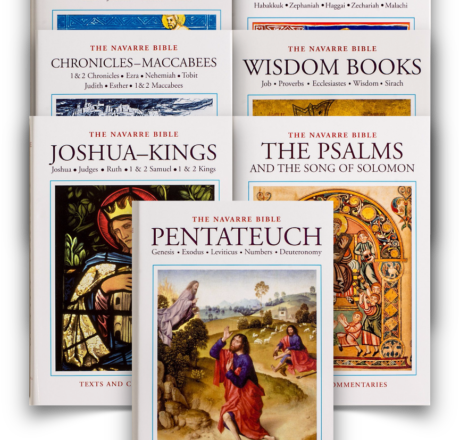
Today’s First Reading
From: Jeremiah 30:1-2, 12-16, 18-22
Distress and hope
---------------------------
[1] The word that came to Jeremiah from the Lord: [2] “Thus says the Lord, the God of Israel: Write in a book all the words that I have spoken to you.
[12] “For thus says the Lord: Your hurt is incurable, and your wound is grievous. [13] There is none to uphold your cause, no medicine for your wound, no healing for you. [14] All your lovers have forgotten you; they care nothing for you; for I have dealt you the blow of an enemy, the punishment of a merciless foe, because your guilt is great, because your sins are flagrant. [15] Why do you cry out over your hurt? Your pain is incurable. Because your guilt is great, because your sins are flagrant, I have done these things to you.
[18] “Thus says the Lord: Behold, I will restore the fortunes of the tents of Jacob, and have compassion on his dwellings: the city shall be rebuilt upon its mound, and the palace shall stand where it used to be. [19] Out of them shall come songs of thanksgiving, and the voices of those who make merry. I will multiply them, and they shall not be few; I will make them honoured, and they shall not be small. [20] Their children shall he as they were of old. and their congregation shall be established before me; and I will punish all who oppress them. [21] Their prince shall be one of themselves, their ruler shall come forth from their midst; I will make him draw near, and he shall approach me, for who would dare of himself to approach me? says the Lord. [22] And you shall be my people, and I will be your God.”
***************************************************************
Commentary:
30:1—33:26. The second section of the second part of the hook is traditionally called the “Book of Consolation” because both the oracles in verse and the prose passages interspersed among them carried a message of consolation for the people during their years in exile.
Although the section may seem to break the thread of the narrative, it does not really do so. Having dealt with the difficulties met by Jeremiah in his attempts to dispel false hopes in an early return from exile, the book now records oracles about a future return to Judah. The central theme is hope in the restoration of Israel and Judah based on a “new covenant”. This section could date from the end of Zedekiah’s reign (587 BC) or a little later.
The oldest part of the section consists in verse oracles. In these we find recurring references to impending judgment and punishment (30:5-7, 12-15, 23-24), calls to hope (30:10-11, 16-17, 18-21; 31:2-14), laments (31:15, 18-19), and promises of better times to come (31:16-17; 31:20-22). The general tone is rather sombre. However, in the final form of the book these oracles are linked by prose passages beginning with the words “days are coming” (30:3; 31:27, 31, 38) and which have the effect of giving these chapters a hopeful tone.
The most important passage announces the “new covenant’ that will replace the one broken by the people’s repeated transgressions down the years (cf. 31:31-37). From very early on, Christian writers have drawn attention to this passage: “God announces that a new covenant shall be made, and it will he a light to all the nations. We believe in his proclamation: our conviction derives from the power of the name of Jesus Christ who was crucified. All the people will forsake idolatry and sin in order to draw closer to God; they will suffer death to pledge their belief in him and to fulfil the creed of their religion. It is clear from the history of events and the power that lies behind them that God’s proclamation is fulfilled in the New Law and the New Covenant, in which all righteous men from all nations who desire God’s goodness place their hope. We, who were led to God by Christ crucified, are the people of Israel in spirit and in truth, the people of Judah and Jacob and Isaac, and of Abraham, the one to whom God bore witness before the time of circumcision, who was blessed and called the father of many nations” (St Justin, “Dialogus cum Trvphone”, 11, 4-5).
30:1-24. The oracles that start of the “Book of Consolation” include some in verse, which are designed mainly to nourish the hope of Israel, that is, the Northern kingdom. To these, others are added (they are usually in prose) which apply those promises of restoration to Judah. The former were probably composed by Jeremiah early in his ministry, in the reign of Josiah, when Assyrian power was on the wane and when religious reform in the Southern kingdom gave ground for hope that the lsraelites, who had borne the brunt of Assyrian aggression, would come back into the fold. The later oracles were composed after Judah had suffered deportations. God is not forgetful of his followers, be they from North or South, and he promises to re-establish his people in their land.
In the first oracles a sharp contrast is drawn between the suffering and anguish that prevails in Israel (seemingly an insoluble situation: vv. 5-7, 12-15), and the Lord’s promise that he will not abandon his people or allow them to he destroyed even though they are experiencing the punishment that their sins deserve (vv. 10-11, 16-24). Similarly, Jerusalem will be rebuilt, and after a period of religious and moral reform, it will flourish again (vv. 18-21). Just as the Lord will deliver Israel, so he will come to Judah’s rescue in due course. He will lift the yoke that Babylon has placed on the Jews (cf. 27:1-22) and they will be able to serve God once more, under the rule of a descendant of David (vv. 8-9; cf. 23:5; Ezek 34:23; 37:24). The Septuagint version omits verse 22, which occurs again in 31:33. It is a wording of the Covenant valid for all times and situations (cf. 7:23; 11:4; 24:7; 32:38).
The grounds for hope are the same as appear right through the book: “I am with you” (v. 11; cf. 1:8; 1:19; 15:20; 30:11; 46:28). Despite the sins of men God is merciful: his love endures: “sin too constitutes man’s misery. The people of the Old Covenant experienced this misery from the time of the Exodus, when they set up the golden calf. The Lord himself triumphed over this act of breaking the covenant when he solemnly declared to Moses that he was a ‘God merciful and gracious, slow to anger, and abounding in steadfast love and faithfulness’ (Ex 34:6). It is in this central revelation that a people, and each of its members, will find, every time that they have sinned, the strength and the motive for turning to the Lord to remind him of what he had exactly revealed about himself and to beseech his forgiveness” (John Paul Il, Dives’ in misericordia, 4).
From: Matthew 15:1-2, 10-14
True Cleanness
--------------
[1] Then Pharisees and scribes came to Jesus from Jerusalem and said, [2] "Why do your disciples transgress the tradition of the elders? For they do not wash their hands when they eat."
[10] And he called the people to him and said to them, "Hear and understand: [11] "Not what goes into the mouth defiles a man, but what comes out of the mouth, this defiles a man." [12] Then the disciples came and said to him, "Do you know that the Pharisees were offended when they heard this saying?" [13] He answered, "Every plant which my heavenly Father has not planted will be rooted up. [14] Let them alone; they are blind guides. And if a blind man leads a blind man, both will fall into a pit."
***********************************************************************
Commentary:
[10-20] Our Lord proclaims the true meaning of moral precepts and makes it clear that man has to answer to God for his actions. The scribes' mistake consisted in concentrating on externals and not giving pride of place to interior purity of heart. For example, they saw prayer in terms of exact recital of fixed forms of words rather than as a raising of the soul to God (cf. Mt 6:5-6). The same thing happened in the case of dietary regulations.
Jesus avails of the particular cases dealt with in this passage to teach us where to find the true center of moral action: it lies in man's personal decision, good or evil, a decision which is shaped in his heart and which then is expressed in the form of action. For example, the sins which our Lord lists are sins committed in the human heart prior to being acted out. In the Sermon on the Mount he already said this: "Every one who looks at a woman lustfully has already committed adultery with her in his heart" (Mt 5:28).
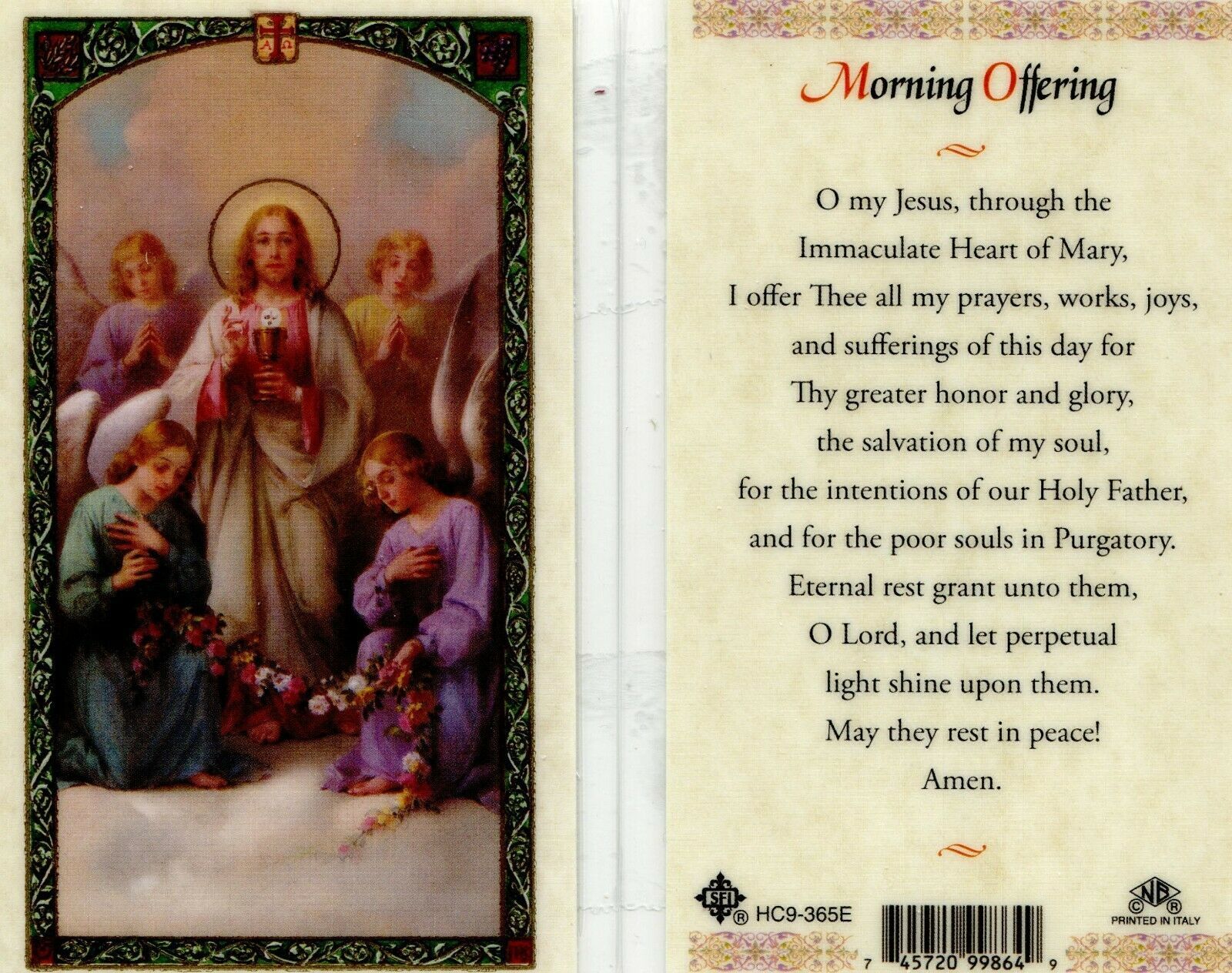
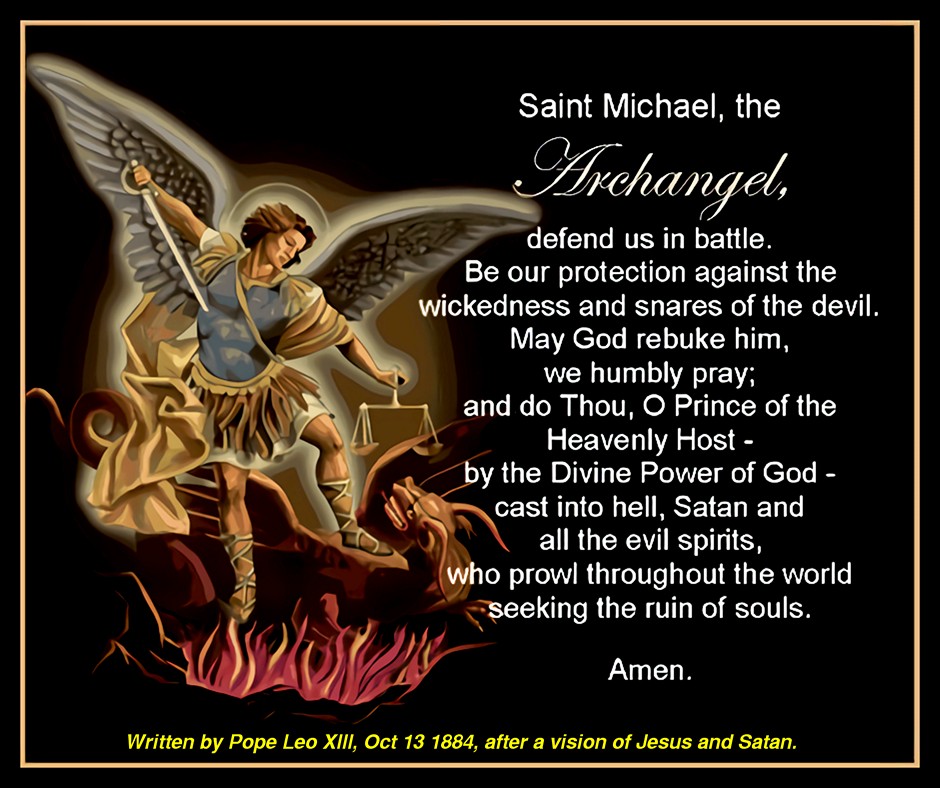
The Month of August is Dedicated to the Immaculate Heart of Mary

“In the sixth month the angel Gabriel was sent from God to a city of Galilee named Nazareth, to a virgin betrothed to a man whose name was Joseph, of the house of David; and the virgin’s name was Mary. And he came to her and said, “Hail, full of grace, the Lord is with you!”” (Luke 1:26-28)

Pope Leo XIV’s prayer intention for the month of August, 2026:
For evangelization in the city
Let us pray that in large cities often marked by anonymity and loneliness we find new ways to proclaim the Gospel, discovering creative paths to build community.

Disclaimer: Opinions posted on Free Republic are those of the individual posters and do not necessarily represent the opinion of Free Republic or its management. All materials posted herein are protected by copyright law and the exemption for fair use of copyrighted works.


