Skip to comments.
Catholic Caucus: Daily Mass Readings 29-July-2026
Universalis/Jerusalem Bible ^
Posted on 07/29/2026 5:17:48 AM PDT by annalex
29 July 2026
Saints Martha, Mary and Lazarus
on Wednesday of week 17 in Ordinary Time

St. Lazarus Church of Bethany, near Jerusalem, Israel Readings at MassLiturgical Colour: White. Year: A(II). Readings for the feria Readings for the memorial These are the readings for the feria
| First reading |
|---|
| Jeremiah 15:10,16-21 |
|---|
They will not overcome you, because I am with you‘Woe is me, my mother, for you have borne me to be a man of strife and of dissension for all the land. I neither lend nor borrow, yet all of them curse me. ‘When your words came, I devoured them: your word was my delight and the joy of my heart; for I was called by your name, Lord, God of Hosts. I never took pleasure in sitting in scoffers’ company; with your hand on me I held myself aloof, since you had filled me with indignation. Why is my suffering continual, my wound incurable, refusing to be healed? Do you mean to be for me a deceptive stream with inconstant waters?’ To which the Lord replied, ‘If you come back, I will take you back into my service; and if you utter noble, not despicable, thoughts, you shall be as my own mouth. They will come back to you, but you must not go back to them. I will make you a bronze wall fortified against this people. They will fight against you but they will not overcome you, because I am with you to save you and to deliver you – it is the Lord who speaks. I mean to deliver you from the hands of the wicked and redeem you from the clutches of the violent.’
| Responsorial Psalm |
|---|
| Psalm 58(59):2-5,10-11,17-18 |
|---|
O God, you have been a refuge in the day of my distress. Rescue me, God, from my foes; protect me from those who attack me. O rescue me from those who do evil and save me from blood-thirsty men. O God, you have been a refuge in the day of my distress. See, they lie in wait for my life; powerful men band together against me. For no offence, no sin of mine, Lord, for no guilt of mine they rush to take their stand. O God, you have been a refuge in the day of my distress. O my Strength, it is you to whom I turn, for you, O God, are my stronghold, the God who shows me love. O God, you have been a refuge in the day of my distress. As for me, I will sing of your strength and each morning acclaim your love for you have been my stronghold, a refuge in the day of my distress. O God, you have been a refuge in the day of my distress. O my Strength, it is you to whom I turn, for you, O God, are my stronghold, the God who shows me love. O God, you have been a refuge in the day of my distress.
Alleluia, alleluia! I am the light of the world, says the Lord; anyone who follows me will have the light of life. Alleluia!
The following reading is proper to the memorial, and must be used even if you have otherwise chosen to use the ferial readings. I am the resurrection and the lifeMany Jews had come to Martha and Mary to sympathise with them over their brother. When Martha heard that Jesus had come she went to meet him. Mary remained sitting in the house. Martha said to Jesus, ‘If you had been here, my brother would not have died, but I know that, even now, whatever you ask of God, he will grant you.’ ‘Your brother’ said Jesus to her ‘will rise again.’ Martha said, ‘I know he will rise again at the resurrection on the last day.’ Jesus said: ‘I am the resurrection and the life. If anyone believes in me, even though he dies he will live, and whoever lives and believes in me will never die. Do you believe this?’ ‘Yes, Lord,’ she said ‘I believe that you are the Christ, the Son of God, the one who was to come into this world.’ Continue These are the readings for the memorial
| First reading | 1 John 4:7-16 |
|---|
Let us love one another, since love comes from GodMy dear people, let us love one another since love comes from God and everyone who loves is begotten by God and knows God. Anyone who fails to love can never have known God, because God is love. God’s love for us was revealed when God sent into the world his only Son so that we could have life through him; this is the love I mean: not our love for God, but God’s love for us when he sent his Son to be the sacrifice that takes our sins away. My dear people, since God has loved us so much, we too should love one another. No one has ever seen God; but as long as we love one another God will live in us and his love will be complete in us. We can know that we are living in him and he is living in us because he lets us share his Spirit. We ourselves saw and we testify that the Father sent his Son as saviour of the world. If anyone acknowledges that Jesus is the Son of God, God lives in him, and he in God. We ourselves have known and put our faith in God’s love towards ourselves. God is love and anyone who lives in love lives in God, and God lives in him.
| Responsorial Psalm |
|---|
| Psalm 33(34):2-11 |
|---|
I will bless the Lord at all times. or Taste and see that the Lord is good. I will bless the Lord at all times, his praise always on my lips; in the Lord my soul shall make its boast. The humble shall hear and be glad. I will bless the Lord at all times. or Taste and see that the Lord is good. Glorify the Lord with me. Together let us praise his name. I sought the Lord and he answered me; from all my terrors he set me free. I will bless the Lord at all times. or Taste and see that the Lord is good. Look towards him and be radiant; let your faces not be abashed. This poor man called, the Lord heard him and rescued him from all his distress. I will bless the Lord at all times. or Taste and see that the Lord is good. The angel of the Lord is encamped around those who revere him, to rescue them. Taste and see that the Lord is good. He is happy who seeks refuge in him. I will bless the Lord at all times. or Taste and see that the Lord is good. Revere the Lord, you his saints. They lack nothing, those who revere him. Strong lions suffer want and go hungry but those who seek the Lord lack no blessing. I will bless the Lord at all times. or Taste and see that the Lord is good.
Alleluia, alleluia! I am the light of the world, says the Lord; anyone who follows me will have the light of life. Alleluia!
I am the resurrection and the lifeMany Jews had come to Martha and Mary to sympathise with them over their brother. When Martha heard that Jesus had come she went to meet him. Mary remained sitting in the house. Martha said to Jesus, ‘If you had been here, my brother would not have died, but I know that, even now, whatever you ask of God, he will grant you.’ ‘Your brother’ said Jesus to her ‘will rise again.’ Martha said, ‘I know he will rise again at the resurrection on the last day.’ Jesus said: ‘I am the resurrection and the life. If anyone believes in me, even though he dies he will live, and whoever lives and believes in me will never die. Do you believe this?’ ‘Yes, Lord,’ she said ‘I believe that you are the Christ, the Son of God, the one who was to come into this world.’ Continue Christian Art Each day, The Christian Art website gives a picture and reflection on the Gospel of the day. \ The readings on this page are from the Jerusalem Bible, which is used at Mass in most of the English-speaking world. The New American Bible readings, which are used at Mass in the United States, are available in the Universalis apps, programs and downloads.
You can also view this page with the Gospel in Greek and English. |
TOPICS: Catholic; General Discusssion; Prayer; Worship
KEYWORDS: catholic; jn11; mt13; ordinarytime; prayer
For your reading, reflection, faith-sharing, comments, questions, discussion.
1
posted on
07/29/2026 5:17:48 AM PDT
by
annalex
To: All
KEYWORDS: catholic; jn11; ordinarytime; prayer;
2
posted on
07/29/2026 5:18:56 AM PDT
by
annalex
(fear them not)
To: nickcarraway; NYer; ELS; Pyro7480; livius; ArrogantBustard; Catholicguy; RobbyS; marshmallow; ...

Alleluia Ping Please FReepmail me to get on/off the Alleluia Ping List.
3
posted on
07/29/2026 5:20:10 AM PDT
by
annalex
(fear them not)
To: annalex
4
posted on
07/29/2026 5:20:36 AM PDT
by
annalex
(fear them not)
To: annalex
| John |
| | English: Douay-Rheims | Latin: Vulgata Clementina | Greek NT: Byzantine/Majority Text (2000) |
| | John 11
|
| 19. | And many of the Jews were come to Martha and Mary, to comfort them concerning their brother. | Multi autem ex Judæis venerant ad Martham et Mariam, ut consolarentur eas de fratre suo. | και πολλοι εκ των ιουδαιων εληλυθεισαν προς τας περι μαρθαν και μαριαν ινα παραμυθησωνται αυτας περι του αδελφου αυτων |
| 20. | Martha therefore, as soon as she heard that Jesus had come, went to meet him: but Mary sat at home. | Martha ergo ut audivit quia Jesus venit, occurrit illi : Maria autem domi sedebat. | η ουν μαρθα ως ηκουσεν οτι ιησους ερχεται υπηντησεν αυτω μαρια δε εν τω οικω εκαθεζετο |
| 21. | Martha therefore said to Jesus: Lord, if thou hadst been here, my brother had not died. | Dixit ergo Martha ad Jesum : Domine, si fuisses hic, frater meus non fuisset mortuus : | ειπεν ουν μαρθα προς τον ιησουν κυριε ει ης ωδε ο αδελφος μου ουκ αν ετεθνηκει |
| 22. | But now also I know that whatsoever thou wilt ask of God, God will give it thee. | sed et nunc scio quia quæcumque poposceris a Deo, dabit tibi Deus. | αλλα και νυν οιδα οτι οσα αν αιτηση τον θεον δωσει σοι ο θεος |
| 23. | Jesus saith to her: Thy brother shall rise again. | Dicit illi Jesus : Resurget frater tuus. | λεγει αυτη ο ιησους αναστησεται ο αδελφος σου |
| 24. | Martha saith to him: I know that he shall rise again, in the resurrection at the last day. | Dicit ei Martha : Scio quia resurget in resurrectione in novissimo die. | λεγει αυτω μαρθα οιδα οτι αναστησεται εν τη αναστασει εν τη εσχατη ημερα |
| 25. | Jesus said to her: I am the resurrection and the life: he that believeth in me, although he be dead, shall live: | Dixit ei Jesus : Ego sum resurrectio et vita : qui credit in me, etiam si mortuus fuerit, vivet : | ειπεν αυτη ο ιησους εγω ειμι η αναστασις και η ζωη ο πιστευων εις εμε καν αποθανη ζησεται |
| 26. | And every one that liveth, and believeth in me, shall not die for ever. Believest thou this? | et omnis qui vivit et credit in me, non morietur in æternum. Credis hoc ? | και πας ο ζων και πιστευων εις εμε ου μη αποθανη εις τον αιωνα πιστευεις τουτο |
| 27. | She saith to him: Yea, Lord, I have believed that thou art Christ the Son of the living God, who art come into this world. | Ait illi : Utique Domine, ego credidi quia tu es Christus, Filius Dei vivi, qui in hunc mundum venisti. | λεγει αυτω ναι κυριε εγω πεπιστευκα οτι συ ει ο χριστος ο υιος του θεου ο εις τον κοσμον ερχομενος |
(*) v. 27 "ο χριστος ο υιος του θεου ο εις τον κοσμον ερχομενος": the translations add "vivi", "living".
5
posted on
07/29/2026 5:23:06 AM PDT
by
annalex
(fear them not)
To: annalex

Catena Aurea by St. Thomas Aguinas
19. And many of the Jews came to Martha and Mary, to comfort them concerning their brother.
20. Then Martha, as soon as she heard that Jesus was coming, went and met him: but Mary sat still in the house.
21. Then said Martha unto Jesus, Lord, if thou hadst been here, my brother had not died.
22. But I know, that even now, whatsoever thou wilt ask of God, God will give it thee.
23. Jesus saith unto her, Thy brother shall rise again.
24. Martha saith unto him, I know that he shall rise again in the resurrection at the last day.
25. Jesus said unto her, I am the resurrection, and the life: he that believeth in me, though he were dead, yet shall he live:
26. And whosoever liveth and believeth in me shall never die. Believest thou this?
27. She saith unto him, Yea, Lord: I believe that thou art the Christ, the Son of God, which should come into the world.
CHRYSOSTOM. (Hom. lxii. 2) Two miles. This is mentioned to account for so many coming from Jerusalem: And many of the Jews came to Martha and Mary, to comfort them concerning their brother. But how could the Jews be consoling the beloved of Christ, when they had resolved that whoever confessed Christ should be put out of the synagogue? Perhaps the extreme affliction of the sisters excited their sympathy; or they wished to shew respect for their rank. Or perhaps they who came were of the better sort; as we find many of them believed. Their presence is mentioned to do away with all doubt of the real death of Lazarus.
BEDE. Our Lord had not yet entered the town, when Martha met Him: Then Martha, as soon as she heard that Jesus was coming, went and met Him: but Mary sat still in the house.
CHRYSOSTOM. (Hom. lxii. 2.) Martha does not take her sister with her, because she wants to speak with Christ alone, and tell Him what has happened. When her hopes had been raised by Him, then she went her way, and called Mary.
THEOPHYLACT. At first she does not tell her sister, for fear, if she came, the Jews present might accompany her. And she did not wish them to know of our Lord’s coming.
Then saith Martha unto Jesus, Lord, if Thou hadst been here, my brother had not died.
CHRYSOSTOM. (Hom. lxii. 3) She believed in Christ, but she believed not as she ought. She did not speak as if He were God: If Thou hadst been here, my brother had not died.
THEOPHYLACT. She did not know that He could have restored her brother as well absent as present.
CHRYSOSTOM. (Hom. lxii. 3) Nor did she know that He wrought His miracles by His own independent power: But I know that even now, whatsoever Thou will ask of God, God will give it Thee. She only thinks Him some very gifted man.
AUGUSTINE. (Tr. xlix. 13) She does not say to Him, Bring my brother to life again; for how could she know that it would be good for him to come to life again; she says, I know that Thou canst do so, if Thou wilt; but what Thou wilt do is for Thy judgment, not for my presumption to determine.
CHRYSOSTOM. (Hom. lxii. 3) But our Lord taught her the truths which she did not know: Jesus saith unto her, Thy brother shall rise again. Observe, He does not say, I will ask God, that he may rise again, nor on the other hand does He say, I want no help, I do all things of Myself; a declaration which would have been too much for the woman; but something between the two, He shall rise again.
AUGUSTINE. (Tr. xlix. 14) Shall rise again, is ambiguous: for He does not say, now. And therefore it follows: Martha saith unto Him, I know that he shall rise again in the resurrection at the last day: of that resurrection I am certain; of this I am doubtful.
CHRYSOSTOM. (Hom. lxii) She had often heard Christ speak of the resurrection. Jesus now declares His power more plainly: Jesus said unto her, I am the resurrection and the life. He needed therefore none to help Him; for if He did, how could He be the resurrection. And if He is the life, He is not confined by place, but is every where, and can heal every where.
ALCUIN. I am the resurrection, because I am the life; as through Me he will rise at the general resurrection, through Me he may rise now.
CHRYSOSTOM. (Hom. lxii) To Martha’s, Whatsoever Thou shall ask, He replies, He that believeth in Me, though he were dead, yet shall he live: shewing her that He is the Giver of all good, and that we must ask of Him. Thus He leads her to the knowledge of high truths; and whereas she had been enquiring only about the resurrection of Lazarus, tells her of a resurrection in which both she and all present would share.
AUGUSTINE. (Tr. xlix. 15) He that believeth in Me, though he were dead: i. e. though his flesh die, his soul shall live till the flesh rise again, never to die more. For faith is the life of the soul.
And whosoever liveth, in the flesh, and believeth in Me, though he die for a time in the flesh, shall not die eternally.
ALCUIN. Because He hath attained to the life of the Spirit, and to an immortal resurrection. Our Lord, from Whom nothing was hid, knew that she believed, but sought from her a confession unto salvation: Believest thou this? She saith unto Him, Yea, Lord, I believe that Thou art the Christ the Son of God, which should come into the world.
CHRYSOSTOM. (Hom. lxii. 3) She seems not to have understood His words; i. e. she saw that He meant something great, but did not see what that was. She is asked one thing, and answers another.
AUGUSTINE. (Tr. xlix. 15) When I believed that Thou wert the Son of God, I believed that Thou wert the resurrection, that Thou wert lifeb; and that he that believeth in Thee, though he were dead, shall live.
Catena Aurea John 11
6
posted on
07/29/2026 5:27:13 AM PDT
by
annalex
(fear them not)
To: annalex

Sts Mary, Lazarus, and Martha
7
posted on
07/29/2026 5:30:59 AM PDT
by
annalex
(fear them not)
To: annalex
Saints of the Day for July 29
(c. 1st century)
Saints Martha, Mary and Lazarus’ story
Martha, Mary, and their brother Lazarus were evidently close friends of Jesus. He came to their home simply as a welcomed guest, rather than as one celebrating the conversion of a sinner like Zacchaeus or one unceremoniously received by a suspicious Pharisee. The sisters felt free to call on Jesus at their brother’s death, even though a return to Judea at that time seemed to spell almost certain death.
Martha’s great glory is her simple and strong statement of faith in Jesus after her brother’s death. “Jesus told her, ‘I am the resurrection and the life; whoever believes in me, even if he dies, will live, and everyone who lives and believes in me will never die. Do you believe this?’ She said to him, ‘Yes, Lord. I have come to believe that you are the Messiah, the Son of God, the one who is coming into the world’” (John 11:25-27).
No doubt Martha was an active sort of person. On one occasion, she prepares the meal for Jesus and possibly his fellow guests and forthrightly states the obvious: All hands should pitch in to help with the dinner. The Lord recognizes that Martha is “worried about many things,” also noting that Mary, who has spent the preparation time at Jesus’ feet listening to his words “has chosen the better part.” John 12:1-8 describes Mary’s anointing of Jesus’ feet at Bethany, an act which he praised highly.
Immediately after we are told that the chief priests plotted to kill Lazarus “because many of the Jews were turning away and believing in Jesus because of him.” Lazarus was the one of whom the Jews said, “See how much he loved him.” In their sight Jesus raised his friend from the dead.
Legends abound about the life of Lazarus after the death and resurrection of Jesus. He is supposed to have left a written account of what he saw in the next world before he was called back to life. Some say he followed Peter into Syria. Another story is that despite being put into a leaking boat by the Jews at Jaffa, he, his sisters, and others landed safely in Cyprus. There he died peacefully after serving as bishop for 30 years.
It is certain there was early devotion to the saint. Around the year 390, the pilgrim lady Etheria talks of the procession that took place on the Saturday before Palm Sunday at the tomb where Lazarus had been raised from the dead. In the West, Passion Sunday was called Dominica de Lazaro, and Augustine tells us that in Africa the Gospel of the raising of Lazarus was read at the office of Palm Sunday.
Reflection
In its 2021 decree on combining veneration of Mary and Lazarus with Martha, the Congregation for Divine Worship and the Sacraments said, “In the household of Bethany, the Lord Jesus experienced the family spirit and friendship of Martha, Mary and Lazarus, and for this reason the Gospel of John states that he loved them. Martha generously offered him hospitality, Mary listened attentively to his words and Lazarus promptly emerged from the tomb at the command of the one who humiliated death.”
Saint Martha is a Patron Saint of:
Cooks
Homemakers
Restaurant servers
Saints Martha, Mary, and Lazarus are Patron Saints of:
Siblings
franciscanmedia.org
8
posted on
07/29/2026 5:33:29 AM PDT
by
annalex
(fear them not)
To: annalex
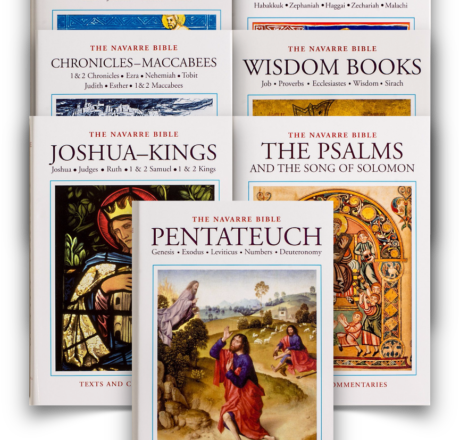
NAVARRE BIBLE COMMENTARY(RSV)
Ad Majorem Dei Gloriam (To the Greater Glory of God)
Today’s First Reading
From: Jeremiah 15:10, 16-21
Jeremiah's second "confession"
----------------------------------------------
[10] Woe is me, my mother, that you bore me, a man of strife and contention to the whole land! I have not lent, nor have I borrowed, yet all of them curse me.
[16] Thy words were found, and I ate them, and thy words became to me a joy and the delight of my heart; for I am called by thy name, O Lord, God of hosts. [17] I did not sit in the company of merrymakers, nor did I rejoice; I sat alone, because thy hand was upon me, for thou hadst filled me with indignation. [18] Why is my pain unceasing, my wound incurable, refusing to be healed? Wilt thou be to me like a deceitful brook, like waters that fail?
[19] Therefore thus says the Lord: "If you return, I will restore you, and you shall stand before me. If you utter what is precious, and not what is worthless. you shall be as my mouth. They shall turn to you, but you shall not turn to them. [20] And I will make you to this people a fortified wall of bronze; they will fight against you, but they shall not prevail over you, for I am with you to save you and deliver you, says the Lord. [21] I will deliver you out of the hand of the wicked, and redeem you from the grasp of the ruthless."
********************************************
Commentary:
15:10-21. Jeremiah again opens his heart to the Lord. The mission God gave him has not proved easy. In vv. 10-11 he seems to share his thoughts with his mother, with himself and with God, and in vv. 15-21 he makes a prayerful complaint to God, who spells out what course he should take and offers hope of deliverance. Verses 12-14, which break the thread of the passage and are to be found again in 17:3-4, seem to stress the solidarity that exists between Jeremiah and the people.
Despite the fact that Jeremiah has sought only to serve the Lord and intercede with him even on behalf of enemies, wishing no one evil, he has been rejected and cursed and has become a source of discord. He tells the Lord how pained he feels (vv. 10-11) and he goes on to recall times when he felt very happy in his relations with God (v. 16), and other times when he felt desolate because everyone rejected him (vv. 17-18). As in the first "confession" (11:18-12:6), the Lord's reply seems harsh, calling him to personal conversion (v. 19a). Because Jeremiah must preach conversion to others, he must begin with himself, by being true to the mission entrusted to him; he must shed any feelings of pessimism. Once he is cleansed, he will be well able to speak the word of the Lord and the people will heed him (vv. 19b-21).
Jeremiah's trusting dialogue with the Lord, and the reply he is given (v. 19), are a personal call to the reader of this passage: "This is meant for everyone, for God is always calling on us to return to him" (Origen, “Homiliae in Jeremiam”, 14, 18).
9
posted on
07/29/2026 8:26:58 AM PDT
by
fidelis
(Ecce Crucem Domini! Fugite partes adversae! Vicit Leo de tribu Juda, Radix David! Alleluia!)
Today’s Gospel Reading From: John 11:17-45
The Raising of Lazarus (Continuation)
-------------------------------------
[19] And many of the Jews had come to Martha and Mary to console them concerning their brother. [20] When Martha heard that Jesus was coming, she went and met Him, while Mary sat in the house. [21] Martha said to Jesus, "Lord, if You had been here, my brother would not have died. [22] And even now I know that whatever You ask from God, God will give You." [23] Jesus said to her, "Your brother will rise again." [24] Martha said to Him, "I know that he will rise again in the resurrection at the last day." [25] Jesus said to her, "I am the resurrection and the life, he who believes in Me, though he die, yet shall he live, [26] and whoever lives and believes in Me shall never die. Do you believe this?" [27] She said to Him, "Yes, Lord; I believe that You are the Christ, the Son of God, He who is coming into the world."
***********************************************************************
Commentary:
21-22. According to St. Augustine, Martha's request is a good example of confident prayer, a prayer of abandonment into the hands of God, who knows better than we what we need. Therefore, "she did not say, But now I ask You to raise my brother to life again. [...] All she said was, I know that You can do it; if you will, do it; it is for you to judge whether to do it, not for me to presume" ("In Ioann. Evang.", 49, 13). The same can be said of Mary's words, which St. John repeats at verse 32.
24-26. Here we have one of those concise definitions Christ gives of Himself, and which St. John faithfully passes on to us (cf. John 10:9; 14:6; 15:1): Jesus is the Resurrection and the Life. He is the Resurrection because by His victory over death He is the cause of the resurrection of all men. The miracle He works in raising Lazarus is a sign of Christ's power to give life to people. And so, by faith in Jesus Christ, who arose first from among the dead, the Christian is sure that he too will rise one day, like Christ (cf. 1 Corinthians 15:23; Colossians 1;18). Therefore, for the believer death is not the end; it is simply the step to eternal life, a change of dwelling-place, as one of the Roman Missal's Prefaces of Christian Death puts it: body of our earthly dwelling lies in death, we gain an everlasting dwelling place in Heaven".
By saying that He is Life, Jesus is referring not only to that life which begins beyond the grave, but also to the supernatural life which grace brings to the soul of man when he is still a wayfarer on this earth.
"This life, which the Father has promised and offered to each man in Jesus Christ, His eternal and only Son, who 'when the time had fully come' (Galatians 4:4), became incarnate and was born of the Virgin Mary, is the final fulfillment of man's vocation. It is in a way the fulfillment of the 'destiny' that God has prepared for him from eternity. This 'divine destiny' is advancing, in spite of all the enigmas, the unsolved riddles, the twists and turns of 'human destiny' in the world of time. Indeed, while all this, in spite of all the riches of life in time, necessarily and inevitably leads to the frontiers of death and the goal of the destruction of the human body, beyond that goal we see Christ. 'I am the resurrection and the life, He who believes in Me...shall never die.' In Jesus Christ, who was crucified and laid in the tomb and then rose again, 'our hope of resurrection dawned...the bright promise of immortality' ("Roman Missal", Preface of Christian Death, I), on the way to which man, through the death of the body, shares with the whole of visible creation the necessity to which matter is subject" (St. Pope John Paul II, "Redemptor Hominis", 18).
10
posted on
07/29/2026 8:27:15 AM PDT
by
fidelis
(Ecce Crucem Domini! Fugite partes adversae! Vicit Leo de tribu Juda, Radix David! Alleluia!)
11
posted on
07/29/2026 8:28:34 AM PDT
by
fidelis
(Ecce Crucem Domini! Fugite partes adversae! Vicit Leo de tribu Juda, Radix David! Alleluia!)
Disclaimer:
Opinions posted on Free Republic are those of the individual
posters and do not necessarily represent the opinion of Free Republic or its
management. All materials posted herein are protected by copyright law and the
exemption for fair use of copyrighted works.
FreeRepublic.com is powered by software copyright 2000-2008 John Robinson
