Free Republic
Browse · Search
Religion
Topics · Post Article

Skip to comments.

Catholic Caucus: Daily Mass Readings xx-July-2026
Universalis/Jerusalem Bible ^

Posted on 07/05/2026 8:59:11 AM PDT by annalex

5 July 2026

14th Sunday in Ordinary Time


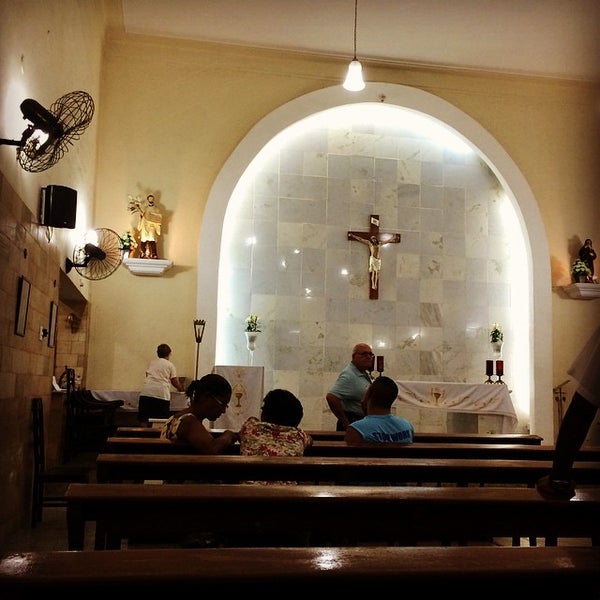
Antonio Maria Zaccaria church, Rio de Janeiro

Readings at Mass

Liturgical Colour: Green. Year: A(II).


First reading
Zechariah 9:9-10

See now, your king comes humbly to you

The Lord says this:
Rejoice heart and soul, daughter of Zion!
Shout with gladness, daughter of Jerusalem!
See now, your king comes to you;
he is victorious, he is triumphant,
humble and riding on a donkey,
on a colt, the foal of a donkey.
He will banish chariots from Ephraim
and horses from Jerusalem;
the bow of war will be banished.
He will proclaim peace for the nations.
His empire shall stretch from sea to sea,
from the River to the ends of the earth.


Responsorial Psalm
Psalm 144(145):1-2,8-11,13b-14
I will bless your name for ever, O God my King.
or
Alleluia!
I will give you glory, O God my king,
  I will bless your name for ever.
I will bless you day after day
  and praise your name for ever.
I will bless your name for ever, O God my King.
or
Alleluia!
The Lord is kind and full of compassion,
  slow to anger, abounding in love.
How good is the Lord to all,
  compassionate to all his creatures.
I will bless your name for ever, O God my King.
or
Alleluia!
All your creatures shall thank you, O Lord,
  and your friends shall repeat their blessing.
They shall speak of the glory of your reign
  and declare your might, O God.
I will bless your name for ever, O God my King.
or
Alleluia!
The Lord is faithful in all his words
  and loving in all his deeds.
The Lord supports all who fall
  and raises all who are bowed down.
I will bless your name for ever, O God my King.
or
Alleluia!

Second reading
Romans 8:9,11-13

If by the Spirit you put an end to the misdeeds of the body, you will live

Your interests are not in the unspiritual, but in the spiritual, since the Spirit of God has made his home in you. In fact, unless you possessed the Spirit of Christ you would not belong to him, and if the Spirit of him who raised Jesus from the dead is living in you, then he who raised Jesus from the dead will give life to your own mortal bodies through his Spirit living in you.
  So then, my brothers, there is no necessity for us to obey our unspiritual selves or to live unspiritual lives. If you do live in that way, you are doomed to die; but if by the Spirit you put an end to the misdeeds of the body you will live.


Gospel AcclamationMt11:25
Alleluia, alleluia!
Blessed are you, Father,
Lord of heaven and earth,
for revealing the mysteries of the kingdom
to mere children.
Alleluia!

Gospel
Matthew 11:25-30

You have hidden these things from the wise and revealed them to little children

Jesus exclaimed, ‘I bless you, Father, Lord of heaven and of earth, for hiding these things from the learned and the clever and revealing them to mere children. Yes, Father, for that is what it pleased you to do. Everything has been entrusted to me by my Father; and no one knows the Son except the Father, just as no one knows the Father except the Son and those to whom the Son chooses to reveal him.
  ‘Come to me, all you who labour and are overburdened, and I will give you rest. Shoulder my yoke and learn from me, for I am gentle and humble in heart, and you will find rest for your souls. Yes, my yoke is easy and my burden light.’

Universalis podcast: The week ahead – from 5 to 11 July

Saintt Peter To Rot. ‘All human conflict is ultimately theological’. Saint Augustine Zhao Rang and his companions. On respecting the beliefs of others. Saint Maria Goretti. (28 minutes)
Episode notes.Play

Christian Art

Illustration

Each day, The Christian Art website gives a picture and reflection on the Gospel of the day.

The readings on this page are from the Jerusalem Bible, which is used at Mass in most of the English-speaking world. The New American Bible readings, which are used at Mass in the United States, are available in the Universalis apps, programs and downloads.

You can also view this page with the Gospel in Greek and English.


TOPICS: Catholic; General Discusssion; Prayer; Worship
KEYWORDS: catholic; mt11; ordinarytime; prayer
For your reading, reflection, faith-sharing, comments, questions, discussion.

1 posted on 07/05/2026 8:59:11 AM PDT by annalex
[ Post Reply | Private Reply | View Replies]

To: All

KEYWORDS: catholic; mt11; ordinarytime; prayer;


2 posted on 07/05/2026 9:00:59 AM PDT by annalex (fear them not)
[ Post Reply | Private Reply | To 1 | View Replies]

To: nickcarraway; NYer; ELS; Pyro7480; livius; ArrogantBustard; Catholicguy; RobbyS; marshmallow; ...


Alleluia Ping

Please FReepmail me to get on/off the Alleluia Ping List.


3 posted on 07/05/2026 9:03:27 AM PDT by annalex (fear them not)
[ Post Reply | Private Reply | To 2 | View Replies]

To: annalex
Chris Robinson: My Dad [our Jim Robinson] Passed Away Peacefully Monday Night (October 27th) In Our Home.
Jim still needs our prayers. Thread 2
Prayer thread for Salvation's recovery
Pray for Ukraine
Prayer thread for Fidelis' recovery
Update on Jim Robinson's health issues
4 posted on 07/05/2026 9:03:59 AM PDT by annalex (fear them not)
[ Post Reply | Private Reply | To 3 | View Replies]

To: annalex
Matthew
 English: Douay-RheimsLatin: Vulgata ClementinaGreek NT: Byzantine/Majority Text (2000)
 Matthew 11
25At that time Jesus answered and said: I confess to thee, O Father, Lord of heaven and earth, because thou hast hid these things from the wise and prudent, and hast revealed them to the little ones. In illo tempore respondens Jesus dixit : Confiteor tibi, Pater, Domine cæli et terræ, quia abscondisti hæc a sapientibus, et prudentibus, et revelasti ea parvulis.εν εκεινω τω καιρω αποκριθεις ο ιησους ειπεν εξομολογουμαι σοι πατερ κυριε του ουρανου και της γης οτι απεκρυψας ταυτα απο σοφων και συνετων και απεκαλυψας αυτα νηπιοις
26Yea, Father; for so hath it seemed good in thy sight. Ita Pater : quoniam sic fuit placitum ante te.ναι ο πατηρ οτι ουτως εγενετο ευδοκια εμπροσθεν σου
27All things are delivered to me by my Father. And no one knoweth the Son, but the Father: neither doth any one know the Father, but the Son, and he to whom it shall please the Son to reveal him. Omnia mihi tradita sunt a Patre meo. Et nemo novit Filium, nisi Pater : neque Patrem quis novit, nisi Filius, et cui voluerit Filius revelare.παντα μοι παρεδοθη υπο του πατρος μου και ουδεις επιγινωσκει τον υιον ει μη ο πατηρ ουδε τον πατερα τις επιγινωσκει ει μη ο υιος και ω εαν βουληται ο υιος αποκαλυψαι
28Come to me, all you that labour, and are burdened, and I will refresh you. Venite ad me omnes qui laboratis, et onerati estis, et ego reficiam vos.δευτε προς με παντες οι κοπιωντες και πεφορτισμενοι καγω αναπαυσω υμας
29Take up my yoke upon you, and learn of me, because I am meek, and humble of heart: and you shall find rest to your souls. Tollite jugum meum super vos, et discite a me, quia mitis sum, et humilis corde : et invenietis requiem animabus vestris.αρατε τον ζυγον μου εφ υμας και μαθετε απ εμου οτι πραος ειμι και ταπεινος τη καρδια και ευρησετε αναπαυσιν ταις ψυχαις υμων
30For my yoke is sweet and my burden light. Jugum enim meum suave est, et onus meum leve.ο γαρ ζυγος μου χρηστος και το φορτιον μου ελαφρον εστιν

5 posted on 07/05/2026 9:06:29 AM PDT by annalex (fear them not)
[ Post Reply | Private Reply | To 4 | View Replies]

To: annalex

11:25–26

25. At that time Jesus answered and said, I thank thee, O Father, Lord of heaven and earth, because thou hast hid these things from the wise and prudent, and hast revealed them unto babes.

26. Even so, Father: for so it seemed good in thy sight.

GLOSS. (non occ.) Because the Lord knew that many would doubt respecting the foregoing matter, namely, that the Jews would not receive Christ whom the Gentile world has so willingly received, He here makes answer to their thoughts; And Jesus answered and said, I confess unto thee, Father, Lord of heaven and earth.

GLOSS. (ord.) That is, Who makest of heaven, or leavest in earthliness, whom Thou wilt. Or literally,

AUGUSTINE. (Serm. 67. 1.) If Christ, from whom all sin is far, said, I confess, confession is not proper for the sinner only, but sometimes also for him that gives thanks. We may confess either by praising God, or by accusing ourselves. When He said, I confess unto thee, it is, I praise Thee, not I accuse Myself.

JEROME. Let those hear who falsely argue, that the Saviour was not born but created, how He calls His Father Lord of heaven and earth. For if He be a creature, and the creature can call its Maker Father, it was surely foolish here to address Him as Lord of heaven and earth, and not of Him (Christ) likewise. He gives thanks that His coming has opened to the Apostles sacraments, which the Scribes and Pharisees knew not, who seemed to themselves wise, and understanding in their own eyes; That thou hast hid these things from the wise and understanding, and hast revealed them unto babes.

AUGUSTINE. (Serm. 67. 5.) That the wise and understanding are to be taken as the proud, Himself opens to us when He says, and hast revealed them unto babes; for who are babes but the humble?

GREGORY. (Mor. xxvii. 13.) He says not’ to the foolish,’ but to babes, shewing that He condemns pride, not understanding.

CHRYSOSTOM. (Horn. xxxviii.) Or when He says, The wise, He does not speak of true wisdom, but of that which the Scribes and Pharisees seemed to have by their speech. Wherefore He said not, ‘And hast revealed them to the foolish,’ but, to babes, that is, uneducated, or simple; teaching us in all things to keep ourselves from pride, and to seek humility.

HILARY. The hidden things of heavenly words and their power are hid from the wise, and revealed to the babes; babes, that is, in malice, not in understanding; hid from the wise because of their presumption of their own wisdom, not because of their wisdom.

CHRYSOSTOM. That it is revealed to the one is matter of joy, that it is hid from the other not of joy, but of sorrow; He does not therefore joy on this account, but He joys that these have known what the wise have not known.

HILARY. The justice of this the Lord confirms by the sentence of the Father’s will, that they who disdain to be made babes in God, should become fools in their own wisdom; and therefore He adds, Even so, Father; for so it seemed good before thee.

GREGORY. (Mor. xxv. 14.) In which words we have a lesson of humility, that we should not rashly presume to discuss the counsels of heaven concerning the calling of some, and the rejection of others shewing that that cannot be unrighteous which is willed by Him that is righteous.

JEROME. In these words moreover He speaks to the Father with the desire of one petitioning, that His mercy begun in the Apostles might be completed in them.

CHRYSOSTOM. These things which the Lord spoke to His disciples, made them more zealous. As afterwards they thought great things of themselves, because they cast out dæmons, therefore He here reproves them; for what they had, was by revelation, not by their own efforts. The Scribes who esteemed themselves wise and understanding were excluded because of them-pride, and therefore He says, Since on this account the mysteries of God were hid from them, fear ye, and abide as babes, for this it is that has made you partakers in the revelation. But as when Paul says, God gave them, over to a reprobate mind, (Rom. 1:28), he does not mean that God did this, but they who gave Him cause, so here, Thou hast hid these things from the wise and understanding. And wherefore were they hid from them? Hear Paul speaking, Seeking to set up their own righteousness, they were not subject to the righteousness of God (Rom. 10:3.)

11:27

27. All things are delivered unto me of my Father: and no man knoweth the Son, but the Father; neither knoweth any man the Father, save the Son, and he to whomsoever the Son will reveal him.

CHRYSOSTOM. Because He had said, I confess unto thee, Father, because thou hast hid these things from the wise, that you should not suppose that He thus thanks the Father as though He Himself was excluded from this power, He adds, All things are committed to me by my Father. Hearing the words are committed, do not admit suspicion of any thing human, for He uses this word that you may not think there be two gods unbegotten. For at the time that He was begotten He was Lord of all.

JEROME. For if we conceive of this thing according to our weakness, when he who receives begins to have, he who gives begins to be without. Or when He says, All things are committed to him, He may mean, not the heaven and earth and the elements, and the rest of the things which He created and made, but those who through the Son have access to the Father.

HILARY. Or that we may not think that there is any thing less in Him than in God, therefore He says this.

AUGUSTINE. (cont. Maximin. ii. 12.) For if He has aught less in His power than the Father has, then all that the Father has, are not His; for by begetting Him the Father gave power to the Son, as by begetting Him He gave all things which He has in His substance to Him whom He begot of His substance.

HILARY. And also in the mutual knowledge between the Father and the Son, He teaches us that there is nothing in the Son beyond what was in the Father, for it follows, And none knoweth the Son but the Father, nor does any man know the Father but the Son.

CHRYSOSTOM. By this that He only knows the Father, He shews covertly that He is of one substance with the Father. As though He had said, What wonder if I be Lord of all, when I have somewhat yet greater, namely to know the Father and to be of the same substance with Him?

HILARY. For this mutual knowledge proclaims that they are of one substance, since He that should know the Son, should know the Father also in the Son, since all things were delivered to Him by the Father.

CHRYSOSTOM. When He says, Neither does any know the Father but the Son, He does not mean that all men are altogether ignorant of Him; but that none knows Him with that knowledge wherewith He knows Him; which may also be said of the Son. For it is not said of some unknown God (i. e. who was not the Creator.) as Marcion declares.

AUGUSTINE. (De Trin. i. 8.) And because their substance is inseparable, it is enough sometimes to name the Father, sometimes the Son, nor is it possible to separate from either His Spirit, who is especially called the Spirit of truth.

JEROME. Let the heretic Eunomius therefore blush hereat who claims to himself such a knowledge of the Father and the Son, as they have one of anothera. But if he argues from what follows, and props up his madness by that, And he to whom the Son will reveal him, it is one thing to know what you know by equality with God, another to know it by His vouchsafing to reveal it.

AUGUSTINE. (De Trin. vii. 3.) The Father is revealed by the Son, that is, by His Word. For if the temporal and transitory word which we utter both shews itself, and what we wish to convey, how much more the Word of God by which all things were made, which so shews the Father as He is Father, because itself is the same and in the same manner as the Father.

AUGUSTINE. (Quæst. Ev. i. 1.) When He said, None knoweth the Son but the Father, He did not add, And he to whom the Father will reveal the Son. But when He said, None knoweth the Father but the Son, He added, And he to whom the Son will reveal him. But this must not be so understood as though the Son could be known by none but by the Father only; while the Father may be known not only by the Son, but also by those to whom the Son shall reveal Him. But it is rather expressed thus, that we may understand that both the Father and the Son Himself are revealed by the Son, inasmuch as He is the light of our mind; and what is afterwards added, And he to whom the Son will reveal, is to be understood as spoken of the Son as well as the Father, and to refer to the whole of what had been said. For the Father declares Himself by His Word, but the Word declares not only that which is intended to be declared by it, but in declaring this declares itself.

CHRYSOSTOM. If then He reveals the Father, He reveals Himself also. But the one he omits as a thing manifest, but mentions the other because there might be a doubt concerning it. Herein also He instructs us that He is so one with the Father, that it is not possible for any to come to the Father, but through the Son. For this had above all things given offence, that He seemed to be against God, and therefore He strove by all means to overthrow this notion.

11:28–30

28. Come unto me, all ye that labour and are heavy laden, and I will give you rest.

29. Take my yoke upon you, and learn of me; for I am meek and lowly in heart: and ye shall find rest unto your souls.

30. For my yoke is easy, and my burden is light.

CHRYSOSTOM. By what He had said, He brought His disciples to have a desire towards Him, shewing them His unspeakable excellence; and now He invites them to Him, saying, Come unto me, all ye that labour and are heavy laden.

AUGUSTINE. (Serm. 69. 1.) Whence do we all thus labour, but that we are mortal men, bearing vessels of clay which cause us much difficulty. But if the vessels of flesh are straitened, the regions of love will be enlarged. To what end then does He say, Come unto me, all ye that labour, but that ye should not labour?

HILARY. He calls to Him those that were labouring under the hardships of the Law, and those who are burdened with the sins of this world.

JEROME. That the burden of sin is heavy the Prophet Zachariah bears witness, saying, that wickedness sitteth upon a talent of lead. (Zech. 5:7.) And the Psalmist fills it up, Thy iniquities are grown heavy upon me. (Ps. 38:4)

GREGORY. (Mor. xxx. 15.) For a cruel yoke and hard weight of servitude it is to be subject to the things of time, to be ambitious of the things of earth, to cling to falling things, to seek to stand in things that stand not, to desire things that pass away, but to be unwilling to pass away with them. For while all things fly away against our wish, those things which had first harassed the mind in desire of gaining them, now oppress it with fear of losing them.

CHRYSOSTOM. He said not, Come ye, this man and that man, but All whosoever are in trouble, in sorrow, or in sin, not that I may exact punishment of you, but that I may remit your sins. Come ye, not that I have need of your glory, but that I seek your salvation. And I will refresh you; not, I will save you, only; but that is much greater, I will refresh you, that is, I will set you in all quietness.

RABANUS. (non occ.) I will not only take from you your burden, but will satisfy you with inward refreshment.

REMIGIUS. Come, He says, not with the feet, but with the life, not in the body, but in faith. For that is a spiritual approach by which any man approaches God; and therefore it follows, Take my yoke upon you.

RABANUS. The yoke of Christ is Christ’s Gospel, which joins and yokes together Jews and Gentiles in the unity of the faith. This we are commanded to take upon us, that is, to have in honour; lest perchance setting it beneath us, that is wrongly despising it, we should trample upon it with the miry feet of unholiness; wherefore He adds, Learn of me.

AUGUSTINE. (Serm. 69. 1.) Not to create a world, or to do miracles in that world; but that I am meek and lowly in heart. Wouldest thou be great? Begin with the least. Wouldest thou build up a mighty fabric of greatness? First think of the foundation of humility; for the mightier building any seeks to raise, the deeper let him dig for his foundation. Whither is the summit of our building to rise? To the sight of God.

RABANUS. We must learn then from our Saviour to be meek in temper, and lowly in mind; let us hurt none, let us despise none, and the virtues which we have shewn in deed let us retain in our heart.

CHRYSOSTOM. And therefore in beginning the Divine Law He begins with humility, and sets before us a great reward, saying, And ye shall find rest for your souls. This is the highest reward, you shall not only be made useful to others, but shall make yourself to have peace; and He gives you the promise of it before it comes, but when it is come, you shall rejoice in perpetual rest. And that they might not be afraid because He had spoken of a burden, therefore He adds, For my yoke is pleasant, and my burden light.

HILARY. He holds forth the inducements of a pleasant yoke, and a light burden, that to them that believe He may afford the knowledge of that good which He alone knoweth in the Father.

GREGORY. (Mor. iv. 33.) What burden is it to put upon the neck of our mind that He bids us shun all desire that disturbs, and turn from the toilsome paths of this world?

HILARY. And what is more pleasant than that yoke, what lighter than that burden? To be made better, to abstain from wickedness, to choose the good, and refuse the evil, to love all men, to hate none, to gain eternal things, not to be taken with things present, to be unwilling to do that to another which yourself would be pained to suffer.

RABANUS. But how is Christ’s yoke pleasant, seeing it was said above, Narrow is the way which leadeth unto life? (Mat. 7:14.) That which is entered upon by a narrow entrance is in process of time made broad by the unspeakable sweetness of love.

AUGUSTINE. (Serm. 70. 1.) So then they who with unfearing neck have submitted to the yoke of the Lord endure such hardships and dangers, that they seem to be called not from labour to rest, but from rest to labour. But the Holy Spirit was there who, as the outward man decayed, renewed the inward man day by day, and giving a foretaste of spiritual rest in the rich pleasures of God in the hope of blessedness to come, smoothed all that seemed rough, lightened all that was heavy. Men suffer amputations and burnings, that at the price of sharper pain they may be delivered from torments less but more lasting, as boils or swellings. What storms and dangers will not merchants undergo that they may acquire perishing riches? Even those who love not riches endure the same hardships; but those that love them endure the same, but to them they are not hardships. For love makes right easy, and almost nought all things however dreadful and monstrous. How much more easily then does love do that for true happiness, which avarice does for misery as far as it can?

JEROME. And how is the Gospel lighter than the Law, seeing in the Law murder and adultery, but under the Gospel anger and concupiscence also, are punished? Because by the Law many things are commanded which the Apostle fully teaches us cannot be fulfilled; by the Law works are required, by the Gospel the will is sought for, which even if it goes not into act, yet does not lose its reward. The Gospel commands what we can do, as that we lust not; this is in our own power; the Law punishes not the will but the act, as adultery. Suppose a virgin to have been violated in time of persecution; as here was not the will she is held as a virgin under the Gospel; under the Law she is cast out as defiled.

Catena Aurea Matthew 11
6 posted on 07/05/2026 9:08:36 AM PDT by annalex (fear them not)
[ Post Reply | Private Reply | To 5 | View Replies]

To: annalex


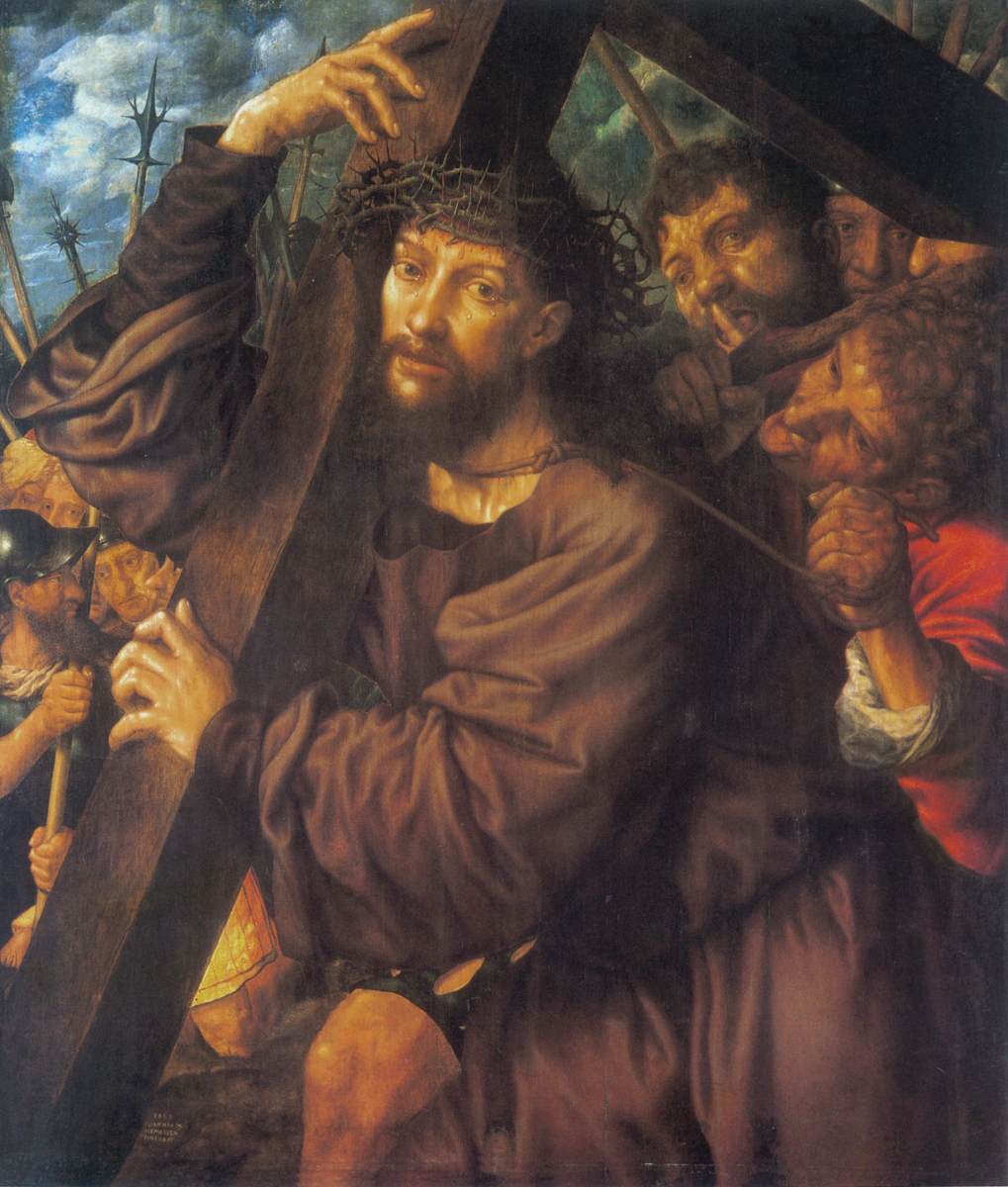
Christ Carrying the Cross

Jan Sanders van Hemessen

1553
Oil on wood, 111 x 97,5 cm
Christian Museum, Esztergom

7 posted on 07/05/2026 9:09:19 AM PDT by annalex (fear them not)
[ Post Reply | Private Reply | To 6 | View Replies]

To: annalex

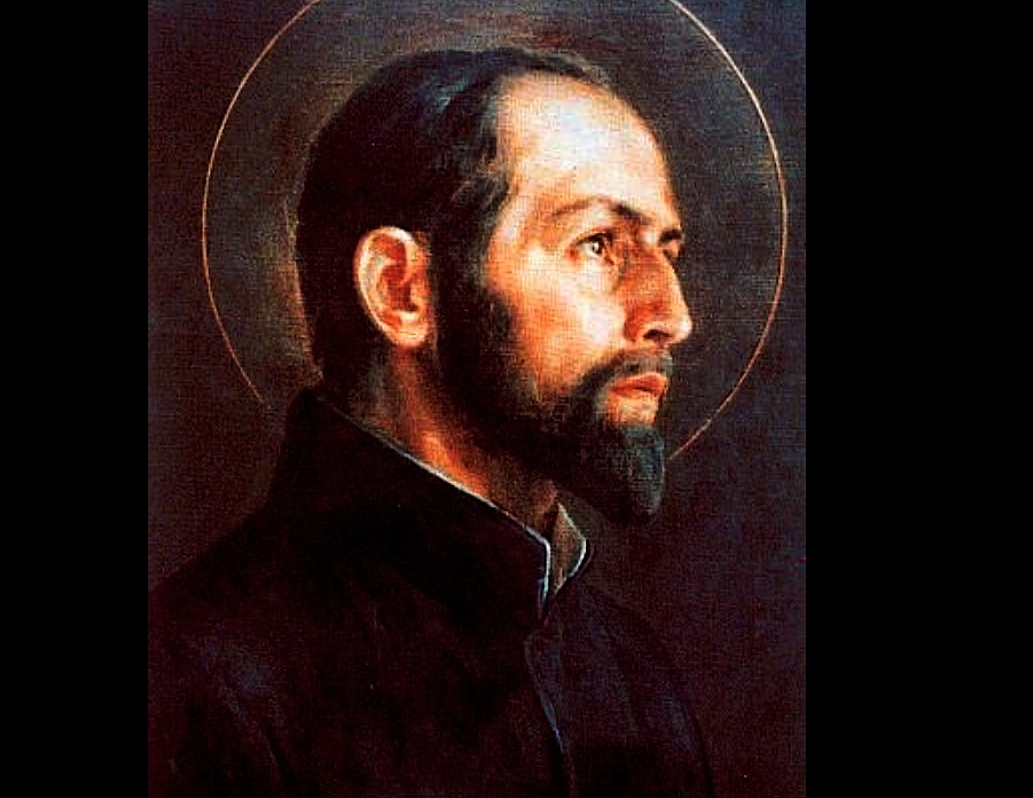
t. Antonio Maria Zaccaria

Founder of the Clerks Regular of St. Paul, commonly known as the Barnabites; b. in Cremona, Italy, 1502; d. 5 July, 1539. While he was still an infant his father died, leaving the care of the child's education to his mother, who taught him compassion for the poor and suffering by making him her almoner. After completing the studies given in the schools at Cremona he was sent to Padua for his philosophy, and in 1520, when he had finished this course, began the study of medicine in the university at that place. At the age of twenty-two he received his degree of Doctor of Medicine and returned to Cremona to practise his profession. Three years later he began to study theology and received holy orders in 1528. He now devoted himself with renewed energy to works of charity and mercy, visiting and consoling the sick in hospitals and poor-prisons. The ministry of preaching and the administration of the sacraments produced such great fruit that St. Antonio was encouraged to seek a larger field for his labours and to carry out a great project which he hard formed for the good of souls. He went to the populous city of Milan, of which he was a burgess, and entered the Confraternity of Eternal Wisdom. Among the members of this religious body he allied himself with two priests, Fathers Ferrari and Morigia, and told them of his idea of founding a congregation of secular clergy. Northern Italy at this period was in a deplorable condition. Frequent wars had devastated the country. The advent of the Lutheran soldiery and their contempt for everything Catholic had spread the contagion of bad example, while famine and plague followed in the track of the soldiers. These scourges combined to produce a state of misery that appealed most powerfully to Antonio and his associates. "The Congregation of the Regular Clerks of St. Paul", St. Antonio's work, which began with five members, was canonically sanctioned by Pope Clement VII in 1533. Their rule bound them to "regenerate and revive the love of the Divine worship, and a truly Christian way of life by frequent preaching and the faithful administration of the sacraments."

The first superior of the new congregation was St. Antonio, who soon hecame known in Milan as an apostle. Besides giving conferences in churches to ecclesiastics and lay people, he went into the streets of the city with crucifix in hand, and produced great fruit in souls by preaching on the Passion and Death of Christ and the need of penance for sin. In 1536 he resigned the superiorship to Father Morigia and later went to Vicenza at the request of Cardinal Ridolfi. There he succeeded in reforming morals and in bringing two religious communities of women to a stricter observance of their rule. In the latter labour he was greatly aided by a congregation of nuns "The Angelicals of St. Paul", which he had founded in Milan. He introduced, also, the devotion of the "Forty Hours' Prayers", in Vicenza. The last two years of his life were spent in Milan. He sought there a more suitable church for his Congregation and accepted the offer of the church of S. Barnabas, but died before the affaire was arranged. From this church of St. Barnabas, the Congregation received the name by which its members are commonly known, i.e. Barnabites. Worn out by his voluntary penences, as well as by his untiring labours of charity, he was attacked by fever during one of his mission. Knowing that this illness was his last, he had himself brought to his native city, Cremona. There, in his mother's house, he received the last sacraments and peacefully expired at the early age of thirty-seven. His body was found incorrupt 27 years after his death. He was declared Blessed by Pope Pius IX in 1849. (See BARNABITES.) On 15 May, 1897, he was solemnly canonized in St. Peter's, Rome, by Pope Leo XIII. His writings are: "Detti notabili, raccolti da varii autori" (Venice, 1583); "Constitutiones ordinis clericorum regularium" (not published); "Sermones super praeceptis Decalogi" (not published).

(Taken from Catholic Encyclopedia)


ewtn.com
8 posted on 07/05/2026 9:15:33 AM PDT by annalex (fear them not)
[ Post Reply | Private Reply | To 7 | View Replies]

To: annalex

9 posted on 07/05/2026 9:17:08 AM PDT by annalex (fear them not)
[ Post Reply | Private Reply | To 8 | View Replies]

To: annalex

NAVARRE BIBLE COMMENTARY(RSV)

Ad Majorem Dei Gloriam (To the Greater Glory of God)

Today’s First Reading

Zechariah 9:9-10

The arrival of the Messiah
-------------------------------------
[9] Rejoice greatly. O daughter of Zion!
Shout aloud, O daughter of Jerusalem!
Lo, your king comes to you;
triumphant and victorious is he,
humble and riding on an ass,
on a colt the foal of an ass.
[10] I will cut off the chariot from Ephraim
and the war horse from Jerusalem;
and the battle how shall he cut off,
and he shall command peace to the nations;
his dominion shall be from sea to sea,
and from the River to the ends of the earth.

*********************************************
Commentary:

9:1-14:21. The prophecies concerning the new circumstances of Jerusalem and Judah in chapters 7-8 give way now to two long oracles describing how that definitive time will he established by the Messiah (chaps. 9-10), and how the kingdom of God will come about (chaps. 12-14). Worked in among these themes are short prophetical pieces which are apparently anonymous, for there is no mention of Zechariah in them and no dates are given. The two oracles start in the same way: “An oracle. The word of the Lord ...” (9:1; 12:1), a formula which is also used at the start of the book of Malachi (Mal 1:1). Because this construction is found on only these three occasions in the Old Testament, the three pieces are thought to come from some third source and to have found their way into the biblical text here -- two into the book of Zechariah and one into that of Malachi.

9:1-11:17. This first oracle includes two prophetical proclamations -- one about the advent of the Messiah king (9:1-10:12), and the other about the rejection of the good shepherd who tries to lead the people along the paths of faithfulness and unity, (11:1-17). The first one starts with a prophetical description of the victorious progress of the Lord as he makes his way down to Jerusalem from the north (9:1-8); then the city is invited to rejoice at the arrival of its king (9:9-10); and finally, the restoration of Israel is proclaimed (9:11-17).

9:9-10. The prophet now speaks directly to Jerusalem (“daughter of Zion”) and her citizens (“daughter of Jerusalem”) as representatives of the entire chosen people. An invitation to rejoice and celebrate is often found in the Old Testament in connexion with the arrival of the messianic era (cf. Is 12:6; 54:1; Zeph 3:14); here it is issued because Jerusalem’s king is arriving. Although the text does not say so explicitly, it is implied that he is the descendant of Dayid; there is an echo here of 2 Samuel 7:12-16 and Isaiah 7:14. This king is distinguished by what he is and what he does. The word “triumphant” translates the Hebrew saddiq, which means “just”: he does the will of God perfectly; and the term “victorious’ means that he enjoys divine protection and salvation. The Septuagint and the Vulgate, however, read it as meaning that he was the saviour. He is also “humble”, that is, he is not boastful in the presence of either God or men. He is peaceable -- as can be seen from the fact that he rides not on a horse like kings of the time but on an ass, like the princes of ancient times (cf. Gen 49:11; Judg 5:10; 10:4; 12:14). He will cause the weapons of war to disappear from Samaria and Judah (cf. Is 2:4, 7; Mic 5:9), who will form a single, united people; and he will also establish peace among the nations (v. 10). This king has features similar to those of the “servant of the Lord” of whom Isaiah spoke (cf. Is 53:11) and to those of the lowly people whom God found acceptable (cf. Zeph 2:3; 3:12). Our Lord Jesus Christ fulfilled this prophecy when he entered Jerusalem before the Passover and was acclaimed by the crowd as the Messiah, the Son of David (cf. Mt 21:1-5; Jn 12:14). “The ‘King of glory’ (Ps 24:7-10) enters his City ‘riding on an ass’ (Zech 9:9). Jesus conquers the Daughter of Zion, a figure of his Church, neither by ruse nor by violence, but by the humility that bears witness to the truth (cf. Jn 18:37)” (Catechism of the Catholic Church, 559). In an allegorical reading, Clement of Alexandria takes the young ass of v. 9 to stand for people who are not subject to evil: “It was not enough to say a ‘colt’; the sacred writer added, ‘the foal of an ass’, to emphasize the youth of the humanity of Christ, his eternal youth. The divine groom tends to us and trains us, the youngest, smallest colts (Paedagogus, 1, 15, 1).

10 posted on 07/05/2026 4:42:21 PM PDT by fidelis (👈 Under no obligation to respond to rude, ignorant, abusive, bellicose, and obnoxious posts.)
[ Post Reply | Private Reply | To 9 | View Replies]

Today’s Second Reading

From: Romans 8:9, 11-13

Life in the Spirit
------------------
[9] But you are not in the flesh, you are in the Spirit, if the Spirit of God really dwells in you. Any one who does not have the Spirit of Christ does not belong to him. [11] If the Spirit of him who raised Jesus from the dead dwells in you, he who raised Christ Jesus from the dead will give life to your mortal bodies also through his Spirit who dwells in you.

[12] So then, brethren, we are debtors, not to the flesh, to live according to the flesh--[13] for if you live according to the flesh you will die, but if by the Spirit you put to death the deeds of the body you will live.

***********************************************************************
Commentary:

10-11. Once he is justified the Christian lives in the grace of God and confidently hopes in his future resurrection; Christ himself lives in him (cf. Gal 2:20; 1 Cor 15:20-23). However, he is not spared the experience of death, a consequence of original sin (cf. Rom 5:12; 6:23). Along with suffering, concupiscence and other limitations, death is still a factor after baptism; it is something which motivates us to struggle and makes us to be like Christ. Almost all commentators interpret the expression "your bodies are dead because of sin" as referring to the fact that, due to sin, the human body is destined to die. So sure is this prospect of death that the Apostle sees the body as "already dead".

St. John Chrysostom makes an acute observation: if Christ is living in the Christian, then the divine Spirit, the Third Person of the Trinity, is also present in him. If this divine Spirit is absent, then indeed death reigns supreme, and with it the wrath of God, rejection of his laws, separation from Christ, and expulsion of our Guest. And he adds: "But when one has the Spirit within, what can be lacking? With the Spirit one belongs to Christ, one possesses him, one vies for honor with the angels. With the Spirit, the flesh is crucified, one tastes the delight of an immortal life, one has a pledge of future resurrection and advances rapidly on the path of virtue. This is what Paul calls putting the flesh to death" ("Hom. on Rom.", 13).

11 posted on 07/05/2026 4:42:35 PM PDT by fidelis (👈 Under no obligation to respond to rude, ignorant, abusive, bellicose, and obnoxious posts.)
[ Post Reply | Private Reply | To 10 | View Replies]

Today’s Gospel Reading

From: Matthew 11:25-30

Jesus Thanks His Father
-----------------------
[25] At that time Jesus declared, "I thank Thee, Father, Lord of Heaven and earth, that Thou hast hidden these things from the wise and understanding and revealed them to babes; [26] yea, Father, for such was Thy gracious will. [27] All things have been delivered to Me by My Father; and no one knows the Son except the Father, and no one knows the Father except the Son and any one to whom the Son chooses to reveal Him. [28] Come to Me, all who labor and are heavy laden, and I will give you rest. [29] Take My yoke upon you, and learn from Me; for I am gentle and lowly in heart, and you will find rest for your souls. [30] For My yoke is easy, and My burden is light."

***********************************************************************
Commentary:

25-26. The wise and understanding of this world, that is, those who rely on their own judgment, cannot accept the revelation which Christ has brought us. Supernatural outlook is always connected with humility. A humble person, who gives himself little importance, sees; a person who is full of self-esteem fails to perceive supernatural things.

27. Here Jesus formally reveals His divinity. Our knowledge of a person shows our intimacy with Him, according to the principle given by St. Paul: "For what person knows a man's thoughts except the spirit of the man which is in him?" (1 Corinthians 2:11). The Son knows the Father by the same knowledge as that by which the Father knows the Son. This identity of knowledge implies oneness of nature; that is to say, Jesus is God just as the Father is God.

28-30. Our Lord calls everyone to come to Him. We all find things difficult in one way or another. The history of souls bears out the truth of these words of Jesus. Only the Gospel can fully satisfy the thirst for truth and justice which sincere people feel. Only our Lord, our Master--and those to whom He passes on His power— can soothe the sinner by telling him, "Your sins are forgiven" (Matthew 9:2). In this connection Pope Paul VI teaches: "Jesus says now and always, `Come to Me, all who labor and are heavy laden, and I will give you rest.' His attitude towards us is one of invitation, knowledge and compassion; indeed, it is one of offering, promise, friendship, goodness, remedy of our ailments; He is our comforter; indeed, our nourishment, our bread, giving us energy and life" ("Homily on Corpus Christi", 13 June 1974).

"Come to Me": the Master is addressing the crowds who are following Him, "harassed and helpless, like sheep without a shepherd" (Matthew 9:36). The Pharisees weighed them down with an endless series of petty regulations (cf. Acts 15:10), yet they brought no peace to their souls. Jesus tells these people, and us, about the kind of burden He imposes: "Any other burden oppresses and crushes you, but Christ's actually takes weight off you. Any other burden weighs down, but Christ's gives you wings. If you take a bird's wings away, you might seem to be taking weight off it, but the more weight you take off, the more you tie it down to the earth. There it is on the ground, and you wanted to relieve it of a weight; give it back the weight of its wings and you will see how it flies" (St. Augustine, "Sermon" 126).

"All you who go about tormented, afflicted and burdened with the burden of your cares and desires, go forth from them, come to Me and I will refresh you and you shall find for your souls the rest which your desires take from you" (St. John of the Cross, "Ascent of Mount Carmel", Book 1, Chapter 7, 4).

12 posted on 07/05/2026 4:43:11 PM PDT by fidelis (👈 Under no obligation to respond to rude, ignorant, abusive, bellicose, and obnoxious posts.)
[ Post Reply | Private Reply | To 11 | View Replies]

Click here to go to the FR thread for the weekly Sacred Page meditations on the Scripture readings for this Sunday's Mass by Dr. John Bergsma.

13 posted on 07/05/2026 4:45:02 PM PDT by fidelis (👈 Under no obligation to respond to rude, ignorant, abusive, bellicose, and obnoxious posts.)
[ Post Reply | Private Reply | To 12 | View Replies]

Click here to go to the My Catholic Life! Devotional thread for a meditation on today’s Gospel Reading.

14 posted on 07/05/2026 4:46:35 PM PDT by fidelis (👈 Under no obligation to respond to rude, ignorant, abusive, bellicose, and obnoxious posts.)
[ Post Reply | Private Reply | To 13 | View Replies]

Disclaimer: Opinions posted on Free Republic are those of the individual posters and do not necessarily represent the opinion of Free Republic or its management. All materials posted herein are protected by copyright law and the exemption for fair use of copyrighted works.

Free Republic
Browse · Search
Religion
Topics · Post Article

FreeRepublic, LLC, PO BOX 9771, FRESNO, CA 93794
FreeRepublic.com is powered by software copyright 2000-2008 John Robinson