
Posted on 07/04/2026 10:12:31 PM PDT by fidelis
Fourteenth Sunday in Ordinary Time
At that time Jesus exclaimed: “I give praise to you, Father, Lord of heaven and earth, for although you have hidden these things from the wise and the learned you have revealed them to little ones. Yes, Father, such has been your gracious will. All things have been handed over to me by my Father. No one knows the Son except the Father, and no one knows the Father except the Son and anyone to whom the Son wishes to reveal him.” Matthew 11:25–27
This passage beautifully summarizes the entire Christian life—the life to which we are called and in which we find our purpose, meaning, and ultimate fulfillment. Jesus begins by offering praise to the “Father, Lord of heaven and earth.” Though Jesus Himself is fully God, “one in being with the Father”—co-eternal and consubstantial—He nevertheless offers praise to the Father.
In the original Greek, the phrase “I give praise to you…” (exomologoumai) indicates an open, public, and full acknowledgment by the Son of the Father’s sovereignty and gracious will. The Father is the All-Powerful Lord of all that exists—everything in the heavens and on earth. Jesus expresses this fundamental stance toward the Father for two reasons: first, because it is eternally true; and second, so that we might humble ourselves and join Him in praying the same prayer—through, with, and in Jesus.
This prayer closely parallels the opening of the Lord’s Prayer (the “Our Father”), because both begin with a direct acknowledgment and praise of the Father’s holiness and sovereignty. The Lord’s Prayer is the perfect prayer precisely because it was given to us by Jesus Himself. After addressing the Father, it presents seven petitions. According to Saints Thomas Aquinas and Augustine, the first two petitions—“hallowed be Thy name” and “Thy Kingdom come”—reveal the central purpose of our lives: to glorify God eternally and to be caught up in, and actively participate in that glory by becoming full members of His Kingdom. In today’s prayer, Jesus says “these things” have been revealed “to little ones” and that the Son can choose to reveal the Father to whom He wishes.
We are drawn into Jesus’ prayer and intimate relationship with the Father precisely when Jesus reveals the Father to us: “No one knows the Father except the Son and anyone to whom the Son wishes to reveal him.”
Because Jesus deeply desires that we come to know and love the Father with the same love He has for Him, His prayer continues by gently inviting us—especially when burdened by weariness, weakness, or sin—to lay our burdens down before His merciful power and glory: “Come to me, all you who labor and are burdened, and I will give you rest” (Matthew 11:28).
Reflect today upon this beautiful prayer, knowing in your heart that Jesus Himself invites you to pray it with Him, through Him, and in Him. He longs for His voice to resonate within your voice, His love to beat within your heart, and His holy desires to shape your own. Turn your gaze toward the Father—He who is both the Source and ultimate goal of your existence—and strive lovingly and humbly to accomplish all things according to His gracious and holy will.
Our Father, You who dwell in the heavens and within the souls of Your sanctified ones, may Your eternal essence, Your holy Name—the One who was, who is, and who is to come, the Great I AM—be honored, praised, and glorified forever. May this glorification shine forth in my life and in the lives of all Your faithful, as we await with joyful hope the return in glory of Your Son, Jesus our Savior, when You, together with Him and the Holy Spirit, will establish the New Heavens and the New Earth. Jesus, I trust in You.
Please keep in mind that this is a Catholic Caucus/Devotional thread for the purpose of prayerful reflection on the Sacred Scriptures and is closed to debate of any kind. Per FR policy on Religion Caucus threads, off-topic, argumentative, and abusive comments are not allowed and will be submitted to the Mods for deletion. Thanks, and God bless you.
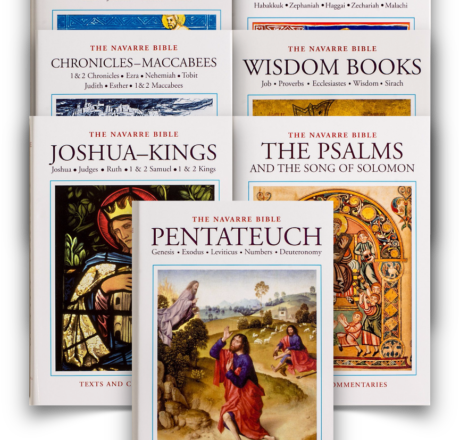
Today’s First Reading
Zechariah 9:9-10
The arrival of the Messiah
-------------------------------------
[9] Rejoice greatly. O daughter of Zion!
Shout aloud, O daughter of Jerusalem!
Lo, your king comes to you;
triumphant and victorious is he,
humble and riding on an ass,
on a colt the foal of an ass.
[10] I will cut off the chariot from Ephraim
and the war horse from Jerusalem;
and the battle how shall he cut off,
and he shall command peace to the nations;
his dominion shall be from sea to sea,
and from the River to the ends of the earth.
*********************************************
Commentary:
9:1-14:21. The prophecies concerning the new circumstances of Jerusalem and Judah in chapters 7-8 give way now to two long oracles describing how that definitive time will he established by the Messiah (chaps. 9-10), and how the kingdom of God will come about (chaps. 12-14). Worked in among these themes are short prophetical pieces which are apparently anonymous, for there is no mention of Zechariah in them and no dates are given. The two oracles start in the same way: “An oracle. The word of the Lord ...” (9:1; 12:1), a formula which is also used at the start of the book of Malachi (Mal 1:1). Because this construction is found on only these three occasions in the Old Testament, the three pieces are thought to come from some third source and to have found their way into the biblical text here -- two into the book of Zechariah and one into that of Malachi.
9:1-11:17. This first oracle includes two prophetical proclamations -- one about the advent of the Messiah king (9:1-10:12), and the other about the rejection of the good shepherd who tries to lead the people along the paths of faithfulness and unity, (11:1-17). The first one starts with a prophetical description of the victorious progress of the Lord as he makes his way down to Jerusalem from the north (9:1-8); then the city is invited to rejoice at the arrival of its king (9:9-10); and finally, the restoration of Israel is proclaimed (9:11-17).
9:9-10. The prophet now speaks directly to Jerusalem (“daughter of Zion”) and her citizens (“daughter of Jerusalem”) as representatives of the entire chosen people. An invitation to rejoice and celebrate is often found in the Old Testament in connexion with the arrival of the messianic era (cf. Is 12:6; 54:1; Zeph 3:14); here it is issued because Jerusalem’s king is arriving. Although the text does not say so explicitly, it is implied that he is the descendant of Dayid; there is an echo here of 2 Samuel 7:12-16 and Isaiah 7:14. This king is distinguished by what he is and what he does. The word “triumphant” translates the Hebrew saddiq, which means “just”: he does the will of God perfectly; and the term “victorious’ means that he enjoys divine protection and salvation. The Septuagint and the Vulgate, however, read it as meaning that he was the saviour. He is also “humble”, that is, he is not boastful in the presence of either God or men. He is peaceable -- as can be seen from the fact that he rides not on a horse like kings of the time but on an ass, like the princes of ancient times (cf. Gen 49:11; Judg 5:10; 10:4; 12:14). He will cause the weapons of war to disappear from Samaria and Judah (cf. Is 2:4, 7; Mic 5:9), who will form a single, united people; and he will also establish peace among the nations (v. 10). This king has features similar to those of the “servant of the Lord” of whom Isaiah spoke (cf. Is 53:11) and to those of the lowly people whom God found acceptable (cf. Zeph 2:3; 3:12). Our Lord Jesus Christ fulfilled this prophecy when he entered Jerusalem before the Passover and was acclaimed by the crowd as the Messiah, the Son of David (cf. Mt 21:1-5; Jn 12:14). “The ‘King of glory’ (Ps 24:7-10) enters his City ‘riding on an ass’ (Zech 9:9). Jesus conquers the Daughter of Zion, a figure of his Church, neither by ruse nor by violence, but by the humility that bears witness to the truth (cf. Jn 18:37)” (Catechism of the Catholic Church, 559). In an allegorical reading, Clement of Alexandria takes the young ass of v. 9 to stand for people who are not subject to evil: “It was not enough to say a ‘colt’; the sacred writer added, ‘the foal of an ass’, to emphasize the youth of the humanity of Christ, his eternal youth. The divine groom tends to us and trains us, the youngest, smallest colts (Paedagogus, 1, 15, 1).
From: Romans 8:9, 11-13
Life in the Spirit
------------------
[9] But you are not in the flesh, you are in the Spirit, if the Spirit of God really dwells in you. Any one who does not have the Spirit of Christ does not belong to him. [11] If the Spirit of him who raised Jesus from the dead dwells in you, he who raised Christ Jesus from the dead will give life to your mortal bodies also through his Spirit who dwells in you.
[12] So then, brethren, we are debtors, not to the flesh, to live according to the flesh--[13] for if you live according to the flesh you will die, but if by the Spirit you put to death the deeds of the body you will live.
***********************************************************************
Commentary:
10-11. Once he is justified the Christian lives in the grace of God and confidently hopes in his future resurrection; Christ himself lives in him (cf. Gal 2:20; 1 Cor 15:20-23). However, he is not spared the experience of death, a consequence of original sin (cf. Rom 5:12; 6:23). Along with suffering, concupiscence and other limitations, death is still a factor after baptism; it is something which motivates us to struggle and makes us to be like Christ. Almost all commentators interpret the expression "your bodies are dead because of sin" as referring to the fact that, due to sin, the human body is destined to die. So sure is this prospect of death that the Apostle sees the body as "already dead".
St. John Chrysostom makes an acute observation: if Christ is living in the Christian, then the divine Spirit, the Third Person of the Trinity, is also present in him. If this divine Spirit is absent, then indeed death reigns supreme, and with it the wrath of God, rejection of his laws, separation from Christ, and expulsion of our Guest. And he adds: "But when one has the Spirit within, what can be lacking? With the Spirit one belongs to Christ, one possesses him, one vies for honor with the angels. With the Spirit, the flesh is crucified, one tastes the delight of an immortal life, one has a pledge of future resurrection and advances rapidly on the path of virtue. This is what Paul calls putting the flesh to death" ("Hom. on Rom.", 13).
From: Matthew 11:25-30
Jesus Thanks His Father
-----------------------
[25] At that time Jesus declared, "I thank Thee, Father, Lord of Heaven and earth, that Thou hast hidden these things from the wise and understanding and revealed them to babes; [26] yea, Father, for such was Thy gracious will. [27] All things have been delivered to Me by My Father; and no one knows the Son except the Father, and no one knows the Father except the Son and any one to whom the Son chooses to reveal Him. [28] Come to Me, all who labor and are heavy laden, and I will give you rest. [29] Take My yoke upon you, and learn from Me; for I am gentle and lowly in heart, and you will find rest for your souls. [30] For My yoke is easy, and My burden is light."
***********************************************************************
Commentary:
25-26. The wise and understanding of this world, that is, those who rely on their own judgment, cannot accept the revelation which Christ has brought us. Supernatural outlook is always connected with humility. A humble person, who gives himself little importance, sees; a person who is full of self-esteem fails to perceive supernatural things.
27. Here Jesus formally reveals His divinity. Our knowledge of a person shows our intimacy with Him, according to the principle given by St. Paul: "For what person knows a man's thoughts except the spirit of the man which is in him?" (1 Corinthians 2:11). The Son knows the Father by the same knowledge as that by which the Father knows the Son. This identity of knowledge implies oneness of nature; that is to say, Jesus is God just as the Father is God.
28-30. Our Lord calls everyone to come to Him. We all find things difficult in one way or another. The history of souls bears out the truth of these words of Jesus. Only the Gospel can fully satisfy the thirst for truth and justice which sincere people feel. Only our Lord, our Master--and those to whom He passes on His power— can soothe the sinner by telling him, "Your sins are forgiven" (Matthew 9:2). In this connection Pope Paul VI teaches: "Jesus says now and always, `Come to Me, all who labor and are heavy laden, and I will give you rest.' His attitude towards us is one of invitation, knowledge and compassion; indeed, it is one of offering, promise, friendship, goodness, remedy of our ailments; He is our comforter; indeed, our nourishment, our bread, giving us energy and life" ("Homily on Corpus Christi", 13 June 1974).
"Come to Me": the Master is addressing the crowds who are following Him, "harassed and helpless, like sheep without a shepherd" (Matthew 9:36). The Pharisees weighed them down with an endless series of petty regulations (cf. Acts 15:10), yet they brought no peace to their souls. Jesus tells these people, and us, about the kind of burden He imposes: "Any other burden oppresses and crushes you, but Christ's actually takes weight off you. Any other burden weighs down, but Christ's gives you wings. If you take a bird's wings away, you might seem to be taking weight off it, but the more weight you take off, the more you tie it down to the earth. There it is on the ground, and you wanted to relieve it of a weight; give it back the weight of its wings and you will see how it flies" (St. Augustine, "Sermon" 126).
"All you who go about tormented, afflicted and burdened with the burden of your cares and desires, go forth from them, come to Me and I will refresh you and you shall find for your souls the rest which your desires take from you" (St. John of the Cross, "Ascent of Mount Carmel", Book 1, Chapter 7, 4).
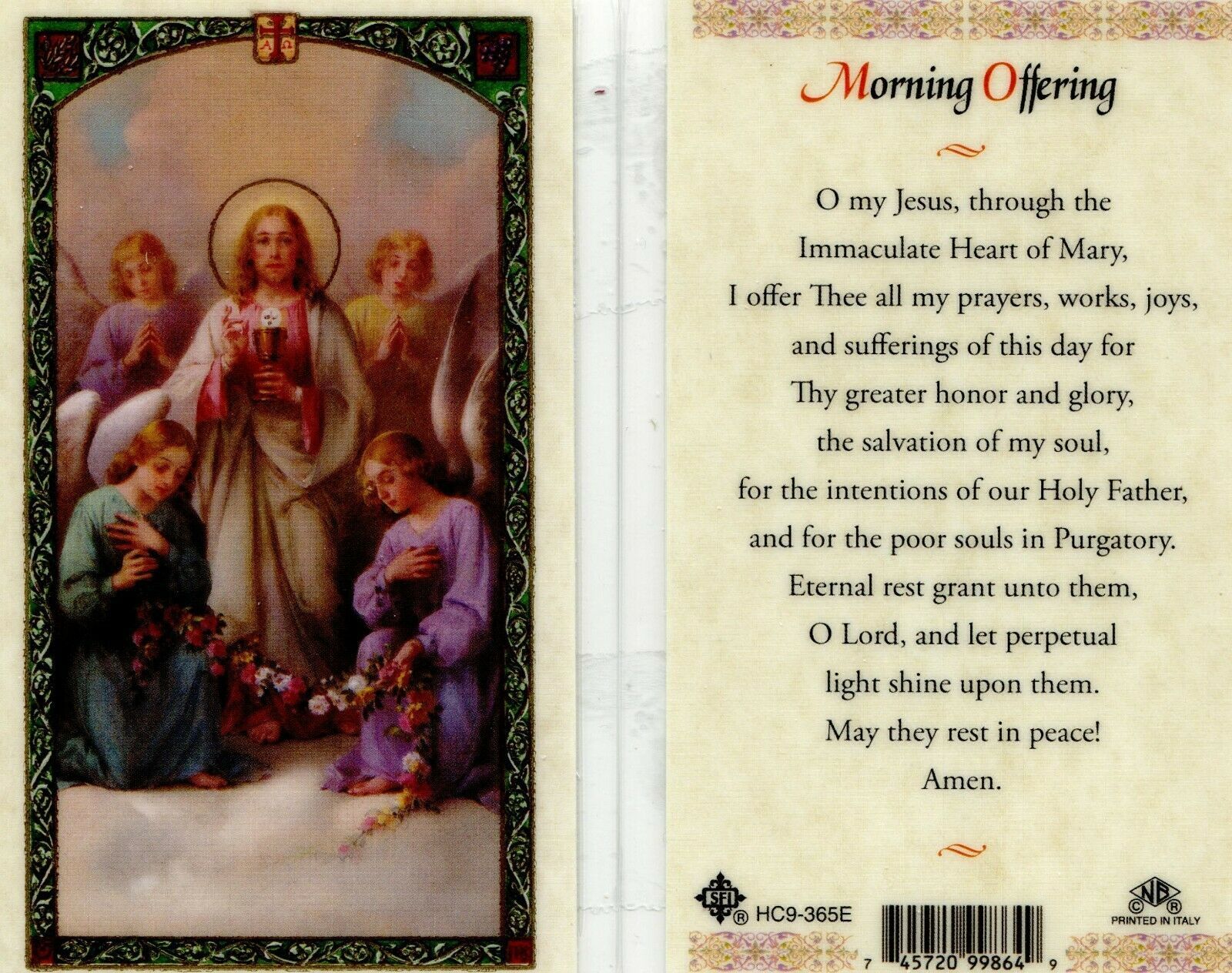
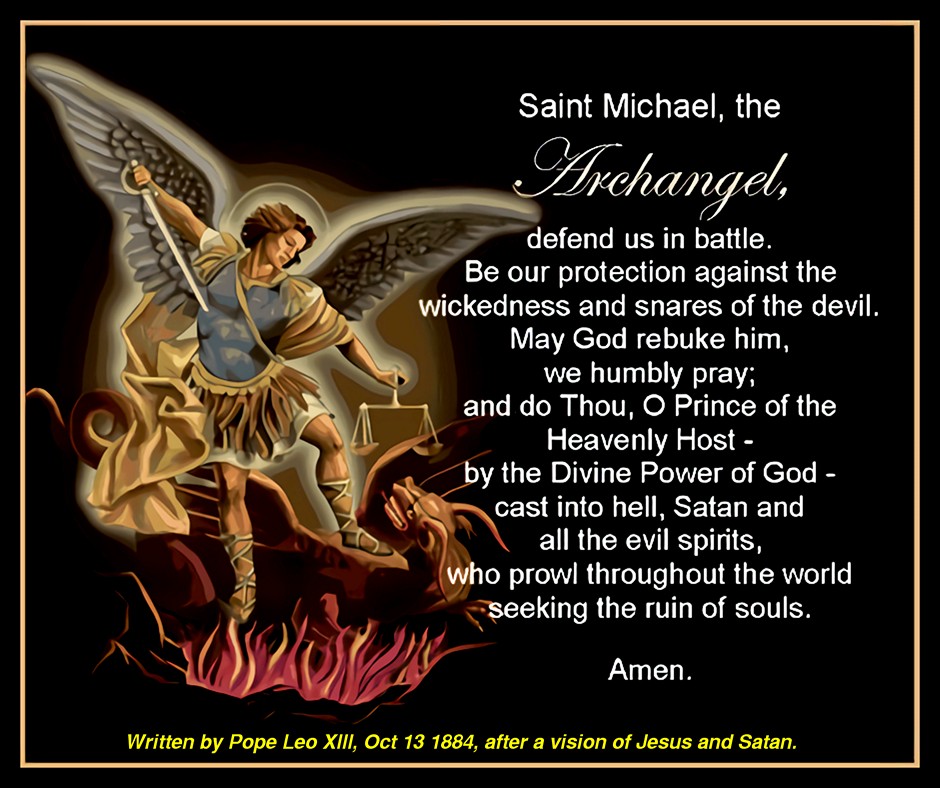
The Month of July is Dedicated to the Precious of Jesus

“They triumphed over the devil by the blood of the Lamb and by the word of their testimony; they did not love their lives so much as to shrink from death.” (Revelation 12:11)

Pope Leo XIV’s prayer intention for the month of July, 2026:
For respect for human life
Let us pray for the respect and protection of human life in all its stages, recognizing it as a gift from God.

Disclaimer: Opinions posted on Free Republic are those of the individual posters and do not necessarily represent the opinion of Free Republic or its management. All materials posted herein are protected by copyright law and the exemption for fair use of copyrighted works.


