
Catena Aurea by St. Thomas Aguinas
CHAP. 77:1–2
1. Judge not, that ye be not judged.
2. For with what judgment ye judge, ye shall be judged: and with what measure ye mete, it shall be measured to you again.
AUGUSTINE. (ubi sup.) Since when these temporal things are provided beforehand against the future, it is uncertain with what purpose it is done, as it may be with a single or double mind, He opportunely subjoins, Judge not.
PSEUDO-CHRYSOSTOM. Otherwise; He has drawn out thus far the consequences of his injunctions of almsgiving; He now takes up those respecting prayer. And this doctrine is in a sort a continuation of that of the prayer; as though it should run, Forgive us our debts, and then should follow, Judge not, that ye be not judged.
JEROME. But if He forbids us to judge, how then does Paul judge the Corinthian who had committed uncleanness? Or Peter convict Ananias and Sapphira of falsehood?
PSEUDO-CHRYSOSTOM. But some explain this place after a sense, as though the Lord did not herein forbid Christians to reprove others out of good will, but only intended that Christians should not despise Christians by making a show of their own righteousness, hating others often on suspicion alone, condemning them, and pursuing private grudges under the show of piety.
CHRYSOSTOM. Wherefore He does not say, ‘Do not cause a sinner to cease,’ but do not judge; that is, be not a bitter judge; correct him indeed, but not as an enemy seeking revenge, but as a physician applying a remedy.
PSEUDO-CHRYSOSTOM. But that not even thus should Christians correct Christians is shewn by that expression, Judge not. But if they do not thus correct, shall they therefore obtain forgiveness of their sins, because it is said, and ye shall not be judged? For who obtains forgiveness of a former sin, by not adding another thereto? This we have said, desiring to shew that this is not here spoken concerning not judging our neighbour who shall sin against God, but who may sin against ourselves. For whoso does not judge his neighbour who has sinned against him, him shall not God judge for his sin, but will forgive him his debt even as he forgave.
CHRYSOSTOM. Otherwise; He does not forbid us to judge all sin absolutely, but lays this prohibition on such as are themselves full of great evils, and judge others for very small evils. In like manner Paul does not absolutely forbid to judge those that sin, but finds fault with disciples that judged their teacher, and instructs us not to judge those that are above us.
HILARY. Otherwise; He forbids us to judge God touching His promises; for as judgments among men are founded on things uncertain, so this judgment against God is drawn from somewhat that is doubtful. And He therefore would have us put away the custom from us altogether; for it is not here as in other cases where it is sin to have given a false judgment; but here we have begun to sin if we have pronounced any judgment at all.
AUGUSTINE. (Serm. in Mont. ii. 18.) I suppose the command here to be no other than that we should always put the best interpretation on such actions as seem doubtful with what mind they were done. But concerning such as cannot be done with good purpose, as adulteries, blasphemies, and the like, He permits us to judge; but of indifferent actions which admit of being done with either good or bad purpose, it is rash to judge, but especially so to condemn. There are two cases in which we should be particularly on our guard against hasty judgments, when it does not appear with what mind the action was done; and when it does not yet appear, what sort of man any one may turn out, who now seems either good or bad. Wherefore we should neither blame those things of which we know with what mind they are done, nor so blame those things which are manifest, as though we despaired of recovery. Here one may think there is difficulty in what follows, With what judgment ye judge ye shall be judged. If we judge a hasty judgment, will God also judge us with the like? Or if we have measured with a false measure, is there with God a false measure whence it may be measured to us again? For by measure I suppose is here meant judgment. Surely this is only said, that the haste in which you punish another shall be itself your punishment. For injustice often does no harm to him who suffers the wrong; but must always hurt him who does the wrong.
AUGUSTINE. (De. Civ. Dei, xxi. 11.) Some say, How is it true that Christ says, And with what measure ye shall mete it shall be measured to you again, if temporal sin is to be punished by eternal suffering? They do not observe that it is not said the same measure, because of the equal space of time, but because of the equal retribution—namely, that he who has done evil should suffer evil, though even in that sense it might be said of that of which the Lord spoke here, namely of judgments and condemnations. Accordingly, he that judges and condemns unjustly, if he is judged and condemned, justly receives in the same measure though not the same thing that he gave; by judgment he did what was unjust, by judgment he suffers what is just.
7:3–5
3. And why beholdest thou the mote that is in thy brother’s eye, but considerest not the beam that is in thine own eye?
4. Or how wilt thou say to thy brother, Let me pull out the mote out of thine eye; and, behold, a beam is in thine own eye?
5. Thou hypocrite, first cast out the beam out of thine own eye; and then shalt thou see clearly to cast out the mote out of thy brother’s eye.
AUGUSTINE. (Serm. in Mont. ii. 18.) The Lord having admonished us concerning hasty and unjust judgment; and because that they are most given to rash judgment, who judge concerning things uncertain; and they most readily find fault, who love rather to speak evil and to condemn than to cure and to correct; a fault that springs either from pride or jealousy—therefore He subjoins, Why seest thou the mote in thy brother’s eye, and seest not the beam in thy own eye?
JEROME. He speaks of such as though themselves guilty of mortal sin, do not forgive a trivial fault in their brother.
AUGUSTINE. (ubi sup.) As if he perhaps have sinned in anger, and you correct him with settled hate. For as great as is the difference between a beam and a mote, so great is the difference between anger and hatred. For hatred is anger become inveterate. It may be if you are angry with a man that you would have him amend, not so if you hate him.
CHRYSOSTOM. Many do this, if they see a Monk having a superfluous garment, or a plentiful meal, they break out into bitter accusation, though themselves daily seize and devour, and suffer from excess of drinking.
PSEUDO-CHRYSOSTOM. Otherwise; This is spoken to the doctors. For every sin is either a great or a small sin according to the character of the sinner. If he is a laie, it is small and a mote in comparison of the sin of a priest, which is the beam.
HILARY. Otherwise; The sin against the Holy Spirit is to take from God power which has influences, and from Christ substance which is of eternity, through whom as God came to man, so shall man likewise1 come to God. As much greater then as is the beam than the mote, so much greater is the sin against the Holy Spirit than all other sins. As when unbelievers object to others carnal sins, and secrete in themselves the burden of that sin, to wit, that they trust not the promises of God, their minds being blinded as their eye might be by a beam.
PSEUDO-CHRYSOSTOM. That is, with what face can you charge your brother with sin, when yourself are living in the same or a yet greater sin?
AUGUSTINE. (Serm. in Mont. ii. 19.) When then we are brought under the necessity of finding fault with any, let us first consider whether the sin be such as we have never had; secondly that we are yet men, and may fall into it; then, whether it be one that we have had, and are now without, and then let our common frailty come into our mind, that pity and not hate may go before correction. Should we find ourselves in the same fault, let us not reprove, but groan with the offender, and invite him to struggle with us. Seldom indeed and in cases of great necessity is reproof to be employed; and then only that the Lord may be served and not ourselves.
PSEUDO-CHRYSOSTOM. Otherwise; How sayest thou to thy brother; that is, with what purpose? From charity, that you may save your neighbour? Surely not, for you would first save yourself. You desire therefore not to heal others, but by good doctrine to cover bad life, and to gain praise of learning from men, not the reward of edifying from God, and you are a hypocrite; as it follows, Thou hypocrite, cast first the beam out of thine own eye.
AUGUSTINE. (Serm. in Mont. ii. 19.) For to reprove sin is the duty of the good, which when the bad do, they act a part, dissembling their own character, and assuming one that does not belong to them.
CHRYSOSTOM. And it is to be noted, that whenever He intends to denounce any great sin, He begins with an epithet of reproach, as below, Thou wicked servant, I forgave thee all that debt; (Mat. 18:32.) and so here, Thou hypocrite, cast out first. For each one knows better the things of himself than the things of others, and sees more the things that be great, than the things that be lesser, and loves himself more than his neighbour. Therefore He bids him who is chargeable with many sins, not to be a harsh judge of another’s faults, especially if they be small. Herein not forbidding to arraign and correct; but forbidding to make light of our own sins, and magnify those of others. For it behoves you first diligently to examine how great may be your own sins, and then try those of your neighbour; whence it follows, and then shalt thou see clearly to cast the mote out of thy brother’s eye.
AUGUSTINE. (ubi sup.) For having removed from our own eye the beam of envy, of malice, or hypocrisy, we shall see clearly to cast the beam out of our brother’s eye.
Catena Aurea Matthew 7
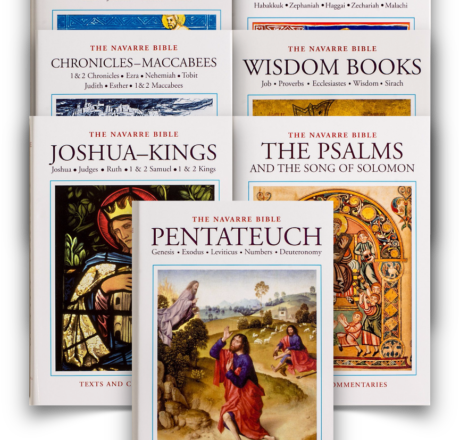
NAVARRE BIBLE COMMENTARY(RSV)
Ad Majorem Dei Gloriam (To the Greater Glory of God)
Today’s First Reading
From: 2 Kings 17:5-8, 13-15a, 18
Samaria is invaded and its capital falls
-------------------------------------------------------
[5] Then the king of Assyria invaded all the land and came to Samaria, and for three years be besieged it. [6] in the ninth year of Hoshea the king of Assyria captured Samaria, and he carried the Israelites away to Assyria, and placed them in Halah, and on the Habor, the river of Gozan, and in the city of the Medes.
Thoughts on the fall of Samaria
---------------------------------------------
[7] And this was so because the people of Israel had sinned against the Lord their God, who had brought them up out of the land of Egypt from under the hand of Pharaoh king of Egypt, and had feared other gods [8] and walked in the customs of the nations whom the Lord drove out before the people of Israel, and in the customs which the kings of Israel had introduced.
[13] Yet the Lord warned Israel and Judah by every prophet and every seer, saying, “Turn from your evil ways and keep my commandments and my statutes, in accordance with all the law which I commanded your fathers, and which I sent to you by my servants the prophets.” [14] But they would not listen, but were stubborn, as their fathers had been, who did not believe in the Lord their God. [15a] They despised his statutes, and his covenant that he made with their fathers, and the warnings which he gave them. [18] Therefore the Lord was very angry with Israel, and removed them out of his sight; none was left but the tribe of Judah only.
***********************************************************************
Commentary:
17:5-41. The Northern kingdom comes to an end with the fall of Samaria. Undoubtedly that event was traumatic for the chosen people. But the sacred writer focuses mainly on the religious aspect of the drama. For one thing, he offers an explanation of it in terms of the overall relationship between God and his people: the events he describes are a lesson for Judah to learn (vv. 7-23). Also, he uses the situation created by the Assyrian takeover to show that the Samaritan population of his own time can no longer be regarded as part of the chosen people (vv. 24-41).
17:5-6. Assyrian chronicles attribute the overrun of Samaria to Sargon II, who succeeded Shalmaneser V in December 722 BC, and they record that 27,290 Israelites were deported, which would have been ten per cent of the population. This would mean that the deportation took place in 721 BC. Assyria’s policy was to deport the upper classes, who would have been best placed to organized resistance.
The date of the fall of Samaria connects with the last year of Hoshea’s reign: he ceased to be king in 724 BC. During the three-year siege Samaria had no king.
17:7-23. The fall of Samaria is described very briefly, whereas the causes of its downfall are reported at length. The sacred writer wants to show that sin was the cause of the catastrophe – a very grave sin when set against the generosity of God’s gifts.
Now, only the tribe of Judah survives – not that it has proven faithful to the Lord (vv. 18-19). For the sacred writer the fall of the Northern kingdom marks the end of a long process which began with Jeroboam and the making of the two golden calves (cf. 1 Kings 12:25-33). By turning their backs on the house of David, the Northerners became estranged from the presence of God. By explaining things in this way, the sacred writer’s message is that God has promised salvation and, specifically, continuity of the Davidic dynasty (2 Sam 7:14). The Northern kingdom cut itself off from the house of David, and now it has ceased to exist. But Judah endures; even though it, too, sinned, it puts its trust in God to keep his promise. The redactor of the books of the Kings is well aware that Jerusalem, too, will be destroyed and that the people of Judah will be sent into exile (cf. 1 Kings 9:7-9), yet God will still be present among them: the people of Judah will not disappear, for God is faithful to the promise he made to the house of David.
The fall of the Northern kingdom was certainly a lesson for Judah, a lesson it failed to learn (cf. Jer 16:10-13). But it is also a lesson for all men, in all ages: abandoning God and distancing oneself from Christ, the Son of David, puts man in danger of eternal perdition. Commenting on the downfall of the two kingdoms, St Macarius drew a spiritual lesson: “Alas for the soul deprived of the loving care of Christ that causes it to bear the good fruits of the Spirit!; because, knowing itself to be abandoned, full of thorns and thistles, instead of producing fruit, it ends up on the bonfire. Alas for the soul in which Christ the Lord does not live!, because, feeling abandoned, it becomes the seed-bed for all vices” (Homiliae spirituals, 28, 2).
Today’s Gospel Reading From: Matthew 7:1-5
Various Precepts: Do Not Judge
------------------------------
(Jesus said to His disciples,) [1] "Judge not, that you be not judged. [2] For with the judgment you pronounce you will be judged, and the measure you give will be the measure you get. [3] Why do you see the speck that is in your brother's eye, but do not notice the log that is in your own eye? [4] Or how can you say to your brother, `Let me take the speck out of your eye,' when there is the log in your own eye? [5] You hypocrite, first take the log out of your own eye, and then you will see clearly to take the speck out of your brother's eye."
***********************************************************************
Commentary:
1. Jesus is condemning any rash judgments we make maliciously or carelessly about our brothers' behavior or feelings or motives. "Think badly and you will not be far wrong" is completely at odds with Jesus' teaching.
In speaking of Christian charity St. Paul lists its main features: "Love is patient and kind [...]. Love bears all things, believes all things, hopes all things, endures all things" (1 Corinthians 13:4, 5, 7). Therefore, "Never think badly of anyone, not even if the words or conduct of the person in question give you good grounds for doing so" (St J. Escriva, "The Way", 442).
"Let us be slow to judge.--Each one sees things from his own point of view, as his mind, with all its limitations, tells him, and through eyes that are often dimmed and clouded by passion" ("ibid"., 451).
1-2. As elsewhere, the verbs in the passive voice ("you will be judged", "the measure you will be given") have God as their subject, even though He is not explicitly mentioned: "Do not judge OTHERS, that you be not judged BY GOD". Clearly the judgment referred to here is always a condemnatory judgment; therefore, if we do not want to be condemned by God, we should never condemn our neighbor. "God measures out according as we measure out and forgives as we forgive, and comes to our rescue with the same tenderness as He sees us having towards others" (Fray Luis de Leon, "Exposicion Del Libro De Job", chapter 29).
3-5. A person whose sight is distorted sees things as deformed, even though in fact they are not deformed. St. Augustine gives this advice: "Try to acquire those virtues which you think your brothers lack, and you will no longer see their defects, because you will not have them yourselves" ("Enarrationes In Psalmos", 30, 2, 7). In this connection, the saying, "A thief thinks that everyone else is a thief" is in line with this teaching of Jesus.
Besides: "To criticize, to destroy, is not difficult; any unskilled laborer knows how to drive his pick into the noble and finely-hewn stone of a cathedral. To construct: that is what requires the skill of a master" (St J. Escriva, "The Way", 456).


 St. Alban
  Death of St. Alban