
Posted on 06/21/2026 10:04:30 PM PDT by fidelis
“Why do you notice the splinter in your brother’s eye, but do not perceive the wooden beam in your own eye? How can you say to your brother, ‘Let me remove that splinter from your eye,’ while the wooden beam is in your eye? You hypocrite, remove the wooden beam from your eye first; then you will see clearly to remove the splinter from your brother’s eye.” Matthew 7:3–5
It is easy to judge another. A certain satisfaction comes from it; otherwise, one would not engage in such an action. In fact, every sin we commit brings with it a certain degree of satisfaction. Of course, the satisfaction is purely emotional, passing, disordered, and ultimately very destructive to our souls.
A judgmental heart presumes the worst about another’s words or actions. The Catechism of the Catholic Church warns against rash judgment as an offense against truth (CCC 2477). We commit this sin when we assume, without sufficient evidence, the moral fault of another. This often manifests as gossip, detraction, or slander. While gossip may sometimes involve truth, it becomes sinful when it harms another’s reputation without a just cause. Detraction needlessly exposes another’s real faults, while slander distorts the truth and spreads falsehood. Each of these acts flows from a heart that finds disordered satisfaction in condemning rather than in mercy.
Every time we judge another unfairly—whether through interior criticism or public condemnation—we fall into this sin. To remedy this, we must examine our motivations. Sin is deceptive, especially to the one who commits it. The sin of judging another is particularly insidious because it often feels justified, even appearing as a moral obligation.
This was the sin of the scribes and Pharisees. They judged others, interpreting the Law of Moses through their rigid traditions rather than true righteousness. Their self-righteousness convinced them they were acting in God’s name. But they were blinded by pride, which not only harmed others but also endangered their souls.
A judgmental heart is difficult to overcome. Doing so requires shedding disordered feelings and hurts and turning to the light of God’s Wisdom. This will hurt because we must admit our sin. When another’s words or actions offend us, it is even harder to face our own sin first. Jesus makes it clear, however, that unless we first remove the “wooden beam” in our own eye, we cannot remove the “splinter” in another’s.
The only way to remove the wooden beam in our own eye is to grow in the virtue of mercy. We must love every sinner—especially those who have harmed us—to such a degree that every passion of our soul is transformed by mercy. With our minds, we must perceive and embrace God’s truth about mercy, and with our wills, we must choose it. Only when we do so over and over again—forming a habit, or virtue—will our passions align with mercy.
Reflect today on any sinful habits you struggle with, especially a judgmental heart. Do you ever feel justified in your judgment of others? Is there a degree of disordered satisfaction you gain from that sin? Humble yourself before God’s mercy if these questions challenge you, and don’t be afraid to acknowledge the wooden beam in your eye. Beg for freedom from a judgmental spirit and embrace the far greater gift of mercy. Though challenging, such an exercise is ultimately freeing and will enable you to assist those who need God’s mercy the most.
Most merciful God, I come before You and humbly acknowledge my struggle with a judgmental heart. When I am hurt or offended, I am tempted to lash out, condemn, and presume the worst of others. But You, O Lord, see all things with perfect wisdom and mercy. Please free me from this sin, purify my heart, and transform me into an instrument of Your love and compassion. May I judge no one apart from Your Truth and Justice, and may I always extend the mercy that I myself long to receive. Jesus, I trust in You.
Please keep in mind that this is a Catholic Caucus/Devotional thread for the purpose of prayerful reflection on the Sacred Scriptures and is closed to debate of any kind. Per FR policy on Religion Caucus threads, off-topic, argumentative, and abusive comments are not allowed and will be submitted to the Mods for deletion. Thanks, and God bless you.
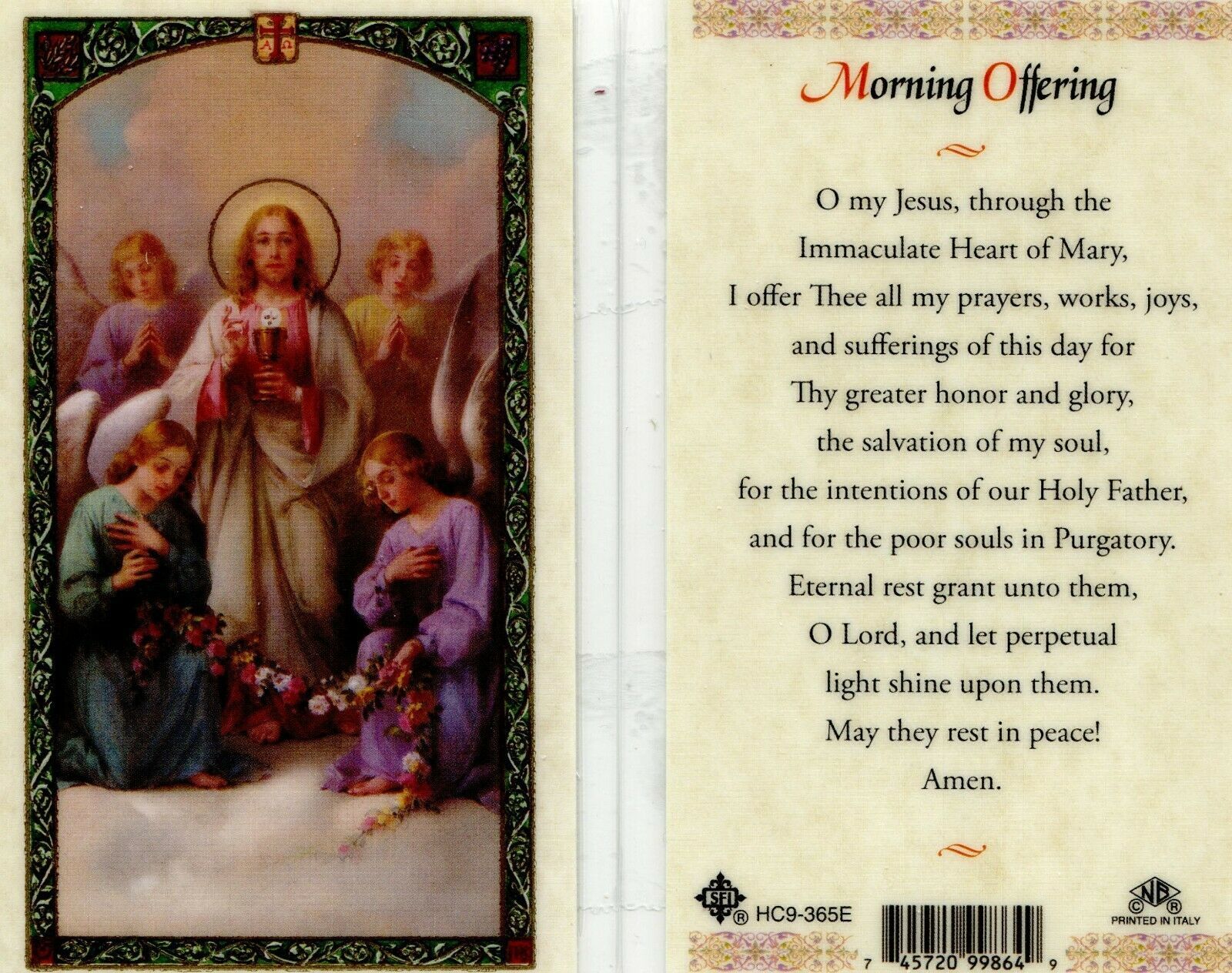
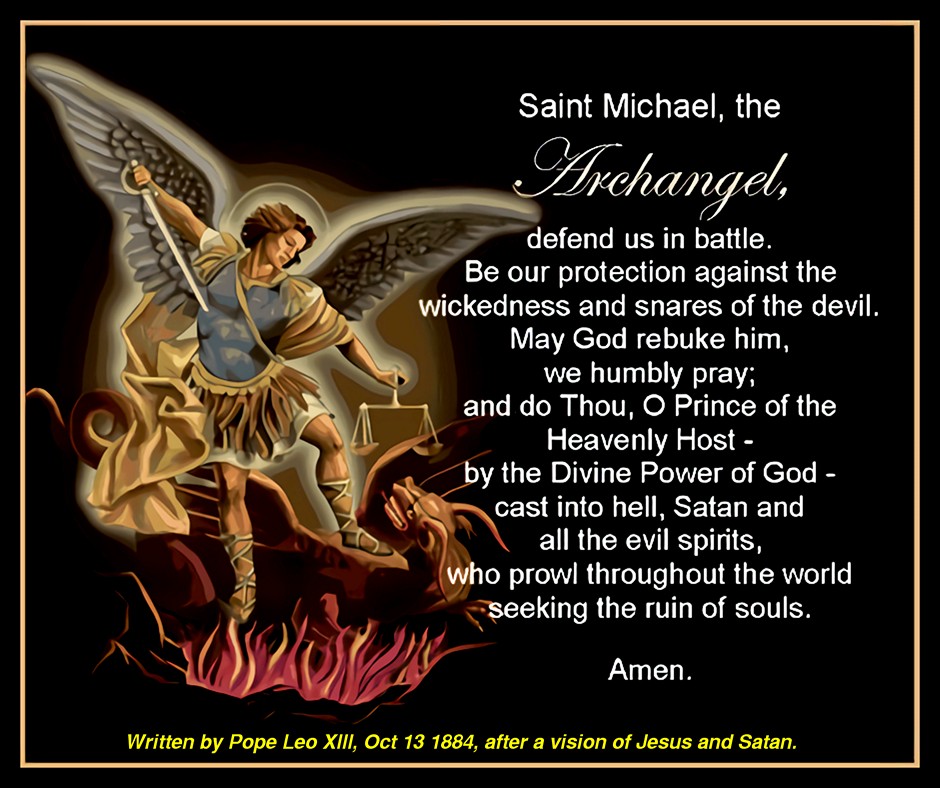
The Month of June is Dedicated to the Sacred Heart of Jesus

“Come to me, all who labor and are heavy laden, and I will give you rest. Take my yoke upon you, and learn from me; for I am gentle and lowly in heart, and you will find rest for your souls. For my yoke is easy, and my burden is light.” (Matthew 11:28-30)

Pope Leo XIV’s prayer intention for the month of May, 2026:
For the values of sports
Let us pray that sports be an instrument of peace, encounter, and dialogue among cultures and nations, and that they promote values such as respect, solidarity, and personal growth.

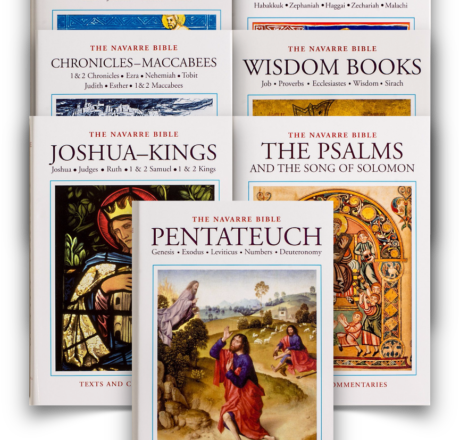
Today’s First Reading
From: 2 Kings 17:5-8, 13-15a, 18
Samaria is invaded and its capital falls
-------------------------------------------------------
[5] Then the king of Assyria invaded all the land and came to Samaria, and for three years be besieged it. [6] in the ninth year of Hoshea the king of Assyria captured Samaria, and he carried the Israelites away to Assyria, and placed them in Halah, and on the Habor, the river of Gozan, and in the city of the Medes.
Thoughts on the fall of Samaria
---------------------------------------------
[7] And this was so because the people of Israel had sinned against the Lord their God, who had brought them up out of the land of Egypt from under the hand of Pharaoh king of Egypt, and had feared other gods [8] and walked in the customs of the nations whom the Lord drove out before the people of Israel, and in the customs which the kings of Israel had introduced.
[13] Yet the Lord warned Israel and Judah by every prophet and every seer, saying, “Turn from your evil ways and keep my commandments and my statutes, in accordance with all the law which I commanded your fathers, and which I sent to you by my servants the prophets.” [14] But they would not listen, but were stubborn, as their fathers had been, who did not believe in the Lord their God. [15a] They despised his statutes, and his covenant that he made with their fathers, and the warnings which he gave them. [18] Therefore the Lord was very angry with Israel, and removed them out of his sight; none was left but the tribe of Judah only.
***********************************************************************
Commentary:
17:5-41. The Northern kingdom comes to an end with the fall of Samaria. Undoubtedly that event was traumatic for the chosen people. But the sacred writer focuses mainly on the religious aspect of the drama. For one thing, he offers an explanation of it in terms of the overall relationship between God and his people: the events he describes are a lesson for Judah to learn (vv. 7-23). Also, he uses the situation created by the Assyrian takeover to show that the Samaritan population of his own time can no longer be regarded as part of the chosen people (vv. 24-41).
17:5-6. Assyrian chronicles attribute the overrun of Samaria to Sargon II, who succeeded Shalmaneser V in December 722 BC, and they record that 27,290 Israelites were deported, which would have been ten per cent of the population. This would mean that the deportation took place in 721 BC. Assyria’s policy was to deport the upper classes, who would have been best placed to organized resistance.
The date of the fall of Samaria connects with the last year of Hoshea’s reign: he ceased to be king in 724 BC. During the three-year siege Samaria had no king.
17:7-23. The fall of Samaria is described very briefly, whereas the causes of its downfall are reported at length. The sacred writer wants to show that sin was the cause of the catastrophe – a very grave sin when set against the generosity of God’s gifts.
Now, only the tribe of Judah survives – not that it has proven faithful to the Lord (vv. 18-19). For the sacred writer the fall of the Northern kingdom marks the end of a long process which began with Jeroboam and the making of the two golden calves (cf. 1 Kings 12:25-33). By turning their backs on the house of David, the Northerners became estranged from the presence of God. By explaining things in this way, the sacred writer’s message is that God has promised salvation and, specifically, continuity of the Davidic dynasty (2 Sam 7:14). The Northern kingdom cut itself off from the house of David, and now it has ceased to exist. But Judah endures; even though it, too, sinned, it puts its trust in God to keep his promise. The redactor of the books of the Kings is well aware that Jerusalem, too, will be destroyed and that the people of Judah will be sent into exile (cf. 1 Kings 9:7-9), yet God will still be present among them: the people of Judah will not disappear, for God is faithful to the promise he made to the house of David.
The fall of the Northern kingdom was certainly a lesson for Judah, a lesson it failed to learn (cf. Jer 16:10-13). But it is also a lesson for all men, in all ages: abandoning God and distancing oneself from Christ, the Son of David, puts man in danger of eternal perdition. Commenting on the downfall of the two kingdoms, St Macarius drew a spiritual lesson: “Alas for the soul deprived of the loving care of Christ that causes it to bear the good fruits of the Spirit!; because, knowing itself to be abandoned, full of thorns and thistles, instead of producing fruit, it ends up on the bonfire. Alas for the soul in which Christ the Lord does not live!, because, feeling abandoned, it becomes the seed-bed for all vices” (Homiliae spirituals, 28, 2).
From: Matthew 7:1-5
Various Precepts: Do Not Judge
------------------------------
(Jesus said to His disciples,) [1] "Judge not, that you be not judged. [2] For with the judgment you pronounce you will be judged, and the measure you give will be the measure you get. [3] Why do you see the speck that is in your brother's eye, but do not notice the log that is in your own eye? [4] Or how can you say to your brother, `Let me take the speck out of your eye,' when there is the log in your own eye? [5] You hypocrite, first take the log out of your own eye, and then you will see clearly to take the speck out of your brother's eye."
***********************************************************************
Commentary:
1. Jesus is condemning any rash judgments we make maliciously or carelessly about our brothers' behavior or feelings or motives. "Think badly and you will not be far wrong" is completely at odds with Jesus' teaching.
In speaking of Christian charity St. Paul lists its main features: "Love is patient and kind [...]. Love bears all things, believes all things, hopes all things, endures all things" (1 Corinthians 13:4, 5, 7). Therefore, "Never think badly of anyone, not even if the words or conduct of the person in question give you good grounds for doing so" (St J. Escriva, "The Way", 442).
"Let us be slow to judge.--Each one sees things from his own point of view, as his mind, with all its limitations, tells him, and through eyes that are often dimmed and clouded by passion" ("ibid"., 451).
1-2. As elsewhere, the verbs in the passive voice ("you will be judged", "the measure you will be given") have God as their subject, even though He is not explicitly mentioned: "Do not judge OTHERS, that you be not judged BY GOD". Clearly the judgment referred to here is always a condemnatory judgment; therefore, if we do not want to be condemned by God, we should never condemn our neighbor. "God measures out according as we measure out and forgives as we forgive, and comes to our rescue with the same tenderness as He sees us having towards others" (Fray Luis de Leon, "Exposicion Del Libro De Job", chapter 29).
3-5. A person whose sight is distorted sees things as deformed, even though in fact they are not deformed. St. Augustine gives this advice: "Try to acquire those virtues which you think your brothers lack, and you will no longer see their defects, because you will not have them yourselves" ("Enarrationes In Psalmos", 30, 2, 7). In this connection, the saying, "A thief thinks that everyone else is a thief" is in line with this teaching of Jesus.
Besides: "To criticize, to destroy, is not difficult; any unskilled laborer knows how to drive his pick into the noble and finely-hewn stone of a cathedral. To construct: that is what requires the skill of a master" (St J. Escriva, "The Way", 456).
^ This applies to nations too...
Another verse that comes to mind is: "When a man’s ways please the LORD, he makes even his enemies to be at peace with him." Proverbs 16:7
^ So when we focus inwardly first, even our outward relationships can improve. Personally, and geopolitically.
Well said.
Disclaimer: Opinions posted on Free Republic are those of the individual posters and do not necessarily represent the opinion of Free Republic or its management. All materials posted herein are protected by copyright law and the exemption for fair use of copyrighted works.


