Skip to comments.
Catholic Caucus: Daily Mass Readings 6-June-2026
Universalis/Jerusalem Bible ^
Posted on 06/06/2026 2:53:13 PM PDT by annalex
6 June 2026
Saturday of week 9 in Ordinary Time
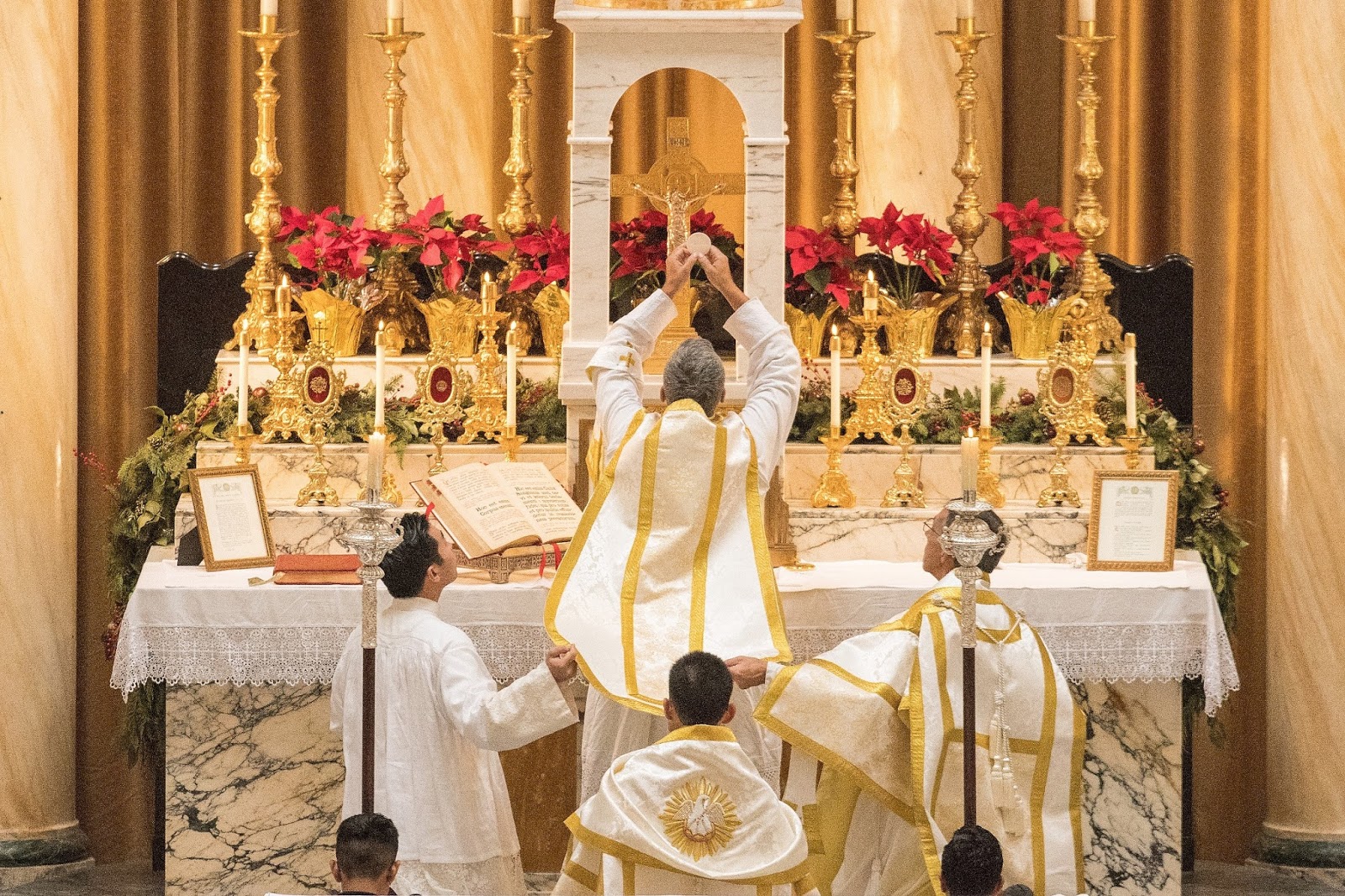
A Premonstratensian Mass, Ss Peter and Paul in Wilmington, CaliforniaReadings at MassLiturgical Colour: Green. Year: A(II).
| First reading | 2 Timothy 4:1-8 |
|---|
I have run the race to the finish; I have kept the faith; it is time for me to be goneBefore God and before Christ Jesus who is to be judge of the living and the dead, I put this duty to you, in the name of his Appearing and of his kingdom: proclaim the message and, welcome or unwelcome, insist on it. Refute falsehood, correct error, call to obedience – but do all with patience and with the intention of teaching. The time is sure to come when, far from being content with sound teaching, people will be avid for the latest novelty and collect themselves a whole series of teachers according to their own tastes; and then, instead of listening to the truth, they will turn to myths. Be careful always to choose the right course; be brave under trials; make the preaching of the Good News your life’s work, in thoroughgoing service. As for me, my life is already being poured away as a libation, and the time has come for me to be gone. I have fought the good fight to the end; I have run the race to the finish; I have kept the faith; all there is to come now is the crown of righteousness reserved for me, which the Lord, the righteous judge, will give to me on that Day; and not only to me but to all those who have longed for his Appearing.
| Responsorial Psalm |
|---|
| Psalm 70(71):8-9,14-17,22 |
|---|
My lips will tell of your justice, O Lord. My lips are filled with your praise, with your glory all the day long. Do not reject me now that I am old; when my strength fails do not forsake me. My lips will tell of your justice, O Lord. But as for me, I will always hope and praise you more and more. My lips will tell of your justice and day by day of your help (though I can never tell it all). My lips will tell of your justice, O Lord. I will declare the Lord’s mighty deeds proclaiming your justice, yours alone. O God, you have taught me from my youth and I proclaim your wonders still. My lips will tell of your justice, O Lord. So I will give you thanks on the lyre for your faithful love, my God. To you will I sing with the harp, to you, the Holy One of Israel. My lips will tell of your justice, O Lord.
| Gospel Acclamation | cf.Lk8:15 |
|---|
Alleluia, alleluia! Blessed are those who, with a noble and generous heart, take the word of God to themselves and yield a harvest through their perseverance. Alleluia! Alleluia, alleluia! How happy are the poor in spirit: theirs is the kingdom of heaven. Alleluia!
This poor widow has put in more than allIn his teaching Jesus said, ‘Beware of the scribes who like to walk about in long robes, to be greeted obsequiously in the market squares, to take the front seats in the synagogues and the places of honour at banquets; these are the men who swallow the property of widows, while making a show of lengthy prayers. The more severe will be the sentence they receive.’ He sat down opposite the treasury and watched the people putting money into the treasury, and many of the rich put in a great deal. A poor widow came and put in two small coins, the equivalent of a penny. Then he called his disciples and said to them, ‘I tell you solemnly, this poor widow has put more in than all who have contributed to the treasury; for they have all put in money they had over, but she from the little she had has put in everything she possessed, all she had to live on.’ Universalis podcast: The week ahead – from 7 to 13 JuneCorpus Christi: ‘Eat my flesh’ and the Last Supper. The work of the Holy Spirit and how the feast of Corpus Christi was born. St Thomas Aquinas and transubstantiation. The power of the Body of Christ. The Sacred Heart: the birth of the feast of love, and what it does for us. (23 minutes)
Episode notes.Play Christian Art Each day, The Christian Art website gives a picture and reflection on the Gospel of the day. The readings on this page are from the Jerusalem Bible, which is used at Mass in most of the English-speaking world. The New American Bible readings, which are used at Mass in the United States, are available in the Universalis apps, programs and downloads.
You can also view this page with the Gospel in Greek and English. |
TOPICS: Catholic; General Discusssion; Prayer; Worship
KEYWORDS: catholic; mk12; ordinarytime; prayer
For your reading, reflection, faith-sharing, comments, questions, discussion.
1
posted on
06/06/2026 2:53:13 PM PDT
by
annalex
To: All
KEYWORDS: catholic; mk12; ordinarytime; prayer
2
posted on
06/06/2026 2:53:43 PM PDT
by
annalex
(fear them not)
To: nickcarraway; NYer; ELS; Pyro7480; livius; ArrogantBustard; Catholicguy; RobbyS; marshmallow; ...

Alleluia Ping Please FReepmail me to get on/off the Alleluia Ping List.
3
posted on
06/06/2026 2:54:36 PM PDT
by
annalex
(fear them not)
To: annalex
4
posted on
06/06/2026 2:55:01 PM PDT
by
annalex
(fear them not)
To: annalex
| Mark |
| | English: Douay-Rheims | Latin: Vulgata Clementina | Greek NT: Byzantine/Majority Text (2000) |
| | Mark 12
|
| 38. | And he said to them in his doctrine: Beware of the scribes, who love to walk in long robes, and to be saluted in the marketplace, | Et dicebat eis in doctrina sua : Cavete a scribis, qui volunt in stolis ambulare, et salutari in foro, | και ελεγεν αυτοις εν τη διδαχη αυτου βλεπετε απο των γραμματεων των θελοντων εν στολαις περιπατειν και ασπασμους εν ταις αγοραις |
| 39. | And to sit in the first chairs, in the synagogues, and to have the highest places at suppers: | et in primis cathedris sedere in synagogis, et primos discubitus in cœnis : | και πρωτοκαθεδριας εν ταις συναγωγαις και πρωτοκλισιας εν τοις δειπνοις |
| 40. | Who devour the houses of widows under the pretence of long prayer: these shall receive greater judgment. | qui devorant domos viduarum sub obtentu prolixæ orationis : hi accipient prolixius judicium. | οι κατεσθιοντες τας οικιας των χηρων και προφασει μακρα προσευχομενοι ουτοι ληψονται περισσοτερον κριμα |
| 41. | And Jesus sitting over against the treasury, beheld how the people cast money into the treasury, and many that were rich cast in much. | Et sedens Jesus contra gazophylacium, aspiciebat quomodo turba jactaret æs in gazophylacium, et multi divites jactabant multa. | και καθισας ο ιησους κατεναντι του γαζοφυλακιου εθεωρει πως ο οχλος βαλλει χαλκον εις το γαζοφυλακιον και πολλοι πλουσιοι εβαλλον πολλα |
| 42. | And there came a certain poor widow, and she cast in two mites, which make a farthing. | Cum venisset autem vidua una pauper, misit duo minuta, quod est quadrans, | και ελθουσα μια χηρα πτωχη εβαλεν λεπτα δυο ο εστιν κοδραντης |
| 43. | And calling his disciples together, he saith to them: Amen I say to you, this poor widow hath cast in more than all they who have cast into the treasury. | et convocans discipulos suos, ait illis : Amen dico vobis, quoniam vidua hæc pauper plus omnibus misit, qui miserunt in gazophylacium. | και προσκαλεσαμενος τους μαθητας αυτου λεγει αυτοις αμην λεγω υμιν οτι η χηρα αυτη η πτωχη πλειον παντων βεβληκεν των βαλλοντων εις το γαζοφυλακιον |
| 44. | For all they did cast in of their abundance; but she of her want cast in all she had, even her whole living. | Omnes enim ex eo, quod abundabat illis, miserunt : hæc vero de penuria sua omnia quæ habuit misit totum victum suum. | παντες γαρ εκ του περισσευοντος αυτοις εβαλον αυτη δε εκ της υστερησεως αυτης παντα οσα ειχεν εβαλεν ολον τον βιον αυτης |
5
posted on
06/06/2026 2:58:06 PM PDT
by
annalex
(fear them not)
To: annalex
6
posted on
06/06/2026 2:59:25 PM PDT
by
kawhill
(Dywedwch Wrthbym because + Add translation Welsh-English dictionary 'Tell Us')
To: annalex

Catena Aurea by St. Thomas Aguinas
38. And he said unto them in his doctrine, Beware of the scribes, which love to go in long clothing, and love salutations in the marketplaces,
39. And the chief seats in the synagogues, and the uppermost rooms at feasts:
40. Which devour widows’ houses, and for a pretence make long prayers: these shall receive greater damnation.
PSEUDO-JEROME. After confuting the Scribes and Pharisees, He burns up as a fire their dry and withered examples; wherefore it is said, And he said unto them in his doctrine, Beware of the Scribes, which love to go in long clothing.
BEDE. (ubi sup.) To walk in long clothing is to go forth into public clad in garments too much ornamented, in which amongst other things, that rich man, who fared sumptuously every day, is said to have sinned.
THEOPHYLACT. But they used to walk in honourable garments, because they wished to be highly esteemed for it, and in like manner they desired other things, which lead to glory. For it goes on: And love salutations in the marketplaces, and the chief seats in the synagogues, and the uppermost rooms at feasts.
BEDE. (ubi sup.) We must observe that He does not forbid that those, to whom it falls by the rule of their office, should be saluted in the marketplace, or have chief seats and places at feasts, but He teaches that those who love those things unduly, whether they have them or no, are to be avoided by the faithful as wicked men: that is, He blames the intention and not the office; although this too is culpable, that the very men who wish to be called masters of the synagogue in Moses’ seat, should have to do with lawsuits in the marketplace. We are in two ways ordered to beware of those who are desirous of vain glory; first, we should not be seduced by their hypocrisy into thinking that what they do is good; nor secondly, should we be excited to imitate them, through a vain rejoicing in being praised for those virtues which they affect.
THEOPHYLACT. He also especially teaches the Apostles, not to have any communication with the scribes, but to imitate Christ Himself; and in ordaining them to be masters in the duties of life, He places others under themv.
BEDE. (ubi sup.) But they do not only seek for praise from men, but also for gain. Wherefore there follows, Which devour widows’ houses, under the pretence of long prayers. For there are men who pretending to be just hesitate not to receive money from persons who are troubled in conscience, as though they would be their advocates in the judgment. A hand stretched out to the poor is always an accompaniment to prayer, but these men pass the night in prayer, that they may take away money from the poor.
THEOPHYLACT. But the Scribes used to come to women, who were left without the protection of their husbands, as though they were their protectors; and by a pretence of prayer, a reverend exterior and hypocrisy, they used to deceive widows, and thus also devour the houses of the rich. It goes on, These shall receive a greater damnation, that is, than the other Jews, who sinned.
12:41–44
41. And Jesus sat over against the treasury, and beheld how the people cast money into the treasury: and many that were rich cast in much.
42. And there came a certain poor widow, and she threw in two mites, which make a farthing.
43. And he called unto him his disciples, and saith unto them, Verily I say unto you, That this poor widow hath cast more in, than all they which have cast into the treasury:
44. For all they did cast in of their abundance; but she of her want did cast in all that she had, even all her living.
BEDE. (ubi sup.) The Lord, who had warned them to avoid the desire of high place and vain glory, now distinguishes by a sure test those who brought in gifts. Wherefore it is said, And Jesus sat over against the treasury, and beheld how the people cast money into the treasury. In the Greek language, phylassein means to keep, and gaza is a Persian word for treasure; wherefore the word gazophylacium. which is here used means a place where riches are kept, which name also was applied to the chest in which the offerings of the people were collected, for the necessary uses of the temple, and to the porch in which they were kept. You have a notice of the porch in the Gospel, These words spake Jesus in the treasury as He taught in the temple; and of the chest in the book of Kings, But Jehoiada the priest took a chest. (John 8:20. 2 Kings 12:9)
THEOPHYLACT. Now there was a praiseworthy custom amongst the Jews, that those who were able and willing should put something into the treasury, for the maintenance of the priests, the poor, and the widows; wherefore there is added, And many that were rich cast in much. But whilst many people were so engaged, a poor widow came up, and shewed her love by offering money according to her ability; wherefore it is said, And there came a certain poor widow, and she threw in two mites, which make a farthing.
BEDE. (ubi sup.) Reckoners use the word ‘quadrans’ for the fourth part of any thing, be it place, money, or time. Perhaps then in this place is meant the fourth part of a shekel, that is, five pence. It goes on, And he called unto him his disciples, and saith unto them, Verily I say unto you, That this poor widow hath cast more in, than all they which have cast into the treasury: for God does not weigh the property but the conscience of those who offer; nor did He consider the smallness of the sum in her offering, but what was the store from which it came. Wherefore He adds, For all they did cast in of their abundance, but she of her want did cast in all that she had, even all her living.
PSEUDO-JEROME. But in a mystical sense, they are rich, who bring forth from the treasure of their heart things new and old, which are the obscure and hidden things of Divine wisdom in both testaments; but who is the poor woman, if it be not I and those like me, who cast in what I can, and have the will to explain to you, where I have not the power. For God does not consider how much ye hear, but what is the store from which it comes; but each at all events can bring his farthing, that is, a ready will, which is called a farthing, because it is accompanied by three things, that is, thought, word, and deed. And in that it is said that she cast in all her living, it is implied that all that the body wants is that by which it lives1; wherefore it is said, All the labour of man is for his mouth. (Eccl. 6:7)
THEOPHYLACT. Or else; That widow is the soul of man, which leaving Satan to which it had been joined, casts into the temple two mites, that is, the flesh and the mind, the flesh by abstinence, the mind by humility, that so it may be able to hear that it has cast away all its living, and has consecrated it, leaving nothing for the world of all that it possessed.
BEDE. (ubi sup) Again, in an allegorical way, the rich men, who cast gifts into the treasury, point out the Jews puffed up with the righteousness of the law; the poor widow is the simplicity of the Church: poor indeed, because she has cast away the spirit of pride and of the desires of worldly things; and a widow, because Jesus her husband has suffered death for her. She casts two mites into the treasury, because she brings the love of God and of her neighbour, or the gifts of faith and prayer; which are looked upon as mites in their own insignificance, but measured by the merit of a devout intention are superior to all the proud works of the Jews. The Jew sends of his abundance into the treasury, because he presumes on his own righteousness; but the Church sends her whole living into God’s treasury, because she understands that even her very living is not of her own desert, but of Divine grace.
Catena Aurea Mark 12
7
posted on
06/06/2026 2:59:40 PM PDT
by
annalex
(fear them not)
To: annalex
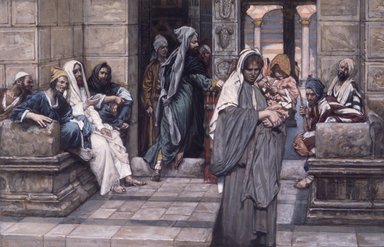
The Widow's Mite
James Tissot
1886-1894
Brooklyn Museum
8
posted on
06/06/2026 3:00:02 PM PDT
by
annalex
(fear them not)
To: annalex
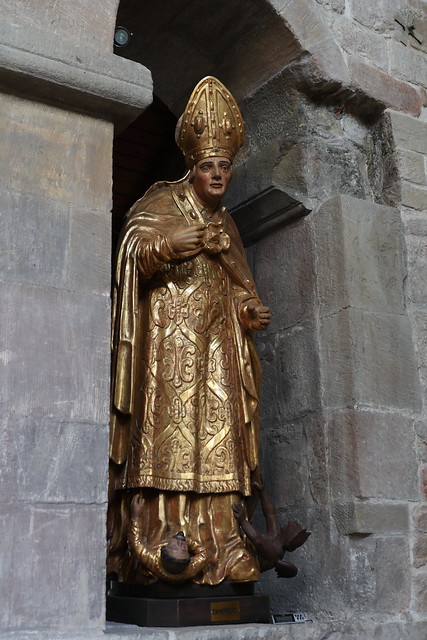
Saint Norbert : Patron Saint of Peace and Farmers
Saint Norbert of Xanten (1080-1134) was a devout Catholic priest and theologian, who was later canonized as a saint by the Catholic Church. He was born in Xanten, near the present-day Dutch-German border, and after being ordained as a priest, he became known for his intense devotion to God and his unwavering commitment to the poor.
Norbert was the son of a wealthy aristocrat. He studied at the Cathedral School of Xanten, and later in Cologne, where he became a canon at the age of twenty-five. His life changed drastically when he experienced a religious conversion at the age of thirty. After a period of living a life of luxury and worldly pursuits, he had a profound spiritual experience while riding his horse. He was thrown from his horse during a thunderstorm, and it was then that he realized the error of his ways and dedicated himself to a life of religious service.
In 1115, Saint Norbert founded the Premonstratensian Order, which was dedicated to a life of poverty and devotion to God. The order was characterized by its strict adherence to the Rule of Saint Augustine and its focus on serving the poor and sick. The Premonstratensian Order became one of the most influential religious orders of its time, and it continues to exist today, with thousands of members around the world.
Saint Norbert was canonized as a saint by Pope Gregory VIII in 1582, and his feast day is celebrated on June 6th. He is the patron saint of peace, farmers, and archbishops, and he is also known for his miracles and his ability to heal the sick.
In addition to his religious achievements, Saint Norbert is also remembered for his political and social contributions. He was a strong advocate for the rights of the poor and the marginalized, and he worked tirelessly to promote peace and justice in his community.
Saint Norbert of Xanten is remembered as a devoted priest and theologian, who lived a life of piety and service to others. He is a model of what it means to live a life of faith and devotion.
catholic365.com
9
posted on
06/06/2026 3:05:08 PM PDT
by
annalex
(fear them not)
To: annalex
10
posted on
06/06/2026 3:06:54 PM PDT
by
annalex
(fear them not)
To: annalex
NAVARRE BIBLE COMMENTARY(RSV)
Ad Majorem Dei Gloriam (To the Greater Glory of God)
Today’s First Reading
From: 2 Timothy 4:1-8
Dedication to Preaching
-----------------------
[1] I charge you in the presence of God and of Christ Jesus who is to judge the living and the dead, and by his appearing and his kingdom: [2] preach the word, be urgent in season and out of season, convince, rebuke, and exhort, be unfailing in patience and in teaching. [3] For the time is coming when people will not endure sound teaching, but having itching ears they will accumulate for themselves teachers to suit their own liking, [4] and will turn away from listening to the truth and wander into myths. [5] As for you, always be steady, endure suffering, do the work of an evangelist, fulfill your ministry.
The Crown of Righteousness
--------------------------
[6] For I am already on the point of being sacrificed; the time of my departure has come. [7] I have fought the good fight, I have finished the race, I have kept the faith. [8] Henceforth there is laid up for me the crown of righteousness, which the Lord, the righteous judge, will award to me on that Day, and not only to me but also to all who have loved his appearing.
***********************************************************************
Commentary:
1. The last chapter of the letter, summing up its main themes, is in St Paul's last will and testament and has the features of that type of document: it begins in a formal manner (vv. 1-5), protests the sincerity of his dedicated life (vv. 6-8) and concludes with some very tender, personal messages (vv. 9-22).
The opening is couched in a solemn form (also found in 1 Tim 5:21) similar to a Greco-Roman will, laying on the heirs an obligation to carry out the testator's wishes: "I charge you"; a series of imperatives follows. To underline the importance of what the testator is requesting, God the Father and Jesus Christ are invoked as witnesses, guarantors of the commitments which will devolve on the heirs. By swearing this document the testator is performing an act of the virtue of religion, because he is acknowledging God as Supreme Judge, to whom we must render an account of our actions.
"Christ Jesus who is to judge the living and the dead": a graphic, catechetical expression (cf. Acts 10:42; 1 Pet 4:5), confessing belief in the truth that all men without exception will undergo judgment by Jesus Christ, from whose decision there is no appeal. This has become part of the Creed; in a solemn profession of faith, the "Creed of the People of God", Pope Paul VI elaborated on this article of faith as we have seen in the commentary on 2 Thessalonians 1:5 above.
2. "Preach the word": that is, the message of the Gospel, which includes all the truths to be believed, the commandments to be kept and the sacraments and other supernatural resources to be availed of. In the life of the Church the ministry of the word has special importance; it is the channel God has established whereby man can partake of the Gospel; priests have a special duty to preach the word: "The people of God is formed into one in the first place by the Word of the living God, which is quite rightly sought from the mouth of priests. For since nobody can be saved who has not first believed, it is the first task of priests as co-workers of the bishops to preach the Gospel of God to all men. In this way they carry out the Lord's command, 'Go into all the world and preach the Gospel to the whole creation' (Mk 16:15) and thus set up and increase the people of God" (Vatican II, "Presbyterorum Ordinis", 4).
"In season and out of season", that is, even in adverse circumstances (cf. v. 3), or when hearers are disinclined to accept the Christian message. Timothy and, like him, all other sacred ministers, ought to behave towards the faithful in accordance with the demands of Christian life and doctrine. "What do men want, what do they expect of the priest, the minister of Christ, the living sign of the presence of the Good Shepherd? We would venture to say that, although they may not explicitly say so, they need, want and hope for a priest-priest, a priest through and through, a man who gives his life for them, by opening to them the horizons of the soul; a man who unceasingly exercises his ministry whose heart is capable of understanding, and a man who gives simply and joyfully, in season and even out of season, what he alone can give--the richness of grace, of divine intimacy which, through him, God wishes to distribute among men" (A. del Portillo, "On Priesthood", p. 66).
3-5. With sadness in his heart and with no little irony St Paul unmasks those who prefer smooth talk to the truth. Earlier Cicero criticized certain Greeks who by skillful use of words managed to delude their listeners even though they had really nothing to say or were misleading them. However where Christian doctrine is at stake, the danger that can be done to soul is much more grave: "Do not be afraid, or surprised, to see the resistance of some people's minds. There will always be stupid people who deck out the armor of their ignorance with a display of culture" (St J. Escriva, "Furrow", 934).
As an antidote to empty talk, the Apostle recommends solid teaching, constancy in the face of difficulty, and commitment to the ministry. St John Chrysostom called for fidelity to the Gospel in these words: "What you should fear is not that people might malign you but that you should be regarded as tainted with the same hypocrisy as your detractors. For if that were the case you would become tasteless and people would trample you underfoot. But if you offer the salt in all sobriety and are criticized on that account, do not be dismayed; for that is what salt is for--to irritate and disturb the corrupt. People will continue to speak evil of you, but they will do you no harm; they will only prove your reliability" ("Hom. on St Matthew", 15, 7).
6-8. Conscious of his closeness to death, St Paul writes in poetic strain about his life in the service of the Gospel, about the meaning of death and his hope of heaven. The imagery he uses shows how he interprets his experience in the light of faith. "On the point of being sacrificed": literally "poured out in sacrifice": death is an offering to God, like the libations of oil poured on the altar of sacrifices. Death is the beginning of a journey: "the point of my departure has come", the anchor is being weighed, the sails unfurled.
The Christian life is like magnificent Games taking place in the presence of God, who acts as the judge. In Greece the Games had close connections with religious worship; St Paul presents the Christian life as a type of spiritual sport: "races" indicates the continuous effort to achieve perfection (cf. Phil 3:14); training for athletics indicates the practice of self-denial (cf. 1 Cor 9:26-27); fighting stands for the effort required to resist sin even if that means death, as can happen in the event of persecution (cf. Heb 12:4). It is well worthwhile taking part in this competition, because, as St John Chrysostom points out, "the crown which it bestows never withers. It is not made of laurel leaves, it is not a man who places it on our head, it has not been won in the presence of a crowd made up of men, but in a stadium full of angels. In earthly competitions a man fights and strives for days and the only reward he receives is a crown which withers in a matter of hours [...]. That does not happen here: the crown he is given is a glory and honor whose brilliance lasts forever ("Hom. on 2 Tim, ad loc".).
All Christians who "have loved his appearing", that is, who stay true to Christ, share St Paul's expectation of eternal life. "We who know about the eternal joys of the heavenly fatherland should hasten to reach it by the more direct route" (St Gregory the Great, "In Evangelia Homiliae", 16).
11
posted on
06/06/2026 4:42:19 PM PDT
by
fidelis
(June is the Month of Devotion to to the Most Sacred Heart of Jesus. Pass it on!)
Today’s Gospel Reading From: Mark 12:38-44
Jesus Censures the Scribes
--------------------------
[38] And in His (Jesus') teaching He said, "Beware of the scribes, who like to go about in long robes, and to have salutations in the market places [39] and the best seats in the synagogues and the places of honor at feasts, [40] who devour widow's houses and for a pretense make long prayers. They will receive the greater condemnation."
The Widow's Mite
----------------
[41] And He sat down opposite the treasury, and watched the multitude putting money into the treasury. Many rich people put in large sums. [42] And a poor widow came, and put in two copper coins, which make a penny. [43] And He called His disciples to Him, and said to them, "Truly, I say to you, this poor widow has put in more than all those who are contributing to the treasury. [44] For they all contributed out of their abundance; but she out of her poverty has put in everything she had, her whole living."
***********************************************************************
Commentary:
38-40. Our Lord reproves disordered desire for human honors: "We should notice that salutations in the marketplace are not forbidden, nor people taking the best seats if that befits their position; rather, the faithful are warned to avoid, as they would evil men, those who set too much store by such honors" (St. Bede, "In Marci Evangelium Expositio, in loc."). See also notes on Matthew 23:2-3, 5, 11 and 14.
Notes on Matthew 23:2-3, 5, 11 and 14: 2-3. Moses passed on to the people the Law received from God. The scribes, who for the most part sided with the Pharisees, had the function of educating the people in the Law of Moses; that is why they were said to "sit on Moses' seat". Our Lord recognized that the scribes and Pharisees did have authority to teach the Law; but He warns the people and His disciples to be sure to distinguish the Law as read out and taught in the synagogues from the practical interpretations of the Law to be seen in their leaders' lifestyles. Some years later, St. Paul--a Pharisee like his father before him--faced his former colleagues with exactly the same kind of accusations as Jesus makes here: "You then who teach others, will you not teach yourself? While you preach against stealing, do you steal? You who say that one must not commit adultery, do you commit adultery? You who abhor idols, do you rob temples? You who boast in the law, do you dishonor God by breaking the law? For, as it is written, `The name of God is blasphemed among the Gentiles because of you'" (Romans 2:21-24).
5. "Phylacteries": belts or bands carrying quotations from sacred Scripture which the Jews used to wear fastened to their arms or foreheads. To mark themselves out as more religiously observant than others, the Pharisees used to wear broader phylacteries. The fringes were light-blue stripes on the hems of cloaks; the Pharisees ostentatiously wore broader fringes.
11. The Pharisees were greedy for honor and recognition: our Lord insists that every form of authority, particularly in the context of religion, should be exercised as a form of service to others; it must not be used to indulge personal vanity or greed. "He who is the greatest among you shall be your servant".
14. As the RSV points out, "other authorities add here (or after verse 12) verse 14, "Woe to you, scribes and Pharisees, hypocrites! For you devour widows' houses and for a pretense you make long prayers; therefore you will receive greater condemnation." Our Lord is not reproaching them for praying long prayers but for their hypocrisy and cupidity. By going in for a lot of external religious practices, the Pharisees wanted to be recognized as devout men and then trade on that reputation particularly with vulnerable people. Widows, for example, would ask them to say prayers; the Pharisees in turn would ask for alms. What Jesus means here is that prayer should always come from an upright heart and a generous spirit. ]
41-44. Our Lord uses this little event to teach us the importance of things which apparently are insignificant. He puts it somewhat paradoxically; the poor widow has contributed more than all the rich. In God's sight the value of such an action lies more in upright intention and generosity of spirit than in the quantity one gives.
"Didn't you see the light in Jesus' eyes as the poor widow left her little alms in the temple? Give Him what you can: the merit is not in whether it is big or small, but in the intention with which you give it" (St J. Escriva, "The Way", 829).
By the same token, our actions are pleasing to God even if they are not as perfect as we would like. St. Francis de Sales comments: "Now as among the treasures of the temple, the poor widow's mite was much esteemed, so the least little good works, even though performed somewhat coldly and not according to the whole extent of the charity which is in us, are agreeable to God, and esteemed by Him; so that though of themselves they cannot cause and increase in the existing love [...] yet Divine Providence, counting on them and, out of His goodness, valuing them, forthwith rewards them with increase in charity for the present, and assigns to them a greater Heavenly glory for the future" (St. Francis de Sales, "Treatise on the Love of God", Book 3, Chapter 2).
12
posted on
06/06/2026 4:42:57 PM PDT
by
fidelis
(June is the Month of Devotion to to the Most Sacred Heart of Jesus. Pass it on!)
13
posted on
06/06/2026 4:44:17 PM PDT
by
fidelis
(June is the Month of Devotion to to the Most Sacred Heart of Jesus. Pass it on!)
Disclaimer:
Opinions posted on Free Republic are those of the individual
posters and do not necessarily represent the opinion of Free Republic or its
management. All materials posted herein are protected by copyright law and the
exemption for fair use of copyrighted works.
FreeRepublic.com is powered by software copyright 2000-2008 John Robinson