
Posted on 05/23/2026 3:11:39 PM PDT by ebb tide
The Sacramental Parable in Madrid
Sometimes the whole revolution appears in one little administrative choice.
During Leo XIV’s upcoming trip to Spain, confessionals reportedly will not be set up at the youth prayer vigil or at other major events. Instead, organizers plan to provide “listening centers,” staffed by trained lay pastoral workers described as “listening agents.” The Archdiocese of Madrid insists these spaces are not meant to replace confession, since Madrid has hundreds of parishes where sacramental confession is available. The point, we are told, is complementarity. A sacrament over there, a conversation over here. Nothing to see. Please keep walking.
But symbols matter, especially when the symbol is chosen for a youth event during a papal visit. World Youth Day used to be famous, even at its most neo-Catholic and guitar-strummed, for rows of priests hearing confessions. There was something unmistakably Catholic about that image. Young people kneeling. Priests absolving. Sin named. Mercy given. Grace applied through the sacrament instituted by Christ.
Now the great public sign is different. The visible sign is not the confessional, the priest, absolution, or contrition. Instead, it has been replaced by the “space,” the trained pastoral lay worker, accompaniment, and conversation.
That is the new Catholicism in miniature.
The revolution rarely announces itself as denial. It arrives as supplementation. The confessional remains somewhere in the city, technically available, like the Latin Mass in a diocesan chapel thirty miles away or doctrine in a footnote no one reads. The official event, the thing staged for cameras and youth and the watching world, offers the pastoral substitute. The sacrament recedes into the background. The therapy booth comes forward.
Germany Knows Where This Is Going
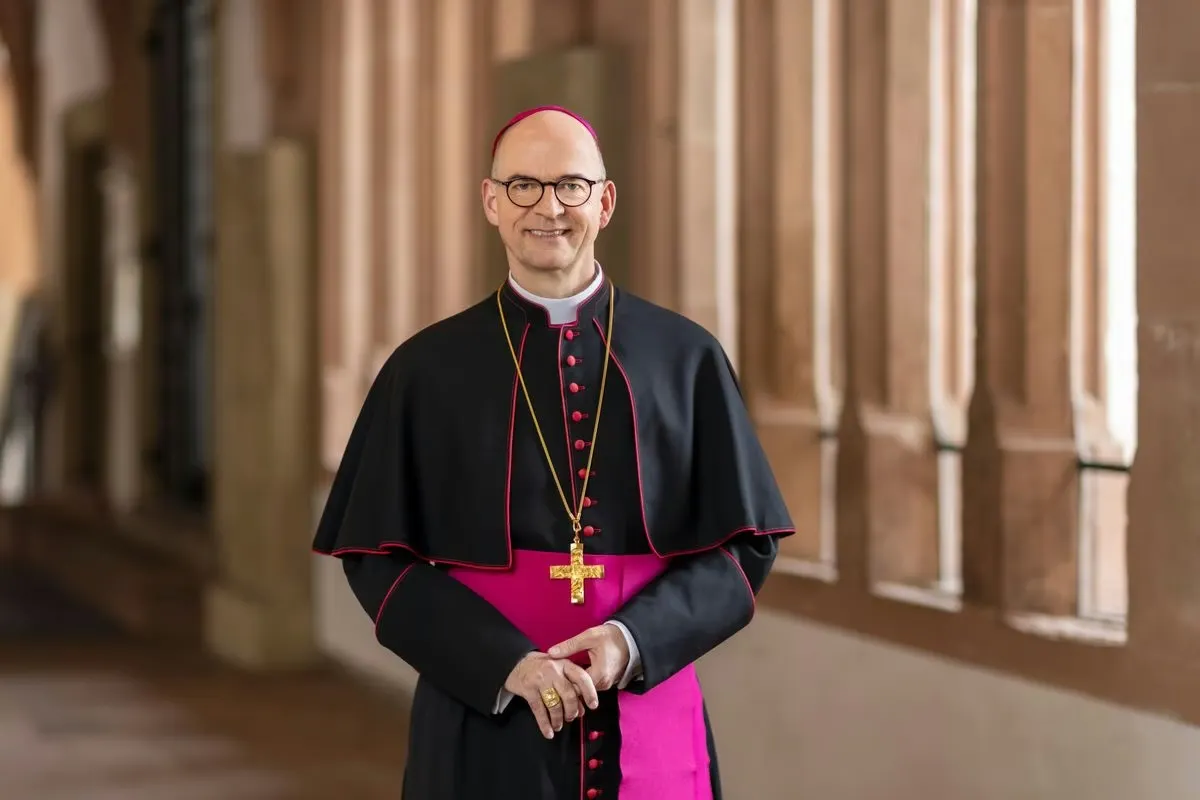
The German bishops, being German, have the courtesy to say the quiet part loudly.
Bishop Franz Jung of Würzburg says the German Bishops’ Conference gave Rome a “very clear vote” in favor of the diaconate for women, and that it is now up to Leo XIV to decide how to proceed. He added that the issue remains on the agenda and will not be removed anytime soon.
This is how the modern Catholic machine works. The radicals push. Rome studies. The study becomes a report. The report becomes part of a process. The process becomes irreversible. Then everyone is told that the Spirit has been speaking through the very agitation Rome pretended merely to monitor.
The female diaconate is especially useful because it sounds modest. Deacons are not priests, after all. Why panic? Why not study the matter? Why not distinguish ancient deaconesses from modern sacramental deacons? Why not have another commission, another continental consultation, another “listening” phase?
Because the diaconate is not a parish volunteer badge. Catholic doctrine teaches that bishops, priests, and deacons are all conferred through the sacrament of Holy Orders, even though deacons are ordained for service rather than priestly sacrifice. Once the issue becomes sacramental ordination, the entire question touches the divine constitution of the Church. John Paul II declared that the Church has no authority to confer priestly ordination on women, and that this judgment must be definitively held by the faithful.
The predictable dodge will be to say that female deacons are different. Perhaps they will be “diaconal ministers.” Perhaps they will receive some non-sacramental commissioning dressed up with enough ceremony to satisfy the activists while preserving a technical escape hatch for the conservatives. That would not be a resolution. It would be the usual Roman compromise: invent a simulacrum, deny that anything changed, then allow the symbolism to do the doctrinal work.
The German bishops understand this. They are not asking for women to help with coffee hour. They are asking Rome to place female bodies inside the visual grammar of Holy Orders. Once that image becomes normal, the next argument writes itself.
Albano Moves from Welcome to Recognition
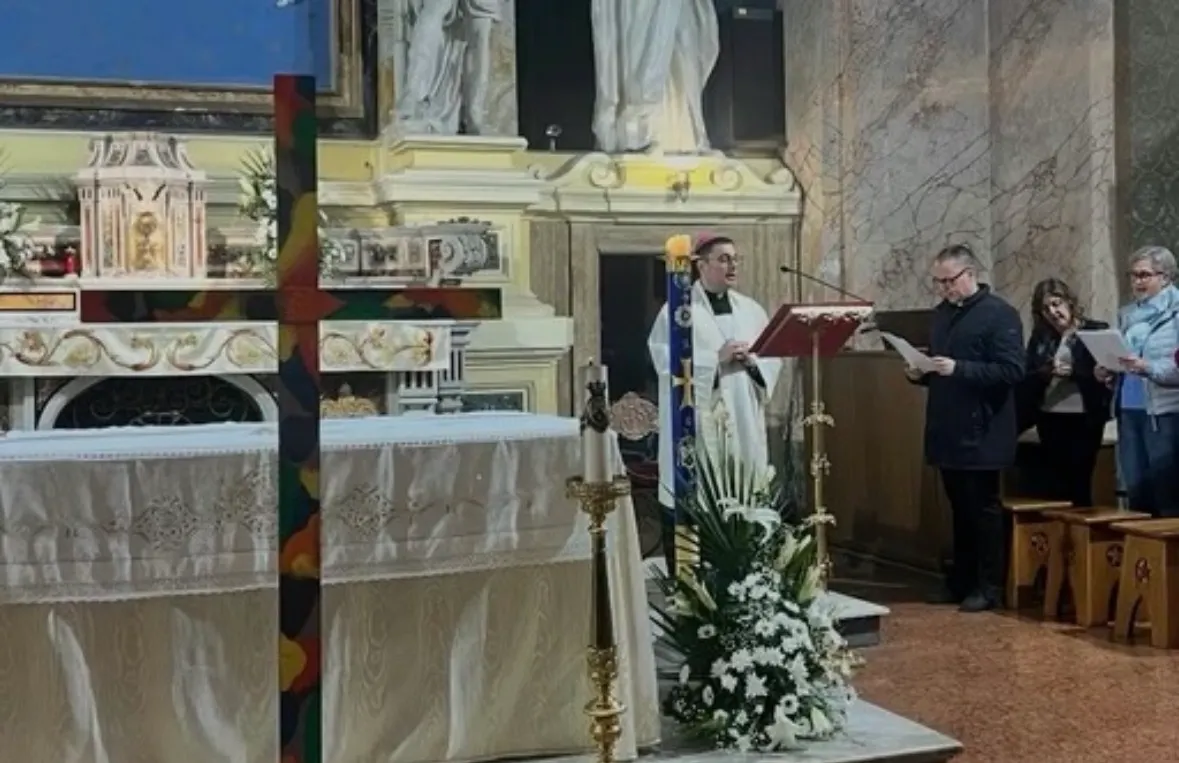
Then there is Albano, where Bishop Vincenzo Viva spoke at a diocesan prayer vigil against homophobia and transphobia. According to Outreach, he said he did not wish to speak merely of “welcoming,” but of “recognition and full integration.” He described LGBT persons as needing to be recognized as living, original, irreplaceable parts of the Body of Christ, without needing to pretend or hide.
“Welcome” can still belong to Catholic pastoral care. The Church welcomes sinners because she wants them saved. She welcomes the prodigal son because the Father is waiting with a robe, a ring, and a feast, but also because the son has come home from the far country. Catholic mercy has always been wider than human respectability and sharper than sentimental acceptance. It forgives sin. It does not baptize the far country.
“Recognition” does something else. It shifts the center of gravity from the sinner’s conversion to the identity’s validation. The person no longer comes to the Church to be healed, taught, corrected, absolved, and sanctified. The Church is summoned to recognize what is already there.
That is why the Catechism becomes so embarrassing to the new pastoral class. Its language is careful but definite. Homosexual persons must be treated with respect, compassion, and sensitivity, while homosexual acts are described as contrary to the natural law and incapable of approval. The new vocabulary wants the first half without the second, compassion severed from chastity, respect severed from repentance, sensitivity severed from truth.
The Albano vigil shows the pastoral direction of travel. The Church of accompaniment begins by saying, “You are welcome here.” It soon discovers that welcome is not enough. Then it says, “You are recognized here.” After that, the remaining obstacle is doctrine itself, because doctrine keeps asking recognition to become conversion.
The Synod Has Become a Conveyor Belt
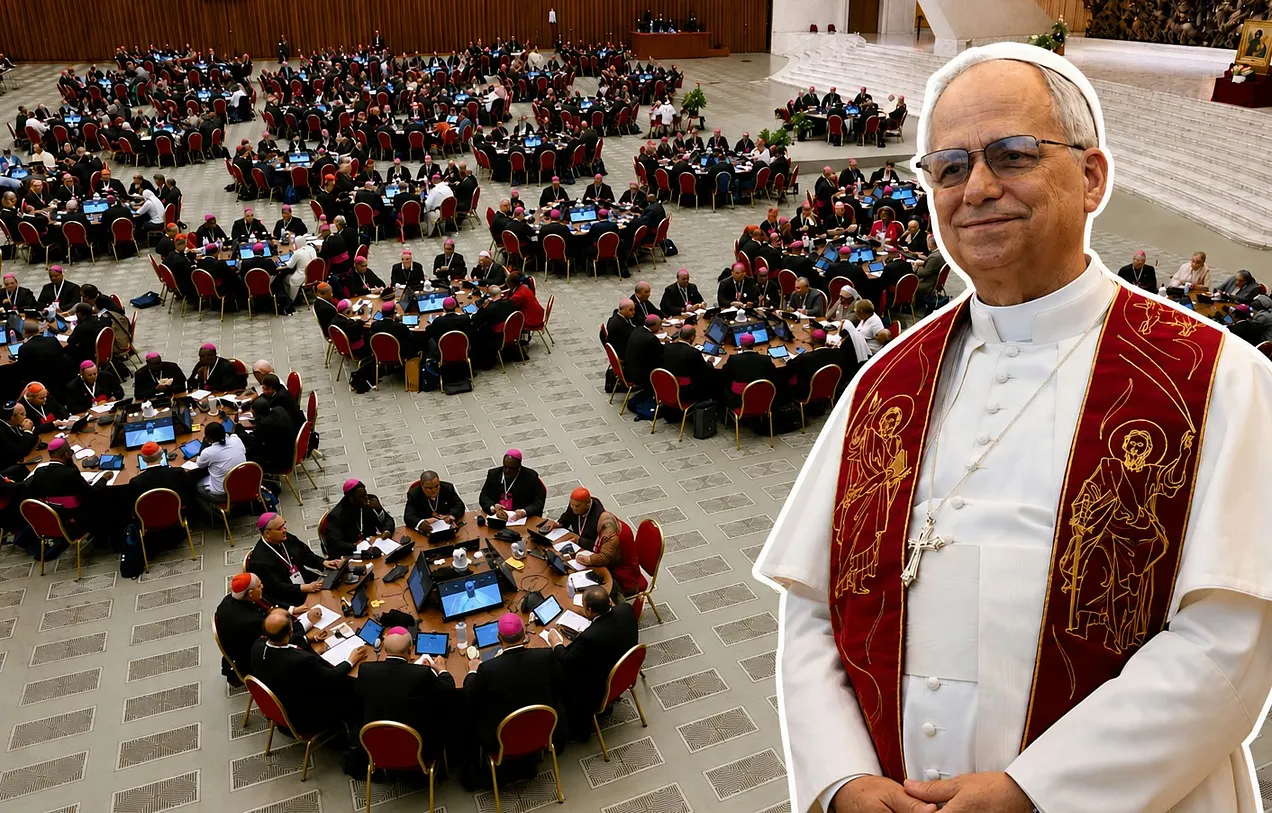
All of this is now being fed into the Synod’s implementation machinery.
The General Secretariat of the Synod says its “Pathways” document was prepared with the favorable opinion of the Ordinary Council and approved by Leo XIV. It is meant to guide local Churches and lead the whole Church toward an Ecclesial Assembly in October 2028. The document states that the Synod’s Final Document is the point of reference for implementation, that Francis declared it part of the ordinary magisterium, and that local Churches are called to implement its “authoritative proposals.”
There is the trick. What began as consultation now returns as magisterium. The laity spoke. The facilitators summarized. The bishops voted. Francis adopted. Leo approved the next stage. Now dioceses must implement.
The same document says synodality is a “constitutive dimension of the Church” and that the implementation phase must involve the whole People of God, expanding participation and co-responsibility among all the baptized. It encourages synodal teams made up of laymen and laywomen, priests and deacons, consecrated men and women, and even suggests that representatives of other Christian communities or other religions could be invited as observers. It also calls local Churches to report on effective access to positions of responsibility and leadership roles for women and non-ordained men where Holy Orders are not required.
The process has moved beyond the old conservative reassurance that synodality is just “listening.” The Synod now has timelines, teams, assemblies, reports, evaluation mechanisms, and a Roman endpoint in 2028. The Pillar’s summary of the latest timetable notes diocesan evaluation assemblies in 2027, national or regional assemblies later that year, continental assemblies in early 2028, and finally the October 2028 Ecclesial Assembly in Rome with Leo XIV.
A Church that can organize a four-year bureaucracy for synodality but cannot provide confessionals at a papal youth vigil has already told you its priorities.
Study Group 9 and the New Doctrinal Method
The most revealing part of the Synod machinery may be Study Group 9, which dealt with “emerging doctrinal, pastoral, and ethical issues.”
The official Vatican News summary says the report proposes a “paradigm shift” in how the Church addresses difficult doctrinal, pastoral, and ethical questions. It prefers “emerging” to “controversial,” emphasizes relational conversion, shared learning, transparency, and identifies three methodological steps: listening to ourselves, listening to reality, and convening different forms of knowledge.
Notice what has happened. Doctrine no longer functions as the stable rule by which pastoral practice is judged. Experience becomes the raw material from which doctrine is pressured to develop. The report applies this method specifically to homosexual Catholics and active nonviolence. Its full text says the task is to overcome a theoretical model that derives praxis from “pre-packaged” doctrine and applies abstract principles to concrete situations. It insists instead on circularity between theory and praxis, thought and experience.
That is a revolution in theological method disguised as pastoral maturity.
One of the accompanying testimonies published by the Synod presents a man in a same-sex civil marriage describing his sexuality as a “gift from God” and his husband as a source of grace in his life. Whether one quotes the testimony or not, the fact of its publication by a Vatican synodal study group is the story. It places an openly dissenting narrative inside the Church’s official discernment apparatus, not as an example of a soul needing conversion, but as data for the Church’s own conversion.
This is why “listening” is never neutral. Listening establishes whose experience gets treated as revelatory. The confessional listens too, but the priest listens as judge, physician, and father, applying the law of Christ to the wounds of the penitent. Synodal listening reverses the posture. The Church listens in order to be corrected by the wound.
Fernández Will Explain Why the Faith Is Collapsing
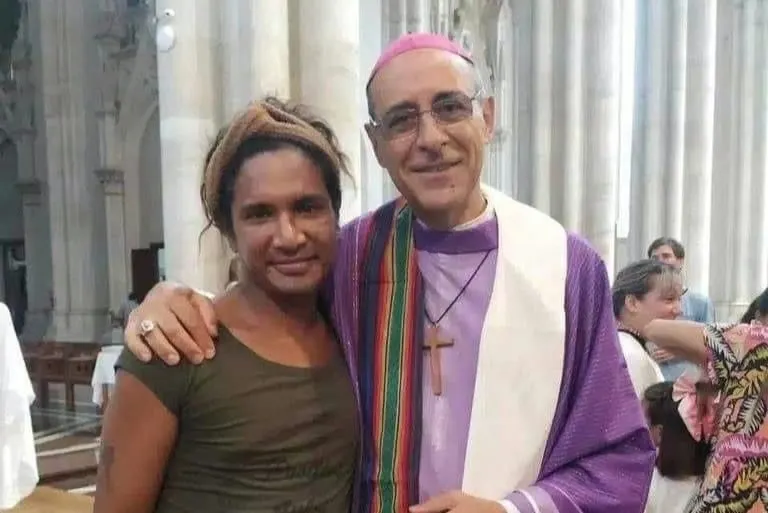
Into this scene steps Cardinal Víctor Manuel Fernández, preparing a new document on the transmission of the faith.
According to the National Catholic Register, Fernández says the document will examine the breakdown of intergenerational transmission, attractive proclamation of the kerygma, the quality of community, liturgy, inculturation, and the need to avoid one-size-fits-all answers. The Dicastery for the Doctrine of the Faith has reportedly consulted episcopal conferences, specialists, and research centers around the world.
The irony is almost too clean.
The man now tasked with explaining why the faith is not being transmitted presides over the same doctrinal office that gave the world Fiducia Supplicans, the declaration opening the possibility of blessings for couples in irregular situations and same-sex couples while insisting that marriage doctrine remained unchanged. He is also the same figure whose earlier erotic theological writings caused international controversy after his appointment, with the Associated Press reporting on his 1998 book dealing graphically with sexuality and mystical passion.
No gossip is needed. The public record suffices.
The collapse in transmission will now be studied by the very class of churchmen who made transmission nearly impossible. They will discuss pedagogy, community, language, culture, liturgy, and inculturation. They will ask why children no longer receive the faith from their parents, why parishes do not form disciples, why Catholic identity dissolves by adolescence, why the West has become spiritually barren.
Will they mention that children cannot inherit a faith their pastors have spent sixty years making negotiable? Will they mention that doctrine transmitted as “dialogue” becomes opinion by the second generation? Will they mention that a rite of Mass stripped, flattened, vernacularized, improvised, and handed over to committees does not impress the supernatural order upon the soul? Will they mention that parents cannot teach moral absolutes while bishops publicly treat those absolutes as “emerging questions”?
Of course not. The diagnosis will be pastoral. The cause will be culture. The remedy will be more synodality.
The New Religion of Process
The stories fit together too neatly to dismiss as coincidence.
This is the new religion of process.
Its sacrament is listening. Its priesthood is facilitation. Its doctrine is provisional. Its penance is dialogue. Its absolution is recognition. Its eschatology is the next assembly.
The old Catholic grammar began with God revealing, Christ instituting, the apostles handing down, the Church guarding, priests absolving, and the faithful receiving. The new grammar begins with experience, proceeds through dialogue, passes through facilitation, becomes report, returns as magisterium, and demands implementation.
The faithful are expected to call this continuity.
They are expected to believe that a Church which once warned against ambiguous sexual teaching is now deepening doctrine by platforming testimonies that contradict it. They are expected to believe that the Holy Office, once charged with defending the deposit of faith, now serves the deposit better by convening experiences. They are expected to believe that the absence of confessionals at a youth vigil is no big deal because sacramental confession exists somewhere else in the city.
At some point, normal Catholics must stop pretending that every scandal is isolated. The pattern is the point.
The Real Question
The real question is no longer whether a particular bishop is too liberal, whether a particular document can be read conservatively, or whether a particular abuse can be explained away by bad implementation.
The deeper question is whether the Conciliar structure now operates according to a different principle of religion.
Catholicism converts man to God. The new system converts ecclesial language to man’s experience. Catholicism tells the sinner to repent and live. The new system tells the wounded person to speak and be recognized. Catholicism uses mercy to restore the moral order. The new system uses mercy to suspend judgment about the moral order. Catholicism hands down what it has received. The new system receives what it has heard and calls the reception a development.
That is why Madrid matters.
A confessional is a little tribunal of mercy. It assumes that sin is real, grace is objective, priesthood matters, absolution changes the soul, and eternal life is at stake. A listening space assumes that the first pastoral need is expression. It may be kind. It may be sincere. It may even help someone take the first step toward confession. But when it becomes the official public symbol at a youth event, while confessionals are omitted, it tells the young exactly what the new Church considers central.
No Confessionals, Please
Leo XIV has inherited Francis’s machinery and, so far, has chosen to run it. He has approved the Synod’s implementation pathways. He has retained Fernández. He has allowed the study groups, the reports, the language of paradigm shift, the machinery of the 2028 Ecclesial Assembly, and the steady expansion of “leadership” language around women and non-ordained ministries.
The conservatives who hoped for a dramatic reversal are now being educated by events. The tone may change. The smile may be calmer. The paperwork may be neater. But the machine continues.
Madrid gives us the icon.
No confessionals, please. We’re listening.
And in that one image, the whole postconciliar tragedy stands exposed. The Church that once sent priests into plague towns, mission fields, battlefields, prisons, and deathbeds to absolve sinners now trains lay agents for listening spaces along the boulevard. The world has not become less sinful. Young people have not become less wounded. Souls have not become less in need of grace.
The shepherds have simply become embarrassed by the old tools of salvation.
So they offer a chair, a trained smile, a pastoral conversation, and the promise that someone will listen.
Christ gave His Church something better.
He gave her priests. He gave her sacraments. He gave her doctrine. He gave her the power to bind and loose.
A Church that forgets this may still speak endlessly about mission. But it has forgotten what mission is for.
Ping
Disclaimer: Opinions posted on Free Republic are those of the individual posters and do not necessarily represent the opinion of Free Republic or its management. All materials posted herein are protected by copyright law and the exemption for fair use of copyrighted works.