
Free Republic
Browse · Search
Religion
Topics · Post Article

Skip to comments.

Catholic Caucus: Daily Mass Readings 30-April-2026
Universalis/Jerusalem Bible ^

Posted on 04/30/2026 5:18:29 AM PDT by annalex

30 April 2026

Thursday of the 4th week of Eastertide


Pope Saint Pius V Church, in Saint Louis, Missouri

Readings at Mass

Liturgical Colour: White. Year: A(II).


First readingActs 13:13-25

God has raised up one of David's descendants, Jesus, as Saviour

Paul and his friends went by sea from Paphos to Perga in Pamphylia where John left them to go back to Jerusalem. The others carried on from Perga till they reached Antioch in Pisidia. Here they went to synagogue on the sabbath and took their seats. After the lessons from the Law and the Prophets had been read, the presidents of the synagogue sent them a message: ‘Brothers, if you would like to address some words of encouragement to the congregation, please do so.’ Paul stood up, held up a hand for silence and began to speak:
  ‘Men of Israel, and fearers of God, listen! The God of our nation Israel chose our ancestors, and made our people great when they were living as foreigners in Egypt; then by divine power he led them out, and for about forty years took care of them in the wilderness. When he had destroyed seven nations in Canaan, he put them in possession of their land for about four hundred and fifty years. After this he gave them judges, down to the prophet Samuel. Then they demanded a king, and God gave them Saul son of Kish, a man of the tribe of Benjamin. After forty years, he deposed him and made David their king, of whom he approved in these words, “I have selected David son of Jesse, a man after my own heart, who will carry out my whole purpose.” To keep his promise, God has raised up for Israel one of David’s descendants, Jesus, as Saviour, whose coming was heralded by John when he proclaimed a baptism of repentance for the whole people of Israel. Before John ended his career he said, “I am not the one you imagine me to be; that one is coming after me and I am not fit to undo his sandal.”’


Responsorial Psalm
Psalm 88(89):2-3,21,22,25,27
I will sing for ever of your love, O Lord.
or
Alleluia!
I will sing for ever of your love, O Lord;
  through all ages my mouth will proclaim your truth.
Of this I am sure, that your love lasts for ever,
  that your truth is firmly established as the heavens.
I will sing for ever of your love, O Lord.
or
Alleluia!
I have found David my servant
  and with my holy oil anointed him.
My hand shall always be with him
  and my arm shall make him strong.
I will sing for ever of your love, O Lord.
or
Alleluia!
My truth and my love shall be with him;
  by my name his might shall be exalted.
He will say to me: ‘You are my father,
  my God, the rock who saves me.’
I will sing for ever of your love, O Lord.
or
Alleluia!

Gospel Acclamationcf.Rv1:5
Alleluia, alleluia!
You, O Christ, are the faithful witness,
the First-born from the dead,
you have loved us and have washed away our sins with your blood.
Alleluia!

GospelJohn 13:16-20

Whoever welcomes the one I send welcomes me

After he had washed the feet of his disciples, Jesus said to them:
‘I tell you most solemnly,
no servant is greater than his master,
no messenger is greater than the man who sent him.
‘Now that you know this, happiness will be yours if you behave accordingly. I am not speaking about all of you: I know the ones I have chosen; but what scripture says must be fulfilled: Someone who shares my table rebels against me.
‘I tell you this now, before it happens,
so that when it does happen
you may believe that I am He.
I tell you most solemnly,
whoever welcomes the one I send welcomes me,
and whoever welcomes me welcomes the one who sent me.’

Christian Art

Illustration

Each day, The Christian Art website gives a picture and reflection on the Gospel of the day.

The readings on this page are from the Jerusalem Bible, which is used at Mass in most of the English-speaking world. The New American Bible readings, which are used at Mass in the United States, are available in the Universalis apps, programs and downloads.

You can also view this page with the Gospel in Greek and English.


TOPICS: Catholic; General Discusssion; Prayer; Worship
KEYWORDS: catholic; easter; jn13; prayer

Click here: to donate by Credit Card

Or here: to donate by PayPal

Or by mail to: Free Republic, LLC - PO Box 9771 - Fresno, CA 93794

Thank you very much and God bless you.

For your reading, reflection, faith-sharing, comments, questions, discussion.

1 posted on 04/30/2026 5:18:29 AM PDT by annalex
[ Post Reply | Private Reply | View Replies]

To: All

KEYWORDS: catholic; easter; jn13; prayer


2 posted on 04/30/2026 5:19:02 AM PDT by annalex (fear them not)
[ Post Reply | Private Reply | To 1 | View Replies]

To: nickcarraway; NYer; ELS; Pyro7480; livius; ArrogantBustard; Catholicguy; RobbyS; marshmallow; ...


Alleluia Ping

Please FReepmail me to get on/off the Alleluia Ping List.


3 posted on 04/30/2026 5:20:19 AM PDT by annalex (fear them not)
[ Post Reply | Private Reply | To 2 | View Replies]

To: annalex
Chris Robinson: My Dad [our Jim Robinson] Passed Away Peacefully Monday Night (October 27th) In Our Home.
Jim still needs our prayers. Thread 2
Prayer thread for Salvation's recovery
Pray for Ukraine
Prayer thread for Fidelis' recovery
Update on Jim Robinson's health issues
4 posted on 04/30/2026 5:20:58 AM PDT by annalex (fear them not)
[ Post Reply | Private Reply | To 3 | View Replies]

To: annalex
John
 English: Douay-RheimsLatin: Vulgata ClementinaGreek NT: Byzantine/Majority Text (2000)
 John 13
16Amen, amen I say to you: The servant is not greater than his lord; neither is the apostle greater than he that sent him. Amen, amen dico vobis : non est servus major domino suo : neque apostolus major est eo qui misit illum.αμην αμην λεγω υμιν ουκ εστιν δουλος μειζων του κυριου αυτου ουδε αποστολος μειζων του πεμψαντος αυτον
17If you know these things, you shall be blessed if you do them. Si hæc scitis, beati eritis si feceritis ea.ει ταυτα οιδατε μακαριοι εστε εαν ποιητε αυτα
18I speak not of you all: I know whom I have chosen. But that the scripture may be fulfilled: He that eateth bread with me, shall lift up his heel against me. Non de omnibus vobis dico : ego scio quos elegerim ; sed ut adimpleatur Scriptura : Qui manducat mecum panem, levabit contra me calcaneum suum.ου περι παντων υμων λεγω εγω οιδα ους εξελεξαμην αλλ ινα η γραφη πληρωθη ο τρωγων μετ εμου τον αρτον επηρεν επ εμε την πτερναν αυτου
19At present I tell you, before it come to pass: that when it shall come to pass, you may believe that I am he. Amodo dico vobis, priusquam fiat : ut cum factum fuerit, credatis, quia ego sum.απ αρτι λεγω υμιν προ του γενεσθαι ινα οταν γενηται πιστευσητε οτι εγω ειμι
20Amen, amen I say to you, he that receiveth whomsoever I send, receiveth me; and he that receiveth me, receiveth him that sent me. Amen, amen dico vobis : qui accipit si quem misero, me accipit ; qui autem me accipit, accipit eum qui me misit.αμην αμην λεγω υμιν ο λαμβανων εαν τινα πεμψω εμε λαμβανει ο δε εμε λαμβανων λαμβανει τον πεμψαντα με

5 posted on 04/30/2026 5:23:56 AM PDT by annalex (fear them not)
[ Post Reply | Private Reply | To 4 | View Replies]

To: annalex

Catena Aurea by St. Thomas Aguinas

16. Verily, verily, I say unto you, The servant is not greater than his lord: neither he that is sent greater than he that sent him.

17. If ye know these things, happy are ye if ye do them.

18. I speak not of you all: I know whom I have chosen: but that the Scripture may be fulfilled, He that eateth bread with me hath lifted up his heel against me.

19. Now I tell you before it come, that, when it is come to pass, ye may believe that I am he.

20. Verily, verily, I say unto you, He that receiveth whomsoever I send receiveth me; and he that receiveth me receiveth him that sent me.CHRYSOSTOM. (Hom. lxxi. 2) He continues to urge them to wash one another’s feet; Verily, verily, I say unto you, The servant is not greater than his lord, neither He that is sent greater than He that sent Him; as if to say, If I do it, much more ought you.

THEOPHYLACT. This was a necessary admonition to the Apostles, some of whom were about to rise higher, others to lower degrees of eminence. That none might exult over another, He changes the hearts of all.

BEDE. To know what is good, and not to do it, tendeth not to happiness, but to condemnation; as James saith, To him that knoweth to do good, and doeth it not, to him it is sin (James 4:17). Wherefore He adds, If ye know these things, happy are ye if yo do them.

CHRYSOSTOM. (Hom. Lxxi. 2) For all know, but all do not do. He then rebukes the traitor, not openly, but covertly: I speak not of you all.

AUGUSTINE. (Tr. lix. 1) As if to say, There is one among you who will not be blessed, nor doeth these things. I know whom I have chosen. Whom, but those who shall be happy by doing His commandments? Judas therefore was not chosen. But if so, why does He say in another place, Have not I chosen you twelve? Because Judas was chosen for that for which he was necessary, but not for that happiness of which He says, Happy are ye, if ye do them.

ORIGEN. (t. xxxii. 8.) Or thus: I speak not of you all, does not refer to, Happy are ye if ye do them. For of Judas, or any other person, it may be said, Happy is he if he do them. The words refer to the sentence above, The servant is not greater than his lord, neither He that is sent greater than He that sent Him. For Judas, being a servant of sin, was not a servant of the Divine Word; nor an Apostle, when the devil had entered into him. Our Lord knew those who were His, and did not know who were not His, and therefore says, not, I know all present, but, I know whom I have chosen, i. e. I know My Elect.

CHRYSOSTOM. (Hom. lxxi. 1) Then, that He might not sadden them all, He adds, But that the Scripture must be fulfilled, He that eateth bread with Me, hath lifted up his heel against Me: shewing that He knew who the traitor was, an intimation that would surely have checked him, if any thing would. He does not say, shall betray Me, but, shall lift up his heel against Me, alluding to his deceit and secret plotting.

AUGUSTINE. (Tr. lix. 1) Shall lift up his heel against Me, i. e. shall tread upon Me. The traitor Judas is meant.

CHRYSOSTOM. (Hom. lxxi. 2) He that eateth bread with Me; i. e. who was fed by Me, who partook of My table. So that if injured ever by our servants or inferiors, we need not be offended. Judas had received infinite benefits, and yet thus requited his Benefactor.

AUGUSTINE. (Tr. lix. 1) They then who were chosen ate the Lord; he ate the bread of the Lord, to injure the Lord; they ate life, he damnation; for he that eateth unworthily, eateth damnation to himself. (1 Cor. 11:27)

Now I tell you before it come, that when it is come, ye may believe that I am He, i. e. of whom that Scripture foretold.

ORIGEN. (t. xxxii. 9.) That ye may believe, is not said, as if the Apostles did not believe already, but is equivalent to saying, Do as ye believe, and persevere in your belief, seeking for no occasion of falling away. For besides the evidences the disciples had already seen, they had now that of the fulfilment of prophecy.

CHRYSOSTOM. (Hom. Lxxii. 3) As the disciples were about to go forth and to suffer many things, He consoles them by promising His own assistance and that of others; His own, when He says, Happy are ye if ye do them; that of others, in what follows, Verily, verily, I say unto you, He that receiveth whomsoever I send, receiveth Me; and he that receiveth Me receiveth Him that sent Me.

ORIGEN. (t. xxxii. 10.) For he that receiveth him whom Jesus sends, receiveth Jesus who is represented by him; and he that receiveth Jesus, receiveth the Father. Therefore he that receiveth whom Jesus sends, receiveth the Father that sent. The words may have this meaning too: He that receiveth whom I send, had attained unto receiving Me: he who receiveth Me not by means of any Apostle, but by My own entrance into his soul, receiveth the Father; so that not only I abide in him, but the Father also.

AUGUSTINE. (Tr. xlix. 2) The Arians, when they hear this passage, appeal immediately to the gradations in their system, that as far as the Apostle is from the Lord, so far is the Son from the Father. But our Lord hath left us no room for doubt on this head; for He saith, I and My Father are one. (supr. 10:30) But how shall we understand those words of our Lord, He that receiveth Me, receiveth Him that sent Me? If we take them to mean that the Father and the Son are of one nature, it will seem to follow, when He says, He that receiveth whomsoever I send, receiveth Me, that the Son and an Apostle are of one nature. May not the meaning be, He that receiveth whosoever I send, receiveth Me, i. e. Me as man: But He that receiveth Me, i. e. as God, receiveth Him that sent Me. But it is not this unity of nature, which is here put forth, but the authority of the Sender, as represented by Him who is sent. In Peter hear Christ, the Master of the disciple, in the Son the Father, the Begotten of the Only Begotten.

Catena Aurea John 13
6 posted on 04/30/2026 5:25:32 AM PDT by annalex (fear them not)
[ Post Reply | Private Reply | To 5 | View Replies]

To: annalex


Christ Washing the Feet of the Disciples

Paolo Veronese

1580s
Oil on canvas, 139 x 283 cm
Národní Galerie, Prague

7 posted on 04/30/2026 5:26:34 AM PDT by annalex (fear them not)
[ Post Reply | Private Reply | To 6 | View Replies]

To: annalex
May 1, 2025

Fr. Scott Haynes


When the bark of Peter appeared most threatened by the swelling tide of the Reformation, internal corruption, and geopolitical instability, Divine Providence raised up a Dominican friar—ascetically dressed in white, burning with zeal for the purity of the Church, and devoted to prayer and truth. His name was Antonio Ghislieri, and the world would come to know him as Pope St. Pius V (1504–1572), canonized in 1712 by Clement XI and remembered liturgically each year on May 5.

His pontificate (1566–1572) was brief by historical standards, but his legacy remains towering. From implementing the Council of Trent’s decrees to codifying the Roman Missal and Breviary, and from unifying the Church’s pastoral response to the Reformation to interceding for Christendom in the Battle of Lepanto, Pius V’s pontificate was one of action, prayer, and reform. He was not only a theologian and a disciplinarian; he was a father to a wounded Church—one who, like Christ, gave himself for her purification and triumph.

The Friar-Pope

Born on January 17, 1504, near Alessandria in northern Italy, Antonio Ghislieri entered the Order of Preachers (Dominicans) at age fifteen, receiving the religious name Michael. As a friar, he was known for his austere life, profound learning, and unflinching love for the truth. He taught theology, served as prior, and was later appointed Inquisitor in several Italian regions. Though feared by heretics, he was respected even by opponents for his integrity.

He was made a cardinal in 1557 by Pope Paul IV and became Grand Inquisitor—a post he wielded with justice and severity, particularly in rooting out moral and doctrinal laxity. Upon the death of Pope Pius IV in 1565, Ghislieri was elected pope and took the name Pius V, choosing to follow in the reforming footsteps of Pope St. Pius I, a second-century martyr.

Champion of Tridentine Reform

At the time of Pius V’s election, the Church was still reeling from the theological, liturgical, and institutional upheaval unleashed by Martin Luther and other reformers. In response, the Council of Trent (1545–1563) had offered a bold and authoritative reaffirmation of Catholic doctrine and discipline. But now came the harder part—implementation. It fell to Pope Pius V to turn Tridentine doctrine into lived Catholicism.

1. Reforming the Clergy

One of his foremost tasks was to implement the Council’s insistence on episcopal and clerical reform. He mandated that bishops reside in their dioceses, uphold strict moral standards, and regularly visit parishes. He encouraged seminaries as required by Trent and personally wrote to bishops and religious superiors, holding them accountable for the souls in their care.

Under his leadership, the Roman Curia was purged of lax and corrupt figures, and new appointments were made based on orthodoxy and holiness. Pius V lived simply himself, continuing to wear his Dominican habit and rejecting opulence. His household became a model of charity and austerity.

2. The Catechism and Liturgy

Pius V firmly believed that liturgy and catechesis were twin pillars for Catholic renewal. In 1566, he oversaw the publication of the Roman Catechism, also known as the Catechism of the Council of Trent. Aimed at parish priests, this catechism offered a clear and systematic presentation of Catholic doctrine and served as a reference for nearly four centuries.

But his most enduring liturgical legacy was the standardization of the Roman Rite.

The Roman Missal (1570)

In accordance with Trent's decree that the liturgy be purified and unified, Pius V promulgated the Missale Romanum in 1570. This Tridentine Mass, as it would come to be called, drew from centuries-old Roman usage and eliminated regional accretions that obscured its clarity and dignity.

He declared that this form of the Mass was to be used universally in the Latin Church unless a rite of at least 200 years’ antiquity was in place (e.g., the Ambrosian or Mozarabic Rites). For four centuries, the Roman Missal of Pius V remained the standard expression of the Latin liturgical tradition.

He also revised and promulgated the Breviary, ensuring that the Divine Office was prayed uniformly and devoutly by clergy and religious around the world.

In doing so, Pius V preserved the Church’s liturgical unity, rooted in tradition and theological clarity. This act was not simply administrative—it was pastoral and theological: he recognized that the Mass forms the heart of the Church's life and the source of grace for the faithful.

As Pope Benedict XVI later reflected in Summorum Pontificum (2007), the Missal of Pius V was “venerated for centuries… and formed countless saints.”

Defender of the True Faith

Pius V was not content merely to reform the Church internally; he also saw it as his duty to defend the Church from external and internal heresies. Though sometimes criticized for his severity, he saw no distinction between doctrinal fidelity and charity for souls.

He excommunicated Elizabeth I of England in 1570 for her persecution of Catholics and her claim to supreme spiritual authority. His papal bull Regnans in Excelsis stated plainly:

“She has seized the kingdom and boldly arrogated to herself supreme authority in both spiritual and temporal matters, while oppressing the faithful.”

This act further endangered English Catholics but also strengthened their witness, leading to generations of martyrs and confessors.

Moreover, Pius V vigorously upheld the doctrine of transubstantiation, the authority of tradition, and the primacy of the Pope, at a time when many Church doctrines were under attack. He supported St. Charles Borromeo, St. Peter Canisius, and the Jesuits, who led the counter-offensive in education and missionary work.

He also championed the cause of saints who embodied reform, such as St. Teresa of Ávila, encouraging her Carmelite renewal.

The Battle of Lepanto: Victory Through the Rosary

Among Pius V’s most dramatic and celebrated actions was his role in uniting the Christian powers of Europe against the advancing threat of the Ottoman Empire. By 1571, the Turks had conquered much of the eastern Mediterranean and posed a direct threat to Christian lands.

Pius V understood that Europe could not afford to remain divided. With patient diplomacy and prayer, he forged the Holy League, an alliance of Spain, Venice, and the Papal States under the command of Don John of Austria.

As the Christian fleet prepared to engage the vastly superior Ottoman navy at Lepanto on October 7, 1571, Pius V called upon all of Christendom to pray the Rosary. He ordered public processions, rosaries, and Masses in Rome and throughout Catholic lands.

Miraculously, the outnumbered Christian forces achieved a decisive victory. It was more than a military success—it was a spiritual triumph.

Pius V credited the victory to the intercession of the Blessed Virgin Mary, and in thanksgiving, he instituted the Feast of Our Lady of Victory, later renamed the Feast of Our Lady of the Rosary. This feast remains a testament to the pope's Marian devotion and the power of communal prayer.

As the Christian fleet prevailed, the pope, in Rome hundreds of miles away, reportedly looked up during a meeting and announced:

“Let us set aside business; our great task at this moment is to give thanks to God. The Christian fleet is victorious!”

A Model of Holy Leadership

Pius V was not simply a reformer, diplomat, or liturgist. At his heart, he was a pastor of souls. He began each day with long hours of prayer, celebrated Mass with tears, and lived simply even as pope. He visited the sick, fed the poor, and often walked barefoot in processions. He lived austerely, fasted regularly, and continued the penances he had practiced as a friar.

He loved the poor and the Church with the heart of a true shepherd.

In his encyclical Quo Primum (1570), he revealed his intent behind his liturgical reforms:

“We have judged that it be our duty to entrust this work to learned men... so that the Holy Church of God may sing to God with one voice.”

His death on May 1, 1572, was marked by peace and sanctity. Those near his bedside testified to his final acts of devotion, humility, and prayer. He was canonized on May 22, 1712, and his feast is celebrated on May 5.

His Enduring Legacy

Pope St. Pius V's contributions are numerous and continue to shape the Church today:

  • Liturgical Unity: The Tridentine Mass remains a powerful expression of Catholic identity, and many Catholics today continue to draw spiritual richness from it.

  • Doctrinal Fidelity: His defense of Catholic doctrine provided the stability the Church needed in a time of crisis.

  • Pastoral Reform: His reforms helped rebuild trust in the hierarchy and priesthood.

  • Prayer and Action: He modeled that the Church is most powerful when it wields both sword and sanctuary, action and adoration.

In our age, when confusion again seems to cloud doctrine, liturgy, and mission, the life of Pius V shines with renewed relevance. His legacy is not mere nostalgia—it is a call to fidelity, clarity, and holiness.

Pope Benedict XVI, writing in 2007, paid tribute to the liturgical clarity begun by Pius V:

“What earlier generations held as sacred, remains sacred and great for us too.”

Conclusion: A Saint for Our Times

As we commemorate Pope St. Pius V on May 5, let us thank God for raising up this Dominican pontiff who reformed the Church, guarded her liturgy, and led the faithful in triumph through one of the most dangerous chapters in her history.

In a world increasingly fragmented and hostile to eternal truths, may we invoke his intercession for holy leadership, doctrinal integrity, and renewed reverence for the Sacred Liturgy.

May the Church never forget the lesson of Pope St. Pius V: that in every crisis, our response must begin with prayer, reform, and fidelity to what is sacred.

“O God, who in thy providence didst raise up Pope Saint Pius V to defend the faith and to renew all things in Christ, grant, through his intercession, that we may be ever faithful to thy truth.” (Collect, Feast of St. Pius V)

mysticaltheologyofthemass.com

8 posted on 04/30/2026 5:37:42 AM PDT by annalex (fear them not)
[ Post Reply | Private Reply | To 7 | View Replies]

To: annalex

Portrait of Pope Pius V
Bartolomeo Passarotti and workshop (1529–1592)

9 posted on 04/30/2026 5:41:04 AM PDT by annalex (fear them not)
[ Post Reply | Private Reply | To 8 | View Replies]

To: annalex

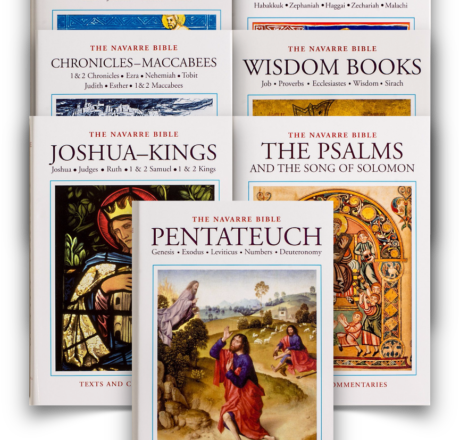
NAVARRE BIBLE COMMENTARY(RSV)

Ad Majorem Dei Gloriam (To the Greater Glory of God)

Today’s First Reading

From: Acts 13:13-25

They Cross into Asia Minor
----------------------------------
[13] Now Paul and his company set sail from Paphos, and came to Perga in Pamphylia. And John left them and returned to Jerusalem; [14] but they passed on from Perga and came to Antioch of Pisidia.

Preaching in the Synagogue of Antioch of Pisidia
---------------------------------------------------------
And on the Sabbath day they went into the synagogue and sat down. [15] After the reading of the law and the prophets, the rulers of the synagogue sent to them, saying, "Brethren, if you have any word of exhortation for the people, say it." [16] So Paul stood up, and motioning with his hand said: "Men of Israel, and you that fear God, listen. [17] The God of this people Israel chose our fathers and made the people great during their stay in the land of Egypt, and with uplifted arm He led them out of it. [18] And for about forty years He bore with them in the wilderness. [19] And when He had destroyed seven nations in the land of Canaan, He gave them their land as an inheritance, for about four hundred and fifty years. [20] And after that He gave them judges until Samuel the prophet. [21] Then they asked for a king; and God gave them Saul the son of Kish, a man of the tribe of Benjamin, for forty years. [22] And when He had removed him, He raised up David to be their king; of whom He testified and said, "I have found in David the son of Jesse a man after My heart, who will do all My will.' [23] Of this man's posterity God has brought Israel a Savior, Jesus, as He promised. [24] Before His coming John had preached a baptism of repentance to all the people of Israel. [25] And as John was finishing his course, he said, 'What do you suppose that I am? I am not He. No, but after me One is coming, the sandals of whose feet I am not worthy to untie.'"

*************************************************
Commentary:

15. Sabbath services in synagogues went right back to the post-exilic period (after the Babylonian Captivity, which lasted from 586 to 539 B.C.), and by now they had a very settled form. They consisted of readings from Sacred Scripture, preaching and public prayers. No one was especially appointed to preside over these services; the president or ruler of the synagogue could ask any member of the community to take the ceremony (cf. 18:8); he supervised the preparations and made sure that everything was done properly.

16-41. Paul's address here is an excellent example of the way he used to present the Gospel to a mixed congregation of Jews and proselytes. He lists the benefits conferred by God on the chosen people from Abraham down to John the Baptism (verses 16-25); he then shows how all the messianic prophecies were fulfilled in Jesus (verses 26-37), and, by way of conclusion, states that justification comes about through faith in Jesus, who died and then rose from the dead (verse 38-41).

This address contains all the main themes of apostolic preaching, that is, God's saving initiative in the history of Israel (verses 17-22); reference to the Precursor (verses 24-25); the proclamation of the Gospel or "kerygma" in the proper sense (verses 26b-31a); mention of Jerusalem (verse 31b); arguments from Sacred Scripture (verses 33-37), complementing apostolic teaching and tradition (verses 38-39); and a final exhortation, eschatological in character, announcing the future (verses 40-41). In many respects this address is like those of St. Peter (cf. 2:14ff; 3:12ff), especially where it proclaims Jesus as Messiah and in its many quotations from Sacred Scripture, chosen to show that the decisive event of the Resurrection confirms Christ's divinity.

Paul gives a general outline of salvation history and then locates Jesus in it as the expected Messiah, the point at which all the various strands in that history meet and all God's promises are fulfilled. He shows that all the steps which lead up to Jesus Christ, even the stage of John the Baptist, are just points on a route. Earlier, provisional elements must now, in Christ, give way to a new, definitive situation.

10 posted on 04/30/2026 8:35:08 AM PDT by fidelis (Ecce Crucem Domini! Fugite partes adversae! Vicit Leo de tribu Juda, Radix David! Alleluia!)
[ Post Reply | Private Reply | To 9 | View Replies]

From: John 13:16-20

Jesus Washes His Disciples' Feet (Continued)
--------------------------------
(Jesus said to His disciples,) [16] "Truly, truly, I say to you, a servant is not greater than his master; nor is he who is sent greater than he who sent him. [17] If you know these things, blessed are you if you do them. [18] I am not speaking to you all; I know whom I have chosen; it is that the Scripture may be fulfilled, `He who ate my bread has lifted his heel against me.' [19] I tell you this now, before it takes place, that when it does take place you may believe that I am He. [20] Truly, truly, I say to you, he who receives any man whom I send receives Me; and he who receives Me receives Him who sent Me."

***********************************************************************
Commentary:

15-17. Jesus' whole life was an example of service towards men, fulfilling His Father's will to the point of dying on the Cross. Here our Lord promises us that if we imitate Him, our Teacher, in disinterested service (which always implies sacrifice), we will find true happiness which no one can wrest from us (cf. 16:22; 17:13). "`I have given you an example', He tells His disciples after washing their feet, on the night of the Last Supper. Let us reject from our hearts any pride, any ambition, any desire to dominate; and peace and joy will reign around us and within us, as a consequence of our personal sacrifice" (St J. Escriva, "Christ Is Passing By", 94).

18. Lifting one's heel against someone means hitting him brutally; metaphorically, therefore, it means violent enmity. Judas' treachery fulfills the words of Psalm 41:10 where the psalmist complains bitterly of a friend's treachery. Once again the Old Testament prefigures events which find their full _expression in the New.

Through Baptism, the Christian has become a son of God and is called to share in God's good things, not only in Heaven but also on earth: He has received grace, he shares in the Eucharistic Banquet..., he shares with his brethren, other Christians, the friendship of Jesus. Therefore, if a person sins who has been born again through Baptism, in some sense his is a sort of treachery similar to Judas'. However, we have the recourse of repentance: if we trust in God's mercy we can set about recovering our friendship with God.

"React. Listen to what the Holy Spirit tells you: `"Si inimicus meus maledixisset mihi, sustinuissem utique"'. If it were the enemy who insulted me, I could put up with that. But you...`"tu vero homo unanimis, dux meus, et notus meus, qui simul mecum dulces capiebas cibos"': you, My friend, My Apostle, who sit at My table and take sweet food with Me!" (St J. Escriva, "The Way", 244).

19. Jesus tells the Apostles in advance about Judas' treachery, so that when they see Christ's predictions come true, they will realize He has divine knowledge and that in Him are fulfilled the Scriptures of the Old Testament (cf. John 2:22). On the words "I am", cf. note on John 8:21-24.

11 posted on 04/30/2026 8:35:27 AM PDT by fidelis (Ecce Crucem Domini! Fugite partes adversae! Vicit Leo de tribu Juda, Radix David! Alleluia!)
[ Post Reply | Private Reply | To 10 | View Replies]

Click here to go to the My Catholic Life! Devotional thread for a meditation on today’s Gospel Reading.

12 posted on 04/30/2026 8:36:47 AM PDT by fidelis (Ecce Crucem Domini! Fugite partes adversae! Vicit Leo de tribu Juda, Radix David! Alleluia!)
[ Post Reply | Private Reply | To 11 | View Replies]

Disclaimer: Opinions posted on Free Republic are those of the individual posters and do not necessarily represent the opinion of Free Republic or its management. All materials posted herein are protected by copyright law and the exemption for fair use of copyrighted works.

Free Republic
Browse · Search
Religion
Topics · Post Article

FreeRepublic, LLC, PO BOX 9771, FRESNO, CA 93794
FreeRepublic.com is powered by software copyright 2000-2008 John Robinson