
Posted on 04/29/2026 10:05:48 PM PDT by fidelis
When Jesus had washed the disciples’ feet, he said to them: “Amen, amen, I say to you, no slave is greater than his master nor any messenger greater than the one who sent him. If you understand this, blessed are you if you do it.” John 13:16–17
Today’s Gospel comes from the Last Supper, just after Jesus washed His disciples’ feet. What an act of humility! By analogy, it would be as if a king knelt before his servants to polish their shoes, setting aside his glory to attend to their most basic needs. This act would teach them that true greatness lies not in power but in love and humble service. Such an act would make quite an impression on those servants, helping them understand their duty within the king’s royal court and their responsibility toward the people of the kingdom.
The Apostles might not have understood the full meaning of Jesus’ act of humility that Holy Thursday evening. As time went on, however, and the Apostles embraced their roles as spiritual leaders of the early Church, Jesus’ actions would have become the foundation of their understanding of servant leadership—one that they themselves were called to imitate as shepherds of Christ’s flock. Leadership in the Kingdom of God is not about seeking honors or recognition but about humbling oneself in selfless service to others. This includes not only leaders within the Church, but also leaders within the community and within families.
Jesus’ example becomes even more impactful when we consider the presence of Judas at this intimate moment. The Gospel goes on to reveal that Jesus acknowledged that one of those whose feet He washed would betray Him. He served Judas anyway. In this one act, Jesus not only demonstrated humility but also showed that His love knows no boundaries, extending even to those who would reject and betray Him.
In our lives, when we encounter those who betray us or sin against us in any way, we are immediately tempted to lash out. Imitating Jesus, however, requires us to humble ourselves even before the worst of sinners, rather than condemn them. Jesus did not approve of Judas’ betrayal. Instead, He identified it by quoting Psalm 41:10: “The one who ate my food has raised his heel against me.” Then, to reassure the remaining disciples of His divine mission, He said: “From now on I am telling you before it happens, so that when it happens you may believe that I AM” (John 13:19).
Jesus was essentially saying that once the other eleven Apostles learned of Judas’ betrayal, they would understand that only God—I AM—is capable of humbly loving and serving those who sin against Him... Jesus’ willingness to serve Judas, knowing full well the betrayal to come, reveals that God’s love is not dependent on human strength but flows unconditionally, offering even sinners the chance for redemption. Each of us is called to participate in that same depth of love.
Reflect today on Jesus’ unconditional humility and love and His call to imitate Him. Consider the relationships in your life: Are there people from whom you have withheld love or forgiveness? Is there anyone whom you refuse to serve with humility? Ask for the grace to love as Jesus loved, to serve even those who have hurt you, and to bear witness to the divine humility of Christ, who loved without limits. Pray for the grace to take a concrete step today to reconcile with someone you struggle to love or forgive, imitating Christ’s humility and boundless love. In doing so, you not only follow His example but also become a living witness to His ongoing presence in the world.
My humble Lord, You love everyone with perfection, even serving those who have betrayed You. In doing so, You have set an example for us to follow. Please give me the grace I need to imitate You by humbling myself before others, even those who have sinned against me. Strengthen me in moments of betrayal, so that I may respond with love and humility. Jesus, I trust in You.
Please keep in mind that this is a Catholic Caucus/Devotional thread for the purpose of prayerful reflection on the Sacred Scriptures and is closed to debate of any kind. Per FR policy on Religion Caucus threads, off-topic, argumentative, and abusive comments are not allowed and will be submitted to the Mods for deletion. Thanks, and God bless you.
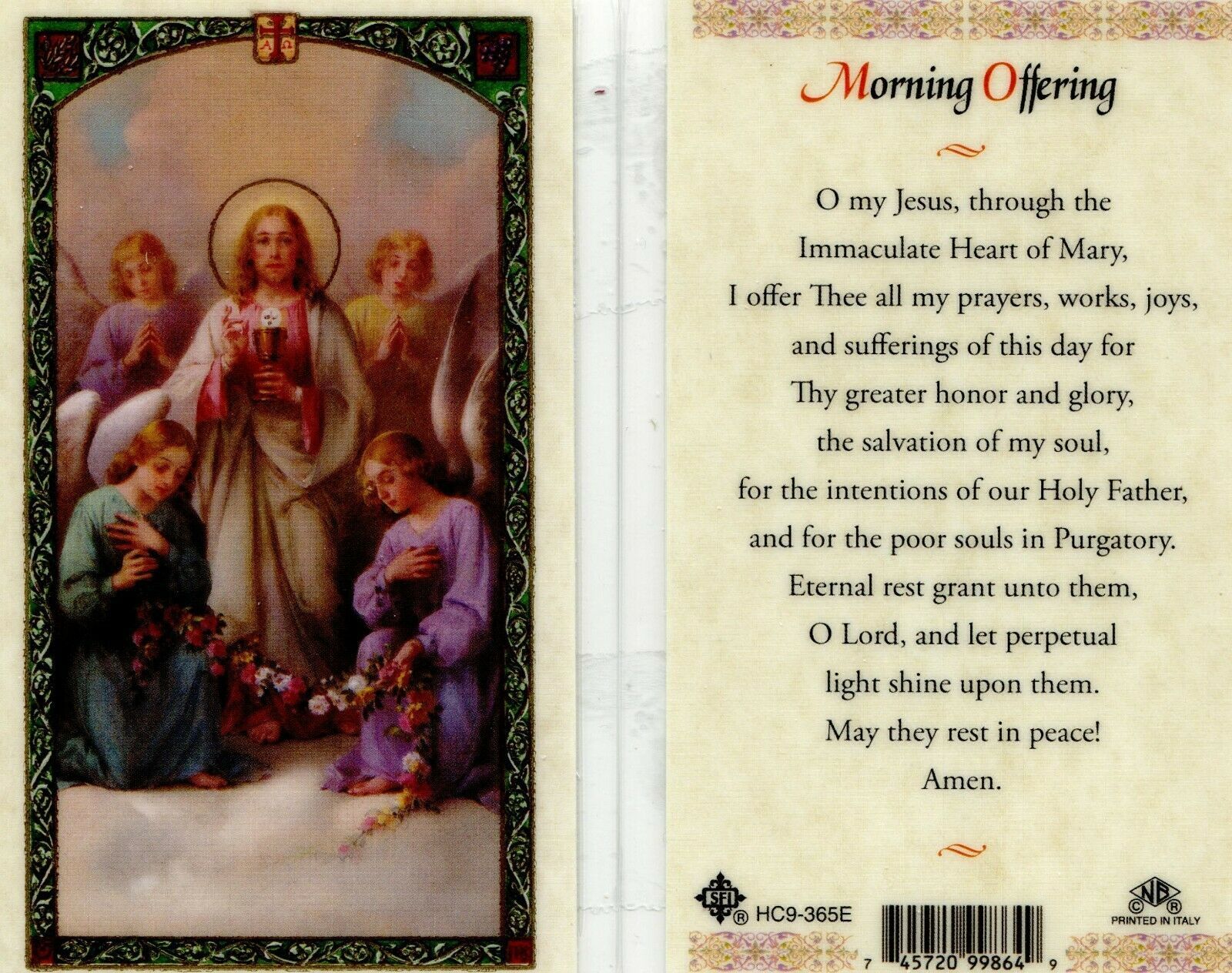
The Month of April is Dedicated to Devotion to the Most Holy Eucharist
“Now as they were eating, Jesus took bread, and blessed, and broke it, and gave it to the disciples and said, “Take, eat; this is my body.” And he took a cup, and when he had given thanks he gave it to them, saying, “Drink of it, all of you; for this is my blood of the covenant, which is poured out for many for the forgiveness of sins.” (Matthew 26:26-28)

Pope Leo XIV’s prayer intention for the month of April, 2026:
For priests in crisis
Let us pray for priests going through moments of crisis in their vocation, that they may find the accompaniment they need and that communities may support them with understanding and prayer.

Today’s First Reading
From: Acts 13:13-25
They Cross into Asia Minor
----------------------------------
[13] Now Paul and his company set sail from Paphos, and came to Perga in Pamphylia. And John left them and returned to Jerusalem; [14] but they passed on from Perga and came to Antioch of Pisidia.
Preaching in the Synagogue of Antioch of Pisidia
---------------------------------------------------------
And on the Sabbath day they went into the synagogue and sat down. [15] After the reading of the law and the prophets, the rulers of the synagogue sent to them, saying, "Brethren, if you have any word of exhortation for the people, say it." [16] So Paul stood up, and motioning with his hand said: "Men of Israel, and you that fear God, listen. [17] The God of this people Israel chose our fathers and made the people great during their stay in the land of Egypt, and with uplifted arm He led them out of it. [18] And for about forty years He bore with them in the wilderness. [19] And when He had destroyed seven nations in the land of Canaan, He gave them their land as an inheritance, for about four hundred and fifty years. [20] And after that He gave them judges until Samuel the prophet. [21] Then they asked for a king; and God gave them Saul the son of Kish, a man of the tribe of Benjamin, for forty years. [22] And when He had removed him, He raised up David to be their king; of whom He testified and said, "I have found in David the son of Jesse a man after My heart, who will do all My will.' [23] Of this man's posterity God has brought Israel a Savior, Jesus, as He promised. [24] Before His coming John had preached a baptism of repentance to all the people of Israel. [25] And as John was finishing his course, he said, 'What do you suppose that I am? I am not He. No, but after me One is coming, the sandals of whose feet I am not worthy to untie.'"
*************************************************
Commentary:
15. Sabbath services in synagogues went right back to the post-exilic period (after the Babylonian Captivity, which lasted from 586 to 539 B.C.), and by now they had a very settled form. They consisted of readings from Sacred Scripture, preaching and public prayers. No one was especially appointed to preside over these services; the president or ruler of the synagogue could ask any member of the community to take the ceremony (cf. 18:8); he supervised the preparations and made sure that everything was done properly.
16-41. Paul's address here is an excellent example of the way he used to present the Gospel to a mixed congregation of Jews and proselytes. He lists the benefits conferred by God on the chosen people from Abraham down to John the Baptism (verses 16-25); he then shows how all the messianic prophecies were fulfilled in Jesus (verses 26-37), and, by way of conclusion, states that justification comes about through faith in Jesus, who died and then rose from the dead (verse 38-41).
This address contains all the main themes of apostolic preaching, that is, God's saving initiative in the history of Israel (verses 17-22); reference to the Precursor (verses 24-25); the proclamation of the Gospel or "kerygma" in the proper sense (verses 26b-31a); mention of Jerusalem (verse 31b); arguments from Sacred Scripture (verses 33-37), complementing apostolic teaching and tradition (verses 38-39); and a final exhortation, eschatological in character, announcing the future (verses 40-41). In many respects this address is like those of St. Peter (cf. 2:14ff; 3:12ff), especially where it proclaims Jesus as Messiah and in its many quotations from Sacred Scripture, chosen to show that the decisive event of the Resurrection confirms Christ's divinity.
Paul gives a general outline of salvation history and then locates Jesus in it as the expected Messiah, the point at which all the various strands in that history meet and all God's promises are fulfilled. He shows that all the steps which lead up to Jesus Christ, even the stage of John the Baptist, are just points on a route. Earlier, provisional elements must now, in Christ, give way to a new, definitive situation.
From: John 13:16-20
Jesus Washes His Disciples' Feet (Continued)
--------------------------------
(Jesus said to His disciples,) [16] "Truly, truly, I say to you, a servant is not greater than his master; nor is he who is sent greater than he who sent him. [17] If you know these things, blessed are you if you do them. [18] I am not speaking to you all; I know whom I have chosen; it is that the Scripture may be fulfilled, `He who ate my bread has lifted his heel against me.' [19] I tell you this now, before it takes place, that when it does take place you may believe that I am He. [20] Truly, truly, I say to you, he who receives any man whom I send receives Me; and he who receives Me receives Him who sent Me."
***********************************************************************
Commentary:
15-17. Jesus' whole life was an example of service towards men, fulfilling His Father's will to the point of dying on the Cross. Here our Lord promises us that if we imitate Him, our Teacher, in disinterested service (which always implies sacrifice), we will find true happiness which no one can wrest from us (cf. 16:22; 17:13). "`I have given you an example', He tells His disciples after washing their feet, on the night of the Last Supper. Let us reject from our hearts any pride, any ambition, any desire to dominate; and peace and joy will reign around us and within us, as a consequence of our personal sacrifice" (St J. Escriva, "Christ Is Passing By", 94).
18. Lifting one's heel against someone means hitting him brutally; metaphorically, therefore, it means violent enmity. Judas' treachery fulfills the words of Psalm 41:10 where the psalmist complains bitterly of a friend's treachery. Once again the Old Testament prefigures events which find their full _expression in the New.
Through Baptism, the Christian has become a son of God and is called to share in God's good things, not only in Heaven but also on earth: He has received grace, he shares in the Eucharistic Banquet..., he shares with his brethren, other Christians, the friendship of Jesus. Therefore, if a person sins who has been born again through Baptism, in some sense his is a sort of treachery similar to Judas'. However, we have the recourse of repentance: if we trust in God's mercy we can set about recovering our friendship with God.
"React. Listen to what the Holy Spirit tells you: `"Si inimicus meus maledixisset mihi, sustinuissem utique"'. If it were the enemy who insulted me, I could put up with that. But you...`"tu vero homo unanimis, dux meus, et notus meus, qui simul mecum dulces capiebas cibos"': you, My friend, My Apostle, who sit at My table and take sweet food with Me!" (St J. Escriva, "The Way", 244).
19. Jesus tells the Apostles in advance about Judas' treachery, so that when they see Christ's predictions come true, they will realize He has divine knowledge and that in Him are fulfilled the Scriptures of the Old Testament (cf. John 2:22). On the words "I am", cf. note on John 8:21-24.
Disclaimer: Opinions posted on Free Republic are those of the individual posters and do not necessarily represent the opinion of Free Republic or its management. All materials posted herein are protected by copyright law and the exemption for fair use of copyrighted works.

