
Posted on 03/21/2026 10:02:48 PM PDT by fidelis
When Mary came to where Jesus was and saw him, she fell at his feet and said to him, “Lord, if you had been here, my brother would not have died.” When Jesus saw her weeping and the Jews who had come with her weeping, he became perturbed and deeply troubled, and said, “Where have you laid him?” They said to him, “Sir, come and see.” And Jesus wept. John 11:32–35
Jesus’ humanity shines clearly in today’s Gospel. In the face of Lazarus’ death, Jesus is deeply moved by the grief around Him. The Gospel says He “became deeply distressed and troubled” and eventually “wept.” The Greek word for “deeply distressed,” embrimaomai, suggests a strong emotional disturbance, even indignation or anger. It could be translated as “He snorted in spirit,” indicating an involuntary, visceral response from the depth of His soul. Some commentators suggest Jesus’ anger wasn’t directed at the people weeping but at the reality of death itself, caused by sin. As God, Jesus knew death was never part of the Father’s original plan for humanity. From a divine perspective, He saw death as a consequence of sin. From this point of view, death provoked righteous indignation and deeply troubled His human heart.
As the passage continues, Jesus’ humanity is powerfully portrayed in the shortest verse in the Bible: “And Jesus wept.” Why did He weep? Saint Paul reminds us in Hebrews: “For we do not have a high priest who is unable to sympathize with our weaknesses, but one who has similarly been tested in every way, yet without sin” (Hebrews 4:15). Jesus’ tears show us that the Holy Trinity knows human pain firsthand. The Incarnate Son allowed Himself to experience sorrow, and the Father and the Holy Spirit shared in this sorrow through Him.
It’s important to note that Jesus’ sorrow was different from the weeping of Lazarus’ sisters and the others present. Jesus’ weeping uses the Greek word edakrysen, which means “to shed tears” or “weep silently.” His tears were personal, controlled, intimate, heartfelt, and full of divine compassion.
In contrast, the weeping of the others is described by the Greek word klaió, meaning loud wailing, a typical expression of communal and ritualistic mourning at the time. Jesus’ grief was neither ritualistic nor excessive; it was intimate and heartfelt, born from personal sorrow and divine compassion.
We must never forget Jesus’ deep compassion, empathy, and sorrow. His human heart feels the same emotions we do—He grieves when we grieve, shares in our pain, and is moved by the hold sin has on us. After feeling these emotions at Lazarus’ death, Jesus stood outside the tomb and “cried out in a loud voice, ‘Lazarus, come out!’” (John 11:43). We can imagine the passion behind His command. In our lives, when we are tempted in sin or burdened by human weakness, we must hear Jesus calling us to freedom with the same divine authority and human passion.
Reflect today on Jesus’ humanity and how He perfectly understands everything we experience. His deep empathy for our suffering and His joy when we rise with His grace show us how intimately He knows us. God became one of us in every way, sharing in our human condition—though without sin—so that we might share in His divinity. Ponder His humanity and let His closeness draw you to Him, giving you a share in His divine life.
Most compassionate Lord, You experienced human nature in its fullness. Though You never sinned, You allowed Yourself to feel the effects of our sin and suffering, filling them with Your divine compassion. Help me to always remember Your humanity, knowing that through it, I come to share in Your divinity. Jesus, I trust in You.
Please keep in mind that this is a Catholic Caucus/Devotional thread for the purpose of prayerful reflection on the Sacred Scriptures and is closed to debate of any kind. Per FR policy on Religion Caucus threads, off-topic, argumentative, and abusive comments are not allowed and will be submitted to the Mods for deletion. Thanks, and God bless you.
The Month of March is Dedicated to St. Joseph
“And he went down with them and came to Nazareth, and was obedient to them; and his mother kept all these things in her heart. And Jesus increased in wisdom and in stature, and in favor with God and man.” (Luke 2:51-52)

Pope Leo XIV’s prayer intention for the month of March, 2026:
For disarmament and peace
Let us pray that nations move toward effective disarmament, particularly nuclear disarmament, and that world leaders choose the path of dialogue and diplomacy instead of violence.

Today’s First Reading
From: Ezekiel 37:12-14
The dry bones
---------------------
[12] Therefore prophesy, and say to them, Thus says the Lord God: Behold, I will open their graves, and raise you from your graves, O my people; and I will bring you home into the land of Israel. [13] And you shall know that I am the Lord, when I open your graves, and raise you from your graves, O my people. [14] And I will put my Spirit within you, and you shall live, and I will place you in your own land; then you shall know that I, the Lord, have spoken, and I have done it, says the Lord."
***********************************************
Commentary:
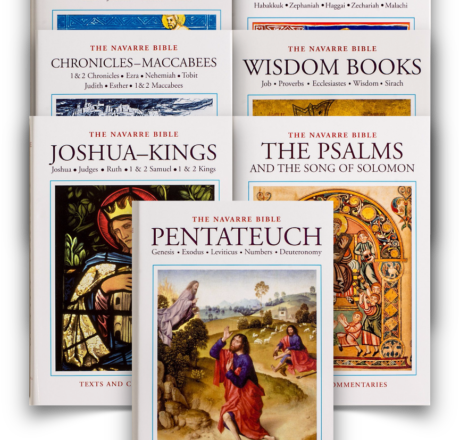
37:1-14. This remarkable vision of the bones being brought back to life sets the scene for the climax of the resurgence of Israel, the unification of the two kingdoms (cf. 37:15-28). The dramatic contrast drawn here between death and life, bones and spirit, shows that the revitalization that God will bring about goes much further than material reconstruction or simply a return to the promised land; it implies, rather, a new beginning, both personal and social.
The vision itself (vv. 2-10) takes place on an immense plain (cf. 3:22-23) and it addresses the exiles' profound concern about their future: "Our bones are dried up, and our hope is lost" (v. 11). It is one of Ezekiel's most famous and most commented-on visions because it is very vivid and easy to understand. The prophet himself explains it as having to do with the destruction-restoration of Israel (vv. 11-14), though the Fathers of the Church see in it veiled references to the resurrection of the dead: "The Creator will revive our mortal bodies here on earth; he promises resurrection, the opening of sepulchers and tombs, and the gift of immortality […]. And in all this, we see that he alone is God, who can do all things, the good Father who from his endless bounty will give life to the lifeless" (St Irenaeus, Adversus haereses, 5, 15, 1). St Jerome writes in similar terms: "The image of the resurrection would not have been used to describe the restoration of the people of Israel if the future resurrection of the dead had not been foreseen, because no one can be led to draw a conclusion from an idea that has no basis is reality" (Commentarii in Ezechielem, 27, 1ff.
"I will put my Spirit within you" (v. 14). The spirit of the Lord is, at least, the power of God (cf. Gen 2:7) performing an act of creation. It is also the principle of life causing man to "become a living being" (Gen 2:7); and, certainly, it is the principle of supernatural life. The same God that created all things can revitalize his demoralized people in Babylon and can allow humankind to partake of his own life. This promise, like others found in the prophets (cf. 11:19; Jer 31:31-34; Joel 3:1-5) will find its complete fulfillment at Pentecost, when the Spirit descends on the apostles: "According to these promises, at the 'end time' the Lord's Spirit will renew the hearts of men, engraving a new law in them. He will gather and reconcile the scattered and divided peoples; he will transform the first creation, and God will dwell there with men in peace" (Catechism of the Catholic Church, 715).
From: Romans 8:8-11
Life in the Spirit
-----------------------
[8] and those who are in the flesh cannot please God. [9] "But you are not in the flesh, you are in the Spirit, if the Spirit of God really dwells in you. Any one who does not have the Spirit of Christ does not belong to him. [10] But if Christ is in you, although your bodies are dead because of sin, your spirits are alive because of righteousness. "If the Spirit of him who raised Jesus from the dead dwells in you, he who raised Christ Jesus from the dead will give life to your mortal bodies also through his Spirit who dwells in you. [11] If the Spirit of him who raised Jesus from the dead dwells in you, he who raised Christ Jesus from the dead will give life to your mortal bodies also through his Spirit who dwells in you."
***********************************************************************
Commentary:
1-13. After original sin man is pulled in two different directions: either he seeks God above all things and contends, with God's grace, against the inclinations of his own concupiscence; or else he lets himself be overwhelmed by the disordered passions of the flesh. The former lifestyle is "life in the Spirit", the latter, life "according to the flesh". "There are only two possible ways of living on this earth: either we live a supernatural life, or we live an animal life" (St. J. Escriva, "Friends of God", 200).
Sanctifying grace is the source of life "according to the Spirit". It is not a matter of simply being in the state of grace or of performing a number of regular pious practices. Life according to the Spirit--spiritual or supernatural life--means a living-according-to-God which influences everything a Christian does: he is constantly trying to bring his thoughts, yearnings, desires and actions into line with what God is asking of him; in everything he does he tries to follow the inspirations of the Holy Spirit.
Life according to the flesh, on the other hand, has its source in the triple concupiscence which is a consequence of original sin--"all that is in the world the lust of the flesh, and the lust of the eyes and the pride of life" (1 Jn 2:16). In this present life it is not possible to kill concupiscence at its root: it is forever producing new growths. The Christian is freed from original sin through Baptism (chap. 6); the coming of Christ has set aside the ritualistic precepts of the Mosaic Law (chap. 7); but his life in Jesus Christ is threatened by concupiscence even after Baptism, which places him under the Law of the Spirit. "We need to submit to the spirit, to wholeheartedly commit ourselves and strive to keep the flesh in its place. By so doing our flesh will become spiritual again. Otherwise, if we give in to the easy life, this will lower our soul to the level of the flesh and make it carnal again" (St John Chrysostom, "Hom. on Rom", 13).
3. Man was unable to free himself from sin through his own efforts or even with the help of the Old Law. But what is impossible for man is possible for God. God in fact freed man from sin by sending his own Son, who became man and conquered sin through his death. If we unite ourselves to the merits of Christ and obtain a share in his Resurrection, we too can overcome sin.
By assuming human nature the Second Person of the Blessed Trinity chose to take on the likeness of sinful flesh, but not sin itself. He could have assumed a glorious body, but "since man has three states--namely, innocence, sin, and glory--Christ assumed from the state of glory the beatific vision; from the state of innocence, freedom from sin; and from the state of sin, the necessity of being subject to the penalties of this life" (St Thomas Aquinas, "Summa Theologiae", Ill, q. 13, a. 3, ad 2).
These disabilities--hunger, fatigue, suffering and especially death--are what constitutes "sinful flesh". By making himself subject to them Christ became like us, thereby making it easier for us to know him and assuring us that he will not abandon us even when we experience these limitations.
10-11. Once he is justified the Christian lives in the grace of God and confidently hopes in his future resurrection; Christ himself lives in him (cf. Gal 2:20; 1 Cor 15:20-23). However, he is not spared the experience of death, a consequence of original sin (cf. Rom 5:12; 6:23). Along with suffering, concupiscence and other limitations, death is still a fact after baptism; it is something which motivates us to struggle and makes us to be like Christ. Almost all commentators interpret the expression "your bodies are dead because of sin" as referring to the fact that, due to sin, the human body is destined to die. So sure is this prospect of death that the Apostle sees the body as "already dead".
St. John Chrysostom makes an acute observation: if Christ is living in the Christian, then the divine Spirit, the Third Person of the Trinity, is also present in him. If this divine Spirit is absent, then indeed death reigns supreme, and with it the wrath of God, rejection of his laws, separation from Christ, and expulsion of our Guest. And he adds: "But when one has the Spirit within, what can be lacking? With the Spirit one belongs to Christ, one possesses him, one vies for honor with the angels. With the Spirit, the flesh is crucified, one tastes the delight of an immortal life, one has a pledge of future resurrection and advances rapidly on the path of virtue. This is what Paul calls putting the flesh to death" ("Hom. on Rom.", 13).
From: John 11:1-45
The Raising of Lazarus
---------------------------------
[1] Now a certain man was ill, Lazarus of Bethany, the village of Mary and her sister Martha. [2] It was Mary who anointed the Lord with ointment and wiped his feet with her hair, whose brother Lazarus was ill. [3] So the sisters sent to him, saying, "Lord, he whom you love is ill." [4] But when Jesus heard it he said, "This illness is not unto death; it is for the glory of God, so that the Son of God may be glorified means of it."
[5] Now Jesus loved Martha and her sister and Lazarus. [6] So when he heard that he was ill, he stayed two days longer in the place where he was. [7] Then after this he said to the disciples, "Let us go into Judea again." [8] The disciples said to him, "Rabbi, the Jews were but now seeking to stone you, and are you going there again?" [9] Jesus answered, "Are there not twelve hours in the day? If any one walks in the day, he does not stumble, because he sees the light of this world. [10] But if any one walks in the night, he stumbles, because the light is not in him." "Thus he spoke, and the he said to them, "Our friend Lazarus has fallen asleep, but I go to awake him out of sleep." [12] The disciples said to him "Lord, if he has fallen asleep, he will recover." [13] Now Jesus had spoken of his death, but they thought that he meant taking rest in sleep. [14] Then Jesus told them plainly, "Lazarus is dead; [15] and for your sake I am glad that I was not there, so that you may believe. But let us go to him." [16] Thomas, called the Twin, said to his fellow disciples, "Let us also go, that we may die with him.
[17] Now when Jesus came, he found that Lazarus had already been in the tomb four days. [18] Bethany was near Jerusalem, about two miles off, [19] And many of the Jews had come to Martha and Mary to console them concerning their brother. [20] When Martha heard that Jesus was coming, she went and met Him, while Mary sat in the house. [21] Martha said to Jesus, "Lord, if You had been here, my brother would not have died. [22] And even now I know that whatever You ask from God, God will give You." [23] Jesus said to her, "Your brother will rise again." [24] Martha said to Him, "I know that he will rise again in the resurrection at the last day." [25] Jesus said to her, "I am the resurrection and the life, he who believes in Me, though he die, yet shall he live, [26] and whoever lives and believes in Me shall never die. Do you believe this?" [27] She said to Him, "Yes, Lord; I believe that You are the Christ, the Son of God, He who is coming into the world." [28] When she had said this, she went and called her sister Mary, saying quietly, "The Teacher is here and is calling for you." [29] And when she heard it, she rose quickly and went to Him. [30] Now Jesus had not yet come to the village, but was still in the place where Martha had met Him. [31] When the Jews who were with her in the house, consoling her, saw Mary rise quickly and go out, they followed her, supposing that she was going to the tomb to weep there. [32] Then Mary, when she came where Jesus was and saw Him, fell at His feet, saying to Him, "Lord, if You had been here, my brother would not have died." [33] When Jesus saw her weeping, and the Jews who came with her also weeping, He was deeply moved in spirit and troubled; [34] and He said, "Where have you laid him?" They said to Him, "Lord, come and see." [35] Jesus wept. [36] So the Jews said, "See how He loved him!" [37] But some of them said, "Could not He who opened the eyes of the blind man have kept this man from dying?"
[38] Then Jesus deeply moved again, came to the tomb; it was a cave, and a stone lay upon it. [39] Jesus said, "Take away the stone." Martha, the sister of the dead man, said to Him, "Lord, by this time there will be an odor, for he has been dead four days." [40] Jesus said to her, "Did I not tell you that if you would believe you would see the glory of God?" [41] So they took away the stone. And Jesus lifted His eyes and said, "Father, I thank Thee that Thou hast heard Me. [42] I knew that Thou hearest Me always, but I have said this on account of the people standing by, that they may believe that Thou didst send Me." [43] When He had said this, He cried with a loud voice, "Lazarus, come out." [44] The dead man came out, his hands and feet bound with bandages, and his face wrapped with a cloth. Jesus said to them, "Unbind him, and let him go.
[45] Many of the Jews therefore, who had come with Mary and had seen what He did, believed in Him.
************************************************************************************
Commentary:
1-45. This chapter deals with one of Jesus' most outstanding miracles. The Fourth Gospel, by including it, demonstrates Jesus' power over death, which the Synoptic Gospels showed by reporting the raising of the daughter of Jairus (Mt 9:25 and par.) and of the son of the widow of Nain (Lk 7:12).
The evangelist first sets the scene (vv. 1-16); then he gives Jesus conversation with Lazarus' sisters (vv. 17-37); finally, he reports the raising of Lazarus four days after his death (vv. 38-45). Bethany was only about three kilometers (two miles) from Jerusalem (v. 18). On the days prior to his passion, Jesus often visited this family, to which he was very attached. St John records Jesus' affection (vv. 3,5,36) by describing his emotion and sorrow at the death of his friend.
By raising Lazarus our Lord shows his divine power over death and thereby gives proof of his divinity, in order to confirm his disciples' faith and reveal; himself as the Resurrection and the Life. Most Jews, but not the Sadducees, believed in the resurrection of the body. Martha believed in it (cf. v. 24).
Apart from being a real, historical event, Lazarus' return to life is a sign our future resurrection: we too will return to life. Christ, by his glorious resurrection through which he is the "first-born from the dead" (1 Cor 15:2; Col 1:18; Rev 1:5), is also the cause and model of our resurrection. In this his resurrection is different from that of Lazarus, for "Christ being raised from the dead will never die again" (Rom 6:9), whereas Lazarus returned to earthly, later to die again.
2. There are a number of women in the Gospels who are called Mary. The Mary here is Mary of Bethany, the sister of Lazarus (v.2), the woman who later anointed our Lord, again in Bethany, at the house of Simon the leper (cf. In 12:1-8; Mk 14:3): the indefinite or aorist "(she) anointed" expresses an action which occurred prior to the time of writing, but the anointing took place after the resurrection of Lazarus.
Were Mary of Bethany, Mary Magdalene and the "sinful" woman who anointed Jesus' feet in Galilee (cf. Lk 7:36) one, two or three women? Although sometimes it is argued they are one and the same, it seems more likely that they were all different people. Firstly, we must distinguish the Galilee anointing (Lk 7:35) by the "sinner" from the Bethany anointing done by Lazarus' sister (Jn 12:1): because of the time they took place and particular details reported, they are clearly distinct (cf. note on Jn 12:1). Besides, the Gospels give us no positive indication that Mary of Bethany was the same person as the "sinner" of Galilee. Nor are there strong grounds for identifying Mary Magdalene and the "sinner", whose name is not given; Mary Magdalene appears among the women who follow Jesus in Galilee as the woman out of whom seven demons were cast (cf. Lk 8:2), and Luke presents her in his account as someone new: no information is given which could link her with either of the two other women.
Nor can Mary of Bethany and Mary Magdalene be identified, for John differentiates between the two: he never calls Lazarus' sister Mary Magdalene, nor does he in any way link the latter (who stays beside the Cross--Jn 19:25--and who goes to the tomb and sees the risen Lord) with Mary of Bethany.
The reason why Mary of Bethany has sometimes been confused with Mary Magdalene is due (1) to identification of the latter with the "sinner" of Galilee through connecting Magdalene's possession by the devil with the sinfulness of the woman who did the anointing in Galilee; and (2) to confusing the two anointings, which would make Lazarus' sister the "sinner" who does the first anointing. This was how the three women were made out to be one, but there are no grounds for that interpretation. The best-grounded and most common interpretation offered by exegetes is that they are three distinct women.
4. The glory which Christ speaks of here, St Augustine says, "was no gain to Jesus; it was only for our good. Therefore, Jesus says that this illness is not unto death, because the particular death was not for death but rather for a miracle, which being wrought men should believe in Christ and thereby avoid the true death" ("In Ioann. Evang.", 49, 6).
8-10. Stoning was the form of capital punishment applying to blasphemy (cf. Lev 24:16). We have seen that people tried to stone Jesus at least twice: first, when he proclaimed that he was the Son of God and that he existed from eternity (by saying that he "was" before Abraham lived)—John 8:58-59; second, when he revealed that he and the Father were one (cf. Jn 10:30-3 1).
These attempts by the Jewish authorities failed because Jesus' 'hour' had not yet arrived--that is, the time laid down by his Father for his death and resurrection. When the Crucifixion comes, it will be the hour of his enemies and of "the power of darkness" (Lk 22:53). But until that moment it is daytime, and our Lord can walk without his life being in danger.
16. Thomas' words remind us of the Apostles saying at the last Supper that they would be ready to die for their Master (cf. Mt 26:31-35). We have seen how the Apostles stayed loyal when many disciples left our Lord after his discourse on the Bread of Life (Jn 6:67-71), and how they remained faithful to him despite their personal weaknesses. But when, after Judas Iscariot' s betrayal, Jesus lets himself be arrested without offering resistance--in fact, forbidding the use of weapons (cf. Jn 18:11)—they become disconcerted and run away. Only St John will stay faithful in Jesus' hour of greatest need.
18. Fifteen stadia, in Greek measurement: three kilometers (two miles).
21-22. According to St. Augustine, Martha's request is a good example of confident prayer, a prayer of abandonment into the hands of God, who knows better than we what we need. Therefore, "she did not say, But now I ask You to raise my brother to life again. [...] All she said was, I know that You can do it; if you will, do it; it is for you to judge whether to do it, not for me to presume" ("In Ioann. Evang.", 49, 13). The same can be said of Mary's words, which St. John repeats at verse 32.
24-26. Here we have one of those concise definitions Christ gives of Himself, and which St. John faithfully passes on to us (cf. John 10:9; 14:6; 15:1): Jesus is the Resurrection and the Life. He is the Resurrection because by His victory over death He is the cause of the resurrection of all men. The miracle He works in raising Lazarus is a sign of Christ's power to give life to people. And so, by faith in Jesus Christ, who arose first from among the dead, the Christian is sure that he too will rise one day, like Christ (cf. 1 Corinthians 15:23; Colossians 1;18). Therefore, for the believer death is not the end; it is simply the step to eternal life, a change of dwelling-place, as one of the Roman Missal's Prefaces of Christian Death puts it: body of our earthly dwelling lies in death, we gain an everlasting dwelling place in Heaven".
By saying that He is Life, Jesus is referring not only to that life which begins beyond the grave, but also to the supernatural life which grace brings to the soul of man when he is still a wayfarer on this earth.
"This life, which the Father has promised and offered to each man in Jesus Christ, His eternal and only Son, who 'when the time had fully come' (Galatians 4:4), became incarnate and was born of the Virgin Mary, is the final fulfillment of man's vocation. It is in a way the fulfillment of the 'destiny' that God has prepared for him from eternity. This 'divine destiny' is advancing, in spite of all the enigmas, the unsolved riddles, the twists and turns of 'human destiny' in the world of time. Indeed, while all this, in spite of all the riches of life in time, necessarily and inevitably leads to the frontiers of death and the goal of the destruction of the human body, beyond that goal we see Christ. 'I am the resurrection and the life, He who believes in Me...shall never die.' In Jesus Christ, who was crucified and laid in the tomb and then rose again, 'our hope of resurrection dawned...the bright promise of immortality' ("Roman Missal", Preface of Christian Death, I), on the way to which man, through the death of the body, shares with the whole of visible creation the necessity to which matter is subject" ([Pope] John Paul II, "Redemptor Hominis", 18).
33-36. This passage gives an opportunity to reflect on the depth and tenderness of Jesus' feelings. If the physical death of His friend can move Him to tears, what will He not feel over the spiritual death of a sinner who has brought about his eternal condemnation? "Christ wept: let man also weep for himself. For why did Christ weep, but to teach men to weep" (St. Augustine, "In Ioann. Evang.", 49, 19). We also should weep--but for our sins, to help us return to the life of grace through conversion and repentance. We should appreciate our Lord's tears: He is praying for us, who are sinners: "Jesus is your friend. The Friend. With a human heart, like yours. With loving eyes that wept for Lazarus. And He loves you as much as He loved Lazarus" (St J. Escriva, "The Way", 422).
41-42. Through His sacred humanity Jesus is expressing Himself as the natural Son of God, that is, He is the metaphysical Son of God, not adopted like the rest of men. This is the source of Jesus' feelings, which helps us to understand that when He says "Father" He is speaking with a unique and indescribable intensity. When the Gospels let us see Jesus praying, they always show Him beginning with the invocation "Father" (cf. note on Luke 11:1-2), which reflects His singular trust and love (cf. Matthew 11:25 and par.). These sentiments should also in some way find a place in our prayer, for through Baptism we are joined to Christ and in Him we became children of God (cf. John 1:12; Romans 6:1-11; 8:14-17), and so we should always pray in a spirit of sonship and gratitude for the many good things our Father God has given us.
The miracle of the raising of Lazarus, which really is an extraordinary miracle, is a proof that Jesus is the Son of God, sent into the world by His Father. And so it is, that when Lazarus is brought back to life, people's faith in Jesus is increased--the disciples' (verse 15), Martha's and Mary's (verses 26, 40) and that of the people at large (36, 45).
43. Jesus calls Lazarus by name. Although he is really dead, he has not thereby lost his personal identity: dead people continue to exist, but they have a different mode of existence, because they have changed from mortal life to eternal life. This is why Jesus states that God "is not God of the dead, but of the living", for to Him all are alive (cf. Matthew 22:32; Luke 20:38).
This passage can be applied to the spiritual resurrection of the soul who has sinned and recovers grace. God wants us to be saved (cf. 1 Timothy 2:4); therefore we should never lose heart; we should always desire and hope to reach this goal: "Never despair. Lazarus was dead and decaying: ' Iam foetet, quatriduanus enim est". By now he will smell; this is the fourth day", says Martha to Jesus.
"If you hear God's inspiration and follow it--'Lazare, veni foras!: Lazarus, come out!'--and you will return to Life" (St J. Escriva, "The Way", 719).
44. The Jews prepared the body for burial by washing it and anointing it with aromatic ointments to delay decomposition and counteract offensive odors; they then wrapped the body in linen cloths and bandages, covering the head with a napkin—a method very like the Egyptians', but not entirely extending to full embalming, which involved removing certain internal organs.
Lazarus' tomb would have consisted of a subterranean chamber linked to the surface by steps, with the entrance blocked by a slab. Lazarus was moved out to the entrance by a supernatural force. As happened in the case of the raising of Jairus' daughter (Mark 5;42-43), due to their astonishment no one moved until our Lord's words broke the atmosphere of silence and terror which had been created.
St. Augustine sees in the raising of Lazarus a symbol of the Sacrament of Penance: in the same way as Lazarus comes out of the tomb, "when you confess, you come forth. For what does 'come forth' mean if not emerging from what is hidden, to be made manifest. But for you to confess is God's doing; He calls you with an urgent voice, by an extraordinary grace. And just as the dead man came out still bound, so you go to Confession still guilty. In order that his sins be loosed, the Lord said this to His ministers: 'Unbind him and let him go'. What you will lose on earth will be loosed in Heaven" (St. Augustine "In Ioann. Evang.", 49, 24). Christian art has used this comparison from very early on; in the catacombs we find some one hundred and fifty representations of the raising of Lazarus, symbolizing thereby the gift of the life of grace which comes through the priest, who in effect repeats the words to the sinner: "Lazarus, come out."
It is nearly unfathomable that we have a Pantocrator who can weep over the death of one person. 100% God and 100% human.
Praise the Lord for His mercy on us and His love for us!
Disclaimer: Opinions posted on Free Republic are those of the individual posters and do not necessarily represent the opinion of Free Republic or its management. All materials posted herein are protected by copyright law and the exemption for fair use of copyrighted works.


