Free Republic
Browse · Search
Religion
Topics · Post Article

Skip to comments.

Catholic Caucus: Daily Mass Readings 20-March-2026
Universalis/Jerusalem Bible ^

Posted on 03/20/2026 5:27:10 AM PDT by annalex

20 March 2026

Friday of the 4th week of Lent


St Cuthbert's Church, Earl's Court, London, UK

Readings at Mass

Liturgical Colour: Violet. Year: A(II).


First reading
Wisdom 2:1,12-22

Let us lie in wait for the virtuous man and condemn him to a shameful death

The godless say to themselves, with their misguided reasoning:
‘Our life is short and dreary,
nor is there any relief when man’s end comes,
nor is anyone known who can give release from Hades.
Let us lie in wait for the virtuous man, since he annoys us
and opposes our way of life,
reproaches us for our breaches of the law
and accuses us of playing false to our upbringing.
He claims to have knowledge of God,
and calls himself a son of the Lord.
Before us he stands, a reproof to our way of thinking,
the very sight of him weighs our spirits down;
his way of life is not like other men’s,
the paths he treads are unfamiliar.
In his opinion we are counterfeit;
he holds aloof from our doings as though from filth;
he proclaims the final end of the virtuous as happy
and boasts of having God for his father.
Let us see if what he says is true,
let us observe what kind of end he himself will have.
If the virtuous man is God’s son, God will take his part
and rescue him from the clutches of his enemies.
Let us test him with cruelty and with torture,
and thus explore this gentleness of his
and put his endurance to the proof.
Let us condemn him to a shameful death
since he will be looked after – we have his word for it.’
This is the way they reason, but they are misled,
their malice makes them blind.
They do not know the hidden things of God,
they have no hope that holiness will be rewarded,
they can see no reward for blameless souls.


Responsorial Psalm
Psalm 33(34):16,18,19-21,23
The Lord is close to the broken-hearted.
The Lord turns his face against the wicked
  to destroy their remembrance from the earth.
The just call and the Lord hears
  and rescues them in all their distress.
The Lord is close to the broken-hearted.
The Lord is close to the broken-hearted;
  those whose spirit is crushed he will save.
Many are the trials of the just man
  but from them all the Lord will rescue him.
The Lord is close to the broken-hearted.
He will keep guard over all his bones,
  not one of his bones shall be broken.
The Lord ransoms the souls of his servants.
  Those who hide in him shall not be condemned.
The Lord is close to the broken-hearted.

Gospel AcclamationJoel2:12-13
Praise to you, O Christ, king of eternal glory!
Now, now – it is the Lord who speaks –
come back to me with all your heart,
for I am all tenderness and compassion.
Praise to you, O Christ, king of eternal glory!
Or:Mt4:4
Praise to you, O Christ, king of eternal glory!
Man does not live on bread alone,
but on every word that comes from the mouth of God.
Praise to you, O Christ, king of eternal glory!

Gospel
John 7:1-2,10,25-30

They would have arrested him, but his time had not yet come

Jesus stayed in Galilee; he could not stay in Judaea, because the Jews were out to kill him.
  As the Jewish feast of Tabernacles drew near, after his brothers had left for the festival, he went up as well, but quite privately, without drawing attention to himself. Meanwhile some of the people of Jerusalem were saying, ‘Isn’t this the man they want to kill? And here he is, speaking freely, and they have nothing to say to him! Can it be true the authorities have made up their minds that he is the Christ? Yet we all know where he comes from, but when the Christ appears no one will know where he comes from.’
  Then, as Jesus taught in the Temple, he cried out:
‘Yes, you know me
and you know where I came from.
Yet I have not come of myself:
no, there is one who sent me
and I really come from him,
and you do not know him,
but I know him because I have come from him
and it was he who sent me.’
They would have arrested him then, but because his time had not yet come no one laid a hand on him.

Christian Art

Illustration

Each day, The Christian Art website gives a picture and reflection on the Gospel of the day.

The readings on this page are from the Jerusalem Bible, which is used at Mass in most of the English-speaking world. The New American Bible readings, which are used at Mass in the United States, are available in the Universalis apps, programs and downloads.

You can also view this page with the Gospel in Greek and English.


TOPICS: Catholic; General Discusssion; Prayer; Worship
KEYWORDS: catholic; jn7; lent; prayer

Click here: to donate by Credit Card

Or here: to donate by PayPal

Or by mail to: Free Republic, LLC - PO Box 9771 - Fresno, CA 93794

Thank you very much and God bless you.

For your reading, reflection, faith-sharing, comments, questions, discussion.

1 posted on 03/20/2026 5:27:10 AM PDT by annalex
[ Post Reply | Private Reply | View Replies]

To: All

KEYWORDS: catholic; jn7; lent; prayer


2 posted on 03/20/2026 5:27:42 AM PDT by annalex (fear them not)
[ Post Reply | Private Reply | To 1 | View Replies]

To: nickcarraway; NYer; ELS; Pyro7480; livius; ArrogantBustard; Catholicguy; RobbyS; marshmallow; ...


Alleluia Ping

Please FReepmail me to get on/off the Alleluia Ping List.


3 posted on 03/20/2026 5:28:32 AM PDT by annalex (fear them not)
[ Post Reply | Private Reply | To 2 | View Replies]

To: annalex
Chris Robinson: My Dad [our Jim Robinson] Passed Away Peacefully Monday Night (October 27th) In Our Home.
Jim still needs our prayers. Thread 2
Prayer thread for Salvation's recovery
Pray for Ukraine
Prayer thread for Fidelis' recovery
Update on Jim Robinson's health issues
4 posted on 03/20/2026 5:29:17 AM PDT by annalex (fear them not)
[ Post Reply | Private Reply | To 3 | View Replies]

To: annalex
John
 English: Douay-RheimsLatin: Vulgata ClementinaGreek NT: Byzantine/Majority Text (2000)
 John 7
1AFTER these things Jesus walked in Galilee; for he would not walk in Judea, because the Jews sought to kill him. Post hæc autem ambulabat Jesus in Galilæam : non enim volebat in Judæam ambulare, quia quærebant eum Judæi interficere.και περιεπατει ο ιησους μετα ταυτα εν τη γαλιλαια ου γαρ ηθελεν εν τη ιουδαια περιπατειν οτι εζητουν αυτον οι ιουδαιοι αποκτειναι
2Now the Jews' feast of tabernacles was at hand. Erat autem in proximo dies festus Judæorum, Scenopegia.ην δε εγγυς η εορτη των ιουδαιων η σκηνοπηγια
[...]
10But after his brethren were gone up, then he also went up to the feast, not openly, but, as it were, in secret. Ut autem ascenderunt fratres ejus, tunc et ipse ascendit ad diem festum non manifeste, sed quasi in occulto.ως δε ανεβησαν οι αδελφοι αυτου τοτε και αυτος ανεβη εις την εορτην ου φανερως αλλ ως εν κρυπτω
[...]
25Some therefore of Jerusalem said: Is not this he whom they seek to kill? Dicebant ergo quidam ex Jerosolymis : Nonne hic est, quem quærunt interficere ?ελεγον ουν τινες εκ των ιεροσολυμιτων ουχ ουτος εστιν ον ζητουσιν αποκτειναι
26And behold, he speaketh openly, and they say nothing to him. Have the rulers known for a truth, that this is the Christ? et ecce palam loquitur, et nihil ei dicunt. Numquid vere cognoverunt principes quia hic est Christus ?και ιδε παρρησια λαλει και ουδεν αυτω λεγουσιν μηποτε αληθως εγνωσαν οι αρχοντες οτι ουτος εστιν αληθως ο χριστος
27But we know this man, whence he is: but when the Christ cometh, no man knoweth whence he is. Sed hunc scimus unde sit : Christus autem cum venerit, nemo scit unde sit.αλλα τουτον οιδαμεν ποθεν εστιν ο δε χριστος οταν ερχηται ουδεις γινωσκει ποθεν εστιν
28Jesus therefore cried out in the temple, teaching, and saying: You both know me, and you know whence I am: and I am not come of myself; but he that sent me, is true, whom you know not. Clamabat ergo Jesus in templo docens, et dicens : Et me scitis, et unde sim scitis : et a meipso non veni, sed est verus qui misit me, quem vos nescitis.εκραξεν ουν εν τω ιερω διδασκων ο ιησους και λεγων καμε οιδατε και οιδατε ποθεν ειμι και απ εμαυτου ουκ εληλυθα αλλ εστιν αληθινος ο πεμψας με ον υμεις ουκ οιδατε
29I know him, because I am from him, and he hath sent me. Ego scio eum : quia ab ipso sum, et ipse me misit.εγω οιδα αυτον οτι παρ αυτου ειμι κακεινος με απεστειλεν
30They sought therefore to apprehend him: and no man laid hands on him, because his hour was not yet come. Quærebant ergo eum apprehendere : et nemo misit in illum manus, quia nondum venit hora ejus.εζητουν ουν αυτον πιασαι και ουδεις επεβαλεν επ αυτον την χειρα οτι ουπω εληλυθει η ωρα αυτου

5 posted on 03/20/2026 5:33:56 AM PDT by annalex (fear them not)
[ Post Reply | Private Reply | To 4 | View Replies]

To: annalex

Catena Aurea by St. Thomas Aguinas

7:1–8

1. After these things Jesus walked in Galilee: for he would not walk in Jewry, because the Jews sought to kill him.

2. Now the Jews’ feast of tabernacles was at hand.

3. His brethren therefore said unto him, Depart hence, and go into Judæa, that thy disciples also may see the works that thou doest.

4. For there is no man that doeth any thing in secret, and he himself seeketh to be known openly. If thou do these things, shew thyself to the world.

5. For neither did his brethren believe in him.

6. Then Jesus said unto them, My time is not yet come: but your time is alway ready.

7. The world cannot hate you: but me it hateth, because I testify of it, that the works thereof are evil.

8. Go ye up unto this feast: I go not up yet unto this feast; for my time is not yet fully come.

AUGUSTINE. (Tr. xxviii. 2) As the believer in Christ would have in time to come to hide himself from persecution, that no guilt might attach to such concealment, the Head began with doing Himself, what He sanctioned in the member; After these things Jesus walked in Galilee: for he would not walk in Jewry, because the Jews sought to kill Him.

BEDE. The connexion of this passage admits of much taking place in the interval previously. Judæa and Galilee are divisions of the province of Palestine. Judæa has its name from the tribe of Judah; but it embraces not only the territories of Judah, but of Benjamin, all of which were called Judæa, because Judah was the royal tribe. Galilee has its name, from the milky, i. e. white, colour of its inhabitants; Galilee being Greek for milk.

AUGUSTINE. (Tr. xxviii. 2) It is not meant that our Lord could not walk among the Jews, and escape being killed; for He had this power, whenever He chose to shew it: but He set the example of so doing, as an accommodation to our weakness. He had not lost His power, but He indulged our frailty.

CHRYSOSTOM. (Hom. xlviii. 1) That is to say, He displayed the attribute both of divinity and humanity. He fled from His persecutors as man, He remained and appeared amongst them as God; being really both.

THEOPHYLACT. He withdrew too now to Galilee, because the hour of His passion was not yet come; and He thought it useless to stay in the midst of His enemies, when the effect would only have been to irritate them the more. The time at which this happened is then given; Now the Jews’ feast of tabernacles was at hand.

AUGUSTINE. (Tr. xxviii. 3) What the feast of tabernacles is, we read in the Scriptures. They used to make tents on the festival, like those in which they lived during their journey in the desert, after their departure from Egypt. They celebrated this feast in commemoration of the good things the Lord had done for them; though they were the very people who were about to slay the Lord. It is called the day of the feasta, though it lasted many days.

CHRYSOSTOM. (Hom. xlviii. 1) It appears here, that a considerable time had passed since the last events. For when our Lord sat upon the mount, it was near the feast of the Passover, and now it is the feast of tabernacles: so that in the five intermediate months the Evangelist has related nothing but the miracle of the loaves, and the conversation with those who ate of them. As our Lord was unceasingly working miracles, and holding disputes with people, the Evangelists could not relate all; but only aimed at giving those, in which complaint or opposition had followed on the part of the Jews, as was the case here.

THEOPHYLACT. His brethren saw that He was not preparing to go to the feast: His brethren therefore said unto him, Depart hence, and go into Judæa.

BEDE. Meaning to say, Thou doest miracles, and only a few see them: go to the royal city, where the rulers are, that they may see Thy miracles, and so Thou obtain praise. And as our Lord had not brought all His disciples with Him, but left many behind in Judæa, they add, That Thy disciples also may see the works that Thou doest.

THEOPHYLACT. i. e. the multitudes that follow Thee. They do not mean the twelve, but the others that bad communication with Him.

AUGUSTINE. (Tr. xxviii. 3) When you hear of our Lord’s brethren, you must understand the kindred of Mary, not her offspring after our Lord’s birth. For as the body of our Lord once only lay in the sepulchre, and neither before, nor after that once; so could not the womb of Mary have possibly conceived any other mortal offspring. Our Lord’s works did not escape His disciples, but they escaped His brethren; hence their suggestion, That Thy disciples may see the works that Thou doest. They speak according to the wisdom of the flesh, to the Word that was made flesh, and add, For there is no man that doeth any thing in secret, and he himself seeketh to be known openly. If Thou do these things, shew Thyself to the world; as if to say, Thou doest miracles, do them in the eyes of the world, that the world may honour Thee. Their admonitions aim at procuring glory for Him; and this very thing, viz. aiming at human glory, proved that they did not believe in Him, as we next read, For neither did His brethren believe on Him. They were Christ’s kindred, but they were on that very account above believing in Him.

CHRYSOSTOM. (Hom. xlviii. 1, 2) It is striking to observe the great sincerity of the Evangelists; that they are not ashamed to mention things which appear to be to our Lord’s disadvantage, but take particular care to tell us of them. It is a considerable reflexion on our Lord, that His brethren do not believe on Him. The beginning of their speech has a friendly appearance about it: but there is much bitterness in it, thus charging Him with the motives of fear and vain glory; No man, say they, doeth any thing in secret: this was reproaching Him tacitly with fear; and was an insinuation too that His miracles had not been real and solid ones. In what follows, And he himself seeketh to be known openly, they taunt Him with the love of glory. Christ however answers them mildly, teaching us not to take the advice of people ever so inferior to ourselves angrily; Then Jesus said unto them, My time is not yet come: but your time is alway ready.

BEDE. This is no contradiction to what the Apostle says, But when the fulness of time was come, God sent forth His Son. (Gal. 4:4) Our Lord referring here to the time not of His nativity, but of His glorification.

AUGUSTINE. (Tr. xxviii. 5) They gave Him advice to pursue glory, and not allow Himself to remain in concealment and obscurity; appealing altogether to worldly and secular motives. But our Lord was laying down another road to that very exaltation, viz. humility: My time, He says, i. e. the time of My glory, when I shall come to judge on high, is not yet come; but your time, i. e. the glory of the world, is always ready. And let us, who are the Lord’s body, when insulted by the lovers of this world, say, Your time is ready: ours is not yet come. Our country is a lofty one, the way to it is low. Whoso rejecteth the way, why seeketh he the country?

CHRYSOSTOM. (Hom. xlviii. 2) Or there seems to be another meaning concealed in the words; perhaps they intended to betray Him to the Jews; and therefore He says, My time is not yet come, i. e. the time of My cross and death: but your time is always ready; for though you are always with the Jews, they will not kill you, because you are of the same mind with them: The world cannot hate you; but Me it hateth, because I testify of it, that the works thereof are evil: as if He said, How can the world hate them who have the same wishes and aims with itself? It hateth Me, because I reprove it. I seek not then glory from men; inasmuch as I hesitate not to reprove them, though I know that I am hated in consequence, and that My life is aimed at. Here we see that the hatred of the Jews was owing to His reproofs, not to His breaking the sabbath.

THEOPHYLACT. Our Lord brings two arguments in answer to their two charges. To the charge of fear He answers, that He reproves the deeds of the world, i. e. of those who love worldly things; which He would not do, if He were under the influence of fear; and He replies to the charge of vain glory, by sending them to the feast, Go ye up unto this feast. Had He been possessed at all with the desire for glory, He would have kept them with Him: for the vain glorious like to have many followers.

CHRYSOSTOM. (Hom. xlviii. 2) This is to shew too, that, while He does not wish to humour them, He still allows them to observe the Jewish ordinances.

AUGUSTINE. (Tr. xxviii. 5. 8) Or He seems to say, Go ye up to this feast, and seek for human glory, and enlarge your carnal pleasures, and forget heavenly things.

I go not up unto this feast;

CHRYSOSTOM. (Hom. xlviii. 2) i. e. not with you, for My time is not yet full come. It was at the next passover that He was to be crucified.

AUGUSTINE. (Tract. xxviii. 8) Or My time, i. e. the time of My glory, is not yet come. That will be My feast day; not a day which passeth and is gone, like holidays here: but one which remaineth for ever. Then will be festivity; joy without end, eternity without stain, sunshine without a cloud.

7:9–13

9. When he had said these words unto them, he abode still in Galilee.

10. But when his brethren were gone up, then went he also up unto the feast, not openly, but as it were in secret.

11. Then the Jews sought him at the feast, and said, Where is he?

12. And there was much murmuring among the people concerning him: for some said, He is a good man: others said, Nay; but he deceiveth the people.

13. Howbeit no man spake openly of him for fear of the Jews.

THEOPHYLACT. Our Lord at first declares that He will not go up to the feast, (I go not up with you,) in order not to expose Himself to the rage of the Jews; and therefore we read, that, When He had said these words unto them, He abode still in Galilee. Afterwards, however, He goes up; But when His brethren were gone up, then went He also up unto the feast.

AUGUSTINE. (Tract. xxviii. 8) He went up, however, not to get temporary glory, but to teach wholesome doctrine, and remind men of the eternal feast.

CHRYSOSTOM. (Hom. xlviii. s. 2) He goes up, not to suffer, but to teach. And He goes up secretly; because, though He could have gone openly, and kept the violence and impetuosity of the Jews in check, as He had often done before; yet to do this every time, would have disclosed His divinity; and he wished to establish the fact of His incarnation, and to teach us the way of life. And He went up privately too, to shew us what we ought to do, who cannot check our persecutors. It is not said, however, in secret, but, as it were in secret; to shew that it was done as a kind of economy. For had He done all things as God, how should we of this world know what to do, when we fell into danger?

ALCUIN. Or, He went up in secret, because He did not seek the favour of men, and took no pleasure in pomp, and being followed about with crowds.

BEDE. (non occ.) The mystical meaning is, that to all those carnal persons who seek human glory, the Lord remains in Galilee; the meaning of which name is, “passing over;” applying to those his members who pass from vice to virtue, and make progress in the latter. And our Lord Himself delayed to go up, signifying that Christ’s members seek not temporal but eternal glory. And He went up secretly, because allb glory is from within: that is, (Ps. 45:14.) from a pure heart and good conscience, and faith unfeigned. (1 Tim. 1:5)

AUGUSTINE. (Tract. xxviii. 9) Or the meaning is, that all the ceremonial of the ancient people was the figure of what was to be; such as the feast of tabernacles. Which figure is now unveiled to us. Our Lord went up in secret, to represent the figurative system. He concealed Himself at the feast itself, because the feast itself signified, that the members of Christ were in a strange country. For he dwells in the tents, who regards himself as a stranger in the world. The word scenopegia here means the feast of tabernacles.

CHRYSOSTOM. (Hom. xlix. 1) Then the Jews sought Him at the feast, and said, Where is He? out of hatred and enmity; for they would not call Him by His name. There was not much reverence or religion in this observance of the feast, when they wanted to make it an opportunity of seizing Christ.

AUGUSTINE. (Tract. xxviii. s. 11) And there was much murmuring in the people concerning Him. A murmuring arising from disagreement. For some said, He is a good man: others said, Nay; but He seduceth the people. Whoever had any spark of grace, said, He is a good man; the rest, Nay, hut He seduceth the people. That such was said of Him, Who was God, is a consolation to any Christian, of whom the same may be said. If to seduce be to decide, Christ was not a seducer, nor can any Christian be. But if by seducing be meant bringing a person by persuasion out of one way of thinking into another, then we must enquire from what, and to what. If from good to evil, the seducer is an evil man; if from evil to good, a good one. And would that we were all called, and really were, such seducers.

CHRYSOSTOM. (Hom. xlix. 1) The former, I think, was the opinion of the multitude, the one, viz. who pronounced Him a good man; the latter the opinion of the priests and rulers; as is shewn by their saying, He deceiveth the people, not, He deceiveth us.

AUGUSTINE. (Tract. xxviii. 12) Howbeit no man spake openly of Him, for fear of the Jews; none, that is, of those who said, He is a good man. They who said, He deceiveth the people, proclaimed their opinion openly enough; while the former only dared whisper theirs.

CHRYSOSTOM. (Hom. xlix. 1) Observe, the corruption is in the rulers: the common people are sound in their judgment, but have not liberty of speech, as is generally their case.

[...]

7:25–30

25. Then said some of them of Jerusalem, Is not this he, whom they seek to kill?

26. But, lo, he speaketh boldly, and they say nothing unto him. Do the rulers know indeed that this is the very Christ?

27. Howbeit we know this man whence he is: but when Christ cometh, no man knoweth whence he is.

28. Then cried Jesus in the temple as he taught, saying, Ye both know me, and ye know whence I am: and I am not come of myself, but he that sent me is true, whom ye know not.

29. But I know him: for I am from him, and he hath sent me.

30. Then they sought to take him: but no man laid hands on him, because his hour was not yet come.

AUGUSTINE. (Tr. xxxi. 1) It was said above that, our Lord went up to the feast secretly, not because He feared being taken (for He had power to prevent it,) but to shew figuratively, that even in the very feast which the Jews celebrated, He was hid, and that it was His mystery. Now however the power appears, which was thought timidity: He spoke publicly at the feast, in so much that the multitude marvelled: They said some of them at Jerusalem, Is not this He, whom they seek to kill? but, lo, He speaketh boldly, and they say nothing to Him. They knew the fierceness with which He had been sought for; they marvelled at the power by which he was not taken.

CHRYSOSTOM. (Hom. l. 1) The Evangelist adds, from Jerusalem: for there had been the greatest display of miracles, and there the people were in the worst state, seeing the strongest proofs of His divinity, and yet willing to give up all to the judgment of their corrupt rulers. Was it not a great miracle, that those who raged for His life, now that they had Him in their grasp, became on a sudden quiet?

AUGUSTINE. (Tr. xxxi. 1) So, not fully understanding Christ’s power, they supposed that it was owing to the knowledge of the rulers that He was spared: Do the rulers know indeed that this is the very Christ?

CHRYSOSTOM. (Hom. l. 1) But they do not follow the opinion of the rulers, but put forth another most perverse and absurd one; Howbeit we know this Man, whence He is; but when Christ cometh, no man knoweth whence He is.

AUGUSTINE. (Tr. xxxi. s. 2) This notion did not arise without foundation. We find indeed that the Scriptures said of Christ, He shall be called a Nazarene, (Matt. 2:23) and thus predicted whence He would come. And the Jews again told Herod, when he enquired, that Christ would be born in Bethlehem of Judah, and adduced the testimony of the Prophet. How then did this notion of the Jews arise, that, when Christ came, no one would know whence He was? From this reason, viz. that the Scriptures asserted both. As man, they foretold whence Christ would be; as God, He was hid from the profane, but revealed Himself to the godly. This notion they had taken from Isaiah, Who shall declare His generation? (Isa. 53) Our Lord replies, that they both knew Him, and knew Him not: Then cried Jesus in the temple as He taught, saying, Ye both know Me, and know whence I am: that is to say, Ye both know whence I am, and do not know whence I am: ye know whence I am, that I am Jesus of Nazareth, whose parents ye know. The birth from the Virgin was the only part of the matter unknown to them: with this exception, they knew all that pertained to Jesus as man. So He well says, Ye both know Me, and know whence I am: i. e. according to the flesh, and the likeness of man. But in respect of His divinity, He says, I am not come of Myself, but He that sent Me is true.

CHRYSOSTOM. (Hom. l. 1) By which He discloses what was in their minds. I am not, He seems to say, of the number of those who have come without reason, but He is true that sent Me; and if He is true, He hath sent Me in truth; and therefore He who is sent must needs speak the truth. He then convicts them from their own assertions. For whereas they had said, When Christ cometh, no man knoweth whence He is, He shews that Christ did come from one whom they knew not, i. e. the Father. Wherefore He adds, Whom ye know not.

HILARY. (de Trin. ult. med.) Every man, ever born in the flesh, is in a certain sense from God. How then could He say that they were ignorant who He was, and whence He wasa? Because our Lord is here referring to His own peculiar birth from God, which they were ignorant of, because they did not know that He was the Son of God. His very saying then that they did not know whence He was, was telling them whence He was. If they did not know whence He was, He could not be from nothing; for then there would be no whence to be ignorant of. He must therefore be from God. And then not knowing whence He is, was the reason that they did not know who He is. He does not know the Son who does not know His birth from the Father.

CHRYSOSTOM. (Hom. l. 1) Or the ignorance, He here speaks of, is the ignorance of a bad life; as Paul saith, They profess that they know God, but in works they deny Him. (Tit. 1:16) Our Lord’s reproof is twofold: He first published what they were speaking secretly, crying out, in order to put them to shame.

AUGUSTINE. (Tr. xxxi. 4) Lastly, to shew whence they could get to know Him (who had sent Him), He adds, I know Him: so if you would know Him, enquire of Me. No one knoweth the Father, save the Son, and he to whom the Son will reveal Him. And if I should say, I know Him not, I should be a liar like unto you. (c. 8:55)

CHRYSOSTOM. (Hom. l. 1) Which is impossible: for He that sent Me is true, and therefore He that is sent must be true likewise. He every where attributes the knowledge of the Father to Himself, as being from the Father: thus here, But I know Him, for I am from Him.

HILARY. (vi. de Trin. ultra med.) I ask however, does the being from Him express a work of creation, or a birth by generation? If a work of creation, then every thing which is created is from Him. And how then does not all creation know the Father, if the Son knows Him, because He is from Him? But if the knowledge of the Father is peculiar to Him, as being from Him, then the being from Him is peculiar to Him also; i. e. the being the true Son of God by nature. So you have then a peculiar knowledge springing from a peculiar generation. To prevent however any heresy applying the being from Him, to the time of His advent, He adds, And He hath sent Me: thus preserving the order of the Gospel sacrament; first announcing Himself born, and then sent.

AUGUSTINE. (Tr. xxxi. 4) I am from Him, He says, i. e. as the Son from the Father: but that you see Me in the flesh is because He hath sent Me. Wherein understand not a difference of nature, but the authority of a father.

CHRYSOSTOM. (Hom. l. 2) His saying however, Whom ye know not, irritated the Jews, who professed to have knowledge; and they sought to take Him, but no man laid hands on Him. Mark the invisible check which is kept upon their fury: though the Evangelist does not mention it, but preserves purposely a humble and human way of speaking, in order to impress us with Christ’s humanity; and therefore only adds, Because His hour was not yet come.

AUGUSTINE. (Tract. xxxi. s. 5) That is, because He was not so pleased; for our Lord was not born subject to fate. Thou must not believe this even of thyself, much less of Him by Whom thou wert made. And if thine hour is in His will, is not His hour in His own will? His home then here does not mean the time that He was obliged to die, but the time that He deigned to be put to death.

Catena Aurea John 7


6 posted on 03/20/2026 5:38:24 AM PDT by annalex (fear them not)
[ Post Reply | Private Reply | To 5 | View Replies]

To: annalex


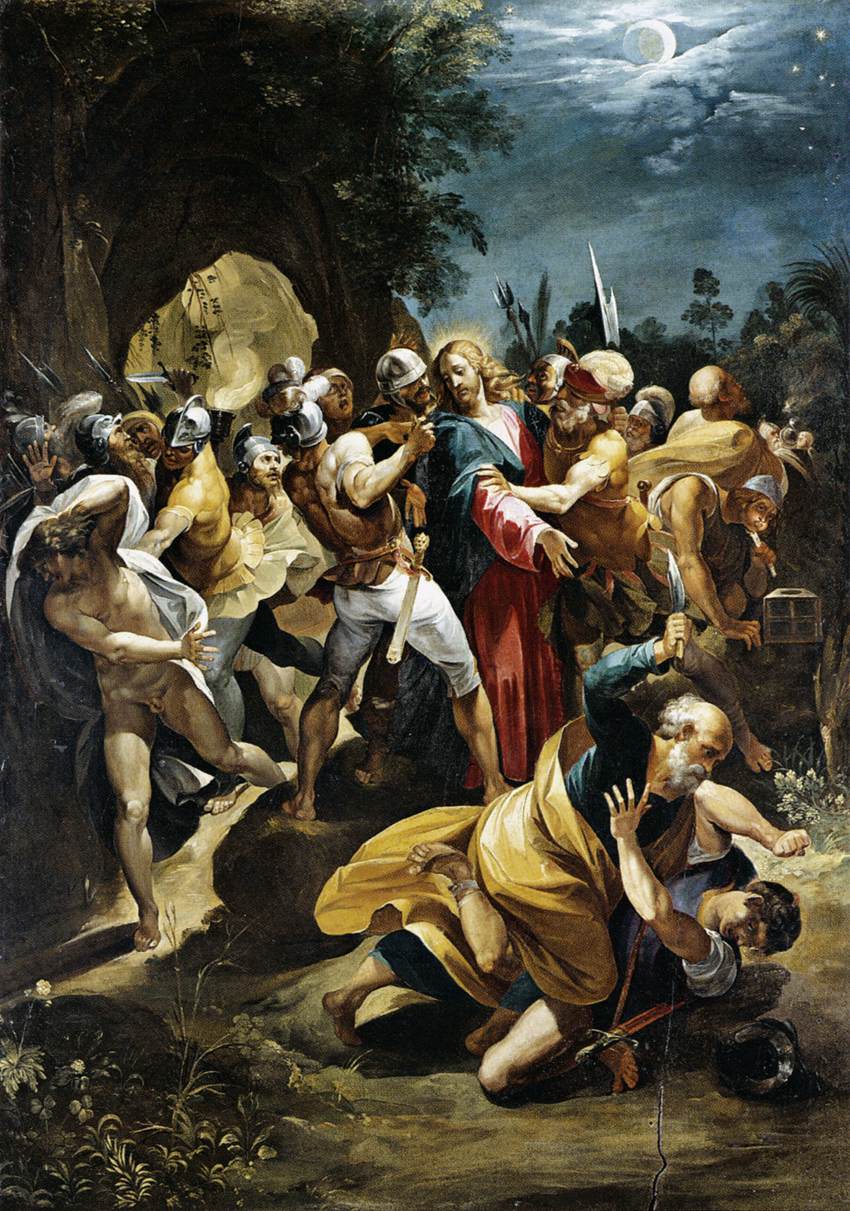
Christ Taken Prisoner

Giuseppe Cesari

c. 1597
Oil on walnut panel, 89 x 62 cm
Staatliche Museen, Kassel

7 posted on 03/20/2026 5:38:56 AM PDT by annalex (fear them not)
[ Post Reply | Private Reply | To 6 | View Replies]

To: annalex

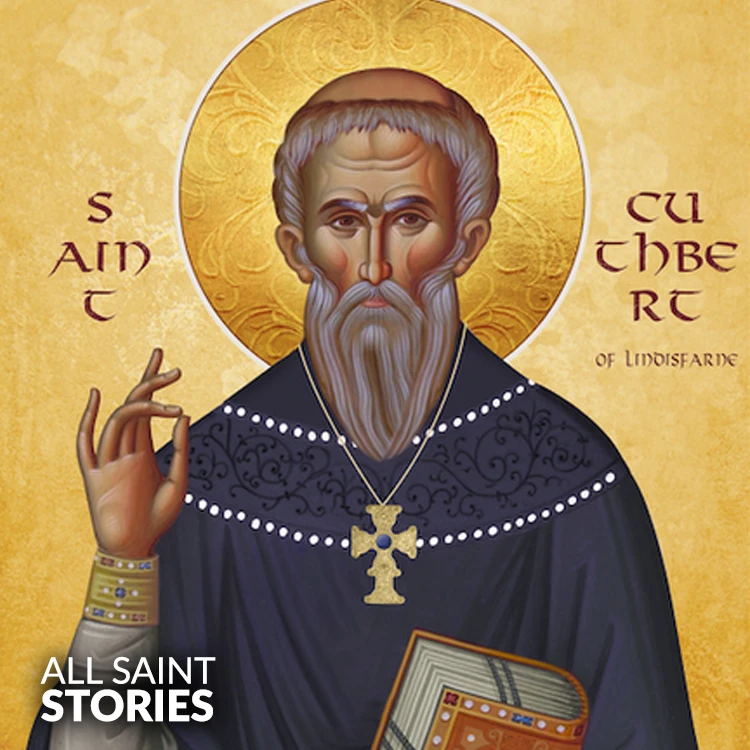
ST. CUTHBERT

ST. CUTHBERT

St. Cuthbert of Lindisfarne was an English monk and bishop known for his piety and miraculous works. He served as Prior at Lindisfarne and later as Abbot-Bishop, helping to unify Christian traditions. His incorrupt relics were discovered centuries after his death, and he is venerated as the Patron Saint of sailors.

Born around 635 AD, St. Cuthbert was raised by his foster mother, Kenswith, in Northumbria. In his youth, he worked as a shepherd and later defended his homeland against King Penda of Mercia. After the peace that followed the Battle of Winwidfield in 651, he felt called to monastic life and joined Melrose Abbey. His dedication to prayer and study distinguished him among his fellow monks, and many miraculous events were attributed to him.

Cuthbert briefly served as guest-master at Ripon but returned to Melrose with monks who opposed the adoption of Roman Easter customs. However, following the Synod of Whitby in 664, he embraced Roman traditions and was appointed Prior at Lindisfarne. His leadership, patience, and devotion helped bring unity among the monks.

In his later years, Cuthbert sought solitude and moved to a remote island for contemplation and prayer. Despite his preference for seclusion, he was called back to serve as Abbot-Bishop of Lindisfarne in 685. His tenure was marked by spiritual guidance, preaching, and deep pastoral care for the faithful. However, sensing his impending death, he resigned after a year and withdrew to his island retreat, where he passed away on March 20, 687.

St. Cuthbert’s body was found incorrupt 400 years after his passing, which led to increased veneration. His remains were later enshrined at Durham Cathedral, which became a major pilgrimage site. Despite the turmoil of the Reformation, his relics were protected by Benedictine monks. St. Cuthbert is honored as the Patron Saint of sailors, and his legacy continues to inspire devotion among Christians.


allsaintstories.com
8 posted on 03/20/2026 5:44:12 AM PDT by annalex (fear them not)
[ Post Reply | Private Reply | To 7 | View Replies]

To: annalex

NAVARRE BIBLE COMMENTARY(RSV)

Ad Majorem Dei Gloriam (To the Greater Glory of God)

Today’s First Reading

From: Wisdom 2:1a, 12-22

Life Leads to Death (Continuation)
----------------------------------
[1a] For they reasoned unsoundly, saying to themselves, [12] "Let us lie in wait for the righteous man, because he is inconvenient to us and opposes our actions; he reproaches us for sins against the law, and accuses us of sins against our training. [13] He professes to have knowledge of God, and calls himself a child of the Lord. [14] He became to us a reproof of our thoughts; [15] the very sight of him is a burden to us, because his manner of life is unlike that of others, and his ways are strange. [16] We are considered by him as something base, and he avoids our ways as unclean; he calls the last end of the righteous happy, and boasts that God is his father. [17] Let us see if his words are true, and let us test what will happen at the end of his life; [18] for if the righteous man is God's son, he will help him, and will deliver him from the hand of his adversaries. [19] Let us test him with insult and torture, that we may find out how gentle he is, and make trial of his forbearance. [20] Let us condemn him to a shameful death, for, according to what he says, he will be protected."

The Origin of Evil and Death
----------------------------
[21] Thus they reasoned, but they were led astray, for their wickedness blinded them, [22] and they did not know the secret purposes of God, nor hope for the wages of holiness, nor discern the prize for blameless souls.

***********************************************************************
Commentary:

1:16-2:24 This section describes the way the ungodly think and behave, and their error in so doing. Righteousness is immortal; but the ungodly think that life ends at death and therefore they try to strike a bargain with death (1:16-2:19). Moreover, they hound the righteous man because he thinks and acts differently from the way they do (2:10-20). They have no idea what life is all about (2:21-24).

1:16-2:9. The sort of thinking attributed here to the ungodly connects up with materialistic and hedonist philosophies, maybe with Epicureanism. The sacred writer probably also had in mind some Jews who, turning their backs on their faith, fell victim to the materialism and scepticism associated with certain streams of Greek thought. Philosophers of such schools based their arguments on two verifiable facts: death is inevitable, and life is short. They had no notion of immortality, and no faith, and therefore only one policy seemed to make sense: seize every chance that life offers for pleasure and enjoyment. It is reminiscent of the "Let us eat and drink, for tomorrow we die" (Is 22:13; 1 Cor 15:32).

2:10-20. Not content with enjoying the pleasures of life, the ungodly go further: they persecute the just man because he is a constant reproach to them. They want to see if God, whom the just man calls his father, will protect and rescue him. He calls God his father? Let us see what protection God gives him. If God fails to come to his aid, then they are proved right, and the just man wrong. Their words are echoed in the insults offered by scribes and Pharisees to Jesus when he was on the cross (cf. Mt 27:40-43; Mk 15:31-32; Lk 23:35-37).

Interestingly, the just man calls himself a "child of God" (v. 13). This is something new in Jewish thinking, because prior to this it was the entire people of Israel or the king their representative who was considered a "son of God" (cf. Ex 4:22; Deut 14:1; 32:6; Ps 2; Is 30:1, 9; Hos 11:1). But in the later books of the Old Testament (for example, in Sir 23:4; 51:14) we begin to see the fatherhood of God towards every just person. The title of "child of God" is applied to all the righteous, and more properly to the Messiah, who is the Righteous One.

As the RSV note "e" points out, the Greek word "pais" which it translates as "child" can also mean "servant". The "servant" in the Old Testament acquires special significance from the book of Isaiah forward, where the "Suffering Servant" appears (cf. Is 52:13-53:12). This man will, through his suffering, set Israel free of Its sins. This dual meaning of "pais" prepares the way for the revelation of Jesus Christ, Son of God and Servant of the Lord.

2:21-24. The mistake of the ungodly is to think that nothing lies beyond death. But this way of thinking stems from the wickedness of their lives which prevents them from knowing God's purposes and causes them to despise the way upright people live. The inspired author takes issue with them and spells out God's plan for man and how death came to be (vv. 23-24). But here again "death" has a far-reaching meaning: it means losing that incorruptibility which, as the author sees it, lies beyond physical death. The death that entered the world through the devil's envy, the death experienced by those who belong to the devil's "party", means to be reduced to nothing, to become "dishonored corpses" (4:18), through losing the incorruptibility that comes from God. What the author is saying here presupposes the Genesis account of how man was created in the image and likeness of God (Gen 1:26) and therefore with a seed of immortality, and how the devil tempted man to commit the original sin that resulted in the loss of immortality (cf. Gen 3-4). But the author of Wisdom goes further than that: he says that only those who belong to the devil lose the "immortality" (which he terms "incorruption") of the human person as an entity made up of soul and body. On the basis of this interpretation and in the light of the resurrection of Jesus Christ, St Paul teaches that death, both physical and spiritual, reaches all human beings through the sin committed by Adam; but Christ, the new Adam, redeems all from death.

The devil, in Greek "diabolos", means "accuser, calumniator" and is the usual translation given for the Hebrew "Satan". These verses do not quote Genesis explicitly, but Genesis is in the background, for it is there we find the serpent identified as God's enemy and mans. The New Testament writer remind us that the devil was a murderer from the beginning (cf. Jn 8:44); and in its account of the battle between good and bad angels, the book of Revelation will say: "The great dragon was thrown down, that ancient serpent, who called the Devil and Satan, the deceiver of the whole world" (Rev 12:9).

9 posted on 03/20/2026 8:31:05 AM PDT by fidelis (Ecce Crucem Domini! Fugite partes adversae! Vicit Leo de tribu Juda, Radix David! Alleluia!)
[ Post Reply | Private Reply | To 8 | View Replies]

Today’s Gospel Reading

From: John 7:1-2, 10, 25-30

Jesus Goes Up to Jerusalem During the Feast of Tabernacles
----------------------------------------------------------
[1] After this Jesus went about in Galilee; He would not go about in Judea, because the Jews sought to kill Him. [2] Now the Jews' feast of Tabernacles was at hand. [10] But after His brethren had gone up to the feast, then He also went up, not publicly but in private.

[25] Some of the people of Jerusalem therefore said, "Is not this the man whom they seek to kill? [26] And here He is, speaking openly, and they say nothing to Him! Can it be that the authorities really know that this is the Christ? [27 Yet we know where this man comes from; and when the Christ appears, no one will know where He comes from. [28] So Jesus proclaimed, as He taught in the temple, "You know where I come from? But I have not come of My own accord; He who sent Me is true, and Him you do not know. [29] I know Him, for I come from Him, and He sent Me." [30] So they sought to arrest Him; but no one laid hands on Him, because His hour had not yet come.

***********************************************************************
Commentary:

1-2. The Jewish custom was for closer relatives to be called "brothers", brethren (cf. notes on Matthew 12:46-47 and Mark 6:1-3). These relatives of Jesus followed Him without understanding His teaching or His mission (cf. Matthew 3:31); but because He worked such obvious miracles in Galilee (cf. Matthew 15:32-39; Mark 8:1-10, 22-26) they suggest to Him that He show Himself publicly in Jerusalem and throughout Judea. Perhaps they wanted Him to be a big success, which would have indulged their family pride.

2. The name of the feast recalls the time the Israelites spent living under canvas in the wilderness (cf. Leviticus 23:34-36). During the eight days the feast lasted (cf. Nehemiah 8:13-18), around the beginning of autumn, the Jews commemorated the protection God had given the Israelites over the forty years of the Exodus. Because it coincided with the end of the harvest, it was also called the feast of ingathering (cf. Exodus 23:16).

10. Because He had not arrived in advance of the feast (which was what people normally did), the first caravans would have reported that Jesus was not coming up, and therefore the members of the Sanhedrin would have stopped planning anything against Him (cf. 7:1). By going up later, the religious authorities would not dare make any move against Him for fear of hostile public reaction (cf. Matthew 26:5). Jesus, possibly accompanied by His disciples, arrives unnoticed at Jerusalem, "in private", almost in a hidden way. Half-way through the feast, on the fourth or fifth day, He begins to preach in the temple (cf. 7:14).

27. In this chapter we often see the Jews disconcerted, in two minds. They argue with one another over whether Jesus is the Messiah, or a prophet, or an impostor (verse 12); they do not know where He gets His wisdom from (verse 15); they are short-tempered (verses 19-20); and they are surprised by the attitudes of the Sanhedrin (verse 26). Despite the signs they have seen (miracles, teaching) they do not want to believe that Jesus is the Messiah. Perhaps some, thinking that He came from Nazareth and was the son of Joseph and Mary, cannot see how this fits in with the notion usually taken from Isaiah's prophecy (Isaiah 53:1-8) about the Messiah's origin being unknown--except for His coming from the line of David and being born in Bethlehem (cf. Matthew 2:5 which quotes Micah 5:2; cf. John 7:42). In fact Jesus did fulfill those prophetic predictions, though most Jews did not know it because they knew nothing about His virginal birth in Bethlehem or His descent from David. Others must have known that He was of the house of David and had been born in Bethlehem, but even so they did not want to accept His teaching because it demanded a mental and moral conversion which they were not ready to make.

28-29. Not without a certain irony, Jesus refers to the superficial knowledge these Jews had of Him: however, He asserts that He comes from the Father who has sent Him, whom only He knows, precisely because He is the Son of God (cf. John 1:18).

30. The Jews realized that Jesus was making Himself God's equal, which was regarded as blasphemy and, according to the Law, was something punishable by death by stoning (cf. Leviticus 24:15-16, 23).

This is not the first time St. John refers to the Jews' hostility (cf. John 5:10), nor will it be the last (8:59; 10:31-33). He stresses this hostility because it was a fact and perhaps also to show that Jesus acts freely when, to fulfill the Father's will He gives Himself over to His enemies when His "hour" arrives (cf. John 18:4-8). "He did not therefore mean an hour when He would be forced to die, but one when He would allow Himself to be put to death. For He was waiting for the time in which He should die, even as He waited for the time in which He should be born" (St. Augustine, "In Ioann. Evang., 31, 5).

10 posted on 03/20/2026 8:31:23 AM PDT by fidelis (Ecce Crucem Domini! Fugite partes adversae! Vicit Leo de tribu Juda, Radix David! Alleluia!)
[ Post Reply | Private Reply | To 9 | View Replies]

Click here to go to the My Catholic Life! Devotional thread for a meditation on today’s Gospel Reading.

11 posted on 03/20/2026 8:32:27 AM PDT by fidelis (Ecce Crucem Domini! Fugite partes adversae! Vicit Leo de tribu Juda, Radix David! Alleluia!)
[ Post Reply | Private Reply | To 10 | View Replies]

Disclaimer: Opinions posted on Free Republic are those of the individual posters and do not necessarily represent the opinion of Free Republic or its management. All materials posted herein are protected by copyright law and the exemption for fair use of copyrighted works.

Free Republic
Browse · Search
Religion
Topics · Post Article

FreeRepublic, LLC, PO BOX 9771, FRESNO, CA 93794
FreeRepublic.com is powered by software copyright 2000-2008 John Robinson