
Posted on 03/19/2026 10:17:35 PM PDT by fidelis
Some of the inhabitants of Jerusalem said, “Is he not the one they are trying to kill? And look, he is speaking openly and they say nothing to him. Could the authorities have realized that he is the Christ? But we know where he is from. When the Christ comes, no one will know where he is from.” John 7:25–27
Though Jesus was perfect, His sermons flawless, and His miracles astonishing, many remained hardened in their disbelief. People of the time had various expectations about the Messiah. Some were looking for a mysterious, heavenly figure; others, a political leader; still others envisioned the Messiah would suddenly appear without prior knowledge of His origins. These expectations were all based on an incomplete understanding of the prophets.
The Messiah’s arrival uprooted many of the preconceived ideas about who He would be. He arrived as a poor carpenter, raised in the unimpressive village of Nazareth, and without any ambitions to overthrow the Roman occupation of Israel. Yet, Jesus performed miracles. His sermons penetrated hearts, winning over many humble converts. His mere presence exuded confidence, purpose, and dignity. Could He really be the Messiah?
Just like the people of Jesus’ time, it is easy for us to develop preconceived ideas about Who God is and how our lives should change once we choose to follow Him. If you give your life to Christ, what do you expect from Him? Do you expect that God will bless you with great success in business? Your children will love and obey God? Your family and friends will be perfectly united? Material provisions will enable you to live a comfortable life? Or do you expect rejection, suffering, and death? We must always align our expectations with God’s will, knowing that His ultimate plan is for our salvation.
Some of the Jews rejected Jesus because He did not meet their expectations of Who the Messiah would be... Their comment, “But we know where He is from,” reflects their disbelief, as they were expecting a more mysterious or sudden appearance. That misunderstanding of the prophets resulted in them rejecting Jesus, the true Messiah.
Similarly, it is easy for us to have certain expectations about God that, when not fulfilled, lead to doubt or confusion. This is our fault for forming false expectations about what should happen once we choose to follow Christ. The remedy is simple—turn to the Gospel and believe what Jesus said.
What did Jesus say? That He would suffer greatly at the hands of the scribes, Pharisees, and elders of the people. That He would be handed over, tortured, and crucified, but that He would also rise on the third day. And that is exactly what happened.
When we choose to follow Christ, does Jesus promise that life will be easy, comfortable, and that we will be loved by all? Certainly not. He tells us that we will suffer the same fate He did, but if we persevere through the crosses of life, we will share in His ultimate victory.
Reflect today on any false notions you might have about being a Christian. Embracing the Gospel—culminating in Christ’s Passion—is difficult. The call to live sacrificially, to lay our lives down for others, to do penance, live selflessly, be generous, repent of every sin, pray continuously, and embrace Christ’s Cross with unwavering determination is difficult at first. Doing so is only possible if we dismiss false expectations about being a Christian, so that the full Gospel and its demands will not shock us but inspire us to follow Christ down the path He has chosen for us.
My Lord and Messiah, Your life and mission did not live up to the expectations that many people had of the Messiah. Similarly, I often have expectations of You that are contrary to Your will. Please open my mind and heart to see and embrace Your will so that I can lay down my life along with You, so as to share in Your Resurrection. Jesus, I trust in You.
Please keep in mind that this is a Catholic Caucus/Devotional thread for the purpose of prayerful reflection on the Sacred Scriptures and is closed to debate of any kind. Per FR policy on Religion Caucus threads, off-topic, argumentative, and abusive comments are not allowed and will be submitted to the Mods for deletion. Thanks, and God bless you.
The Month of March is Dedicated to St. Joseph
“And he went down with them and came to Nazareth, and was obedient to them; and his mother kept all these things in her heart. And Jesus increased in wisdom and in stature, and in favor with God and man.” (Luke 2:51-52)

Pope Leo XIV’s prayer intention for the month of March, 2026:
For disarmament and peace
Let us pray that nations move toward effective disarmament, particularly nuclear disarmament, and that world leaders choose the path of dialogue and diplomacy instead of violence.

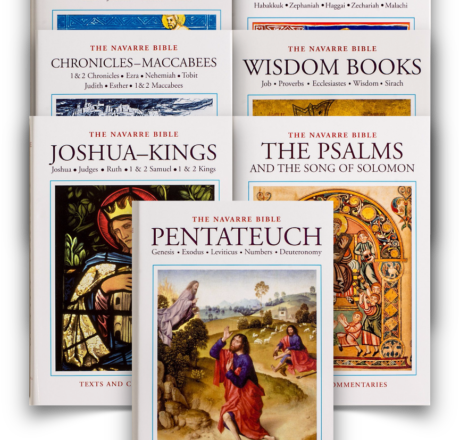
Today’s First Reading
From: Wisdom 2:1a, 12-22
Life Leads to Death (Continuation)
----------------------------------
[1a] For they reasoned unsoundly, saying to themselves, [12] "Let us lie in wait for the righteous man, because he is inconvenient to us and opposes our actions; he reproaches us for sins against the law, and accuses us of sins against our training. [13] He professes to have knowledge of God, and calls himself a child of the Lord. [14] He became to us a reproof of our thoughts; [15] the very sight of him is a burden to us, because his manner of life is unlike that of others, and his ways are strange. [16] We are considered by him as something base, and he avoids our ways as unclean; he calls the last end of the righteous happy, and boasts that God is his father. [17] Let us see if his words are true, and let us test what will happen at the end of his life; [18] for if the righteous man is God's son, he will help him, and will deliver him from the hand of his adversaries. [19] Let us test him with insult and torture, that we may find out how gentle he is, and make trial of his forbearance. [20] Let us condemn him to a shameful death, for, according to what he says, he will be protected." The Origin of Evil and Death
----------------------------
[21] Thus they reasoned, but they were led astray, for their wickedness blinded them, [22] and they did not know the secret purposes of God, nor hope for the wages of holiness, nor discern the prize for blameless souls.
***********************************************************************
Commentary:
1:16-2:24 This section describes the way the ungodly think and behave, and their error in so doing. Righteousness is immortal; but the ungodly think that life ends at death and therefore they try to strike a bargain with death (1:16-2:19). Moreover, they hound the righteous man because he thinks and acts differently from the way they do (2:10-20). They have no idea what life is all about (2:21-24).
1:16-2:9. The sort of thinking attributed here to the ungodly connects up with materialistic and hedonist philosophies, maybe with Epicureanism. The sacred writer probably also had in mind some Jews who, turning their backs on their faith, fell victim to the materialism and scepticism associated with certain streams of Greek thought. Philosophers of such schools based their arguments on two verifiable facts: death is inevitable, and life is short. They had no notion of immortality, and no faith, and therefore only one policy seemed to make sense: seize every chance that life offers for pleasure and enjoyment. It is reminiscent of the "Let us eat and drink, for tomorrow we die" (Is 22:13; 1 Cor 15:32).
2:10-20. Not content with enjoying the pleasures of life, the ungodly go further: they persecute the just man because he is a constant reproach to them. They want to see if God, whom the just man calls his father, will protect and rescue him. He calls God his father? Let us see what protection God gives him. If God fails to come to his aid, then they are proved right, and the just man wrong. Their words are echoed in the insults offered by scribes and Pharisees to Jesus when he was on the cross (cf. Mt 27:40-43; Mk 15:31-32; Lk 23:35-37).
Interestingly, the just man calls himself a "child of God" (v. 13). This is something new in Jewish thinking, because prior to this it was the entire people of Israel or the king their representative who was considered a "son of God" (cf. Ex 4:22; Deut 14:1; 32:6; Ps 2; Is 30:1, 9; Hos 11:1). But in the later books of the Old Testament (for example, in Sir 23:4; 51:14) we begin to see the fatherhood of God towards every just person. The title of "child of God" is applied to all the righteous, and more properly to the Messiah, who is the Righteous One.
As the RSV note "e" points out, the Greek word "pais" which it translates as "child" can also mean "servant". The "servant" in the Old Testament acquires special significance from the book of Isaiah forward, where the "Suffering Servant" appears (cf. Is 52:13-53:12). This man will, through his suffering, set Israel free of Its sins. This dual meaning of "pais" prepares the way for the revelation of Jesus Christ, Son of God and Servant of the Lord.
2:21-24. The mistake of the ungodly is to think that nothing lies beyond death. But this way of thinking stems from the wickedness of their lives which prevents them from knowing God's purposes and causes them to despise the way upright people live. The inspired author takes issue with them and spells out God's plan for man and how death came to be (vv. 23-24). But here again "death" has a far-reaching meaning: it means losing that incorruptibility which, as the author sees it, lies beyond physical death. The death that entered the world through the devil's envy, the death experienced by those who belong to the devil's "party", means to be reduced to nothing, to become "dishonored corpses" (4:18), through losing the incorruptibility that comes from God. What the author is saying here presupposes the Genesis account of how man was created in the image and likeness of God (Gen 1:26) and therefore with a seed of immortality, and how the devil tempted man to commit the original sin that resulted in the loss of immortality (cf. Gen 3-4). But the author of Wisdom goes further than that: he says that only those who belong to the devil lose the "immortality" (which he terms "incorruption") of the human person as an entity made up of soul and body. On the basis of this interpretation and in the light of the resurrection of Jesus Christ, St Paul teaches that death, both physical and spiritual, reaches all human beings through the sin committed by Adam; but Christ, the new Adam, redeems all from death.
The devil, in Greek "diabolos", means "accuser, calumniator" and is the usual translation given for the Hebrew "Satan". These verses do not quote Genesis explicitly, but Genesis is in the background, for it is there we find the serpent identified as God's enemy and mans. The New Testament writer remind us that the devil was a murderer from the beginning (cf. Jn 8:44); and in its account of the battle between good and bad angels, the book of Revelation will say: "The great dragon was thrown down, that ancient serpent, who called the Devil and Satan, the deceiver of the whole world" (Rev 12:9).
From: John 7:1-2, 10, 25-30
Jesus Goes Up to Jerusalem During the Feast of Tabernacles
----------------------------------------------------------
[1] After this Jesus went about in Galilee; He would not go about in Judea, because the Jews sought to kill Him. [2] Now the Jews' feast of Tabernacles was at hand. [10] But after His brethren had gone up to the feast, then He also went up, not publicly but in private.
[25] Some of the people of Jerusalem therefore said, "Is not this the man whom they seek to kill? [26] And here He is, speaking openly, and they say nothing to Him! Can it be that the authorities really know that this is the Christ? [27 Yet we know where this man comes from; and when the Christ appears, no one will know where He comes from. [28] So Jesus proclaimed, as He taught in the temple, "You know where I come from? But I have not come of My own accord; He who sent Me is true, and Him you do not know. [29] I know Him, for I come from Him, and He sent Me." [30] So they sought to arrest Him; but no one laid hands on Him, because His hour had not yet come.
***********************************************************************
Commentary:
1-2. The Jewish custom was for closer relatives to be called "brothers", brethren (cf. notes on Matthew 12:46-47 and Mark 6:1-3). These relatives of Jesus followed Him without understanding His teaching or His mission (cf. Matthew 3:31); but because He worked such obvious miracles in Galilee (cf. Matthew 15:32-39; Mark 8:1-10, 22-26) they suggest to Him that He show Himself publicly in Jerusalem and throughout Judea. Perhaps they wanted Him to be a big success, which would have indulged their family pride.
2. The name of the feast recalls the time the Israelites spent living under canvas in the wilderness (cf. Leviticus 23:34-36). During the eight days the feast lasted (cf. Nehemiah 8:13-18), around the beginning of autumn, the Jews commemorated the protection God had given the Israelites over the forty years of the Exodus. Because it coincided with the end of the harvest, it was also called the feast of ingathering (cf. Exodus 23:16).
10. Because He had not arrived in advance of the feast (which was what people normally did), the first caravans would have reported that Jesus was not coming up, and therefore the members of the Sanhedrin would have stopped planning anything against Him (cf. 7:1). By going up later, the religious authorities would not dare make any move against Him for fear of hostile public reaction (cf. Matthew 26:5). Jesus, possibly accompanied by His disciples, arrives unnoticed at Jerusalem, "in private", almost in a hidden way. Half-way through the feast, on the fourth or fifth day, He begins to preach in the temple (cf. 7:14).
27. In this chapter we often see the Jews disconcerted, in two minds. They argue with one another over whether Jesus is the Messiah, or a prophet, or an impostor (verse 12); they do not know where He gets His wisdom from (verse 15); they are short-tempered (verses 19-20); and they are surprised by the attitudes of the Sanhedrin (verse 26). Despite the signs they have seen (miracles, teaching) they do not want to believe that Jesus is the Messiah. Perhaps some, thinking that He came from Nazareth and was the son of Joseph and Mary, cannot see how this fits in with the notion usually taken from Isaiah's prophecy (Isaiah 53:1-8) about the Messiah's origin being unknown--except for His coming from the line of David and being born in Bethlehem (cf. Matthew 2:5 which quotes Micah 5:2; cf. John 7:42). In fact Jesus did fulfill those prophetic predictions, though most Jews did not know it because they knew nothing about His virginal birth in Bethlehem or His descent from David. Others must have known that He was of the house of David and had been born in Bethlehem, but even so they did not want to accept His teaching because it demanded a mental and moral conversion which they were not ready to make.
28-29. Not without a certain irony, Jesus refers to the superficial knowledge these Jews had of Him: however, He asserts that He comes from the Father who has sent Him, whom only He knows, precisely because He is the Son of God (cf. John 1:18).
30. The Jews realized that Jesus was making Himself God's equal, which was regarded as blasphemy and, according to the Law, was something punishable by death by stoning (cf. Leviticus 24:15-16, 23).
This is not the first time St. John refers to the Jews' hostility (cf. John 5:10), nor will it be the last (8:59; 10:31-33). He stresses this hostility because it was a fact and perhaps also to show that Jesus acts freely when, to fulfill the Father's will He gives Himself over to His enemies when His "hour" arrives (cf. John 18:4-8). "He did not therefore mean an hour when He would be forced to die, but one when He would allow Himself to be put to death. For He was waiting for the time in which He should die, even as He waited for the time in which He should be born" (St. Augustine, "In Ioann. Evang., 31, 5).
Disclaimer: Opinions posted on Free Republic are those of the individual posters and do not necessarily represent the opinion of Free Republic or its management. All materials posted herein are protected by copyright law and the exemption for fair use of copyrighted works.


