
Posted on 03/10/2026 10:32:23 PM PDT by fidelis
Jesus said to his disciples: “Do not think that I have come to abolish the law or the prophets. I have come not to abolish but to fulfill. Amen, I say to you, until heaven and earth pass away, not the smallest letter or the smallest part of a letter will pass from the law, until all things have taken place.” Matthew 5:17–18
The long history of salvation, through which God gradually revealed His divine plan, began with Adam and Eve, continued with Noah and Abraham, deepened with Moses, became internalized with the prophets, and was fulfilled in Jesus. Though tracing this history in detail is a lengthy process, one simple truth stands out: After the fall of Adam and Eve, God gradually unfolded the perfection of His Divine Law to His people. In the same way, He draws each of us closer as we slowly convert and are purified through our spiritual journey.
At the start, God established what we call the Natural Law. Adam and Eve understood moral truths naturally. However, after their sin, that Law became obscured and remains so today. God then made a covenant with Noah, promising never again to destroy the earth by water... Ceremonial laws were introduced to guide the people in worship and civil laws helped establish the Israelites as God’s distinct people.
Once Israel was established, God sent prophets to call for a deeper, internal transformation of heart. The prophets urged the people to repent, return to God, and prepare for the Messiah, who would fulfill the Covenant in its entirety.
When Jesus arrived, His teaching illuminated a fuller understanding of the Law. In Him, all the promises and precepts of the Law were realized. Through His life, death, and resurrection, Jesus established a New Covenant of grace, bringing about the fullness of redemption.
This overview of salvation history is not only important from a historical perspective but also offers insight into how God relates to each of us personally. In the beginning of our own conversion, God meets us where we are: He calls us to be His children, and we are drawn to follow His commandments, avoiding serious sin... Gradually, we internalize the call to live from the heart, not just through outward observance. We begin to see God as an intimate and personal God, and we work to overcome even small attachments to sin. Ultimately, we are called to turn fully to the Gospel, letting it lead us into a deeper relationship with Christ.
Recognizing this progression is essential for our spiritual journeys. If we fail to see this path, we might become complacent. Everything God revealed at the beginning of your conversion remains true, but the start is not the fulfillment. As you reflect on your life, ask yourself: Can I see how God has drawn me closer to Himself, deepened my faith, and called me into greater union with Him?
God leads us gently, knowing that immediate perfection would be overwhelming. Still, He desires our daily growth. Each day is an opportunity for continued conversion, deeper transformation, and spiritual purification. The great saints have written about this journey, showing us the way to holiness.
Reflect today on the call to be perfect. If that seems impossible, commit to one step at a time. The road to perfection is long, demanding, and difficult—but it is also freeing, transforming, and ultimately glorious. Though you won’t become a saint overnight, you can take the next step toward holiness today. Say “Yes” to this journey and trust that God will lead you.
My revealing Lord, little by little You have shown us the path to salvation. From the time of Adam and Eve until Your coming as man, You have guided us back to full communion with You. In my own life, reveal to me the path to holiness and give me the courage to follow it. Help me to grow into sainthood, one step at a time. Jesus, I trust in You.
Please keep in mind that this is a Catholic Caucus/Devotional thread for the purpose of prayerful reflection on the Sacred Scriptures and is closed to debate of any kind. Per FR policy on Religion Caucus threads, off-topic, argumentative, and abusive comments are not allowed and will be submitted to the Mods for deletion. Thanks, and God bless you.
The Month of March is Dedicated to St. Joseph
“And he went down with them and came to Nazareth, and was obedient to them; and his mother kept all these things in her heart. And Jesus increased in wisdom and in stature, and in favor with God and man.” (Luke 2:51-52)

Pope Leo XIV’s prayer intention for the month of March, 2026:
For disarmament and peace
Let us pray that nations move toward effective disarmament, particularly nuclear disarmament, and that world leaders choose the path of dialogue and diplomacy instead of violence.

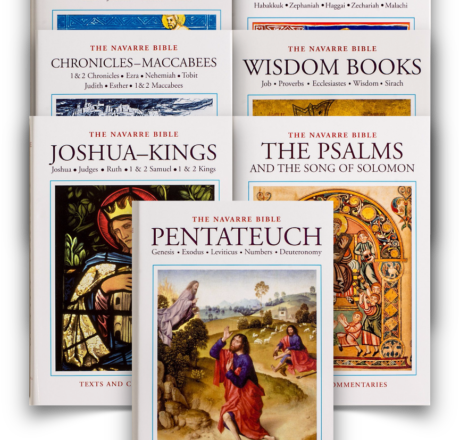
Today’s First Reading
From: Deuteronomy 4:1-2, 5-9
Faithfulness to the Law: God's Closeness to His People
------------------------------------------------------
(Moses said to the people:) [1] "And now, O Israel, give heed to the statutes and the ordinances which I teach you, and do them; that you may live, and go in and take possession of the land which the LORD, the God of your fathers, gives you. [2] You shall not add to the word which I command you, nor take from it; that you may keep the commandments of the LORD your God which I command you.
[5] Behold, I have taught you statutes and ordinances, as the Lord my God commanded me, that you should do them in the land which you are entering to take possession of it. [6] Keep them and do them; for that will be your wisdom and your understanding in the sight of the peoples, who, when they hear all these statutes will say, 'Surely this great nation is a wise and understanding people.' [7] For what great nation is there that has a god so near to it as the LORD our God is to us, whenever we call upon him? [8] And what great nation is there, that has statutes and ordinances so righteous as all this law which I set before you this day?
The Revelation at Horeb
-----------------------
[9] "Only take heed, and keep your soul diligently, lest you forget the things which your eyes have seen, and lest they depart from your heart all the days of your life; make them known to your children and your children's children."
***********************************************************************
Commentary:
4:1-8. Having recalled the main events in Israel's journey from Sinai-Horeb onwards, in which God's special providence was evident, the text now stresses the privileged position of the Hebrew people, chosen as they are by God from among all the nations of the earth, and enabled to draw near to him in a close relationship quite beyond the experience of the Gentiles.
The passage acts as an advance exhortation to fidelity to the Law, the core of which will be recorded later on (5:1-6; 6; 12:1-28:68); it may have been inserted in the course of a revision of the book. The main argument it makes in favor of keeping the Law is the fact that God is so near his people and so accessible to them (vv. 7-8).
4:6-8. The theme of these verses is typical of Wisdom writing. The very life of Israel, shaped as it is by obedience to the Law, will be an eloquent lesson for all other nations. This message, open and out-reaching, implies a universal mission for the chosen people, a message which looks far ahead and will find its fulfillment in the future spread of the Church throughout the world.
4:9-14. This section concentrates on a line of teaching found throughout holy Scripture: salvation history is based on the will of God who on his own initiative offers a Covenant, to the chosen people. The key points in this Covenant have to do with Abraham (Gen 17:1-14) and Moses (Ex 19-24) and they culminate in the future New Covenant in Jesus Christ (Mt 26:28; Mk 14:24; Lk 22:20; 1 Cor 11:25). The promulgation of the Law on Sinai-Horeb is a product of the Covenant: God promises the people of Israel protection, a land of their own, etc. Because a covenant or pact is involved, certain things are laid down that the people must do: these are contained in the precepts of the Law. God will be true to the promises he makes, but the people never decide. whether to be faithful or unfaithful. According to this passage the Law consists in the Ten Commandments (v. 13).
From: Matthew 5:17-19
Jesus and His Teaching, the Fulfillment of the Law
----------------------------------------------------------------
(Jesus said to His disciples,) [17] "Think not that I have come to abolish the law and the prophets; I have come not to abolish them but to fulfill them. [18] For truly I say to you, till Heaven and earth pass away, not an iota, not a dot, will pass from the law until all is accomplished. [19] Whoever then relaxes one of the least of these commandments and teaches men so, shall be called least in the Kingdom of Heaven; but he who does them and teaches them shall be called great in the Kingdom of Heaven."
***********************************************************************
Commentary:
17-19. In this passage Jesus stresses the perennial value of the Old Testament. It is the word of God; because it has a divine authority it deserves total respect. The Old Law enjoined precepts of a moral, legal and liturgical type. Its moral precepts still hold good in the New Testament because they are for the most part specific divine-positive promulgations of the natural law. However, our Lord gives them greater weight and meaning. But the legal and liturgical precepts of the Old Law were laid down by God for a specific stage in salvation history, that is, up to the coming of Christ; Christians are not obliged to observe them (cf. "Summa Theologiae", I-II, q. 108, a. 3 ad 3).
The law promulgated through Moses and explained by the prophets was God's gift to His people, a kind of anticipation of the definitive Law which the Christ or Messiah would lay down. Thus, as the Council of Trent defined, Jesus not only "was given to men as a redeemer in whom they are to trust, but also as a lawgiver whom they are to obey" ("De Iustificatione", can. 21).
Gospel
Matthew 5:17-19
Jesus said to his disciples:
“Do not think that I have come to abolish the law or the prophets.
I have come not to abolish but to fulfill.
Amen, I say to you, until heaven and earth pass away,
not the smallest letter or the smallest part of a letter
will pass from the law,
until all things have taken place.
Therefore, whoever breaks one of the least of these commandments
and teaches others to do so
will be called least in the Kingdom of heaven.
But whoever obeys and teaches these commandments
will be called greatest in the Kingdom of heaven.”
Disclaimer: Opinions posted on Free Republic are those of the individual posters and do not necessarily represent the opinion of Free Republic or its management. All materials posted herein are protected by copyright law and the exemption for fair use of copyrighted works.


