
Posted on 02/28/2026 5:10:57 AM PST by fidelis
Jesus said to his disciples: “You have heard that it was said, You shall love your neighbor and hate your enemy. But I say to you, love your enemies, and pray for those who persecute you…” Matthew 5:43–44
Why would we want to love our enemies and pray for those who persecute us? The fallen natural mind alone reasons that an enemy is someone we should oppose and distance ourselves from, and those who persecute us deserve our wrath and condemnation. Without grace, our minds are incapable of comprehending this command. As the passage continues, Jesus answers the question for us: “that you may be children of your heavenly Father…”
A child inherits his or her DNA from the mother and father. Children often resemble their parents, adopt certain traits, and might imitate some of their habits. These similarities result from both biology and learned behavior. If we choose God the Father as our true Father in Heaven, becoming a member of Jesus’ family, we must inherit God’s spiritual “DNA,” adopt His traits, and imitate our Lord’s moral habits. Otherwise, we are not children of our heavenly Father.
Just as membership in an earthly family carries obligations—such as compassion, support, and faithfulness—so does membership in God’s family, with even greater responsibilities. For example, if a child of an earthly family rebels, is hostile, rejects his parents and siblings, and leaves them, the child loses out on the numerous blessings of family life, especially when the parents and other siblings are faithful servants of God. Likewise, by refusing to follow God’s divine commands, we miss out on the blessings He gives His children.
Because being a member of God’s family demands great love, Jesus addresses the ultimate requirement He expects of us: “be perfect, just as your heavenly Father is perfect.” True, we might only attain perfection in Heaven once we experience the purifying fires of Purgatory. However, that doesn’t change the family obligations our Father imposes upon us in this life. God expects perfection, including a radical love of everyone—those who love us and those deemed “enemies” or who persecute us.
The love to which God calls us knows no bounds because our heavenly Father’s love for us knows no bounds. True children take on His spiritual DNA and moral habits. Moral perfection leads to spiritual communion with God—Divine Union—a gift beyond anything a rebellious spiritual child could attain through effort alone.
Reflect today on God’s incredible invitation given to you to be a member of His family. As you hear that invitation and respond with acceptance, consider the requirements that result from that choice. Look at those in your life for whom you hold a grudge, have a complicated relationship, or have been hurt. Do not act according to natural reason alone. Allow your mind to be elevated by truth so that you understand what God expects of you, and allow your will to be strengthened by grace so that you can act toward others as your heavenly Father acts toward you.
Most loving God, Your love never fails, never diminishes, never changes. It is perfect in every way. My love is often selfish, limited, and erratic. I accept Your invitation to be a member of Your heavenly family and pray that I will learn to see all people with Your wisdom and love them with Your heart. Forgive me for my lack of love, and transform me into Your child by grace. Jesus, I trust in You.
Please keep in mind that this is a Catholic Caucus/Devotional thread for the purpose of prayerful reflection on the Sacred Scriptures and is closed to debate of any kind. Per FR policy on Religion Caucus threads, off-topic, argumentative, and abusive comments are not allowed and will be submitted to the Mods for deletion. Thanks, and God bless you.
The Month of February is Dedicated to the Holy Family of Jesus, Mary, and Joseph
“And he went down with them and came to Nazareth, and was obedient to them; and his mother kept all these things in her heart. And Jesus increased in wisdom and in stature, and in favor with God and man.” (Luke 2:51-52)

Pope Leo XIV’s prayer intention for the month of February, 2026:
For children with incurable diseases
Let us pray that children suffering from incurable diseases and their families receive the necessary medical care and support, never losing strength and hope.

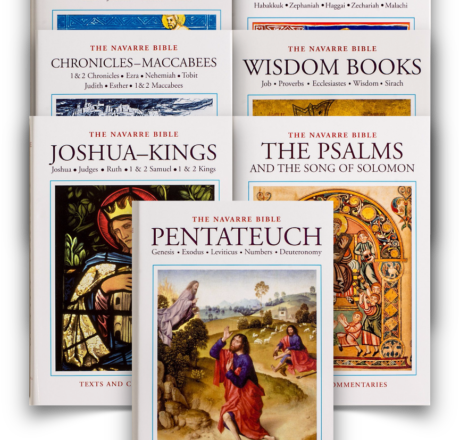
Today’s First Reading
From: Deuteronomy 26:16-19
Israel, the People of the Lord
------------------------------
(Moses spoke to the people saying,) [16] "This day the Lord your God commands you to do these statutes and ordinances; you shall therefore be careful to do them with all your heart and with all your soul. [17] You have declared this day concerning the Lord that he is your God, and that you will walk in his ways, and keep his statutes and his commandments and his ordinances, and will obey his voice; [18] and the Lord has declared this day concerning you that you are a people for his own possession, as he has promised you, and that you are to keep all his commandments, [19] that he will set you high above all nations that he has made, in praise and in fame and in honor, and that you shall be a people holy to the Lord your God, as he has spoken."
***********************************************************************
Commentary:
26:16-19. The main part of Moses' second discourse (chaps. 5-26) ends with a new, solemn proclamation of the Covenant between the Lord and his people, on which their mutual relationship is based Israel is the people--property of God, chosen by him from among all nations. And the Lord, for his part, is the God and Lord of Israel, whom he has solemnly promised to protect.
Verses 17 and 18 begin with turns of phrase typical of the language of contacts and pacts: one contracting party has the other declare or swear something. This gives the passage great beauty and strength: through the wording of the Covenant, Israel makes the Lord undertake to be its God and protector, while God calls on Israel to testify that it will he faithful to his commandments. The wording of the Covenant is extolled in other passages of the Old Testament. Thus, Hosea 2:25 uses the imagery of love to express the dialogue between God and Israel: "You are my people.[...] Thou art my God.
By treating man in this way, God shows himself to be both near to man and far above him. The mutual commitment of God and men in the Covenant is not a simple business-like transaction; it is something enduring, something which is being renewed all the time: for man, and particularly for the Christian, every day is a renewal of the Covenant, a new beginning (cf. Is 43:19). St J. Escriva writes "Committed. How much I like that word! We children of God, freely put ourselves under an obligation to live a life of dedication to God, striving that He may have complete and absolute sovereignty over our lives" ("The Forge", 855).
As regards the structure of Deuteronomy in its present form, vv. 16-19 act as both a summing up of Moses' second discourse and as a preparation for chapter 28, the end of that discourse, consisting of "Blessings and Curses" exhorting Israel to be faithful to the Covenant it has made with the Lord.
From: Matthew 5:43-48
Jesus and His Teaching, the Fulfillment of the Law (Continuation)
-----------------------------------------------------------------
(Jesus said to His disciples,) [43] "You have heard that it was said, `You shall love your neighbor and hate your enemy.' [44] But I say to you, Love your enemies and pray for those who persecute you. [45] So that you may be sons of your Father who is in Heaven; for He makes His sun rise on the evil and on the good, and sends rain on the just and on the unjust. [46] For if you love those who love you, what reward have you? Do not even the tax collectors do the same? [47] And if you salute only your brethren, what more are you doing than others? Do not even the Gentiles do the same? [48] You, therefore, must be perfect, as your Heavenly Father is perfect."
***********************************************************************
Commentary:
43. The first part of this verse--"You shall love your neighbor"--is to be found in Leviticus 19:18. The second part--"hate your enemy"—is not to be found in the Law of Moses. However, Jesus' words refer to a widespread rabbinical interpretation which understood "neighbors" as meaning "Israelites". Our Lord corrects this misinterpretation of the Law: for Him everyone is our neighbor (cf. the parable of the Good Samaritan in Luke 10:25-37).
43-47. This passage sums up the teaching which precedes it. Our Lord goes so far as to say that a Christian has no personal enemies. His only enemy is evil as such--sin--but not the sinner. Jesus Himself puts this into practice with those who crucified Him, and He continues to act in the same way towards sinners who rebel against Him and despise Him. Consequently, the saints have always followed His example--like St. Stephen, the first martyr, who prayed for those who were putting him to death. This is the apex of Christian perfection--to love, and pray for, even those who persecute us and calumniate us. It is the distinguishing mark of the children of God.
46. "Tax collectors": the Roman empire had no officials of its own for the collection of taxes: in each country it used local people for this purpose. These were free to engage agents (hence we find reference to "chief tax collectors": cf. Luke 19:2). The global amount of tax for each region was specified by the Roman authorities; the tax collectors levied more than this amount, keeping the surplus for themselves: this led them to act rather arbitrarily, which was why the people hated them. In the case of the Jews, insult was added to injury by the fact that the chosen people were being exploited by Gentiles.
48. Verse 48 is, in a sense, a summary of the teaching in this entire chapter, including the Beatitudes. Strictly speaking, it is quite impossible for a created being to be as perfect as God. What our Lord means here is that God's own perfection should be the model which every faithful Christian tries to follow, even though he realizes that there is an infinite distance between himself and his Creator. However, this does not reduce the force of this commandment; it sheds more light on it. It is a difficult commandment to live up to, but along with this we must take account of the enormous help grace gives us to go so far as to tend towards divine perfection. Certainly, perfection which we should imitate does not refer to the power and wisdom of God, which are totally beyond our scope; here the context seems to refer primarily to love and mercy. Along the same lines, St. Luke quotes these words of our Lord: "Be merciful, even as your Father is merciful" (Luke 6:36; cf. note on Luke 6:20-49).
Clearly, the "universal call to holiness" is not a recommendation but a commandment of Jesus Christ. "Your duty is to sanctify yourself. Yes, even you. Who thinks that this task is only for priests and religious? To everyone, without exception, our Lord said: `Be ye perfect, as My Heavenly Father is perfect'" (St J. Escriva, "The Way", 291). This teaching is sanctioned by chapter 5 of Vatican II's Constitution "Lumen Gentium", where it says (40): "The Lord Jesus, divine teacher and model of all perfection, preached holiness of life (of which He is the author and maker) to each and every one of His disciples without distinction: `You, therefore, must be perfect, as your Heavenly Father is perfect' [...]. It is therefore quite clear that all Christians in any state or walk of life are called to the fullness of Christian life and to the perfection of love, and by this holiness a more human manner of life is fostered also in earthly society."
Luke 10:

[25] And, behold, a certain lawyer stood up, and tempted him, saying,
Master, what shall I do to inherit eternal life?
[26] He said unto him, What is written in the law? how readest thou?
[27] And he answering said,
Thou shalt love the Lord thy God with all thy heart, and with all thy soul, and with all thy strength, and with all thy mind;
and thy neighbour as thyself.
[28] And he said unto him, Thou hast answered right: this do, and thou shalt live.
[29] But he, willing to justify himself, said unto Jesus, And who is my neighbour?
[30] And Jesus answering said,
A certain man went down from Jerusalem to Jericho, and fell among thieves,
which stripped him of his raiment, and wounded him, and departed, leaving him half dead.
[31] And by chance there came down a certain priest that way:
and when he saw him, he passed by on the other side.
[32] And likewise a Levite, when he was at the place, came
and looked on him, and passed by on the other side.
[33] But a certain Samaritan, as he journeyed, came where he
was: and when he saw him, he had compassion on him,
[34] And went to him, and bound up his wounds, pouring in oil
and wine, and set him on his own beast, and brought him to an
inn, and took care of him.
[35] And on the morrow when he departed, he took out two
pence, and gave them to the host, and said unto him, Take
care of him; and whatsoever thou spendest more, when I come
again, I will repay thee.
[36] Which now of these three, thinkest thou, was neighbour
unto him that fell among the thieves?
[37] And he said, He that shewed mercy on him. Then said
Jesus unto him, Go, and do thou likewise.
Disclaimer: Opinions posted on Free Republic are those of the individual posters and do not necessarily represent the opinion of Free Republic or its management. All materials posted herein are protected by copyright law and the exemption for fair use of copyrighted works.

