Posted on 01/31/2026 9:17:21 AM PST by annalex
Saint John Bosco, Priest on Saturday of week 3 in Ordinary Time ![]() St. John Bosco Church, Chicago Readings at MassLiturgical Colour: White. Year: A(II). These are the readings for the feria
David's penitence over UriahThe Lord sent Nathan the prophet to David. He came to him and said: ‘In the same town were two men, one rich, the other poor. The rich man had flocks and herds in great abundance; the poor man had nothing but a ewe lamb, one only, a small one he had bought. This he fed, and it grew up with him and his children, eating his bread, drinking from his cup, sleeping on his breast; it was like a daughter to him. When there came a traveller to stay, the rich man refused to take one of his own flock or herd to provide for the wayfarer who had come to him. Instead he took the poor man’s lamb and prepared it for his guest.’ David’s anger flared up against the man. ‘As the Lord lives,’ he said to Nathan ‘the man who did this deserves to die! He must make fourfold restitution for the lamb, for doing such a thing and showing no compassion.’ Then Nathan said to David, ‘You are the man. So now the sword will never be far from your House, since you have shown contempt for me and taken the wife of Uriah the Hittite to be your wife.” ‘Thus the Lord speaks, “I will stir up evil for you out of your own House. Before your very eyes I will take your wives and give them to your neighbour, and he shall lie with your wives in the sight of this sun. You worked in secret, I will work this in the face of all Israel and in the face of the sun.”’ David said to Nathan, ‘I have sinned against the Lord.’ Then Nathan said to David, ‘The Lord, for his part, forgives your sin; you are not to die. Yet because you have outraged the Lord by doing this, the child that is born to you is to die.’ Then Nathan went home. The Lord struck the child that Uriah’s wife had borne to David and it fell gravely ill. David pleaded with the Lord for the child; he kept a strict fast and went home and spent the night on the bare ground, covered with sacking. The officials of his household came and stood round him to get him to rise from the ground, but he refused, nor would he take food with them.
A pure heart create for me, O God. A pure heart create for me, O God, put a steadfast spirit within me. Do not cast me away from your presence, nor deprive me of your holy spirit. A pure heart create for me, O God. Give me again the joy of your help; with a spirit of fervour sustain me, that I may teach transgressors your ways and sinners may return to you. A pure heart create for me, O God. O rescue me, God, my helper, and my tongue shall ring out your goodness. O Lord, open my lips and my mouth shall declare your praise. A pure heart create for me, O God.
Alleluia, alleluia! Instruct me, Lord, in your way; on an even path lead me. Alleluia!
Alleluia, alleluia! God loved the world so much that he gave his only Son: everyone who believes in him has eternal life. Alleluia!
'Even the wind and the sea obey him'With the coming of evening, Jesus said to his disciples, ‘Let us cross over to the other side.’ And leaving the crowd behind they took him, just as he was, in the boat; and there were other boats with him. Then it began to blow a gale and the waves were breaking into the boat so that it was almost swamped. But he was in the stern, his head on the cushion, asleep. They woke him and said to him, ‘Master, do you not care? We are going down!’ And he woke up and rebuked the wind and said to the sea, ‘Quiet now! Be calm!’ And the wind dropped, and all was calm again. Then he said to them, ‘Why are you so frightened? How is it that you have no faith?’ They were filled with awe and said to one another, ‘Who can this be? Even the wind and the sea obey him.’ These are the readings for the memorial
If there is anything you need, pray for it.I want you to be happy, always happy in the Lord; I repeat, what I want is your happiness. Let your tolerance be evident to everyone: the Lord is very near. There is no need to worry; but if there is anything you need, pray for it, asking God for it with prayer and thanksgiving, and that peace of God, which is so much greater than we can understand, will guard your hearts and your thoughts, in Christ Jesus. Finally, brothers, fill your minds with everything that is true, everything that is noble, everything that is good and pure, everything that we love and honour, and everything that can be thought virtuous or worthy of praise. Keep doing all the things that you learnt from me and have been taught by me and have heard or seen that I do. Then the God of peace will be with you.
My soul, give thanks to the Lord. My soul, give thanks to the Lord all my being, bless his holy name. My soul, give thanks to the Lord and never forget all his blessings. My soul, give thanks to the Lord. It is he who forgives all your guilt, who heals every one of your ills, who redeems your life from the grave, who crowns you with love and compassion. My soul, give thanks to the Lord. The Lord is compassion and love, slow to anger and rich in mercy. His wrath will come to an end; he will not be angry for ever. My soul, give thanks to the Lord. As a father has compassion on his sons, the Lord has pity on those who fear him; for he knows of what we are made, he remembers that we are dust. My soul, give thanks to the Lord. But the love of the Lord is everlasting upon those who hold him in fear; his justice reaches out to children’s children when they keep his covenant in truth, when they keep his will in their mind. My soul, give thanks to the Lord.
Alleluia, alleluia! The greatest among you must be your servant, says the Lord: the man who humbles himself will be exalted. Alleluia!
Unless you become like little children you will not enter the kingdom of heavenThe disciples came to Jesus and said, ‘Who is the greatest in the kingdom of heaven?’ So he called a little child to him and set the child in front of them. Then he said, ‘I tell you solemnly, unless you change and become like little children you will never enter the kingdom of heaven. And so, the one who makes himself as little as this little child is the greatest in the kingdom of heaven. ‘Anyone who welcomes a little child like this in my name welcomes me.’
You can also view this page with the New Testament in Greek and English. Universalis podcast: The week ahead – from 1 to 7 FebruaryCandlemas, the feast of the Purification of Mary and the Presentation of the Lord. Purification. The celebration and sanctification of transitions. The hundredth episode!! (21 minutes)Play Christian Art![]() Each day, The Christian Art website gives a picture and reflection on the Gospel of the day. The readings on this page are from the Jerusalem Bible, which is used at Mass in most of the English-speaking world. The New American Bible readings, which are used at Mass in the United States, are available in the Universalis apps, programs and downloads. |
KEYWORDS: catholic; mk4; mt18; ordinarytime; prayer;

Please FReepmail me to get on/off the Alleluia Ping List.
| Mark | |||
| English: Douay-Rheims | Latin: Vulgata Clementina | Greek NT: Byzantine/Majority Text (2000) | |
| Mark 4 | |||
| 35. | And he saith to them that day, when evening was come: Let us pass over to the other side. | Et ait illis in illa die, cum sero esset factum : Transeamus contra. | και λεγει αυτοις εν εκεινη τη ημερα οψιας γενομενης διελθωμεν εις το περαν |
| 36. | And sending away the multitude, they take him even as he was in the ship: and there were other ships with him. | Et dimittentes turbam, assumunt eum ita ut erat in navi : et aliæ naves erant cum illo. | και αφεντες τον οχλον παραλαμβανουσιν αυτον ως ην εν τω πλοιω και αλλα δε πλοιαρια ην μετ αυτου |
| 37. | And there arose a great storm of wind, and the waves beat into the ship, so that the ship was filled. | Et facta est procella magna venti, et fluctus mittebat in navim, ita ut impleretur navis. | και γινεται λαιλαψ ανεμου μεγαλη τα δε κυματα επεβαλλεν εις το πλοιον ωστε αυτο ηδη γεμιζεσθαι |
| 38. | And he was in the hinder part of the ship, sleeping upon a pillow; and they awake him, and say to him: Master, doth it not concern thee that we perish? | Et erat ipse in puppi super cervical dormiens : et excitant eum, et dicunt illi : Magister, non ad te pertinet, quia perimus ? | και ην αυτος επι τη πρυμνη επι το προσκεφαλαιον καθευδων και διεγειρουσιν αυτον και λεγουσιν αυτω διδασκαλε ου μελει σοι οτι απολλυμεθα |
| 39. | And rising up, he rebuked the wind, and said to the sea: Peace, be still. And the wind ceased: and there was made a great calm. | Et exsurgens comminatus est vento, et dixit mari : Tace, obmutesce. Et cessavit ventus : et facta est tranquillitas magna. | και διεγερθεις επετιμησεν τω ανεμω και ειπεν τη θαλασση σιωπα πεφιμωσο και εκοπασεν ο ανεμος και εγενετο γαληνη μεγαλη |
| 40. | And he said to them: Why are you fearful? have you not faith yet? And they feared exceedingly: and they said one to another: Who is this (thinkest thou) that both wind and sea obey him? | Et ait illis : Quid timidi estis ? necdum habetis fidem ? et timuerunt timore magno, et dicebant ad alterutrum : Quis, putas, est iste, quia et ventus et mare obediunt ei ? | και ειπεν αυτοις τι δειλοι εστε ουτως πως ουκ εχετε πιστιν και εφοβηθησαν φοβον μεγαν και ελεγον προς αλληλους τις αρα ουτος εστιν οτι και ο ανεμος και η θαλασσα υπακουουσιν αυτω |

4:35–41
35. And the same day, when the even was come, he saith unto them, Let us pass over unto the other side.
36. And when they had sent away the multitude, they took him even as he was in the ship. And there were also with him other little ships.
37. And there arose a great storm of wind, and the waves beat into the ship, so that it was now full.
38. And he was in the hinder part of the ship, asleep on a pillow: and they awake him, and say unto him, Master, carest thou not that we perish?
39. And he arose, and rebuked the wind, and said unto the sea, Peace, be still. And the wind ceased, and there was a great calm.
40. And he said unto them, Why are ye so fearful? how is it that ye have no faith?
41. And they feared exceedingly, and said one to another, What manner of man is this, that even the wind and the sea obey him?
PSEUDO-JEROME. After His teaching, they come from that place to the sea, and are tossed by the waves. Wherefore it is said, And the same day, when the even was come, &c.
REMIGIUS. For the Lord is said to have had three places of refuge, namely, the ship, the mountain, and the desert. As often as He was pressed upon by the multitude, he used to fly to one of these. When therefore the Lord saw many crowds about Him, as man, He wished to avoid their importunity, and ordered His disciples to go over to the other side. There follows: And sending away the multitudes, they took him, &c,
CHRYSOSTOM. (Hom. in Matt. 28) The Lord took the disciples indeed, that they might be spectators of the miracle which was coming, but He took them alone, that no others might see that they were of such little faith. Wherefore, to shew that others went across separately, it is said, And there were also with him other ships. Lest again the disciples might be proud of being alone taken, He permits them to be in danger; and besides this, in order that they might learn to bear temptations manfully. Wherefore it goes on, And there arose a great storm of wind; and that He might impress upon them a greater sense of the miracle which was to be done, He gives time for their fear, by sleeping. Wherefore there follows, And he was himself in the hinder part of the ship, &c. For if He had been awake, they would either not have feared, nor have asked Him to save them when the storm arose, or they would not have thought that He could do any such things.
THEOPHYLACT. Therefore He allowed them to fall into the fear of danger, that they might experience His power in themselves, who saw others benefitted by Him. But He was sleeping upon the pillow of the ship, that is, on a wooden one.
CHRYSOSTOM. (Hom. in Matt. 28) Shewing His humility, and thus teaching us many lessons of wisdom. But not yet did the disciples who remained about Him know His glory; they thought indeed that if He arose He could command the winds, but could by no means do so reposing or asleep. And therefore there follows, And they awake him, and say unto him, Master, carest thou not that we perish?
THEOPHYLACT. But He arising, rebukes first the wind, which was raising the tempest of the sea, and causing the waves to swell, and this is expressed in what follows, And he arose, and rebuked the wind; then He commands the sea; wherefore it goes on, And he said to the sea, Peace, be still.
GLOSS. (non occ.) For from the troubling of the sea there arises a certain sound, which appears to be its voice threatening danger, and therefore, by a sort of metaphor, He fitly commands tranquillity by a word signifying silence: just as in the restraining of the winds, which trouble the sea with their violence, He uses a rebuke. For men who are in power are accustomed to curb those, who rudely disturb the peace of mankind, by threatening to punish them; by this, therefore, we are given to understand, that, as a king can repress violent men by threats, and by his edicts sooth the murmurs of his people, so Christ, the King of all creatures, by His threats restrained the violence of the winds, and compelled the sea to be silent. And immediately the effect followed, for it continues, And the wind ceased, which He had threatened, and there arose a great calm, that is, in the sea, to which He had commanded silence.
THEOPHYLACT. He rebuked His disciples, for not having faith; for it goes on, And he said unto them, Why are ye so fearful? How is it that ye have not faith? For if they had had faith, they would have believed that even when sleeping, He could preserve them safe. There follows, And they feared with a great fear, and said one to another, &c. For they were in doubt about Him, for since He stilled the sea, not with a rod like Moses, nor with prayers as Elisha at the Jordan, nor with the ark as Joshua, the son of Nun, on this account they thought Him truly God, but since He was asleep, they thought Him a man.
PSEUDO-JEROME. Mystically, however, the hinder part of the ship is the beginning of the Church, in which the Lord sleeps in the body only, for He never sleepeth who keepeth Israel; for the ship with its skins of dead animals keeps in the living, and keeps out the waves, and is bound together by wood, that is, by the cross and the death of the Lord the Church is saved. The pillow is the body of the Lord, on which His Divinity, which is as His head, has come down. But the wind and the sea are devils and persecutors, to whom He says Peace, when He restrains the edicts of impious kings, as He will. The great calm is the peace of the Church after oppression, or a contemplative after an active life.
BEDE. (ubi sup.) Or else the ship into which He embarked, is taken to mean the tree of His passion, by which the faithful attain to the security of the safe shore. The other ships which are said to have been with the Lord, signify those, who are imbued with faith in the cross of Christ, and are not beaten about by the whirlwind of tribulation; or who, after the storms of temptation, are enjoying the serenity of peace. And whilst His disciples are sailing on, Christ is asleep, because the time of our Lord’s Passion came on His faithful ones, when they were meditating on the rest of His future reign. Wherefore it is related, that it took place late, that not only the sleep of our Lord, but the hour itself of departing light, might signify the setting of the true Sun. Again, when He ascended the cross, of which the stern of the ship was a type, His blaspheming persecutors rose like the waves against Him, driven on by the storms of the devils, by which, however, His own patience is not disturbed, but His foolish disciples are struck with amazement. The disciples awake the Lord, because they sought, with most earnest wishes, the resurrection of Him whom they had seen die. Rising up, He threatened the wind, because when He had triumphed in His resurrection, He prostrated the pride of the devil. He ordered the sea to be still, that is, in rising again, He cast down the rage of the Jews. The disciples are blamed, because after His resurrection, He chid them for their unbelief. And we also when being marked with the sign of the Lord’s cross, we determine to quit the world, embark in the ship with Christ; we attempt to cross the sea; but, He goes to sleep, as we are sailing amidst the roaring of the waters, when amidst the strivings of our virtues, or amidst the attacks of evil spirits, of wicked men, or of our own thoughts, the flame of our love grows cold. Amongst storms of this sort, let us diligently strive to awake Him; He will soon restrain the tempest, pour down peace upon us, give us the harbour of salvation.
Catena Aurea Mark 4
| Matthew | |||
| English: Douay-Rheims | Latin: Vulgata Clementina | Greek NT: Byzantine/Majority Text (2000) | |
| Matthew 18 | |||
| 1. | AT that hour the disciples came to Jesus, saying: Who thinkest thou is the greater in the kingdom of heaven? | In illa hora accesserunt discipuli ad Jesum, dicentes : Quis, putas, major est in regno cælorum ? | εν εκεινη τη ωρα προσηλθον οι μαθηται τω ιησου λεγοντες τις αρα μειζων εστιν εν τη βασιλεια των ουρανων |
| 2. | And Jesus calling unto him a little child, set him in the midst of them, | Et advocans Jesus parvulum, statuit eum in medio eorum, | και προσκαλεσαμενος ο ιησους παιδιον εστησεν αυτο εν μεσω αυτων |
| 3. | And said: Amen I say to you, unless you be converted, and become as little children, you shall not enter into the kingdom of heaven. | et dixit : Amen dico vobis, nisi conversi fueritis, et efficiamini sicut parvuli, non intrabitis in regnum cælorum. | και ειπεν αμην λεγω υμιν εαν μη στραφητε και γενησθε ως τα παιδια ου μη εισελθητε εις την βασιλειαν των ουρανων |
| 4. | Whosoever therefore shall humble himself as this little child, he is the greater in the kingdom of heaven. | Quicumque ergo humiliaverit se sicut parvulus iste, hic est major in regno cælorum. | οστις ουν ταπεινωσει εαυτον ως το παιδιον τουτο ουτος εστιν ο μειζων εν τη βασιλεια των ουρανων |
| 5. | And he that shall receive one such little child in my name, receiveth me. | Et qui susceperit unum parvulum talem in nomine meo, me suscipit : | και ος εαν δεξηται παιδιον τοιουτον εν επι τω ονοματι μου εμε δεχεται |

18:1–6
1. At the same time came the disciples unto Jesus, saying, Who is the greatest in the kingdom of heaven?
2. And Jesus called a little child unto him, and set him in the midst of them,
3. And said, Verily I say unto you, Except ye be converted, and become as little children, ye shall not enter into the kingdom of heaven.
4. Whosoever therefore shall humble himself as this little child, the same is greatest in the kingdom of heaven.
5. And whoso shall receive one such little child in my name receiveth me.
6. But whoso shall offend one of these little ones which believe in me, it were better for him that a millstone were hanged about his neck, and that he were drowned in the depth of the sea.
JEROME. The disciples seeing one piece of money paid both for Peter and the Lord, conceived from this equality of ransom that Peter was preferred before all the rest of the Apostles.
CHRYSOSTOM. Thus they suffered a human passion, which the Evangelist denotes by saying, At the same time come the disciples to Jesus, saying, Who, we pray thee, is the greatest in the kingdom of heaven? Ashamed to shew the feeling which was working within, they do not say openly, Why have you honoured Peter above us? but they ask in general, Who is the greatest? When in the transfiguration they saw three distinguished, namely, Peter, James, and John, they had no such feeling, but now that one is singled out for especial honour, then they are grieved. But do you remember, first, that it was nothing in this world that they sought; and, secondly, that they afterwards laid aside this feeling? Even their failings are above us, whose enquiry is not, Who is the greatest in the kingdom of heaven? but, Who is greatest in the kingdom of the world?
ORIGEN. Herein we ought to be imitators of the disciples, that when any question of doubt arises among us, and we find not how to settle it, We should with one consent go to Jesus, Who is able to enlighten the hearts of men to the explication of every perplexity. We shall also consult some of the doctors, who are thought most eminent in the Churches. But in that they asked this question, the disciples knew that there was not an equality among the saints in the kingdom of heaven; what they yet sought to learn was, how they were so, and lived as greater and less. Or, from what the Lord had said above, they knew Who was the best and who was great; but out of many great, who was the greatest, this Was not clear to them.
JEROME. Jesus seeing their thoughts would heal their ambitious strivings, by arousing an emulation in lowliness; whence it follows, And Jesus calling a little child, set him in the midst of them.
CHRYSOSTOM. He chose, I suppose, quite an infant, devoid of any of the passions.
JEROME. One whose tender age should express to them the innocence which they should have. But truly He set Himself in the midst of them, a little one who had come not to be ministered unto, but to minister; (Mat. 20:28.) that He might be a pattern of holiness. Others interpret the little one of the Holy Spirit, whom He set in the hearts of His disciples, to change their pride into humility. (Vid. Origen. in loc.) And he said. Verily I say unto you, Except ye be converted, and become as little children, ye shall not enter into the kingdom of heaven. He does not enjoin on the Apostles the age, but the innocence of infants, which they have by virtue of their years, but to which these might attain by striving; that they should be children in malice, not in understanding. As though He had said, As this child, whom I set before you as a pattern, is not obstinate in anger, when injured does not bear it in mind, has no emotion at the sight of a fair woman, does not think one thing while he speaks another; so ye, unless ye have the like innocence and purity of mind, shall not be able to enter into the kingdom of heaven.
HILARY. He calls infants all who believe through the hearing of faith; for such follow their father, love their mother, know not to will that which is evil, do not bear hate, or speak lies, trust what is told them, and believe what they hear to be true. But the letter is thus interpreted.
GLOSS. (interlin.) Except ye be converted from this ambition and jealousy in which you are at present, and become all of you as innocent and humble in disposition as you are weak, in your years, ye shall not enter into the kingdom of heaven; and since there is none other road to enter in, whoso shall humble himself as this little child, the same is greatest in the kingdom of heaven; for by how much a man is humble now, by so much shall he be exalted in the kingdom of heaven.
REMIGIUS. In the understanding of grace, or in ecclesiastical dignity, or at least in everlasting blessedness.
JEROME. Or otherwise; Whoso shall humble himself as this little child, that is, whoso shall humble himself after My example, he shall enter into the kingdom of heaven. It follows, And whoso receiveth one such little one in my name, receiveth me.
CHRYSOSTOM. Not only if ye become such yourselves, but also if for My sake you shall pay honour to other such, ye receive reward; and as the return for the honour you pay them, I entail upon you the kingdom. He puts indeed what is far greater, Receiveth me.
JEROME. For whoever is such that he imitates Christ’s humility and innocence, Christ is received by him; and by way of caution, that the Apostles should not think, when such are come to them, that it is to themselves that the honour is paid, He adds, that they are to be received not for their own desert, but in honour of their Master.
CHRYSOSTOM. And to make this word the rather received. He subjoins a penalty in what follows, Whoso offendeth one of these little ones, & c. as though he had said, As those who for My sake honour one of these, have their reward, so they who dishonour shall undergo the extreme punishment. And marvel not that He calls an evil word an offence, for many of feeble spirit are offended by only being despised,
JEROME. Observe that he who is offended is a little one, for the greater hearts do not take offences. And though it may be a general declaration against all who scandalize any, yet from the connection of the discourse it may be said specially to the Apostles; for in asking who should be greatest in the kingdom of heaven, they seemed to be contending for preeminence among themselves; and if they had persisted in this fault, they might have scandalized those whom they called to the faith, seeing the Apostles contending among themselves for the preference.
ORIGEN. But how can he who has been converted, and become as a little child, be yet liable to be scandalized? This may be thus explained. Every one who believes on the Son of God, and walks after evangelic acts, is converted and walks as a little child; but he who is not converted that he may become as a child, it is impossible that he should enter into the kingdom of heaven. But in every congregation of believers, there are some only newly converted that they may become as little children, but not yet made such; these are the little ones in Christ, and these are they that receive offence.
JEROME. When it is said, It is better for him that a mill-stone be hanged about his neck, He speaks according to the custom of the province; for among the Jews this was the punishment of the greater criminals, to drown them by a stone tied to them. It is better for him, because it is far better to receive a brief punishment for a fault, than to be reserved for eternal torments.
CHRYSOSTOM. To correspond with the foregoing, He should have said here, Receiveth not Me, which were bitterer than any punishment; but because they were dull, and the before-named punishment did not move them, by a familiar instance He shews that punishment awaited them; for He therefore says, it were better for him, because another more grievous punishment awaits him.
HILARY. Mystically; The work of the mill is a toil of blindness, for the beasts having their eyes closed are driven round in a circle, and under the type of an ass we often find the Gentiles figured, who are held in the ignorance of blind labour; while the Jews have the path of knowledge set before them in the Law, who if they offend Christ’s Apostles it were better for them, that having their necks made fast to a mill-stone, they should be drowned in the sea, that is, kept under labour and in the depths of ignorance, as the Gentiles; for it were better for them that they should have never known Christ, than not to have received the Lord of the Prophets.
GREGORY. (Mor. vi. 37.) Otherwise; What is denoted by the sea, but the world, and what by the mill-stone, but earthly action? which, when it binds the neck in the yoke of vain desires, sends it to a dull round of toil. There arc some who leave earthly action, and bond themselves to aims of contemplation beyond the reach of intellect, laying aside humility, and so not only throw themselves into error, but also cast many weak ones out of the bosom of truth. Whoso then offends one of the least of mine, it were better for him that a mill-stone be tied about his neck, and he be cast into the sea; that is, it were better for a perverted heart to be entirely occupied with worldly business, than to be at leisure for contemplative studies to the hurt of many.
AUGUSTINE. (Quæst. Ev. i. 24) Otherwise; Whoso offendeth one of these little ones, that is so humble as He would have his disciples to be, by not obeying, or by opposing, (as the Apostle says of Alexander,) it were better for him, that a millstone should be hanged about his neck, and he be drowned in the depths of the sea, (2 Tim. 4:15.) that is, it were better for him that desire of the things of the world, to which the blind and foolish are tied down, should sink him by its load to destruction.
Catena Aurea Matthew 18

Saint John Bosco’s theory of education could well be used in today’s schools. It was a preventive system, rejecting corporal punishment and placing students in surroundings removed from the likelihood of committing sin. He advocated frequent reception of the sacraments of Penance and Holy Communion. He combined catechetical training and fatherly guidance, seeking to unite the spiritual life with one’s work, study and play.
Encouraged during his youth in Turin to become a priest so he could work with young boys, Saint John Bosco was ordained in 1841. His service to young people started when he met a poor orphan in Turin, and instructed him in preparation for receiving Holy Communion. He then gathered young apprentices and taught them catechism.
After serving as chaplain in a hospice for working girls, Don Bosco opened the Oratory of St. Francis de Sales for boys. Several wealthy and powerful patrons contributed money, enabling him to provide two workshops for the boys, shoemaking and tailoring.
By 1856, the institution had grown to 150 boys and had added a printing press for publication of religious and catechetical pamphlets. John’s interest in vocational education and publishing justify him as patron of young apprentices and Catholic publishers.
Saint John Bosco’s preaching fame spread and by 1850 he had trained his own helpers because of difficulties in retaining young priests. In 1854, he and his followers informally banded together, inspired by Saint Francis de Sales.
With Pope Pius IX’s encouragement, John gathered 17 men and founded the Salesians in 1859. Their activity concentrated on education and mission work. Later, he organized a group of Salesian Sisters to assist girls.
John Bosco educated the whole person—body and soul united. He believed that Christ’s love and our faith in that love should pervade everything we do—work, study, play. For John Bosco, being a Christian was a full-time effort, not a once-a-week, Mass-on-Sunday experience. It is searching and finding God and Jesus in everything we do, letting their love lead us. Yet, because John realized the importance of job-training and the self-worth and pride that come with talent and ability, he trained his students in the trade crafts, too.
Boys
Editors
Educators/Teachers
Youth


Today’s First Reading
From: 2 Samuel 12:1-7a-10-17
David’s Repentance
------------------
[1] And the LORD sent Nathan to David. He came to him, and said to him, “There were two men in a certain city, the one rich and the other poor. [2] The rich man had very many flocks and herds; [3] but the poor man had nothing but one little ewe lamb, which he had bought. And he brought it up, and it grew up with him and with his children; it used to eat of his morsel, and drink from his cup, and lie in his bosom, and it was like a daughter to him. [4] Now there came a traveller to the rich man, and he was unwilling to take one of his own flock or herd to prepare for the wayfarer who had come to him, but he took the poor man’s lamb, and prepared it for the man who had come to him.” [5] Then David’s anger was greatly kindled against the man; and he said to Nathan, “As the LORD lives, the man who has done this deserves to die; [6] and he shall restore the lamb fourfold, because he did this thing, and because he had no pity.” [7a] Nathan said to David, “You are the man.
[10] 'Now therefore the sword shall never depart from your house, because you have despised me, and have taken the wife of Uriah the Hittite to be your wife.' Thus says the LORD, ‘Behold, I will raise up evil against you out of your own house; and I will take your wives before your eyes, and give them to your neighbor, and he shall lie with your wives in the sight of this sun. [12] For you did it secretly; but I will do this thing before all Israel, and before the sun.'" [13] David said to Nathan, “I have sinned against the LORD.” And Nathan said to David, “The LORD also has put away your sin; you shall not die. [14] Nevertheless, because by this deed you have utterly scorned the LORD, the child that is born to you shall die.” [15] Then Nathan went to his house.
And the LORD struck the child that Uriah’s wife bore to David, and it became sick. [16] David therefore besought God for the child; and David fasted, and went in and lay all night upon the ground, [17] And the elders of his house stood beside him, to raise him from the ground; but he would not, nor did he eat food with them.
***********************************************************************
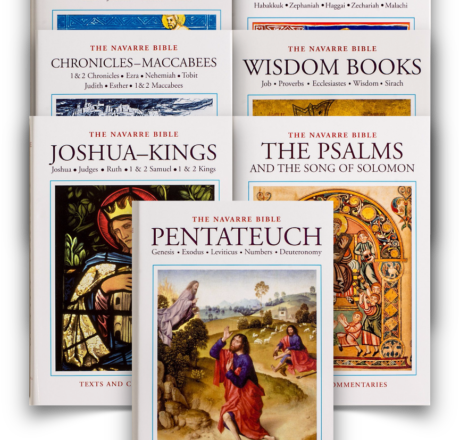
Commentary:
12:1-25. Nathan’s intervention (vv. 1-15), David’s repentance (vv. 16-19), and the birth of Solomon (vv. 20-25) are the main subjects in this chapter. Nathan makes an appeal to David with one of the most beautiful parables in the Old Testament and gets the king to condemn his own conduct: “the man who has done this deserves to die” (v. 5). In reply, Nathan tells him the penalty the Lord has decreed, which in line with the law of vengeance or retaliation has three parts to it, corresponding to David's triple crime--murder, adultery and the fact that the victim was a blameless man. On account of the murder, the sword will not depart from David’s house (V. 10): this punishment will affect his eldest sons, Amnon, Absalom and Adonijah, who will die violent deaths. For the adultery, his wives will be violated in public (v. 11), which will happen when Absalom takes his father’s harem (cf. 16:20-23). And for the killing of an innocent man, his own recently born son will not survive (v. 14).
David’s repentance is exemplary (vv. 16-19): he weeps for his sin, and fasts and pleads for his little son: so, in spite of his weaknesses and sins, he still trusts in the Lord and shows himself to he “a man after (the Lord’s) own heart” (1 Sam 13:14). David is a model of penance because, by acknowledging his sin, he obtained divine forgiveness. His repentance finds expression in Psalm 51, which so beautifully and piously records the sinful king’s supplication to the Lord: “Have mercy on me, 0 God, according to your steadfast love; according to your abundant mercy blot out my transgressions. Wash me thoroughly from my iniquity, and cleanse me from my sin!” (Ps 51:1-2).
The birth of a new son (vv. 20-25) brings this account to an end and makes it clear that Solomon was born within marriage; his birth causes David great joy and he is given a second name in a message from Nathan--"Jedidiah" (v. 25); beloved of the Lord. This means that, from birth, Solomon is the one chosen by God to advance his plan of salvation for Israel.
Great was David’s sin, and heartfelt his contrition. But God’s forgiveness is greatest of all. “In the course of its history, Israel was able to discover that God had only one reason to reveal himself to theirs, a single motive for choosing them from among all peoples as his special possession--his sheer gratuitous love. And thanks to the prophets Israel understood that it was again out of love that God never stopped saving them and pardoning their unfaithfulness and sins” ("Catechism of the Catholic Church", 218).
From: Mark 4:35-41
The Calming of the Storm
------------------------
[35] On that day, when evening had come, He (Jesus) said to them, "Let us go across to the other side." [36] And leaving the crowd, they took Him with them just as He was, in the boat. And other boats were with Him. [37] And a great storm of wind arose, and the waves beat into the boat so that the boat was already filling. [38] But He was in the stern, asleep on the cushion; and they woke Him and said to Him, "Teacher, do You not care if we perish?" [39] And He awoke and rebuked the wind, and said to the sea, "Peace! Be still!" And the wind ceased, and there was a great calm. [40] He said to them, "Why are you afraid? Have you no faith?" [41] And they were filled with awe, and said to one another, "Who then is this, that even wind and sea obey Him?"
***********************************************************************
Commentary:
35-41. The episode of the calming of the storm, the memory of which must have often helped the Apostles regain their serenity in the midst of struggles and difficulties, also helps us never lose the supernatural way of looking at things: a Christian's life is like a ship: "As a vessel on the sea is exposed to a thousand dangers--pirates, quicksands, hidden rocks, tempests--so man in this life, is encompassed with perils, arising from the temptations of Hell, from the occasions of sin, from the scandals or bad counsels of men, from human respect, and, above all from the passions of corrupt nature [...]. This should not cause him to lose confidence. Rather [...] when you find yourself assaulted by a violent passion [...] take whatever steps you can to avoid the occasions [of sin] and place your reliance on God [...]: when the tempest is violent, the pilot never takes his eyes from the light which guides him to port. In like manner, we should keep our eyes always turned to God, who alone can deliver us from the many dangers to which we are exposed" (St. Augustine, "Sermon 51; for the Fourth Sunday After Epiphany).
Disclaimer: Opinions posted on Free Republic are those of the individual posters and do not necessarily represent the opinion of Free Republic or its management. All materials posted herein are protected by copyright law and the exemption for fair use of copyrighted works.